
Create a Clutter-Free Potting Shed with Effective Organisation Ideas
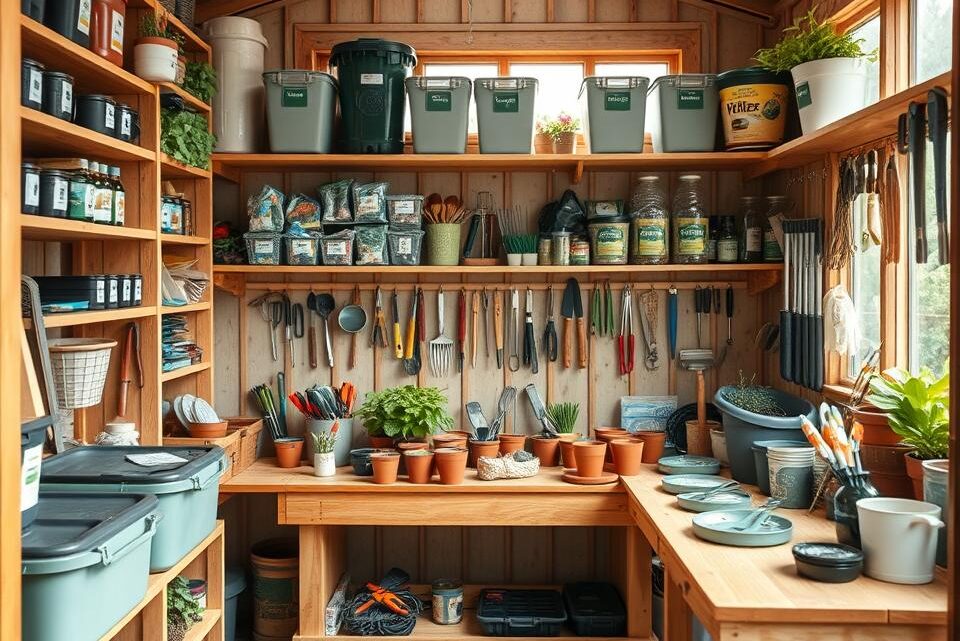
Many gardeners find their potting sheds become chaotic over time. Spare pots often scatter across the floor, while bags of fertiliser pile up in corners. Tools get misplaced, leading to frustration and wasted moments searching.
Transforming this chaotic area into a functional, pleasant workspace is a game-changer. A well-ordered shed saves valuable time during gardening tasks. It eliminates the need to search through mess or move piles of items to find what is needed.
The key principles for a successful setup are accessibility and visibility. Frequently used items should be kept within easy reach. Supplies must be clearly seen, not hidden away in drawers.
Taking time to visualise how the space will be used is essential. This planning ensures the area serves as a soothing retreat. It becomes a place for potting plants, planning seasonal activities, and enjoying the hobby without stress.
Inhaltsverzeichnis
Key Takeaways
- A disorganised potting shed leads to frustration and inefficiency during gardening tasks.
- Implementing a clear system transforms a chaotic area into a functional and pleasant workspace.
- Accessibility ensures frequently used tools and supplies are always within easy reach.
- Visibility prevents items from being lost or forgotten, saving time and effort.
- Proper planning is crucial for creating a shed that supports both work and relaxation.
- A well-ordered space enhances the overall gardening experience, making it more enjoyable.
Planning Your Potting Shed Layout for Maximum Organised Space
Before purchasing a single storage unit, a thorough assessment of the shed’s potential is paramount. This initial planning stage prevents costly mistakes and ensures the final setup truly supports gardening activities.
Assessing Available Space and Workflow
The first practical step is to choose a dry day for a complete clear-out. Removing everything from the shed allows for an honest inventory. Gardeners can then decide what to keep, recycle, or dispose of, including old or duplicate equipment.
Measuring the interior space is crucial. Accurate dimensions help in selecting shelving and other units that fit perfectly. It is also wise to visualise the typical workflow, from sowing seeds to potting plants.
This helps identify which items are used most often. These high-frequency tools and supplies deserve the most accessible spots.
Deciding on Key Storage Zones
With measurements and a clear workflow in mind, the shed can be divided into functional zones. Common zones include a dedicated potting area, a tool storage section, and supply shelves.
Creating this zoned system is a powerful way to maintain order. Frequently used items are positioned for easy reach. Seasonal or rarely used gear can be stored higher up or towards the back.
This strategic approach saves time and makes gardening tasks more efficient. It transforms the shed from a simple storage area into a highly functional workspace.
Effective Organisation Ideas for a Clutter-Free Potting Shed
Moving from planning to action, the next step involves implementing practical systems to maintain order. The core principles guiding these efforts are accessibility and visibility. Frequently used items must be easy to reach and see.
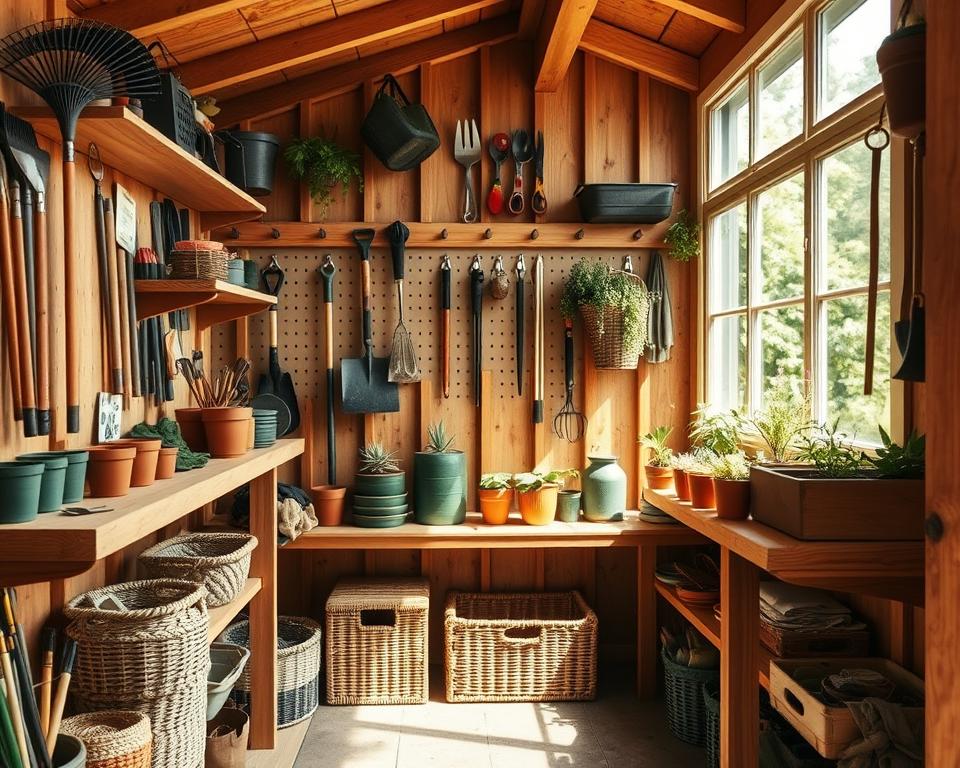
Treating the space as an extension of the home encourages better upkeep. When gardeners view their shed with the same care as a kitchen or living room, regular tidying becomes a natural habit. This mindset prevents the area from becoming a dumping ground for random household items.
Achieving a lasting, neat environment is an ongoing process, not a single event. Seasonal decluttering is essential. At the end of each growing period, it is wise to review supplies and tools.
This regular refresh stops clutter from accumulating again. It ensures the space remains dedicated to its primary purpose: supporting enjoyable gardening. Simple routines make all the difference in preserving a functional and pleasant retreat.
Upcoming sections will explore specific storage furniture, wall-mounted options, and do-it-yourself projects. These solutions are designed to work together, creating a cohesive system that saves time and reduces frustration.
Incorporating Smart Storage Solutions: Benches, Shelves and Bins
Implementing the right furniture transforms a basic shed into a highly functional gardening workspace. These elements work together to create an organised system that supports daily tasks.
Potting Bench Setup and Placement
A well-chosen potting bench serves as the central work area. It provides a dedicated surface for handling plants and keeping supplies within reach.
Positioning is crucial for workflow efficiency. Placing the bench near the entrance allows easy access to the garden. Alternatively, situating it under a window provides valuable natural light.
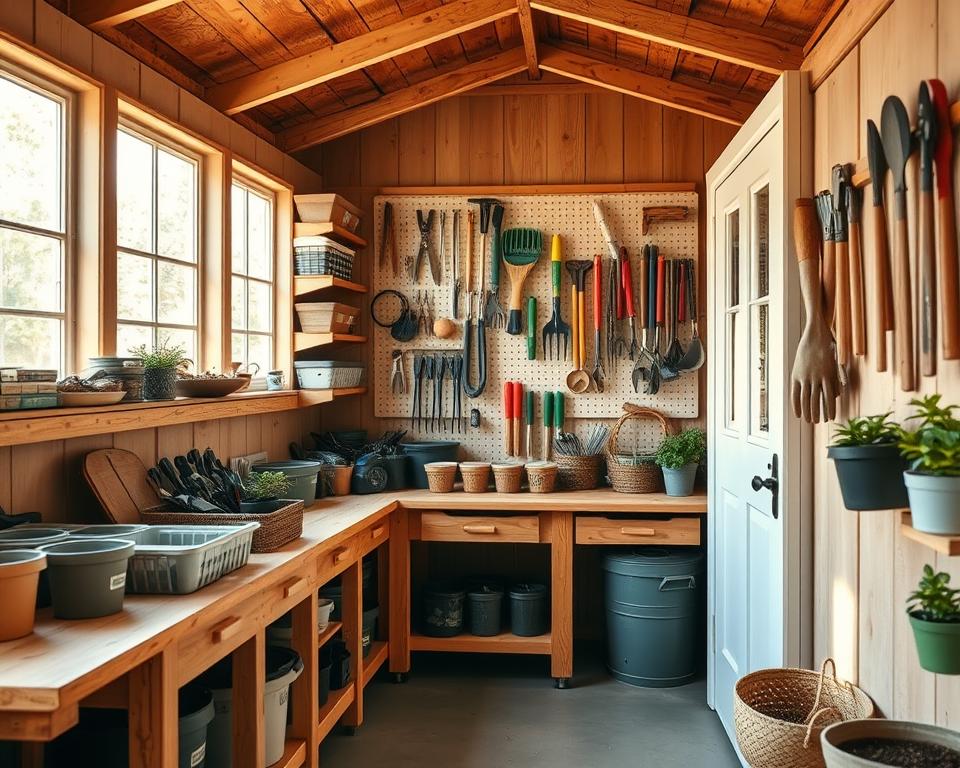
Both DIY and pre-made options offer practical benefits. Custom-built benches can utilise reclaimed materials for an affordable solution. Purchased models often include integrated storage compartments.
Selecting Durable Shelving and Transparent Storage Bins
Sturdy shelving maximises vertical space around the work area. Deep, adjustable shelves accommodate various container sizes and heavier items.
Transparent bins revolutionise material organisation. They allow gardeners to identify contents instantly without opening each container. This visibility prevents forgotten supplies and messy searches.
Lidded plastic containers protect contents from moisture and dust. Their stackable design creates additional storage space while maintaining a small footprint.
| Container Type | Best For | Key Benefits | Considerations |
|---|---|---|---|
| Transparent Bins | Soil, compost, fertiliser | Visible contents, stackable | Require sturdy construction |
| Stackable Crates | Pots, tools, accessories | Space-efficient, portable | May need labelling system |
| Lidded Buckets | Sand, small materials | Moisture-proof, durable | Limited capacity |
Transferring opened bags into large bins prevents spills and keeps materials fresh. This approach maintains a clean environment while ensuring supplies remain accessible.
Optimising Wall Space with Hooks, Pegboards and Hanging Baskets
Unused vertical surfaces offer immense potential for transforming storage in a gardening workspace. Wall-mounted systems keep equipment organised and accessible while freeing up valuable floor space. This approach protects tools from moisture damage and prevents clutter accumulation.
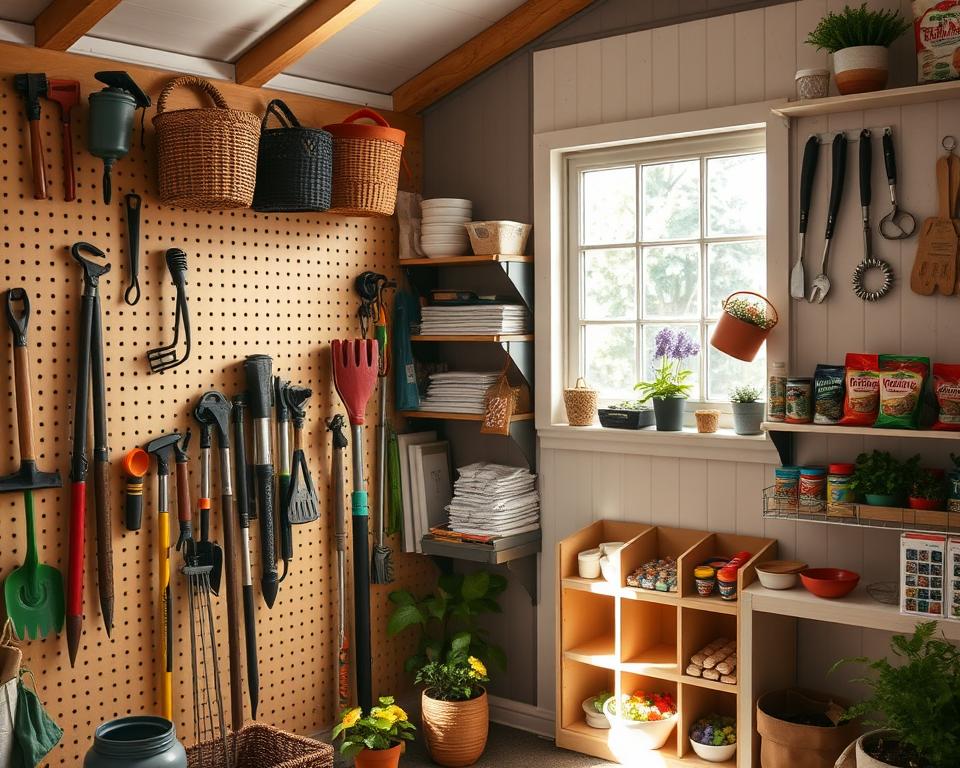
Installing Pegboards for Easy Access to Tools
Pegboards are versatile panels with regularly spaced holes that accept various hooks and pegs. They allow gardeners to create customised storage layouts that can be rearranged as needs change. Positioning frequently used tools at eye level ensures convenient access during gardening tasks.
Less commonly used equipment can be placed higher or lower on the board. Combining pegboards with rails and shelving creates a comprehensive wall system. This arrangement accommodates different item sizes while keeping everything visible.
Creative Solutions with Hanging Baskets and Wall Hooks
Wall-mounted wire baskets group similar items together, from pots to cleaning equipment. Hanging baskets suspended from ceiling hooks add functional storage with aesthetic appeal. Position them at convenient heights near work areas for logical workflow.
Galvanised hooks provide superior strength for heavy tools like spades and drills. Simple movable hooks offer flexibility for changing storage requirements. Long-handled tools benefit from being hung upside down on peg rails to prevent floor contact.
| Storage Type | Best For | Installation Tips |
|---|---|---|
| Pegboards | Frequently used hand tools | Mount at eye level, use sturdy hooks |
| Wall Hooks | Heavy equipment, long tools | Choose galvanised for durability |
| Hanging Baskets | Lightweight essentials, pots | Position near workstations |
Well-planned wall storage transforms any gardening area by keeping tools organised and within reach. This systematic approach maximises available space while maintaining a tidy environment.
DIY Enhancements and Customised Organisational Systems
Personalising a garden shed with custom DIY projects offers a unique opportunity to create storage that perfectly fits individual needs. This approach is both budget-friendly and environmentally conscious, giving old items a new purpose.
Tailored solutions ensure every tool and supply has a logical home. This prevents the clutter that often accumulates in standard setups.
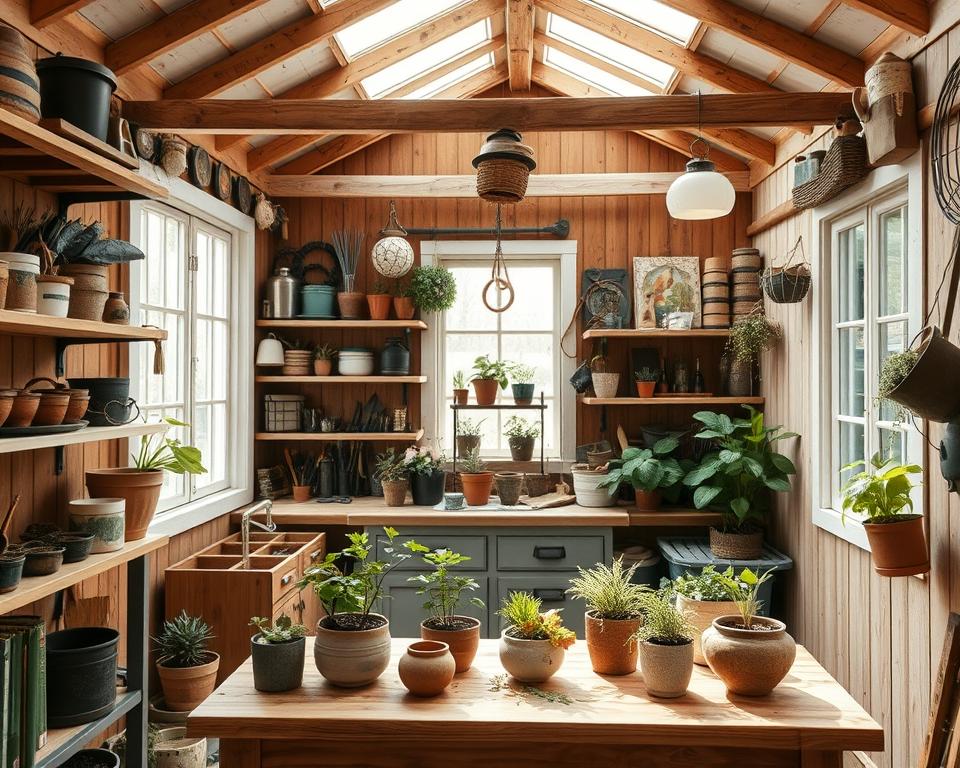
Building a Custom Potting Bench from Recycled Materials
Constructing a bespoke work surface is a rewarding weekend project. Using leftover wood or salvaged timber keeps costs low.
The design can include specific features like integrated shelving or an under-bench area for bags of compost. A fresh coat of paint not only protects the wood but also adds a splash of colour to the workspace.
This customisation results in a highly functional centrepiece for the garden shed.
Upcycling and Repurposing for Eco-Friendly Storage
Many household items can find a second life as practical storage. An old bookcase, with its doors removed, becomes open shelving for pots and fertilisers.
Even a dated sink can be repurposed into a handy cleaning station for tools. Creative thinking turns everyday objects into clever organisers.
| Item to Repurpose | New Function | Key Benefit |
|---|---|---|
| Wooden Pallets | Vertical tool holder | Keeps long-handled tools tidy and accessible |
| Shoe Organiser | Wall-mounted storage for small items | Perfect for twine, labels, and secateurs |
| Jam Jars | Suspended storage for nails & seeds | Clear visibility of contents |
This method is a smart way to maximise storage without buying new products. It transforms the space efficiently and sustainably.
Maximising Vertical Storage and Floor Space Efficiency
A clever storage strategy makes the most of every inch in a potting shed. Thinking vertically dramatically increases capacity without expanding the shed’s footprint. This approach keeps the floor area clear for movement and larger items.
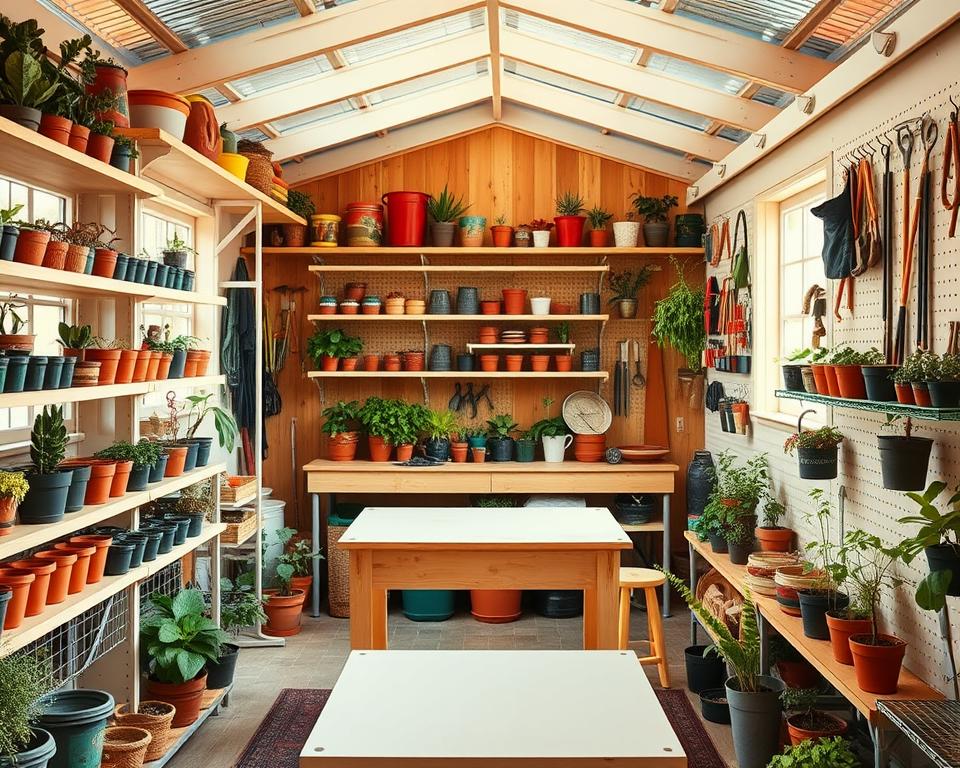
Utilising Deep, Sturdy Shelves for Heavier Items
Installing shelving units that reach high above work surfaces creates valuable tiers of storage. Frequently used tools and supplies belong on middle shelves for easy access.
Seasonal or rarely needed gardening items can be stored overhead. A compact step ladder ensures everything remains within reach when required.
Safety is paramount when organising shelves. Heavy items like bags of soil or large pots should be kept on lower shelves or the floor. This prevents accidents and makes them easier to handle. Steel-framed storage bays offer a durable, long-term shelving solution for various shed spaces.
Implementing Clear Labelled Containers and Baskets
Labelling is essential for maintaining order over time. Use a simple label maker or tape and pen to mark shelves, bins, and even tools.
Group similar items into logical categories. Clear plastic boxes allow gardeners to see contents instantly, preventing messy searches. Fabric baskets add style while storing lightweight supplies like seed packets.
They are collapsible for saving space and washable if dirty. Transferring opened bags of compost into large, lidded bins contains mess and protects supplies. Stackable containers have a smaller footprint, helping to keep work benches clear.
Conclusion
A well-maintained workspace becomes the gardener’s sanctuary, where efficiency meets tranquility. Implementing the right storage solutions transforms the entire gardening experience from frustrating to fulfilling.
Gardeners reclaim valuable time previously spent searching for misplaced tools. This systematic approach eliminates the stress of navigating through accumulated clutter. More moments can be dedicated to tending plants and enjoying the garden.
Regular maintenance protects this investment. Checking the shed structure prevents water damage to stored materials. A secure floor and sealed windows ensure belongings stay protected throughout the seasons.
The ultimate goal extends beyond mere tidiness. A properly arranged potting shed serves as a peaceful retreat away from the main home. It becomes a space where work feels like pleasure, supporting the gardener’s passion throughout the year.
FAQ
What is the first step in organising a potting shed?
The initial step involves assessing the available space and planning the layout. One should consider their gardening workflow to decide on key storage zones for tools, supplies, and plants. This ensures the setup is both logical and efficient.
How can wall space be used effectively in a potting shed?
Wall space is ideal for maximising storage. Installing pegboards provides easy access to hand tools, while hooks and hanging baskets are perfect for storing items like twine, gloves, and smaller containers, keeping the floor and work surfaces clear.
What are some smart storage solutions for a potting bench?
A well-placed potting bench is central to an organised shed. It should have built-in shelving or drawers for essentials. Using transparent storage bins on or under the bench allows one to see contents at a glance, saving time during gardening tasks.
Can I create custom storage from recycled materials?
Absolutely. Building a custom potting bench or shelving from reclaimed wood is a popular and eco-friendly DIY enhancement. Upcycling old crates or pallets into storage units is a cost-effective way to create a personalised system for pots and equipment.
How can I make the most of vertical storage for heavier items?
Utilising deep, sturdy shelves is key for storing bulky bags of compost or heavy equipment. Placing these shelves at a comfortable height prevents strain. Labelling containers and baskets clearly ensures everything remains easy to find and access.

