Design your garden in Japanese style
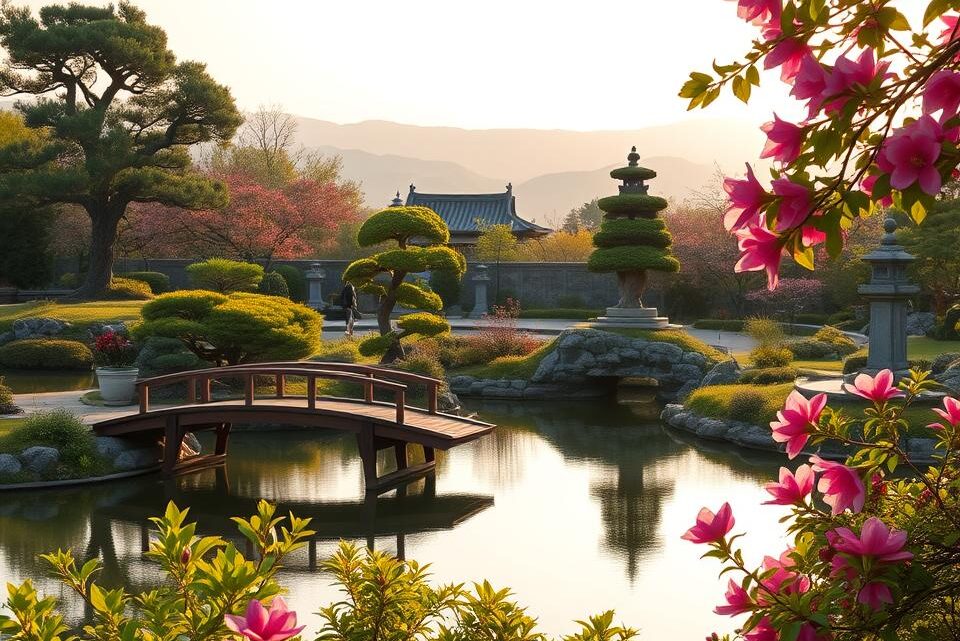
Transforming your garden into a reflection of Japanese landscape architecture is about more than just aesthetic appeal; it’s a foray into the world of outdoor design elegance. The intricacies of a Japanese-style garden capture the essence of zen garden inspiration, offering a unique blend of simplicity and sophistication that promises a serene outdoor retreat. Embracing this time-honoured approach connects you to the natural world, fostering an environment that enhances personal wellbeing through its tranquil atmosphere.
Whether it’s the quiet contemplation in a carefully raked gravel garden or the soothing sounds of a gently babbling brook, the elements that define these spaces are steeped in tradition and natural beauty. Such designs are not merely about the visual spectacle but about creating a living tapestry that resonates with balance and harmony. A Japanese-inspired garden, then, becomes a personal sanctuary of peace and quietude, a haven away from the bustle of everyday life.
Inhaltsverzeichnis
Key Takeaways
- Japanese garden design offers a calming zen-like atmosphere.
- Emphasizes outdoor design elegance while promoting simplicity.
- Creating a serene outdoor retreat contributes to personal wellbeing.
- A mindful approach to replicating traditional Japanese landscape architecture.
- Utilising native plants and water features to foster natural tranquillity.
Introduction to Japanese Garden Design
Delving into the serene world of Japanese gardens opens a window to a tradition rich with cultural heritage and profound aesthetic principles. These gardens are more than mere arrangements of flora and fauna; they encapsulate a spiritual landscape design philosophy that has been evolving since ancient times. Through meticulous integration of natural elements, Japanese garden designers aim to foster a sense of peace and reflection.
History and Principles
The Japanese garden tradition is steeped in history, tracing back to the Asuka period. Fundamental to these gardens are the aesthetic principles of minimalism, harmony, and respect for the natural world. Each element in a Japanese garden—from the placement of rocks to the trimming of trees—is thoughtfully considered to reflect the natural landscape in a stylised yet understated manner. These principles aim to create a spiritual experience, inviting contemplation and quietude.
Key Elements of Japanese Gardens
Central to achieving the tranquility of a Japanese garden is the careful selection and placement of various elements. Rocks, water features, and carefully selected plants work together to form a cohesive and spiritually resonant space. Below is an overview of these key elements:
| Element | Description | Symbolism |
|---|---|---|
| Rocks | Strategically placed to emulate natural landscapes | Enduring presence and strength |
| Water Features | Ponds, streams, or waterfalls creating sound and reflection | Purity and fluidity |
| Plants | Arranged to promote naturalness without appearing contrived | Growth and change with seasons |
Integrating these elements with the overarching aesthetic principles of the Japanese garden tradition helps achieve a balanced and harmonious environment, ideal for reflection and spiritual connection.
Choosing the Right Plants for a Japanese Garden
Creating a Japanese garden involves a delicate balance of elements to establish a tranquil atmosphere, and the selection of appropriate Japanese plant species is vital to this process. Not only does it help cultivate serene and tranquil green spaces, but it also ensures garden flora is in harmony with traditional aesthetics.
To achieve a truly authentic feel, focusing on native Japanese plants is essential. Let us explore some of the most suitable varieties that not only thrive in such an environment but also support the creation of a visually harmonious garden space.
Native Japanese Plants
Japanese Maples (Acer palmatum) and Cherry Blossoms (Sakura) are quintessential to the Japanese garden theme, offering breathtaking blooms and a profound seasonal transformation that captivate and enchant viewers. Similarly, Azaleas bring vibrant colour with their various hues, playing a significant role in adding depth and emotion to the garden landscape.
Mosses and Ferns: The Understated Beauties
Not to be overlooked, mosses and ferns add delicate, fine textures to the garden, which are crucial for crafting the tranquil green spaces associated with Japanese gardens. These plants are particularly adept at creating soft, understated beds that complement stones and water features, lending a sense of age and permanence to the setting.
Japanese Maple and Ferns are perfect examples of plants that are not only beautiful but are evolved to deliver a peaceful, green sanctuary. They are easy to maintain, bringing year-round beauty with minimal care requirements.
| Plant Type | Seasonal Interest | Colour Variants | Maintenance Level |
|---|---|---|---|
| Japanese Maple | Spring-Fall | Red, Orange, Yellow | Low |
| Cherry Blossoms | Spring | Pink, White | Medium |
| Azaleas | Spring | Red, Pink, White | Low |
| Mosses | All year | Green | Low |
| Ferns | Spring-Summer | Green | Low |
Incorporating these plants into your garden not only enhances the aesthetic appeal but also contributes to the overall ethos of simplicity and natural beauty that Japanese gardens are known for. It is an investment in creating a space that offers refuge and calmness amidst the bustling modern life.
Designing with Water Features
Incorporating water features into a garden can significantly enhance the overall aesthetics and create a space where tranquillity and nature flourish. Designing a water garden correctly can establish a soothing ambiance, make a visual statement, and attract wildlife. This segment explores the integration of koi ponds along with streams and waterfalls, each element distinct in contributing to the serene atmosphere and embodying cascading water symbols.
Koi ponds are not just water bodies but a canvas where koi fish tranquillity plays out in vivid hues and fluid movements.
Koi ponds, traditionally central to Japanese garden aesthetics, serve as vibrant yet serene focal points. Their design should consider adequate depth and filtration to maintain the health of koi fish while facilitating a calm surface, which reflects the surrounding beauty. The gentle movement of koi, gliding under lily pads and past moss-covered rocks, provides a meditative quality essential to the water garden’s soothing ambiance.
Streams and waterfalls, on the other hand, introduce dynamic elements to the garden. They represent life’s continuum, with water cascading from one level to another, resonating with the sounds of a natural brook. Strategically placed rocks can channel water flows, creating meandering streams or dramatic waterfalls. This aspect not only enhances the visual appeal but also aids in oxygenating the garden’s ecosystem, benefiting all living things within it.
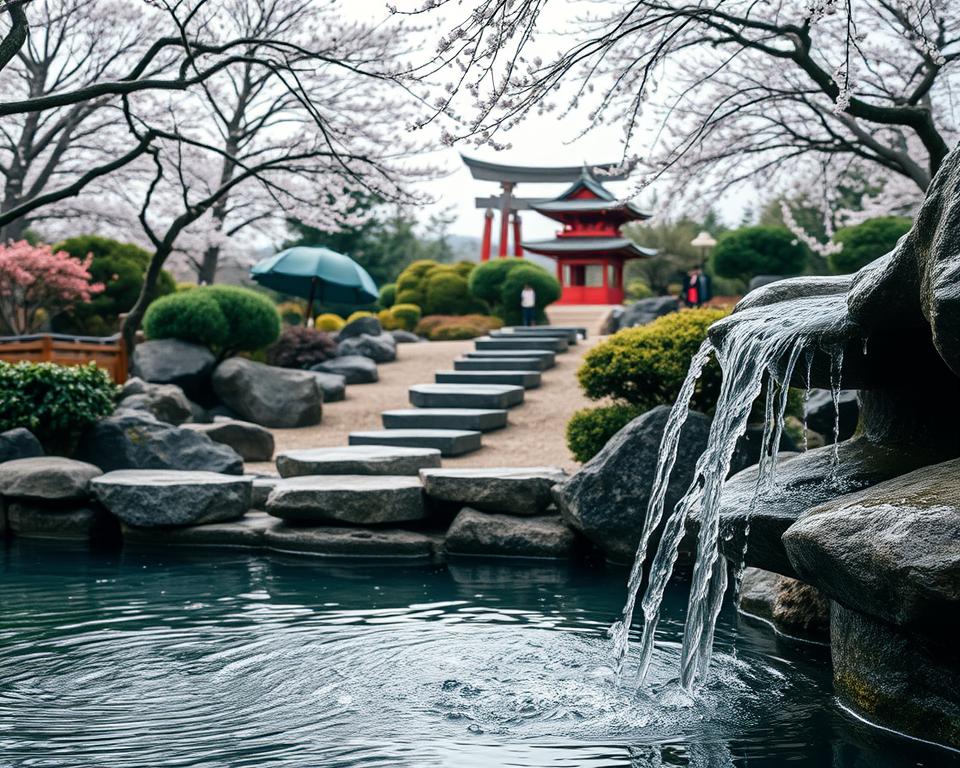
Together, these water features create a symphony of sights and sounds, transforming any garden into a tranquil retreat. Careful planning and thoughtful design are key to harnessing the qualities of koi fish tranquillity and cascading water symbols, ensuring every element is in harmony with nature’s innate compositions.
Incorporating Stone Elements
Rocks in Japanese gardening are not just ornamental; they are imbued with deep symbolic significance and contribute to the representation of a natural landscape mimicry. Typical stone arrangements in these tranquil gardens serve as focal points and play a crucial role in the overall composition by creating miniaturised versions of natural landscapes. Understanding the selection and placement of these stones can profoundly affect the balance and harmony within the garden space.

Stone arrangements can vary widely, from rugged, imposing boulders that represent mountains, to carefully placed stone groupings that trace the meandering of a river. Each placement is intentional, designed to bring to mind the broader natural world through careful mimicry. It’s essential for gardeners to choose rocks with appropriate shape, texture, and colour to maintain authenticity and evoke a sense of serenity and timelessness.
| Stone Type | Description | Symbolic Meaning |
|---|---|---|
| Kikyaku (footstone) | Irregularly shaped, flat | Stability and grounding |
| Taido (body stone) | Vertical, often tallest in the grouping | Connection to spiritual realms |
| Shigyoku (piercing stone) | Rugged, pointy | Intensity and focus |
| Reisho (spirit stone) | Rounded, smooth | Calmness and meditation |
Understanding these types can help gardeners make informed decisions about which stones will best enhance their garden’s design aesthetics and spiritual holdings. The purposeful configuration of these elements facilitates not only a visual continuity that mirrors the natural world but also an environment conducive to contemplation and introspection. Therefore, creating a stone arrangement is much more than placing rocks; it is about capturing the essence of nature itself.
Crafting Pathways and Bridges
Pathways and bridges are vital for effective garden navigation, creating a journey that invites visitors to explore every nook with anticipation. They contribute significantly to the natural flow and harmony of garden spaces, particularly in designs inspired by Asian aesthetics. This section explores how to integrate these elements seamlessly into your garden design.

Stepping stones are a quintessential aspect of Asian gardens. They do more than guide your steps; they offer a reflective path that aligns with nature’s rhythm. The choice and placement of these stones can transform a simple garden route into a meditative walking experience, thus enhancing the garden’s tranquillity.
Stepping Stones
Incorporating stepping stones into your garden improves the aesthetic while ensuring practical walkability without disturbing the natural landscapes. Each stone’s placement should consider both functionality and visual appeal, encouraging a slow and immersive journey through the natural surroundings.
Wooden and Stone Bridges
Bridges in Asian landscaping do not just serve as connectors over water features or garden divisions; they are a symbolic passageway to new experiences and perspectives. The use of materials like wood and stone not only complements the organic essence but also accents the cultural authenticity of the garden design.
Both wooden and stone bridges can be designed to feature elegant curves that emulate natural forms, blending with water elements and lush greenery to create a seamless transition between different areas of the garden.
Here’s a comparison of materials often used in the construction of garden bridges:
| Material | Characteristics | Benefits |
|---|---|---|
| Wood | Warm, natural texture; can be painted or treated | Blends easily with surrounding greenery; versatile design options |
| Stone | Durable and sturdy; natural appearance | Long-lasting with little maintenance; weather-resistant |
The thoughtful integration of stepping stones and bridges can greatly enhance the environmental synergy and functional utility of a garden, making every visit a rejuvenating venture into nature. As extensions of the living landscape, these features enrich the user’s experience and highlight the philosophical underpinnings of traditional Asian landscapes.
Building a Tea House or Pavilion
Integrating a tea house or pavilion within a Japanese garden not only adds aesthetic appeal but also provides a dedicated outdoor relaxation space for enjoying the serene practice of the Japanese tea ceremony. This garden structure draws on traditional garden pavilion architecture, offering a tranquil retreat and harmoniously blending with the natural surroundings.
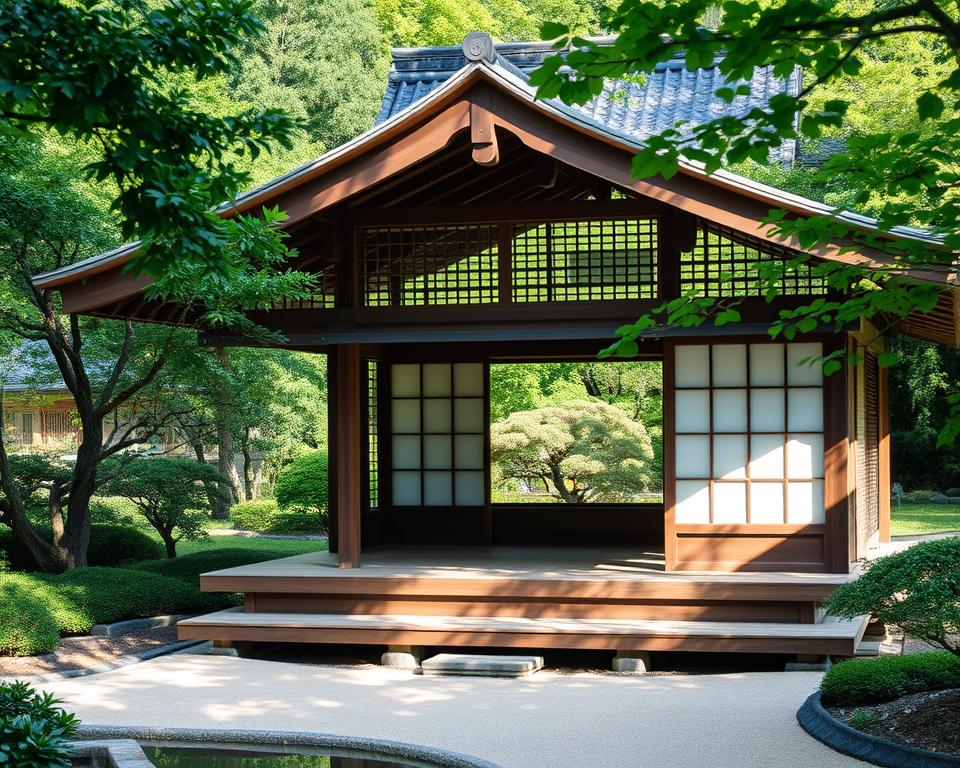
The design of these structures is deeply entrenched in history, reflecting a minimalist yet functional approach that encourages reflection and mindfulness. Whether opting for a simple wooden construction or an elegantly designed pavilion, each element is thoughtfully considered to enhance the holistic experience of tea ceremony participants.
Here are some practical considerations for creating such a space:
- Location is key: Choose a peaceful corner of your garden that invites calmness.
- Materials matter: Utilise natural, locally sourced materials such as bamboo or wood to maintain authenticity and environmental harmony.
- Focus on flow: The layout should allow for a smooth flow of movement, essential for tea preparation rituals.
With thoughtful planning, a tea house or garden pavilion becomes more than just a building; it is a gateway to a deeper understanding of the aesthetic and philosophy of the Japanese tea ceremony.
Accentuating the Garden with Japanese Lanterns
As dusk falls, the subtle art of illuminating Japanese gardens plays a critical role in transforming the landscape. The use of ornamental lighting features not only enhances visibility but also amplifies the aesthetic appeal of the garden, creating a serene evening escape. This section explores how different types of traditional Japanese lanterns can both illuminate and decorate a garden setting.
Stone Lanterns
Stone lanterns are classic elements in Japanese gardens, known for their sturdiness and historic significance. Originating from Buddhist temples, these lanterns serve as both spiritual symbols and practical lighting solutions. They come in various shapes and sizes, each designed to complement the natural stone settings commonly found in these gardens.
Wooden and Bamboo Lanterns
The elegance of bamboo lanterns offers a lighter, more organic look compared to their stone counterparts. Bamboo lantern elegance is celebrated for its natural integration with the living elements of a garden. Wooden lanterns, often crafted from weather-resistant woods like cedar, provide a rustic touch that enhances the garden’s ambience through both sight and scent.
The table below compares the features of stone and bamboo lanterns, highlighting their unique characteristics and suitability for different garden styles.
| Lantern Type | Material | Typical Use | Aesthetic Appeal |
|---|---|---|---|
| Stone Lantern | Granite, Basalt | Pathways, near water features | Rugged, enduring |
| Bamboo Lantern | Natural Bamboo | Among plants, on patios | Light, harmonious |
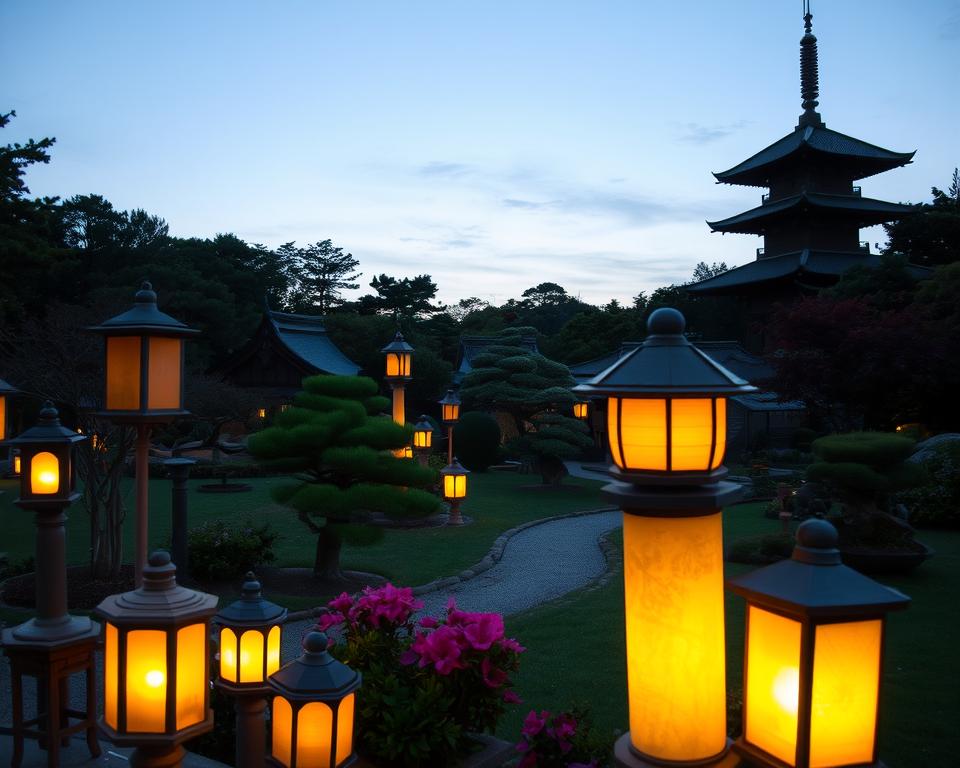
Incorporating these ornamental lighting features into a Japanese garden doesn’t merely serve a functional purpose; it also enhances the overall sensory experience. Whether it’s the robust charm of stone or the subtle grace of bamboo, each lantern style brings a unique flair and ambience to the garden, ensuring the beauty of the landscape is revealed even under the starlit sky.
Creating Harmony with Garden Borders and Fences
Integrating garden enclosures such as bamboo barriers and traditional Japanese fencing not only enhances the aesthetic appeal of a garden but also instills a sense of tranquility and structure. By employing elements like bamboo, one can delineate different sections of the garden while maintaining an open, inviting atmosphere that characterises Japanese garden design.
Bamboo barriers serve as an exemplary material for garden enclosures. These structures are not only sustainable but also blend seamlessly with the natural surroundings. Furthermore, they are robust enough to provide privacy and protection without overshadowing the garden’s minimalist design.
- Garden Enclosures: Bamboo barriers offer a natural and flexible option for creating secluded nooks or meditation spaces within the garden.
- Traditional Japanese Fencing: Techniques such as the use of bamboo allow for the creation of fences that are not just functional but also resonate with the Zen philosophies of simplicity and harmony.
Achieving a harmonious balance in garden design involves more than just the physical structures. It requires a thoughtful placement that considers both the aesthetic qualities and the functional benefits of traditional Japanese fencing and modern garden enclosures. These elements cultivate an atmosphere of peace and continuity which is vital in any garden, especially those inspired by Japanese aesthetics.
Incorporating traditional Japanese fencing not only adheres to cultural authenticity but enhances the spiritual and visual aspects of the garden by crafting an intimate connection with nature. This connection is central to the Japanese garden experience, turning a simple walk in the garden into a rejuvenating journey.
Japanese Garden Style Tipps
Embracing the tranquil beauty of a Japanese garden means considering its appearance across all four seasons. This section explores how to maintain a vibrant garden design for all seasons, ensuring your outdoor space provides year-round delight.
Seasonal Considerations
For those eager to create a garden that flourishes throughout the year, selection of plants and design features is crucial. Spring might bloom with cherry blossoms, while autumn showcases the rustic beauty of maple leaves. Integrating evergreens and hardy shrubs ensures your garden retains its charm even in the winter months. The goal is to create a balanced garden aesthetics that harmonises with the changing seasons.
Maintaining Balance and Simplicity
The philosophy of simplicity in styling is fundamental to Japanese garden designs. This ‘less is more’ approach focuses on the thoughtful placement of each element to create a serene and meditative space. Strive for balance, not just in plant life, but also in the arrangement of stones, paths, and water features. This balanced garden aesthetics not only appeals to the eyes but also soothes the soul, reflecting the natural beauty that thrives with minimal human interference.
Tailoring your garden to reflect the beauty of simplicity and balance, while considering the cyclical nature of the seasons, ensures a space that is not only physically appealing but also emotionally resonant. This is garden design for all seasons—creating a timeless landscape that resonates with the beauty of simplicity and balance year after year.
Conclusion
Embarking on the venture of tranquil Japanese garden creation is both a tribute to an age-old tradition and a personal journey towards a harmonious outdoor retreat. The principles and elements that we’ve explored serve as the foundation for an elegant garden transformation, where every stone, plant, and water feature contributes to the serenity of the space. By embracing these core ideals, you cultivate more than just land – you foster peace and harmony within your environment.
Whether you’re captivated by the grace of stepping stones meandering through a sea of moss or the soothing sounds of a gently cascading waterfall, the Japanese garden design offers a medley of sensory experiences. It stands as testament to the delicate balance between nature and artistic expression, creating landscapes that resonate with the heart’s yearning for calm and simplicity. This is the art of crafting living, breathing works of tranquillity that transcend mere aesthetics.
In closing, may the tips provided inspire you to begin your own path to crafting an outdoor sanctuary. The journey towards an elegant and serene Japanese garden is not just about adhering to design principles, but also about allowing your personal touch to harmonise with natural beauty. As you wield these tools of creation, remember that every choice is a step towards realising a contemplative and rejuvenating haven – a place where your spirit can truly soar amongst the whispers of nature.
FAQ
What is the historical significance of Japanese gardens?
Japanese gardens reflect a history steeped in spirituality and philosophy, originating in ancient times. They served as spaces for meditation and reflection, designed to represent natural landscapes in miniature and embody principles such as minimalism, harmony, and respect for natural aesthetics.
What are the key elements of Japanese garden design?
Fundamental elements include carefully selected rocks that simulate the natural environment, water features like koi ponds and waterfalls that add sensory experiences, and assorted plant species like native Japanese maples and ethereal mosses that together, evoke a deep connection with nature.
Can non-native plants be used in a Japanese garden themed space?
While traditional Japanese gardens utilise indigenous plants, non-native yet aesthetically fitting plants can also be incorporated. The aim is to achieve the balance, tranquillity, and natural look characteristic of a Japanese garden, not necessarily botanical authenticity.
How important are water elements in Japanese garden designs?
Quite important. The presence of water, whether through koi ponds, streams, or waterfalls, is a central feature. It represents life, continuous change, and adds a layer of sound and movement to the garden, enriching the visitor’s experience.
What is the symbolic significance of stone arrangements in Japanese gardens?
Stone arrangements are more than just aesthetic elements; they symbolise mountains, islands, or even animals. The stones’ placement is meticulously considered to reflect nature and are often used to create focal points that command contemplation and evoke a sense of stability.
How do pathways and bridges contribute to the overall design of a Japanese garden?
Pathways, often made from stepping stones, guide viewers through the garden, allowing them to engage with the landscape. Bridges, whether wooden or stone, are not only functional but also represent life’s crossings and changes, enhancing the garden’s depth and meaning.
Does a Japanese garden need a tea house or pavilion?
While not obligatory, a tea house or pavilion adds historical and cultural depth, creating a space for contemplation and traditional ceremonies. These structures serve as a central feature that encourages relaxation in harmony with the surrounding nature.
How can lanterns affect the ambiance of a Japanese garden?
Japanese lanterns, whether stone, wooden, or bamboo, are instrumental in crafting ambience, especially at dusk or night. They provide subtle illumination, marking pathways and highlighting key areas while reinforcing an atmosphere of serenity and natural beauty.
What role do garden borders and fences play in Japanese gardens?
Borders and fences define spaces without obstructing the view, using materials like bamboo to maintain a natural look. They balance privacy with openness, fostering a sense of enclosure and tranquillity without feeling confined.
How do I maintain balance and simplicity in my Japanese garden?
Embracing the ‘less is more’ philosophy, focus on selecting fewer, thoughtfully chosen features and plants that complement each other and the setting. Regular maintenance and avoidance of clutter help preserve the garden’s tranquillity and aesthetic appeal.