Create a Gravel Garden: Paths and Planting Beds
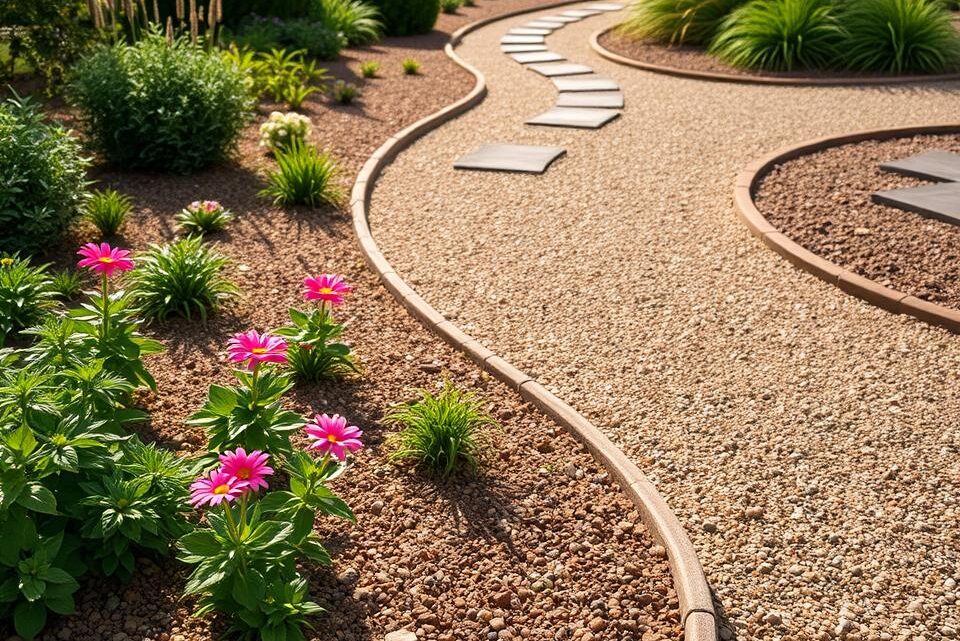
When it comes to designing your outdoor space, a gravel garden is an excellent choice for UK climates. Not only is it low maintenance, but it also offers a versatile canvas for creative expression.
You can create a beautiful and functional garden design by incorporating paths and planting beds into your gravel garden. This will not only enhance the aesthetic appeal of your garden but also provide a practical and accessible outdoor space.
In this article, we will guide you through the process of creating a stunning gravel garden, focusing on the design and implementation of paths and planting beds that suit your UK garden.
Inhaltsverzeichnis
Key Takeaways
- Benefits of a gravel garden in UK climates
- Design considerations for paths and planting beds
- Tips for creating a low-maintenance garden
- Ideas for incorporating plants into your gravel garden
- Best practices for implementing your garden design
Understanding the Appeal of Gravel Gardens
The appeal of gravel gardens lies in their unique combination of environmental benefits and aesthetic charm. These gardens have become increasingly popular among UK homeowners due to their numerous advantages.
Environmental Benefits of Gravel Gardens
Gravel gardens offer several environmental benefits, including water conservation and reduced chemical use. By using gravel and drought-tolerant plants, you can significantly reduce your water consumption and create a more sustainable garden.
- Reduced water consumption
- Lower chemical usage
- Improved soil health through reduced erosion
Aesthetic Advantages in British Landscapes
Gravel gardens also provide aesthetic advantages in British landscapes. They offer a natural, rustic look that complements the surrounding environment. The versatility of gravel gardens allows you to create a unique and visually appealing design.
Low Maintenance Requirements
One of the most significant advantages of gravel gardens is their low maintenance requirements. With minimal weeding and no need for regular mowing, gravel gardens are ideal for busy homeowners. This low-maintenance feature, combined with their environmental benefits and aesthetic appeal, makes gravel gardens an attractive option for many.
Planning Your Gravel Garden Layout
A well-designed gravel garden begins with a thorough understanding of your available space and its conditions. To create a beautiful and functional outdoor area, you need to assess various factors that will influence your garden’s overall design.
Assessing Your Available Space
Start by measuring your garden and noting any existing features such as trees, slopes, or boundaries. Consider how you want to use your gravel garden – for relaxation, entertainment, or as a pathway. This assessment will help you determine the scale and layout of your garden.
Determining Sun Exposure and Drainage
Observe how sunlight falls on your garden throughout the day to understand the sun exposure. Additionally, assess the drainage patterns to avoid waterlogging in certain areas. Both factors will significantly impact your plant choices and the overall design.
Sketching Your Garden Design
With your space assessed and conditions noted, it’s time to sketch out your garden design. Consider the placement of paths and planting beds.
Path Placement Considerations
Paths should be functional and visually appealing. Consider the flow of traffic through your garden and how you can create a natural pathway that guides visitors through different areas.
Planting Bed Configurations
When designing planting beds, think about the mature size of the plants and leave enough space for growth. Group plants with similar watering needs together to make maintenance easier.
| Design Element | Considerations |
|---|---|
| Paths | Material, width, curvature, drainage |
| Planting Beds | Plant selection, spacing, soil preparation |
| Drainage | Slope, material, French drains |

By carefully planning your gravel garden layout, you can create a beautiful, low-maintenance outdoor space that enhances your home’s appeal.
Essential Tools and Materials for Gravel Garden Construction
When constructing a gravel garden, it’s crucial to have the right tools and materials at your disposal. A well-prepared toolkit and the correct materials will make the construction process smoother and more efficient.
Tools Checklist
To begin, you’ll need a few essential tools. These include:
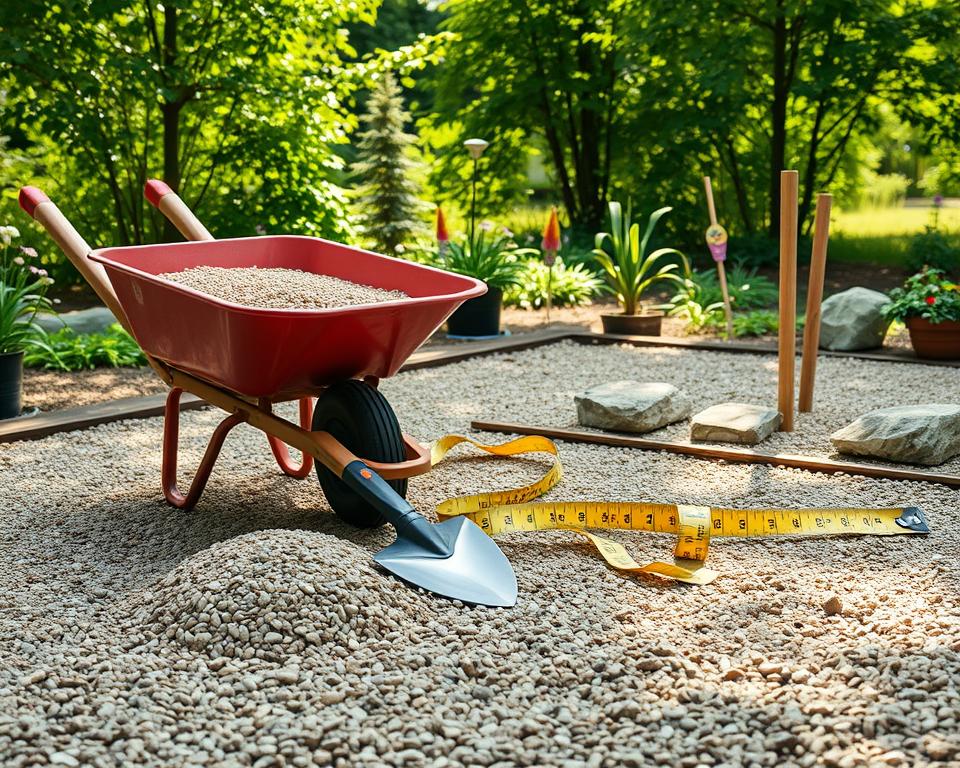
- a sturdy wheelbarrow for transporting gravel and other materials
- a shovel for digging and moving soil
- a rake for levelling and smoothing surfaces
- garden gloves for protecting your hands
- a spirit level to ensure your paths and beds are even
- string lines for marking out straight edges
Types of Gravel and Aggregates Available in the UK
The UK offers a variety of gravel and aggregates suitable for garden construction. You can choose from pea gravel, shingle, or crushed stone, each with its unique characteristics and aesthetic appeal. Consider factors like colour, texture, and size when selecting the right gravel for your garden paths and planting beds.
Additional Materials Required
In addition to gravel, you’ll need other materials to complete your garden. These may include:
- edging materials like metal, plastic, or stone to define your paths and beds
- a weed suppressant membrane to prevent unwanted growth
- landscape fabric to improve drainage and soil health
- topsoil or compost to enrich your planting beds
By gathering the necessary tools and materials, you’ll be well-prepared to construct a beautiful and functional gravel garden.
Preparing the Ground for Your Gravel Garden
A successful gravel garden begins with thorough ground preparation. This crucial step ensures that your garden not only looks its best but also drains properly and supports the health of your plants.
Clearing Existing Vegetation
The first task in preparing your ground is to clear the area of any existing vegetation. This can be done manually or with the help of tools such as a strimmer or herbicide for more persistent weeds. It’s essential to remove all roots to prevent regrowth.
Levelling and Grading the Area
Once the area is clear, you’ll need to level and grade it to ensure proper drainage. Use a spirit level and rake to achieve a relatively flat surface. Grading the soil slightly away from any nearby structures will help prevent water from accumulating.
Soil Testing and Amendments for British Soils
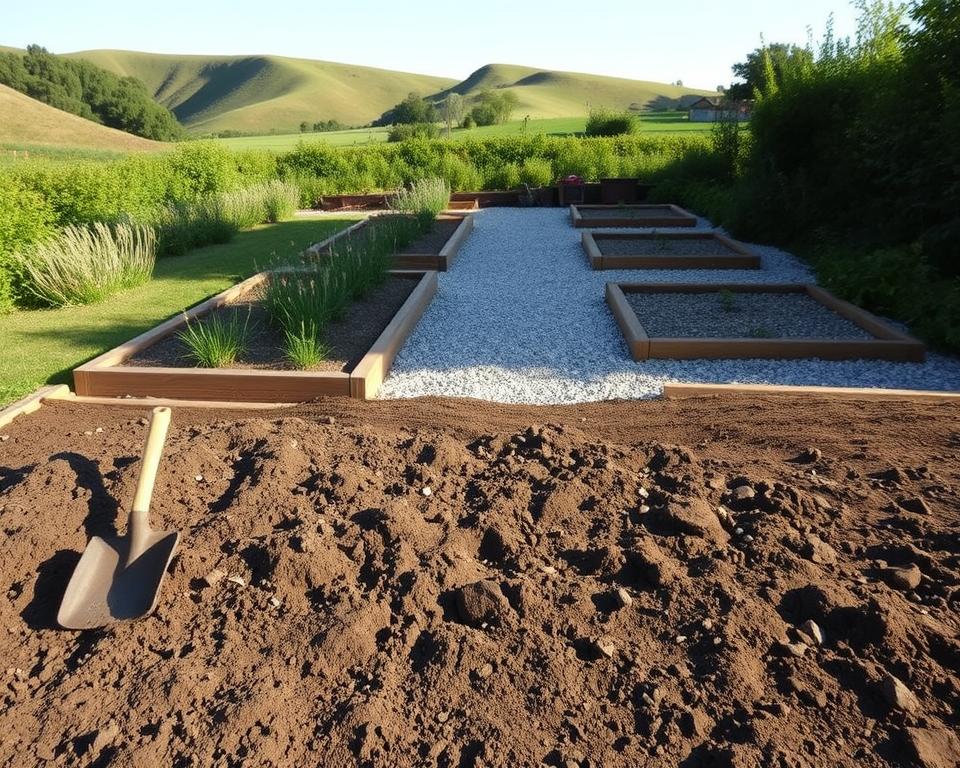
Testing your soil will help you understand its composition and pH level. Based on the test results, you may need to amend your soil. For British soils, which can often be clay-heavy, adding organic matter like compost can improve drainage and structure.
| Soil Type | Amendment Needed | Benefit |
|---|---|---|
| Clay | Organic Matter (Compost) | Improved Drainage |
| Sandy | Organic Matter (Compost) | Improved Water Retention |
| Loamy | Minimal Amendments | Good Structure |
By following these steps, you’ll be well on your way to creating a beautiful and functional gravel garden that thrives with minimal maintenance.
Creating a Gravel Garden – Paths and Planting Beds
To achieve a well-structured gravel garden, it’s essential to delineate paths and planting beds effectively. This not only enhances the garden’s visual appeal but also its functionality.
Defining the Boundaries Between Paths and Beds
Defining the boundaries between paths and planting beds is crucial for maintaining a tidy and navigable garden. You can use various edging materials to create a clear distinction.
Installing Edging Materials
The choice of edging material can significantly impact the overall look and feel of your gravel garden. Different materials offer varying benefits in terms of durability, maintenance, and aesthetics.
Metal Edging Options
Metal edging is a popular choice due to its durability and sleek appearance. It can be used to create both straight and curved edges.
Stone and Brick Edging
Stone and brick edging offer a more traditional look and can be particularly effective in complementing the gravel and plants. They are also durable and require minimal maintenance.
Timber and Recycled Materials
For a more eco-friendly or rustic look, timber and recycled materials can be used. These options can add a unique character to your garden.
| Edging Material | Durability | Maintenance | Aesthetic Appeal |
|---|---|---|---|
| Metal | High | Low | Modern/Sleek |
| Stone/Brick | High | Low | Traditional/Classic |
| Timber/Recycled | Medium | Medium | Rustic/Eco-friendly |
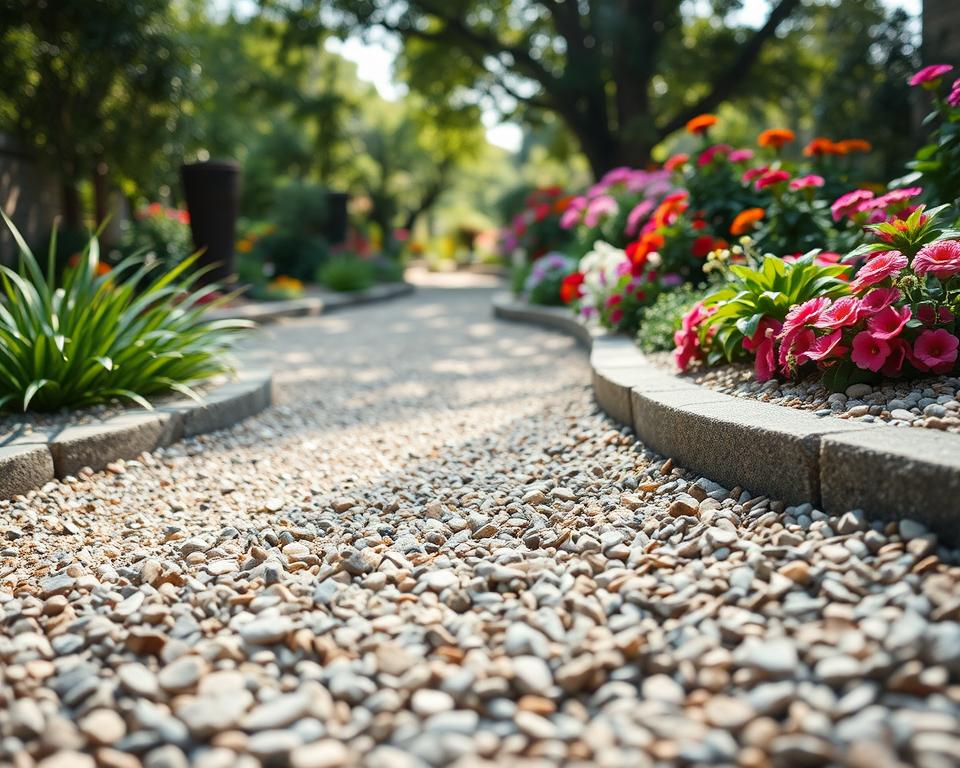
By carefully selecting and installing edging materials, you can create a beautiful and functional gravel garden that meets your needs and preferences.
Designing Functional Gravel Pathways
When it comes to creating a practical and attractive garden, the design of gravel pathways plays a vital role. Gravel pathways not only add visual appeal but also improve the accessibility of your garden, making it enjoyable for everyone.

Determining Path Width and Flow
The width of your gravel pathways is crucial for comfortable navigation. A minimum width of 3 feet (90 cm) is recommended to allow for easy passage, especially if you anticipate wheelchair or stroller use. The flow of the pathway should be smooth and logical, guiding visitors through your garden in a natural and effortless manner.
Creating Curves and Straight Sections
A well-designed gravel pathway often incorporates a mix of curves and straight sections. Curves can add visual interest and create a sense of journey through the garden. Straight sections, on the other hand, can provide a clear direction and purpose, such as leading to a focal point or a seating area. As Lancelot “Capability” Brown once said, “The place where a man sets his foot is the key to his character.” The design of your pathways can reveal the character of your garden.
“A garden is a love song, a duet between a human being and Mother Nature.” – Jeff Cox
Accessibility Considerations for All-Weather Use
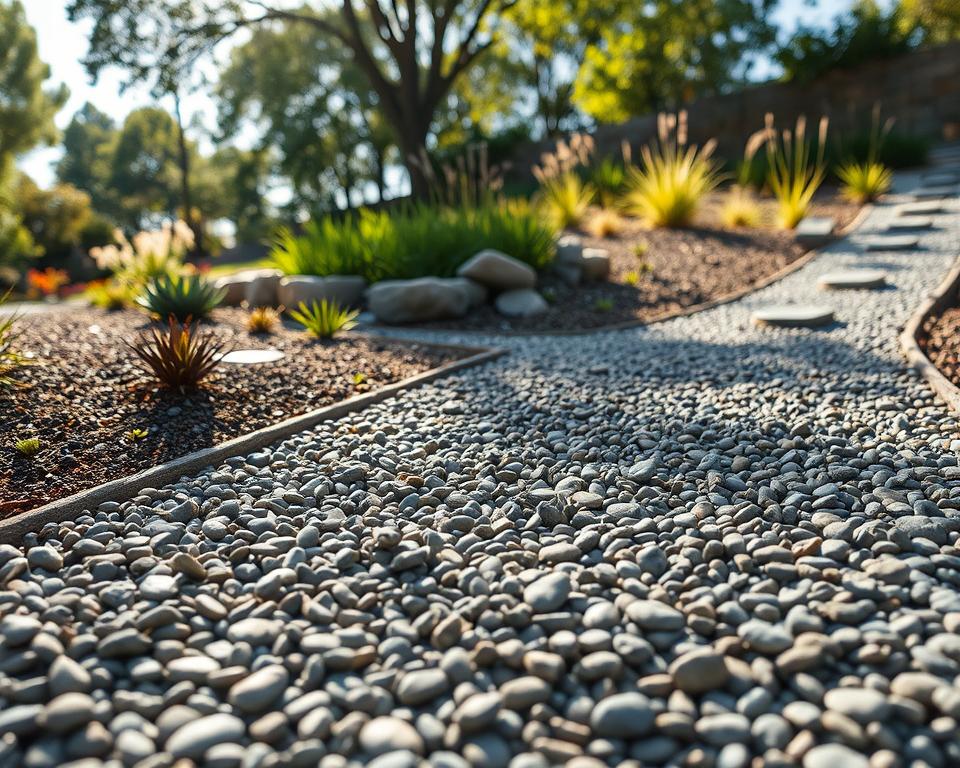
Ensuring that your gravel pathways are accessible in all weather conditions is vital. Using a compacted gravel surface can help prevent erosion and make the path more stable. Additionally, incorporating appropriate drainage solutions can prevent waterlogging and make your pathways usable even after heavy rainfall.
By carefully considering the design of your gravel pathways, you can create a beautiful and functional garden that remains enjoyable throughout the year.
Constructing Durable Gravel Paths
Gravel path construction involves several key steps to ensure durability. To create a long-lasting gravel path, you need to focus on proper excavation, weed suppression, and layering techniques.
Excavating the Path Area
The first step in constructing a durable gravel path is excavating the path area. You need to remove the top layer of soil to the required depth, typically around 5-7 cm, depending on the intended use and load-bearing capacity of the path. Use a garden fork or spade to gently remove the soil, taking care not to compact the underlying ground.
Installing Weed Suppressant Membrane
To prevent weeds from growing through your gravel path, install a weed suppressant membrane. This membrane allows water to pass through while suppressing weed growth. Lay the membrane over the excavated path, ensuring it covers the entire area. Secure it with landscape pins to prevent it from shifting.

Layering Techniques for British Weather Conditions
Layering is crucial for creating a durable gravel path that can withstand British weather. The layering process involves three main layers: base, middle, and top decorative layers.
Base Layer Installation
The base layer provides the foundation for your gravel path. Use a compacted layer of hardcore or crushed stone to create a stable base. This layer should be around 5 cm deep and compacted using a hand tamper or plate compactor.
Middle Layer Compaction
The middle layer consists of a mixture of sand and aggregate. This layer should be around 2-3 cm deep and compacted to create a smooth surface. Use a plate compactor or hand tamper to ensure it’s firmly in place.
Top Decorative Layer Application
The top decorative layer is the final layer, consisting of your chosen gravel or aggregate. This layer should be around 2-3 cm deep and raked to create a smooth, even surface.
By following these steps and using the right materials, you can create a durable gravel path that enhances your garden’s beauty and functionality.
Selecting the Right Gravel for Different Garden Areas
Gravel selection is a critical aspect of designing a beautiful and low-maintenance gravel garden. The type of gravel you choose can significantly impact the overall aesthetic and functionality of your garden paths and planting beds.
Path-Specific Gravel Options
When it comes to creating durable and visually appealing paths, the right gravel can make all the difference. Consider using angular gravel or crushed stone for paths that require good drainage and stability. These types of gravel are ideal for high-traffic areas and can help prevent erosion.
Planting Bed Gravel Considerations
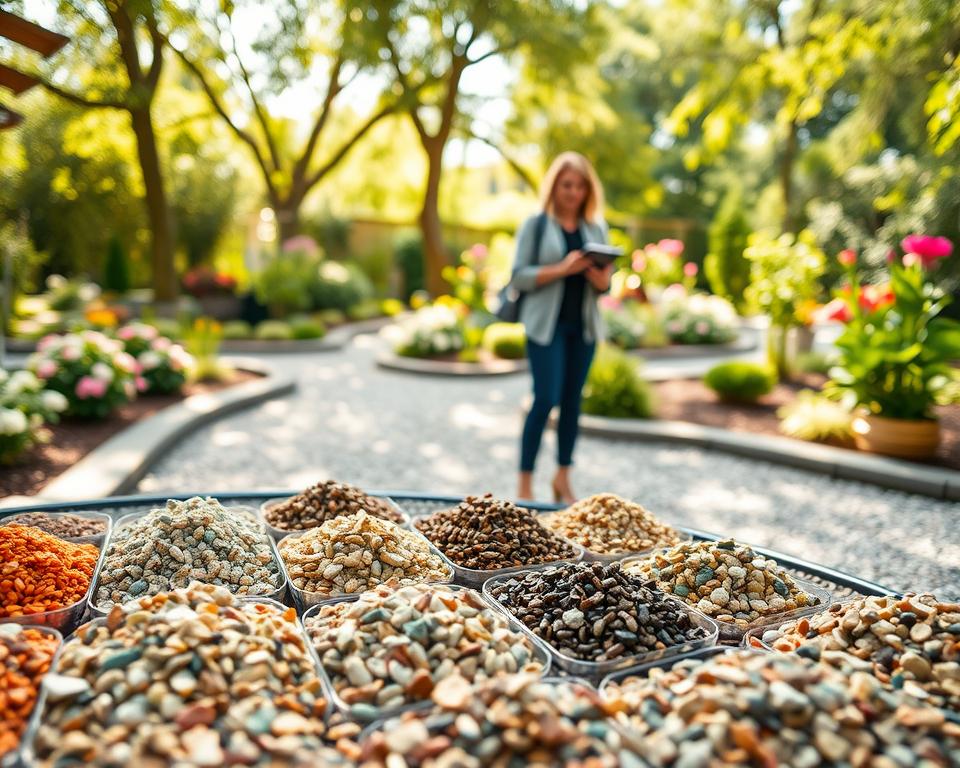
For planting beds, you may prefer a finer gravel that won’t compete with your plants for visual attention. Small pea gravel or rounded river gravel can add a decorative touch while allowing your plants to take center stage. Ensure the gravel is deep enough to suppress weeds and retain moisture.
Decorative Gravel Features and Colours
Decorative gravel can add a unique element to your garden design. Consider using coloured gravel or glass gravel to create visually striking features. You can also mix different gravel colours and textures to create a mosaic effect.
Sustainable and Local Sourcing
When selecting gravel, consider the environmental impact of your choice. Opt for locally sourced gravel to reduce transportation emissions. Additionally, choose gravel that is sustainably sourced and has a minimal environmental footprint.
By considering these factors and choosing the right gravel for your garden paths and planting beds, you can create a beautiful and functional outdoor space that requires minimal maintenance.
Establishing Planting Beds in Your Gravel Garden
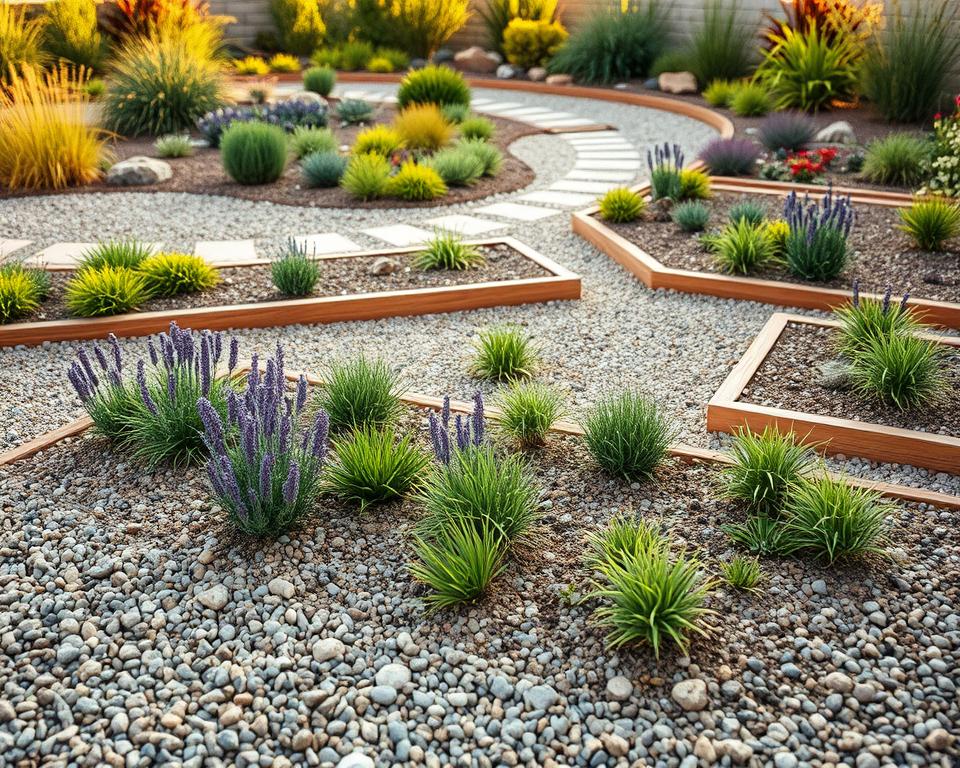
Planting beds are the heart of any gravel garden, providing a haven for your chosen plants to thrive. These beds not only add visual appeal but also support the overall health and sustainability of your garden.
Determining Bed Dimensions and Shapes
The dimensions and shapes of your planting beds will depend on your garden’s layout and the types of plants you wish to include. Consider the mature size of your plants and leave enough space for them to grow without overcrowding. You can create beds of various shapes, from simple rectangles to more complex curves, depending on your design preferences.
Preparing Soil for Planting
Before planting, it’s essential to prepare the soil within your beds. Start by removing any weeds or debris, then assess the soil quality. You may need to amend the soil with organic matter to improve its structure and fertility. This step is crucial for ensuring that your plants establish strong root systems.
Creating Planting Pockets
Planting pockets are areas within your gravel where you will place your plants. There are two main approaches to creating these pockets:
Single Plant Pockets
For individual plants, you can create single planting pockets by scooping out a small area of gravel and soil, then planting your specimen. This method works well for plants that require more space or have specific growing conditions.
Grouped Planting Areas
Alternatively, you can create grouped planting areas for a more natural, clustered effect. This involves removing a larger section of gravel and soil to accommodate multiple plants. Grouped planting areas can enhance the visual impact of your garden and create a sense of lushness.
By carefully planning and establishing your planting beds, you can create a thriving and beautiful gravel garden that requires minimal maintenance.
Choosing Plants for British Gravel Gardens
To create a stunning and resilient gravel garden, you need to select plants that are well-suited to the conditions. Gravel gardens in the UK offer a unique opportunity to grow a variety of plants that thrive in well-drained conditions.
Drought-Tolerant Mediterranean Species
Mediterranean plants are ideal for gravel gardens due to their drought tolerance. Some popular options include:
- Lavandula (Lavender)
- Rosmarinus officinalis (Rosemary)
- Thymus (Thyme)
These plants are not only beautiful but also fragrant and can attract pollinators to your garden.
Native British Plants for Gravel Gardens
Native British plants are another excellent choice for gravel gardens. They are naturally adapted to the local climate and soil conditions. Some examples include:
- Potentilla
- Festuca glauca (Blue Fescue)
- Stachys
These plants can add a touch of natural beauty to your gravel garden while supporting local biodiversity.
Seasonal Interest Considerations
To keep your gravel garden interesting throughout the year, consider plants that provide seasonal interest.
Spring and Summer Bloomers
For spring and summer, choose plants like Tulipa (Tulip) and Allium, which provide vibrant colors and attract pollinators.
Autumn and Winter Structure
For autumn and winter, plants like Sedum and Phlomis offer structure and interest even when they’re not in bloom.
Here’s a comparison of some plants suitable for different seasons:
| Plant | Season of Interest | Height | Spread |
|---|---|---|---|
| Lavandula | Summer | 60-90 cm | 60-90 cm |
| Sedum | Autumn | 30-60 cm | 60-90 cm |
| Tulipa | Spring | 20-60 cm | 10-20 cm |

By choosing a mix of plants that provide year-round interest, you can create a dynamic and engaging gravel garden.
Planting Techniques for Gravel Garden Success
To achieve success with your gravel garden, it’s essential to master the right planting techniques. A well-planned gravel garden not only enhances the aesthetic appeal of your outdoor space but also requires careful consideration of how plants are established and maintained within it.
Proper Spacing Guidelines
Proper spacing is crucial for the healthy growth of plants in your gravel garden. Overcrowding can lead to competition for resources such as water and nutrients. As a general rule, plant spacing should be at least half to two-thirds of the mature spread of the plant. This allows for good air circulation and prevents the spread of diseases.
Planting Through Landscape Fabric
Using landscape fabric can significantly reduce weed growth and retain moisture in the soil. When planting through landscape fabric, cut a slit in the fabric large enough to accommodate the plant’s root system, then gently tease the roots out if necessary, and firm the soil around the roots. Ensure the fabric is not too tight around the stem to avoid damaging the plant.
Initial Watering and Establishment
Initial watering is critical for establishing plants in a gravel garden. Water newly planted areas thoroughly to settle the soil around the roots. During the first few months, keep the soil consistently moist but not waterlogged. As plants establish, reduce watering to encourage deep root growth.
Mulching with Gravel
Mulching with gravel helps retain moisture, suppress weeds, and regulate soil temperature. Apply a layer of gravel 2-3 inches thick around your plants, keeping it a few inches away from the plant stems to prevent rot. Gravel mulch also adds to the garden’s aesthetic appeal.
| Planting Technique | Benefits | Best Practices |
|---|---|---|
| Proper Spacing | Reduces competition for resources, improves air circulation | Space plants half to two-thirds of their mature spread |
| Planting Through Landscape Fabric | Reduces weed growth, retains moisture | Cut appropriate slits, firm soil around roots |
| Initial Watering | Establishes plants, encourages root growth | Water thoroughly, keep soil consistently moist |
| Mulching with Gravel | Retains moisture, suppresses weeds, regulates soil temperature | Apply 2-3 inches thick, keep away from plant stems |

Adding Structural Elements to Your Gravel Garden
Structural elements play a crucial role in transforming your gravel garden into a beautiful outdoor space. These features not only enhance the aesthetic appeal but also improve the functionality of your garden.
Incorporating Rocks and Boulders
Rocks and boulders can add a natural, rugged element to your gravel garden. They can be used to create focal points or to define different areas within the garden.
Installing Garden Art and Focal Points
Garden art and focal points, such as sculptures or water features, can add visual interest and personality to your gravel garden. Choose pieces that complement your garden’s style and theme.

Seating and Relaxation Areas
Creating seating and relaxation areas within your gravel garden can make it a more inviting space. Consider using benches, pergolas, or other garden furniture.
Lighting for Evening Enjoyment
Outdoor lighting can enhance the ambiance of your gravel garden in the evening. Solar-powered lights or low-voltage lighting systems are energy-efficient options.
| Structural Element | Purpose |
|---|---|
| Rocks and Boulders | Add natural beauty and define areas |
| Garden Art | Create focal points and add personality |
| Seating Areas | Provide relaxation spaces |
| Lighting | Enhance evening ambiance |
Water Management in Gravel Gardens
To keep your gravel garden healthy, it’s essential to implement proper water management techniques. Effective water management not only conserves this precious resource but also ensures your garden thrives, even during periods of drought or excessive rainfall.
Drainage Solutions for British Rainfall
British gardens often experience significant rainfall, making drainage a critical aspect of water management. Installing a French drain can be an effective solution. This involves digging a trench, filling it with gravel, and placing a perforated pipe that redirects water away from the garden.
Drip Irrigation Systems
Drip irrigation delivers water directly to the roots of plants, reducing evaporation and runoff. This method is particularly beneficial for gravel gardens, as it minimizes waste and ensures plants receive the water they need.
Rainwater Harvesting Options
Collecting rainwater is another sustainable practice that can benefit your gravel garden. By installing a rainwater harvesting system, you can store rainwater for later use, reducing your reliance on mains water.
Sustainable Water Practices
Adopting sustainable water practices is crucial for the long-term health of your gravel garden. This includes using drought-tolerant plants, mulching, and monitoring soil moisture levels to avoid overwatering.
By implementing these water management strategies, you can create a resilient and beautiful gravel garden that thrives in the British climate.
Maintaining Your Gravel Garden Through the Seasons
Maintaining your gravel garden throughout the year is crucial for its longevity and aesthetic appeal. Regular upkeep ensures that your garden remains a beautiful and functional part of your outdoor space.
Spring and Summer Maintenance Tasks
During spring and summer, your gravel garden will require more frequent maintenance. Weed control is a top priority; regularly inspect your garden and remove any weeds that appear. You should also replenish gravel as needed to maintain the desired depth and appearance.
Additionally, inspect your garden’s edging and repair or replace it if necessary. Summer months may require more frequent watering, especially for newly planted areas.
Autumn and Winter Care
In autumn, clear fallen leaves from your gravel paths and planting beds to prevent them from decomposing and creating mud. Consider installing a drainage solution if your garden is prone to waterlogging.
Winter care involves protecting your plants from frost and ensuring that your gravel paths remain clear of debris and ice.
Dealing with Weeds and Pests
Effective weed control is crucial for maintaining the appearance of your gravel garden. Use a weed suppressant membrane under your gravel to minimize weed growth. For pests, consider using organic or integrated pest management strategies to minimize harm to beneficial organisms.
Refreshing Gravel and Edging
Over time, your gravel may become discolored or compacted. Refreshing the gravel can restore its appearance. Similarly, inspect and replace edging as needed to maintain clean boundaries between paths and planting beds.

Conclusion: Enjoying Your Low-Maintenance Gravel Garden
You’ve created a beautiful gravel garden, now it’s time to relax and enjoy the fruits of your labour. A well-designed gravel garden offers a serene outdoor space that requires minimal upkeep, allowing you to appreciate the beauty of nature without the hassle of high maintenance.
With your gravel garden in place, you can look forward to spending more time enjoying your outdoor space rather than maintaining it. The low-maintenance gardening approach enables you to appreciate the aesthetic advantages of your garden, including the attractive gravel pathways and planting beds.
As you sit back and enjoy your gravel garden, you’ll appreciate the rewards of creating a sustainable and visually appealing outdoor space. The gravel garden enjoyment you’ve cultivated will be evident in the tranquil atmosphere and the vibrant plants that thrive in this environment.
In reaching the garden conclusion, you’ve not only created a stunning outdoor space but also a haven that requires less time and effort to maintain. You can now reap the benefits of your hard work and enjoy the beauty of your low-maintenance gravel garden.
FAQ
What are the benefits of creating a gravel garden?
Gravel gardens offer several benefits, including water conservation, reduced chemical use, and low maintenance requirements, making them ideal for UK climates and busy homeowners.
How do I plan my gravel garden layout effectively?
To plan your gravel garden layout, assess your available space, determine sun exposure and drainage patterns, and sketch out a garden design, considering path placement and planting bed configurations.
What materials do I need to construct a gravel garden?
You will need essential tools, various types of gravel and aggregates available in the UK, and additional materials such as edging materials and weed suppressant membranes.
How do I prepare the ground for my gravel garden?
Prepare the ground by clearing existing vegetation, levelling and grading the area to ensure proper drainage, and conducting soil tests to determine necessary amendments for British soils.
What are the best practices for creating durable gravel paths?
To create durable gravel paths, excavate the path area, install a weed suppressant membrane, and employ layering techniques suitable for British weather conditions, including base, middle, and top decorative layers.
How do I choose the right gravel for different garden areas?
Select gravel based on factors like size, colour, and texture, considering path-specific gravel options, planting bed gravel considerations, and decorative gravel features.
What plants are suitable for British gravel gardens?
Drought-tolerant Mediterranean species and native British plants are suitable for gravel gardens, and considerations should be given to seasonal interest, including spring and summer bloomers and autumn and winter structure.
How do I maintain my gravel garden through the seasons?
Maintain your gravel garden by performing spring and summer maintenance tasks, autumn and winter care, dealing with weeds and pests, and refreshing gravel and edging to maintain the garden’s appearance.
Can I incorporate structural elements into my gravel garden?
Yes, you can incorporate rocks and boulders, install garden art and focal points, create seating and relaxation areas, and use lighting to enhance the visual appeal and functionality of your gravel garden.
How do I manage water in my gravel garden?
Effective water management involves implementing drainage solutions, drip irrigation systems, rainwater harvesting options, and other sustainable water practices to minimize water waste and ensure the garden thrives.