How to Cultivate a Lush Mediterranean Garden
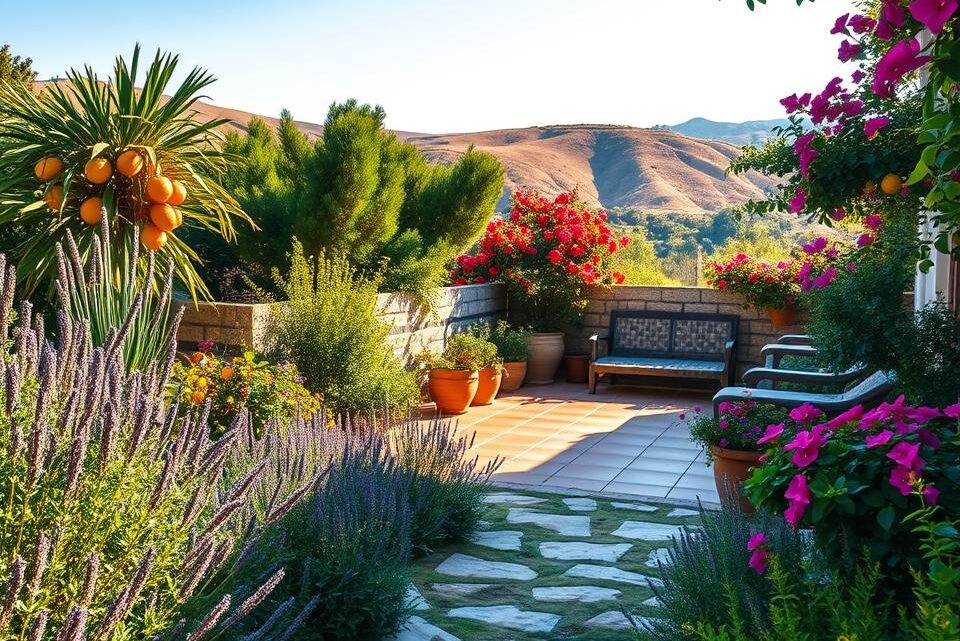
Imagine stepping into your own Mediterranean garden, surrounded by the soothing scent of herbs and the vibrant colours of exotic plants. A Mediterranean garden is not just a visually appealing outdoor space; it’s an oasis that brings the warmth and charm of the Mediterranean region right into your backyard.
You can achieve this idyllic setting by understanding the key elements that define a Mediterranean garden design. It’s about selecting the right Mediterranean plants that thrive in your local climate and arranging them in a way that creates a harmonious and inviting atmosphere.
This article will guide you through the process of cultivating a lush Mediterranean garden, providing you with practical tips and insights into the world of Mediterranean gardening.
Inhaltsverzeichnis
Key Takeaways
- Understanding the core principles of Mediterranean garden design.
- Selecting appropriate Mediterranean plants for your climate.
- Creating a harmonious and inviting garden atmosphere.
- Practical tips for maintaining a lush Mediterranean garden.
- Insights into the benefits of a Mediterranean garden.
Understanding the Mediterranean Garden Style
The Mediterranean garden style is renowned for its warm, inviting aesthetic that seamlessly blends with the natural surroundings. This style is not just about the plants; it’s a holistic approach to garden design that incorporates various elements to create a harmonious and relaxing outdoor space.
Key Characteristics of Mediterranean Gardens
Mediterranean gardens are known for their distinctive features, which include a specific colour palette and textures, as well as architectural elements and spatial organisation.
Colour Palette and Textures
The colour palette in Mediterranean gardens is typically warm and earthy, featuring terracotta, ochre, and various shades of green. The textures are often rough and natural, with an emphasis on stone, terracotta pots, and weathered wood.
Architectural elements such as arches, pergolas, and stone walls are integral to Mediterranean garden design. These features not only add structure but also help to create inviting outdoor living spaces.
Regional Variations Within Mediterranean Garden Design
The Mediterranean region encompasses a diverse range of cultures and landscapes, each contributing its unique twist to garden design. Understanding these regional variations can help you tailor your garden to your personal taste.
Spanish, Italian, Greek and French Influences
Different countries within the Mediterranean region have their distinct garden styles. For example, Spanish gardens often feature intricate tile work and Moorish influences, while Italian gardens are known for their formal, symmetrical designs.
Adapting Mediterranean Styles to British Gardens
When adapting Mediterranean garden styles to British gardens, it’s essential to consider the local climate and microclimate. You can still achieve the Mediterranean look by selecting plants that are resilient to cooler and wetter conditions, and by incorporating similar architectural elements.
Assessing Your Garden’s Potential
To successfully cultivate a Mediterranean garden, you need to understand your garden’s unique characteristics. Assessing your garden’s potential involves evaluating several key factors that will influence the success of your Mediterranean garden design.
Evaluating Your Climate and Microclimate
Understanding your local climate and microclimate is crucial. Your climate influences the types of plants that will thrive in your garden.
Identifying Sun Exposure and Wind Patterns
Observe how sunlight falls on your garden throughout the day and note the prevailing wind directions. This will help you choose plants that are suited to your garden’s conditions.
Temperature Variations and Frost Pockets
Temperature fluctuations and frost pockets can significantly affect plant survival. Identify areas that are prone to frost to protect your plants.
Analysing Your Soil Type and Drainage
Soil type and drainage play a critical role in the health of your Mediterranean garden. Mediterranean plants prefer well-draining soil.
Testing Soil pH and Structure
Conduct a soil test to determine its pH level and structure. Most Mediterranean plants thrive in slightly alkaline soils.
Assessing Natural Drainage Patterns
Observe how water drains through your garden. Poor drainage can lead to root rot in plants.
| Factor | Considerations |
|---|---|
| Climate | Temperature, sunlight, wind patterns |
| Soil Type | pH level, structure, drainage |
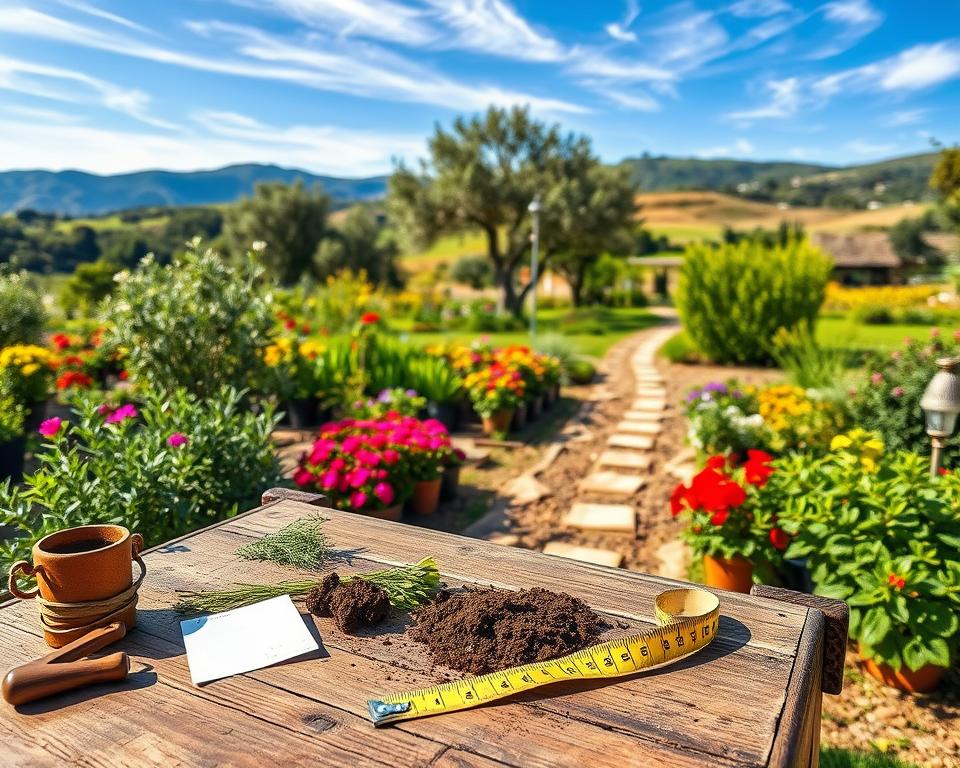
“The garden is a love song, a duet between a human being and Mother Nature.”
Understanding and working with your garden’s natural conditions is key to creating a beautiful Mediterranean garden.
Planning Your Mediterranean Garden Layout
Crafting a Mediterranean garden layout that balances beauty and practicality requires thoughtful consideration. Your garden’s layout is the foundation upon which the entire Mediterranean style is built, influencing both its aesthetic appeal and functionality.
Creating Outdoor Living Spaces
Outdoor living spaces are a hallmark of Mediterranean gardens, inviting relaxation and social interaction. To create these areas, consider how you intend to use your garden.
Designing Terraces and Seating Areas
Terraces and seating areas should be designed to take advantage of the garden’s best views and most pleasant microclimates. Use natural materials like stone or terracotta for paving to maintain the Mediterranean aesthetic.
Incorporating Outdoor Dining Zones
Outdoor dining zones are essential for al fresco meals, a characteristic feature of Mediterranean living. Position these areas to receive the desired amount of sun or shade, and consider proximity to the kitchen for convenience.
Designing for Sun and Shade
Mediterranean gardens often feature a mix of sun-drenched areas and shaded retreats. Achieving this balance requires careful planning.
Mapping Sun Patterns Throughout the Day
Observe your garden at different times to understand how sunlight affects various areas. This will help you place plants and structures appropriately.
Creating Shade with Plants and Structures
Use trees, pergolas, or other shade structures to create cool areas, especially in regions that receive intense sunlight. This not only enhances comfort but also adds visual interest.
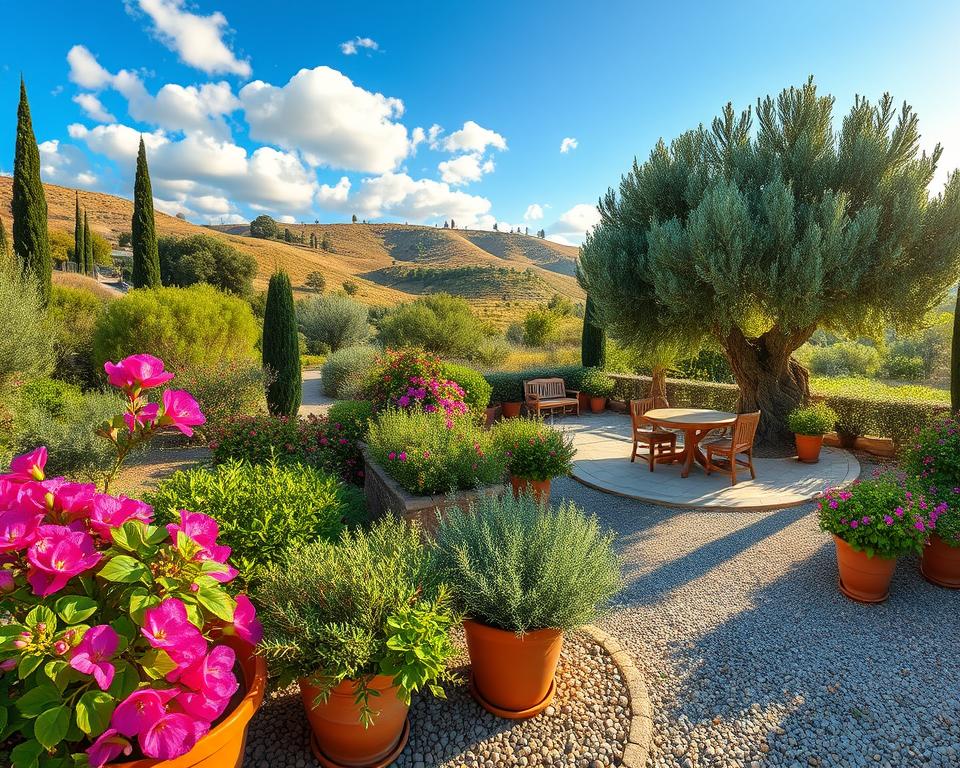
By carefully planning your Mediterranean garden layout, you can create a harmonious and inviting outdoor space that embodies the spirit of the Mediterranean style.
Preparing the Ground for Your Mediterranean Garden
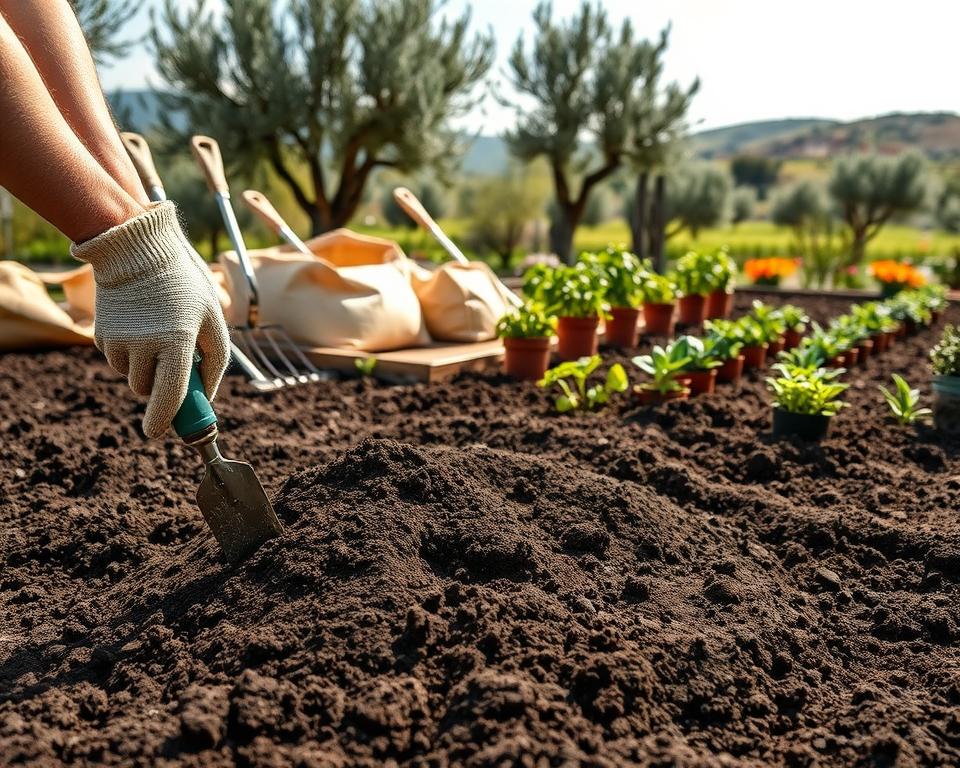
A well-prepared soil foundation is essential for a lush Mediterranean garden. Before you start planting, you need to ensure that your soil is conducive to the growth of Mediterranean plants, which typically thrive in well-drained soil with adequate nutrients.
Improving Drainage for Mediterranean Plants
Mediterranean plants are adapted to dry conditions and are susceptible to root rot if the soil is too wet. Therefore, improving drainage is crucial.
Installing Drainage Systems in Heavy Soils
If your garden has heavy clay soil, consider installing a drainage system. This can involve laying drainage pipes or creating a French drain to redirect water away from plant roots.
Creating Raised Beds for Better Drainage
Another effective method is to create raised beds. By elevating the soil, you can improve drainage and prevent waterlogging, creating a more hospitable environment for your Mediterranean plants.
Soil Amendment Techniques
Amending the soil is vital to provide your Mediterranean plants with the necessary nutrients. This can involve adding grit, sand, and organic matter to improve soil structure and fertility.
Adding Grit, Sand and Organic Matter
Incorporating grit and sand into heavy soils can significantly improve drainage. Adding organic matter like compost can enhance soil fertility and structure, benefiting your plants.
Adjusting Soil pH for Mediterranean Plants
Mediterranean plants often prefer slightly alkaline soils. Testing your soil pH and adjusting it if necessary can help create an optimal growing environment. As René Lys, a renowned horticulturist, once said,
“The right soil pH is the foundation upon which a healthy garden is built.”
By focusing on drainage and soil amendment, you can create a thriving Mediterranean garden that brings joy and beauty to your outdoor space.
How to Create a Mediterranean Garden: Step-by-Step Guide
To cultivate a lush Mediterranean garden, you need to follow a systematic approach. This involves understanding the core elements of a Mediterranean garden and implementing them effectively in your outdoor space.
Establishing the Hardscape Elements First
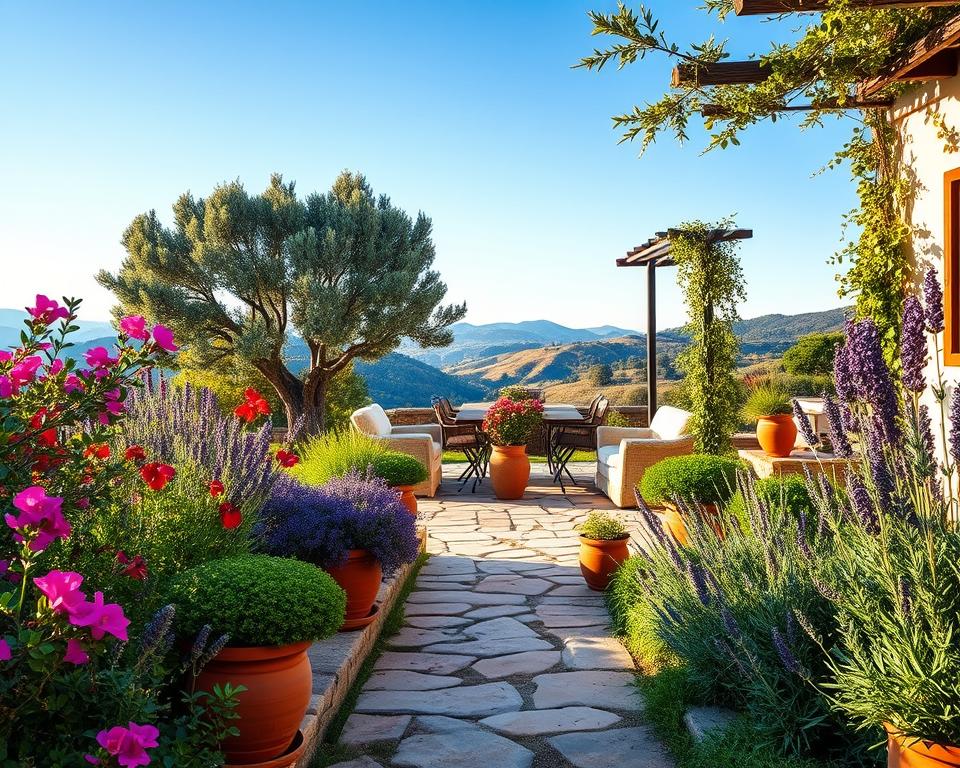
The hardscape elements form the backbone of your Mediterranean garden, providing structure and definition. These elements include paths, walls, terraces, and gravel areas, which not only add visual appeal but also help in managing the terrain.
Installing Paths, Walls and Terraces
When installing paths, walls, and terraces, consider using natural materials such as stone or brick to create a seamless integration with the surrounding landscape. Proper drainage is crucial to prevent waterlogging and ensure the longevity of these structures.
Creating Gravel Areas and Rock Gardens
Gravel areas and rock gardens are characteristic features of Mediterranean gardens, offering a low-maintenance and drought-tolerant solution. Choose gravel or rocks that complement the color and texture of your plants and other hardscape elements.
Implementing the Planting Plan
Once the hardscape elements are in place, it’s time to implement your planting plan. This involves selecting the right plants for your climate and soil type, and arranging them in a way that creates a harmonious and balanced landscape.
Planting Trees and Structural Shrubs
Trees and structural shrubs provide the framework for your Mediterranean garden, offering shade, texture, and structure. Olive trees and cypress are popular choices, but be sure to select varieties that are suitable for your local climate.
Adding Perennials and Ground Covers
Perennials and ground covers add color and vibrancy to your Mediterranean garden, filling gaps between larger plants and spilling over walls and paths. Lavender and rosemary are excellent choices, offering fragrance and beauty while being drought-tolerant.
Essential Mediterranean Trees and Shrubs
When designing a Mediterranean garden, choosing the appropriate trees and shrubs is crucial for achieving the desired aesthetic and resilience. These plants are not only beautiful but also adapted to withstand the dry summers characteristic of the Mediterranean climate.
Olive Trees and Alternatives for UK Climate
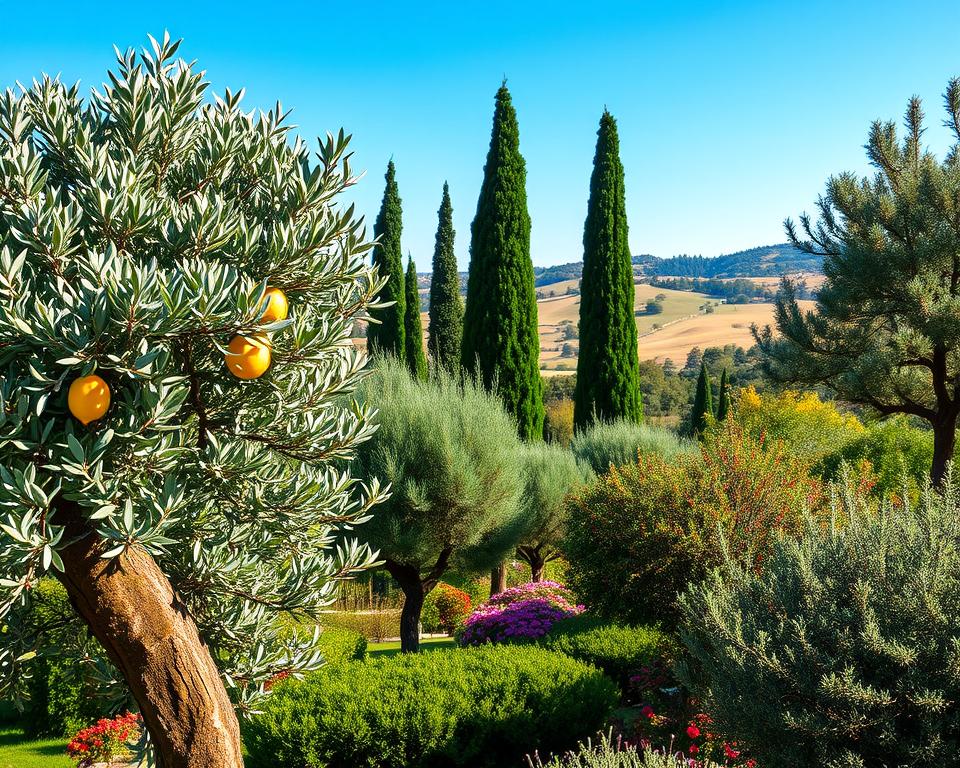
Olive trees (Olea europaea) are iconic in Mediterranean landscapes, but their sensitivity to frost can make them challenging to grow in the UK. Growing Olea europaea in British Gardens requires careful selection of a sheltered location.
Growing Olea europaea in British Gardens
To successfully grow olive trees in the UK, choose a variety known for its hardiness, such as ‘Arbequina’ or ‘Koroneiki’. Ensure the tree is planted in a sunny, well-drained spot.
Hardy Alternatives with Mediterranean Character
For those seeking alternatives to olive trees, Phillyrea latifolia and Eleagnus x ebbingei offer similar evergreen foliage with greater cold hardiness.
Cypress, Bay and Other Structural Plants
Cypress and bay trees are staples in Mediterranean gardens, providing vertical accents and fragrant leaves. They are ideal for creating structured landscapes.
Evergreen Vertical Accents for Structure
Cupressus sempervirens (Mediterranean cypress) is a classic choice for adding height and formality to your garden design.
Broadleaf Evergreens for Year-Round Interest
Laurus nobilis (bay laurel) is not only evergreen but also provides aromatic leaves for culinary use, making it a practical and attractive choice.
| Plant | Characteristics | Hardiness |
|---|---|---|
| Olea europaea | Evergreen, edible olives | Frost sensitive |
| Cupressus sempervirens | Evergreen, columnar shape | Moderately hardy |
| Laurus nobilis | Evergreen, aromatic leaves | Hardy |
Drought-Tolerant Perennials for Mediterranean Gardens
Drought-tolerant perennials are the backbone of a sustainable and beautiful Mediterranean garden. These plants not only survive but thrive in the dry conditions typical of Mediterranean climates. By incorporating a mix of aromatic plants, ornamental grasses, and flowering perennials, you can create a vibrant and resilient garden.
Lavender, Rosemary and Other Aromatic Plants
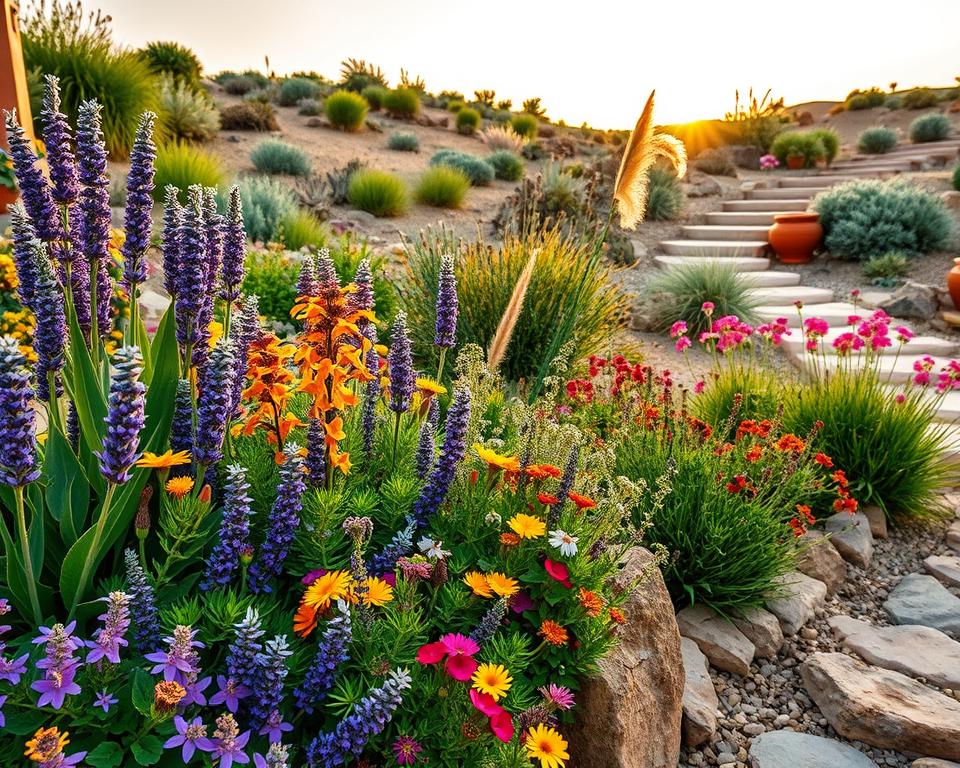
Aromatic plants are a hallmark of Mediterranean gardens, providing fragrance and beauty. Lavender and rosemary are two of the most popular choices, known for their drought tolerance and culinary uses.
Best Lavender Varieties for British Gardens
For British gardens, Hidcote and Munstead are excellent lavender varieties. They are compact, fragrant, and relatively hardy against the UK’s temperate maritime climate.
Culinary Herbs with Mediterranean Character
Besides lavender, herbs like rosemary, thyme, and oregano add a Mediterranean touch to your garden. They are perfect for cooking and can thrive in well-drained soil.
Ornamental Grasses and Flowering Perennials
In addition to aromatic plants, ornamental grasses and flowering perennials play a crucial role in Mediterranean garden design. They add movement, texture, and vibrant colors.
Drought-Resistant Flowering Plants
Plants like salvias, verbena, and yucca are not only beautiful but also highly resistant to drought. They come in a variety of colors and can add a dramatic flair to your garden.
Grasses for Movement and Texture
Ornamental grasses such as Stipa and Pennisetum provide movement and texture, creating a dynamic landscape. They are low maintenance and can tolerate dry conditions.
By carefully selecting and combining these drought-tolerant perennials, you can enjoy a lush, vibrant Mediterranean garden even in dry conditions.
Creating Gravel Gardens and Pathways
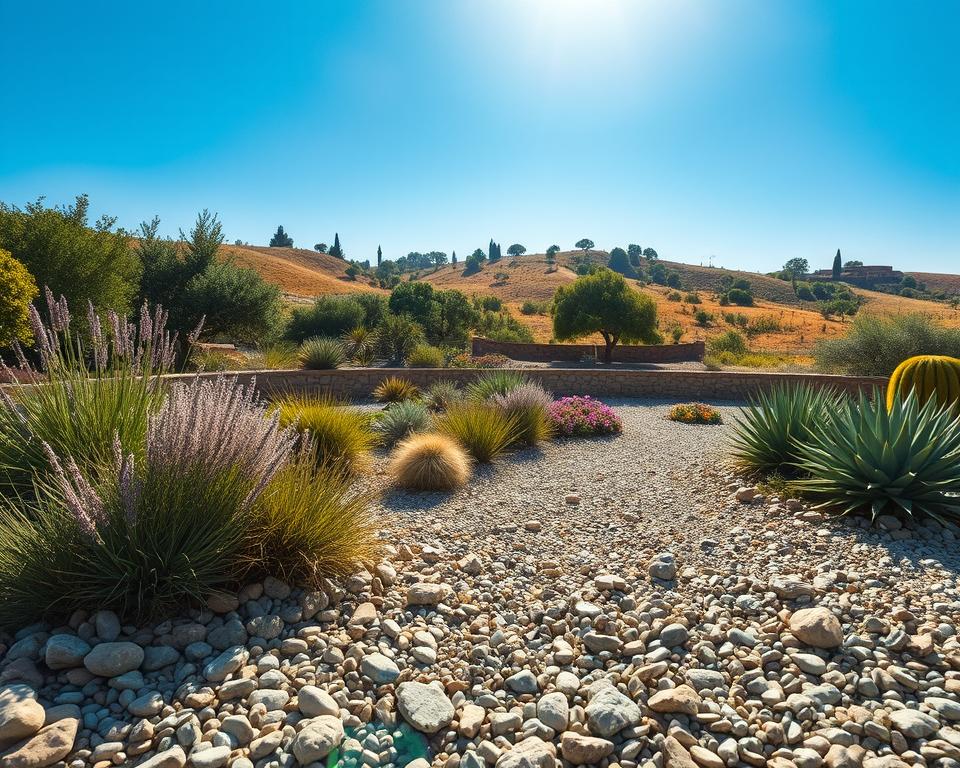
To achieve an authentic Mediterranean look in your garden, incorporating gravel gardens and pathways is essential. Gravel gardens are not only visually appealing but also offer a low-maintenance alternative to traditional garden designs. They are particularly suited to Mediterranean gardens as they complement the dry, sun-kissed aesthetic characteristic of this style.
Selecting and Installing Gravel Materials
The choice of gravel material is crucial in creating an authentic Mediterranean effect. Different types of gravel and stone can significantly impact the overall appearance of your garden.
Types of Gravel and Stone for Mediterranean Effect
For a Mediterranean look, consider using limestone, marble, or granite gravel. These materials come in various shades and can be chosen based on the colour scheme of your garden. Limestone, for instance, provides a soft, warm tone that blends well with Mediterranean plants.
Proper Installation Techniques for Longevity
To ensure the longevity of your gravel garden, proper installation is key. Start by laying a weed barrier to prevent unwanted growth. Then, spread a layer of gravel, ensuring it’s evenly distributed. Regular maintenance, such as raking, will keep the gravel looking its best.
Planting Between Stones and Gravel
One of the charms of gravel gardens is the ability to plant between the stones, adding texture and colour. Choosing the right plants is essential for a naturalistic effect.
Creeping Thymes and Low-Growing Mediterranean Plants
Creeping thymes and other low-growing Mediterranean plants are ideal for planting between gravel. They are hardy, require minimal maintenance, and release fragrant scents when walked upon.
Self-Seeding Plants for Naturalistic Effect
Incorporating self-seeding plants into your gravel garden can enhance the naturalistic effect. Plants like poppies and chamomile will spread naturally, creating a relaxed, informal atmosphere.
Water Features in Mediterranean Garden Design
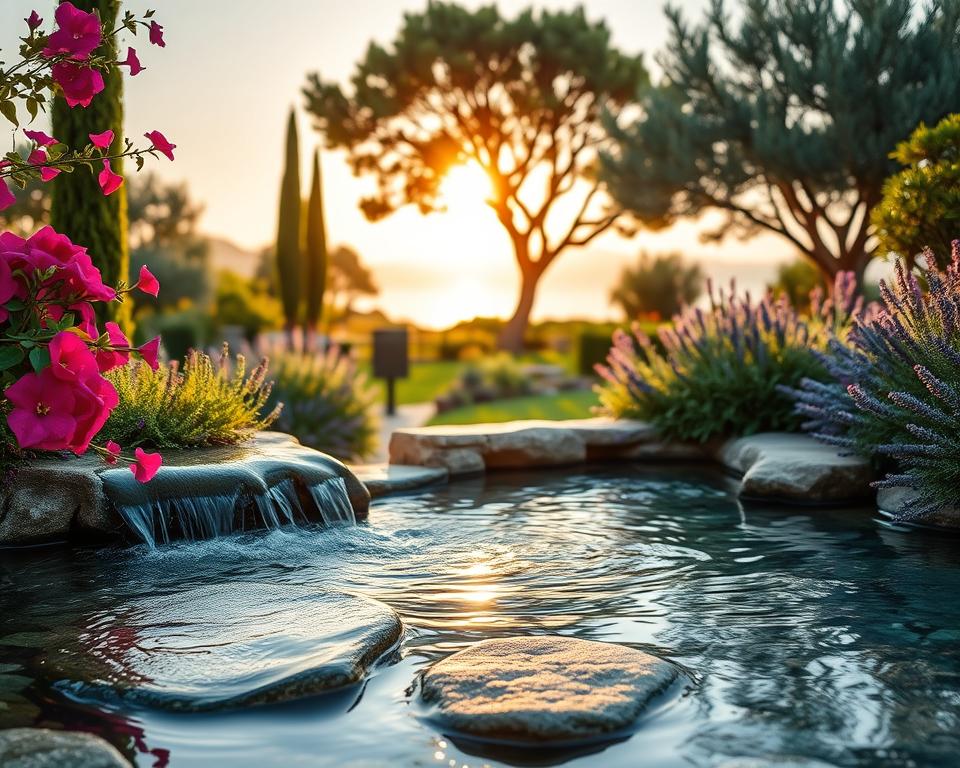
Mediterranean gardens often incorporate water features to create a sense of calm and connection to nature. These elements not only add visual appeal but also help to cool the surroundings, making your outdoor space more comfortable during warm weather.
Simple Fountains and Water Basins
Simple fountains and water basins are popular choices for Mediterranean gardens due to their elegance and ability to create a soothing atmosphere. They come in various designs, from traditional to modern styles.
Traditional Mediterranean Water Feature Styles
Traditional Mediterranean water features often draw inspiration from historical designs, such as those found in Spanish and Italian gardens. These may include intricately designed fountains and basins that reflect the cultural heritage of the region.
Installation and Maintenance Considerations
When installing a water feature, it’s crucial to consider factors like pump size, filtration systems, and energy efficiency. Regular maintenance, including cleaning and checking the water level, is essential to keep your water feature functioning properly.
Water-Efficient Irrigation Systems
In addition to aesthetic water features, efficient irrigation systems are vital for maintaining a healthy Mediterranean garden, especially in dry climates. These systems help conserve water while ensuring your plants receive the right amount of moisture.
Drip Irrigation for Mediterranean Plants
Drip irrigation is a highly effective method for watering Mediterranean plants, as it delivers water directly to the roots, reducing evaporation and runoff. This technique is particularly beneficial for plants that prefer dry conditions between waterings.
Rainwater Harvesting Techniques
Rainwater harvesting is another water-efficient strategy that involves collecting and storing rainwater for garden use. This approach not only conserves water but also reduces your reliance on mains water, making it an eco-friendly choice for your Mediterranean garden.
Mediterranean Garden Walls and Structures
In Mediterranean garden design, walls and structures play a pivotal role in defining the space and its character. These elements not only provide support and division within the garden but also contribute significantly to its aesthetic appeal.
Creating Stone Walls and Terraces
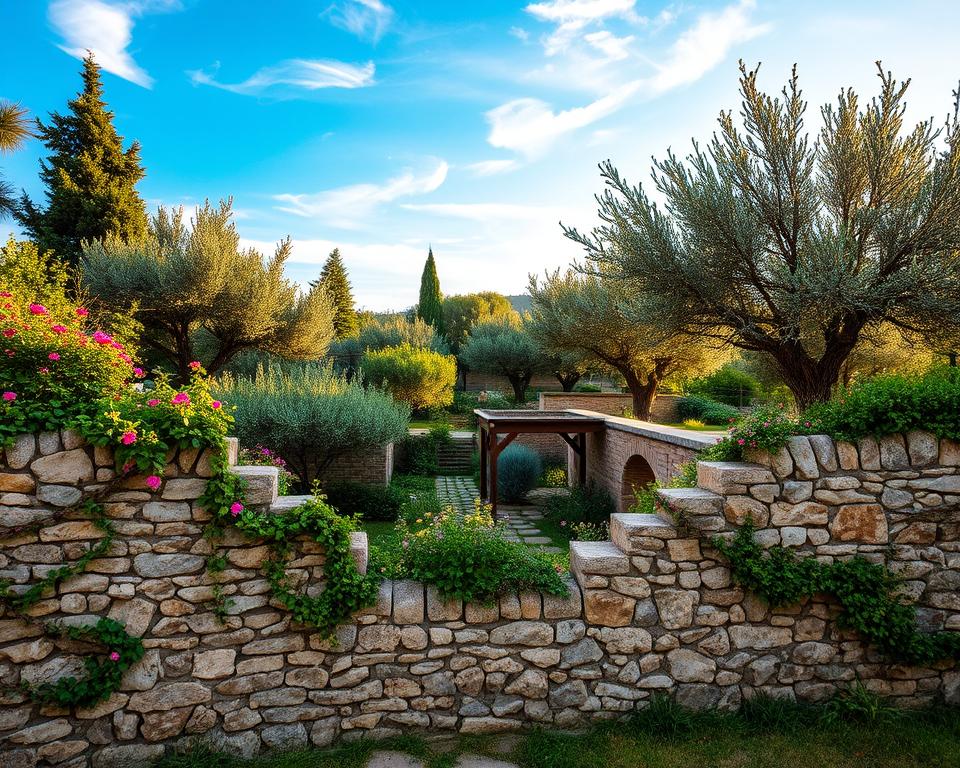
Stone walls are a hallmark of Mediterranean gardens, offering both functionality and beauty. They can be used to create terraces, which help in managing sloping land and preventing soil erosion.
Dry Stone Wall Construction Basics
Dry stone wall construction is a traditional technique that involves building walls without mortar. This method allows for water to drain through the stones, reducing the risk of erosion. To construct a dry stone wall, start by laying a foundation of larger stones, then fill in the gaps with smaller stones and gravel.
Rendered Walls and Colourwash Techniques
Rendered walls, on the other hand, are finished with a layer of mortar, which can then be colourwashed to achieve a distinctive Mediterranean look. Colourwashing involves applying a thin, translucent layer of paint to give the walls a soft, weathered appearance.
Pergolas, Arbours and Shade Structures
Pergolas, arbours, and other shade structures are essential in Mediterranean gardens, providing respite from the sun. These structures can be adorned with climbing plants, further enhancing their beauty and functionality.
Traditional and Contemporary Pergola Designs
Pergola designs range from traditional wooden structures to contemporary metal and glass constructions. The choice of design depends on the overall style of the garden and the desired level of shade and support for climbing plants.
Climbing Plants for Mediterranean Structures
Climbing plants such as bougainvillea, jasmine, and wisteria are ideal for Mediterranean structures. They provide shade, beauty, and fragrance, making the garden a more enjoyable space.
| Structure Type | Climbing Plants | Benefits |
|---|---|---|
| Pergola | Bougainvillea, Jasmine | Shade, Beauty |
| Arbour | Wisteria, Clematis | Fragrance, Aesthetic Appeal |
“The garden is a love song, a duet between a human being and Mother Nature.”
Container Gardening Mediterranean Style
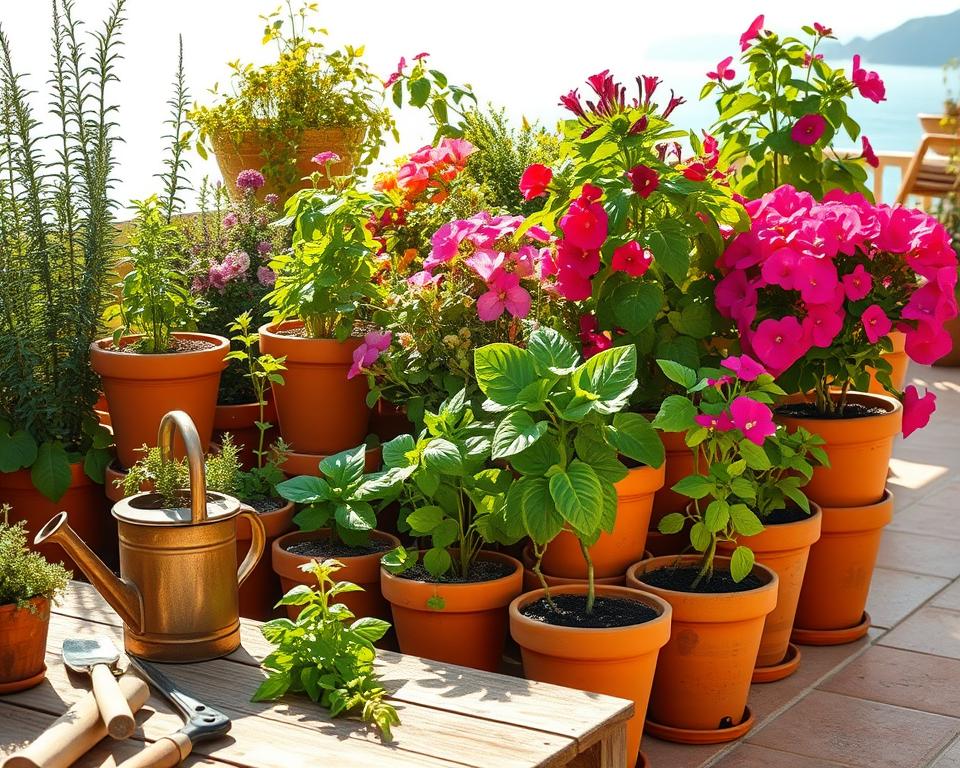
Container gardening is a versatile way to cultivate a Mediterranean-style garden, even in small spaces. This approach allows you to bring the warmth and charm of the Mediterranean region to your doorstep, using a variety of plants and stylish containers.
Terracotta Pots and Planting Combinations
Terracotta pots are a hallmark of Mediterranean gardening. Their earthy tones and rustic appearance complement the region’s characteristic flora.
Selecting Authentic Mediterranean Containers
When choosing containers, opt for terracotta pots that have a classic, timeless look. These pots are not only aesthetically pleasing but also allow for good drainage, which is essential for Mediterranean plants.
Effective Plant Groupings for Containers
Combine plants with different textures and heights to create visually appealing arrangements. For example, pair tall, statuesque plants like cypress or bay trees with lower-growing, spreading plants like thyme or rosemary.
Maintaining Container Plants in Mediterranean Gardens
To keep your container plants thriving, it’s essential to follow a regular maintenance routine.
Watering and Feeding Regimes
Water your container plants when the top inch of soil feels dry to the touch. Feed them during the growing season with a balanced, slow-release fertilizer.
Winter Protection for Container Plants
Protect your container plants from harsh winter conditions by moving them to a sheltered location or wrapping the pots with insulation.
| Plant | Watering Needs | Sunlight Requirements |
|---|---|---|
| Olive Tree | Low to Moderate | Full Sun |
| Lavender | Low | Full Sun |
| Rosemary | Moderate | Full Sun to Partial Shade |
Seasonal Maintenance of Your Mediterranean Garden
A well-maintained Mediterranean garden is a result of adapting to the changing seasons with appropriate care and attention. As you tend to your garden, you’ll find that each season brings its own set of tasks to ensure your outdoor space remains beautiful and thriving.
Spring and Summer Care
During the spring and summer months, your Mediterranean garden will require regular maintenance to flourish. This includes tasks such as pruning and deadheading, as well as strategic watering.
Pruning and Deadheading Techniques
Pruning is essential in spring to remove any dead or damaged growth from the previous winter. Use sharp, clean pruning tools to prevent spreading diseases. Deadheading, or removing spent flowers, encourages more blooms and keeps your garden looking vibrant.
Watering Strategies During Dry Periods
In the dry summer months, it’s crucial to water your Mediterranean plants efficiently. Water deeply but infrequently to encourage deep root growth, making plants more drought-resistant. Avoid watering during the hottest part of the day to minimize evaporation.
Autumn and Winter Protection
As autumn and winter approach, your Mediterranean garden needs protection from cooler, wetter conditions. This involves preparing tender plants for the colder months and performing structural maintenance.
Preparing Tender Plants for Winter
Bring tender plants under cover or mulch them well to protect from frost. Consider using a frost cloth or bringing potted plants into a greenhouse or conservatory.
Structural Maintenance in the Dormant Season
Autumn is a good time to inspect your garden’s structures, such as pergolas and walls, for any damage. Make repairs before winter to prevent further deterioration. Clean out debris from paths and around plants to prevent waterlogging.
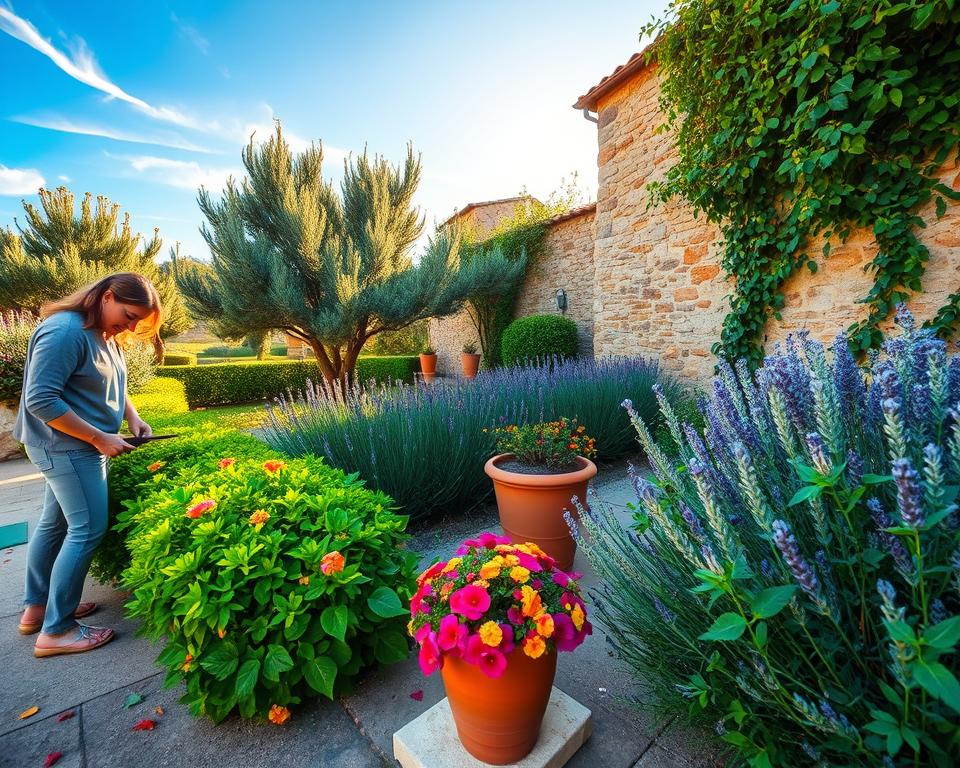
Adapting Mediterranean Gardening for British Weather
British weather can be challenging for Mediterranean gardens, but with the right strategies, you can still achieve a lush oasis. The key is to understand the local climate and adapt your gardening techniques accordingly.
Protecting Plants During Wet Winters
Wet winters can be detrimental to Mediterranean plants that are accustomed to dry conditions. To protect your plants, you need to improve drainage and select varieties that can tolerate wet conditions.
Improving Winter Drainage Solutions
To improve drainage, you can add organic matter like compost or manure to the soil. This will help to break up clay soils and improve the structure of sandy soils.
Selecting Varieties with Better Wet Tolerance
Some Mediterranean plants are more tolerant of wet conditions than others. For example, Phlomis and Salvia are good choices for wet winters.
Creating Microclimates for Tender Mediterranean Species
Creating microclimates can help to protect tender Mediterranean species from harsh weather conditions. You can achieve this by using walls and structures to retain heat and shelter plants from prevailing winds.
Using Walls and Structures for Heat Retention
Walls and structures can absorb and retain heat during the day, providing a warmer microclimate for your plants.
Sheltering Plants from Prevailing Winds
Prevailing winds can be damaging to Mediterranean plants. By sheltering them behind walls or structures, you can reduce the risk of damage.
| Plant | Wet Tolerance | Wind Tolerance |
|---|---|---|
| Phlomis | High | Medium |
| Salvia | Medium | High |
| Olive Tree | Low | Medium |
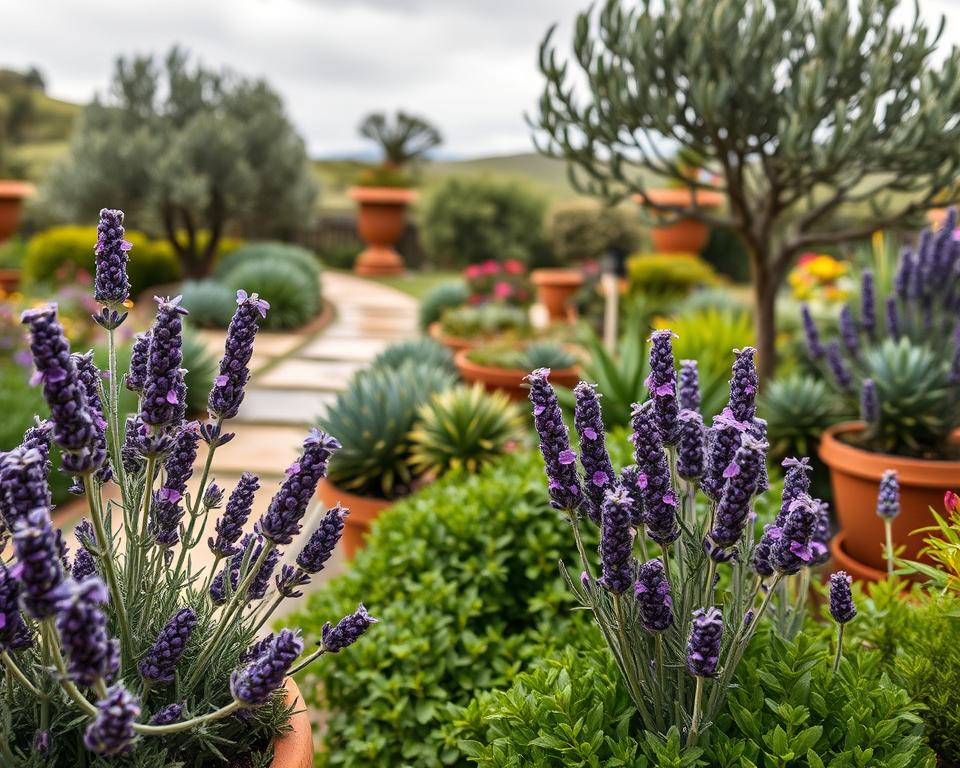
By adapting your Mediterranean gardening techniques to the British weather, you can create a thriving and beautiful garden. With the right strategies, you can protect your plants and enjoy a lush oasis all year round.
Conclusion: Enjoying Your Mediterranean Oasis
As you complete your Mediterranean garden, you’ll discover a serene oasis that invites relaxation and enjoyment. By incorporating the elements discussed, you’ve created a haven that not only reflects the beauty of the Mediterranean style but also provides a tranquil retreat from the stresses of everyday life.
Your Mediterranean oasis is designed to be enjoyed throughout the seasons. As you sit under the shade of an olive tree or stroll along a gravel pathway, surrounded by the fragrance of lavender and rosemary, you’ll appreciate the thoughtful design that has gone into creating this special space.
To fully enjoy your garden, consider how you can use it to enhance your outdoor living experience. Whether it’s hosting al fresco dinners, enjoying a morning coffee amidst the scent of blooming flowers, or simply finding a quiet spot to read, your Mediterranean garden is a place to unwind and recharge.
By embracing the Mediterranean garden style, you’ve not only created a beautiful outdoor space but also a lifestyle that celebrates the joy of outdoor living. So, take a moment to appreciate your hard work and enjoy the serenity of your Mediterranean oasis.
FAQ
What are the key characteristics of a Mediterranean garden?
Mediterranean gardens are known for their warm and inviting atmosphere, often featuring a combination of natural stone, terracotta, and lush vegetation. They typically incorporate drought-tolerant plants, such as olive trees, lavender, and rosemary, and often include architectural elements like pergolas and arbors.
How do I assess my garden’s potential for a Mediterranean garden?
To assess your garden’s potential, evaluate your climate and microclimate, soil type, and drainage. Consider factors like sun exposure, wind patterns, and temperature variations. You can also test your soil pH and structure to determine if it needs amendment.
What type of plants are suitable for a Mediterranean garden in the UK?
Choose drought-tolerant plants that thrive in well-draining soil and full sun. Popular options include olive trees, cypress, bay, lavender, and rosemary. Consider using hardy alternatives to traditional Mediterranean plants if your climate is cooler or wetter.
How do I create a gravel garden or pathway?
Select a suitable gravel material and install it properly to ensure longevity. You can also plant between stones and gravel using creeping thymes, low-growing Mediterranean plants, or self-seeding plants for a naturalistic effect.
What are the benefits of using terracotta pots in a Mediterranean garden?
Terracotta pots are a classic Mediterranean feature, adding warmth and character to your garden. They can be used to create effective planting combinations and are particularly suited to drought-tolerant plants like herbs and succulents.
How do I maintain my Mediterranean garden during the winter months?
Protect tender plants from frost and wet weather by using techniques like mulching, covering, or bringing plants under cover. Perform structural maintenance tasks like pruning and inspecting irrigation systems to ensure they’re in good working order.
Can I create a Mediterranean-style garden in a shaded area?
While Mediterranean gardens typically thrive in full sun, you can still create a Mediterranean-style garden in a shaded area by selecting shade-tolerant plants and incorporating architectural elements like pergolas or arbors to create dappled shade.
How often should I water my Mediterranean garden?
Mediterranean gardens are designed to be drought-tolerant, but they’ll still require watering during prolonged dry spells. Water plants deeply but infrequently to encourage deep root growth, and avoid overwatering, which can be detrimental to many Mediterranean plants.