Creating & Designing a Vegetable Garden
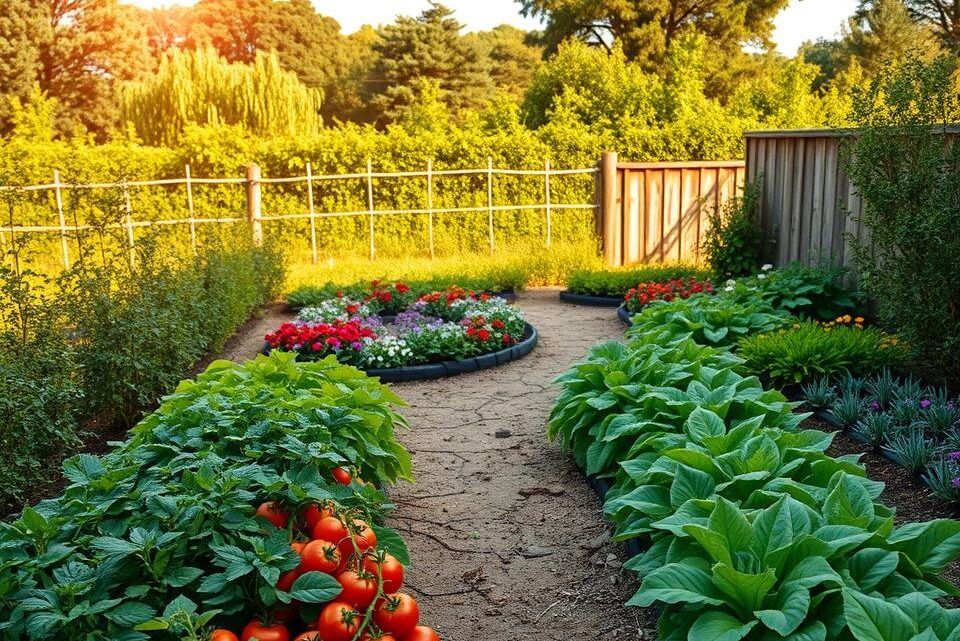
You can transform your outdoor space into a thriving oasis with a well-planned vegetable garden design. In the UK, gardening is a beloved pastime, and cultivating your own vegetables can be a rewarding experience. Not only will you have access to fresh produce, but you’ll also be able to enjoy the therapeutic benefits of gardening.
To get started, consider the key elements of a successful vegetable garden. You’ll need to choose the right location, prepare the soil, and select a mix of vegetables that will thrive in the UK climate. By following some simple gardening tips, you can create a bountiful harvest and enjoy the satisfaction of growing your own food.
Inhaltsverzeichnis
Key Takeaways
- Plan your vegetable garden carefully to ensure a successful harvest.
- Choose a location that receives sufficient sunlight and has good drainage.
- Prepare your soil with organic matter to improve its structure and fertility.
- Select a mix of vegetables that are suitable for the UK climate.
- Follow simple gardening tips to maintain your vegetable garden.
The Benefits of Growing Your Own Vegetables
Growing your own vegetables can have a significant impact on your health, wallet, and the environment. By cultivating a vegetable garden, you can enjoy a range of benefits that enhance your overall well-being.
Health and Nutritional Advantages
Growing your own vegetables allows you to harvest produce at its peak nutritional value. This means you can enjoy fresher, healthier food, rich in vitamins and minerals. The health benefits of gardening also include increased physical activity and reduced stress levels.
Environmental Impact Reduction
Sustainable gardening practices, such as growing your own vegetables, can significantly reduce your carbon footprint. By minimizing transportation needs and packaging waste, you contribute to a more environmentally friendly food system.
Cost Savings in Your Food Budget
Growing your own vegetables can be cost-effective. By producing some of your own food, you can save money on grocery bills and enjoy a more self-sufficient lifestyle. This is a key aspect of cost-effective gardening.
By understanding these benefits, you can make informed decisions about starting or maintaining a vegetable garden, enhancing your health, reducing your environmental impact, and saving money.
Assessing Your Garden Space in the UK Climate
Understanding your garden’s unique conditions is key to creating a thriving vegetable garden in the UK. Assessing your garden space effectively involves considering several factors that impact the success of your vegetable garden.
Evaluating Sunlight Exposure Throughout the Seasons
Sunlight is crucial for vegetable growth. Observe your garden throughout the day and across different seasons to determine which areas receive the most sunlight. Most vegetables require at least 6 hours of direct sunlight per day. Recording sunlight patterns will help you decide where to plant your vegetables for optimal growth.

Measuring and Maximising Available Space
Make the most of your garden by measuring and maximising the available space. Consider using vertical gardening techniques or raised beds to increase your planting area. A well-planned garden layout can significantly enhance productivity.
| Gardening Technique | Space Savings | Productivity Impact |
|---|---|---|
| Vertical Gardening | High | Increased yield per square foot |
| Raised Beds | Moderate | Better soil structure and drainage |
| Companion Planting | Low | Improved growth and pest resistance |
Understanding Your Local Microclimate
Your garden has its own microclimate, influenced by factors like proximity to buildings, wind direction, and soil type. Understanding these conditions can help you make informed decisions about vegetable selection and garden design. As noted by gardening expert, “Microclimate awareness is crucial for gardeners to adapt to their local environment.”
“The microclimate in your garden can be quite different from the general climate in your area, and understanding this can make a big difference in your gardening success.”
By assessing your garden space and understanding its unique conditions, you can create a thriving vegetable garden that makes the most of the UK climate.
Planning Your Vegetable Garden Layout
A well-planned vegetable garden layout is the foundation of a successful harvest. When designing your garden, it’s essential to consider the various techniques that can help you maximize space and productivity.
Traditional Row Planting Methods
Traditional row planting is a common method where vegetables are planted in long rows, typically 3 feet apart. This technique allows for easy access and maintenance but can be less space-efficient.
Pros and Cons: The advantages include simplicity and ease of mechanization. However, it may lead to wasted space between rows and increased soil erosion.
Raised Bed Designs for UK Weather
Raised bed gardening involves creating beds that are higher than the surrounding soil. This method improves drainage, reduces soil compaction, and allows for better soil structure.
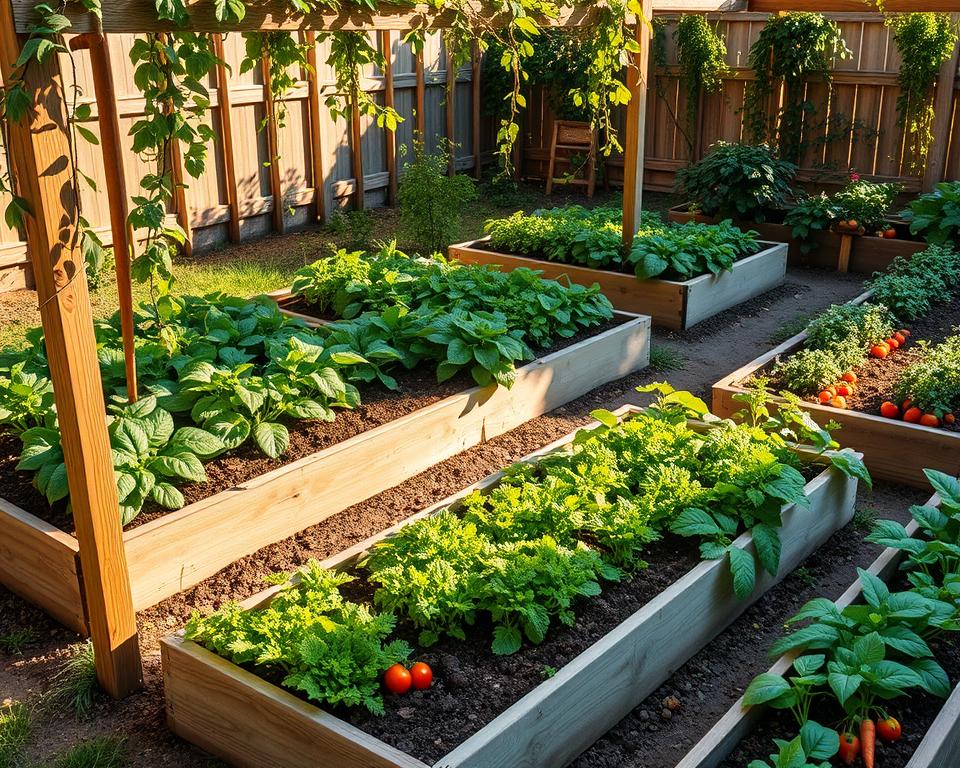
Raised beds are particularly beneficial in the UK’s wet climate as they help prevent waterlogged soil.
Square Foot Gardening Techniques
Square foot gardening is a space-efficient method where the garden bed is divided into small, square sections. This technique allows for a high density of plants and reduces waste.
“Square foot gardening is a great way to grow a lot of vegetables in a small space.” – Gardening Expert
Vertical Growing Solutions for Small Spaces
Vertical gardening involves growing plants upwards using supports or trellises. This method is ideal for small spaces and can increase yields.
| Gardening Method | Space Efficiency | Yield Potential |
|---|---|---|
| Traditional Row Planting | Low | Medium |
| Raised Bed Gardening | Medium | High |
| Square Foot Gardening | High | High |
| Vertical Gardening | Very High | Very High |
By considering these different gardening techniques, you can create a layout that suits your needs and maximizes your vegetable yield.
Essential Tools for British Vegetable Gardeners
To make the most of your vegetable garden in the UK, it’s crucial to be equipped with the essential gardening tools. Having the right equipment not only makes gardening easier but also helps in maintaining a healthy and productive garden throughout the year.
Quality Hand Tools Worth Investing In
Investing in quality hand tools is fundamental for any gardener. Essential hand tools include a sturdy trowel for planting, a garden fork for turning over soil, and a pruning knife for trimming plants. These tools are indispensable for tasks such as planting seeds, transplanting seedlings, and maintaining soil health.

Watering Equipment for Variable Weather
Watering equipment is vital for managing the UK’s unpredictable weather conditions. A reliable watering can or a hosepipe with a spray nozzle allows for efficient watering of your plants. For larger gardens, consider investing in a more sophisticated irrigation system to ensure your vegetables receive the right amount of water.
Protective Gear for Year-Round Gardening
Protective gear is often overlooked but is crucial for year-round gardening comfort and safety. This includes gardening gloves to protect your hands from thorns and dirt, and knee pads for comfort when working close to the ground. Additionally, a wide-brimmed hat and sunscreen are essential for protecting yourself from the sun.
| Tool Category | Essential Items | Benefits |
|---|---|---|
| Hand Tools | Trowel, Garden Fork, Pruning Knife | Planting, Soil Turnover, Pruning |
| Watering Equipment | Watering Can, Hosepipe, Irrigation System | Efficient Watering, Water Conservation |
| Protective Gear | Gardening Gloves, Knee Pads, Wide-Brimmed Hat | Protection from Thorns, Comfort, Sun Protection |
Soil Preparation Techniques for UK Gardens
Soil preparation is the foundation upon which a productive UK vegetable garden is built. To grow a wide variety of vegetables, you need to understand your soil type and how to improve it.

Testing and Understanding Your Soil Type
Before you start preparing your soil, it’s essential to test its type. You can do this by purchasing a soil testing kit or by sending a sample to a laboratory for analysis. Understanding your soil type – whether it’s clay, sandy, or loamy – will help you determine the best amendments to make.
Improving Heavy Clay or Sandy Soils
If you have heavy clay soil, you can improve its structure by adding organic matter like compost or well-rotted manure. For sandy soils, adding organic matter will help retain moisture and nutrients. Here are some tips to improve your soil:
- Add compost or well-rotted manure to improve soil structure
- Use perlite or vermiculite to enhance drainage in clay soils
- Incorporate peat or coconut coir to retain moisture in sandy soils
Adding Organic Matter and Compost
Adding organic matter is one of the most effective ways to improve your soil’s fertility and structure. Compost is rich in nutrients and beneficial microbes that help plants grow. You can make your own compost using kitchen scraps, leaves, and grass clippings.
pH Adjustment for Optimal Growth
Most vegetables prefer a slightly acidic to neutral soil pH (around 6.0-7.0). Testing your soil pH is crucial, as most vegetables won’t thrive in highly acidic or alkaline conditions. You can adjust your soil pH by adding lime to raise it or elemental sulfur to lower it.
By following these soil preparation techniques, you’ll be well on your way to creating a thriving vegetable garden in the UK. Remember, healthy soil is the key to a bountiful harvest.
Creating & Designing a Vegetable Garden That Thrives
The key to a thriving vegetable garden lies in its design, which encompasses various aspects including layout, plant selection, and maintenance. A well-designed garden not only enhances productivity but also makes gardening more enjoyable and sustainable.
Companion Planting for Pest Management
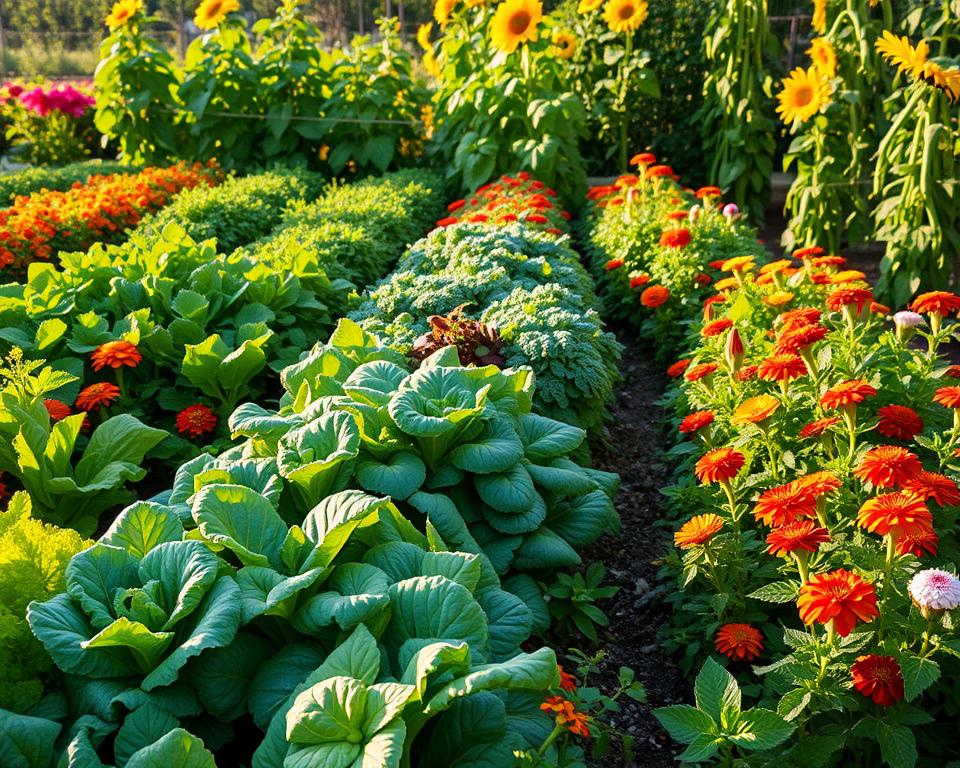
Companion planting is a technique where different plants are grown together to improve growth, health, or pest resistance. For example, planting marigolds with tomatoes can deter nematodes, while basil repels aphids and improves flavour.
Crop Rotation Planning for Soil Health
Crop rotation is essential for maintaining soil health and structure. Rotating crops helps in reducing soil-borne diseases and pests, and improves nutrient availability. A simple rotation plan can include dividing crops into groups like brassicas, root vegetables, and legumes.
Accessibility and Ergonomic Considerations
Ensuring your garden is accessible can make a significant difference, especially for those with mobility issues. Using raised beds and wide paths can improve accessibility. Ergonomic considerations, such as reducing the need for bending or stretching, can also enhance the gardening experience.
Incorporating Aesthetic Elements
Incorporating aesthetic elements can make your vegetable garden more visually appealing. This can include adding flowers, herbs, or decorative features that complement the vegetables. A beautiful garden is not just productive but also a joy to behold.
| Companion Planting Examples | Benefits |
|---|---|
| Marigolds with Tomatoes | Repels nematodes |
| Basil with Vegetables | Repels aphids, improves flavour |
| Nasturtiums with Cabbage | Repels aphids, whiteflies |
Choosing the Right Vegetables for British Growing Conditions
To make the most of your vegetable garden in the UK, it’s essential to choose varieties that are well-suited to the local climate conditions. The UK’s temperate maritime climate, with its cool winters and mild summers, allows for a wide range of vegetables to be grown throughout the year.
Cold-Hardy Vegetables for Year-Round Harvests
Cold-hardy vegetables are ideal for the UK climate, as they can withstand frost and continue to produce crops during the winter months. Examples include kale, Brussels sprouts, and root vegetables like carrots and parsnips. These vegetables are not only hardy but also provide a rich source of nutrients during the colder months.
Summer Crops That Thrive in Variable Weather
For summer crops, choose varieties that are resilient to the UK’s variable weather conditions. Tomatoes, peppers, and aubergines can thrive in the UK’s summer, especially when given protection from excessive rain and wind. Using polytunnels or greenhouses can enhance their growth.
Heritage Varieties Suited to UK Climate
Heritage varieties of vegetables are often well-suited to the UK climate and can add diversity to your garden. These varieties have been cultivated over generations and are prized for their flavour and resilience. Examples include ‘Maincrop’ potatoes and heritage carrots.
Regional Considerations from Scotland to Southern England
The UK’s regional climates vary significantly, from the cooler temperatures of Scotland to the milder winters of Southern England. Understanding your local microclimate is crucial for selecting the most appropriate vegetables. For instance, gardeners in Scotland may need to focus on hardier varieties, while those in Southern England can grow a wider range of crops.
| Region | Recommended Vegetables |
|---|---|
| Scotland | Kale, Brussels Sprouts, Root Vegetables |
| Southern England | Tomatoes, Peppers, Aubergines, Maincrop Potatoes |
Starting Seeds Indoors vs Direct Sowing in British Gardens
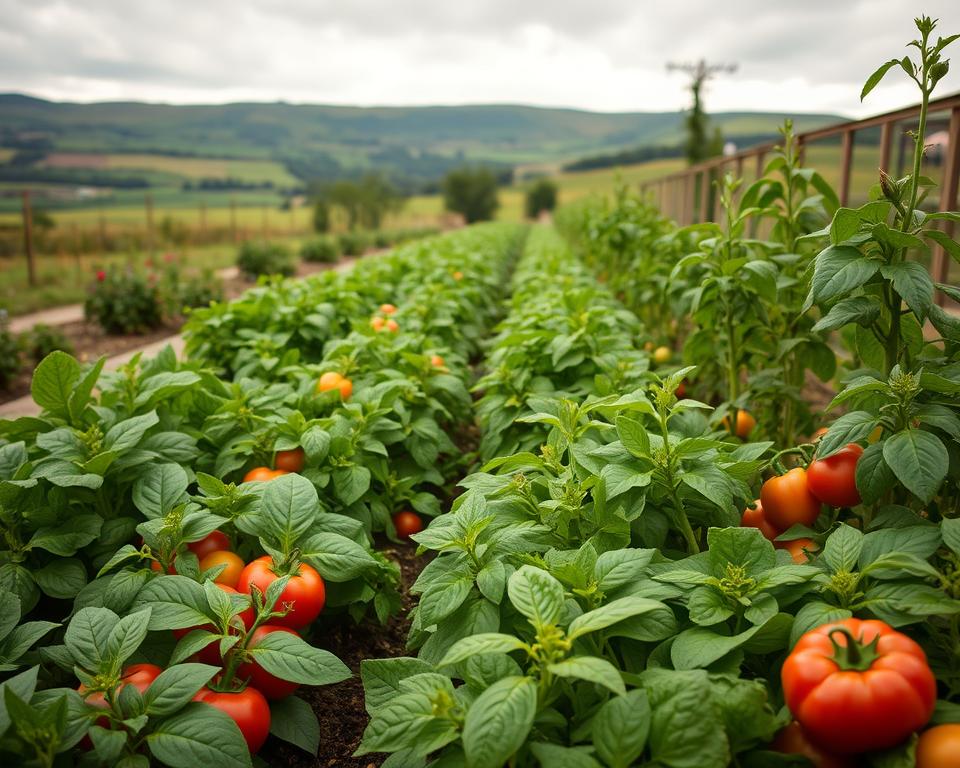
When it comes to growing vegetables in the UK, one of the first decisions you’ll face is whether to start seeds indoors or sow them directly in the garden. Both methods have their advantages and are suited to different types of crops and gardening conditions.
Benefits of Starting Seeds Indoors in the UK Climate
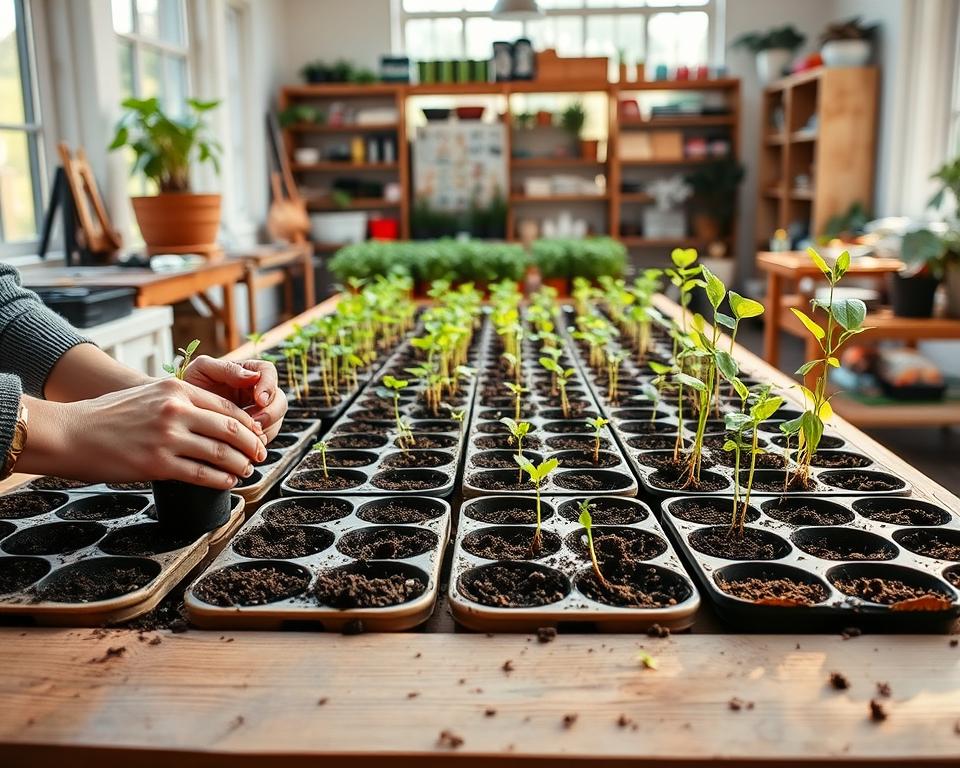
Starting seeds indoors gives you a head start on the growing season, allowing for earlier harvests. This method is particularly beneficial in the UK’s cooler spring temperatures, as it provides young seedlings with a protected environment to establish themselves before being transplanted outside. Vegetables like tomatoes, peppers, and aubergines benefit significantly from indoor starting, as they require a longer growing season.
Direct Sowing Advantages for Certain Crops
Direct sowing is more suitable for crops that don’t transplant well, such as root vegetables like carrots and beetroot. Direct sowing also reduces the risk of transplant shock, which can occur when seedlings are moved from indoor pots to outdoor soil. This method is straightforward and eliminates the need for indoor seed trays and subsequent transplanting.
Month-by-Month Sowing Guide for British Gardeners
A month-by-month guide can help you plan your sowing schedule. For instance, in January and February, you can start seeds indoors for early spring crops like lettuce and spinach. March is ideal for sowing seeds directly for peas and broad beans. As the weather warms, April and May are good times for direct sowing of many summer crops, while June and July are better for sowing heat-loving plants directly.
By understanding the benefits of both starting seeds indoors and direct sowing, and by following a month-by-month sowing guide, you can optimize your vegetable garden’s productivity in the UK climate.
Building Raised Beds and Containers for Year-Round Growing
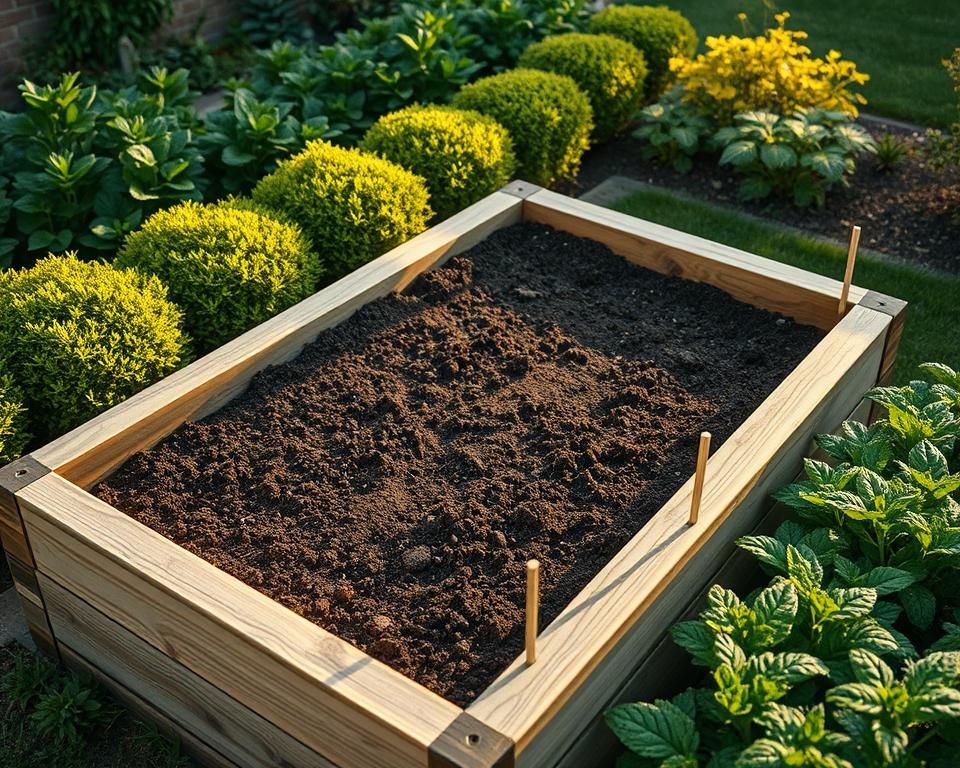
Raised beds and containers offer a versatile solution for gardeners looking to grow vegetables year-round in the British climate. By elevating your garden, you can improve drainage, reduce soil compaction, and extend the growing season.
Weather-Resistant Materials Selection
When building raised beds, selecting the right materials is crucial for durability and performance. Weather-resistant woods like cedar or recycled plastic are excellent choices as they withstand the UK’s variable weather conditions.
Construction Methods for Longevity
The construction method significantly impacts the longevity of your raised beds. Ensure that the corners are securely fastened and the structure is level to prevent soil erosion. Using a bottom layer of landscape fabric can also help prevent weeds from growing up into the bed.
Optimal Soil Mixes for Raised Beds
The soil mix used in raised beds is critical for plant health. A mix of compost, well-rotted manure, and topsoil provides a nutrient-rich environment for vegetables. The ideal mix should retain moisture but also drain well to prevent waterlogged soil.
| Material | Durability | Cost |
|---|---|---|
| Cedar Wood | High | Medium |
| Recycled Plastic | Very High | High |
| Pressure-Treated Wood | High | Low |
When choosing materials and constructing raised beds, consider both the cost and the durability to ensure your investment lasts for years to come.
Efficient Irrigation Systems for British Vegetable Gardens
To maximize your vegetable garden’s potential, it’s essential to explore efficient irrigation methods that conserve water and support plant growth. The UK’s variable climate means that gardeners must be adaptable and informed about the best irrigation practices.
Drip Irrigation for Water Conservation
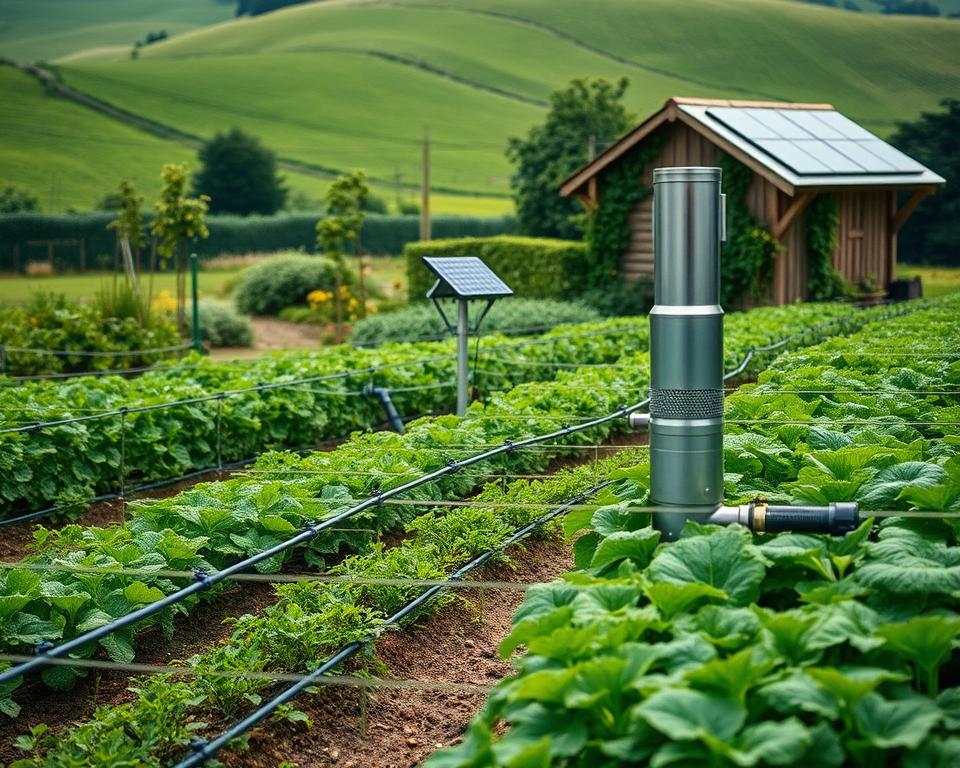
Drip irrigation systems deliver water directly to the roots of plants, reducing evaporation and runoff. This method is particularly effective in the UK’s often wet and cool climate, as it minimizes water waste.
Soaker Hoses and Their Benefits
Soaker hoses are another efficient irrigation solution, allowing water to seep slowly into the soil. They are easy to install and can be particularly beneficial for gardens with heavy clay soils common in many parts of the UK.
Rainwater Harvesting Systems
Implementing a rainwater harvesting system can significantly reduce your garden’s reliance on mains water. By collecting and storing rainwater, you can irrigate your vegetables with naturally soft water that’s free from additives like chlorine.
Watering Schedules for Different Seasons
Adjusting your watering schedule according to the season is crucial. During the warmer months, vegetables may require more frequent watering, while in cooler, wetter periods, less irrigation may be needed.
| Season | Watering Frequency | Irrigation Tips |
|---|---|---|
| Spring | Moderate | Start with drip irrigation or soaker hoses |
| Summer | High | Water early morning or late evening |
| Autumn | Low to Moderate | Reduce frequency as temperatures drop |
| Winter | Low | Protect plants from frost, minimal watering |
Natural and Organic Pest Control Methods
Organic pest control is crucial for a thriving vegetable garden, and there are several natural methods you can employ. By adopting these techniques, you’ll not only protect your crops but also contribute to a healthier environment.
Encouraging Beneficial Insects
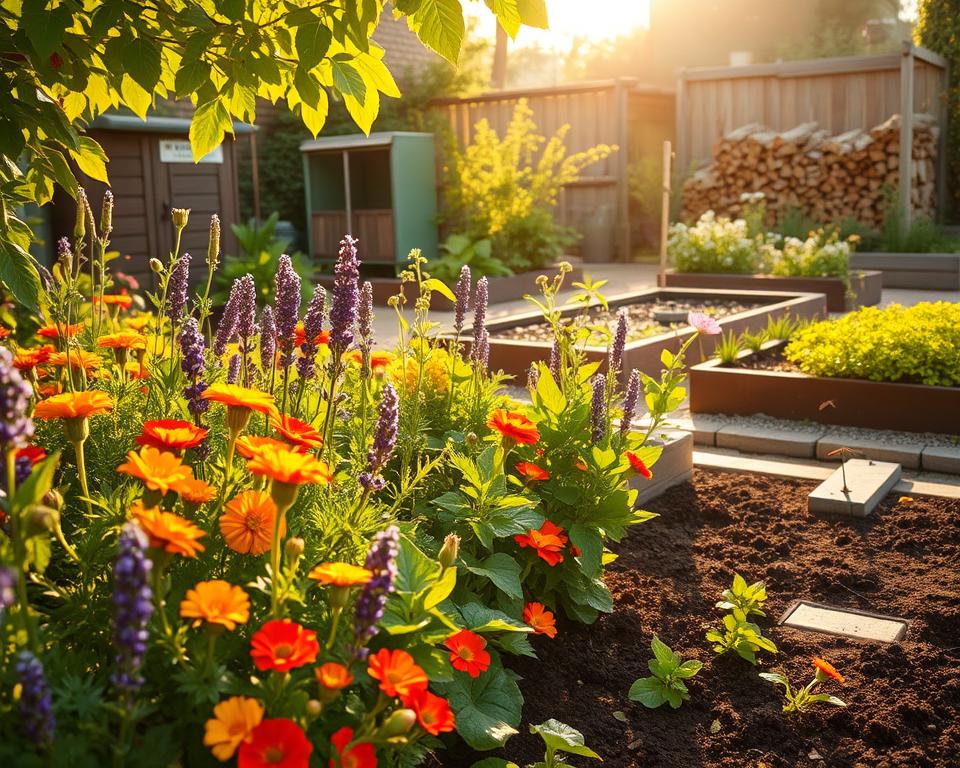
One of the most effective ways to control pests organically is by encouraging beneficial insects in your garden. Ladybugs and lacewings are natural predators of aphids and other pests. Planting a diverse range of flowers, such as marigolds and cosmos, can attract these beneficial insects.
You can also create a welcoming environment by providing shelter and food sources for these helpful creatures. For instance, planting herbs like dill and fennel can attract beneficial wasps that prey on pests.
Physical Barriers Against Common UK Pests
Using physical barriers is another effective method for controlling pests in your UK vegetable garden. Fleece covers can protect young plants from frost and pests like slugs and snails. You can also use copper tape around pots and raised beds, as slugs and snails don’t like to cross over copper.
Fine mesh or fine netting can be used to cover plants to prevent aphids, whiteflies, and other flying pests from reaching them. This method is particularly effective for protecting brassicas from cabbage moths.
Homemade Organic Sprays and Solutions
Creating your own organic sprays can be an effective way to control pests without using commercial chemicals. A simple mixture of water and mild dish soap can be used to control aphids and other soft-bodied pests.
Another effective homemade solution is a garlic spray. Blend garlic cloves with water, let it steep, and then strain it before spraying it on affected plants. This can deter a wide range of pests.
Companion Plants for Integrated Pest Management
Companion planting is a traditional method used for centuries to manage pests. Certain plants, when grown together, can deter pests or attract beneficial insects. For example, planting marigolds with tomatoes can deter nematodes, while basil planted with tomatoes can improve their flavor and repel pests.
By incorporating these natural and organic pest control methods into your gardening routine, you can maintain a healthy and productive vegetable garden without resorting to chemical pesticides.
Seasonal Maintenance Tasks for UK Vegetable Gardens
Maintaining a thriving vegetable garden in the UK climate means adapting to the changing seasons. Each season brings its own set of tasks to ensure your garden remains healthy and productive.
Spring Preparations and Early Plantings
As spring arrives, it’s time to start preparing your garden for the new growing season. Begin by clearing away any debris that may have accumulated over winter. Check your soil to determine if it needs any adjustments before planting. Early spring is an ideal time to sow seeds indoors for plants like tomatoes and peppers.
As the weather warms up, you can start direct sowing in the garden. Consider using cold frames or cloches to protect young plants from late frosts.
Summer Care and Succession Sowing
During the summer months, your vegetable garden will require regular maintenance. Ensure that your plants are well-watered during dry spells, and consider using drip irrigation to conserve water. Summer is also the time for succession sowing, where you plant seeds at intervals to ensure a continuous harvest.
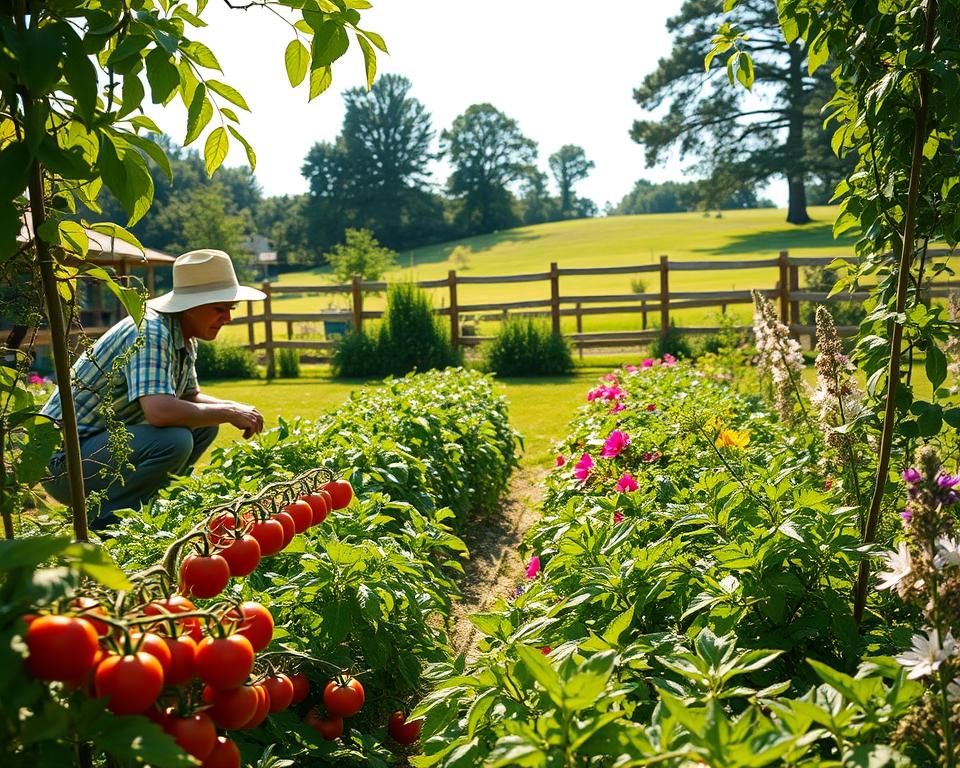
Keep an eye out for pests and diseases, and take action promptly if you notice any issues.
Autumn Activities and Soil Protection
As autumn approaches, start thinking about how to protect your soil over the coming winter. Add organic matter to the soil to improve its structure and fertility. Clear away any remaining crops and dispose of any diseased material.
Consider planting cover crops to protect the soil from erosion and improve its health.
Winter Tasks and Planning for Next Season
Winter is a quiet time in the garden, but there are still tasks to be done. Check your garden infrastructure, such as fences and supports, and make any necessary repairs. Use the winter months to plan for the next growing season, ordering seeds and making a garden plan.
Consider attending local gardening events or workshops to learn new skills and stay up-to-date with the latest gardening advice.
Extending the Growing Season in the British Climate
To make the most of your vegetable garden in the UK, consider methods to extend the growing season. By using protective structures, you can enjoy a longer harvest period and grow a wider variety of vegetables.
Cold Frames for Early Spring and Late Autumn
Cold frames are an excellent way to start seedlings early in the spring or extend the harvest into late autumn. They work by trapping sunlight and protecting plants from harsh weather. You can build or purchase cold frames, and they can be used for a variety of crops, including lettuce, spinach, and radishes.
Polytunnels for Year-Round Growing
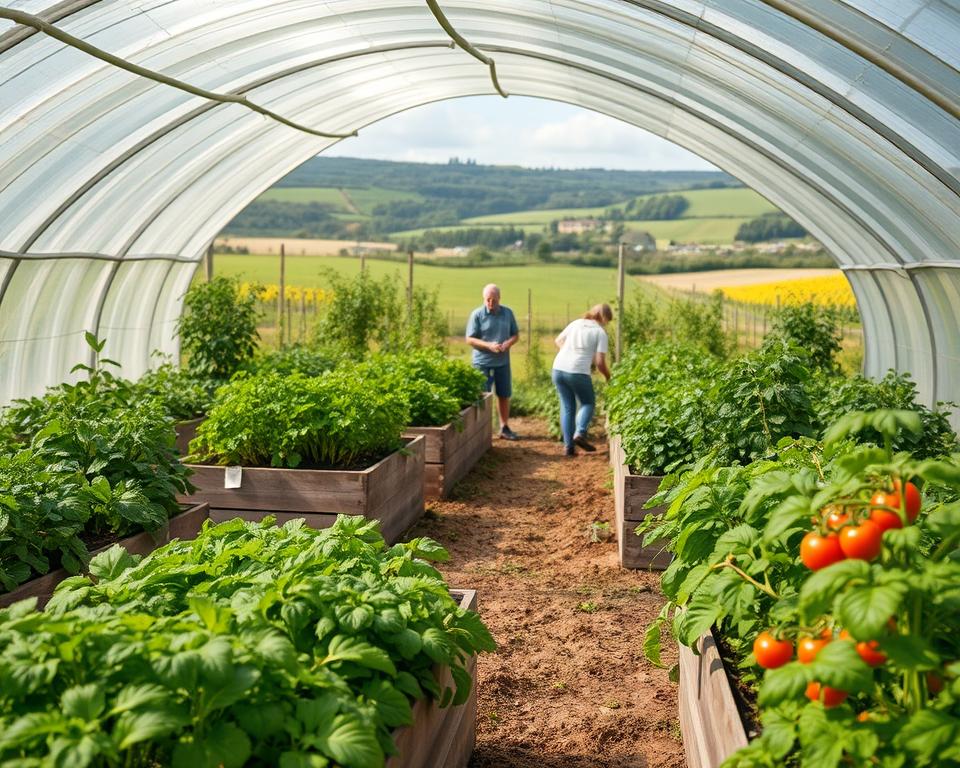
Polytunnels offer more extensive protection than cold frames and can be used for year-round growing. They provide a stable environment, shielding plants from wind, frost, and excessive rain. This makes them ideal for growing tender crops like tomatoes and peppers even in the coldest months.
Cloches and Row Covers for Frost Protection
Cloches and row covers are simple, effective methods for protecting individual plants or rows from frost. They can be made from various materials, including plastic, glass, or fabric. These covers help to trap warmth and prevent damage from light frosts, allowing you to grow sensitive crops like French beans earlier in the season.
Greenhouse Integration and Management
Greenhouses provide the ultimate protection for your vegetables, offering a controlled environment that can be heated and ventilated. By integrating a greenhouse into your garden, you can grow a wide range of crops year-round, from cucumbers to exotic herbs. Effective management involves maintaining optimal temperatures, humidity, and light levels.
Harvesting and Storing Your Homegrown Produce
To enjoy your homegrown vegetables throughout the year, it’s essential to harvest them at the right time and store them properly. Harvesting at the optimal time ensures maximum flavour and nutritional value, while proper storage techniques help maintain the quality of your produce for as long as possible.
Optimal Harvesting Times for Maximum Flavour
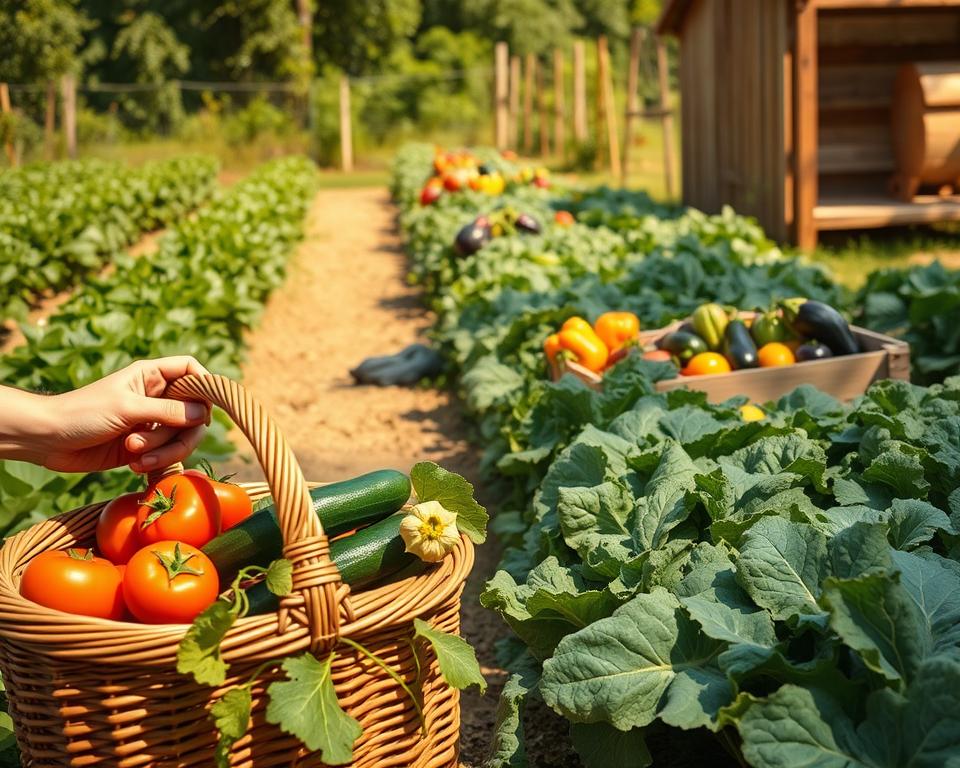
Harvesting your vegetables at the right time is crucial. For instance, leafy greens like lettuce and spinach are best picked in the morning, after the dew has dried but before the heat of the day. Tomatoes and courgettes should be harvested when they are firm and have reached their full colour.
Proper Storage Techniques for Different Vegetables
Different vegetables require different storage techniques. Here’s a comparison of how to store some common homegrown vegetables:
| Vegetable | Storage Method | Storage Duration |
|---|---|---|
| Carrots | Cool, dark place or refrigerator | Several weeks to months |
| Potatoes | Cool, dark place | Several months |
| Onions | Cool, dry, well-ventilated area | Several months |
| Leafy Greens | Refrigerator, wrapped in damp cloth | Up to a week |
Traditional British Preserving Methods
Preserving your harvest through traditional British methods like pickling, freezing, and jam-making allows you to enjoy your homegrown produce year-round. Pickling involves soaking vegetables in a brine solution, while freezing requires blanching vegetables before storing them at very low temperatures.
Conclusion
You now have a comprehensive guide to creating and designing a thriving vegetable garden in the UK. By following the vegetable gardening tips outlined in this article, you can enjoy a bountiful harvest of fresh, healthy produce.
From assessing your garden space and planning your layout to preparing your soil and maintaining your garden throughout the seasons, we’ve covered the essential steps to help you succeed. By applying these principles, you’ll be well on your way to growing a productive and sustainable vegetable garden.
As you continue on your gardening journey, remember to stay flexible and adapt to the unique conditions of your garden. With patience, practice, and persistence, you’ll be enjoying the fruits of your labor in no time. This summary provides a valuable resource to help you review and refine your approach to vegetable gardening.
FAQ
What are the benefits of growing my own vegetables in the UK?
Growing your own vegetables in the UK provides numerous benefits, including access to fresh, nutritious produce, reduced carbon footprint from transportation, and cost savings on your grocery bills. You can also choose to grow heritage varieties suited to the UK climate.
How do I assess my garden space for vegetable gardening in the UK climate?
To assess your garden space, evaluate the sunlight exposure throughout the seasons, measure and maximise the available space, and understand your local microclimate. This will help you make the most of your garden and choose the right vegetables for your conditions.
What are the best methods for planning a vegetable garden layout?
You can choose from various methods, including traditional row planting, raised bed designs, square foot gardening, and vertical growing solutions. Each method has its pros and cons, and the best choice will depend on your available space, soil type, and personal preference.
What essential tools do I need for vegetable gardening in the UK?
Essential tools for UK vegetable gardeners include quality hand tools, such as trowels and pruners, watering equipment like watering cans or hoses, and protective gear, including gloves and knee pads. You may also consider investing in a garden fork, rake, and hoe.
How do I prepare my soil for vegetable gardening?
To prepare your soil, test and understand your soil type, improve its structure if necessary, add organic matter and compost, and adjust the pH levels for optimal growth. This will help create a fertile and supportive environment for your vegetables.
What are some effective natural and organic pest control methods for my vegetable garden?
You can try encouraging beneficial insects, using physical barriers, making homemade organic sprays, and companion planting to manage pests. These methods can be effective and environmentally friendly alternatives to chemical pesticides.
How can I extend the growing season in my UK vegetable garden?
To extend the growing season, consider using cold frames, polytunnels, cloches, or row covers to protect your crops from frost and harsh weather. You can also integrate a greenhouse into your garden for year-round growing.
What are the best practices for harvesting and storing my homegrown produce?
To enjoy your homegrown produce at its best, harvest vegetables at the optimal time, store them properly, and consider traditional British preserving methods, such as freezing, pickling, or jam-making, to enjoy your crops throughout the year.
Can I grow vegetables year-round in the UK?
Yes, with the right techniques and planning, you can grow vegetables year-round in the UK. Choose cold-hardy varieties, use protective coverings, and make the most of your garden’s microclimate to enjoy a continuous harvest.
How do I choose the right vegetables for my UK garden?
Select vegetables that are well-suited to the UK climate, considering factors like hardiness, seasonal variations, and regional differences. You can also explore heritage varieties that have been grown in the UK for generations.