How to create and design a garden path

A well-designed garden path can elevate the aesthetic of your outdoor space, providing a clear route through your garden while adding visual interest. Whether you’re looking to enhance your pathway landscaping or simply create a more inviting atmosphere, a garden path is a great place to start.
When planning your garden, it’s essential to consider the role that a garden path will play in your overall garden design. A thoughtfully designed path can guide visitors through your garden, highlighting key features and creating a sense of journey.
Inhaltsverzeichnis
Key Takeaways
- Understand the role of a garden path in enhancing your outdoor space.
- Consider the style and material that suits your garden’s aesthetic.
- Plan your path to guide visitors through key features of your garden.
- Think about the maintenance requirements of your chosen path material.
- Ensure your garden path complements your overall garden design.
The Importance of Garden Paths in Landscape Design
Well-designed garden paths are essential for both functionality and aesthetics. They not only guide visitors through your garden but also enhance its overall beauty and structure.
Functional Benefits of Garden Paths
Garden paths serve several practical purposes. They provide a clear route through the garden, making it easier to navigate and enjoy.
Practical Access Throughout the Garden
A well-planned path ensures that you can access all areas of your garden comfortably. This is particularly important for maintenance tasks, such as pruning and watering.
Protection of Plants and Lawn Areas
By directing foot traffic along specific routes, garden paths help protect sensitive plants and lawn areas from damage. This can reduce the need for costly repairs and maintenance.
Aesthetic Value in Garden Design
In addition to their practical benefits, garden paths also play a crucial role in the aesthetic appeal of your garden.
Creating Visual Flow and Interest
A thoughtfully designed path can create a sense of visual flow, drawing the eye through the garden and highlighting its most attractive features. As the landscape designer, Piet Oudolf, once said,
“A path is a way of guiding the visitor through the garden, creating a narrative.”
Defining Garden Spaces and Zones
Garden paths can also be used to define different areas within the garden, such as a seating area or a herb garden. This helps to create a sense of structure and organisation.
| Path Material | Aesthetic Appeal | Maintenance Level |
|---|---|---|
| Natural Stone | High | Low |
| Gravel | Medium | Medium |
| Brick Pavers | High | Low |
Planning Your Garden Path Project
To create a beautiful and functional garden path, you need to start with a solid plan. Effective garden planning is crucial for a successful project.
Assessing Your Garden Space
Begin by assessing your garden space to understand its dimensions and layout. This step is vital for determining the best route for your path.
Measuring and Mapping Your Garden
Measure your garden’s dimensions and create a map to scale. You can use a tape measure and graph paper or utilize digital tools for more precision. Accurate garden mapping helps in visualizing the path’s placement.
Identifying Problem Areas and Opportunities
Identify any problem areas, such as slopes or drainage issues, and opportunities, like existing features you can incorporate into your path design.
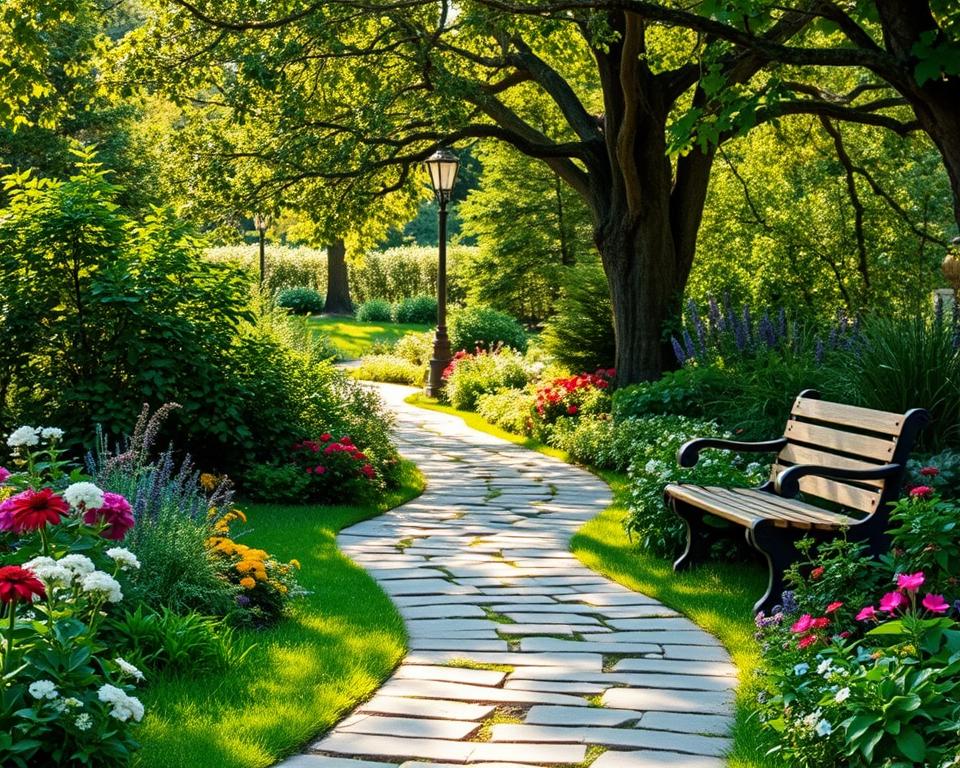
Determining Path Purpose and Traffic Flow
Consider the purpose of your garden path and how it will direct traffic flow through your garden. Think about where you want to lead visitors and how to create a natural flow.
Creating a Design Sketch
With your garden mapped and purpose defined, create a design sketch. You can use traditional methods or modern digital tools for this step.
Using Garden Design Software and Apps
Utilize garden design software or apps to create a digital plan. These tools offer features like drag-and-drop functionality and 3D visualization, making it easier to experiment with different path designs.
Hand-Drawing Your Path Plans
Alternatively, hand-drawing your path plans can be a more personal and creative approach. Sketch your design on graph paper, considering the scale and proportions.
By following these steps, you’ll be well on your way to creating a well-planned garden path that enhances your outdoor space.
Different Types of Garden Paths
The type of garden path you choose can significantly impact the overall aesthetic of your outdoor space. Garden paths come in various styles, each serving a unique purpose and contributing to the garden’s overall design.
Formal vs. Informal Paths
Formal paths are typically straight and symmetrical, often made from materials like stone or brick. They are ideal for creating a sense of order and structure in your garden. Informal paths, on the other hand, are more relaxed and meandering, often using natural materials like gravel or wood chips.
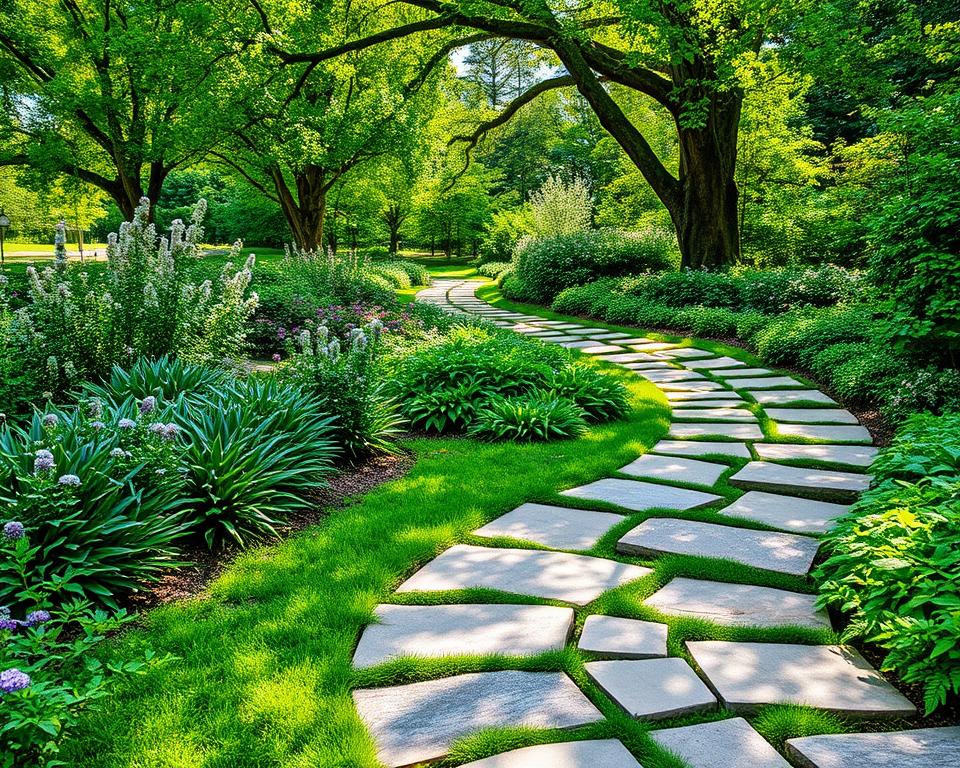
Straight vs. Curved Designs
Straight paths are direct and purposeful, leading visitors to specific areas of the garden. Curved paths, by contrast, create a sense of journey and discovery, encouraging exploration of the garden. The choice between straight and curved designs depends on your garden’s layout and the desired atmosphere.
Connecting Different Garden Areas
Garden paths can serve as connectors between various areas of your garden, enhancing both functionality and aesthetics. They can link different features, creating a cohesive and inviting outdoor space.
Linking Patios and Seating Areas
A well-designed path can seamlessly connect your patio or seating area to other parts of the garden, creating a smooth transition and encouraging movement through the space.
Creating Journeys Through Planting Beds
Paths can be used to guide visitors through planting beds, showcasing your garden’s flora and creating an engaging experience.
Practical Paths to Utility Areas
In addition to their aesthetic value, paths can also provide practical access to utility areas, such as sheds or compost bins, making it easier to maintain your garden.
| Path Type | Description | Ideal Use |
|---|---|---|
| Formal | Straight, symmetrical, often made from stone or brick | Creating a sense of order and structure |
| Informal | Meandering, using natural materials like gravel or wood chips | Relaxed, casual garden atmosphere |
| Straight | Direct and purposeful | Leading to specific garden features |
| Curved | Creates a sense of journey and discovery | Encouraging exploration of the garden |
Choosing the Right Materials for Your Garden Path
Selecting the ideal materials for your garden path is a crucial decision that impacts both the aesthetic appeal and functionality of your outdoor space. The right materials can enhance your garden’s beauty, ensure durability, and reduce maintenance needs.
Natural Stone Options
Natural stone is a popular choice for garden paths due to its durability and timeless appeal. It comes in various types, each with its unique characteristics.
British Limestone and Sandstone
British limestone and sandstone are excellent options for garden paths. They are locally sourced, which reduces transportation costs and environmental impact. Limestone is particularly durable and can withstand heavy foot traffic, while sandstone offers a warm, earthy tone that complements many garden styles.
Slate and Granite Considerations
Slate and granite are other natural stone options that offer distinct benefits. Slate is known for its dark, rich color and is often used in formal garden designs. Granite, on the other hand, is highly durable and resistant to weathering, making it suitable for high-traffic areas.
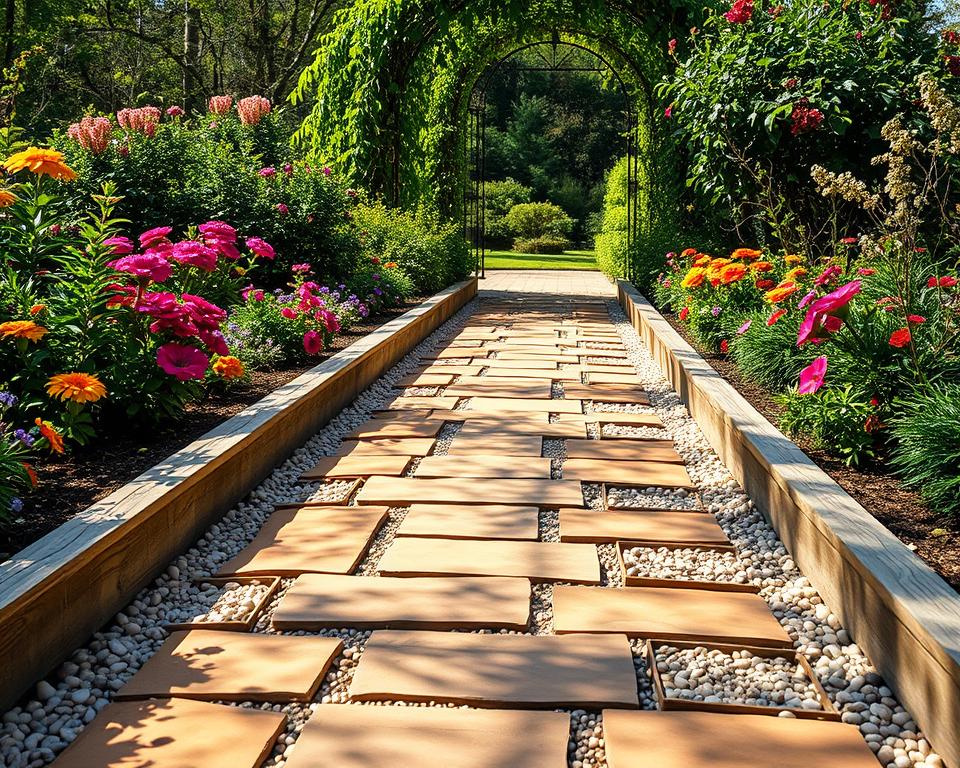
Brick and Concrete Pavers
Brick and concrete pavers are versatile and can be used to create a variety of patterns and designs. They are also relatively easy to install and maintain.
Traditional Clay Bricks
Traditional clay bricks are a classic choice for garden paths. They offer a warm, inviting appearance and can be arranged in various patterns, such as herringbone or stretcher bond.
Modern Concrete Options
Modern concrete pavers have come a long way in terms of design and functionality. They are available in a range of colors and textures, and some even mimic the appearance of natural stone.
“The use of brick and concrete pavers allows for a high degree of creativity in garden path design, enabling homeowners to achieve a unique and personalized look.”
Gravel and Loose Materials
Gravel and loose materials are another popular choice for garden paths, offering a more informal and relaxed look.
Self-Binding Gravel
Self-binding gravel is a type of gravel that compacts to form a solid surface, reducing the need for additional binders. It’s an eco-friendly option that allows for good drainage and is relatively low maintenance.
Decorative Aggregates
Decorative aggregates, such as pea gravel or crushed stone, can add visual interest to your garden path. They come in various colors and can be used to create a unique and eye-catching design.
Wood and Alternative Materials
For those looking for a more rustic or eco-friendly option, wood and alternative materials can be an attractive choice.
Timber and Railway Sleepers
Timber and railway sleepers can be used to create a natural, rustic look. They are particularly suited to woodland or cottage-style gardens.
Eco-Friendly Recycled Options
Eco-friendly recycled materials, such as recycled plastic or reclaimed wood, offer a sustainable alternative for garden paths. They not only reduce waste but can also add a unique character to your garden.
By considering these various materials and their characteristics, you can choose the perfect garden path that complements your outdoor space and meets your needs.
Essential Tools and Equipment Needed
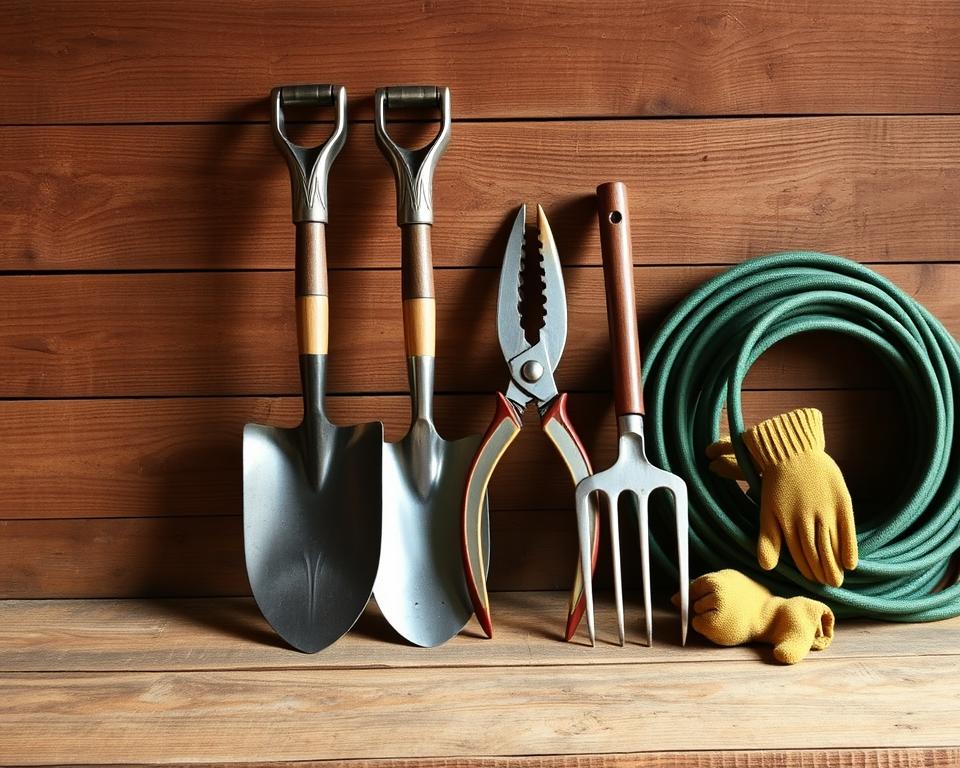
The right tools and equipment are crucial for creating a beautiful and durable garden path. To ensure a successful project, it’s essential to have the necessary gardening tools and path construction equipment.
Basic Hand Tools
Basic hand tools are the foundation of any garden path construction project. You’ll need a variety of tools to prepare the ground and lay your path materials.
Spades, Shovels, and Rakes
Spades and shovels are necessary for digging and excavating the path area, while rakes help to level and smooth out the ground.
Measuring and Marking Tools
Accurate measurements are crucial for a well-designed garden path. Use measuring tapes and string lines to mark out your path, ensuring it’s straight or curved as desired.
Power Tools and Specialised Equipment
In addition to basic hand tools, you’ll need power tools and specialised equipment to complete your garden path.
Compactors and Cement Mixers
A compactor is used to compact the base material, ensuring a stable surface, while a cement mixer is necessary for mixing concrete for your path.
Cutting Tools for Hard Materials
For paths made from hard materials like stone or brick, you’ll need cutting tools such as a wet saw or angle grinder to cut materials to size.
Safety Gear and Protective Equipment
Safety should always be a priority when working on a garden path project. Wear safety gear such as gloves, safety glasses, and a dust mask to protect yourself from injury and dust.
| Tool/Equipment | Purpose |
|---|---|
| Spade/Shovel | Digging and excavating |
| Rake | Leveling and smoothing |
| Measuring Tape | Measuring and marking |
| Compactor | Compacting base material |
| Cement Mixer | Mixing concrete |
How to Create and Design a Garden Path: Step-by-Step Guide
To create a garden path that is both functional and visually appealing, follow this step-by-step guide tailored to help you achieve your gardening goals.
Marking Out Your Path
The first step in constructing your garden path is to mark out its route. This involves deciding where you want your path to go and ensuring it complements your garden’s layout.
Using String Lines and Marking Spray
Use string lines to define the edges of your path and marking spray to visualize the path’s route on the ground. This will give you a clear guide for the excavation process.
Creating Curves with Hosepipes
For curved paths, use hosepipes to create smooth, flowing curves. This flexible approach allows you to adjust the path’s shape until you’re satisfied with its appearance.
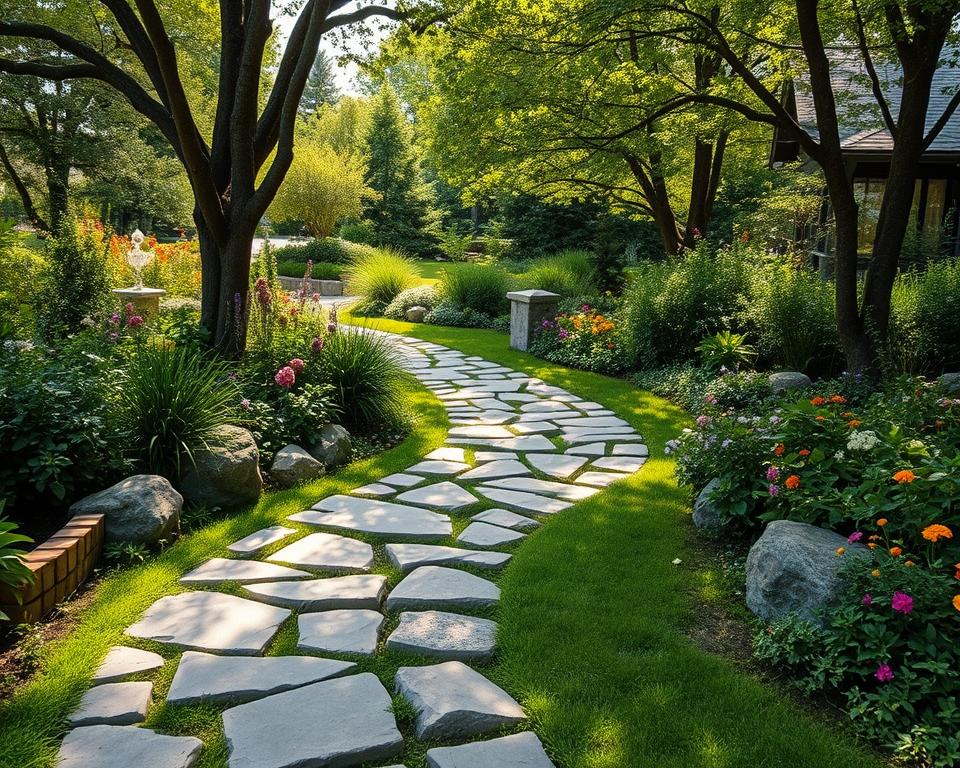
Excavating the Path Area
Once your path is marked out, it’s time to excavate the area. This step is crucial for creating a stable base for your path.
Proper Depth Guidelines
The depth of excavation depends on the materials you plan to use for your path. Generally, a depth of about 100-150mm is recommended to accommodate the sub-base and surface materials.
Removing Turf and Soil
Carefully remove the turf and soil to the required depth, ensuring the area is level and even. This prepares the ground for the sub-base material.
Installing Edging
Edging is essential for containing your path materials and preventing them from shifting over time. Choose edging materials that complement your path and garden design.
Preparing the Base
A solid base is crucial for a durable garden path. This involves laying and compacting sub-base materials.
Laying and Compacting Sub-base Materials
Use materials like crushed stone or gravel for the sub-base. Compact these materials thoroughly to create a stable foundation for your path.
Creating the Perfect Foundation
Ensure the sub-base is level and compacted to prevent settling or shifting. This step is vital for the longevity of your garden path.
Laying Your Path Materials
With the base prepared, you can now lay your chosen path materials, whether it’s pavers, bricks, gravel, or another material.
Setting Patterns for Pavers and Bricks
For pavers and bricks, consider the pattern you want to achieve. Running bond, herringbone, and basket weave are popular patterns that can add visual interest to your path.
| Pattern | Description | Visual Appeal |
|---|---|---|
| Running Bond | Bricks laid end to end | Simple, linear look |
| Herringbone | Bricks laid at 90-degree angles | Highly decorative |
| Basket Weave | Pairs of bricks laid at right angles | Intricate, woven appearance |
Finishing Touches and Jointing
Once your path materials are laid, fill the joints with sand or gravel to stabilize the materials and prevent weed growth. Finally, compact the surface to ensure it’s even and firm.
By following these steps, you can create a beautiful and functional garden path that enhances your outdoor space.
Adding Borders and Edging to Your Path
Borders and edging are crucial elements in garden path design, offering both aesthetic and practical benefits. They not only enhance the visual appeal of your path but also help in maintaining its integrity by preventing the encroachment of grass and weeds.
Material Options for Path Edging
Choosing the right material for your path edging is essential. The material should complement the overall design of your garden and path.
Metal Edging Systems
Metal edging systems are durable and can add a sleek, modern look to your garden path. They are available in various materials, including aluminium and steel.
Stone and Brick Borders
Stone and brick borders are popular choices due to their timeless appeal and durability. They can be used to create a formal or informal look, depending on the design.
Installation Techniques
Proper installation of edging is crucial for its longevity and effectiveness. It involves preparing the ground, laying the edging material, and securing it in place.
Creative Edging Ideas
Edging can be more than just functional; it can also be a creative element in your garden design.
Living Edges with Plants
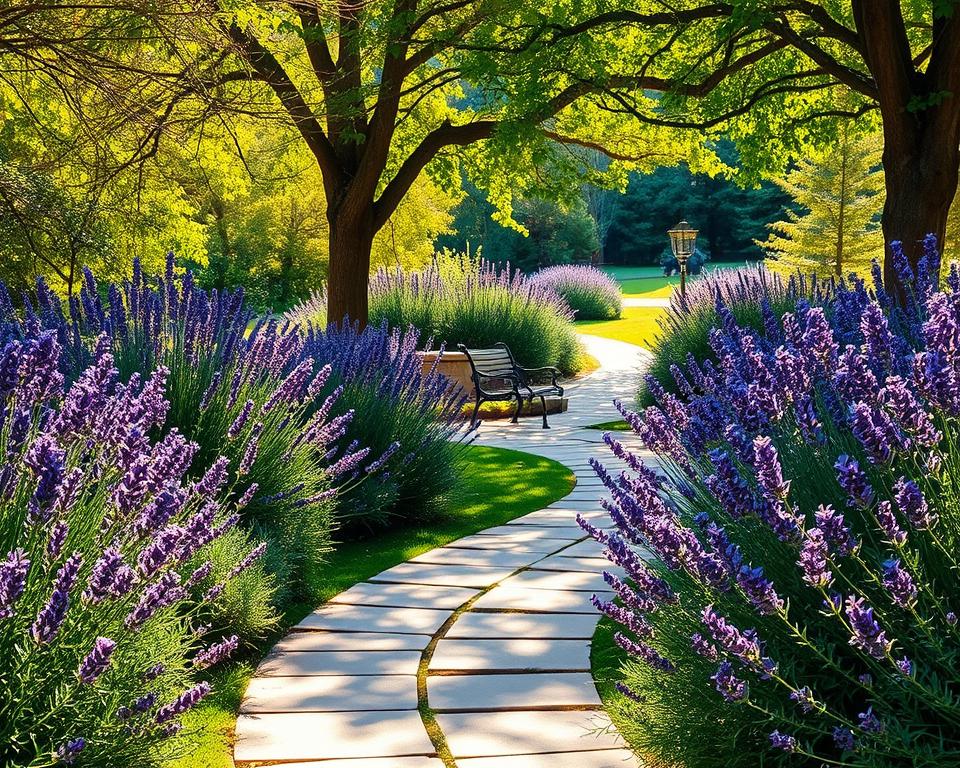
Using plants as edging is a beautiful way to soften the look of your path. Plants like lavender or boxwood can be used to create a living border.
Decorative Border Designs
Consider using decorative elements like shells, pebbles, or glass beads to add a unique touch to your path edging.

By carefully selecting and installing your path edging, you can significantly enhance the overall appearance and functionality of your garden path.
Incorporating Plants and Lighting Along Your Path
The right combination of plants and lighting along your garden path can significantly enhance its beauty and functionality. By carefully selecting plants and lighting, you can create a welcoming and safe passage through your garden.
Selecting Plants for Path Borders
Choosing the right plants for your garden path borders can add colour, texture, and fragrance to your outdoor space. Consider plants that are low-maintenance and won’t obstruct the path.
Low-Growing Plants for Path Edges
Low-growing plants such as Thymus serpyllum (Creeping Thyme) and Sedum species are ideal for path edges. They are hardy, require minimal maintenance, and can withstand occasional foot traffic.
Scented Plants for Sensory Interest
Incorporating scented plants like Lavandula angustifolia (English Lavender) and Rosmarinus officinalis (Rosemary) can add a sensory dimension to your garden path. These plants release their fragrance when brushed against, enhancing the walking experience.
Lighting Options for Garden Paths
Lighting is crucial for both safety and ambiance. It can highlight the beauty of your garden path during the night and provide visibility.
Solar-Powered Solutions
Solar-powered lights are an eco-friendly option for garden paths. They charge during the day and light up at night, requiring no wiring or electricity.
Wired Lighting Systems
For a more permanent solution, wired lighting systems can be installed along your garden path. These systems offer consistent lighting and can be integrated with your home’s electrical system.
Seasonal Planting Considerations
When planning your garden path, consider the changing seasons to ensure year-round interest.
Year-Round Interest Plants
Plants like Hellebores and Vinca minor (Periwinkle) provide year-round interest with their evergreen foliage and winter flowers.
Managing Plant Growth Around Paths
Regular maintenance is necessary to keep plants from encroaching on the path. Prune plants regularly to maintain a clear path and encourage healthy growth.
By incorporating a mix of plants and lighting, and considering seasonal changes, you can create a beautiful and inviting garden path that enhances your outdoor space throughout the year.
Drainage Solutions for Garden Paths
In the British climate, where rainfall is frequent, ensuring proper drainage for your garden paths is vital. Waterlogging can lead to damage, erosion, and safety hazards, making drainage a critical consideration in garden path design.
Why Proper Drainage Matters in the British Climate
The UK’s climate is characterised by significant rainfall throughout the year. Without proper drainage, garden paths can become hazardous and require frequent maintenance. Effective drainage solutions help prevent water from accumulating on the path surface, reducing the risk of slipping and falling.
Different Drainage Systems
There are several drainage systems you can consider for your garden paths. The choice depends on the path’s design, materials, and the surrounding landscape.
French Drains and Soakaways
French drains are a popular solution, involving a trench filled with gravel and a perforated pipe that redirects water away from the path. Soakaways are another option, where water is collected and allowed to slowly infiltrate the surrounding soil.
Permeable Paving Options
Permeable paving materials, such as porous asphalt or permeable concrete pavers, allow water to pass through the surface, reducing runoff and the risk of flooding. These materials are particularly effective in high rainfall areas.
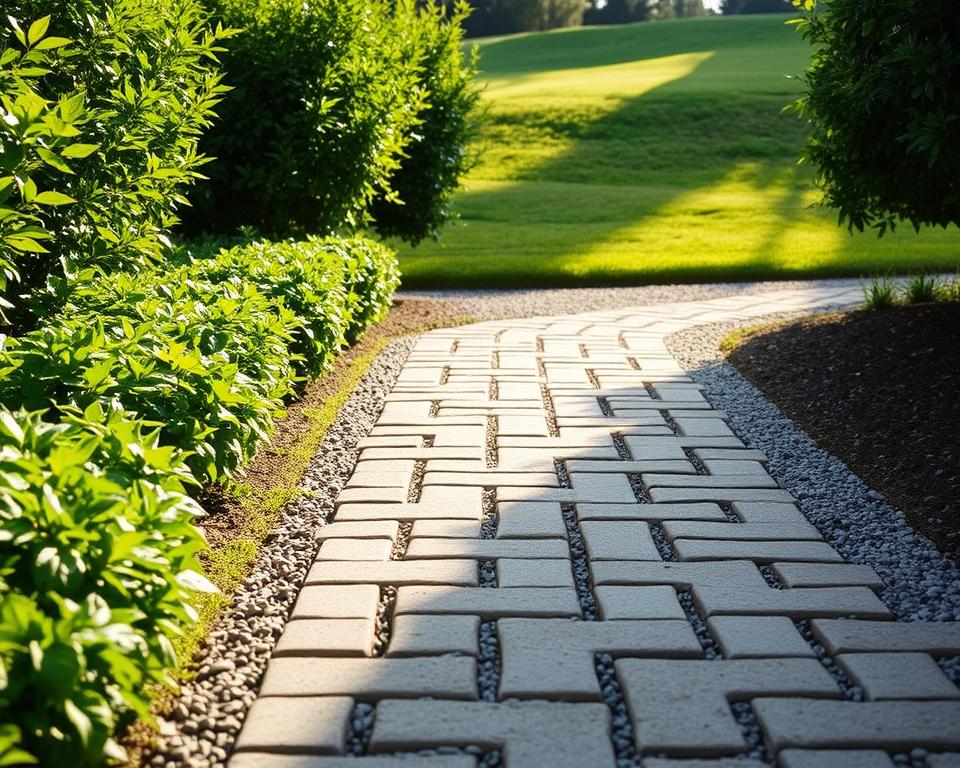
Installing Drainage for Your Path
Proper installation of drainage systems is crucial for their effectiveness. This involves considering the gradient of your path and ensuring that it connects properly with existing drainage infrastructure.
Cross Falls and Gradients
A well-designed path should have a cross fall or gradient to direct water off the surface. This can be achieved by adjusting the path’s slope during construction.
Connecting to Existing Drainage
If you have existing drainage systems in your garden, it’s essential to connect your new path drainage to these. This may involve consulting with a professional to ensure that the systems are compatible and effective.
By implementing the right drainage solutions, you can protect your garden paths from water damage and ensure they remain safe and attractive throughout the year.
Accessibility Considerations for Garden Paths
A well-designed garden path should be both aesthetically pleasing and accessible to people of all ages and abilities. When creating a garden path, it’s crucial to consider the needs of all users, including those with mobility issues, to ensure that your outdoor space is enjoyable for everyone.
Creating Wheelchair-Friendly Paths
To create a wheelchair-friendly path, you need to consider several key factors. Firstly, the path’s width and surface are critical for ease of navigation.
Width and Surface Requirements
A minimum width of 900mm is recommended to allow for comfortable passage. The surface should be smooth and stable, avoiding loose materials like gravel that can be difficult to navigate.
Managing Gradients and Steps
Gradients should be gentle, with a maximum slope of 1:20. Where steps are necessary, incorporating a ramp or alternative route for wheelchair users is essential.
Slip-Resistant Materials for Safety
Choosing the right materials for your garden path is vital for safety. Slip-resistant materials can significantly reduce the risk of falls, especially when the path is wet or icy. Consider using textured paving stones or applying a non-slip coating to your path surface.

Designing for All Ages and Abilities
An accessible garden path is not just about wheelchair accessibility; it’s also about creating a safe and enjoyable experience for all users. Consider incorporating features that support users of all ages and abilities.
Handrails and Support Features
Handrails can provide essential support, particularly on slopes or where steps are present. Ensure that handrails are sturdy and well-fixed.
Rest Points Along Longer Paths
Incorporating rest points or seating areas along longer paths can help users take breaks and enjoy their surroundings without feeling overwhelmed.
Maintaining Your Garden Path Throughout the Seasons
As the seasons change, your garden path requires different types of care to remain in good condition. Regular maintenance not only enhances the beauty of your garden but also ensures the longevity of your path.
Seasonal Maintenance Tasks
Different seasons bring different challenges for your garden path. In the winter, it’s essential to protect your path from frost and ice.
Winter Protection Measures
Use a gentle de-icer to prevent damage to your path materials. Avoid using salt or chemical de-icers, as they can harm plants and contaminate soil.
Spring and Autumn Clean-up
In spring and autumn, clean your path thoroughly to remove debris and leaves. Use a broom or a leaf blower for this task.
Dealing with Weeds and Moss
Weeds and moss can make your path look neglected. Regularly inspect your path and remove any weeds or moss you find.
Eco-Friendly Weed Control
Consider using eco-friendly methods to control weeds, such as applying a natural weed killer or manually removing them.
Pressure Washing Techniques
For paths with stubborn dirt or moss, use a pressure washer on a low setting to avoid damaging the surface.

Repairs and Restoration
Over time, your garden path may require repairs. Inspect your path regularly for loose pavers or damaged edging.
Fixing Loose Pavers and Edging
Re-set loose pavers and repair or replace damaged edging to maintain the integrity of your path.
Refreshing Gravel and Aggregates
For gravel paths, periodically refresh the gravel to keep the path looking its best.
By following these maintenance tips, you can keep your garden path in excellent condition throughout the year.
Common Mistakes to Avoid When Creating Garden Paths
Creating a garden path can be a rewarding experience, but it’s easy to make mistakes that can affect its functionality and aesthetic appeal. When designing and constructing a garden path, several common pitfalls can be avoided with proper planning and knowledge.
Design Errors
Design errors can significantly impact the usability and visual appeal of your garden path. Two common design mistakes include paths that are too narrow and poor integration with the overall garden style.
Paths That Are Too Narrow
A path that is too narrow can be difficult to navigate, especially for those with mobility issues. It’s essential to consider the purpose of your path and the expected traffic flow.
Poor Integration with Garden Style
Your garden path should complement the overall style of your garden. For instance, a formal garden might require a more structured path, while an informal garden could incorporate more natural or curved paths.
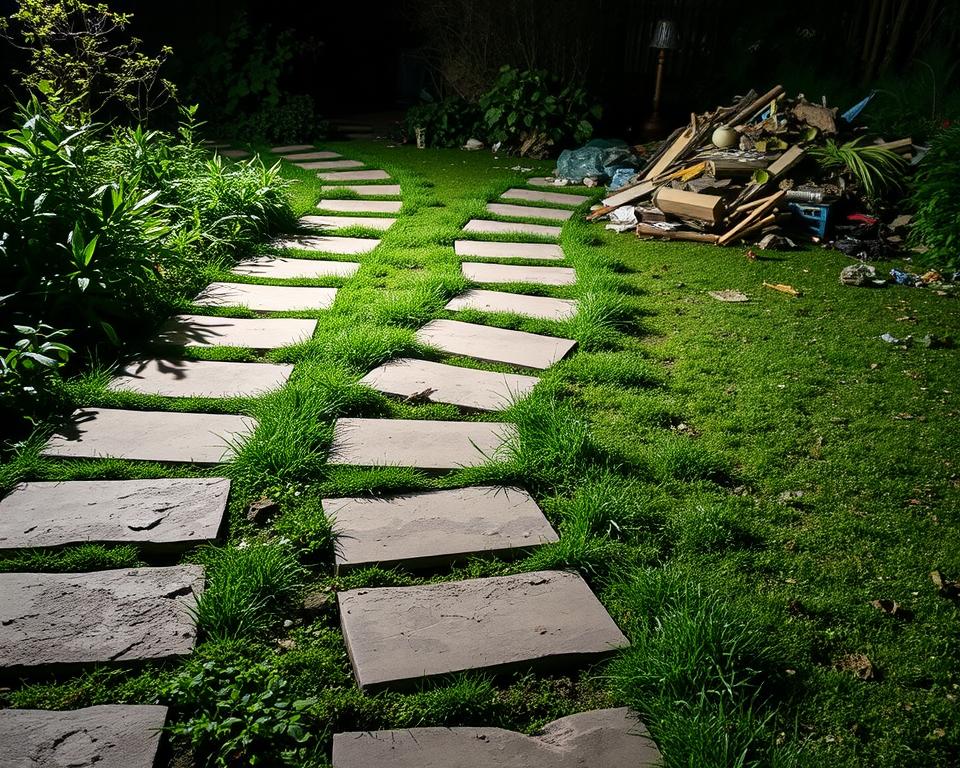
Construction Pitfalls
Construction errors can lead to maintenance issues and safety hazards. Two significant construction pitfalls are inadequate foundations and improper gradient management.
Inadequate Foundations
A well-constructed foundation is crucial for the longevity of your garden path. Without a proper base, your path may shift or become uneven over time.
Improper Gradient Management
Ensuring that your path has a proper gradient is vital for drainage and safety. A path that is too steep or improperly graded can lead to water accumulation and erosion.
Material Selection Mistakes
Choosing the right materials for your garden path is critical. Mistakes in material selection can lead to increased maintenance and potential safety issues.
Choosing Materials Unsuitable for British Weather
The British climate can be quite harsh, with frequent rain and frost. Selecting materials that can withstand these conditions is essential. For example, certain types of stone or treated wood may be more suitable than others.
Overlooking Long-term Maintenance Requirements
Different materials have varying maintenance needs. It’s crucial to consider the long-term maintenance requirements of your chosen materials to ensure your path remains safe and attractive.
| Material | Maintenance Needs | Suitability for British Weather |
|---|---|---|
| Natural Stone | Low to Moderate | High |
| Brick Pavers | Moderate | High |
| Gravel | High | Moderate |
By being aware of these common mistakes and taking steps to avoid them, you can create a garden path that is both beautiful and functional.
Conclusion
Creating a beautiful and functional garden path is a multifaceted process that requires careful planning, appropriate material selection, and regular maintenance. As you’ve seen throughout this article, a well-designed garden path can enhance the aesthetic appeal of your outdoor space while providing a safe and accessible route through your garden.
By assessing your garden space, determining the path’s purpose, and choosing the right materials, you can create a garden path that complements your landscaping. Whether you opt for formal or informal designs, straight or curved paths, the key is to ensure that your path is both functional and visually appealing.
Regular maintenance is crucial to keeping your garden path looking its best. This includes seasonal tasks such as clearing debris, dealing with weeds and moss, and making repairs as needed. By following these guidelines, you can enjoy a beautiful garden path for years to come, ultimately enhancing your overall landscaping summary.
In conclusion, a well-designed garden path is a valuable addition to any garden, providing a garden path conclusion that ties together the various elements of your outdoor space.
FAQ
What is the best material to use for a garden path?
The best material for a garden path depends on your garden’s style, budget, and the amount of foot traffic it receives. Popular options include natural stone, such as British limestone and sandstone, brick and concrete pavers, gravel, and wood.
How do I ensure my garden path is accessible?
To create an accessible garden path, consider using slip-resistant materials, ensuring the path is wide enough for wheelchairs or mobility scooters, and managing gradients and steps to prevent tripping hazards.
What are the benefits of using permeable paving for my garden path?
Permeable paving allows rainwater to percolate through the surface, reducing runoff and the risk of flooding. It’s an excellent choice for garden paths in the British climate, where rainfall is frequent.
How often should I maintain my garden path?
Regular maintenance is essential to keep your garden path looking its best. Tasks may include cleaning, weed control, and repairs, with the frequency depending on the material used and the weather conditions.
Can I use solar-powered lighting for my garden path?
Yes, solar-powered lighting is a great option for garden paths as it’s eco-friendly and cost-effective. It can be used to highlight the path, create ambiance, and improve safety at night.
What are the most common mistakes to avoid when creating a garden path?
Common mistakes include designing paths that are too narrow, failing to integrate the path with the garden’s style, using inadequate foundations, and selecting materials that are unsuitable for the British weather.
How do I prevent weeds and moss from growing on my garden path?
To prevent weeds and moss, you can use eco-friendly weed control methods, apply a sealant to your paving, or regularly clean your path. Pressure washing can also be effective for certain types of paving.
What is the ideal width for a garden path?
The ideal width for a garden path depends on its purpose and the expected foot traffic. A minimum width of 0.9 metres is recommended for wheelchair accessibility, while a width of 1.2 to 1.5 metres is more comfortable for two people to walk side by side.
How do I choose the right plants for my garden path borders?
When selecting plants for your garden path borders, consider low-growing plants that won’t obstruct the path, scented plants for sensory interest, and plants that provide year-round interest.