How to Prepare Your Garden for a Summerhouse

Installing a summer house in your garden can be a wonderful way to enhance your outdoor living space. A solid base is crucial for ensuring the stability and longevity of your summer house. Proper preparation of the garden area is essential to create a level and durable foundation.
A well-prepared garden provides the perfect foundation for your summer house, allowing you to enjoy it for years to come. The right base preparation involves careful planning, levelling the ground, and using the appropriate construction tools and safety equipment.
Inhaltsverzeichnis
Key Takeaways
- Careful planning is required to ensure a stable and secure summer house.
- A level and durable base is crucial for the longevity of the summer house.
- Proper ground preparation helps prevent future structural issues.
- Various foundation options are available, including concrete bases and timber decking.
- Choosing the right foundation depends on specific garden conditions and summerhouse requirements.
Why a Solid Foundation is Essential for Your Summerhouse
When installing a summerhouse, a solid base is not just desirable, it’s essential. A well-prepared base elevates your summer house, protecting it from ground moisture and rainwater. Proper drainage around the base ensures water doesn’t pool, preventing rot, mould, and other water-related damage.
Ensuring Stability and Longevity
A properly elevated base creates a crucial barrier between your summerhouse and ground moisture, preventing dampness from rising into the structure. This protection is vital for the longevity of your garden building, as it prevents the wooden elements from absorbing moisture, which can lead to rot and eventual structural failure.
Preventing Dampness and Structural Issues
Effective drainage solutions incorporated into your base design direct water away from the summerhouse, preventing pooling that can undermine the foundation. Damp-related issues not only compromise the structural integrity of your summer house but can also create unhealthy conditions inside the space. Regular maintenance becomes significantly more challenging and expensive when dealing with a summerhouse affected by dampness issues stemming from an inadequate base.
By investing in a well-designed base, you can ensure your summerhouse remains a safe and enjoyable space for years to come, requiring less maintenance and reducing the risk of costly repairs.
Selecting the Perfect Location in Your Garden
To ensure your summerhouse is a haven, selecting the right location is paramount. The ideal spot will enhance your garden’s overall aesthetic while providing a functional space for relaxation or entertainment.
Considering Sunlight and Shade
When choosing a location, consider the balance between sunlight and shade. A spot that receives the right amount of sunlight can make your summerhouse more inviting. Assess the sun’s path across your garden to determine the sunniest and shadiest areas.
Assessing Drainage and Ground Conditions
It’s crucial to evaluate the drainage and ground conditions of your chosen location. Poor drainage can lead to water accumulation, potentially damaging your summerhouse. Ensure the ground is level and stable to provide a solid base for your structure.
| Ground Condition | Drainage Requirement | Recommended Base |
|---|---|---|
| Clay Soil | High | Concrete Base |
| Sandy Soil | Low | Timber Decking |
| Sloping Ground | Variable | Raised Platform |
Planning for Access and Usability
Examine the site’s accessibility for both construction and everyday use. Consider how materials will be transported to your chosen location during the construction phase. Plan pathways that provide convenient, all-weather access to your summerhouse from your home and other garden features.

Essential Tools and Materials You’ll Need
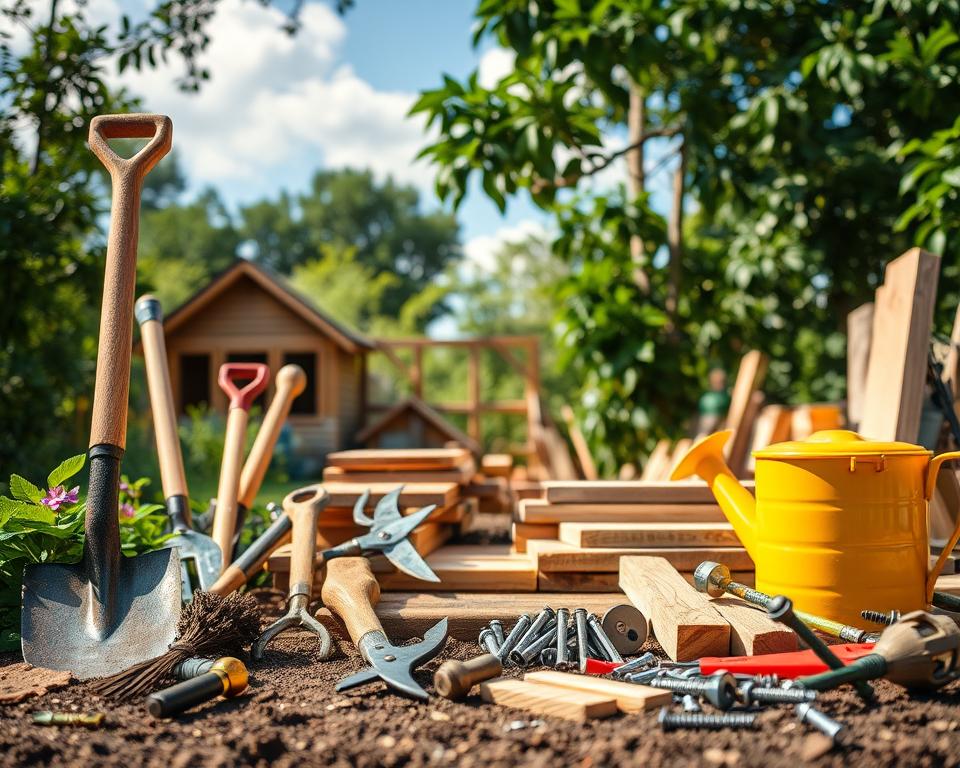
To build a sturdy foundation for your summerhouse, you’ll need to acquire specific tools and materials tailored to your chosen base type. The most common options for a summer house base are concrete, paving slabs, and timber decking, each with its benefits and considerations.
Construction Tools Checklist
Having the right tools is vital for the successful construction of your summerhouse base. Essential tools may include a spirit level, trowels, shovels, and a mixer for concrete bases. For timber decking, you’ll need a saw, drill, and appropriate fixings. Ensuring you have all necessary tools beforehand will streamline the construction process.
Materials for Different Base Types
The materials needed will vary depending on the base type. For instance, concrete bases require cement, sharp sand, aggregate, reinforcing mesh, and a damp-proof membrane. Paving slab foundations need the slabs, sharp sand, cement, and hardcore material for the sub-base. Timber decking bases necessitate pressure-treated timber joists and bearers, along with decking boards and exterior-grade screws. A weed-proof membrane is beneficial for all base types to prevent vegetation growth.
- For concrete bases, consider materials like cement, sharp sand, and aggregate.
- Paving slab foundations require the slabs, sharp sand, and cement.
- Timber decking bases need pressure-treated timber and appropriate fixings.
- All base types benefit from a weed-proof membrane and proper drainage materials.
By selecting the right materials and tools for your summerhouse base, you’ll ensure a stable and long-lasting structure that enhances your garden for years to come.
How to Prepare Your Garden for a Summerhouse: Step-by-Step Guide
Before installing your summerhouse, it’s crucial to prepare the ground properly. This involves several key steps to ensure the base remains stable and secure, preventing future structural issues.
Clearing and Measuring the Area
The first step in preparing your garden is to clear the area where your summerhouse will be located. Remove any debris, vegetation, or obstructions to create a clean slate. Accurate measurement is crucial; measure the area carefully to ensure it matches the dimensions of your summerhouse. This step is essential for a smooth installation process.
Excavating and Levelling the Ground
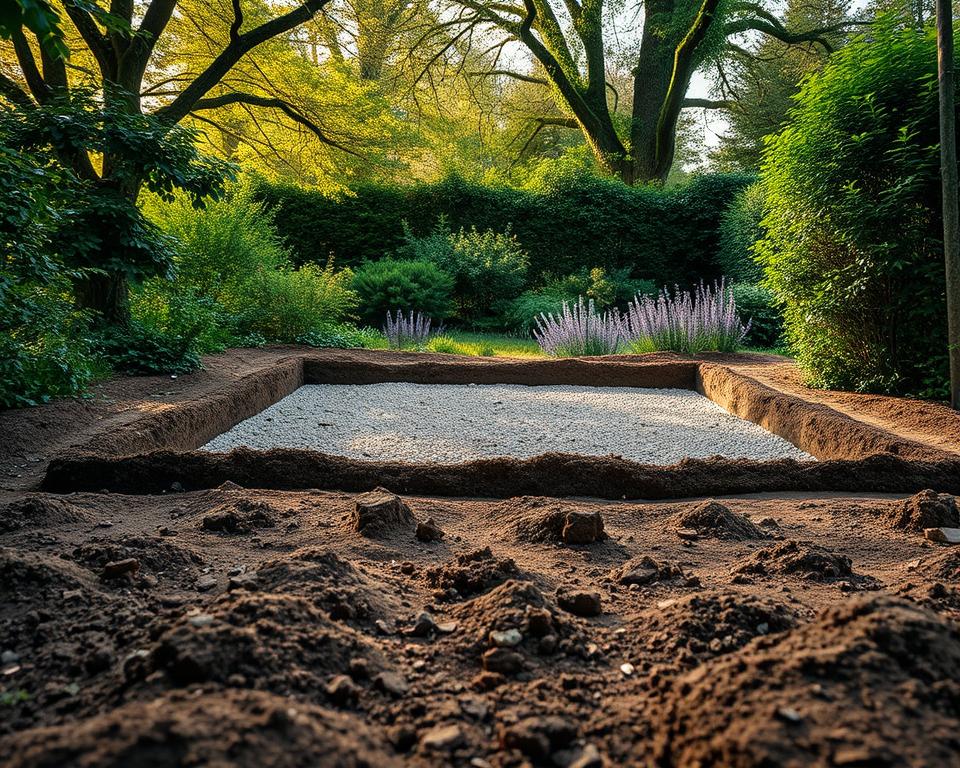
Once the area is cleared, the next step is to excavate and level the ground. Use appropriate tools to dig out the area to the required depth, and then level the ground to create a flat surface. Ensuring the ground is level is vital for the stability of your summerhouse. Check the level regularly during this process to avoid any discrepancies.
Installing a Weed-Proof Membrane
After excavating and levelling, lay a high-quality weed-proof membrane across the entire prepared area, extending it slightly beyond the edges. Ensure the membrane overlaps by at least 30cm at any joins to prevent weeds from growing through gaps. Secure the membrane in place using landscape fabric pins or by weighing down the edges with some of your base materials. This step is crucial in preventing weed growth and ensuring the base remains stable.
- Lay the weed-proof membrane carefully to avoid tears or damage.
- Overlap the membrane by at least 30cm to prevent weed growth.
- Secure the membrane using appropriate materials.
By following these steps, you can ensure your garden is properly prepared for your summerhouse, providing a stable and long-lasting base.
Choosing the Right Base Type for Your Summerhouse
A well-chosen base is the backbone of your summerhouse, providing the necessary support and protection against the elements. The right base type can enhance the overall aesthetic appeal and ensure the longevity of your summerhouse.
Concrete Base: Pros, Cons and Installation
A concrete base is a popular choice for summerhouses due to its durability and stability. It provides a solid foundation, ideal for larger structures. However, it requires careful planning and execution to avoid cracking and unevenness.
Pros: Durable, stable, and suitable for larger summerhouses.
Cons: Requires careful planning, can be prone to cracking.
| Installation Steps | Description |
|---|---|
| 1. Prepare the site | Clear the area, removing any debris and vegetation. |
| 2. Lay the foundation | Excavate the ground and lay a layer of compacted hardcore. |
| 3. Pour the concrete | Pour the concrete mix into the prepared frame, ensuring it’s level and smooth. |
Paving Slabs: Pros, Cons and Installation
Paving slabs offer a more straightforward installation process compared to concrete bases. They are ideal for smaller summerhouses and provide good drainage.
Pros: Easy to install, good drainage.
Cons: May require more frequent maintenance.
- Lay a weed-proof membrane to prevent weed growth.
- Install paving slabs on a bed of sand, ensuring they’re level and securely positioned.
Timber Decking: Pros, Cons and Installation
Timber decking is an attractive option, especially for smaller summerhouses. It provides good drainage and airflow, helping to prevent dampness. However, it requires regular maintenance to keep the wood in good condition.
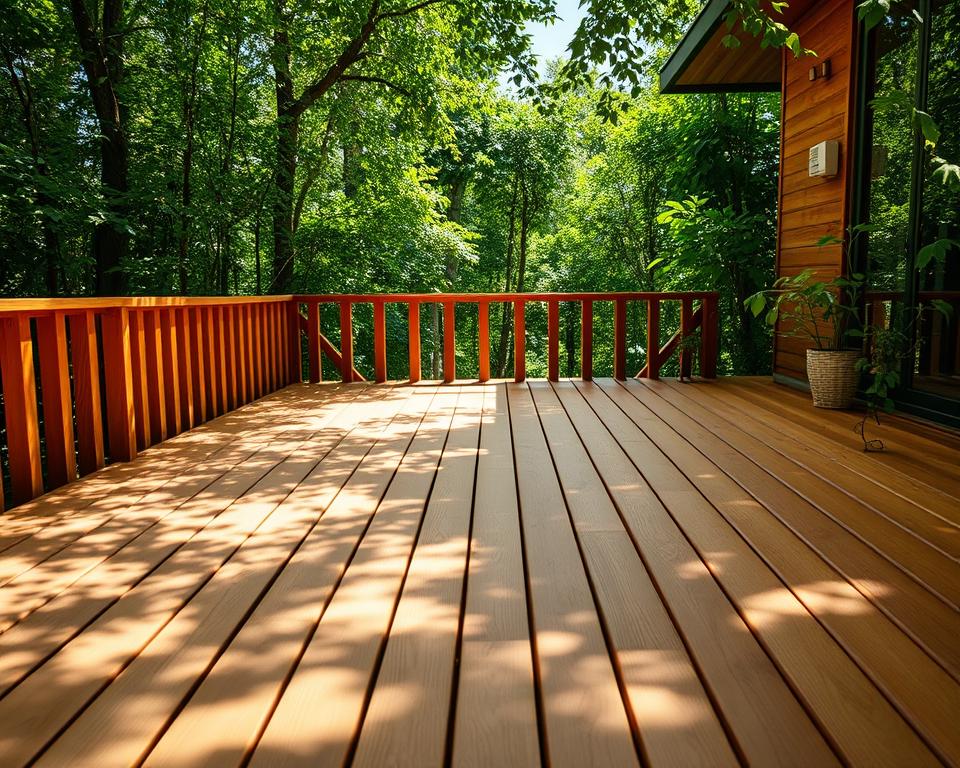
Pros: Aesthetic appeal, good drainage, and airflow.
Cons: Requires regular maintenance.
“Timber decking bases provide excellent airflow beneath your summerhouse, helping to prevent dampness and extending the life of both the base and the structure.”
To install timber decking, lay a weed-proof membrane, then install pressure-treated timber joists, securing them with concrete anchor points or screws. Ensure the decking is level and properly supported.
Building a Concrete Base: Detailed Instructions
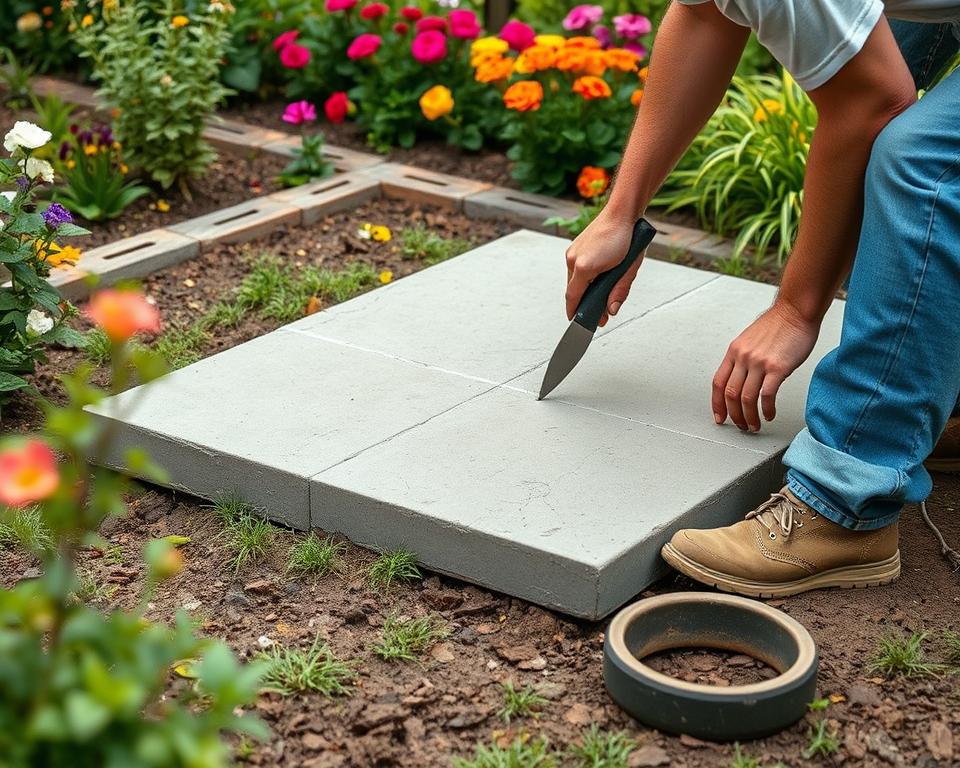
Constructing a concrete base for your summerhouse is a crucial step that requires careful planning and execution. A solid foundation is vital for the stability and longevity of your garden building.
Creating a Timber Frame
To start, create a timber frame that will hold the concrete in place. This frame should be level and securely positioned on the ground. Ensure that the frame is sturdy enough to support the weight of the concrete.
Mixing and Pouring Concrete
Next, mix the concrete according to the manufacturer’s instructions, ensuring it is not too runny or too thick. Pour the mixed concrete into the timber frame, smoothing it out to prevent air pockets. Use a level to ensure the surface is even.
Ensuring Proper Curing Time
After pouring the concrete, it’s essential to allow it to cure properly. Keep the concrete damp for at least seven days, especially in warm weather, by covering it with plastic sheeting or damp hessian. Avoid walking on the concrete for at least 48 hours and refrain from installing your summerhouse for a minimum of seven days.
By following these steps, you can ensure a strong and durable concrete base for your summerhouse, providing a stable foundation for years to come.
Alternative Base Options for Different Garden Conditions
The right base for your summerhouse is crucial, and there are several alternatives to consider depending on your garden’s specific conditions. Different gardens present unique challenges, such as drainage issues, sloping terrain, or the need for low maintenance.
Composite Decking for Low Maintenance
Composite decking is an attractive option for those seeking a low-maintenance base. Made from a combination of materials, usually wood fibres and plastic, composite decking is durable and resistant to rot, mould, and insect damage. It requires less upkeep than traditional timber decking, as it doesn’t need to be stained or sealed regularly.
Ground Screw Systems for Minimal Disruption
Ground screw systems offer a minimal disruption installation process, ideal for gardens with sensitive ecosystems or where extensive excavation is not feasible. These systems involve screwing steel foundations into the ground, providing a stable base without the need for concrete.
Raised Platforms for Sloping Gardens
Raised platforms are particularly useful for sloping gardens, allowing for the creation of a level surface without extensive excavation. The construction involves building a timber frame supported by posts of varying heights. This not only provides a stable base but also creates opportunities for interesting design possibilities.
| Base Type | Maintenance Level | Suitability for Sloping Gardens |
|---|---|---|
| Composite Decking | Low | No |
| Ground Screw Systems | Low | Yes |
| Raised Platforms | Medium | Yes |
Conclusion: Final Preparations Before Installing Your Summerhouse
A successful summerhouse installation depends on thorough preparation of the base and surrounding garden area. Before the installation team arrives, several key steps must be taken.
Conduct a final check to ensure the base is level, stable, and properly cured. Verify that the dimensions match the manufacturer’s specifications to avoid any issues.
Clear the surrounding area to provide ample working space and ensure clear access from the street to the installation site. Consider the weather conditions on the planned installation day and make necessary arrangements for pets and children to be safely away.
FAQ
What type of foundation is best for a summerhouse?
A solid foundation is essential, and the type depends on the summerhouse size and garden conditions. A concrete base is a popular choice, providing stability and longevity. However, timber decking or paving slabs can also be suitable options, depending on the specific requirements.
How do I ensure my summerhouse is level?
To ensure the summerhouse is level, the ground must be properly excavated and levelled. Using a spirit level and a string line can help achieve this. It’s also crucial to check the base regularly during the construction process.
What is the purpose of a weed-proof membrane?
A weed-proof membrane prevents weeds from growing up through the base, reducing maintenance and ensuring the summerhouse remains stable. It should be installed under the base, covering the entire area.
Can I install a summerhouse on a sloping garden?
Yes, but it requires careful planning. A raised platform can be used to create a level surface, or a ground screw system can be employed to minimize disruption. The choice depends on the slope’s severity and the summerhouse’s design.
What maintenance is required for a summerhouse base?
Regular maintenance is necessary to ensure the longevity of the summerhouse. This includes checking for damage, cleaning, and inspecting the base for any signs of wear or deterioration.
What are the benefits of using composite decking for a summerhouse base?
Composite decking offers low maintenance, durability, and resistance to rot and insect damage. It’s an ideal choice for those seeking a hassle-free solution.
Can I use paving slabs as a base for my summerhouse?
Yes, paving slabs can be used as a base, providing a level surface and good drainage. However, they may require additional preparation, such as laying a sand bed, to ensure stability.