
How to Build a Wooden Garden Table (DIY Guide)
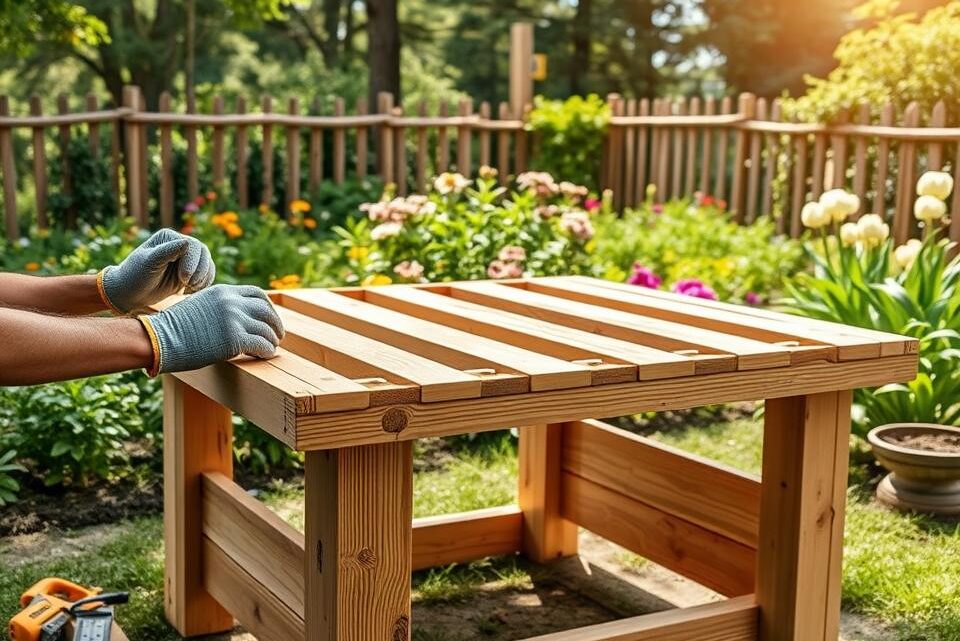
Building your own DIY garden table is an exciting woodworking project that transforms your outdoor space while saving money. Whether you’re a beginner or an experienced DIY enthusiast, creating a custom wooden garden table offers immense satisfaction and a unique piece of furniture tailored to your specific requirements.
This comprehensive guide will walk you through every stage of building a garden table, from selecting materials to final weatherproofing. You’ll learn essential woodworking techniques, understand tool selection, and gain confidence in your ability to craft a durable, beautiful piece of outdoor furniture.
A DIY garden table allows you to design a piece that perfectly matches your garden’s aesthetic. You’ll develop practical skills, create a functional item, and enjoy the pride of crafting something with your own hands. Our step-by-step instructions will ensure you can successfully build a garden table, regardless of your previous woodworking experience.
Inhaltsverzeichnis
Key Takeaways
- Learn professional woodworking techniques for outdoor furniture
- Save money by creating your own custom garden table
- Develop practical DIY skills through a structured project
- Create a unique piece of furniture tailored to your garden
- Understand wood selection and treatment for outdoor use
Why Build Your Own Wooden Garden Table
Embarking on a DIY woodworking project to create your garden furniture offers numerous exciting advantages that go far beyond simply purchasing a ready-made table. When you choose to build your own wooden garden table, you unlock a world of creativity, cost savings, and personal satisfaction.
Creating your garden furniture DIY style presents several key benefits:
- Significant cost reductions compared to store-bought options
- Complete customisation of design and dimensions
- Superior quality control through personal craftsmanship
- Environmentally friendly approach using sustainable materials
The financial advantages are particularly compelling. A handcrafted wooden garden table can cost 40-60% less than equivalent professionally manufactured pieces. You’ll have total control over material selection, ensuring durability and aesthetic appeal perfectly matched to your garden’s unique style.
“Crafting your own furniture transforms a simple project into a deeply personal experience” – Traditional Woodworking Magazine
Beyond monetary benefits, your DIY woodworking project becomes a rewarding journey of skill development. You’ll gain practical woodworking techniques, build confidence in your abilities, and create a lasting piece of functional art that reflects your personal craftsmanship.
Sustainability forms another crucial aspect of building your own garden furniture. By selecting responsibly sourced timber and controlling your production process, you’re making an environmentally conscious choice that mass-produced furniture simply cannot match.
Essential Tools and Materials for Your Garden Table Project
Embarking on a timber garden table project requires careful preparation. Whether you’re a beginner in woodworking or looking to create a stunning outdoor piece, understanding the right garden table materials is crucial for success.
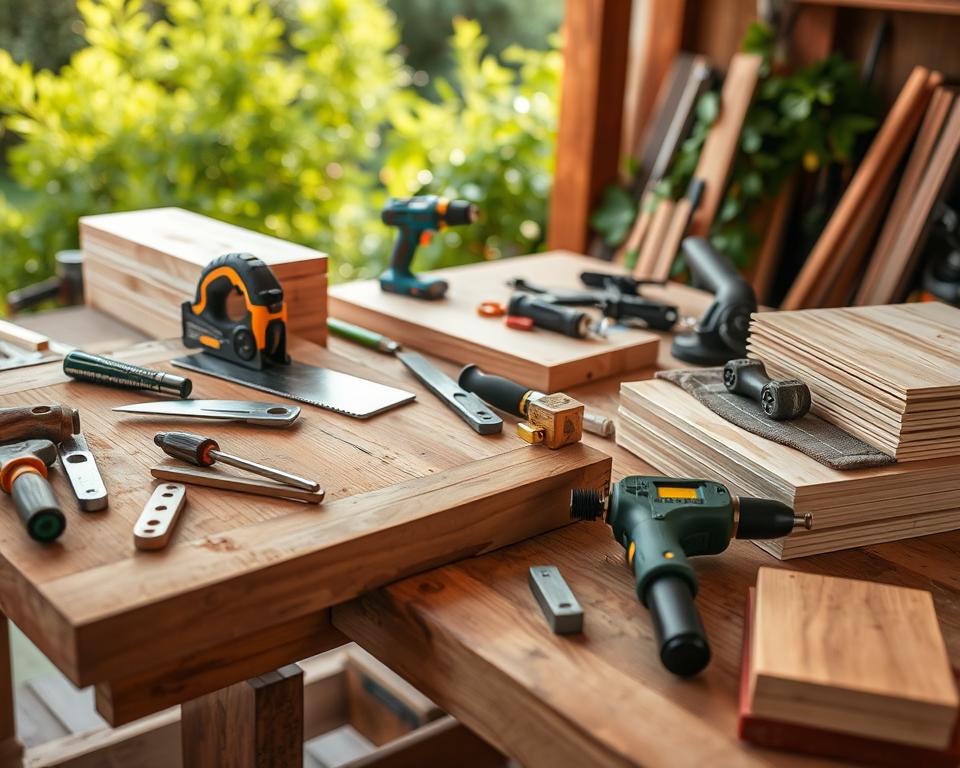
Your woodworking for beginners journey starts with selecting the appropriate tools and materials. Let’s break down the essential components you’ll need to craft a beautiful, durable garden table.
Power Tools for Precision
To create a professional-quality garden table, you’ll want to invest in some key power tools:
- Circular saw for accurate timber cuts
- Electric drill with multiple drill bits
- Orbital sander for smooth finishing
- Measuring tape and carpenter’s square
Selecting Timber for Outdoor Durability
Choosing the right wood is critical for your garden table’s longevity. Consider these timber options:
- Cedar: Naturally weather-resistant
- Oak: Extremely durable and sturdy
- Pressure-treated pine: Budget-friendly option
- Hardwood varieties: Longer-lasting performance
Essential Hardware and Fixings
Complete your project with quality hardware that ensures structural integrity:
- Stainless steel exterior screws
- Waterproof wood glue
- Corner brackets for additional support
- Rust-resistant fixings
Preparation is key in woodworking. By selecting the right tools, timber, and hardware, you’ll set yourself up for a successful garden table construction project.
Planning Your Garden Table Design
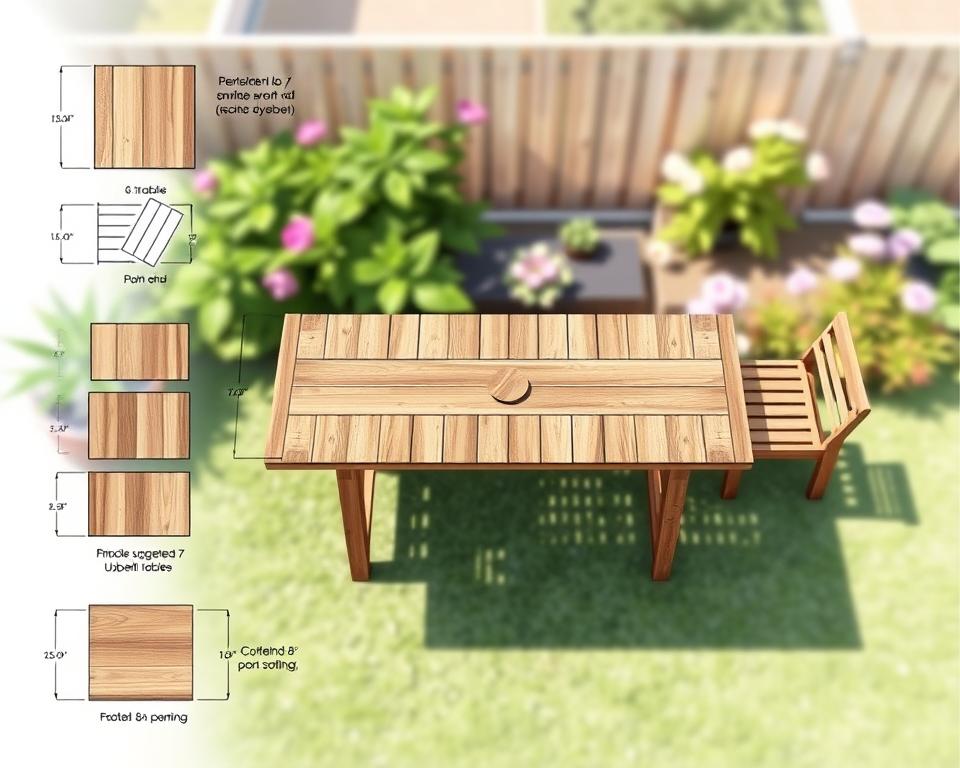
Creating successful outdoor table plans begins with careful preparation. Your wooden table design requires thoughtful consideration of space, functionality, and aesthetic appeal. Developing comprehensive garden table dimensions ensures your project meets both practical and visual requirements.
Before cutting a single piece of timber, sketch your design carefully. This crucial step helps visualise the final product and identify potential construction challenges. Your preliminary drawing should include precise measurements and structural details.
- Determine table size based on available garden space
- Consider intended usage (dining, entertainment, relaxation)
- Sketch detailed design with accurate proportions
Standard garden table dimensions typically range between 150-180cm in length, accommodating six people comfortably. The ideal table height falls between 70-75cm, providing optimal dining comfort.
| Design Aspect | Recommended Measurement |
|---|---|
| Table Length | 150-180cm |
| Table Height | 70-75cm |
| Tabletop Overhang | 5-10cm per side |
When developing your wooden table design, calculate exact timber quantities to minimise waste. Create a detailed cutting list that accounts for every component, ensuring efficient material use and reducing unnecessary expenses.
Pro tip: Always add a small margin for potential measurement errors or unexpected challenges during construction.
Preparing and Cutting Your Timber to Size
Mastering timber preparation is crucial in garden table construction. Your success in outdoor carpentry depends on precision and careful planning. The DIY furniture guide you’re following requires meticulous attention to detail before making a single cut.
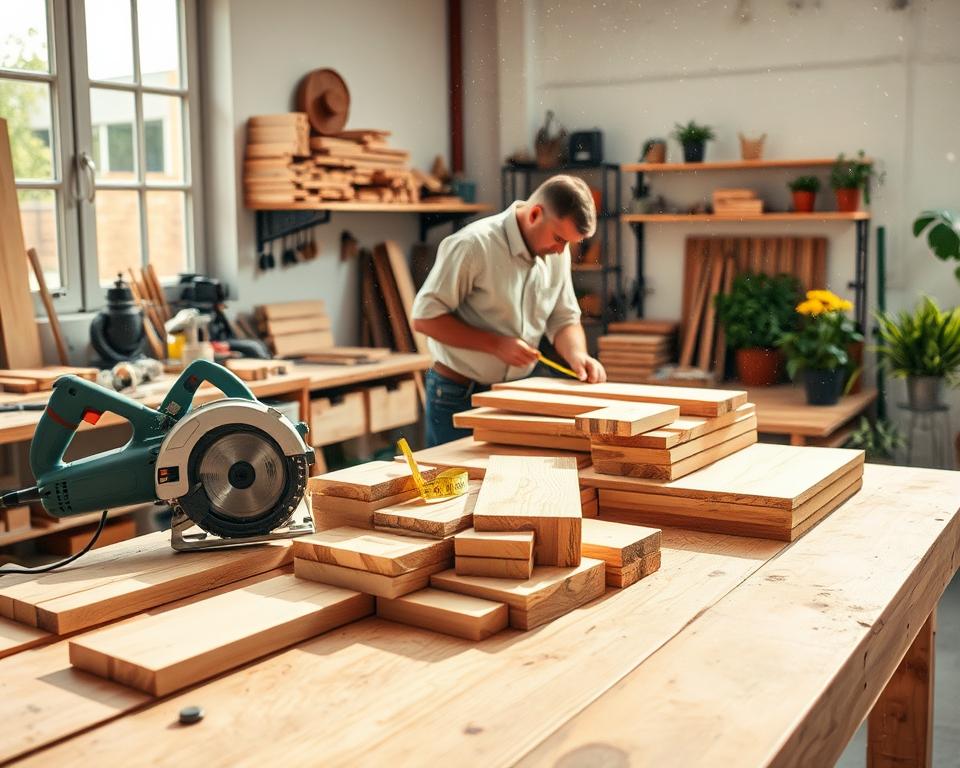
When approaching your woodworking project, remember the golden rule of carpentry: measure twice, cut once. This principle will save you time, materials, and frustration during your garden table build.
Measuring and Marking Your Wood Accurately
Accurate measurements are the foundation of successful woodworking. Use these essential tools for precise marking:
- Tape measure with clear, legible markings
- Combination square for perfect 90-degree angles
- Marking knife for crisp, visible cutting lines
- Pencil for preliminary sketches
Safe Cutting Techniques for Beginners
Safety is paramount in outdoor carpentry. Before starting your DIY furniture guide project, ensure you have proper protective equipment:
- Safety glasses to protect your eyes
- Hearing protection for loud power tools
- Dust mask to prevent wood particle inhalation
- Sturdy work gloves
When cutting timber, always:
- Support your workpiece securely
- Check saw blade depth
- Use guides for straight cuts
- Maintain a stable stance
By following these techniques, you’ll transform raw timber into the perfect components for your garden table, creating a professional-quality piece through careful preparation and safe woodworking practices.
Assembling the Table Frame Structure
Creating a sturdy garden table frame requires precision and careful planning. Your outdoor table construction will depend on getting the foundational structure right. Start by preparing a clean, flat workspace that allows you to align and join your timber components accurately.
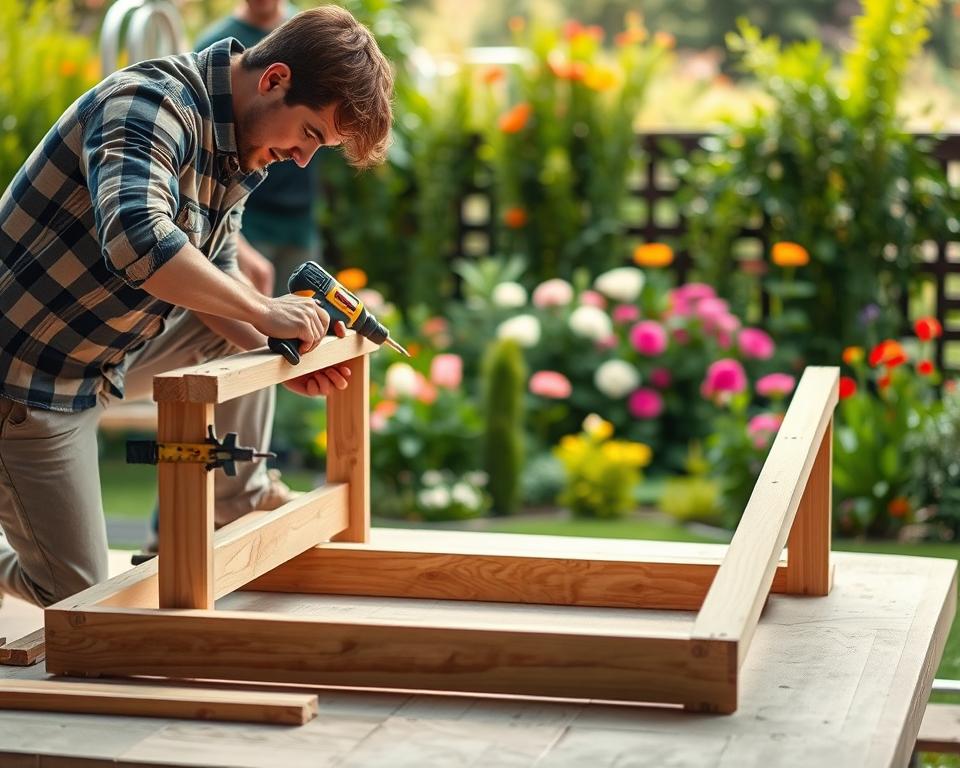
When beginning your garden table assembly, follow these critical steps:
- Lay out all pre-cut timber pieces
- Check each component for squareness
- Use the 3-4-5 triangle method to ensure right angles
- Dry-fit components before final fixing
Joining methods play a crucial role in creating a robust frame. Consider these techniques for outdoor table construction:
| Joinery Method | Strength Level | Best Used For |
|---|---|---|
| Pocket Hole Joinery | High | Hidden fixings |
| Mortise and Tenon | Very High | Maximum structural integrity |
| Reinforced Butt Joints | Medium | Simple constructions |
Key tips for successful garden table assembly include pre-drilling holes to prevent timber splitting, using exterior wood glue for enhanced joint strength, and carefully countersinking screws. Always work slowly and methodically to ensure a professional finish.
Remember to use robust clamps to hold components in place while installing fixings. This prevents misalignment and helps create a perfectly square frame that will support your tabletop for years to come.
Step-by-Step Assembly Instructions
Building your own wooden garden table is an exciting outdoor furniture building project that requires careful attention to detail. This garden table tutorial will walk you through the crucial assembly stages to create a sturdy and attractive piece of outdoor furniture.

When you build a wooden table for your garden, precision matters. Your assembly approach will determine the final quality and durability of your outdoor furniture.
Creating the Tabletop Surface
The tabletop is the centrepiece of your garden table. Follow these key steps:
- Select straight, well-matched timber planks
- Ensure planks are clean and free from major defects
- Use spacers for consistent gap sizing
- Pre-drill holes to prevent wood splitting
Attaching the Legs Securely
Leg attachment is critical for stability. Your technique will impact the table’s overall strength:
- Check leg alignment carefully
- Use robust wood screws or coach bolts
- Ensure each leg contacts the ground evenly
- Consider adding apron rails for extra support
Adding Cross Braces for Stability
Cross braces transform your garden table from functional to rock-solid. They prevent side-to-side movement and enhance structural integrity.
| Brace Type | Purpose | Recommended Placement |
|---|---|---|
| Diagonal Braces | Prevent Racking | Between Leg Corners |
| Horizontal Braces | Increase Rigidity | Midway Between Legs |
By following these detailed assembly instructions, you’ll create a professional-quality wooden garden table that will withstand outdoor conditions for years to come.
Sanding and Finishing Your Garden Table
Mastering outdoor table finishing is crucial for transforming your DIY table construction project from rough timber to a polished piece of garden furniture. The sanding process requires careful attention and a systematic approach to achieve a professional-quality result.
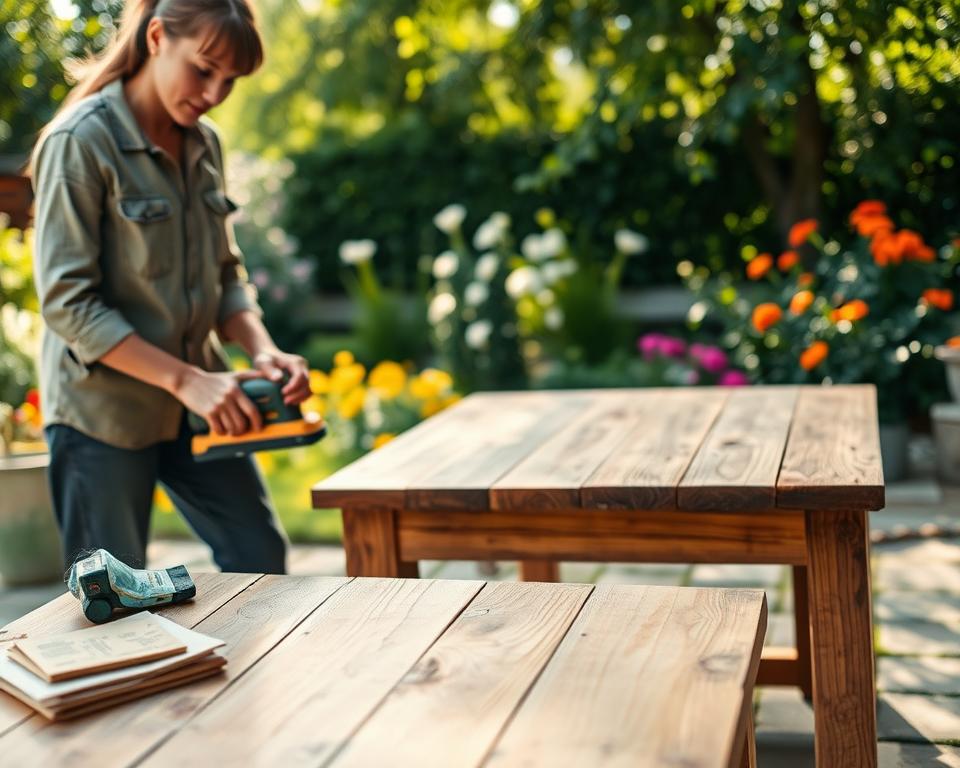
Begin your outdoor table finishing journey by selecting the right sandpaper. Your DIY table construction will benefit from a progressive sanding technique:
- Start with coarse-grit sandpaper (80-100 grit) to remove initial rough spots
- Progress to medium-grit sandpaper (120-150 grit) for smoothing
- Finish with fine-grit sandpaper (180-220 grit) for a silky-smooth surface
When sanding, always work with the wood grain to prevent unsightly scratches. Pay special attention to edges and corners, which receive the most tactile interaction. Use light, consistent pressure to avoid creating uneven depressions in the wood surface.
Dust removal is a critical step in outdoor table finishing. After each sanding stage, use a tack cloth or vacuum to eliminate particles that could scratch during subsequent sanding. For best results in your DIY table construction, inspect the surface under angled lighting and run your hand across the wood to detect any remaining imperfections.
Tip: Thorough sanding isn’t just about aesthetics – it’s about creating a comfortable, splinter-free surface that enhances your garden furniture’s usability.
Weatherproofing and Protecting Your Wooden Table
Protecting your handmade wooden garden table from the unpredictable British weather is crucial for maintaining its beauty and longevity. Wood treatment outdoor solutions are essential to shield your creation from moisture, UV rays, and potential decay.
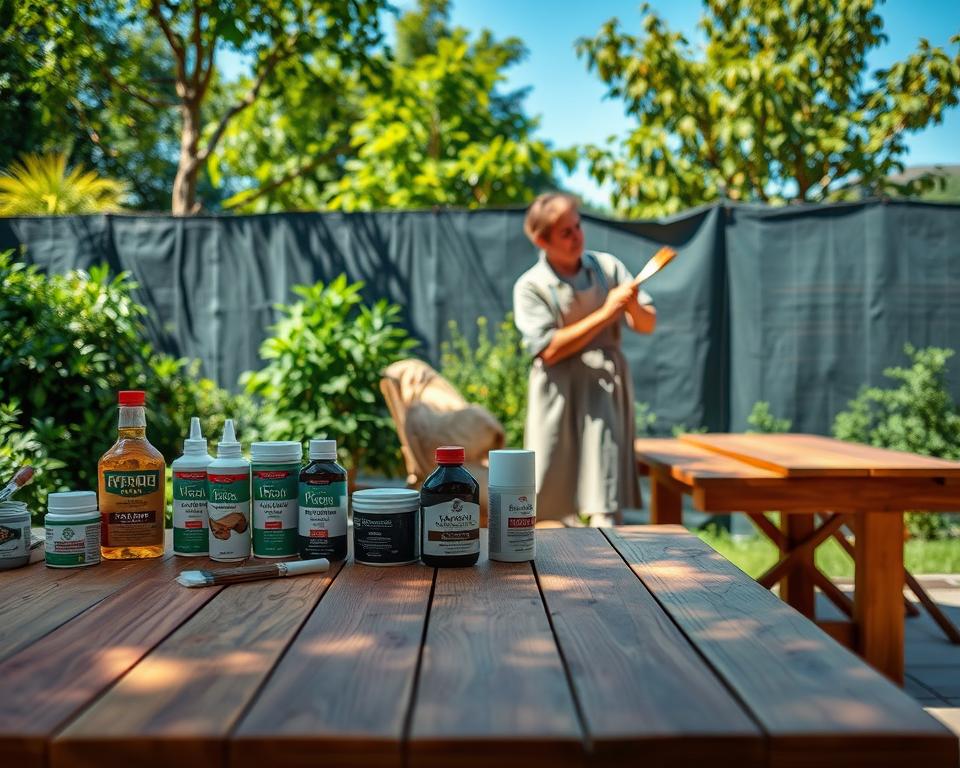
Effective outdoor wood protection involves selecting the right timber weatherproofing strategy that suits your specific needs and environmental conditions.
Selecting the Best Outdoor Wood Treatment
When choosing a wood treatment, consider these key factors:
- Water resistance capabilities
- UV protection levels
- Penetration depth
- Aesthetic finish
Application Tips for Long-Lasting Protection
To ensure optimal timber weatherproofing, follow these professional recommendations:
- Clean the wood surface thoroughly
- Ensure the surface is completely dry
- Apply treatment in dry conditions
- Use high-quality applicator brushes
- Apply multiple thin coats instead of one thick layer
Your wood treatment outdoor approach should include protecting all surfaces, including hard-to-reach areas like underneath and end grains. Professional tip: Choose treatments specifically designed for exterior wooden furniture to guarantee maximum protection.
Common Mistakes to Avoid When Building Garden Furniture
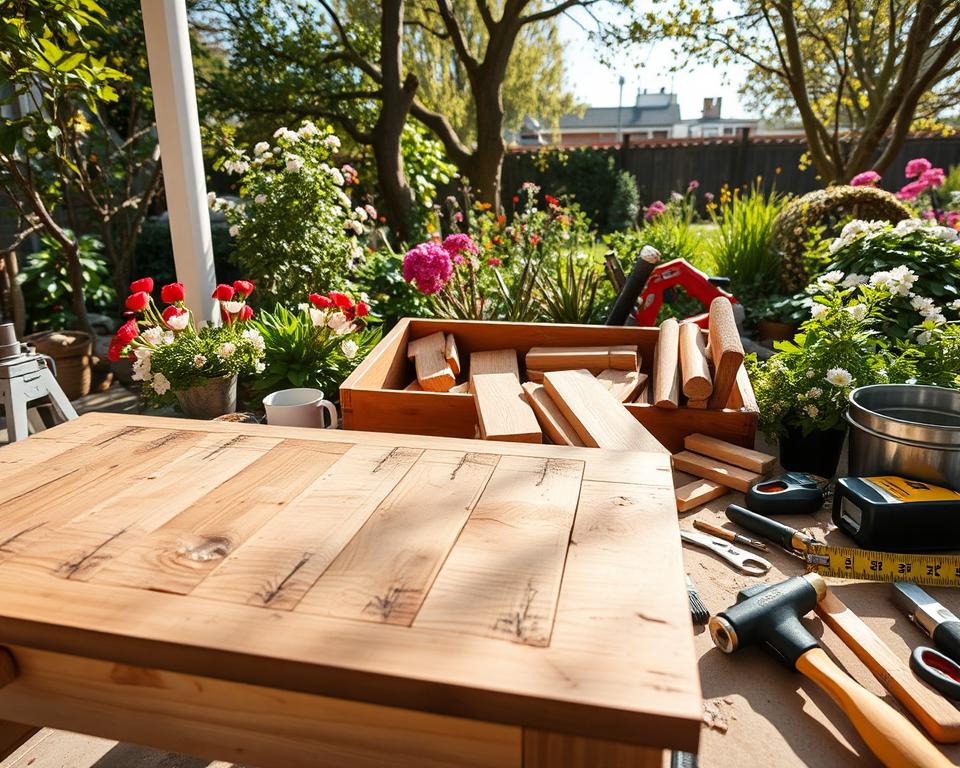
Crafting garden furniture requires precision and careful planning. DIY woodworking errors can quickly transform your project from a dream to a disappointment. Understanding common pitfalls will help you create sturdy, long-lasting outdoor furniture.
When embarking on garden furniture construction, several critical mistakes can compromise your project’s quality and durability:
- Selecting inappropriate timber for outdoor conditions
- Neglecting proper weatherproofing techniques
- Using incorrect fixing materials that rust
- Inadequate structural bracing
Wood selection plays a crucial role in successful garden furniture construction. Cheap timber might save money initially but can lead to rapid deterioration. Invest in quality, weather-resistant woods like cedar or treated pine that can withstand British weather conditions.
| Common Error | Potential Consequence | Prevention Strategy |
|---|---|---|
| Incorrect measurements | Misaligned structures | Double-check measurements before cutting |
| Poor sanding | Splinters and rough surfaces | Use progressive sandpaper grits |
| Rushed finishing | Inadequate protection | Apply multiple thin coats of sealant |
“Measure twice, cut once” – A woodworker’s timeless wisdom
Garden furniture construction tips emphasise checking for squareness during assembly. Misaligned legs or uneven surfaces can create unstable furniture that looks unprofessional and potentially dangerous.
By understanding these DIY woodworking errors, you’ll create beautiful, durable garden furniture that withstands the test of time and British weather.
Maintenance Tips for Your Wooden Garden Table
Preserving your handcrafted wooden garden table requires consistent care and attention. Proper garden table maintenance ensures your outdoor furniture remains beautiful and functional for years to come. Protecting your investment means understanding the nuances of wooden table upkeep through every season.
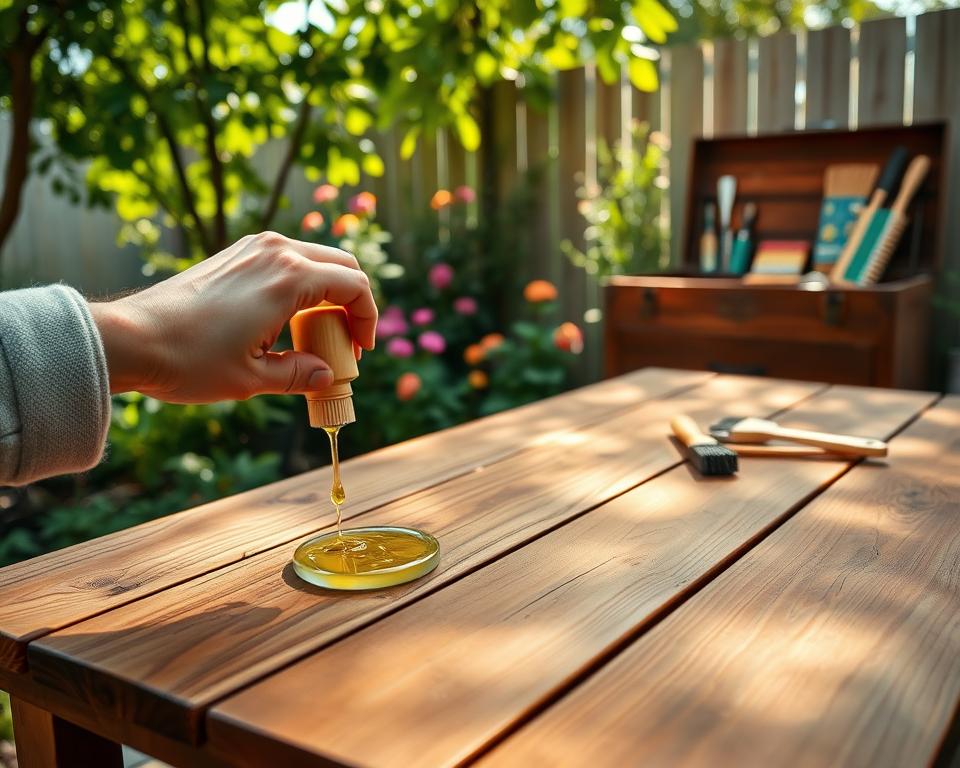
Regular outdoor furniture care helps prevent damage and extends the life of your cherished garden piece. Follow these essential maintenance guidelines to keep your table looking pristine:
- Clean the surface thoroughly after each use
- Remove debris with a soft brush
- Avoid harsh chemical cleaners
- Protect from direct prolonged sunlight
Seasonal Care and Cleaning
Each season presents unique challenges for wooden garden furniture. In spring, inspect your table for winter damage. Summer requires regular cleaning to prevent dirt accumulation. Autumn calls for protective treatments, while winter demands careful storage or covering.
Reapplying Protective Finishes
Recognising when to refinish is crucial for wooden table upkeep. Watch for these signs that indicate your table needs attention:
- Water no longer beads on the surface
- Wood appears dry or grey
- Finish shows wear in high-contact areas
Pro tip: Light sanding before applying new protective coatings ensures better adhesion and a smoother finish.
Conclusion
Building your own wooden garden furniture is an incredibly rewarding experience that combines practical skills with creative expression. Your DIY garden table project represents more than just a piece of outdoor furniture—it’s a testament to your craftsmanship and determination.
Throughout this guide, you’ve learned essential woodworking techniques that extend far beyond a single project. From selecting materials to precise cutting and careful assembly, each step has equipped you with valuable skills for future wooden garden furniture building endeavours. The knowledge you’ve gained will serve as a solid foundation for more complex woodworking challenges.
Remember that your first project may not be perfect, but it is a significant milestone in your crafting journey. Every cut, sanding stroke, and finishing touch represents personal growth and developing expertise. The unique table you’ve created will not only provide functional outdoor seating but also bring immense personal satisfaction every time you enjoy your handcrafted piece.
Your commitment to learning and creating has transformed a collection of timber and tools into a beautiful, functional garden asset. Embrace the imperfections, celebrate your achievements, and look forward to the many woodworking projects that await you in the future.
FAQ
How long does it take to build a wooden garden table?
The time required to build a wooden garden table varies depending on your woodworking experience and the complexity of the design. For a beginner, you should expect to spend approximately 12-16 hours spread across several days. This includes time for planning, cutting, assembly, sanding, and finishing. More experienced woodworkers might complete the project more quickly, potentially in a weekend.
What is the most cost-effective wood for an outdoor garden table?
Pressure-treated pine is typically the most budget-friendly option for outdoor furniture. It offers good durability and resistance to rot at a lower cost compared to hardwoods. Expect to spend around £50-£100 on timber for a standard-sized garden table. If you’re looking for a balance between cost and longevity, consider cedar or treated softwoods which provide better weather resistance while remaining relatively affordable.
Do I need professional woodworking experience to build a garden table?
No, you don’t need professional experience. This project is suitable for beginners with basic DIY skills and access to standard woodworking tools. Following a detailed guide, taking your time, and being patient with each step are more important than prior professional experience. Watching online tutorials and practicing basic techniques can help build your confidence before starting the project.
What protective treatments work best for outdoor wooden furniture?
For outdoor wooden garden tables, exterior wood oils and marine-grade varnishes provide excellent protection. Look for treatments that offer:
– UV resistance
– Water repellence
– Fungal and rot protection
– Flexibility to accommodate wood movement
Brands like Cuprinol, Ronseal, and Sadolin offer high-quality exterior wood treatments specifically designed for garden furniture.
How often should I maintain my wooden garden table?
Regular maintenance is crucial for longevity. Annually, you should:
– Clean the table thoroughly
– Inspect for any damage
– Reapply protective finish
– Check and tighten any loose fixings
In harsh British weather conditions, you might need to retreat the table every 18-24 months to maintain optimal protection and appearance.
Can I customise the table design to fit my specific garden space?
Absolutely! One of the primary advantages of building your own garden table is complete customisation. You can:
– Adjust dimensions to suit your space
– Choose specific wood types
– Select your preferred finish
– Add unique design elements
– Create a table that perfectly matches your garden’s aesthetic and functional requirements
What safety equipment do I need for this project?
Essential safety equipment includes:
– Safety glasses to protect eyes from wood chips
– Dust mask for respiratory protection
– Hearing protection when using power tools
– Work gloves to prevent splinters
– Steel-toed boots for foot protection
Always prioritise safety when working with woodworking tools and materials.
How can I ensure my wooden garden table remains stable and level?
To ensure stability:
– Use the 3-4-5 triangle method when checking right angles
– Ensure a flat working surface during construction
– Add cross braces for additional rigidity
– Check leg alignment carefully
– Use adjustable feet or careful cutting to compensate for uneven ground
Proper initial construction and occasional maintenance will help maintain the table’s stability over time.

