Planting, growing, caring for garden bonsai + species
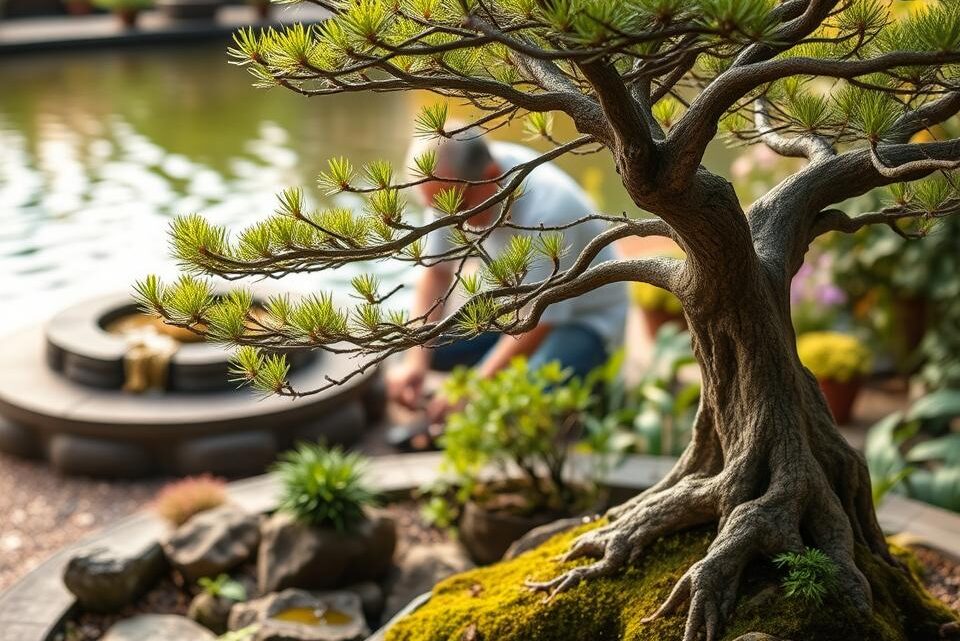
You are about to embark on a fascinating journey into the world of bonsai gardening, where patience and dedication meet artistic expression. Bonsai trees are not just miniature plants; they are living sculptures that require careful nurturing and attention.
To successfully grow and care for your bonsai, you need to understand the basics of bonsai care, including the right soil, watering, and pruning techniques. With numerous bonsai species to choose from, selecting the right one for your environment is crucial.
Inhaltsverzeichnis
Key Takeaways
- Understanding the fundamentals of bonsai gardening is essential for success.
- Proper bonsai care involves careful attention to soil, watering, and pruning.
- Selecting the right bonsai species for your climate is vital.
- Bonsai trees are living sculptures that require patience and dedication.
- Regular maintenance is necessary to keep your bonsai healthy and thriving.
The Art and History of Bonsai Gardening
With roots in ancient traditions, bonsai gardening has evolved into a sophisticated art form appreciated globally. The practice of cultivating bonsai trees is not just about growing plants in containers; it’s an intricate blend of horticulture, art, and philosophy.
Origins of Bonsai in Japan and China
The origins of bonsai gardening can be traced back to ancient China, where it was known as ‘penjing’ or ‘potted scenery.’ This art form later spread to Japan, where it evolved into ‘bonsai,’ a term that literally means ‘planted in a container.’ The Japanese refined the techniques, emphasizing harmony, balance, and simplicity.
Evolution of Bonsai in Western Gardens
Bonsai gardening was introduced to the Western world in the late 19th and early 20th centuries, captivating enthusiasts with its unique aesthetic and cultural significance. As global interest grew, so did the adaptation of bonsai techniques to suit Western climates and tastes, leading to a diverse range of bonsai styles.
The Philosophy and Aesthetics of Bonsai
Bonsai is not merely a gardening activity but a reflection of philosophical and aesthetic principles. It embodies the concept of ‘Wabi-Sabi,’ finding beauty in imperfection and impermanence. The art of bonsai encourages patience, mindfulness, and a deep connection with nature.
As Masahiko Kimura, a renowned bonsai master, once said, “Bonsai is not just about the tree; it’s about the relationship between the tree, the container, and the person who cares for it.” This encapsulates the essence of bonsai gardening, highlighting its multifaceted nature.
Understanding Bonsai Fundamentals
As you embark on your bonsai journey, grasping the fundamental concepts is essential for success. Bonsai cultivation is not just about growing trees in containers; it’s an art form that requires a deep understanding of the tree’s needs, growth patterns, and the techniques used to shape them into beautiful, miniature representations.
What Makes a Tree a “Bonsai”
A tree becomes a bonsai through careful cultivation and training. It’s not just about the species; any tree can be turned into a bonsai if it’s given the right care and attention. The key characteristics of a bonsai include a scaled-down size, a harmonious shape, and a balanced proportion between the tree and its container.
Indoor vs Outdoor Garden Bonsai
Bonsai trees can be grown both indoors and outdoors, but the choice depends on the species and your local climate. Some species thrive indoors, while others require outdoor conditions to flourish. For instance:
- Tropical species like Ficus can do well indoors.
- Temperate species such as Juniper and Maple generally prefer outdoor conditions.
UK Climate Considerations for Bonsai
The UK’s temperate maritime climate presents both opportunities and challenges for bonsai enthusiasts. Understanding these climate considerations is crucial for the health and survival of your bonsai. Key factors include:
- Protecting your bonsai from extreme temperatures.
- Managing watering schedules according to seasonal rainfall.
- Providing adequate light and humidity.
Microclimate Creation in British Gardens
Creating a microclimate in your garden can help protect your bonsai from harsh weather conditions. This can be achieved by:
- Placing bonsai in sheltered locations.
- Using protective coverings during extreme weather.
- Grouping plants together to create a more stable environment.
Essential Tools and Materials for Bonsai Gardening
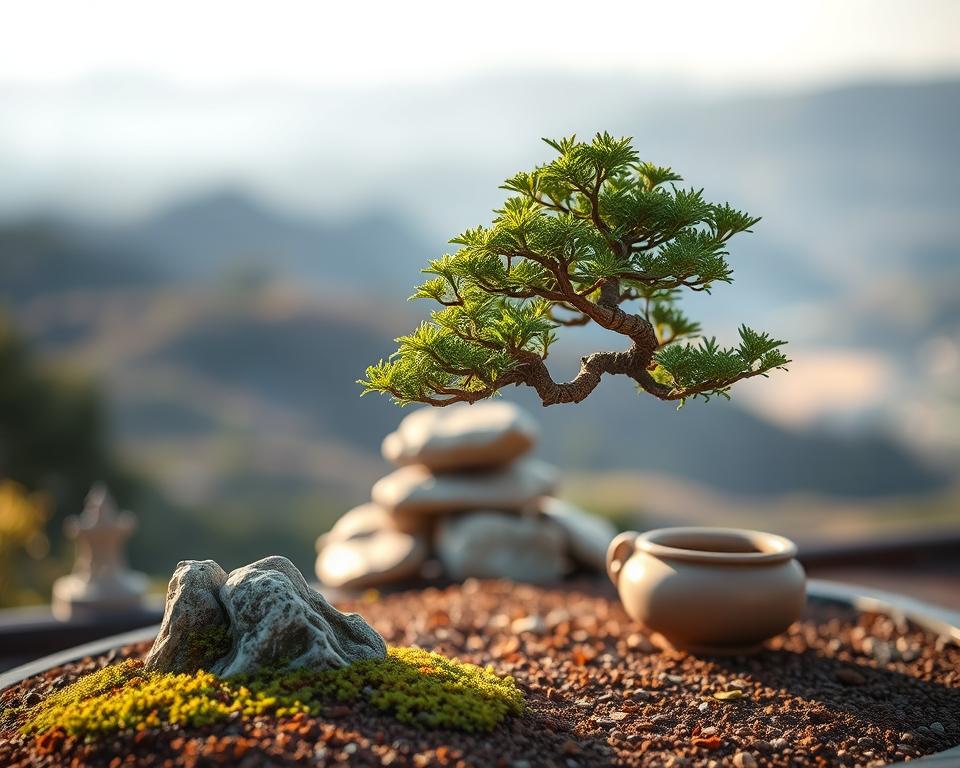
The art of bonsai gardening relies heavily on the quality of tools and materials used. To create and maintain these miniature trees, you’ll need a specific set of equipment.
Basic Bonsai Tool Kit
A basic bonsai tool kit is essential for any bonsai enthusiast. This kit typically includes:
Pruning and Cutting Tools
You’ll need pruning shears and concave cutters to trim and shape your bonsai trees. These tools help you make precise cuts, promoting healthy growth and maintaining the tree’s shape.
Wiring and Shaping Implements
Bonsai wire is used to shape and hold branches in place. You’ll also need wire cutters to trim the wire once it’s in position.
Soil Mixtures and Containers
The right soil mixture and container are crucial for your bonsai’s health. You can choose from a variety of soil mixtures specifically designed for bonsai trees.
UK-Sourced Bonsai Components
In the UK, you can find bonsai components, including soil and containers, from local nurseries and online retailers. Look for suppliers that offer high-quality, UK-sourced materials.
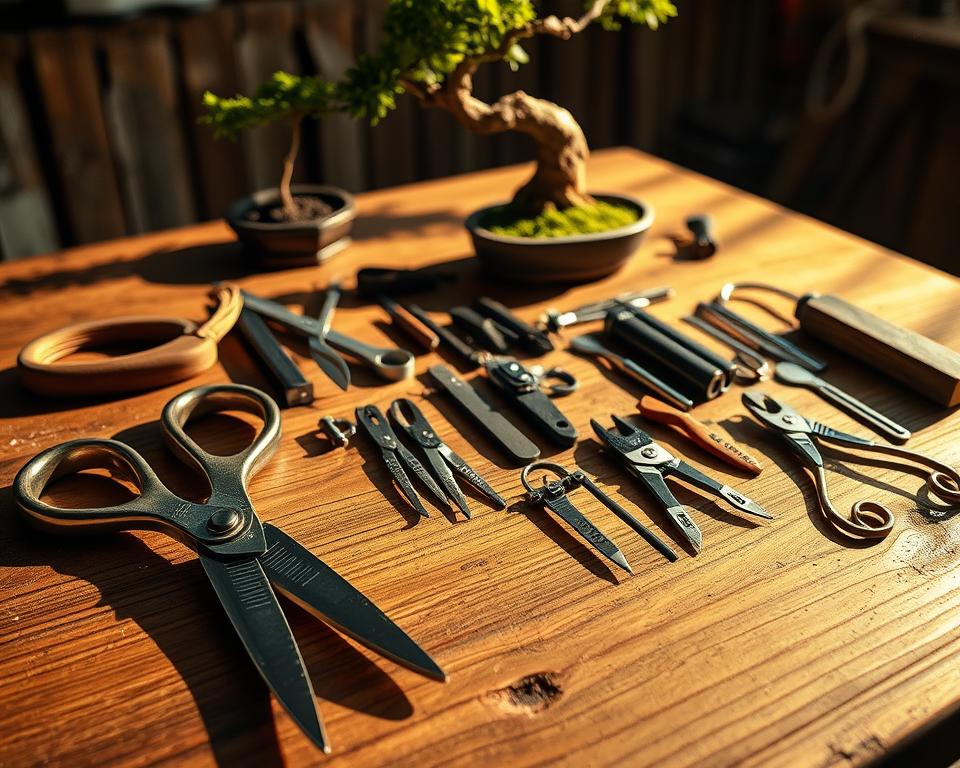
By investing in the right tools and materials, you’ll be well on your way to creating beautiful and thriving bonsai trees.
Selecting the Right Bonsai Species for Your Garden
The journey to creating a stunning bonsai begins with selecting a species that thrives in your local climate and meets your aesthetic preferences. Your choice will significantly impact the health and beauty of your bonsai.
Native British Trees for Bonsai
Native British trees are an excellent choice for bonsai gardening due to their hardiness and adaptability to the UK climate. Some popular varieties include:
- Oak: Known for their strength and durability, oak trees make robust bonsai.
- Beech: Beech trees are versatile and can be styled in various forms.
- Hawthorn: Hawthorn is a popular choice for its beautiful flowers and ability to thrive in different conditions.
Oak, Beech and Hawthorn Varieties
These native trees offer a range of characteristics that can be leveraged in bonsai design. For instance, oak trees can develop impressive trunk thickness, while beech trees are known for their smooth bark and dense foliage.
Japanese Maples and Other Deciduous Options
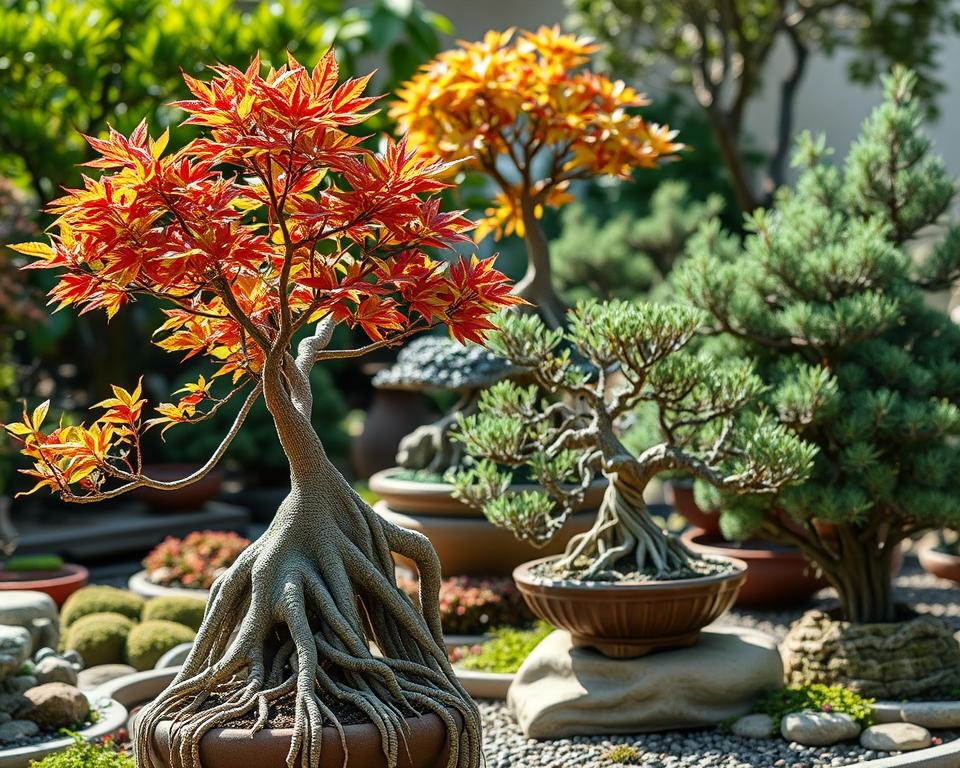
Japanese maples are highly prized for their vibrant foliage and elegant shapes. Other deciduous trees like elm and field maple also make excellent bonsai due to their hardiness and the ease with which they can be styled.
Coniferous Bonsai Varieties
Coniferous trees, such as pines, junipers, and yews, are popular for bonsai due to their evergreen foliage and ability to withstand rigorous pruning.
Pines, Junipers and Yews
- Pines: Symbolizing longevity, pines are a classic choice for bonsai.
- Junipers: Junipers are versatile and can be shaped into various styles.
- Yews: Yews are known for their dense foliage and ability to regenerate quickly.
Flowering and Fruiting Bonsai Types
For those looking to add an extra layer of beauty, flowering and fruiting bonsai species like cherry blossom or apple trees can be a delightful choice. These trees not only offer the traditional bonsai aesthetic but also provide seasonal interest with their blooms or fruit.
By considering these options and understanding the specific needs of each species, you can select the perfect bonsai for your garden, ensuring a rewarding and enjoyable bonsai gardening experience.
Planting, Growing, Caring for Garden Bonsai + Species
Embarking on the journey of bonsai cultivation requires careful consideration of several key factors. As you begin, it’s essential to understand the different methods of obtaining a bonsai tree and the initial care it requires.
Starting Your Bonsai Journey
The first step in growing bonsai is acquiring a starter plant. You have several options to consider:
- Nursery stock: Many garden centres and online retailers sell pre-bonsai trees that are ready to be styled.
- Seeds: Growing from seed allows you to control the tree’s development from the beginning.
- Cuttings: Taking cuttings from mature trees is another method of propagation.
Nursery Stock vs Seeds vs Cuttings
Each method has its advantages. Nursery stock provides a head start with pre-grown trees, while seeds offer the opportunity to shape the tree from a young age. Cuttings can be a good compromise, allowing you to replicate the characteristics of a mature tree.
Sourcing Quality Starter Plants in the UK
When sourcing nursery stock, look for reputable suppliers who specialize in bonsai trees. Ensure that the trees are healthy and well-cared for. You can find quality starter plants at:
- Specialist bonsai nurseries
- Garden centres with a bonsai section
- Online retailers who ship bonsai trees
Initial Care for New Bonsai
Once you’ve acquired your bonsai, proper initial care is crucial. This includes:
- Watering: Keep the soil consistently moist but not waterlogged.
- Lighting: Place your bonsai in a location that suits its species-specific lighting needs.
- Fertilisation: Start with a balanced, water-soluble fertiliser during the growing season.
By following these guidelines, you’ll be well on your way to successfully growing and caring for your bonsai trees.
Bonsai Planting Techniques
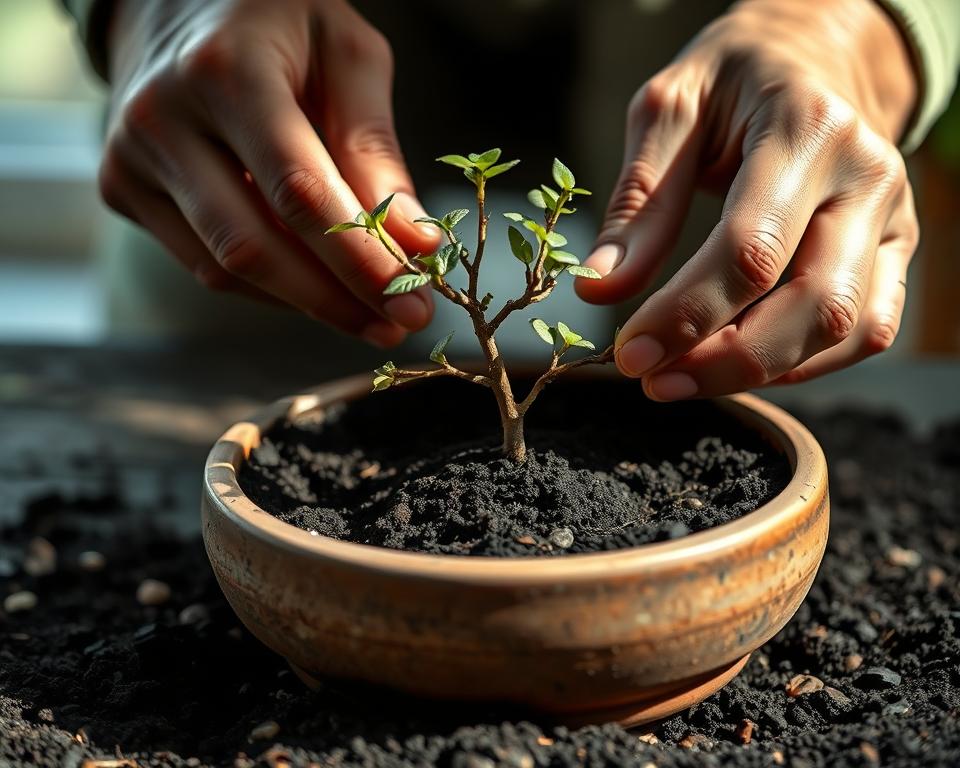
To successfully plant a bonsai, you need to understand the techniques involved in container preparation and root management. Planting a bonsai tree is a delicate process that requires attention to detail to ensure the tree thrives in its new environment.
Container Preparation and Selection
Choosing the right container is crucial for the health and aesthetic appeal of your bonsai. The container should be proportionate to the size of the tree and have adequate drainage holes to prevent waterlogged soil. Terracotta pots are a popular choice because they are breathable and help to prevent root rot.
- Ensure the container has drainage holes.
- Select a container that complements the tree’s style.
- Consider the material; terracotta is highly recommended.
Root Management During Planting
Effective root management is vital when planting a bonsai. This involves gently removing the tree from its old container, inspecting the roots, and pruning them as necessary to encourage healthy growth.
Root Pruning Fundamentals
Root pruning is a critical step in bonsai care. It involves cutting back the roots to maintain the tree’s size and promote new growth. Use sharp, sterile tools to prevent damaging the roots or introducing infection.
“The art of bonsai is not just about growing trees; it’s about cultivating patience, discipline, and a deep connection with nature.”
Initial Styling and Positioning
Once planted, the initial styling of your bonsai involves positioning the tree in the container to achieve the desired aesthetic. This may involve wiring branches to create the desired shape.
| Styling Technique | Description |
|---|---|
| Wiring | Using wire to shape branches. |
| Pruning | Cutting back branches to maintain shape. |
Post-Planting Care
After planting, it’s essential to provide your bonsai with proper care, including adequate watering, fertilization, and protection from extreme weather conditions. Regular monitoring will help ensure your bonsai thrives.
Watering and Feeding Your Bonsai
To keep your bonsai thriving, understanding its watering and feeding needs is essential. Proper care in these areas will significantly impact the health and longevity of your bonsai trees.
Seasonal Watering Requirements
Watering your bonsai correctly is vital, and this varies with the seasons. During the summer months, your bonsai may require more frequent watering due to higher temperatures and increased evaporation.
Adjusting for UK Rainfall Patterns
In the UK, rainfall can be unpredictable. It’s crucial to monitor weather forecasts and adjust your watering schedule accordingly to avoid overwatering or underwatering your bonsai.
Fertilisation Schedule and Types
Fertilising your bonsai is as important as watering. The type and frequency of fertilisation depend on the species of your bonsai and its growth stage.
Organic vs Chemical Fertilisers
When it comes to fertilisers, you can choose between organic and chemical options. Organic fertilisers release nutrients slowly and are generally safer for your bonsai, while chemical fertilisers provide quick nutrients but require careful application to avoid burning your tree’s roots.
Water Quality Considerations
The quality of water used for your bonsai can affect its health. Tap water may contain high levels of chlorine or fluoride, which can be harmful. Consider using rainwater or filtered water as an alternative.
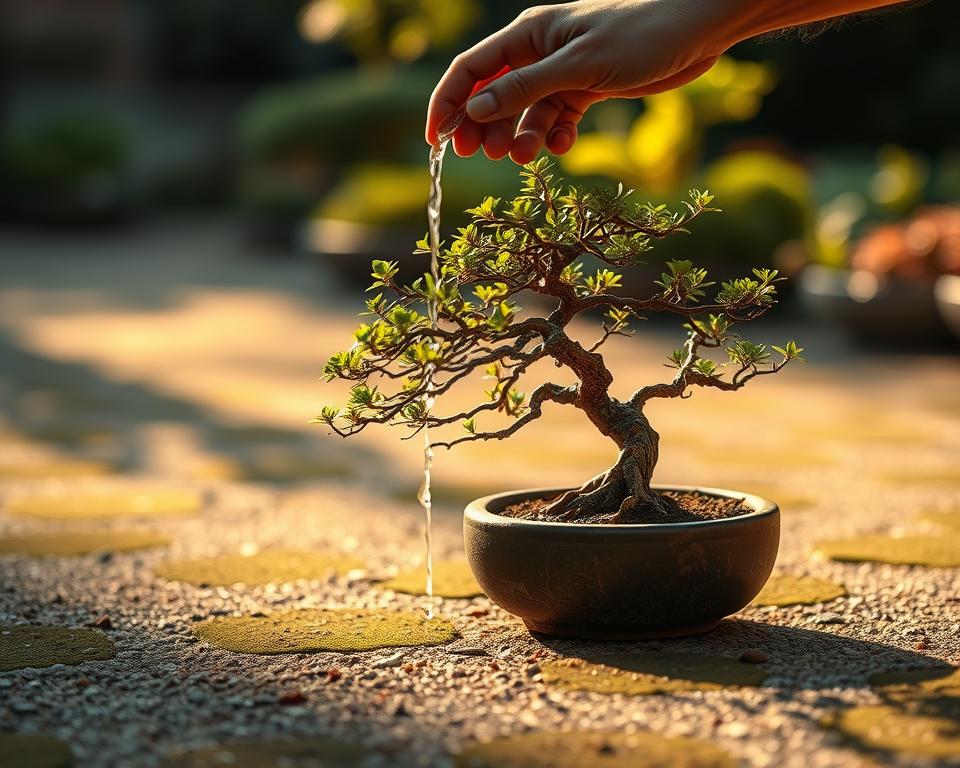
By understanding and implementing these watering and feeding strategies, you can ensure your bonsai remains healthy and continues to thrive.
Pruning and Shaping Techniques
To achieve the desired form and beauty in your bonsai, mastering pruning and shaping techniques is essential. Pruning is not just about cutting branches; it’s an art that helps control the tree’s shape, promotes healthy growth, and enhances its aesthetic appeal.
Structural Pruning Basics
Structural pruning involves removing or reducing branches to create the basic shape of your bonsai. This process requires a good understanding of the tree’s natural growth patterns. Maintenance vs developmental pruning are two approaches you need to consider. Maintenance pruning is about keeping your bonsai in its desired shape, while developmental pruning is used to guide the tree’s growth into the desired form.
Maintenance vs Developmental Pruning
Maintenance pruning is typically done regularly to remove new growth that doesn’t fit the bonsai’s design. Developmental pruning, on the other hand, is more invasive and is used to correct the tree’s structure or to achieve a specific design goal. “Pruning is an ongoing process that requires patience and attention to detail,” as noted by bonsai experts.
Wiring Methods for Bonsai
Wiring is a technique used to shape your bonsai by bending branches into the desired position. The choice between aluminium and copper wire depends on the tree species and the desired shape.
Aluminium vs Copper Wire Applications
Aluminium wire is softer and easier to use, making it suitable for most beginners. Copper wire, being stronger, is used for more rigid branches or for creating more dramatic shapes. The wire should be removed after a few months to prevent damage to the tree.
Creating Different Bonsai Styles
Bonsai trees can be styled in various forms, including formal upright, informal upright, slanting, cascade, and semi-cascade. Each style requires a different approach to pruning and wiring.
Formal Upright, Informal Upright, and Slanting Styles
The formal upright style is characterized by a straight trunk and balanced branches. The informal upright style allows for more flexibility in branch placement. The slanting style gives a dynamic effect by having the trunk lean to one side.
Cascade and Semi-Cascade Forms
Cascade and semi-cascade styles involve branches that flow downwards, often below the base of the pot. These styles require careful wiring and pruning to achieve a natural, flowing effect.
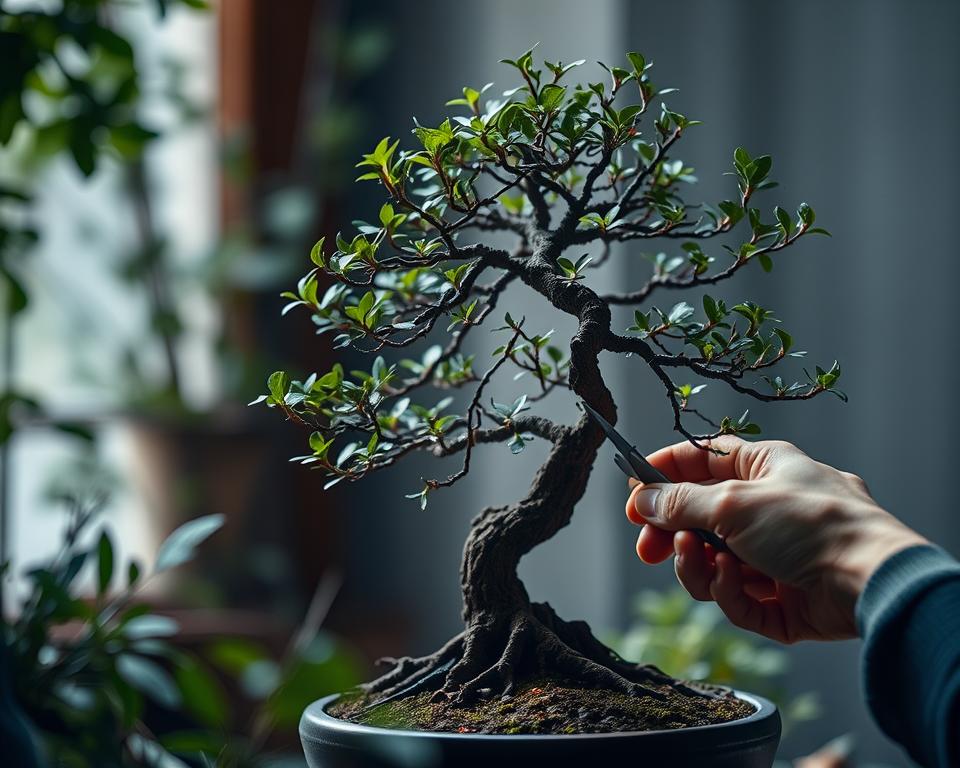
By mastering these pruning and shaping techniques, you can create beautiful bonsai trees that reflect your creativity and patience. Remember, the key to successful bonsai cultivation is regular maintenance and a willingness to learn and adapt.
Repotting Your Garden Bonsai
Understanding when and how to repot your bonsai is key to its survival and beauty. Repotting is a critical process that involves transferring the bonsai to a new container with fresh soil, which is essential for maintaining its health.
When to Repot Different Species
Different bonsai species have varying needs when it comes to repotting. For example, deciduous trees like maples typically require repotting every two to three years, while conifers may only need repotting every four to five years. It’s crucial to research the specific needs of your bonsai species to determine the best repotting schedule.
Step-by-Step Repotting Process
The repotting process involves several steps. First, prepare a new container with adequate drainage holes. Then, gently remove the bonsai from its old container, taking care not to damage the roots. Root pruning is a vital part of this process, as it helps maintain the tree’s health and promotes new growth.
Root Work During Repotting
During repotting, inspect the roots carefully and prune any that are circling, dead, or damaged. This encourages the growth of new roots and helps maintain the bonsai’s overall health. Use sharp, sterile tools to prevent infection.

Post-Repotting Care
After repotting, your bonsai requires careful attention. Water it thoroughly and keep the soil consistently moist but not waterlogged. Monitor your bonsai closely for signs of stress or disease, and be prepared to adjust its care accordingly. With proper post-repotting care, your bonsai will continue to thrive.
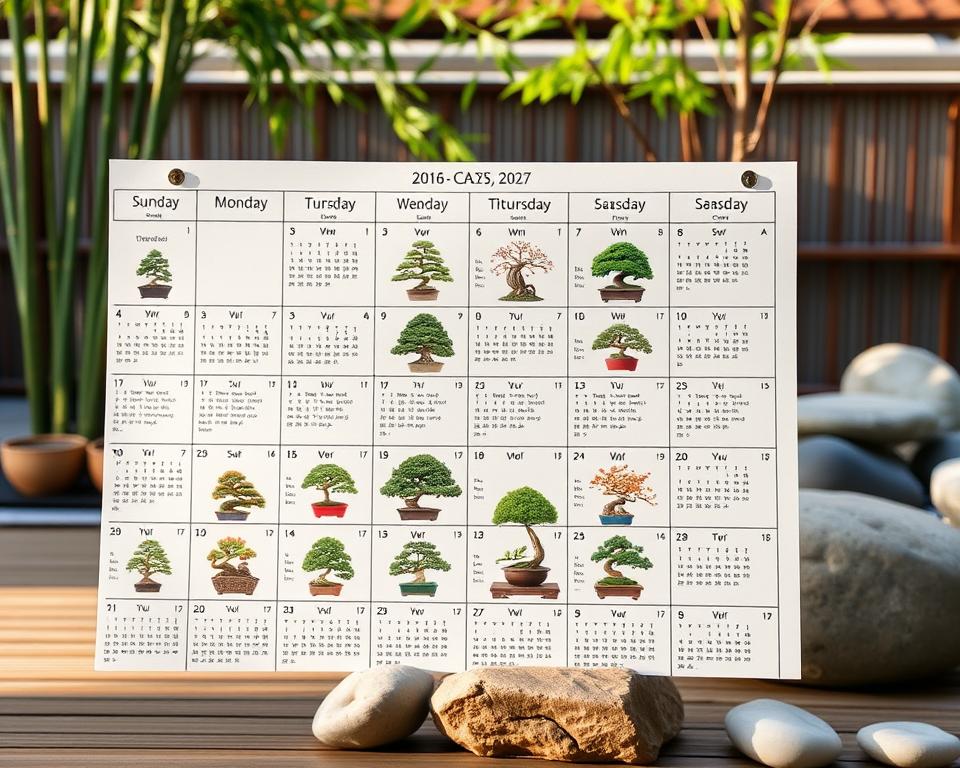
Seasonal Care Calendar for Bonsai
As the seasons change, so do the needs of your bonsai tree, requiring a tailored care approach. Understanding and adapting to these seasonal changes is crucial for the health and aesthetic appeal of your bonsai.
Spring and Summer Care
During spring and summer, your bonsai is in its active growth phase. Regular watering is essential, as the tree uses a lot of water during this period. Ensure the soil is moist but not waterlogged.
Growth Management in Active Seasons
Managing growth during spring and summer involves regular pruning to maintain shape and encourage healthy growth. Monitor your bonsai’s response to the increasing temperatures and adjust its care accordingly.
Autumn Preparation Techniques
As autumn approaches, prepare your bonsai for the colder months by reducing watering and stopping fertilisation. This helps harden the tree, making it more resilient to winter conditions.
Winter Protection in British Climate
Winter care involves protecting your bonsai from frost and freezing temperatures. Move your bonsai to a sheltered location or use protective covering to shield it from harsh weather.
Cold Frame and Greenhouse Options
Consider using a cold frame or greenhouse to provide additional protection. These environments can offer a more stable temperature, helping your bonsai survive the winter months.
By following this seasonal care calendar, you can ensure your bonsai remains healthy and thrives throughout the year.
“The art of bonsai is not just about growing trees, it’s about cultivating patience, dedication, and harmony with nature.”
This philosophy underscores the importance of understanding and responding to the seasonal needs of your bonsai.
Troubleshooting Common Bonsai Problems
As you embark on your bonsai journey, you may encounter several challenges that can be overcome with the right knowledge. Bonsai cultivation is a rewarding hobby, but it requires understanding the potential issues that can arise and how to address them effectively.
Pest and Disease Management
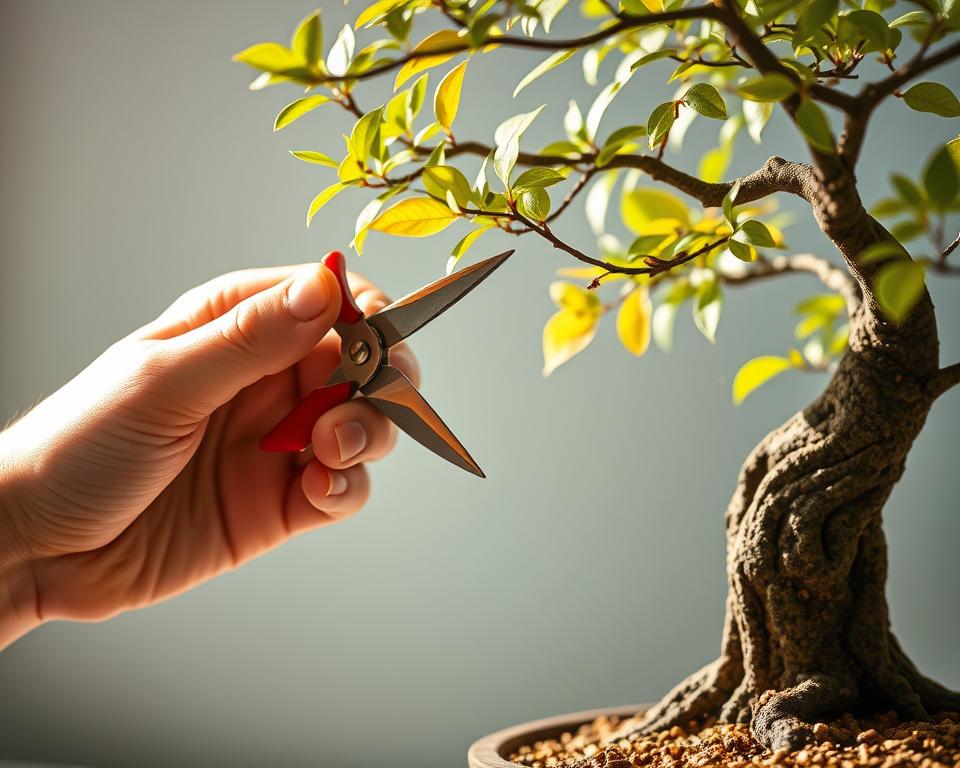
Managing pests and diseases is crucial for the health of your bonsai. In the UK, common pests include aphids, spider mites, and scale insects. Regular inspection is key to identifying these issues early. For organic solutions, consider using neem oil or insecticidal soap.
Common UK Pests and Organic Solutions
- Aphids: Use neem oil or a strong jet of water to dislodge them.
- Spider mites: Increase humidity and apply miticides if necessary.
- Scale insects: Manually remove them with a soft brush and apply insecticidal soap.
Addressing Growth Issues
Growth issues in bonsai can be due to various factors, including improper watering, insufficient light, or poor soil quality. Ensure you’re providing the right conditions for your bonsai species. For example, some species require more light, while others prefer shade.
Recovering Neglected Bonsai
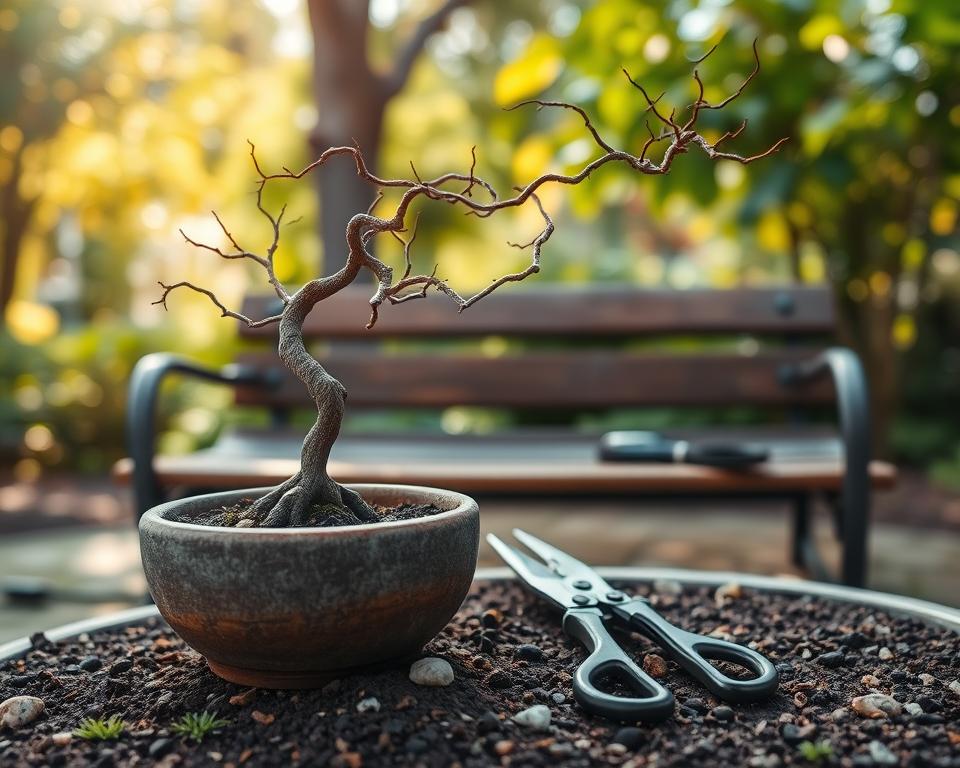
If your bonsai has been neglected, it’s not too late to revive it. Start by assessing its condition, then gradually reintroduce proper care, including watering, fertilizing, and pruning. Patience is crucial as recovery can take time.
Dealing with Weather Extremes
UK weather can be unpredictable, and bonsai trees may face challenges from extreme temperatures, wind, or frost. Protect your bonsai by providing shelter during harsh weather conditions and adjusting your care routine accordingly.
By understanding and addressing these common bonsai problems, you can ensure the health and longevity of your trees. Regular care and attention will help your bonsai thrive.
Advanced Bonsai Techniques
As you progress in your bonsai journey, you’ll want to explore advanced techniques to elevate your trees. Mastering these techniques will not only enhance the aesthetic appeal of your bonsai but also demonstrate your skill and dedication to this ancient art form.
Creating Deadwood Features
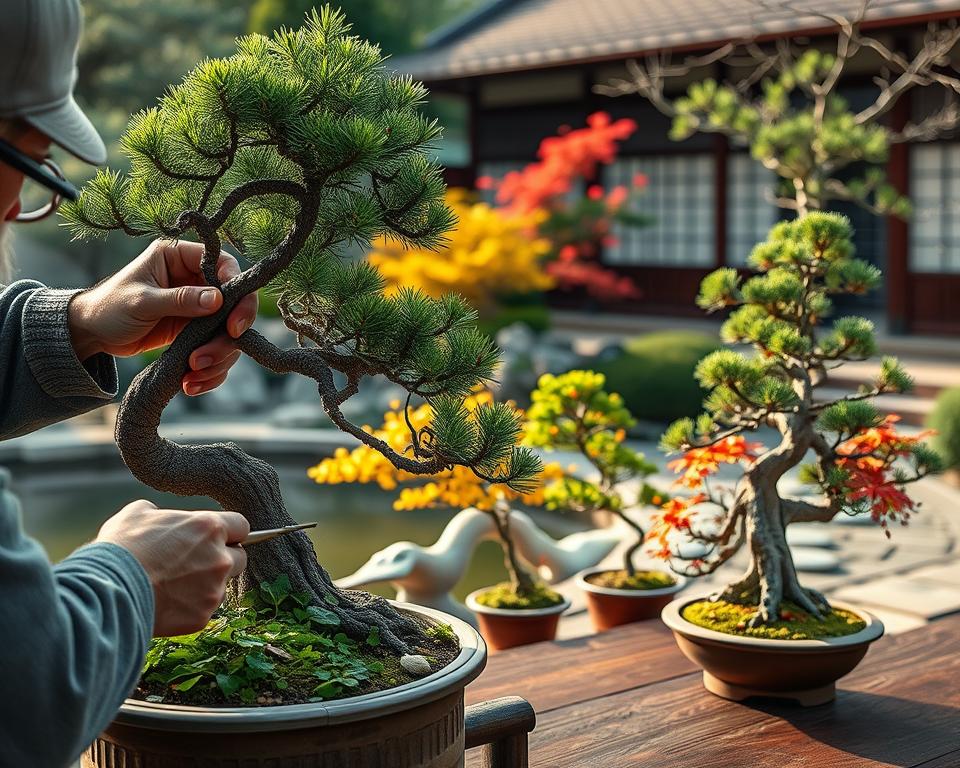
Deadwood features, such as jin and shari, add character and age to your bonsai. These techniques involve carefully removing bark and manipulating branches to create the appearance of natural decay.
Jin and Shari Techniques
Jin involves stripping the bark from a branch tip, creating a dead, weathered appearance. Shari, on the other hand, is the removal of bark from a larger area of the trunk or branch, often creating a dramatic, aged effect. “The art of creating jin and shari requires patience and precision,” notes bonsai expert, John Naka.
‘A well-crafted jin or shari can transform a bonsai, giving it a sense of history and maturity.’
Forest and Group Plantings
Creating forest or group plantings is an advanced technique that involves planting multiple bonsai trees together to create a harmonious, natural landscape. This style requires careful planning and maintenance to achieve a balanced composition.
Bonsai Display Principles
The display of your bonsai is crucial to its overall impact. Consider the following principles when showcasing your trees:
- Balance: Ensure the bonsai is balanced in its container.
- Harmony: Choose a container that complements the tree.
- Proportion: Ensure the size of the bonsai is proportionate to its container.
Seasonal Bonsai Exhibition Preparation
Preparing your bonsai for exhibitions requires meticulous care. This includes regular pruning, wiring, and styling to ensure your tree is at its best for the show. “Exhibiting bonsai is a great way to share your passion with others and learn from fellow enthusiasts,” says a seasoned exhibitor.
Conclusion
As you conclude your journey through the world of bonsai gardening, it’s essential to recap the key principles that will help you succeed in this ancient art form. By understanding the fundamentals of bonsai care, you can create a thriving miniature tree that brings serenity and beauty to your garden.
A bonsai gardening summary highlights the importance of selecting the right species for your climate, mastering planting techniques, and providing regular care through watering, feeding, and pruning. By following these guidelines, you can enjoy a healthy and aesthetically pleasing bonsai tree.
A bonsai care recap emphasizes the need for seasonal attention, including repotting, protection from extreme weather, and pest management. By staying vigilant and adapting to your tree’s needs, you can ensure its continued health and beauty.
As you continue to nurture your bonsai, remember that patience and dedication are key to mastering this rewarding hobby. With the knowledge gained from this guide, you’re well-equipped to embark on your bonsai journey and enjoy the many rewards it has to offer.
FAQ
What are the basic requirements for growing a bonsai tree in the UK?
To grow a bonsai tree in the UK, you need to provide it with the right climate, soil, watering, and pruning. Most bonsai trees prefer well-draining soil and partial shade, especially during the hottest part of the day. You should also be mindful of the UK’s temperate maritime climate, with cool winters and mild summers, and adjust your care accordingly.
How often should I water my bonsai tree?
The frequency of watering your bonsai tree depends on several factors, including the species, climate, and time of year. As a general rule, you should check the soil moisture daily during the growing season and adjust your watering schedule accordingly. In the UK’s cooler climate, you may need to water less frequently during the winter months.
What is the best way to fertilise my bonsai tree?
You can fertilise your bonsai tree using either organic or chemical fertilisers. Organic options, such as compost or manure tea, release nutrients slowly and promote healthy soil biota. Chemical fertilisers, on the other hand, provide a quick boost of nutrients but may require more frequent application. Consider using a balanced, water-soluble fertiliser during the growing season.
How do I prune my bonsai tree to maintain its shape?
Pruning is a crucial aspect of bonsai care, and the technique will vary depending on the species and desired shape. Generally, you should prune your bonsai tree during the dormant season to minimise stress and promote healthy growth. Use sharp, clean tools to remove any dead or damaged branches, and shape the tree according to your desired style.
Can I grow a bonsai tree indoors in the UK?
While some bonsai species can be grown indoors, many require outdoor conditions to thrive. If you want to grow a bonsai tree indoors, choose a species that tolerates low light and maintain a consistent temperature between 15°C to 20°C. Be aware that indoor conditions can be dry, so you may need to increase the humidity around your bonsai tree.
How do I protect my bonsai tree from pests and diseases?
To protect your bonsai tree from pests and diseases, maintain good hygiene, inspect your tree regularly, and take action promptly if you notice any issues. Use organic or integrated pest management (IPM) strategies whenever possible, and consider using physical barriers or chemical controls as a last resort.
What are the benefits of repotting my bonsai tree?
Repotting your bonsai tree allows you to refresh the soil, prune the roots, and inspect the tree’s root system. This process helps maintain the tree’s health, promotes healthy growth, and prevents the tree from becoming pot-bound.
How do I create a bonsai display?
Creating a bonsai display involves selecting a suitable container, arranging the tree and any accompanying elements, such as rocks or moss, and considering the overall aesthetic. You should also think about the tree’s style, size, and proportions when creating your display.
What are some common mistakes to avoid when growing a bonsai tree?
Common mistakes to avoid when growing a bonsai tree include over-watering, under-watering, and neglecting to prune or fertilise. You should also be mindful of the tree’s specific needs, such as protection from extreme weather conditions or pests, and take steps to address any issues promptly.