Building a Natural Stone Fountain Yourself – How to Do It Right
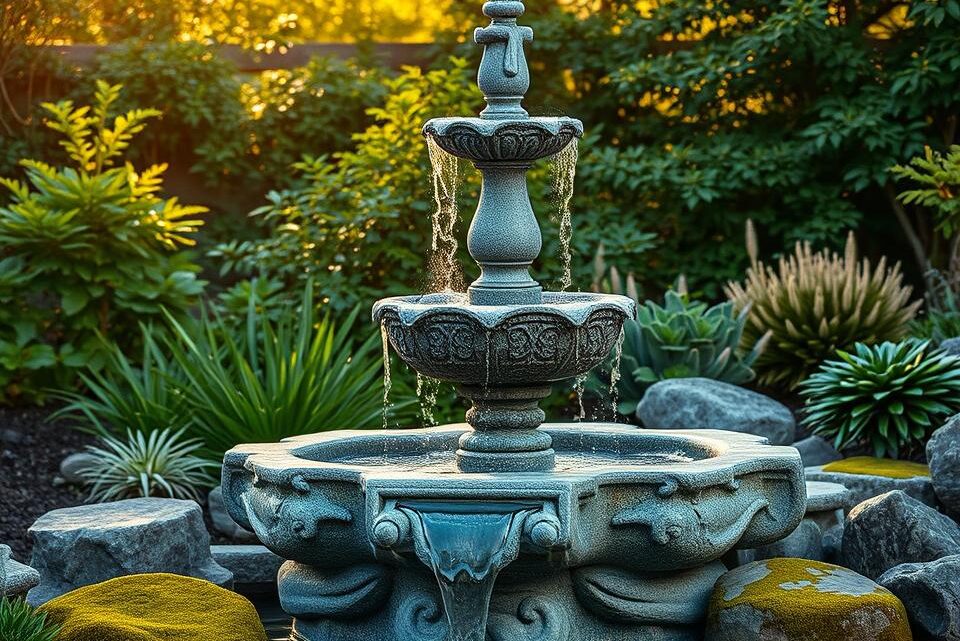
Creating a natural stone fountain in your garden can be a rewarding DIY project, adding a soothing water feature that enhances the beauty of your outdoor space. You can enjoy the serene sound of running water and the visual appeal of a well-crafted fountain.
However, undertaking such a project requires careful planning and execution. You need to consider several factors, including the design, materials, and installation process, to ensure your fountain is both functional and aesthetically pleasing.
By following the right guidance, you can successfully create a stunning garden water feature that becomes a focal point in your garden.
Inhaltsverzeichnis
Key Takeaways
- Plan your fountain design carefully to ensure it complements your garden.
- Choose the right materials for your fountain to withstand the elements.
- Consider the installation process to avoid common pitfalls.
- Regular maintenance is crucial to keep your fountain in good condition.
- A well-designed fountain can enhance the beauty and tranquility of your garden.
The Beauty and Benefits of Natural Stone Fountains
Natural stone fountains have become a popular feature in UK garden design, providing both visual and psychological benefits. These beautiful structures can transform an ordinary garden into a serene and inviting space.
Aesthetic Appeal in UK Gardens
A natural stone fountain adds a touch of elegance to any UK garden. The sound of gently flowing water creates a soothing atmosphere, while the stone’s natural beauty complements the surrounding landscape. You can choose from various styles, from modern to traditional, to suit your garden’s design.
Psychological Benefits of Water Features
The sound of water from your outdoor fountain has a calming effect, reducing stress and promoting relaxation. This can turn your garden into a peaceful retreat, perfect for unwinding after a long day.
Increasing Property Value
Installing a natural stone fountain can increase your property value. A well-designed garden with a beautiful fountain can be a major selling point, making your home more attractive to potential buyers.
By incorporating a natural stone fountain into your UK garden design, you not only enhance its beauty but also create a tranquil atmosphere that can boost your property’s value.
Planning Your Natural Stone Fountain Project
To ensure your natural stone fountain project is successful, thorough planning is required. This involves several key considerations to ensure your fountain complements your garden and meets local regulations.
Assessing Your Garden Space
Begin by assessing your garden space to determine the most suitable location for your fountain. Consider the layout, existing features, and the overall aesthetic you wish to achieve. This assessment will help you visualize how the fountain will integrate with your garden design.
Determining the Right Size and Scale
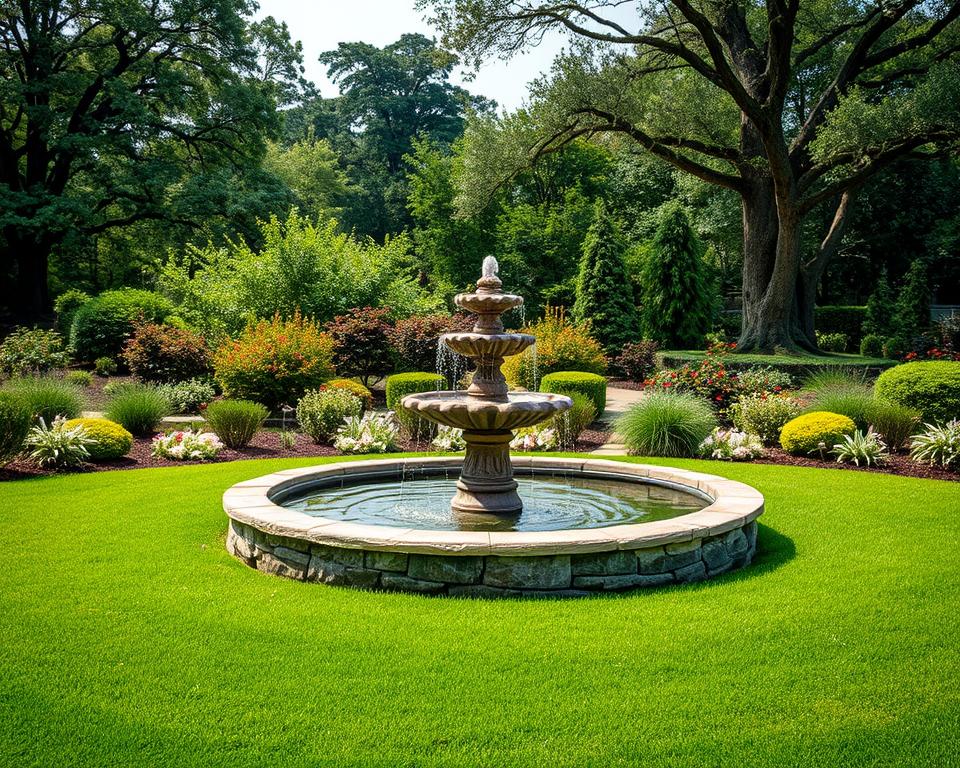
The size and scale of your fountain should be proportionate to your garden. A large fountain in a small garden can be overwhelming, while a small fountain in a large garden may not have the desired impact. Measure your garden and consider the scale of other features to determine the appropriate size for your fountain.
Selecting a Suitable Location
Choose a location that is both visually appealing and functional. Ensure the site is level and has access to a power supply if needed. Consider the proximity to seating areas or pathways to maximize the enjoyment of your fountain.
UK Planning Permissions and Regulations
Familiarize yourself with UK planning permissions and regulations regarding water features. While many small fountains do not require permission, larger or more complex installations may need approval. Check with your local authority to ensure compliance and avoid potential issues.
Different Types of Natural Stone Fountains
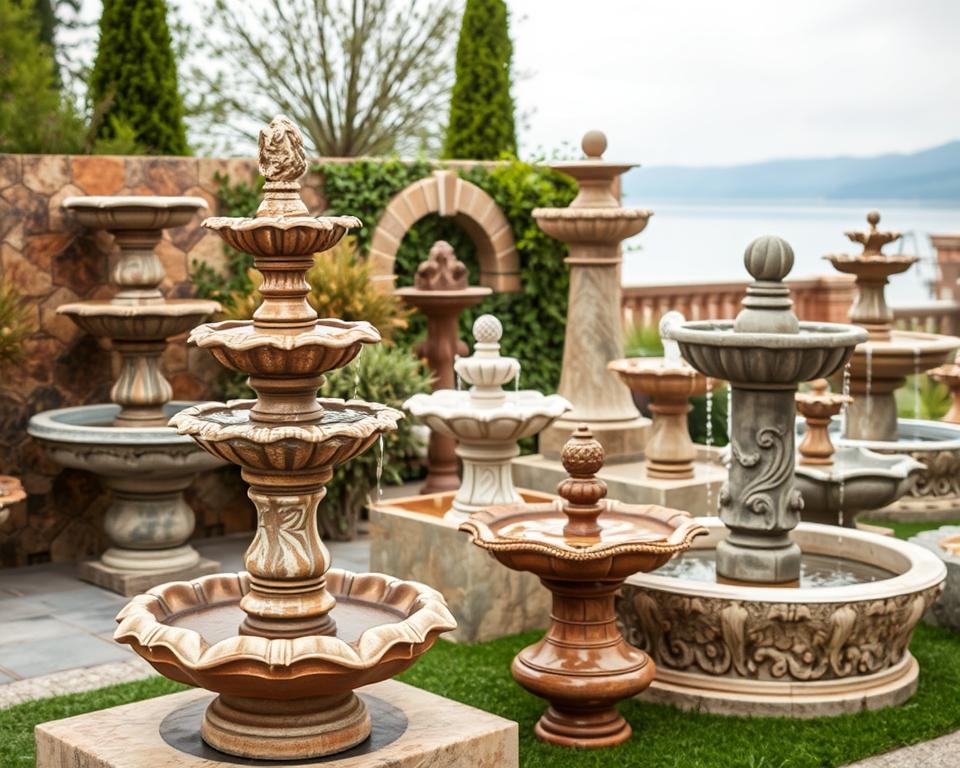
Natural stone fountains come in various styles, each offering a unique aesthetic to your outdoor space. You can choose from a range of designs to suit your garden’s character and your personal preferences.
Wall-Mounted Fountains
Wall-mounted fountains are ideal for smaller gardens or where space is limited. They can be attached to a house wall, garden wall, or even a freestanding wall. These fountains create a soothing, cascading effect and can be designed with various stone types and styles.
Freestanding Fountains
Freestanding fountains are versatile and can be placed in various locations within your garden. They come in different sizes and can be used as a focal point or integrated into a larger landscape design. Freestanding fountains can be particularly effective in larger gardens or parks.
Pond Fountains
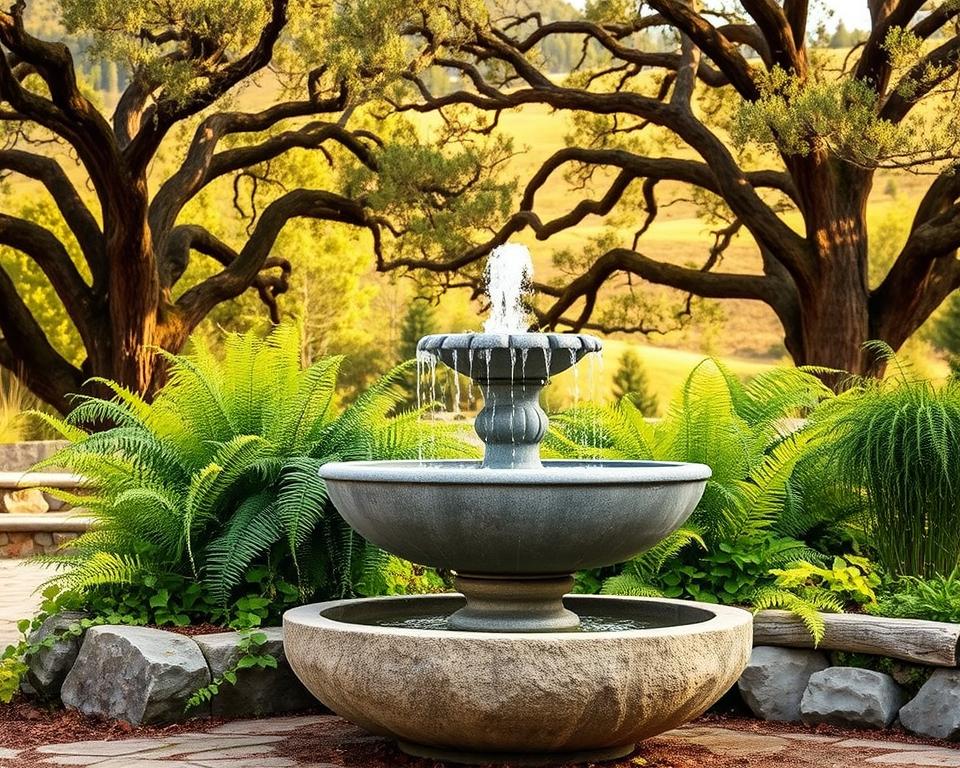
Pond fountains are designed to be integrated into existing ponds, adding movement and sound to the water. They help to aerate the pond, promoting healthier aquatic life. Pond fountains can be customized to fit the size and style of your pond.
Bubbling Rock Fountains
Bubbling rock fountains feature a natural rock or stone with water bubbling out of it, creating a subtle, serene effect. These fountains are often used in modern garden designs and can be a striking feature in any outdoor space.
Budgeting for Your Fountain Project in the UK
A well-planned budget is the foundation of a successful DIY natural stone fountain project. To ensure your project’s financial viability, you need to consider several key factors.
Average Costs of Materials
The cost of materials for your natural stone fountain can vary significantly depending on the type and quality of stone you choose. On average, you can expect to spend between £500 to £2,000 on stone alone, depending on the size and complexity of your design. Other materials such as pumps, pipes, and sealants will add to the overall cost.
Tool Investment vs. Rental Options
You may need to invest in or rent specialized tools for working with natural stone. While purchasing these tools outright can be expensive, renting them for the duration of your project can be a more cost-effective option. For instance, a stone chisel or a wet saw can be rented for £50 to £100 per day.
Potential Savings Compared to Professional Installation
One of the main advantages of undertaking a DIY natural stone fountain project is the potential for significant cost savings. By doing the work yourself, you can save on labor costs, which can be as much as 50% of the total project cost. This can translate to savings of £1,000 to £5,000 or more, depending on the project’s complexity.
Hidden Costs to Consider
While budgeting for your natural stone fountain, it’s essential to consider potential hidden costs. These can include unexpected expenses for additional materials, repairs, or modifications to your original plan. Setting aside a contingency fund of 10% to 20% of your total budget can help mitigate these risks.
By carefully planning your budget and considering all the factors involved, you can successfully complete your natural stone fountain project without breaking the bank.
Essential Tools and Materials Checklist
Before you start building your natural stone fountain, it’s crucial to gather all the necessary tools and materials. Having everything on hand will streamline the construction process and help avoid delays.
Required Tools for Stone Working
To work with natural stone, you’ll need a set of specialized tools. These include a stone chisel for carving, a mallet for tapping stones into place, and a level to ensure even surfaces. A diamond blade saw or a stone cutter is essential for cutting stone to the required dimensions.
Safety Equipment
Safety should be your top priority when working with stone and power tools. Essential safety gear includes protective eyewear, gloves, and a dust mask. Steel-toed boots are also recommended to protect your feet from heavy objects.

Pump and Plumbing Components
The pump is a critical component of your fountain, responsible for circulating water. You’ll need to select a pump that’s appropriately sized for your fountain’s water volume. Additionally, you’ll require plumbing components such as pipes, fittings, and valves to connect the pump to your fountain.
Additional Materials and Supplies
Other materials you’ll need include a waterproof sealant to prevent leaks, a reservoir or pond liner to hold the water, and gravel or sand for drainage. Decorative elements like plants or lighting can also enhance the aesthetic appeal of your fountain.
| Tool/Material | Purpose |
|---|---|
| Stone Chisel | Carving and shaping stone |
| Diamond Blade Saw | Cutting stone to size |
| Protective Eyewear | Safety during stone cutting and drilling |
| Pump | Circulating water in the fountain |
By having the right tools and materials, you’ll be well-prepared to build a beautiful and functional natural stone fountain.
Selecting the Perfect Stones for Your Fountain
The right natural stone can elevate your fountain’s design while ensuring it withstands the British weather. When building a natural stone fountain, the type of stone you choose is crucial for both its aesthetic appeal and durability.
Popular Stone Types in the UK
The UK offers a variety of natural stone types that are suitable for fountains. Some popular choices include:
- Yorkstone: Known for its durability and attractive colour variations.
- Portland Stone: A limestone that is highly prized for its fine grain and versatility.
- Granite: Extremely hard and resistant to weathering, making it ideal for outdoor features.
- Slate: Offers a sleek, dark appearance and is highly durable.
Considerations for Durability and Weather Resistance
When selecting stones, it’s essential to consider their durability and resistance to weathering. Factors to consider include:
- The stone’s porosity and ability to withstand freezing temperatures.
- Its resistance to chemical weathering and potential for erosion.
- The stone’s density and its impact on the overall structure’s stability.
Aesthetic Considerations
The aesthetic appeal of your fountain is significantly influenced by the choice of stone. Consider the colour, texture, and pattern of the stone to ensure it complements your garden’s design.

Where to Source Quality Stones in Britain
You can source quality natural stones from various suppliers across Britain. Look for quarries or stone merchants that offer a wide range of stone types. Ensure that the stones are sustainably sourced and suitable for outdoor use.
By carefully selecting the right stones for your fountain, you can create a beautiful and durable feature that enhances your garden’s ambiance.
Understanding Water Pump Systems
To ensure your natural stone fountain operates efficiently and effectively, it’s vital to understand the basics of water pump systems. The right pump can make a significant difference in the overall performance and aesthetic appeal of your fountain.
Types of Pumps for Garden Fountains
There are several types of pumps suitable for garden fountains, including submersible pumps, external pumps, and solar-powered pumps. Submersible pumps are the most common choice for smaller fountains, as they are easy to install and maintain. External pumps, on the other hand, are more suitable for larger fountains or those with complex plumbing systems.
Calculating the Right Pump Size
Choosing the correct pump size is crucial for the optimal performance of your fountain. To determine the right size, you need to consider the height of the fountain, the volume of water, and the desired flow rate. A general rule of thumb is to select a pump that can circulate the entire volume of water every hour.
| Fountain Size | Pump Capacity |
|---|---|
| Small | 100-200 L/h |
| Medium | 200-400 L/h |
| Large | 400-600 L/h |
Energy Efficiency Considerations
When selecting a pump, it’s essential to consider energy efficiency to minimize your environmental impact and reduce running costs. Look for pumps with low wattage and high efficiency ratings. Solar-powered pumps are an excellent option for those looking to reduce their carbon footprint.

As noted by a leading manufacturer, “Energy-efficient pumps not only save on electricity bills but also contribute to a more sustainable garden environment.” –
Creating a Detailed Design Plan
Before you start building your natural stone fountain, it’s essential to create a comprehensive design plan. This plan will serve as your guide throughout the project, ensuring that your fountain is both aesthetically pleasing and functional.
Sketching Your Fountain Design
Begin by sketching your fountain design, considering the style, size, and location in your garden. Think about how the fountain will integrate with your existing landscape.
Calculating Water Flow and Capacity
Calculating the water flow and capacity is crucial for determining the right pump size and ensuring efficient water circulation.
Planning the Electrical Requirements
Plan the electrical requirements for your fountain, including the pump, lighting, and any other features that need power.
Water Conservation Considerations
Consider water conservation by incorporating features like recirculating systems and efficient pump designs.
| Design Aspect | Considerations |
|---|---|
| Water Flow | Pump size, pipe diameter |
| Electrical Requirements | Pump power, lighting needs |
| Water Conservation | Recirculating systems, efficient pumps |
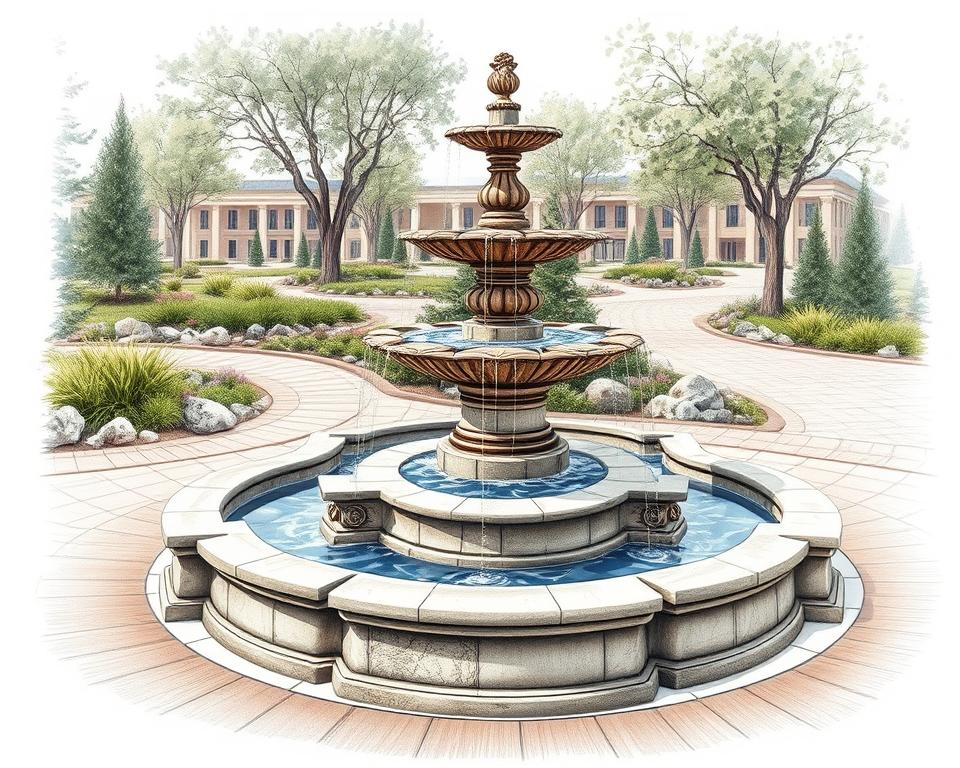
Building a Natural Stone Fountain Yourself – How to Do It Right
To build a natural stone fountain successfully, you need to understand the intricacies of the construction process and plan accordingly. This involves several key steps that ensure your project is both aesthetically pleasing and functional.
The Construction Process Overview
The construction process begins with a thorough assessment of your garden space and the selection of appropriate natural stone. It’s crucial to plan the fountain’s design, taking into account the size, scale, and location within your garden. A well-designed plan will help you avoid potential pitfalls and ensure a smooth construction process.

Safety First
Safety should be your top priority when building a natural stone fountain. This includes wearing appropriate protective gear, such as gloves and safety glasses, and ensuring that the construction area is clear of debris and obstacles. As the renowned landscape designer, Piet Oudolf, once said,
“The garden is a love song, a duet between a human being and Mother Nature.”
Ensuring safety allows you to enjoy this duet without unnecessary risks.
Time and Budget Planning
Effective time and budget planning are critical to the success of your fountain project. Establishing a realistic timeline and budget will help you stay on track and avoid costly surprises. Consider the time required for each stage of the construction process, from preparing the foundation to adding the finishing touches. It’s also wise to allocate a contingency fund for unexpected expenses.
Knowing When to Seek Professional Help
While building a natural stone fountain yourself can be a rewarding experience, there are times when it’s necessary to call in professional help. If you’re unsure about any aspect of the construction process, such as electrical or plumbing installations, it’s best to consult a qualified expert. This will ensure that your fountain is not only beautiful but also safe and functional.
Preparing the Foundation and Reservoir
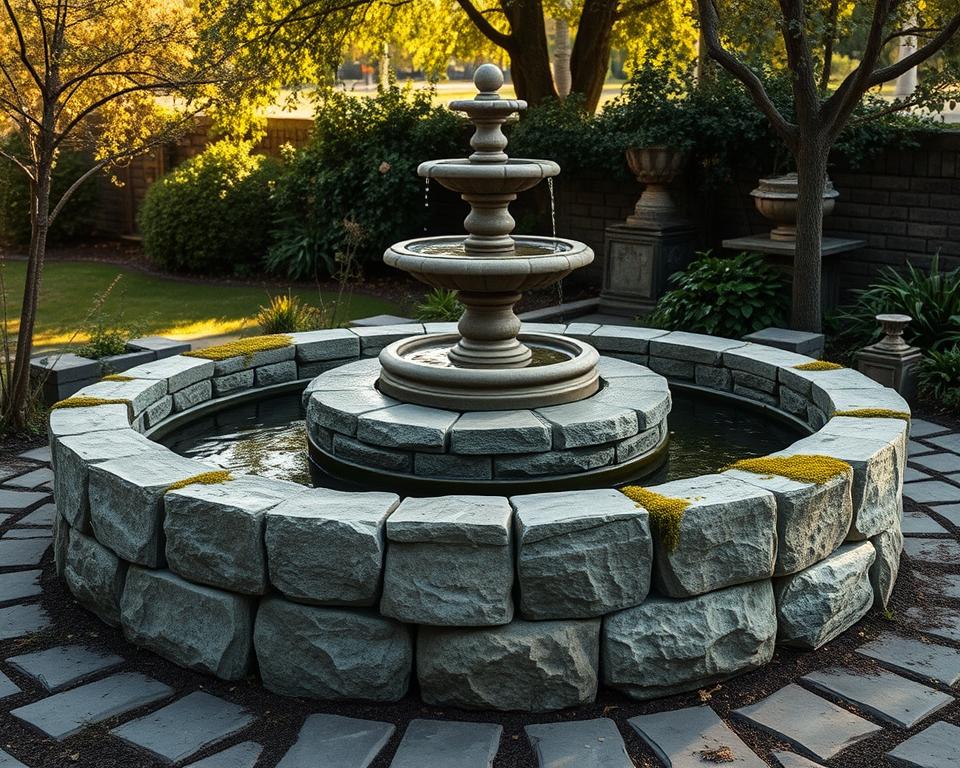
A well-constructed foundation and reservoir are the backbone of a beautiful and functional natural stone fountain. Before you begin the exciting part of building your fountain, it’s essential to get the groundwork right.
Excavation Techniques
The first step in preparing your fountain’s foundation is excavation. You need to dig a hole that is the right size for your fountain’s reservoir and base. Ensure the area is clear of debris and vegetation. The depth will depend on the design, but typically, it should be deep enough to accommodate the reservoir and allow for proper drainage.
Creating a Level Base
Once you’ve excavated the area, creating a level base is crucial. Use a spirit level to ensure the ground is even. This step is vital for the stability and aesthetic appeal of your fountain. An uneven base can lead to water tilting, which might affect the fountain’s overall performance.
Installing a Proper Reservoir
The reservoir is where the water will be stored. It’s essential to choose a reservoir that is watertight and appropriately sized for your fountain. Line the excavated hole with a durable liner to prevent leaks. Ensure the reservoir is installed level and secure to prevent any shifting or damage over time.
Drainage Considerations for British Weather
Drainage is a critical aspect, especially in the UK where weather can be unpredictable. You need to ensure that your fountain can handle excess water during heavy rainfall. Incorporate a drainage system that allows for overflow, preventing water from accumulating around the fountain and potentially damaging the foundation.
By carefully preparing the foundation and reservoir, you’ll ensure your natural stone fountain is not only beautiful but also durable and safe. Proper excavation, a level base, a watertight reservoir, and effective drainage are key to a successful fountain installation.
Installing the Water System
To ensure your natural stone fountain operates smoothly, the water system must be installed correctly. This involves several critical steps that require attention to detail and a focus on safety.
Setting Up the Pump Correctly
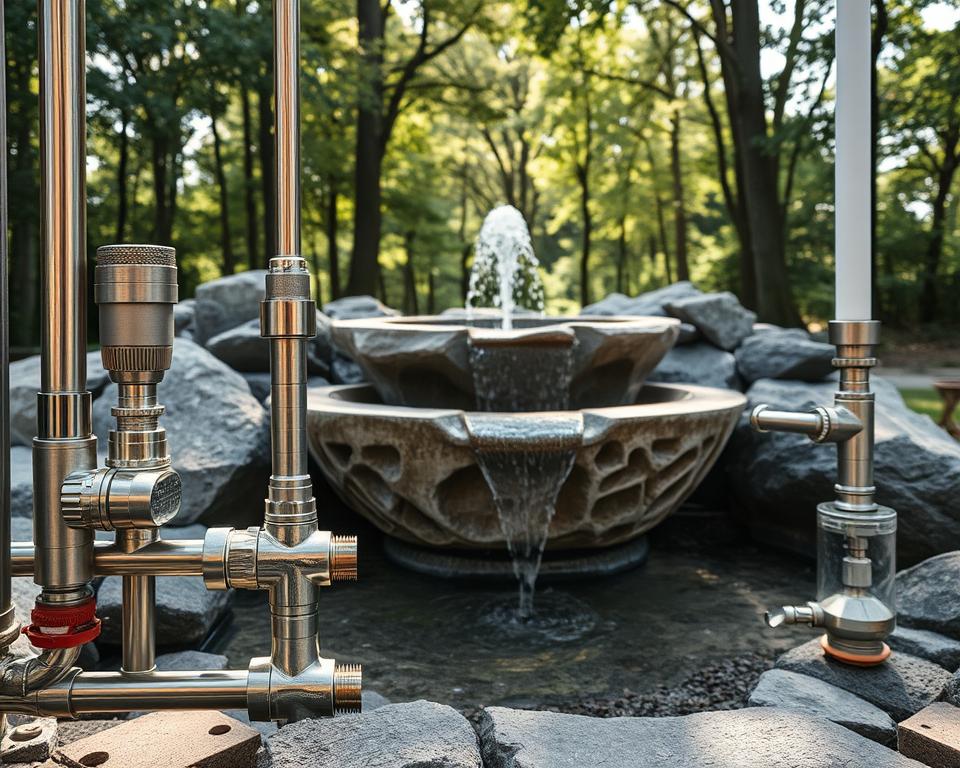
The pump is the heart of your fountain’s water system. Selecting the right pump size and type is crucial for achieving the desired water flow and aesthetic effect. When setting up the pump, ensure it is properly submerged and secured to prevent movement or damage.
Connecting Water Lines
Connecting the water lines requires care to avoid leaks and ensure a smooth flow of water. Use high-quality tubing that is resistant to UV light and suitable for outdoor use in the UK climate. Secure all connections tightly, and consider using a waterproof sealant for added protection.
Testing Water Flow
Once the pump and water lines are installed, test the water flow to ensure it meets your expectations. Adjust the pump settings or water line configurations as needed to achieve the desired effect.
Electrical Safety for Outdoor Features
Electrical safety is paramount when installing outdoor water features. Ensure all electrical components are designed for outdoor use and comply with UK electrical standards.
Weatherproof Connections
Weatherproof connections are critical to prevent electrical hazards. Use waterproof connectors and sealants to protect all electrical joints.
RCD Protection Requirements in the UK
In the UK, RCD (Residual Current Device) protection is required for outdoor electrical installations, including fountains. This safety measure helps prevent electrical shock. Consult a qualified electrician to ensure your installation meets all relevant regulations.
| Safety Measure | Description | UK Compliance Requirement |
|---|---|---|
| RCD Protection | Prevents electrical shock | Mandatory for outdoor installations |
| Weatherproof Connections | Protects electrical joints from water | Recommended for all outdoor electrical connections |
| Outdoor Rated Electrical Components | Ensures durability and safety in outdoor conditions | Required for all outdoor electrical installations |
By following these guidelines and ensuring compliance with UK electrical standards, you can enjoy a safe and beautiful natural stone fountain.
Constructing the Stone Structure
With your foundation and reservoir in place, the next step is to construct the stone structure that will be the visual centrepiece of your fountain. This process requires careful planning and attention to detail to ensure the stability and aesthetic appeal of your natural stone fountain.
Laying the First Course of Stones
Begin by laying the first course of stones, which will form the base of your fountain’s structure. It’s essential to start with a level surface to prevent any tilting or instability in the structure. Use a spirit level to ensure the stones are perfectly horizontal.
Key considerations when laying the first course include:
- Selecting stones that are flat and of a similar height
- Ensuring the stones are level and securely positioned
- Using a rubber mallet to tap stones into place gently
Building Upward Safely
As you build upward, maintain the stability of the structure by offsetting the joints between stones. This technique, known as “breaking joints,” enhances the structural integrity and visual appeal of your fountain.
Creating Water Channels and Flow Patterns
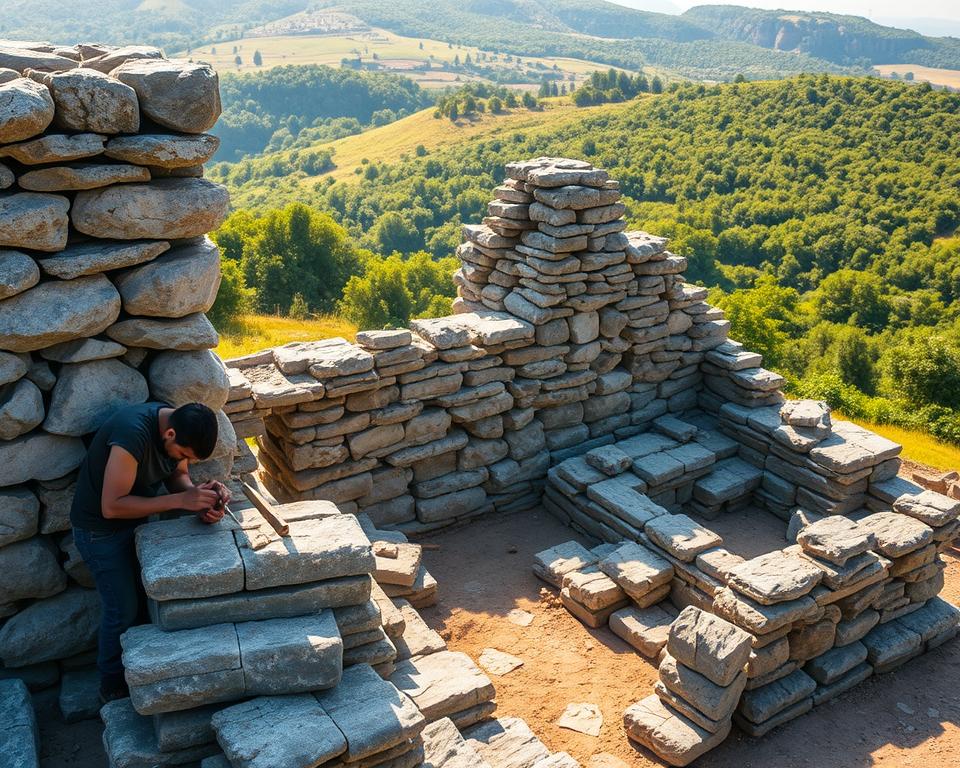
To achieve a visually appealing water flow, you need to create water channels within your stone structure. This involves carefully planning and carving the stones to allow water to flow smoothly from one level to the next.
Securing Stones Properly
Securing the stones properly is crucial to prevent movement or shifting over time. You can achieve this through either mortar or dry stacking methods.
Using Mortar vs. Dry Stacking
Mortar involves using a binding agent to hold the stones together, providing additional stability. Dry stacking, on the other hand, relies on the careful placement of stones without mortar, relying on gravity and friction to keep them in place.
Both methods have their advantages, and the choice between them depends on your design preferences and the specific requirements of your fountain.
Creating Hidden Water Paths
To enhance the visual effect of your fountain, you can create hidden water paths that allow water to flow beneath the surface before emerging at a lower level. This requires careful planning and execution to ensure the water flows smoothly and doesn’t leak.
By following these guidelines and paying close attention to the construction process, you can create a beautiful and functional natural stone fountain that will be a focal point in your garden.
Waterproofing and Sealing Techniques
When building a natural stone fountain, ensuring it’s properly waterproofed is crucial. Waterproofing and sealing are essential steps that prevent leakage and water damage, ensuring the longevity of your fountain.
Selecting the Right Sealants for British Climate
The British climate can be quite harsh, with frequent rain and freezing temperatures. To withstand these conditions, you need to select a sealant that is durable and weather-resistant. Silicone-based sealants are often recommended due to their flexibility and water-repelling properties.
Application Methods
Proper application of sealants is just as important as choosing the right type. Ensure the surface is clean and dry before applying the sealant. Use a caulking gun for precise application, and smooth out the sealant with a suitable tool to prevent air bubbles.
Ensuring Long-Term Water Retention
To ensure long-term water retention, regular inspections are necessary. Check for any signs of leakage or sealant deterioration. A well-maintained seal will help in conserving water and reducing maintenance costs.
Eco-Friendly Sealing Options
For those concerned about the environmental impact, there are eco-friendly sealing options available. Look for sealants that are low in VOCs (Volatile Organic Compounds) and made from natural ingredients. These options are not only better for the environment but also safer for your garden’s ecosystem.
By following these waterproofing and sealing techniques, you can enjoy a beautiful and functional natural stone fountain for years to come.
Adding Finishing Touches
As you near the completion of your natural stone fountain, it’s time to focus on the finishing touches that will elevate its beauty and functionality. These final elements will not only enhance the aesthetic appeal of your fountain but also ensure it becomes a safe and enjoyable feature in your garden.
Decorative Elements
Decorative elements can range from carefully selected pebbles or gravel to more elaborate features like statues or mosaics. Consider adding plants or flowers around the fountain to create a harmonious blend with the surrounding landscape.
Lighting Options for Year-Round Enjoyment
Installing appropriate lighting can extend the enjoyment of your fountain into the evening hours. Solar-powered lights are an eco-friendly option, while low-voltage LED lights can provide a dramatic effect without significant energy consumption.
Surrounding Landscaping
The area around your fountain should be landscaped to complement its natural beauty. Choose plants that thrive in moist environments to create a lush, inviting atmosphere.
Child and Pet Safety Features
To ensure your fountain is safe for children and pets, consider installing a protective grille or fencing around the water feature. You may also want to incorporate a safety switch for the pump to prevent accidental start-ups.
| Safety Feature | Description | Cost Estimate |
|---|---|---|
| Protective Grille | Metal or plastic grid to prevent access to water | £50-£100 |
| Fencing | Surrounding fence to restrict access | £100-£500 |
| Safety Switch | Automatic shut-off for pump | £20-£50 |
Maintaining Your Natural Stone Fountain
Proper care and maintenance are essential for extending the life of your natural stone fountain. Regular upkeep not only ensures the fountain remains functional but also preserves its aesthetic appeal.
Regular Cleaning Procedures
Cleaning your natural stone fountain regularly is vital to prevent the buildup of dirt and debris. Use a soft-bristled brush to gently scrub away any algae or mineral deposits on the stones. For more thorough cleaning, a mixture of water and a mild detergent can be used, but be sure to rinse thoroughly to avoid any residue.
Seasonal Maintenance Calendar
To keep your fountain in top condition, follow this seasonal maintenance calendar:
| Season | Task |
|---|---|
| Spring | Inspect and clean the fountain, check for any damage or wear. |
| Summer | Regularly check water levels, clean the pump, and prevent algae buildup. |
| Autumn | Clear leaves and debris, prepare the fountain for winter. |
| Winter | Drain the fountain, or use a fountain heater to prevent freezing. |
Preventing Algae and Mineral Buildup
Algae and mineral buildup can be prevented by regular cleaning and using algaecides. Additionally, ensuring proper water circulation and maintaining the right water chemistry can help prevent these issues.
Winter Care in British Climate
In the British climate, winter care is crucial to protect your fountain from freezing temperatures. Either drain the fountain completely or use a fountain heater to keep the water from freezing.
“Protecting your fountain from winter damage is essential to ensure it remains a beautiful feature in your garden for years to come.”
Consider consulting a professional for advice on the best winterization methods.
Troubleshooting Common Issues
Maintaining a natural stone fountain involves not just regular upkeep but also knowing how to troubleshoot common issues that may arise. Even with proper installation and maintenance, problems can occur, affecting the fountain’s performance and aesthetic appeal.
Water Flow Problems and Solutions
Issues with water flow can significantly impact your fountain’s overall effect. Common causes include:
- Clogged nozzles or filters
- Incorrect pump sizing
- Airlocks in the plumbing
To resolve these issues, check and clean the nozzles and filters regularly. Ensure the pump is appropriately sized for your fountain’s capacity. If you suspect an airlock, try bleeding the system to remove any trapped air.

Pump Malfunctions and Repairs
The pump is a critical component of your fountain. If it malfunctions, the entire system can fail. Common pump issues include:
- Power supply problems
- Clogged impellers
- Wear and tear over time
Check the power supply and connections first. Clean the impeller if it’s clogged. For persistent issues, consider replacing the pump.
Addressing Leakage Issues
Leakage can lead to significant water loss and damage to surrounding areas. Inspect your fountain regularly for signs of leaks, particularly around the reservoir and plumbing connections. Seal any gaps or cracks found using appropriate sealants.
Stone Deterioration Prevention
Natural stone can deteriorate over time due to weathering and water exposure. Regular cleaning and applying a suitable sealant can help prevent this. Inspect your stones regularly for signs of wear and address any issues promptly.
Dealing with Frost Damage
In the UK, frost can damage your fountain, especially if water is left standing in the pipes and pump. To mitigate this, drain your fountain before winter or use a frost-stat to control the pump during cold periods.
By understanding these common issues and how to troubleshoot them, you can ensure your natural stone fountain remains a beautiful and functional feature in your garden for years to come.
Conclusion
Building a natural stone fountain is a fulfilling DIY project that can enhance the beauty and tranquility of your UK garden. By following the steps outlined in this article, you can create a stunning water feature that not only adds aesthetic appeal but also increases your property’s value.
Throughout this guide, we’ve explored the various aspects of planning, designing, and constructing a natural stone fountain. From selecting the right stones and understanding water pump systems to preparing the foundation and maintaining your fountain, each step is crucial to the success of your DIY project.
As you embark on creating your natural stone fountain, remember that patience and attention to detail are key. With careful planning and execution, you’ll be able to enjoy the soothing sounds of water and the beauty of natural stone in your own garden. Start your DIY project today and experience the joy of bringing a piece of nature to your outdoor space.
FAQ
What are the benefits of having a natural stone fountain in my UK garden?
A natural stone fountain can enhance the aesthetic appeal of your garden, provide psychological benefits, and increase your property value.
Do I need planning permission to build a natural stone fountain in my UK garden?
It depends on the size and location of your fountain. You should check with your local UK planning authority to determine if you need permission.
What type of natural stone is best for a fountain in the UK climate?
Popular stone types in the UK include Portland stone, Yorkstone, and granite. Consider durability and weather resistance when selecting stones.
How do I calculate the right pump size for my fountain?
To calculate the right pump size, consider the height and width of your fountain, as well as the desired water flow rate.
What are the average costs of materials for building a natural stone fountain?
Material costs can vary depending on the type and quantity of stone, pump, and other components. You should budget for stones, pump, plumbing, and sealants.
How do I ensure electrical safety for my outdoor fountain feature?
Ensure that your fountain’s electrical components are weatherproof and meet UK electrical safety standards, including RCD protection.
What maintenance is required to keep my natural stone fountain clean and functioning?
Regularly clean your fountain, check for algae and mineral buildup, and perform seasonal maintenance to ensure optimal performance.
How do I prevent frost damage to my natural stone fountain in the UK climate?
Take steps to winterize your fountain, such as draining the water system and protecting the pump and pipes from freezing temperatures.
Can I use a solar-powered pump for my natural stone fountain?
Yes, solar-powered pumps are a viable option for eco-friendly gardens, offering energy efficiency and reduced carbon footprint.
What are the most common issues with natural stone fountains, and how can I troubleshoot them?
Common issues include water flow problems, pump malfunctions, and leakage. Check the pump, plumbing, and stone structure to identify and resolve issues.