DIY Garden Playground Ideas: Tips for Your Backyard
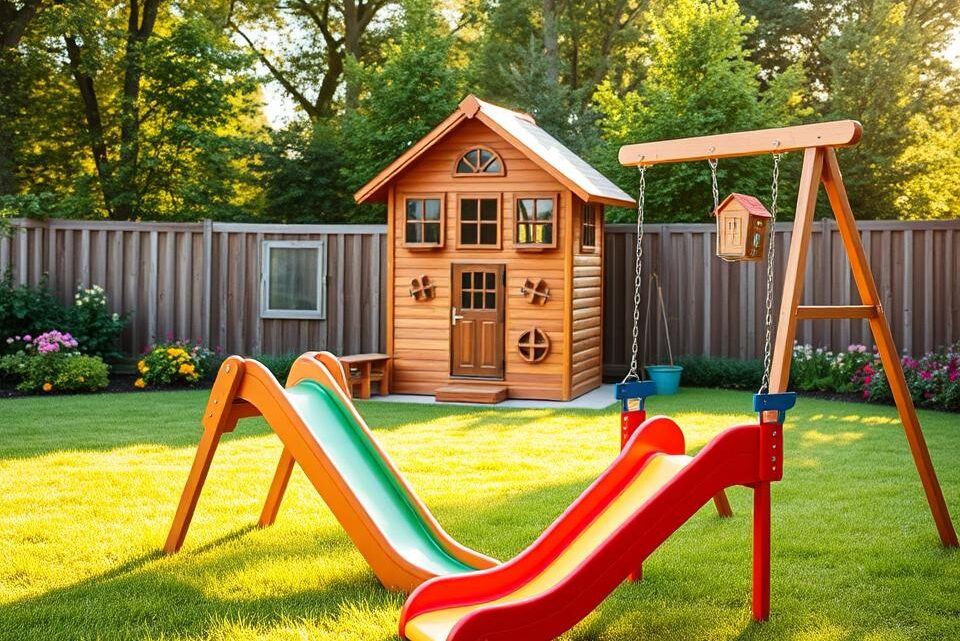
Creating a children’s play area in your backyard can be a fantastic way to encourage kids to spend more time outdoors, promoting physical activity and imaginative play.
Imagine transforming your outdoor space into a fun-filled backyard playground where your children can explore, learn, and enjoy quality time with family and friends.
A well-designed garden playground not only enhances your home’s appeal but also provides a safe and engaging environment for your children to develop their skills.
Inhaltsverzeichnis
Key Takeaways
- Transforming your backyard into a playground can encourage outdoor play.
- A well-designed play area can enhance your home’s appeal.
- Creating a safe environment is crucial for children’s development.
- Practical tips and ideas can help you create a fantastic play area.
- A DIY playground project can be a fun and rewarding experience.
Creating a Family-Friendly Outdoor Space
A well-designed garden playground can become the heart of your outdoor space, providing a welcoming area for the whole family to enjoy together. By incorporating elements that cater to different ages and interests, you can create a vibrant and engaging environment.
Benefits of a Garden Playground
A garden playground offers numerous benefits for families. It encourages children to engage in outdoor play, promoting physical activity and healthy development. Moreover, a well-designed playground can foster social interaction among children, helping them develop essential social skills. The benefits of a garden playground are multifaceted, making it a valuable addition to any family home.
| Benefits | Description |
|---|---|
| Promotes Physical Activity | Encourages children to engage in outdoor games and exercises. |
| Fosters Social Interaction | Helps children develop social skills through play. |
| Enhances Cognitive Development | Supports imaginative play and creativity. |
Balancing Fun and Aesthetics
When designing your garden playground, it’s crucial to strike a balance between fun elements and aesthetic considerations. You want your outdoor space to be both enjoyable for children and visually appealing to adults. Incorporating natural materials and integrating playground equipment with the surrounding landscape can help achieve this balance. Consider using a mix of play structures, such as swings and climbing frames, alongside decorative elements like flower beds or water features.
Planning Your Garden Playground
To make the most of your outdoor space, planning your garden playground is a crucial first step. A well-designed playground not only enhances your garden’s aesthetic appeal but also provides a safe and engaging area for your children to play.
Assessing Your Available Space
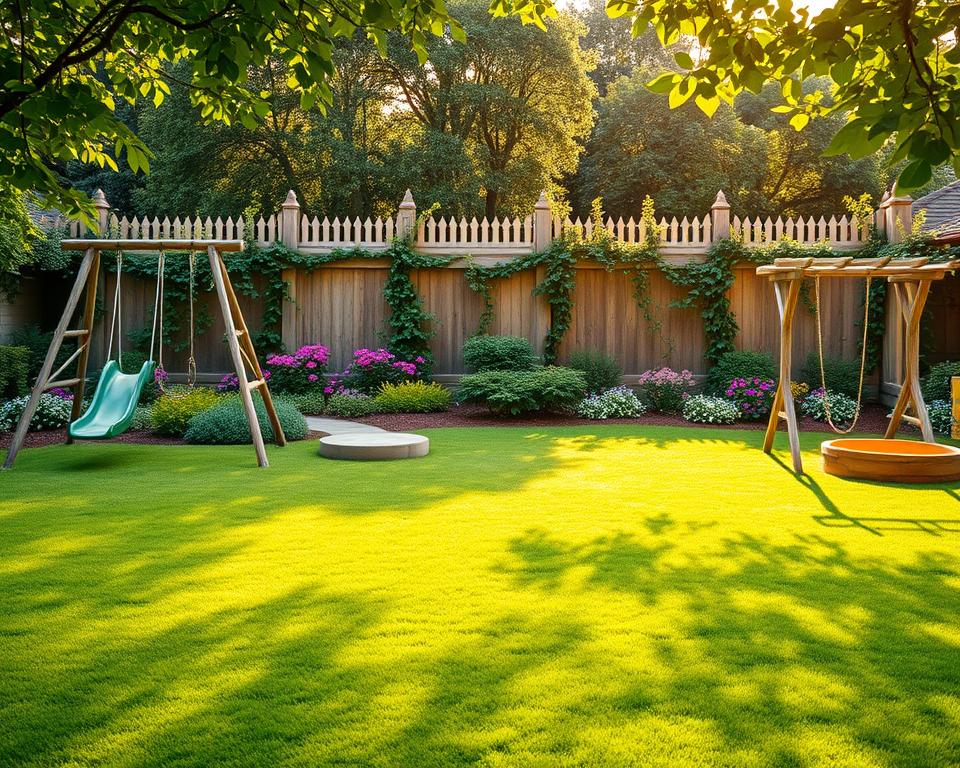
Before designing your garden playground, it’s essential to assess the available space. Measure your garden, noting any obstacles such as trees, slopes, or existing features. Consider the amount of sunlight and shade, as well as drainage issues. This assessment will help you determine the best layout for your playground, ensuring it’s both functional and enjoyable.
Tip: Create a scale drawing of your garden to visualize your playground design and make adjustments as needed.
Considering Age-Appropriate Features
The age of your children will significantly influence the design of your garden playground. For younger children, consider including soft play areas, sandbox, or a small climbing structure. For older children, you might incorporate more challenging climbing frames, swings, or a zip line. “The key to a successful garden playground is to create an environment that caters to the diverse needs of your children,” says gardening expert, Alan Titchmarsh.
“A playground should be an extension of your home, a place where children can explore and express themselves freely.”
Setting a Realistic Budget
Setting a realistic budget is crucial for your garden playground project. Determine how much you’re willing to spend and stick to it. Consider the cost of materials, labor (if hiring professionals), and any necessary safety equipment. Budget-friendly options include repurposing existing garden features or using recycled materials. By planning carefully, you can create a fantastic garden playground without breaking the bank.
- List the materials and their costs
- Consider DIY projects to save on labor
- Shop around for the best deals on safety equipment
Essential Safety Considerations
Creating a safe playground environment is crucial for the well-being of children. When designing your DIY garden playground, several safety factors must be considered to ensure a fun and secure space for kids to play.
Choosing Safe Ground Surfaces
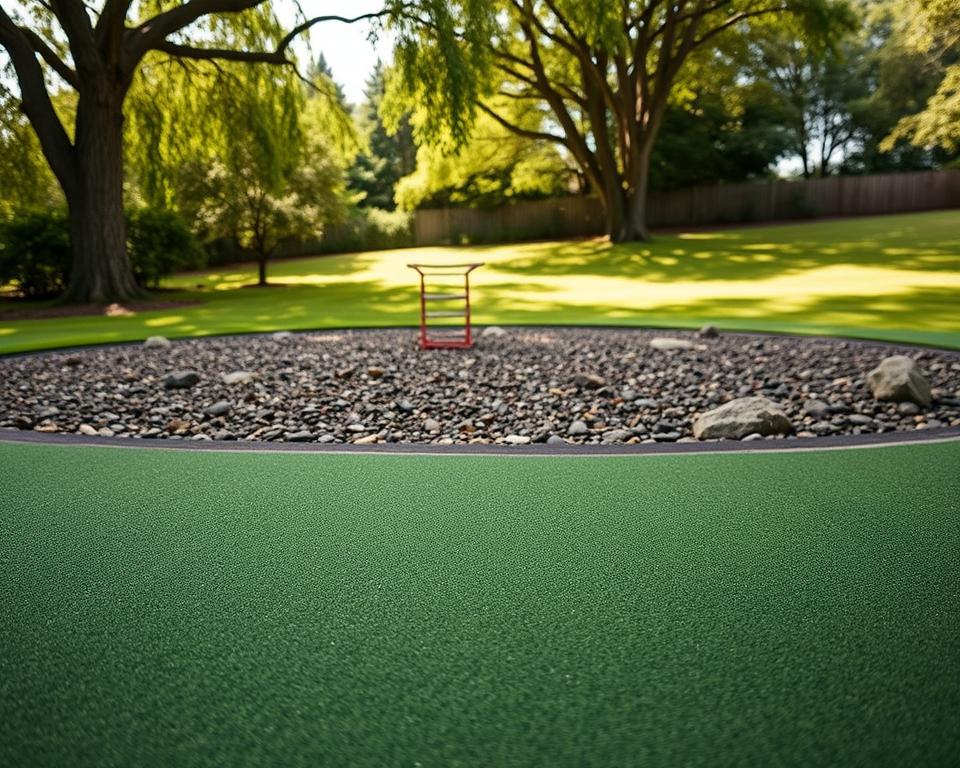
The surface material under and around playground equipment is critical for safety. Soft surfaces like wood chips, mulch, or rubber mats can help cushion falls, reducing the risk of injury. According to safety guidelines, a depth of at least 9 inches of such materials is recommended to provide adequate shock absorption.
Proper Equipment Spacing
Adequate spacing between playground equipment is vital to prevent collisions and ensure safe access. A minimum of 6 feet of clearance between equipment is generally recommended. This not only helps in preventing accidents but also allows for easier supervision by adults.
Weather-Proofing Considerations
Weather conditions can significantly impact playground safety. Using weather-resistant materials for equipment and ensuring that the playground is designed to withstand local weather conditions can help mitigate risks. Regular inspections after severe weather are crucial to identify and address any potential hazards.
By focusing on these essential safety considerations, you can create a playground that is both enjoyable and safe for children.
DIY Garden Playground Ideas: Tips for Your Backyard
Transforming your backyard into a playground paradise is easier than you think with these DIY garden playground ideas. You can create a fun and engaging outdoor space that your children will love, without breaking the bank or requiring extensive construction experience.
Quick and Simple Weekend Projects
Starting with simple projects can be a great way to begin your DIY playground journey. Consider creating a DIY swing using a sturdy tree branch or a metal frame. You can also make a sandbox using a wooden frame and some play sand. These projects are perfect for a weekend and can be completed with minimal tools and expertise.
Here are some more ideas for quick and simple weekend projects:
- Create a chalkboard area using a piece of plywood and some chalkboard paint.
- Make a sensory garden with different textures and smells.
- Build a simple climbing wall using a wooden plank and some brackets.
| Project | Materials Needed | Time Required |
|---|---|---|
| DIY Swing | Sturdy rope, wooden or metal frame, safety harness | 2-3 hours |
| Sandbox | Wooden frame, play sand, safety cover | 4-5 hours |
| Chalkboard Area | Plywood, chalkboard paint, brushes | 1-2 hours |
More Ambitious Long-Term Builds
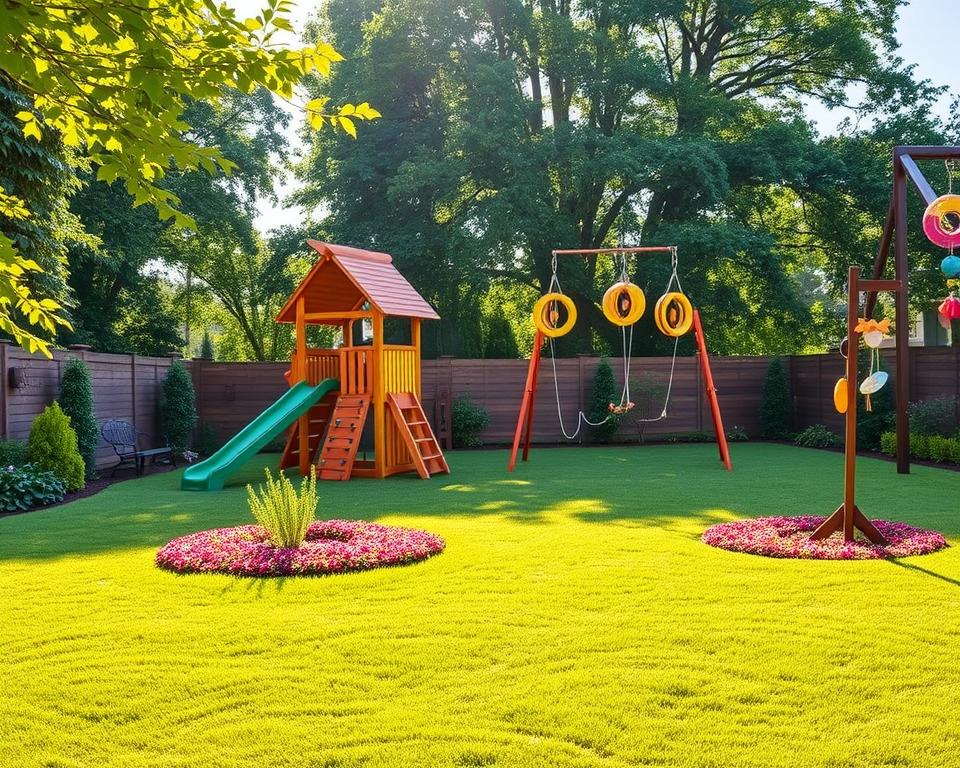
If you’re looking to create a more elaborate playground, consider planning a long-term build. This could involve designing a multi-level play structure or a treehouse. These projects require more planning, materials, and time, but the end result can be truly spectacular.
Some ideas for more ambitious long-term builds include:
- Building a rope course using wooden posts and rope ladders.
- Creating a mini-golf course with obstacles and challenges.
- Designing a themed play area, such as a pirate ship or a fairy garden.
By starting with simple projects and gradually moving to more complex builds, you can create a DIY garden playground that your children will enjoy for years to come.
Building a DIY Swing Set
A DIY swing set is a great addition to any garden playground, providing endless entertainment for children. With a little planning and the right materials, you can create a safe and enjoyable play area.
Materials and Tools Needed
To start your project, you’ll need durable materials such as pressure-treated timber for the frame and high-quality chains or ropes for the swings. Essential tools include a post hole digger, a drill, and a saw. Ensure you have safety gear like gloves and goggles.
Key Materials: Pressure-treated timber, chains or ropes, screws, and weather-resistant finishes.
Step-by-Step Construction Guide
Begin by marking out the area for your swing set, ensuring it’s level and clear of obstacles.
Foundation and Support Posts
Dig holes for the support posts, about 2 feet deep, and fill with concrete to secure them.
Crossbeam Installation
Attach the crossbeam between the support posts, ensuring it’s sturdy and level.
Swing Attachment Methods
Use heavy-duty chains or ropes to hang the swings from the crossbeam, securing them with robust hardware.
Tip: Regularly inspect the swing set for wear and tear, tightening any loose parts.

Customisation Options
You can customise your DIY swing set by adding different types of swings or incorporating a slide or climbing wall. Consider your children’s interests and ages when deciding on additional features.
Creating a Sandbox Play Area
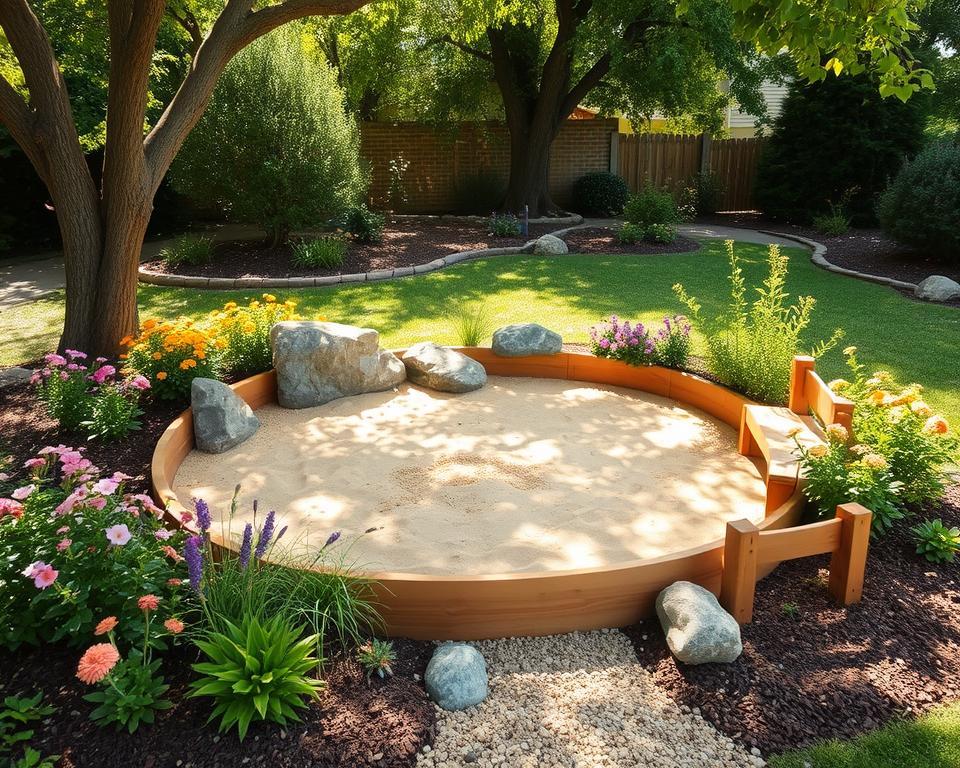
Creating a sandbox play area in your garden can be a fun and rewarding DIY project that brings joy to children of all ages. A sandbox offers a space for kids to engage in imaginative play, explore textures, and enjoy the outdoors.
Designing the Perfect Sandbox
When designing your sandbox, consider the size and location carefully. Ensure it’s in a shaded area to prevent overheating and is easily accessible for both children and adults. A square or rectangular shape is often more practical than a circular one.
Key considerations include:
- Space available in your garden
- Age and number of children using it
- Proximity to seating for adult supervision
Sand Selection and Maintenance
Choosing the right sand is crucial. Opt for play sand that is fine-grained and free from debris. Regular maintenance involves raking the sand to keep it smooth and checking for any contaminants.
Adding Creative Elements
To enhance the sandbox experience, consider adding creative elements such as moulds, buckets, and shovels. You can also incorporate natural elements like rocks or shells to stimulate imagination.
| Element | Purpose |
|---|---|
| Moulds and Shapes | Encourage creative building |
| Buckets and Shovels | Facilitate digging and construction |
| Rocks and Shells | Add variety and stimulate imagination |
DIY Climbing Structures and Frames
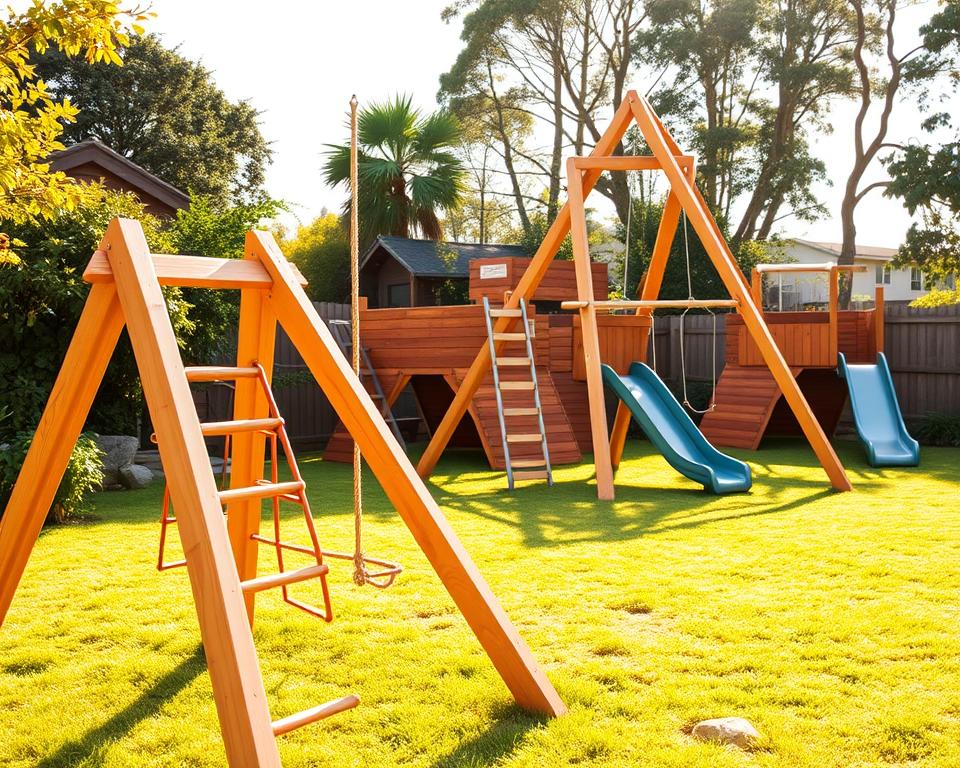
A well-designed climbing structure can transform your garden into an exciting playground. Climbing frames are not only fun for children, but they also promote physical activity and help develop problem-solving skills.
Safe Design Principles
When designing a climbing structure, safety should be your top priority. Ensure that the structure is stable and securely anchored to the ground. Soft landing surfaces, such as wood chips or rubber mulch, should be used to cushion falls. It’s also crucial to design the structure with adequate spacing between elements to prevent entrapment.
Material Options for Durability
The durability of your climbing structure depends on the materials used. Pressure-treated wood is a popular choice due to its resistance to rot and insect damage. Alternatively, you can use recycled plastic or metal for a low-maintenance option. Whichever material you choose, ensure it is weather-resistant and can withstand various environmental conditions.
Adding Climbing Elements
To make your climbing structure engaging, you can add various climbing elements.
Rope Ladders and Nets
Rope ladders and nets are excellent for developing climbing skills and providing a fun challenge. They can be attached to the frame or used as a standalone feature.
Rock Climbing Holds
Rock climbing holds offer a more structured climbing experience. They come in various shapes and sizes, allowing you to create a customized climbing route. Ensure that the holds are securely attached to the structure to prevent accidents.
By incorporating these elements, you can create a climbing structure that is both fun and challenging for children.
Water Play Features for Hot Days
As the temperature rises, incorporating water play features into your garden playground becomes an attractive option for keeping children cool and entertained. Water play areas are not only fun but also provide a way to cool off during the warmer months. You can create a simple yet effective water play area with a few thoughtful considerations.
Firstly, let’s explore the simplicity of creating splash zones that can be a delight for kids.
Simple Splash Zones
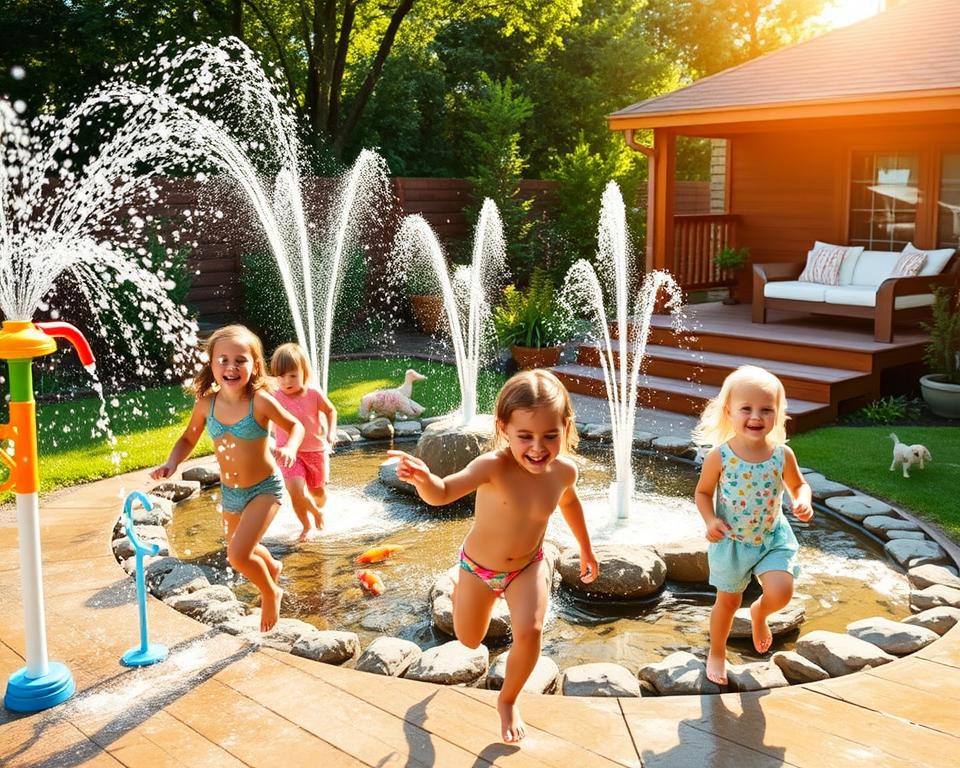
Creating a simple splash zone can be as straightforward as installing a shallow water area or a splash pad. These areas are designed with water jets or sprayers that children can play with, providing endless entertainment. You can also consider repurposing an old bathtub or a large container, turning it into a mini splash zone. Ensure that the water is shallow enough for children to stand in and that the area is surrounded by a non-slip surface to prevent accidents.
Water Conservation Considerations
While water play features are enjoyable, it’s essential to consider water conservation. You can achieve this by installing a recirculating system that reuses water, thus minimizing waste. Another approach is to use a timer or a sensor-activated valve to control the water flow, ensuring that water is not wasted when not in use. Additionally, using a cover or canopy over your splash zone can help reduce evaporation. By being mindful of water usage, you can create a fun and sustainable water play area.
Natural Play Elements in Your Garden
Incorporating natural elements into your garden playground can significantly enhance the play experience for children. By using elements found in nature, you can create a more engaging and dynamic environment that encourages exploration and imaginative play.
Log and Boulder Arrangements
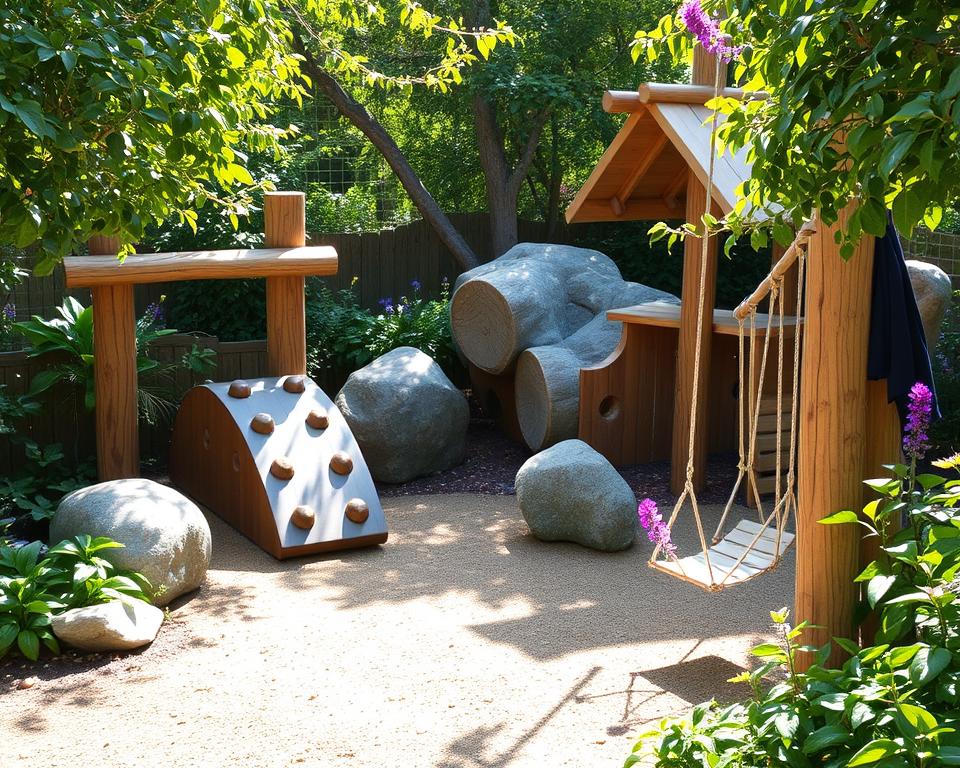
Logs and boulders can be arranged to create climbing structures, balancing beams, or simply as decorative elements. These natural features can help develop children’s physical skills and encourage creative play. For example, a log pile can become a fort or a climbing frame, while boulders can be used to create a stepping stone pathway.
| Natural Element | Play Potential | Safety Consideration |
|---|---|---|
| Logs | Climbing, balancing, hiding | Ensure stability, avoid rot |
| Boulders | Climbing, stepping stones | Ensure secure placement |
Creating Sensory Pathways
Sensory pathways can be created using a variety of natural materials such as gravel, sand, and different textures of stone. These pathways encourage children to explore with their senses, enhancing their connection with nature. You can also incorporate plants with different scents and textures along the pathway to further enrich the sensory experience.
“The natural world is a powerful stimulus for children’s senses, and incorporating sensory pathways can help foster a deeper appreciation for nature.”
Incorporating Existing Trees and Plants
Existing trees and plants can be incorporated into your garden playground design, providing shade, shelter, and a sense of connection to nature. You can build play structures around trees or use plants to create hiding spots and secret gardens. This not only enhances the play value but also promotes environmental awareness.
- Use trees as supports for swings or rope ladders
- Create a ‘secret garden’ with dense planting
- Incorporate flowering plants to attract wildlife
By incorporating these natural play elements, you can create a rich and varied play environment that supports children’s development and well-being.
Building a Playhouse or Fort
If you’re looking to create a special play area for your children, consider building a playhouse or fort. This project can be a fun and rewarding experience for the whole family, encouraging creative play and outdoor activity.
Design Considerations
When designing your playhouse or fort, think about the age and interests of the children who will be using it. Consider the space available in your garden and the style that will complement your outdoor area. You can choose from a variety of designs, from simple hideouts to elaborate structures with windows and doors.

Construction Basics
Once you have a design in mind, it’s time to start building. The construction process involves several key steps.
Foundation and Platform
Start by preparing the foundation and platform for your playhouse or fort. Ensure it is level and secure to provide a stable base.
Wall and Roof Construction
Next, construct the walls and roof, using materials that are durable and weather-resistant. Consider using pre-made panels or individual boards, depending on your design and skill level.
Safety Features
Don’t forget to incorporate safety features into your design. This includes ensuring there are no sharp edges, using non-toxic materials, and providing a safe entrance and exit.
Weatherproofing and Decorating
After the basic structure is complete, focus on weatherproofing and decorating your playhouse or fort. Apply a protective finish to the wood, and consider adding curtains or shutters to enhance the appearance and functionality.
By following these steps, you can create a beautiful and safe playhouse or fort that your children will enjoy for years to come.
Creating Outdoor Games and Activities
To breathe life into your garden playground, consider integrating a variety of outdoor games and activities that promote fun and interaction. These elements not only enhance the playground experience but also encourage children to engage with their surroundings in a meaningful way.
Permanent Garden Games
Permanent garden games are a fantastic way to provide ongoing entertainment. Two popular options include:
Giant Chess or Checkers
Designing a giant chess or checkers board in your garden can be a fun project. You can use large stones or painted wooden boards to create the grid, and oversized pieces can be crafted from wood or other durable materials.
Hopscotch and Mazes
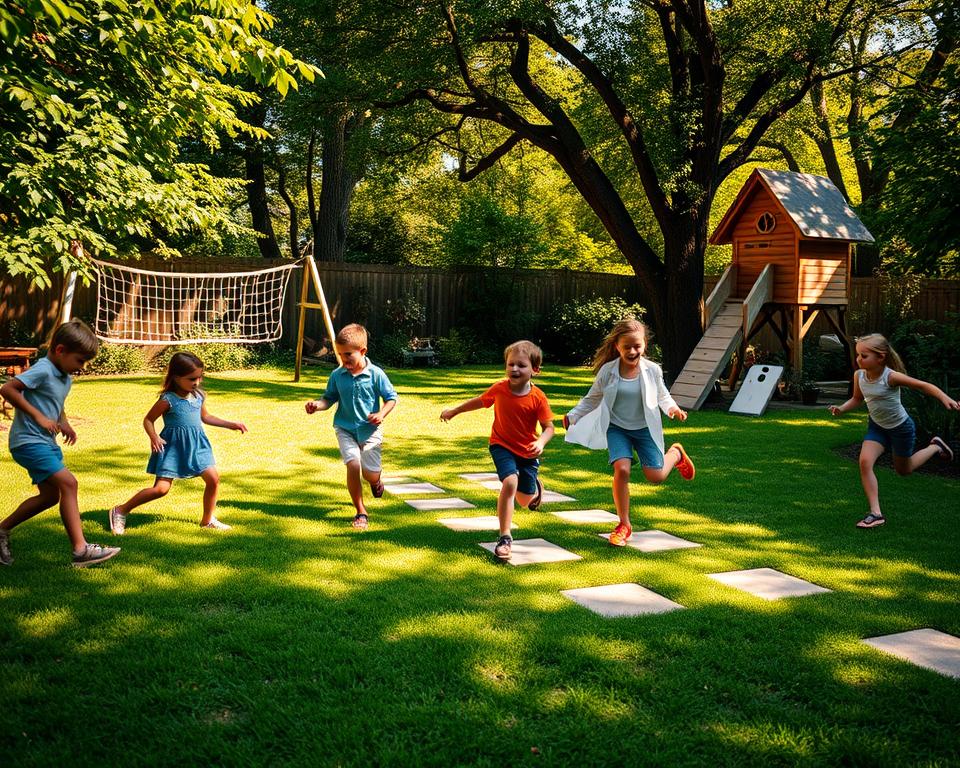
Drawing inspiration from traditional playground games, hopscotch courts and mazes can be created using paving stones or by designing pathways through your garden. These games promote physical activity and challenge children in different ways.
Seasonal Activity Stations
In addition to permanent fixtures, incorporating seasonal activity stations can keep your garden playground fresh and exciting throughout the year. For example, a water play area during hot summer months or a snow sculpture station in winter can provide unique play opportunities.
By thoughtfully combining permanent garden games and seasonal activity stations, you can create a dynamic and engaging outdoor space that caters to a wide range of interests and age groups.
Inclusive Play Space Considerations
An inclusive play space is not just a nicety, it’s a necessity for families with children of all abilities. By incorporating accessibility features and multi-sensory play elements, you can create a welcoming environment that caters to diverse needs.
Accessibility Features
To ensure that your garden playground is accessible to all, consider incorporating features such as ramps, wide pathways, and transfer stations. These elements enable children with mobility impairments to participate fully in play activities. For instance, a quote from the National Autistic Society highlights the importance of inclusive design:
“Creating autism-friendly environments is crucial for ensuring that individuals with autism can participate fully in society.”
| Accessibility Feature | Benefit |
|---|---|
| Ramps | Enables wheelchair access to play equipment |
| Wide Pathways | Facilitates easy navigation for children with mobility aids |
| Transfer Stations | Allows children to transfer from wheelchairs to play equipment |
Multi-Sensory Play Elements
Incorporating multi-sensory play elements can enhance the play experience for children with diverse needs. Consider adding features such as textured surfaces, sound-emitting equipment, and sensory gardens. 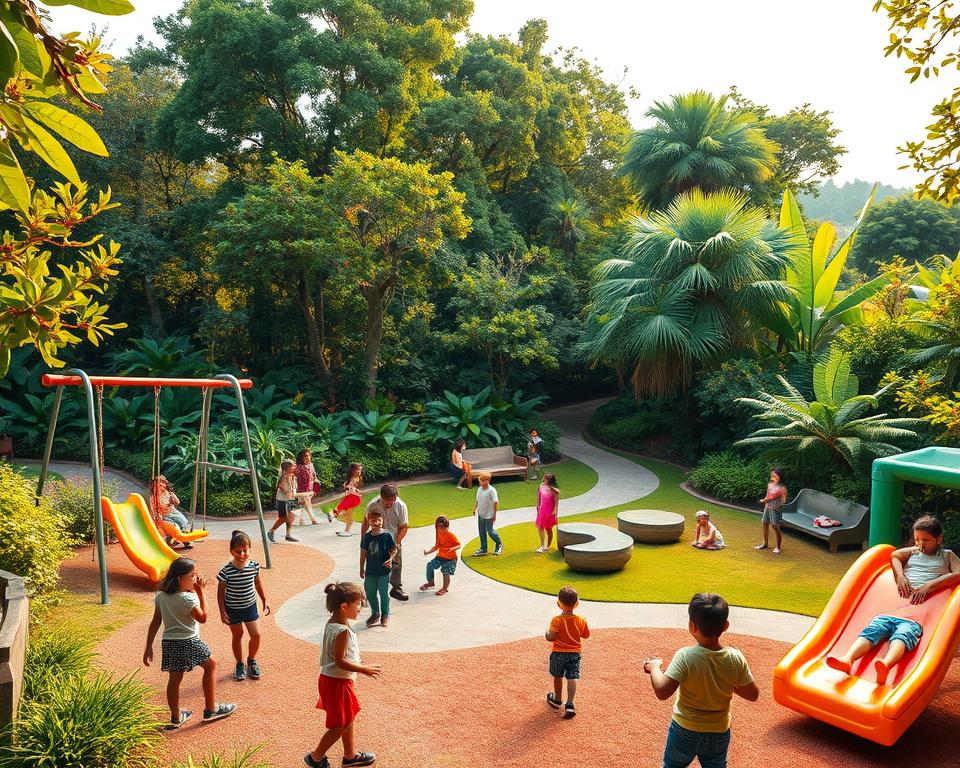
By incorporating these elements, you can create a more engaging and inclusive play environment that caters to different abilities and needs.
Budget-Friendly Playground Ideas
Creating a playground doesn’t have to break the bank; there are numerous budget-friendly options to consider. With a bit of creativity, you can build a fantastic playground that is both fun and safe for children.
Upcycling Household Items
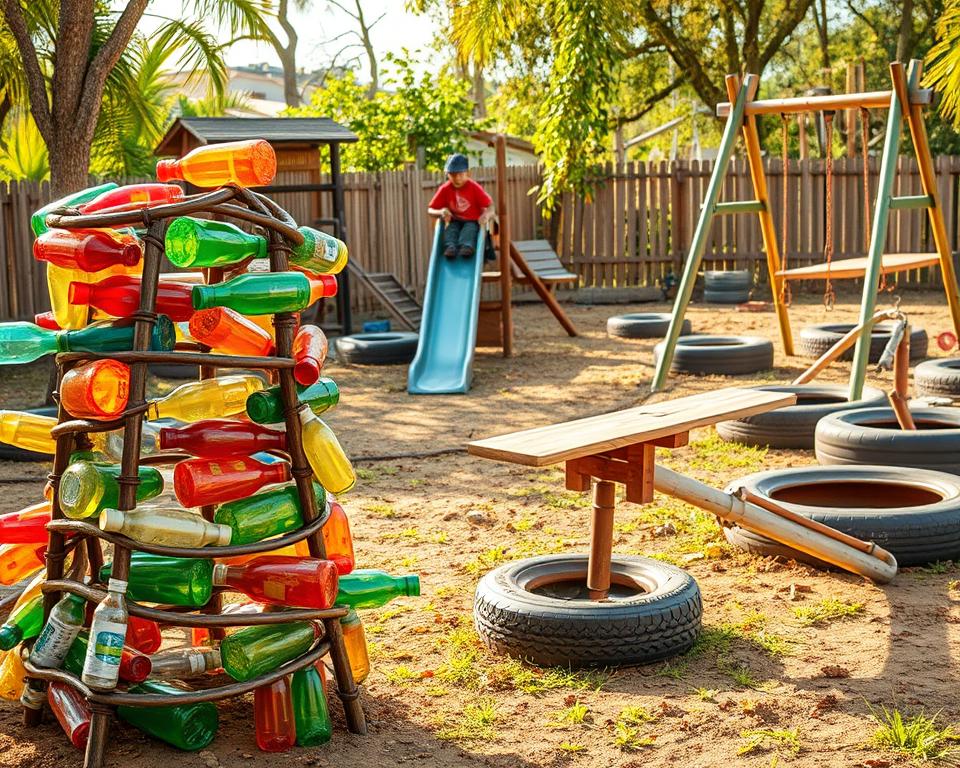
One of the most cost-effective ways to build a playground is by upcycling household items. Old tyres can be transformed into swings or used as planters for plants. You can also use wooden pallets to create climbing structures or seating areas. Additionally, consider repurposing old furniture or materials from renovation projects to add unique features to your playground.
Low-Cost Material Alternatives
When it comes to building a playground on a budget, choosing the right materials is crucial. Consider using low-cost material alternatives such as reclaimed wood, which not only saves money but also adds character to your playground. Another option is to use recycled plastic materials for play equipment, as they are durable and require less maintenance. You can also look into second-hand playground equipment or materials available at local salvage yards.
Involving Children in the Building Process
Involving your kids in building the garden playground not only teaches them new skills but also makes the project more enjoyable. By engaging them in the construction process, you can foster a sense of ownership and responsibility, making the playground even more special to them.
Age-Appropriate Building Tasks
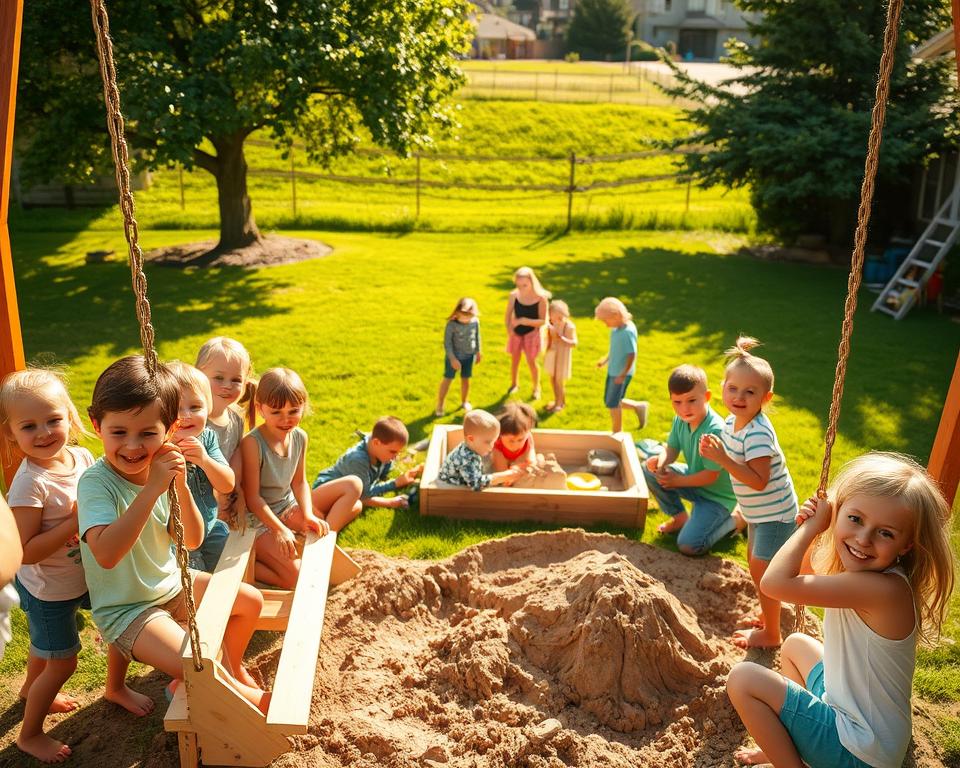
Assigning tasks that are suitable for your child’s age is crucial. For younger children, simple tasks like gathering tools or painting wooden structures can be both fun and educational. Older children can take on more complex tasks such as measuring materials or assisting with simple constructions.
| Age Group | Tasks |
|---|---|
| 3-5 years | Gathering tools, simple painting |
| 6-10 years | Measuring materials, simple constructions |
| 11+ years | Complex constructions, project planning |
Teaching DIY Skills Safely
When teaching DIY skills to children, safety must be the top priority. Ensure they understand the proper use of tools and materials. Start with simple, safe tasks and gradually move to more complex ones as their skills and confidence grow.
Seasonal Adaptations for Year-Round Use
To ensure your garden playground remains a haven for children throughout the year, consider implementing seasonal adaptations. This involves making adjustments to withstand various weather conditions and creating opportunities for play that are relevant to each season.
Weatherproofing for British Weather
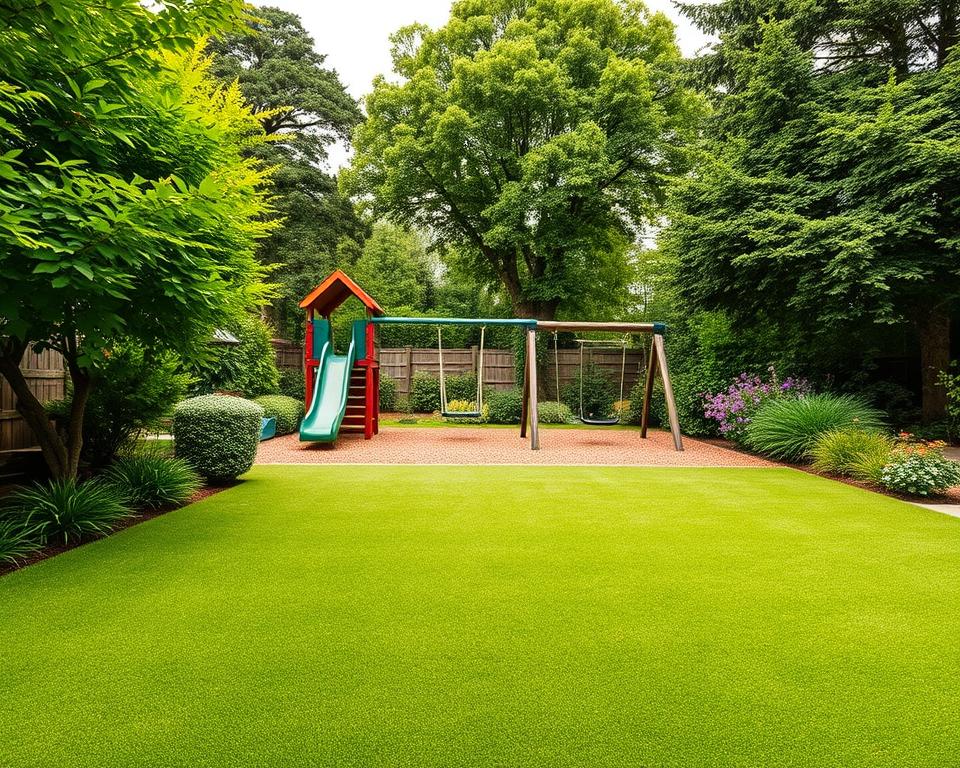
British weather can be quite unpredictable, with rain and wind being common occurrences. Weatherproofing your garden playground is essential to ensure it remains safe and functional. Use durable, weather-resistant materials for equipment and consider installing a canopy or shade sail to protect against the elements. Regularly inspect and maintain your playground to prevent damage from weathering.
Seasonal Play Opportunities
Creating seasonal play opportunities can keep your garden playground exciting and engaging for children. In the winter, consider adding snow-friendly play elements like sledges or snowball makers. During the summer, incorporate water play features such as splash pads or a small paddling pool. For spring and autumn, create sensory pathways with seasonal plants and flowers, or add elements that encourage exploration and discovery.
Maintenance and Safety Checks
To keep your DIY garden playground in top condition, regular safety checks and maintenance are essential. A well-maintained playground not only ensures the safety of your children but also prolongs the lifespan of the structures you’ve built.
Regular Inspection Schedule
Establishing a regular inspection schedule is crucial for maintaining your garden playground. You should inspect your playground at least once a month, checking for any signs of wear and tear, damage, or potential hazards. Key areas to focus on include the condition of the ground surfaces, the stability of climbing structures, and the integrity of swing sets and other equipment.
- Check for any sharp edges or points on equipment.
- Ensure all bolts and screws are tightened.
- Inspect for signs of rot or decay in wooden structures.
Common Repairs and Solutions
During your inspections, you may identify areas that require repair. Common issues include loose boards on climbing structures, worn-out surfaces under swing sets, and rusty bolts. Addressing these issues promptly is vital to prevent accidents. For instance, you can replace worn-out boards, replenish safety surfaces, and replace rusty bolts with new ones.
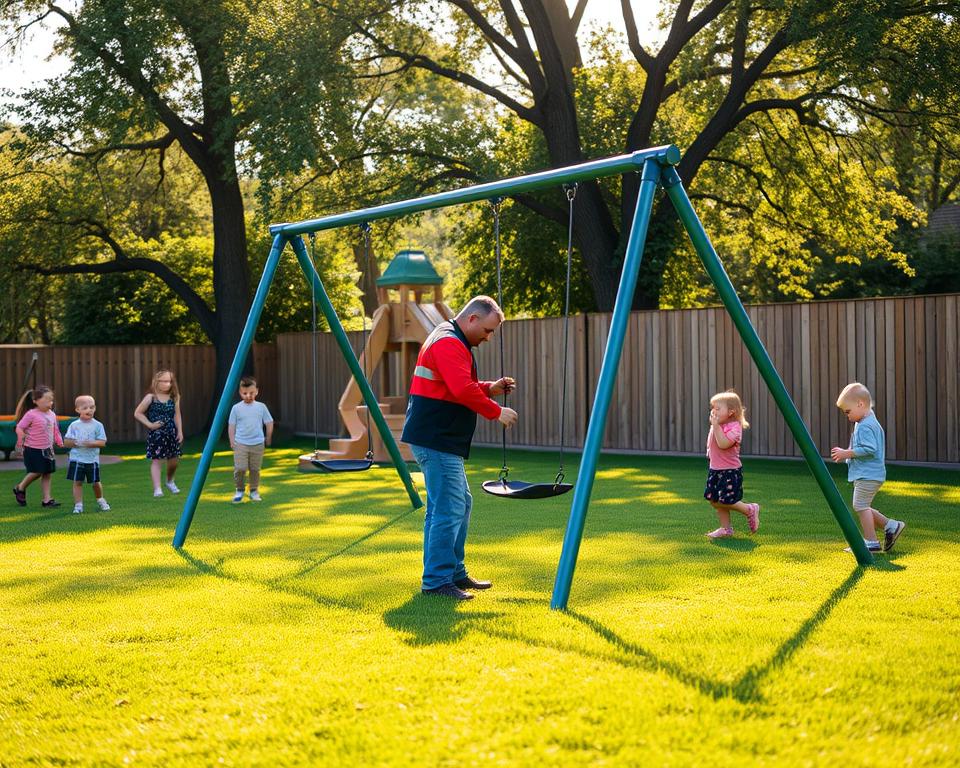
By staying on top of maintenance and safety checks, you can ensure your garden playground remains a safe and enjoyable space for your children.
Conclusion
You now have the tools and inspiration to create a DIY garden playground that suits your family’s needs. By incorporating backyard playground ideas and playground tips, you can design a space that is both fun and safe for your children.
Remember to assess your available space, consider age-appropriate features, and set a realistic budget when planning your DIY garden playground. With careful planning and creativity, you can create a wonderful outdoor space that will be enjoyed for years to come.
By following the tips and ideas outlined in this article, you can create a unique and engaging playground that will provide hours of entertainment for your children. So, get started on your project, and enjoy watching your children play and thrive in their new outdoor playground.
FAQ
What are the most important safety considerations when building a DIY garden playground?
When building a DIY garden playground, it is essential to consider safety factors such as choosing safe ground surfaces, ensuring proper equipment spacing, and weatherproofing to prevent accidents and injuries.
How can I create an inclusive play space for children of all abilities?
To create an inclusive play space, incorporate accessibility features and multi-sensory play elements, such as wheelchair-accessible ramps, sensory pathways, and a variety of play equipment that cater to different abilities.
What are some budget-friendly ideas for building a garden playground?
You can build a garden playground on a budget by upcycling household items, using low-cost material alternatives, and repurposing existing garden features, such as old trees or logs.
How can I involve my children in the building process, and what tasks are suitable for their age?
You can involve your children in the building process by assigning age-appropriate tasks, such as helping with simple construction tasks, decorating the playhouse, or assisting with planting sensory pathways.
What are some seasonal adaptations I can make to ensure year-round use of my garden playground?
To ensure year-round use, consider weatherproofing your playground for the British climate, and create seasonal play opportunities, such as building a snowman in winter or having a water play area in summer.
How often should I inspect my garden playground, and what are some common repairs I should be aware of?
Regularly inspect your garden playground to identify potential hazards, and be aware of common repairs, such as fixing broken equipment, re-sanding the sandbox, or re-painting wooden structures.
What are some creative ways to incorporate natural elements into my garden playground?
You can incorporate natural elements, such as log and boulder arrangements, sensory pathways, and existing trees and plants, to create a unique and engaging play experience.
How can I ensure that my DIY swing set is safe and sturdy?
To build a safe and sturdy DIY swing set, use high-quality materials, follow a step-by-step construction guide, and ensure that the foundation and support posts are secure.
What are some tips for building a playhouse or fort that is both fun and safe?
When building a playhouse or fort, consider design considerations, construction basics, and safety features, such as a sturdy foundation, secure roof construction, and weatherproofing.