Buddha statues and their meaning: symbolism and spiritual significance
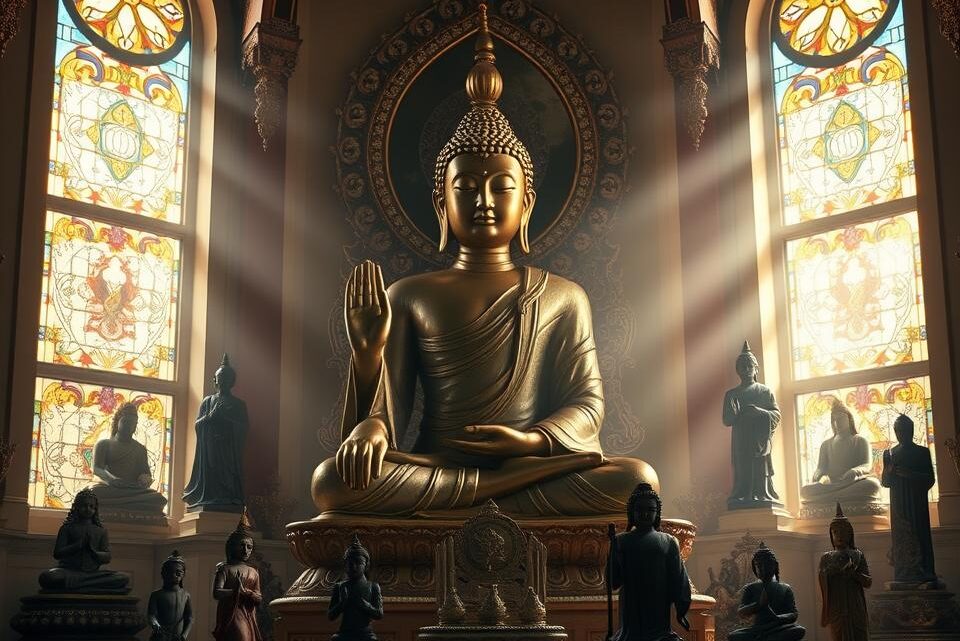
You may have come across Buddhist statues or Buddha figurines in various settings, from temples to homes, and wondered about their significance.
These statues represent the teachings of the Buddha and embody the principles of Buddhism, serving as a reminder of the path to enlightenment.
The symbolism and spiritual significance of these statues are multifaceted, reflecting various aspects of Buddhist philosophy and practice.
Inhaltsverzeichnis
Key Takeaways
- Buddhist statues symbolise the teachings of the Buddha.
- The statues embody the principles of Buddhism.
- Buddha figurines serve as a reminder of the path to enlightenment.
- The symbolism of Buddhist statues is multifaceted.
- These statues reflect various aspects of Buddhist philosophy and practice.
The Origins and History of Buddha Statues
As you explore the origins of Buddha statues, you’ll uncover a fascinating journey through time. The development of Buddha statues is deeply intertwined with the spread of Buddhism across various regions and cultures.
Early Representations of the Buddha
The early representations of the Buddha were not directly depictions of the Buddha himself but rather symbols that represented his presence. Aniconic symbols, such as the footprint, the Bodhi tree, and the stupa, were used in early Buddhist art to signify the Buddha’s presence. It wasn’t until the Gandharan and Mathura periods that the first anthropomorphic representations of the Buddha emerged, influenced by Greek and Indian artistic traditions.
Evolution of Buddha Imagery Through the Ages
As Buddhism spread throughout Asia, the imagery of the Buddha evolved, reflecting local cultural and artistic influences. In China, Buddha statues began to incorporate local facial features and attire, while in Thailand, the Buddha was often depicted in intricate robes with a serene expression. The evolution of Buddha imagery not only reflected the diversity of Buddhist practices but also contributed to the rich tapestry of Buddhist art history.
The Historical Buddha: Siddhartha Gautama
As you explore the life of Siddhartha Gautama, you uncover the roots of Buddhism and its foundational teachings. This historical figure, known to many as the Buddha, or the “awakened one,” has had a profound impact on the spiritual landscape of the world.
Life Story and Enlightenment
Siddhartha Gautama was born into a wealthy family in ancient India around 563 BCE. His early life was marked by luxury, but upon encountering suffering, he renounced his royal life to seek enlightenment. For six years, he practiced intense asceticism before realizing that extreme self-mortification was not the path to understanding. He then adopted the Middle Way, a path between indulgence and asceticism, and eventually achieved enlightenment under the Bodhi Tree.
| Event | Age | Significance |
|---|---|---|
| Birth | 0 | Arrival of Siddhartha Gautama |
| Renunciation | 29 | Beginning of spiritual quest |
| Enlightenment | 35 | Achievement of Buddhahood |
How His Image Became Venerated
After his enlightenment, the Buddha spent decades teaching his insights to others, establishing a community of monks and nuns. His image became a symbol of these teachings, representing the potential for enlightenment within every being. As Buddhism spread throughout Asia, the representation of the Buddha evolved, incorporating local artistic styles while maintaining the core symbolism associated with his enlightenment and teachings.
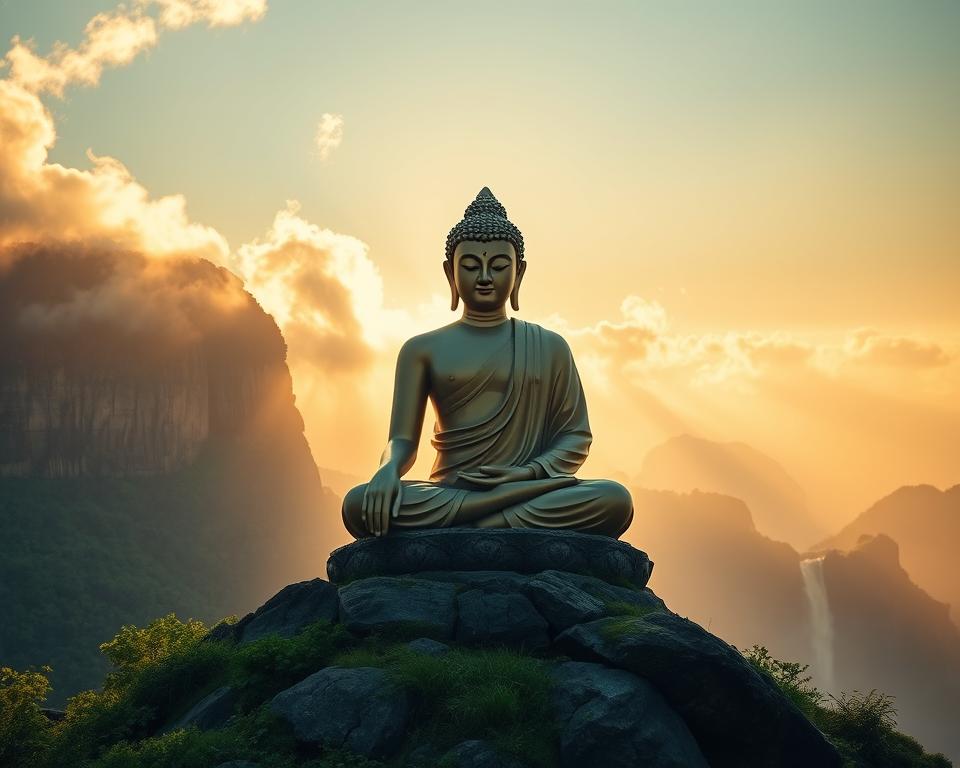
Buddha Statues and Their Meaning: Symbolism and Spiritual Significance
The intricate details and postures of Buddha statues convey profound symbolic meanings that are central to Buddhist practice. As you explore the world of Buddha statues, you’ll discover that each element, from the posture to the hand gestures, holds significant importance.
Core Symbolism in Buddhist Iconography
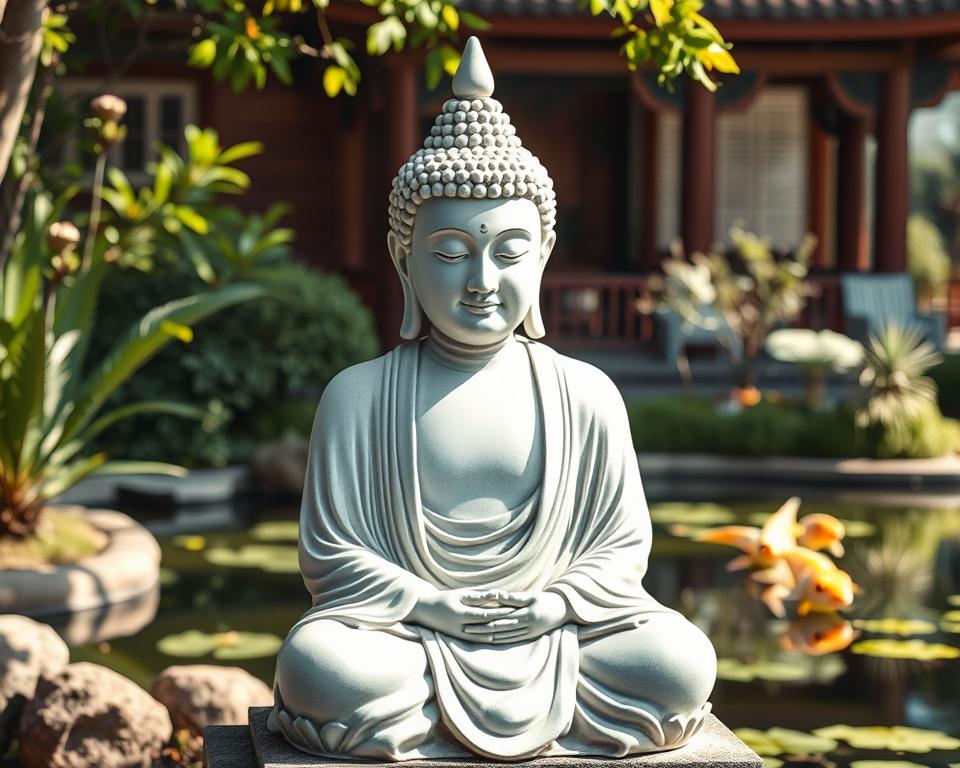
Buddhist iconography is rich in symbolism, with each statue and image conveying specific teachings and principles of Buddhism. The core symbolism can be broken down into several key elements:
- Posture: The posture of a Buddha statue, whether sitting, standing, or reclining, signifies different aspects of Buddhist teachings.
- Mudras: Hand gestures, or mudras, are used to convey specific meanings, such as meditation, fearlessness, or teaching.
- Facial Expressions: The serene facial expressions of Buddha statues embody peace and enlightenment.
These elements combined create a visual representation of Buddhist philosophy, guiding practitioners on their spiritual journey.
Spiritual Importance in Buddhist Practice
In Buddhist practice, statues of Buddha hold significant spiritual importance, serving as focal points for meditation and veneration. They remind practitioners of the teachings of the Buddha and inspire mindfulness and compassion.
- Meditation: Buddha statues are often used as focal points during meditation, helping practitioners to concentrate and achieve a state of mindfulness.
- Veneration: The act of venerating Buddha statues is a way of showing respect for the Buddha’s teachings and the path to enlightenment.
By understanding the symbolism and spiritual significance of Buddha statues, you can deepen your appreciation for Buddhist practices and the role these statues play in the spiritual lives of practitioners.
The Physical Characteristics of Buddha Statues
In Buddhist art, the physical characteristics of Buddha statues are imbued with profound meaning, reflecting various aspects of the Buddha’s nature. These characteristics are not merely decorative but are integral to understanding the spiritual and cultural significance of the statues.

The 32 Physical Marks of a Buddha
According to Buddhist tradition, a Buddha is recognised by the 32 major physical marks, known as laksana. These marks are considered signs of a great being or mahapurisa. Some of these marks include:
- a protuberance on the top of the head, known as the ushnisha, symbolising spiritual wisdom
- elongated earlobes, signifying renunciation
- a urna, or a mark between the eyebrows, representing the third eye or insight
These physical attributes are depicted in Buddha statues to convey the enlightened state of the Buddha.
Facial Expressions and Their Meaning
The facial expressions of Buddha statues are also rich in meaning. A serene and calm expression is typical, symbolising the Buddha’s state of enlightenment and inner peace. The smile, often subtle, represents the Buddha’s compassion and benevolence towards all beings. The downcast eyes signify introspection and meditation, while the overall expression conveys a sense of detachment from worldly concerns.
Understanding these physical characteristics and facial expressions can deepen one’s appreciation of Buddha statues, revealing the intricate symbolism and spiritual significance embedded in these revered images.
Hand Gestures (Mudras) and Their Significance
Mudras, the symbolic hand gestures found in Buddha statues, play a crucial role in Buddhist practice and iconography. These gestures are not merely artistic expressions but convey deep spiritual meanings and teachings.

Dhyana Mudra: Meditation
The Dhyana Mudra, or meditation mudra, is characterised by the hands placed in the lap, with the right hand on top of the left, and fingers extended. This mudra symbolises meditation and mental focus.
Abhaya Mudra: Fearlessness
The Abhaya Mudra, or fearlessness mudra, is depicted with the right hand raised to shoulder height, palm facing outward, and fingers together. This gesture signifies fearlessness and protection.
Bhumisparsha Mudra: Earth Witness
Bhumisparsha Mudra, or the earth witness mudra, is shown with the right hand reaching towards the ground, symbolising the Buddha’s enlightenment under the Bodhi tree. It represents the Buddha’s call to the earth as a witness to his enlightenment.
Dharmachakra Mudra: Teaching
The Dharmachakra Mudra, or teaching mudra, involves both hands held at chest level, with the thumb and index finger of the right hand forming a circle. This mudra signifies the turning of the wheel of dharma, or the teaching of Buddhist doctrine.
Varada Mudra: Compassion
Varada Mudra, or the gesture of compassion, is depicted with the right hand extended downward, palm facing outward. It symbolises compassion, generosity, and the granting of wishes.
| Mudra | Meaning |
|---|---|
| Dhyana Mudra | Meditation and mental focus |
| Abhaya Mudra | Fearlessness and protection |
| Bhumisparsha Mudra | Earth witness, enlightenment |
| Dharmachakra Mudra | Teaching, turning of the wheel of dharma |
| Varada Mudra | Compassion, generosity |
Buddha Postures and Their Meanings
In Buddhist art, the posture of Buddha statues conveys deep symbolic meanings and spiritual significance. The various postures are not merely aesthetic choices but are imbued with teachings and principles of Buddhism.
Standing Buddha
A standing Buddha is often depicted with one hand in a gesture of giving or teaching. This posture represents the Buddha’s readiness to guide and assist all beings. It symbolises strength, compassion, and the willingness to help others on their spiritual path.
Sitting Buddha
The sitting Buddha is one of the most common depictions, often shown in meditation or teaching postures. This posture signifies the Buddha’s enlightenment under the Bodhi Tree and represents the state of deep meditation and spiritual awakening.
Reclining Buddha
A reclining Buddha represents the Buddha’s final nirvana, symbolising the end of his earthly life and his attainment of complete enlightenment. This posture is a reminder of the impermanence of life and the ultimate goal of achieving nirvana.
| Buddha Posture | Symbolic Meaning |
|---|---|
| Standing | Guidance, compassion, and strength |
| Sitting | Meditation, enlightenment, and spiritual awakening |
| Reclining | Nirvana, impermanence, and complete enlightenment |

Different Types of Buddha Statues
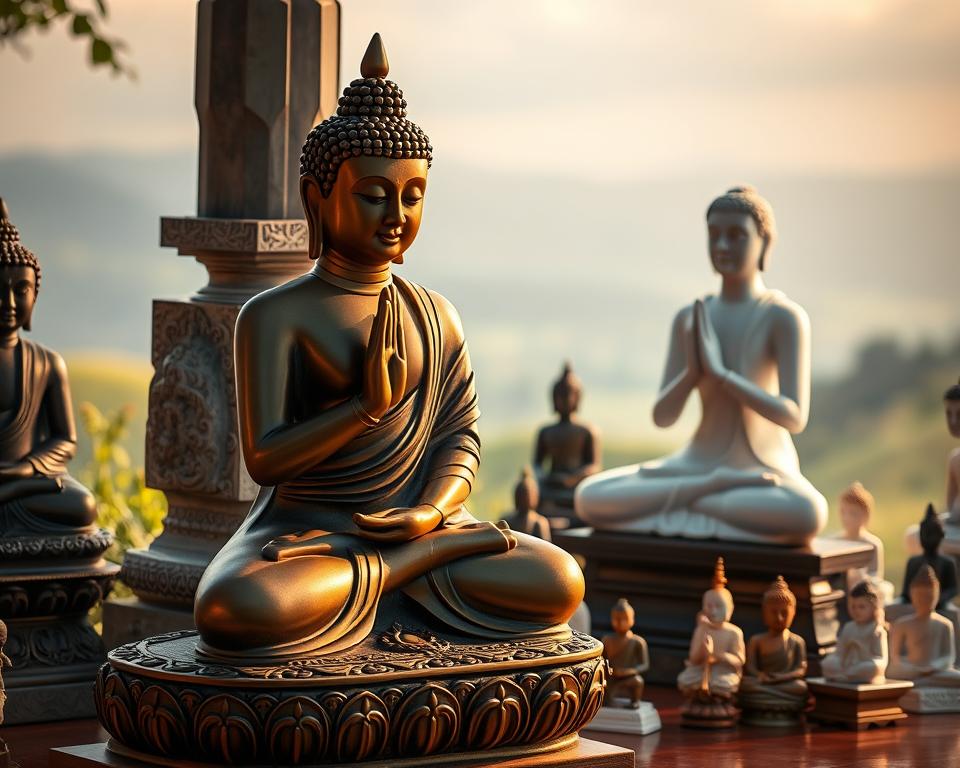
As you explore the world of Buddha statues, you’ll discover a multitude of types, each with its unique significance. Buddhist tradition is rich with various representations of the Buddha, reflecting different aspects of his teachings and the cultural contexts in which they were created.
Shakyamuni Buddha
Shakyamuni Buddha represents the historical Buddha, Siddhartha Gautama. Statues of Shakyamuni Buddha often depict him in a meditative pose or teaching posture, symbolizing the moment of his enlightenment. These statues are revered for their representation of the Buddha’s teachings and the path to enlightenment.
Medicine Buddha
The Medicine Buddha, or Bhaisajyaguru, is venerated in Mahayana Buddhism for his healing properties. Statues of the Medicine Buddha typically depict him holding a medicine pot, symbolizing his ability to heal spiritual and physical ailments. Devotion to the Medicine Buddha is believed to bring about physical and mental well-being.
Amitabha Buddha
Amitabha Buddha is a central figure in Pure Land Buddhism, representing compassion and wisdom. Statues of Amitabha often show him in a serene posture, sometimes with hands in the dhyana mudra, symbolizing meditation and spiritual purity. Amitabha is believed to preside over the Pure Land, a realm where devotees can attain enlightenment.
Laughing Buddha (Budai)
The Laughing Buddha, known as Budai or Hotei in Chinese and Japanese cultures, respectively, is often mistaken for the historical Buddha. Instead, he represents a Chan (Zen) monk known for his generosity and happiness. Statues of the Laughing Buddha depict a smiling, rotund figure, symbolizing joy and prosperity.
Maitreya Buddha
Maitreya Buddha is considered the future Buddha, who will appear on earth to teach the Dharma and bring enlightenment to all beings. Statues of Maitreya often depict him seated in a Western-style posture or standing, sometimes with one leg crossed, symbolizing his readiness to descend to the world. Maitreya represents hope and the future realization of Buddhist teachings.
These various types of Buddha statues not only reflect the diversity within Buddhist traditions but also serve as focal points for devotion, meditation, and the cultivation of wisdom. Understanding the significance of each type can deepen one’s appreciation for the rich tapestry of Buddhist culture and practice.
Regional Variations in Buddha Statues
Buddha statues exhibit a rich diversity across various regions, reflecting local artistic styles and cultural influences. As Buddhism spread throughout Asia, the depiction of Buddha evolved, incorporating local traditions and aesthetics.
Tibetan Buddhist Statues
Tibetan Buddhist statues are known for their intricate details and symbolism. They often feature Buddha figures with complex iconography, including multiple arms and ornaments that signify their spiritual significance. Tibetan statues are typically made from metal alloys and are often gilded or painted in vibrant colours.
Thai Buddha Statues
Thai Buddha statues are renowned for their elegance and serene expressions. They are usually made from bronze or gold and feature distinctive facial features and ornate decorations. Thai statues often depict Buddha in various mudras, or hand gestures, which convey different aspects of his teachings.
Chinese Buddha Statues
Chinese Buddha statues reflect a blend of Buddhist and Chinese cultural influences. They often incorporate elements of Chinese art and architecture, such as intricate carvings and porcelain. Chinese statues may depict Buddha in various forms, including the historical Buddha and other Buddhist deities.
Japanese Buddha Statues
Japanese Buddha statues are characterized by their simplicity and elegance. They often feature minimalist designs and are made from materials such as wood or bronze. Japanese statues may depict Buddha in a variety of poses, including seated and standing positions.
| Region | Characteristics | Materials |
|---|---|---|
| Tibetan | Intricate details, complex iconography | Metal alloys, gilded or painted |
| Thai | Elegant, serene expressions, ornate decorations | Bronze, gold |
| Chinese | Blend of Buddhist and Chinese influences, intricate carvings | Porcelain, stone |
| Japanese | Simple, elegant, minimalist designs | Wood, bronze |
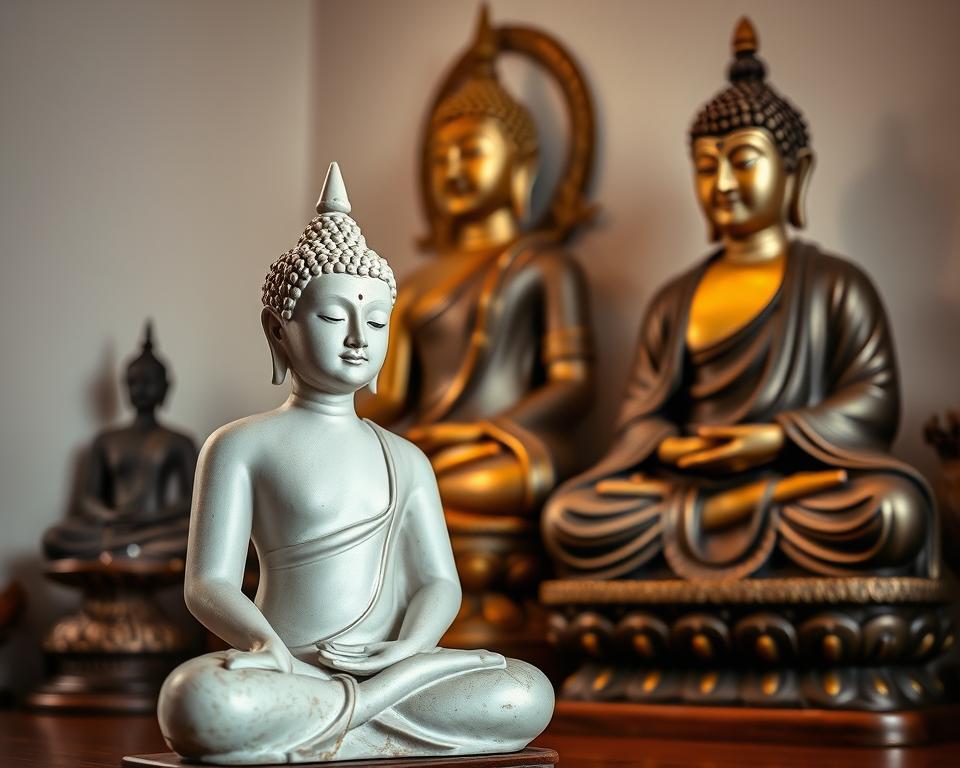
Materials Used in Buddha Statues
The materials used for Buddha statues vary widely, including metals, stones, woods, and precious gems, each selected for its durability and spiritual significance. The choice of material often depends on the intended use of the statue, its location, and the cultural context in which it is created.
Bronze and Metal Statues
Bronze has been a popular material for Buddha statues due to its durability and versatility. Bronze Buddha statues are often cast using the lost-wax method, allowing for intricate details and designs. The use of bronze also signifies the transformation of the material from a raw state to a more refined and spiritual form, echoing the Buddha’s own journey to enlightenment.
Stone and Marble Statues
Stone and marble are also favoured materials for Buddha statues, prized for their beauty and longevity. Marble Buddha statues, in particular, are renowned for their fine detail and the serene expressions they convey. The use of stone and marble connects the statue to the earth and conveys a sense of solidity and permanence.
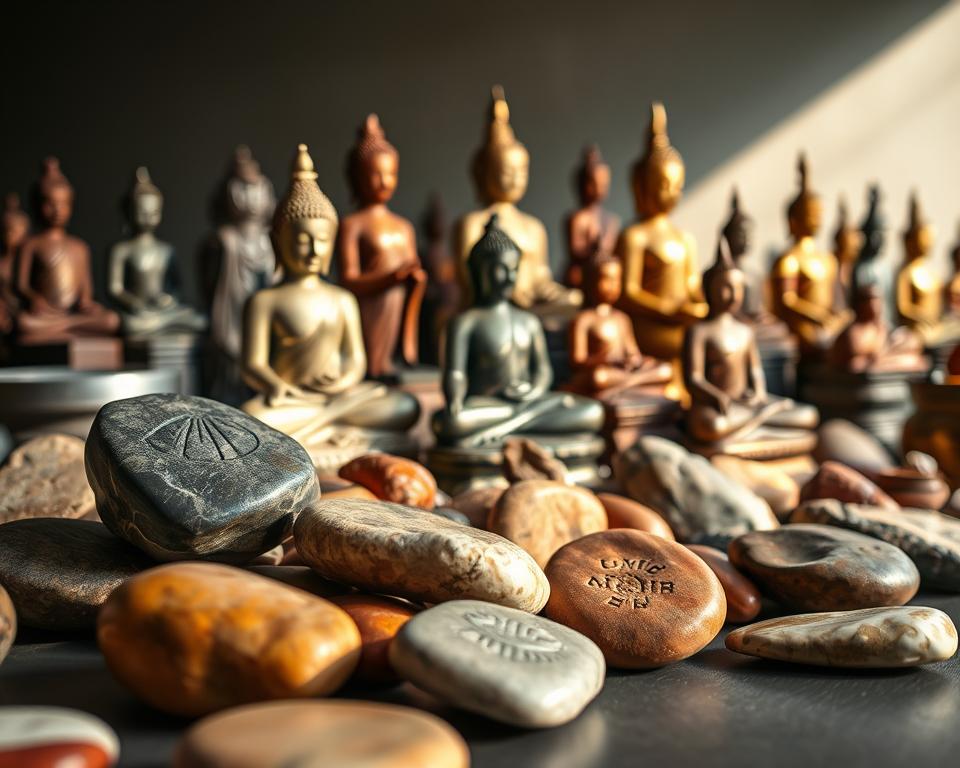
Wood Carvings
Wood is another material used for Buddha statues, especially in regions where it is abundant. Wood carvings of Buddha can range from simple, rustic figures to elaborate, intricate designs. The warmth of wood gives the statues a unique, inviting quality, and the material’s natural texture can add to the overall aesthetic.
Jade and Precious Materials
Jade and other precious materials are used to create Buddha statues that are not only spiritually significant but also highly valuable. Jade Buddha statues are particularly esteemed for their beauty and the symbolic meaning of jade, which includes purity, harmony, and prosperity. The use of such materials underscores the reverence and devotion associated with the statues.
| Material | Characteristics | Significance |
|---|---|---|
| Bronze | Durable, versatile, intricate details | Symbolizes transformation and spiritual growth |
| Stone/Marble | Beautiful, long-lasting, fine detail | Connects to the earth, conveys solidity and permanence |
| Wood | Warm, natural texture, varied designs | Inviting quality, reflects regional abundance |
| Jade/Precious Materials | Valuable, beautiful, symbolic | Represents purity, harmony, prosperity, and devotion |
The Role of Buddha Statues in Meditation Practices
The presence of Buddha statues in meditation spaces is not merely decorative; they are used to facilitate deeper mindfulness and visualisation. In Buddhist meditation practices, these statues serve as powerful tools to guide your spiritual journey.
Using Statues as Focal Points
Buddha statues can be used as focal points during meditation, helping you to concentrate and achieve a state of inner peace. By focusing on the statue, you can calm your mind and enhance your mindfulness. The serene expressions and symbolic postures of Buddha statues inspire a sense of tranquility and contemplation.
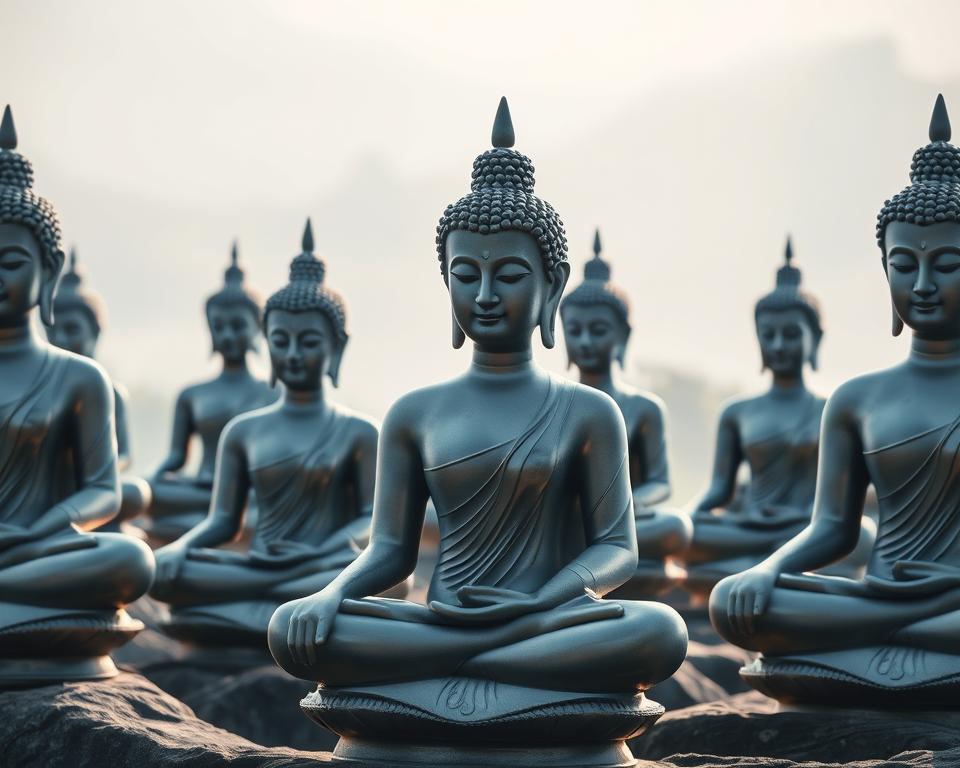
Visualisation Techniques
Visualisation is a key aspect of Buddhist meditation, and Buddha statues play a crucial role in this practice. By visualising the qualities embodied by the Buddha, such as compassion and wisdom, you can cultivate these attributes within yourself. The statue acts as a tangible representation of these qualities, aiding your visualisation and deepening your meditation practice.
| Meditation Practice | Role of Buddha Statue | Benefits |
|---|---|---|
| Focal Point Meditation | Statue serves as a visual anchor | Enhanced concentration, calmness |
| Visualisation Techniques | Statue embodies qualities to be cultivated | Cultivation of compassion, wisdom |
By incorporating Buddha statues into your meditation practice, you can enrich your spiritual journey and deepen your understanding of Buddhist principles.
Proper Placement of Buddha Statues
The placement of Buddha statues is a significant aspect of Buddhist practice, influencing the energy and tranquility of a space. Whether in a temple, home, or garden, the positioning of these statues is crucial for creating a harmonious environment.
Placement in Temples and Monasteries
In temples and monasteries, Buddha statues are typically placed in areas of reverence, such as the main altar. This placement is often accompanied by other sacred objects and scriptures, creating a focal point for meditation and worship. The statues are usually positioned to face the east, symbolizing the direction of enlightenment.
Home Placement Guidelines
When placing Buddha statues in the home, it’s essential to choose a location that promotes peace and tranquility. Consider the following guidelines:
- Place the statue in a quiet, clean area, away from clutter and distractions.
- Avoid positioning the statue in bedrooms or bathrooms, as these areas are considered private and potentially disruptive.
Living Room and Study Placement
In living rooms and studies, Buddha statues can be placed on a shelf or table, ideally at a height that allows for comfortable viewing. This placement encourages mindfulness and calmness in areas used for relaxation and intellectual pursuits.
Bedroom and Personal Space Placement
While it’s generally advised to avoid placing Buddha statues in bedrooms, if you choose to do so, ensure the statue is positioned respectfully and not in a location where it may be overlooked or disturbed.
Garden and Outdoor Placement
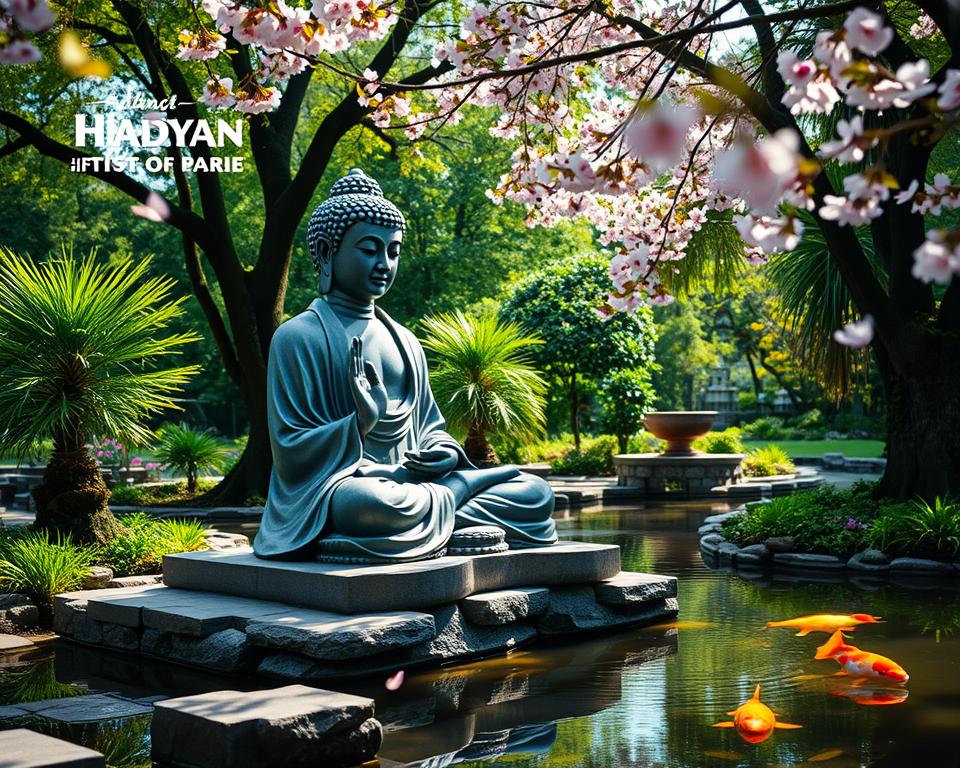
Outdoor Buddha statues can be a beautiful addition to gardens, creating a serene atmosphere. When placing a statue outdoors, consider the material’s durability and the statue’s exposure to the elements. Positioning the statue in a shaded area or under a canopy can help protect it.
| Placement Location | Considerations |
|---|---|
| Temples and Monasteries | Main altar, facing east, accompanied by sacred objects |
| Home | Quiet, clean area, away from clutter and distractions |
| Garden/Outdoor | Durable material, shaded area, serene atmosphere |
Caring for and Respecting Buddha Statues
Caring for Buddha statues is not just about maintaining a physical object, but also about showing respect for the spiritual significance they hold. When you care for a Buddha statue, you are not only preserving its physical condition but also honouring the principles it represents.
Traditional Practices for Statue Care
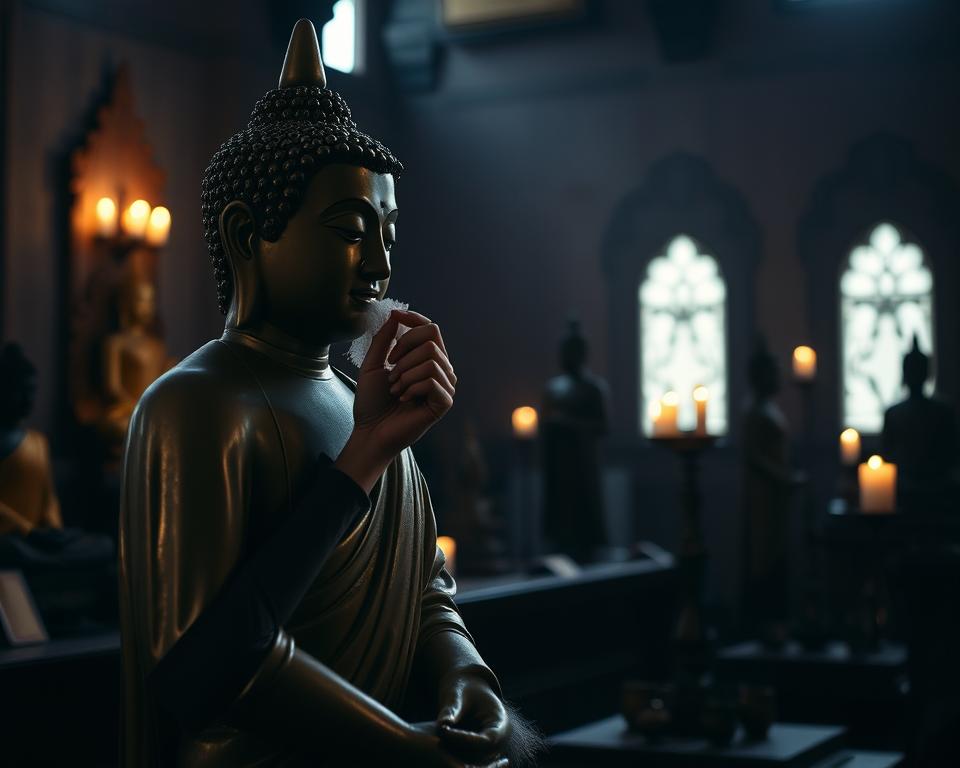
Traditional practices for caring for Buddha statues vary across cultures, but they often involve regular cleaning and offering rituals. For instance, in many Buddhist traditions, statues are cleaned with soft cloths and sometimes perfumed water. You should avoid using harsh chemicals or abrasive materials that could damage the statue.
It’s also common to make offerings such as incense, flowers, or candles. These practices are not just about maintaining the statue but also about cultivating mindfulness and respect.
Cultural Sensitivities to Consider
When caring for a Buddha statue, it’s essential to be aware of cultural sensitivities. For example, in many Buddhist cultures, it’s considered disrespectful to touch or handle a statue without proper cleansing or preparation. You should also be mindful of the statue’s posture and mudras, as these have specific meanings.
| Cultural Practice | Description | Significance |
|---|---|---|
| Cleaning | Using soft cloths and sometimes perfumed water | Maintaining the statue’s condition and showing respect |
| Offerings | Making offerings such as incense, flowers, or candles | Cultivating mindfulness and respect |
| Handling | Avoiding touch without proper cleansing or preparation | Showing respect and avoiding disrespect |
By understanding and respecting these cultural practices, you can deepen your appreciation for Buddha statues and the values they represent.
Ethical Considerations in Buddha Statue Ownership
As you contemplate owning a Buddha statue, it’s essential to reflect on the ethical dimensions. The acquisition and possession of such statues involve more than just aesthetic or spiritual appreciation; they encompass cultural sensitivity, historical awareness, and ethical responsibility.
Cultural Heritage and Appropriation
Buddha statues are deeply rooted in Buddhist culture and tradition. When acquiring a statue, it’s crucial to consider the cultural context and potential for cultural appropriation. Cultural appropriation occurs when elements of a culture are taken out of context and used in a way that is disrespectful or demeaning. To avoid this, educate yourself on the significance of Buddha statues in Buddhist practice and ensure that your acquisition does not contribute to the commodification of sacred symbols.
Antique and Historical Statues
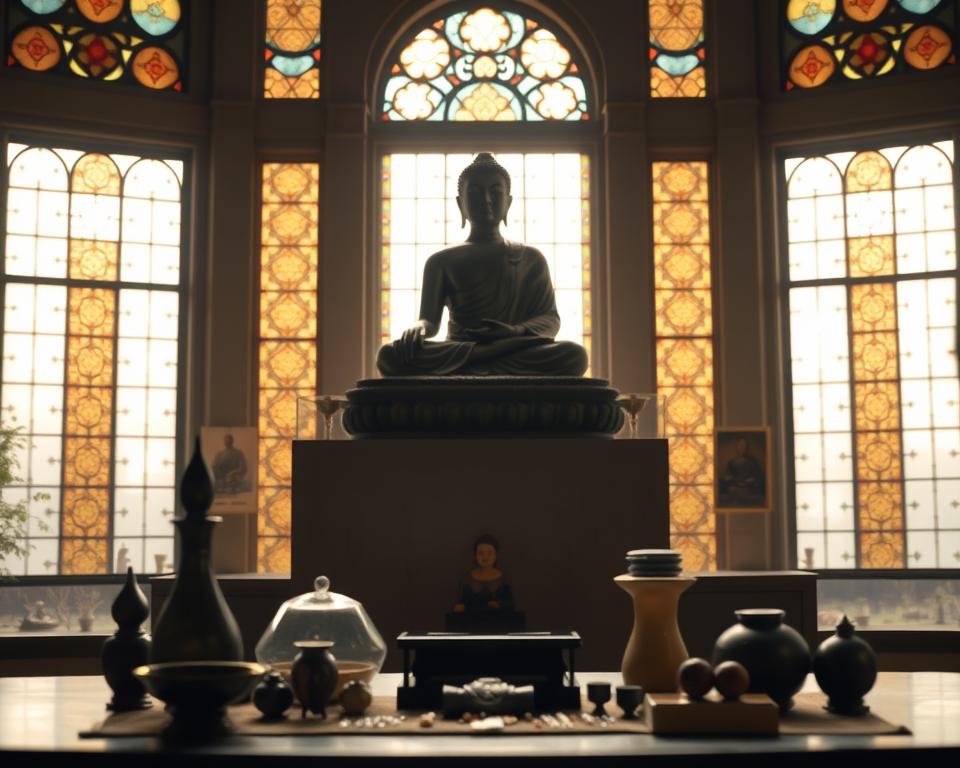
Antique and historical Buddha statues present additional ethical considerations. Many such statues have been looted or removed from their original contexts without proper authorization or compensation.
“The looting of cultural artifacts is a significant issue, with many historical Buddha statues being removed from their countries of origin and sold on the international market.”
When considering the purchase of an antique or historical statue, research its provenance to ensure it has not been obtained unethically.
| Ethical Consideration | Description | Action |
|---|---|---|
| Cultural Appropriation | Using cultural symbols out of context | Educate yourself on cultural significance |
| Provenance of Antiques | Historical statues looted or sold unethically | Research the statue’s history |
| Supporting Ethical Artisans | Promoting fair trade and ethical craftsmanship | Purchase from reputable, ethical sources |
Supporting Ethical Artisans and Craftspeople
One way to ethically engage with Buddha statues is by supporting artisans and craftspeople who produce them. Look for fair trade practices and ethical craftsmanship. By doing so, you contribute to the preservation of traditional skills and support communities involved in the creation of these statues. This approach not only ensures that your purchase is ethically sound but also promotes cultural sustainability.
Buddha Statues in Contemporary Art and Design
Modern interpretations of Buddha statues are redefining their role in art and design. Contemporary artists are continually finding new ways to represent these sacred figures, blending traditional symbolism with modern aesthetics.

Modern Interpretations
Contemporary art has seen a surge in innovative representations of Buddha statues. Artists are experimenting with various materials and styles, from abstract sculptures to digital art. For instance, some artists incorporate Buddha statues into street art, while others use them in installations that challenge traditional perceptions.
The use of Buddha statues in modern design also extends to home decor and fashion. Designers are creating pieces that not only pay homage to the traditional significance of Buddha statues but also make them accessible to a wider audience.
| Art Form | Description | Innovation |
|---|---|---|
| Sculpture | Traditional Buddha statues reimagined with modern materials | Use of recycled materials, mixed media |
| Digital Art | Buddha statues represented through digital mediums | Interactive installations, digital paintings |
| Fashion | Buddha statues incorporated into clothing and accessories | Use of Buddha imagery on apparel, jewelry |
Commercialisation Concerns
While the commercialisation of Buddha statues has made them more accessible, it also raises concerns about cultural appropriation and the loss of spiritual significance. As Buddha statues become more prevalent in consumer culture, there’s a risk that their sacred meaning could be diluted.
It’s essential for consumers and artists alike to be aware of these issues and to approach the representation and purchase of Buddha statues with sensitivity and respect for their cultural and religious significance.
How to Choose a Buddha Statue That Resonates with You
The right Buddha statue can bring a sense of calm and serenity to your space, but how do you choose it? Selecting a Buddha statue is a personal decision that depends on several factors, including your intention, the symbolism behind the statue, and its authenticity. In this section, we’ll guide you through the process of choosing a Buddha statue that resonates with you.
Understanding Your Intention
Before selecting a Buddha statue, it’s essential to understand your intention. Are you looking for a statue to enhance your meditation practice, or do you want it as a decorative piece? Your intention will guide your choice. For instance, if you’re seeking a statue for meditation, you might prefer one with a serene expression, such as a Dhyana Mudra statue, symbolizing peace and inner calm.
Selecting Based on Symbolism
Buddha statues are rich in symbolism, and understanding these symbols can help you make an informed decision. Different postures and mudras represent various aspects of Buddhist teachings. For example, a Bhumisparsha Mudra statue, where the Buddha is touching the earth, symbolizes his enlightenment and can be a powerful reminder of your own spiritual journey.
Authenticity Considerations
When choosing a Buddha statue, consider its authenticity. Look for statues made from high-quality materials and crafted with care. An authentic Buddha statue not only reflects the beauty of Buddhist art but also conveys the spiritual significance. Be mindful of the cultural context and ensure that your purchase supports ethical artisans.

Conclusion
As we reflect on the various aspects of Buddha statues, it becomes clear that these statues embody the teachings and spirit of Buddhism. The significance of Buddha statues lies not only in their historical and cultural context but also in their role as a focal point for meditation and spiritual growth.
A summary of Buddha statue significance reveals that the different mudras, postures, and types of Buddha statues all contribute to a deeper understanding of Buddhist principles. Whether you are a practitioner of Buddhism or simply appreciate the cultural and artistic value of these statues, their significance is undeniable.
In your journey with Buddha statues, whether for meditation, decoration, or spiritual inspiration, understanding their symbolism and significance can enhance your appreciation and connection to these powerful representations of the Buddha’s teachings.
FAQ
What is the significance of Buddha statues in Buddhist practices?
Buddha statues play a crucial role in Buddhist practices, serving as objects of veneration and aids to meditation. They symbolise the teachings of the Buddha and are believed to bring peace and prosperity.
How do I choose a Buddha statue that is right for me?
When selecting a Buddha statue, consider your intention, the symbolism associated with different statues, and the authenticity of the statue. Understanding the meaning behind the statue will help you choose one that resonates with you.
What are the different types of Buddha statues and their meanings?
There are various types of Buddha statues, including Shakyamuni Buddha, Medicine Buddha, Amitabha Buddha, Laughing Buddha, and Maitreya Buddha. Each type has its unique significance and characteristics, reflecting different aspects of Buddhist teachings.
How should I place a Buddha statue in my home?
When placing a Buddha statue in your home, consider the location carefully. It is recommended to place the statue in a quiet, respectful area, such as a meditation room or a peaceful corner. Avoid placing the statue in areas with high foot traffic or near clutter.
What are the traditional practices for caring for Buddha statues?
Traditional practices for caring for Buddha statues include regular cleaning, offering incense, and making offerings such as flowers or candles. It is also important to handle the statue with respect and care.
Can I display a Buddha statue in my garden or outdoor space?
Yes, you can display a Buddha statue in your garden or outdoor space. However, consider the material and durability of the statue, as well as the surrounding environment. Ensure that the statue is not exposed to harsh weather conditions or direct sunlight.
What are the ethical considerations when buying a Buddha statue?
When purchasing a Buddha statue, consider the cultural heritage and potential appropriation concerns. It is also essential to support ethical artisans and craftspeople. Be mindful of the statue’s origin and ensure that it is not made from illicit or endangered materials.
How do mudras (hand gestures) in Buddha statues relate to Buddhist practices?
Mudras in Buddha statues represent various aspects of Buddhist teachings and are used in meditation practices. Different mudras, such as Dhyana Mudra, Abhaya Mudra, and Bhumisparsha Mudra, symbolise different qualities, including meditation, fearlessness, and enlightenment.
What is the significance of the physical characteristics of Buddha statues?
The physical characteristics of Buddha statues, including the 32 marks of a Buddha, are symbolic of the Buddha’s enlightenment and spiritual significance. Facial expressions and postures also convey different aspects of Buddhist teachings.