Bird-Friendly Garden: Eight Ways to Help Breeding Birds
Creating a haven for breeding birds in your outdoor space is not only a delight but also a vital contribution to supporting local bird populations. As natural habitats continue to decline, gardens have become crucial sanctuaries for birds, providing them with the necessary resources to thrive, especially during breeding season.
By transforming your garden into a welcoming space, you can attract a greater diversity of birds and contribute to local conservation efforts. This comprehensive guide will explore practical tips to address the three essential needs of birds: food, water, and shelter.
Inhaltsverzeichnis
Key Takeaways
- Transform your outdoor space into a haven for breeding birds.
- Support local bird populations by providing essential resources.
- Attract a greater diversity of birds with practical tips.
- Contribute to local conservation efforts as natural habitats decline.
- Create a bird-friendly environment by addressing the needs of birds.
The Importance of Creating a Bird-Friendly Garden
With the decline of natural habitats, gardens that welcome birds have become vital sanctuaries. As our landscape becomes increasingly monotonous and intensely farmed, birds are becoming more dependent on garden habitats for survival.
Why Birds Need Our Help
Modern agricultural practices and urban development have drastically reduced natural habitats for birds, making domestic gardens crucial for many species. Birds face numerous challenges, including habitat loss, climate change, and reduced food sources, making our garden spaces vital for their survival.
Benefits of Birds in Your Garden
Birds contribute significantly to the health and biodiversity of your garden. They eat grubs and insects that damage plants and lawns, helping your greenery thrive. Some key benefits include:
- Natural pest control, reducing the need for harmful chemical interventions.
- Improved plant health through pollination and seed dispersal.
- The joy of observing wildlife in your own garden.
- A diverse range of bird species indicating a healthy local ecosystem.
By creating a bird-friendly garden, you not only support local wildlife but also enhance the overall health and beauty of your outdoor space.
1. Plant Native Trees and Shrubs
Native trees and shrubs are the backbone of a bird-friendly garden, offering a haven for birds to nest, feed, and thrive. By incorporating these plants into your garden, you can create a welcoming environment that supports the local bird population throughout the year.
Best Trees for Nesting Birds
When selecting trees for your garden, consider species that provide nesting sites and support a wide variety of birds. Trees with dense foliage, such as oak and beech, are ideal for nesting birds, as they offer protection from predators and harsh weather conditions.
Berry-Producing Shrubs for Food Sources
Berry-producing shrubs like rowan, holly, and hawthorn are excellent for providing a food source for birds. These shrubs produce fruit that is rich in nutrients, which is especially important during autumn and winter when other food sources are scarce.
Creating Natural Shelter
In addition to food and nesting sites, native trees and shrubs can also provide shelter for birds. Dense vegetation like cotoneaster and pyracantha creates a safe haven for birds to hide from predators and harsh weather.
- Native trees and shrubs provide essential resources for birds, including food, shelter, and nesting sites.
- Planting a variety of native species can attract a diverse range of bird species to your garden.
2. Provide a Variety of Bird Feeders
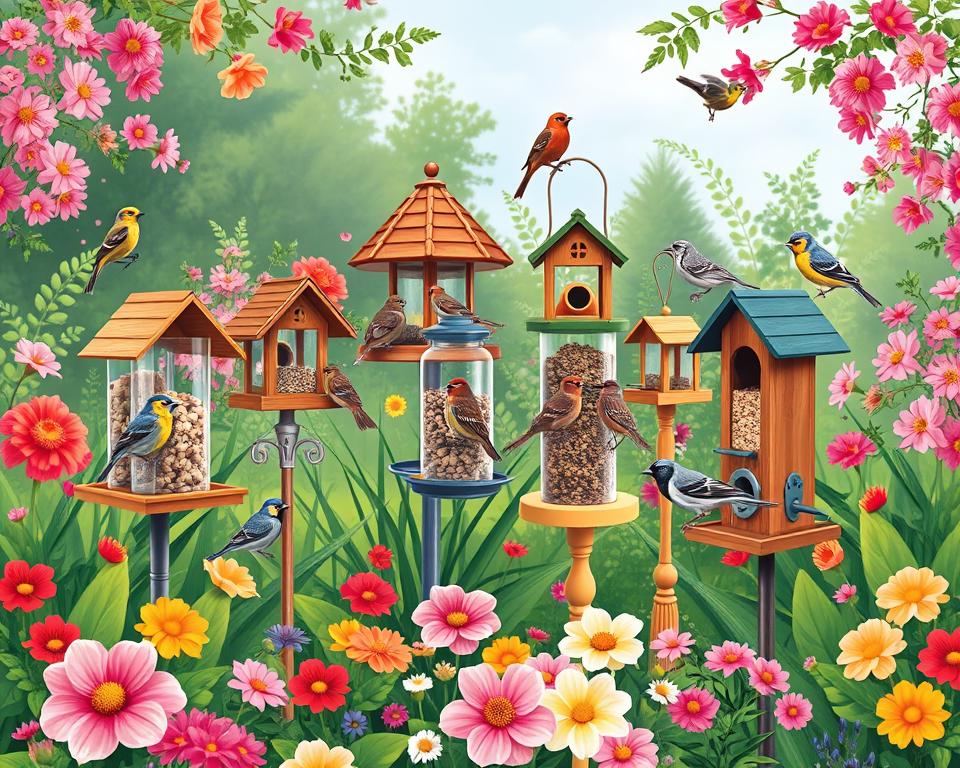
To draw a diverse range of birds to your garden, it’s essential to install a variety of bird feeders catering to different feeding preferences. Different bird species have distinct feeding habits, making it crucial to provide a range of feeder types.
Types of Feeders for Different Species
Various bird feeders are designed for specific types of food. For instance, tube feeders are ideal for seeds like sunflower hearts, attracting finches and tits. In contrast, platform feeders accommodate ground-feeding birds such as blackbirds and thrushes.
Nyjer seed feeders with small ports are specifically designed for goldfinches and siskins, while suet cake holders and fat ball feeders provide high-energy food, particularly valuable during colder months.
Optimal Feeder Placement
Strategic feeder placement is crucial. Position feeders near shrubs or trees, but not too close, to provide birds with quick escape routes from predators while maintaining good visibility of potential threats.
Keeping Feeders Clean and Safe
Regular cleaning of bird feeders is essential to prevent the spread of diseases. Aim to clean all feeders thoroughly at least once a week using a mild disinfectant solution, rinsing well before refilling.
By introducing different types of feeders and foods gradually, you can discover which combinations attract the most birds to your specific garden environment.
3. Offer Nutritious Food Year-Round
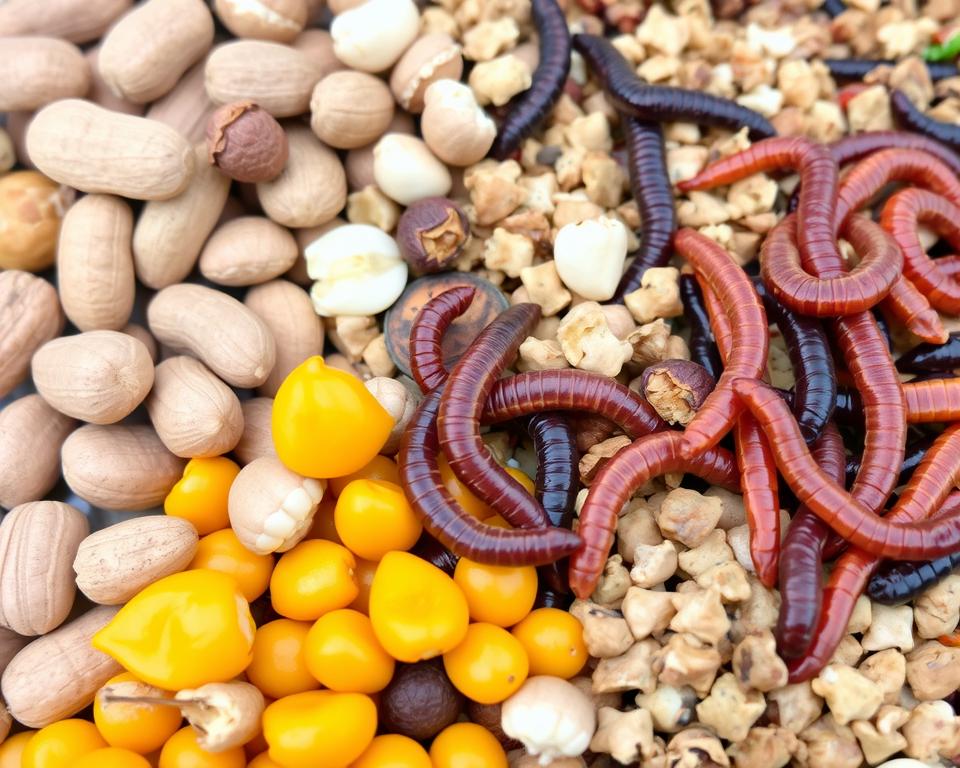
A bird-friendly garden should offer nutritious food year-round to support its feathered visitors. Providing the right food is crucial, as the nutritional needs of birds change significantly across different seasons.
Seasonal Feeding Requirements
During the breeding season (spring and early summer), birds require protein-rich foods like mealworms and insectivorous bird seed mixes. In contrast, winter feeding is critical when natural food sources are scarce, and high-energy foods like fat balls and suet cakes are essential.
Foods to Avoid
It’s equally important to avoid offering foods that provide little nutritional value, such as bread. Fresh fruit like apples and berries can be offered year-round, but it’s crucial to remove mouldy or stale food promptly.
4. Install Bird Baths and Water Features
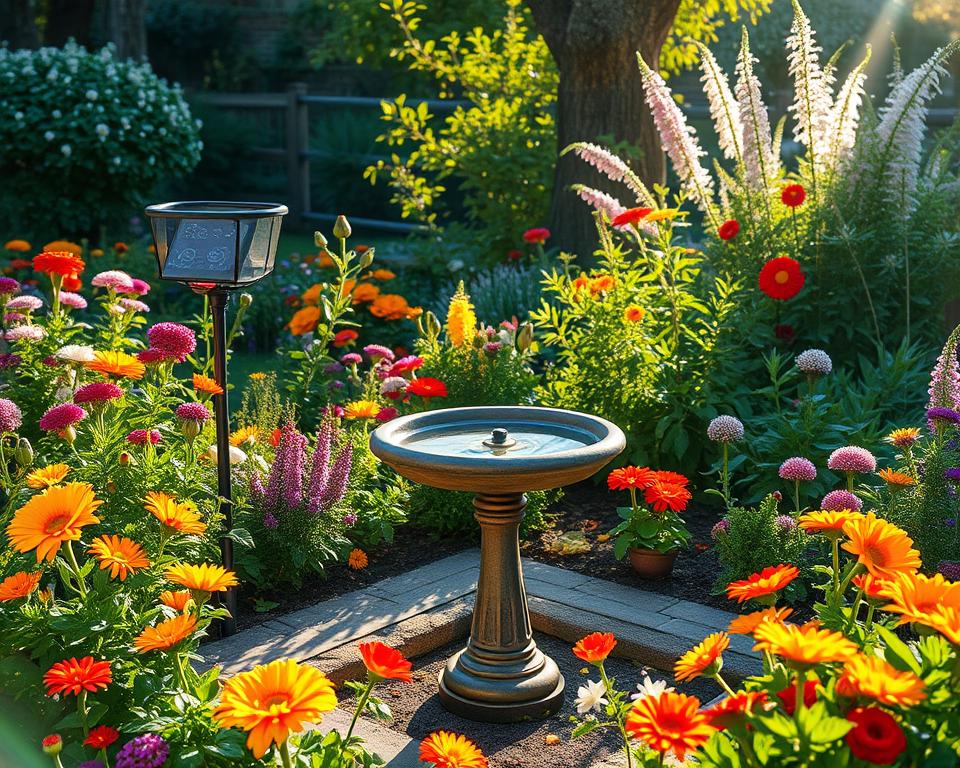
A crucial element of a bird-friendly garden is the installation of bird baths and water features. Birds need fresh water for both drinking and bathing, and providing a reliable source of water can significantly enhance the appeal of your garden to birds.
Importance of Fresh Water
Fresh water is essential for birds year-round, not just for drinking but also for bathing to maintain feather condition, which is crucial for flight and insulation. Birds are particularly drawn to the sound of running water, so installing a small pump or choosing a solar-powered bird bath can encourage more visitors.
Maintaining Clean Water Sources
To keep the water clean, make sure to change it regularly and clean the basin at least once a week. During hot summer days, stagnant water can quickly become a breeding ground for bacteria. It’s recommended to clean baths at least twice weekly using a stiff brush and mild vinegar solution.
Simple DIY Water Features
A bird bath can be as simple as an upturned dustbin lid or a shallow dish placed on the ground. For added appeal, consider adding a small solar fountain or dripper to create the sound of moving water. Position baths in open areas with nearby perches where birds can survey for predators before approaching.
- Fresh water is essential for birds year-round.
- Bird baths should be shallow with gently sloping sides.
- The sound of moving water is particularly attractive to birds.
- Position bird baths in open areas with nearby perches.
- Maintain multiple water features throughout your garden.
- Make sure to clean bird baths regularly.
5. Create Insect-Friendly Areas
Creating areas in your garden that are friendly to insects is a key strategy for attracting birds and supporting their nutritional needs. Insects form a critical part of most birds’ diets, particularly during the breeding season when protein-rich food is essential for chick development.
Natural Food Sources for Birds
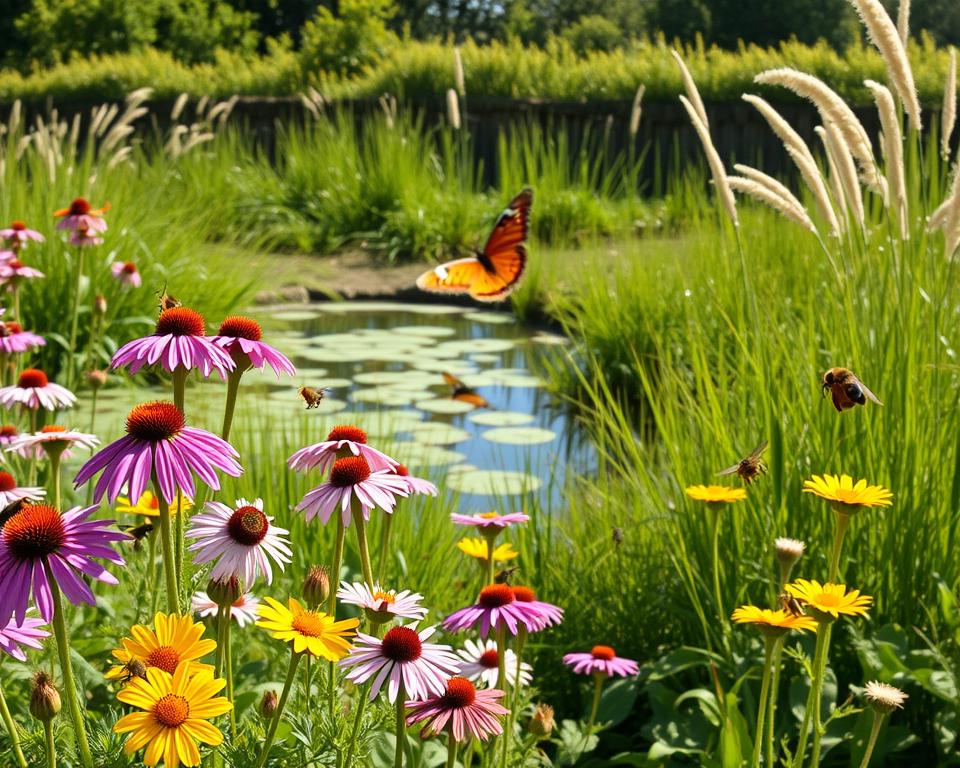
By allowing some areas of your garden to grow wild with native wildflowers, long grass, and seed-bearing plants, you naturally attract a diverse range of insects. This approach not only provides natural food sources for birds but also reduces their dependence on supplementary feeding.
Plants That Attract Insects
Incorporating plants specifically known to attract insects, such as lavender, buddleia, and native flowering herbs, can provide nectar for pollinators and subsequently food for insectivorous birds. Creating a log pile or dead wood feature in a quiet corner of your garden can also encourage beetles and other invertebrates that provide food for ground-feeding birds.
Avoiding Harmful Pesticides
It’s crucial to avoid using chemical pesticides and herbicides, which not only kill insects directly but can also accumulate in the food chain, potentially harming birds that consume affected insects or seeds. By maintaining an insect-friendly garden, you can create a haven that supports both insects and birds.
6. Provide Nesting Sites and Materials
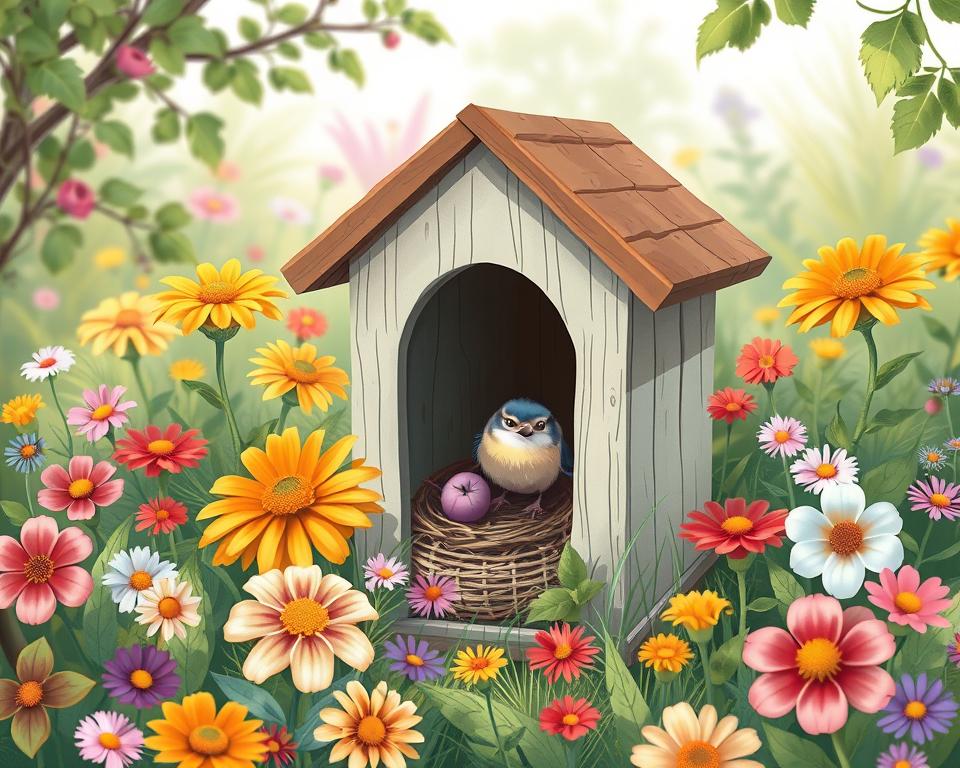
To support birds during their breeding season, consider enhancing your garden with appropriate nesting facilities. Providing nesting sites and materials is crucial for birds as they prepare to raise their young.
Types of Nest Boxes for Different Species
Different bird species have specific nesting requirements. Providing a variety of nest box styles with appropriate entrance hole sizes will attract a diverse range of birds to your garden. For instance, small entrance holes (25-28mm) are ideal for blue tits and coal tits, while medium holes (32mm) suit great tits and tree sparrows.
Natural Nesting Materials to Offer
Natural nesting materials such as small twigs, dried grass, moss, pet hair (untreated), sheep’s wool, and feathers can be offered in mesh holders or scattered in sheltered spots for birds to collect. This provision will encourage birds to nest in your garden.
Proper Placement of Nest Boxes
Proper placement of nest boxes is crucial. Position them 2-4 metres above ground, facing between north and east to avoid strong sunlight and prevailing winds. Ensure they’re out of reach of predators to safeguard the nesting birds.
By providing the right nesting sites and materials, you can create a welcoming environment for birds in your garden. This support is essential during the breeding season when birds are busy courting, nesting, and raising their young.
7. Time Your Garden Maintenance Wisely
A well-timed garden maintenance routine can make all the difference in supporting breeding birds. By considering the timing of your gardening activities, you can help protect nesting birds and ensure their breeding success.
When to Prune Trees and Shrubs
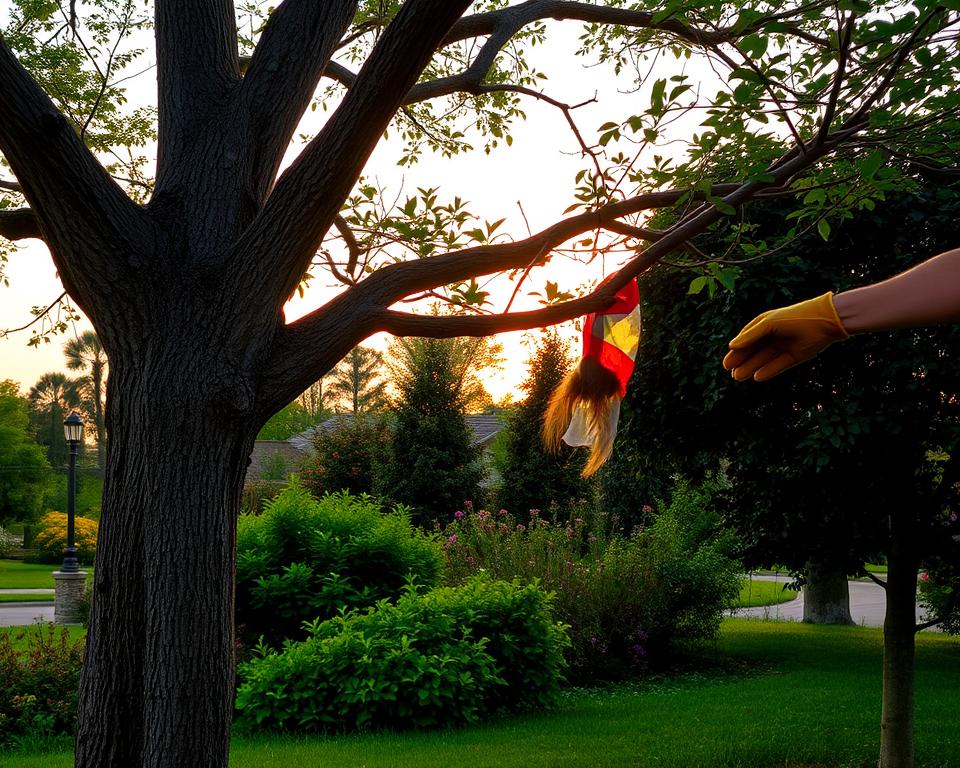
Most bushes and shrubs benefit from annual pruning, which encourages new growth the following year. However, pruning at the wrong time can cut off the food source for the birds you’re trying to attract. It’s recommended to prune before March or after July, avoiding the breeding season for most birds. Always check for nests before pruning, and if you find one, wait until the last bird has flown away before proceeding.
Lawn Care During Breeding Season
During the breeding season, it’s essential to adopt a more relaxed approach to lawn care. Longer grass provides cover for ground-feeding birds and supports the insects they feed on. If you must mow, check carefully for ground-nesting birds first and consider raising the cutting height of your mower to protect insects and small creatures living in the grass.
Creating Undisturbed Areas
Creating dedicated undisturbed areas in your garden can provide a safe haven for birds to nest without human interference. Consider allowing a corner to grow wild or maintaining dense shrubs that aren’t regularly pruned. These areas can become a haven for biodiversity, supporting a variety of wildlife.
- Timing your garden maintenance activities around the breeding season is crucial for protecting nesting birds.
- Avoid major pruning of trees and shrubs between March and August when birds are most likely to be nesting.
- Check for active nests before any necessary maintenance during breeding season.
8. Protect Birds from Predators
One of the most effective ways to support garden birds is by protecting them from predators. For those trying to attract birds to their garden, local cats can pose a significant threat. It’s heartbreaking to find the remains of a bird after it has fallen victim to a cat.
Managing Domestic Cats
If you own cats, consider fitting them with a bell collar or keeping them indoors during early morning and evening when birds are most active. Creating a designated ‘catio’ is another option, allowing your cats to enjoy the outdoors without threatening wildlife.
Safe Feeder Placement
Position bird feeders and bird baths at least 2 metres away from dense shrubs that could conceal predators. Installing predator guards or baffles on bird feeder poles can prevent cats and other predators from climbing up to access feeding or nesting birds.
Window Strike Prevention
Window strikes are a major cause of bird mortality. To prevent these, apply special window decals, external screens, or UV-reflective stickers that are visible to birds but not distracting to humans. Consider placing bird feeders within 1 metre of windows or more than 10 metres away to reduce the risk of collision.
Creating a Year-Round Haven for Birds
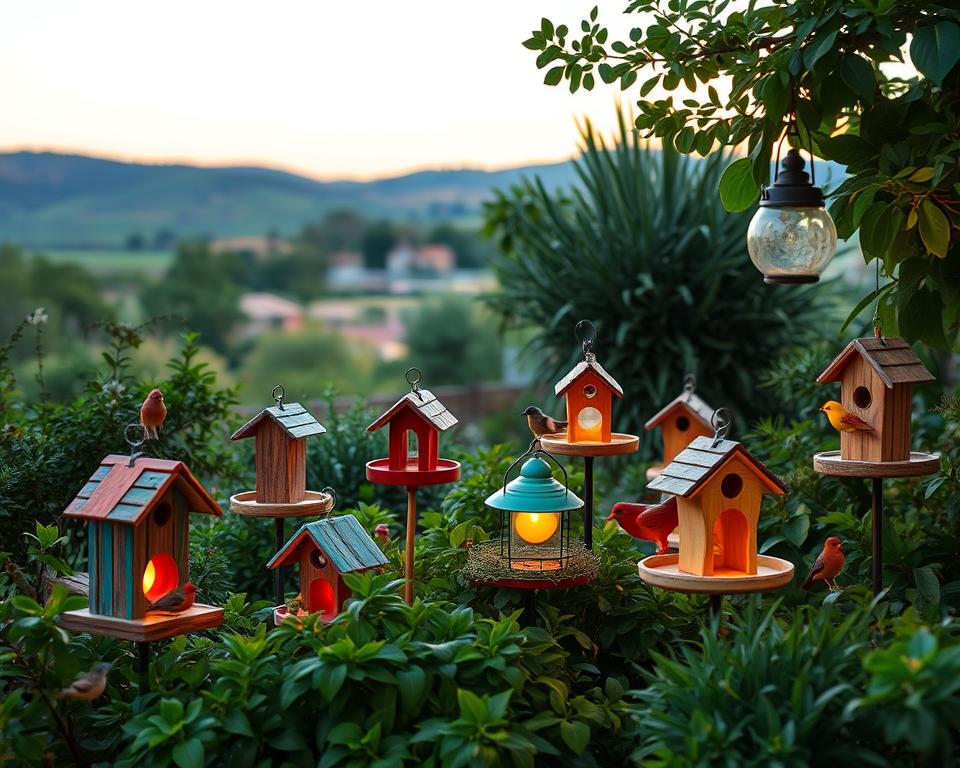
Maintaining a garden that attracts birds is a multifaceted task that spans all seasons. It requires a comprehensive approach that includes providing the right food, water, and shelter throughout the year. By adapting your garden management and feeding strategies to meet the changing seasonal needs of birds, you can create a haven that supports them year-round.
Spring and Summer Support
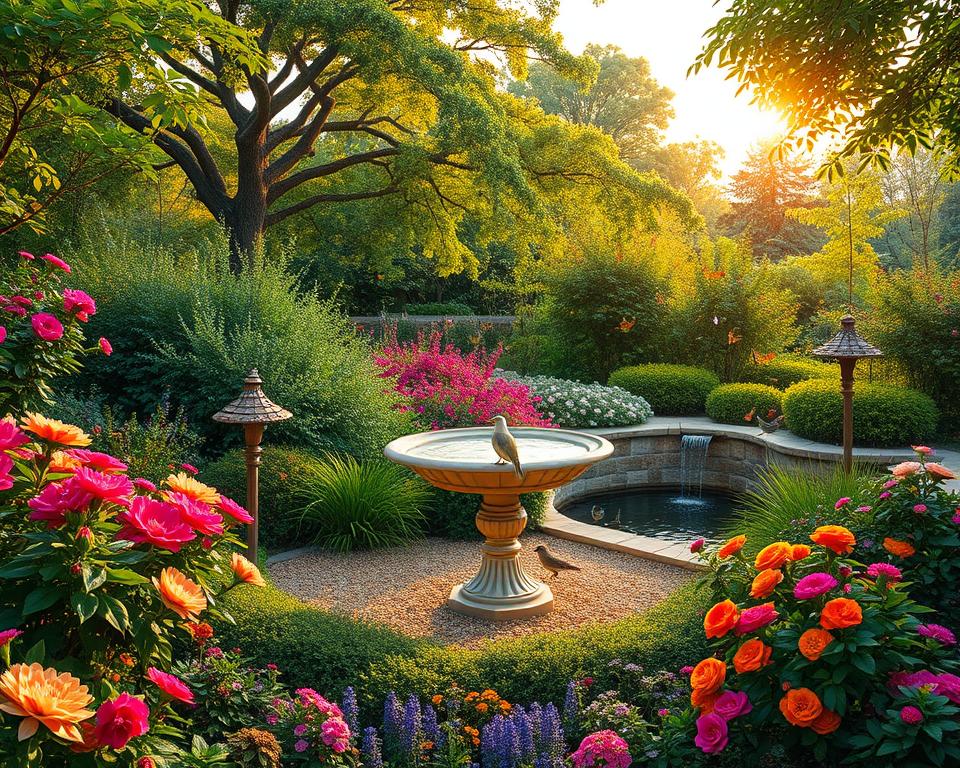
During spring and summer, birds expend significant energy on breeding and raising their chicks. To support them, focus on providing protein-rich foods, nesting materials, and fresh water. Maintaining quiet zones around known nest sites is also crucial to prevent disturbance. As highlighted by a renowned ornithologist, “Birds need a safe and healthy environment to thrive, and it’s our responsibility to provide it.”
Autumn and Winter Preparations
In autumn, allow seed heads on plants like sunflowers, teasels, and thistles to remain uncut, serving as natural food sources. Consider planting spring-flowering bulbs that will provide early nectar for insects, which birds feed on. During winter, increase high-energy food offerings, ensure water sources remain unfrozen, and maintain dense evergreen plants that provide crucial shelter during harsh weather.
Observing and Learning from Your Garden Birds
Take time to observe the birds in your garden throughout the year, noting which species visit, their preferred foods, and their behaviour patterns. This knowledge will help you tailor your garden to better support them. As the saying goes, “You can’t manage what you don’t measure.” By understanding the needs of your garden birds, you can create a more effective bird-friendly garden.
Maintaining a wide variety of plants that provide food and shelter across all seasons ensures your garden remains attractive to wildlife year-round. This continuous support system is crucial for both resident and migratory birds. By following these strategies, you can create a thriving haven that supports birds throughout the year.
The Wider Impact of Your Bird-Friendly Garden
By transforming your garden into a haven for birds, you are contributing to a larger conservation effort. This not only supports the local bird population but also enhances biodiversity in your area.
Contributing to Conservation
Your bird-friendly garden is part of a wider network of habitats that counteracts habitat loss and fragmentation. It forms a wildlife corridor that allows birds and other wildlife to move safely through urban environments, connecting larger natural spaces. By supporting birds throughout the year, you’re helping to maintain healthy populations that can withstand challenges such as harsh winters and climate change.
Connecting with Nature
Creating a bird-friendly garden also benefits you by providing opportunities for mindfulness and reducing stress. As you observe the birds in your garden, you foster a deeper connection with the natural world. This connection can enhance your wellbeing and encourage a more sustainable lifestyle. As “The clearest way into the Universe is through a forest wilderness”, having a bird-friendly garden brings the wilderness closer to your doorstep.
Conclusion
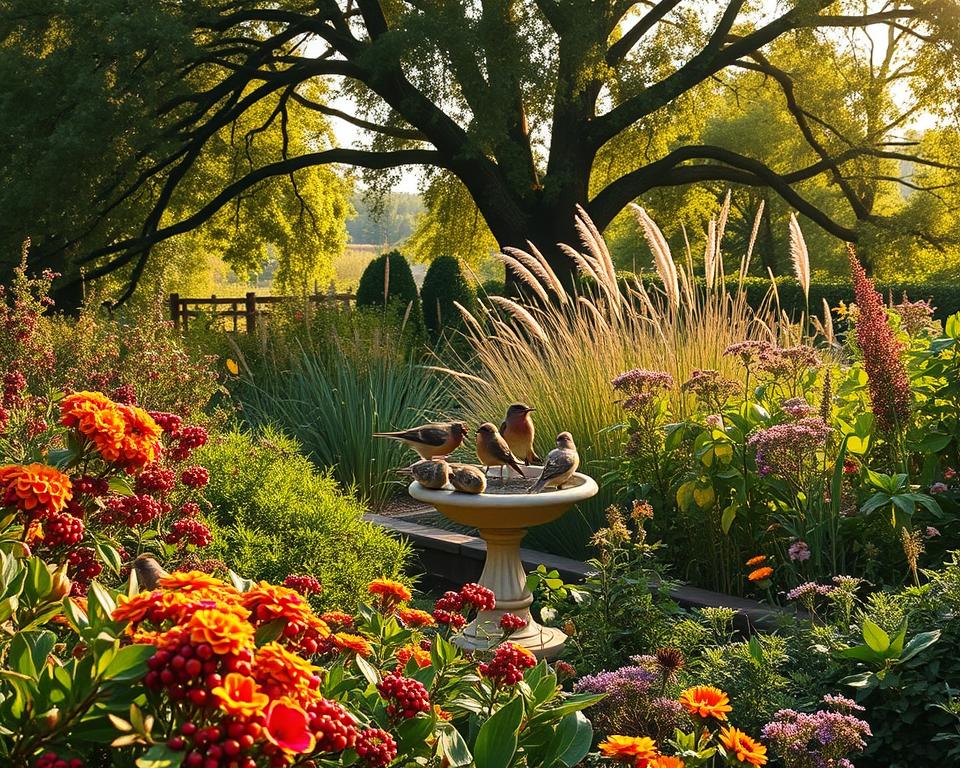
Transforming your garden into a sanctuary for birds can be a highly rewarding endeavour, supporting local biodiversity and providing a peaceful retreat. By implementing the eight key strategies outlined in this guide, you can create a bird-friendly garden that benefits both local and migratory birds. Every positive change you make contributes to supporting bird populations facing environmental challenges. Observe, learn, and adapt your approach based on the birds that visit your garden. Share your experiences and tips with others to expand the network of bird-friendly spaces, multiplying the positive impact. This journey is ongoing, offering continuous opportunities to connect with nature and support wildlife conservation, showing you a new way to create bird-friendly spaces.
FAQ
What are the best plants for a bird-friendly environment?
Native trees and shrubs, such as oak, beech, and hawthorn, are ideal for providing food and shelter for birds. Plants that produce berries, seeds, or nectar are particularly beneficial.
How can I attract a variety of bird species to my garden?
Providing a diverse range of food sources, such as seeds, nuts, and insects, can attract different bird species. Installing various bird feeders and maintaining a clean water source can also help.
What type of bird feeder is best for my garden?
The type of feeder depends on the species you want to attract. Tube feeders are ideal for finches, while hopper feeders suit larger birds like sparrows. Nyjer seed feeders attract goldfinches, and suet feeders are perfect for woodpeckers.
How can I protect birds from predators in my garden?
To safeguard birds, place feeders and nest boxes in areas that are difficult for predators to access. Use cat-deterrent methods, such as bells or ultrasonic devices, and consider using window film to reduce collision risks.
What are some tips for maintaining a clean and safe bird bath?
Change the water frequently, scrub the bath with a brush, and avoid using harsh chemicals. Positioning the bath in a sunny spot can help prevent algae growth.
How can I create insect-friendly areas in my garden?
Planting native flowers, shrubs, and trees that attract insects, such as lavender and sunflowers, can help. Leaving some areas of the garden unmanicured and avoiding pesticides can also encourage insect life.
What materials can I provide for birds to use for nesting?
Offering natural materials like twigs, grasses, and moss can help birds build their nests. You can also provide nesting material specifically designed for birds, such as cotton or wool.
How can I make my garden more appealing to birds during the winter months?
Providing high-energy foods like suet and sunflower seeds can help birds survive the cold weather. Maintaining a clean water source and offering sheltered spots can also make your garden more attractive.