Combatting Mold in the Greenhouse – Tips & Strategies

Keeping mould at bay is essential for healthy crops and tidy growing spaces. This short introduction outlines practical, evidence-based guidance for gardeners, allotment holders and small-scale growers across the United Kingdom. It explains why mould in the greenhouse appears, what factors drive its spread, and the balanced mix of design, monitoring and cultural practices that underpin effective greenhouse mould control.
The focus is on actionable steps you can take today: improving ventilation, adjusting irrigation, choosing resistant surfaces and using reliable instruments such as hygrometers and thermostats. The advice reflects British horticultural practice and references reputable suppliers and stewardship guidance used widely in the UK, including Thompson & Morgan and Suttons, alongside Agrochemical Stewardship guidance where chemical treatments are considered.
This article promises clear outcomes: straightforward greenhouse fungus prevention techniques, when to apply targeted treatments, and decision guidance on removing infected plants or materials. Whether you want to start combatting mould greenhouse issues now or plan longer-term changes to your structure and routine, the following sections deliver step-by-step recommendations and practical UK greenhouse mould tips.
Inhaltsverzeichnis
Key Takeaways
- Mould in the greenhouse is mainly driven by high humidity, poor ventilation and wet substrates.
- Good greenhouse mould control combines design, monitoring and routine cleaning.
- Use hygrometers, thermostats and sensible heating to manage relative humidity.
- Follow UK guidance and approved products from suppliers such as Thompson & Morgan and Suttons.
- Act quickly: early detection and targeted interventions reduce waste and crop loss.
Understanding Mold in the Greenhouse
Mould in greenhouses starts where moisture, organic matter and steady temperatures meet. To answer what is mould: they are filamentous fungi that produce spores, colonise decaying plant tissue and grow on porous surfaces. In controlled environments, spores land on wet leaves, compost or tools and germinate when conditions remain damp for extended periods.
Lifecycle essentials include spore production, dispersal by air or water splash and mycelial growth that feeds on compost and plant residues. Stable temperatures and relative humidity above 75% extend leaf wetness, which helps sporulation. Poor airflow creates tiny pockets of saturated air around foliage that favour fungal development.
What is mould and how it develops in controlled environments
Greenhouse microclimates trap moisture and heat, so small wet patches become hotspots for fungi. Spores travel on tools, clothing and ventilation currents. Once established, mycelium breaks down organic material and forms new spores, making eradication difficult without targeted measures.
Common greenhouse fungi in the UK climate
Several pathogens thrive in UK glasshouses. Botrytis cinerea, known as grey mould, favours cool to moderate temperatures and high humidity and appears as grey fuzzy growth on soft fruits and ornamentals. Powdery mildew species such as Erysiphe and Podosphaera produce white, powdery patches on leaves and worsen with dense planting and poor airflow.
Pythium and Phytophthora cause damping-off and root rot in oversaturated compost, killing seedlings quickly. Sclerotinia and Cladosporium lead to stem rots and leaf spots when dampness persists. Saprophytic moulds like Aspergillus and Penicillium colonise potting mix and wooden benches, creating long-term reservoirs.
Signs of infestation: visual cues and plant symptoms
Visual cues include fuzzy grey, white or coloured growths on leaves, stems and fruit. Powdery deposits and slimy patches on pots or benches are common. Black sooty mould may develop on sticky exudates from pests or wounds.
Plant symptoms vary from wilting and yellowing to necrotic spots and stunted growth. Seedlings may collapse from damping-off, while fruits show soft spots and rapid decay when Botrytis is active. Environmental clues include persistent condensation on glass and recurring outbreaks on the same benches, indicating a reservoir in compost, wood or structure.
Routine inspection under leaves, in corners and at pot bases helps catch problems early. Early detection makes control simpler and reduces loss.
Causes of High Humidity and Condensation
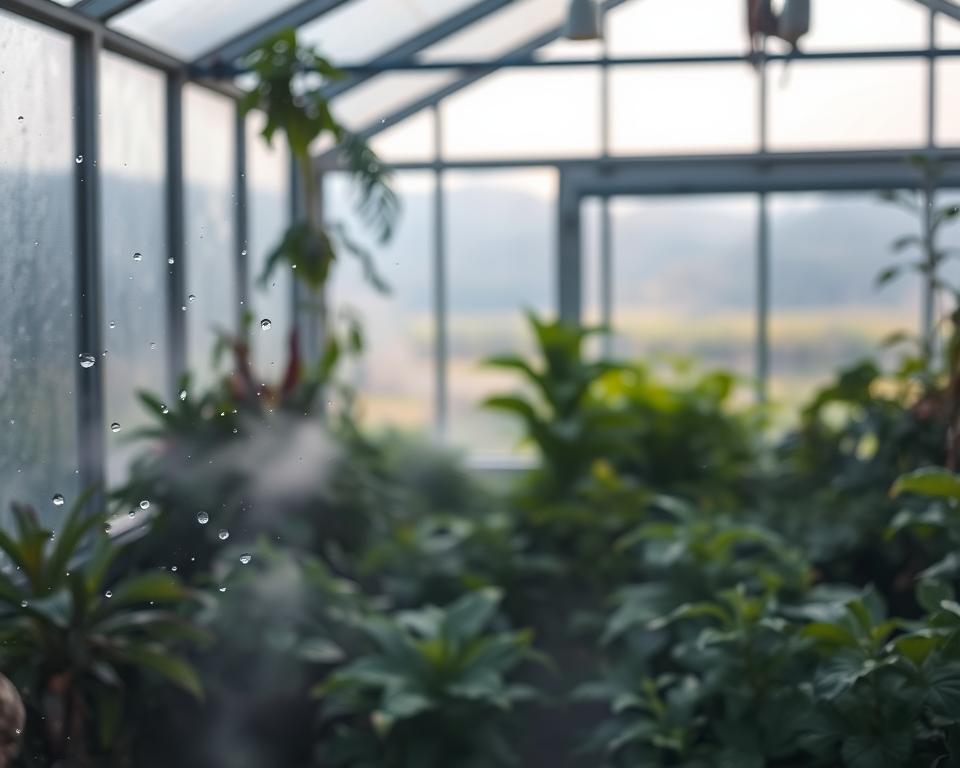
Warm, wet air meeting cold glass or metal creates the most common greenhouse humidity causes. When internal air cools to its dew point, moisture forms as droplets on glazing or cool surfaces. This process often occurs overnight, after daytime heating, or during sudden cold spells in the UK.
How temperature differentials create condensation
Air that holds moisture will release it when it touches a colder surface. Poor insulation and single-glazed panels let external chill lower internal surface temperatures. If vents remain closed during a temperature drop, condensation in greenhouse glazing and on benches becomes likely.
Typical scenarios include warm afternoons followed by chilly nights, or a badly sited structure shaded by hedges. These scenarios increase the amount of surface wetness and lengthen leaf-drying times, which raises the risk of fungal growth.
Role of irrigation practices and water reservoirs
Overhead watering keeps leaves wet and raises ambient humidity. Splash from watering spreads spores and encourages irrigation and mould issues. Standing water in trays, saucers, gutters or beneath benches forms evaporation sources that maintain high relative humidity.
Waterlogged compost and persistent wetting boost spore loads and encourage root-rotting fungi. Best practice includes bottom watering, using capillary mats with controlled wetting, avoiding overwatering, and emptying trays and gutters on a regular basis.
Impact of crowded benches and poor airflow
Crowded benches and dense plantings create microclimates with trapped moisture. Reduced air exchange lets boundary layers remain on leaves, slowing evaporation and keeping surfaces damp for longer.
Poor airflow greenhouse conditions arise from blocked vents, sealed doors or poor siting. Leaf-to-leaf contact and dense canopies shade lower foliage and speed pathogen spread. Aim for daytime RH below about 70% for many crops and use a hygrometer to track progress.
| Cause | Mechanism | Practical step |
|---|---|---|
| Temperature differentials | Warm moist air hits cold surfaces, reaching dew point and condensing | Improve insulation, vent during cool periods, use thermal screens |
| Irrigation and reservoirs | Overhead watering and standing water raise ambient RH and spread spores | Switch to bottom watering, empty trays, use timed mats |
| Crowding and poor ventilation | Dense canopies create microclimates with low air exchange | Space plants, clear vents, add circulation fans |
| Poor siting | Shaded or wind-sheltered sites reduce drying and airflow | Relocate greenhouse or prune surrounding hedges to improve exposure |
Preventative Greenhouse Design and Ventilation
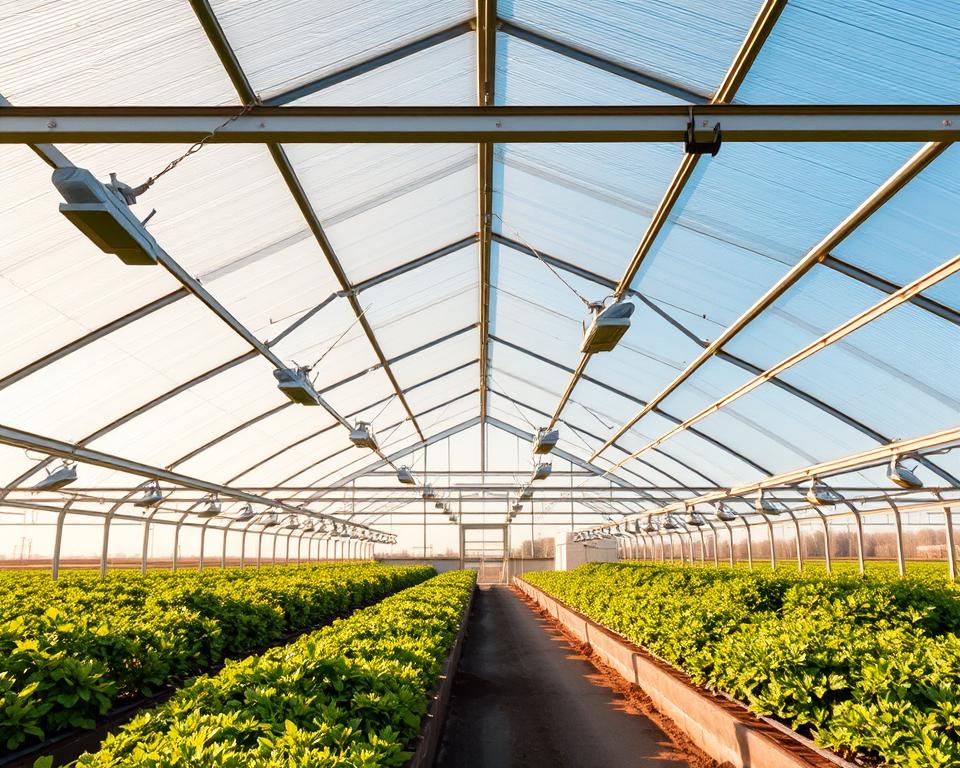
Good design cuts mould risk before it starts. Place vents to encourage steady convective flow so warm, moist air can escape and fresh air can enter. Pair side inlets with high outlets to support cross-ventilation and reduce condensation on glazing.
Vent placement, automated vents and roof vents
Locate intake vents low and exhaust vents high to follow natural air movement. Roof vents greenhouse-style are particularly useful because warm air rises and exits through the ridge, lowering internal humidity and limiting drip on inner glass.
Automated vents remove guesswork on changeable UK days. Wax-based openers, hydraulic struts and electric actuators respond to temperature shifts and protect crops without constant adjustment. Ensure vent pathways are free from obstructions and screened to keep pests out.
Fans, circulation systems and passive airflow strategies
Use low-speed greenhouse fans to keep air moving across leaf surfaces without creating cold draughts. Position fans for gentle horizontal flow to break pockets of still air and speed drying after watering.
Extractor fans sized to the greenhouse volume will remove humid air quickly when needed. Run extractors in tandem with vents and control them with timers or hygrostats to save energy and cut noise.
Passive elements such as louvre panels, ridge vents and insect-proof mesh promote airflow while keeping pests away. Sit structures away from shaded or cold boundaries like tall hedges to avoid stagnant zones.
Choosing materials and surfaces that resist mould growth
Choose non-porous, easy-to-clean fittings. Powder-coated aluminium benches, sealed timber and plastic-coated shelving reduce crevices where spores hide and make disinfection straightforward.
Opt for toughened glass or twin-wall polycarbonate to reduce thermal bridging and internal surface condensation. Gravel or paved floors with weed membrane underlay improve drainage. Avoid bare soil floors that act as spore reservoirs.
Stainless steel fittings and protective coatings further reduce maintenance and lower long-term mould risk. Combine these material choices with effective greenhouse ventilation and well-placed greenhouse fans for best results.
| Element | Benefit | Practical tip |
|---|---|---|
| Roof vents greenhouse | Expel warm, moist air at ridge; cut condensation | Fit high vents and keep them unobstructed; use screened openings |
| Automated vents | Respond to temperature shifts without manual input | Choose reliable wax or electric actuators and test seasonally |
| Greenhouse fans | Prevent still air pockets; speed surface drying | Select low-noise, energy-efficient models and control with hygrostats |
| Mould-resistant materials | Reduce spore harbourage; simplify cleaning | Use powder-coated aluminium benches, sealed timber and stainless fittings |
| Passive airflow | Low-energy ventilation; fewer mechanical failures | Install louvres, ridge vents and insect mesh; avoid shaded siting |
Environmental Controls and Monitoring
Good environmental control starts with clear, regular monitoring. Reliable instruments and a practical control strategy cut mould risk and protect crop health. Place sensors where they will reveal the worst-case microclimates and link heating and ventilation to measured conditions.

Using hygrometers and thermostats for precise control
Use calibrated digital hygrometers and combined temperature/humidity loggers to capture daily swings. A greenhouse thermostat that records minimum and maximum values helps you spot risky night-time humidity peaks.
Position sensors at canopy height and in shaded corners. Larger structures benefit from multiple devices so that localised pockets of high moisture are not missed. Track both relative humidity and leaf wetness period to guide action.
Target ranges vary by crop. Aim to keep RH below 70% during the day when possible. Regular calibration and simple cross-checks with a hand-held meter preserve accuracy.
Heating strategies to reduce relative humidity
Raising air temperature without adding moisture reduces relative humidity and speeds drying. Small amounts of background heat overnight cut condensation on glazing and lower the leaf wetness period.
Choose appropriate greenhouse heaters for the job. Electric fan heaters give rapid, controllable warmth. Gas-fired units need correct flues and ventilation to avoid adding moisture or contaminants. Brands such as Hozelock and Gardman supply thermostatically controlled greenhouse heaters useful for hobby and small commercial setups.
Use zonal heating to protect young plants while avoiding overheating mature crops. Set frost-protection points that also limit dew formation on glass. Check fuel-burning units regularly for correct combustion and venting to manage risk.
Integrating timers, sensors and smart controls
Integrate hygrostats, vents and a greenhouse thermostat with automation for consistent microclimate control. Smart greenhouse controls can open vents, switch fans and fire heaters when thresholds are reached.
Simple timers schedule fans and irrigation to avoid wetting periods that coincide with poor ventilation. Networked sensors provide data logs and alarm thresholds. Alerts by app or SMS let you act if a heater fails or humidity rises fast.
Low-cost options such as mechanical vent openers and battery hygrostats suit hobbyists. Commercial growers may invest in full systems with data logging and remote access. Whatever the scale, calibrate sensors, test actuators and set control points that match crop-specific needs.
| Control element | Practical tip | Typical benefit |
|---|---|---|
| Hygrometer / data logger | Place at canopy height and shaded corners; calibrate quarterly | Accurate RH trends and leaf wetness insights |
| Greenhouse thermostat | Use thermostatic control with minimum/maximum recording | Stable temperatures; reduced condensation events |
| Greenhouse heaters | Select zonal, thermostatted models; ensure correct venting for gas units | Lower night-time RH and frost protection without overheat |
| Timers and fans | Schedule runs to coincide with warmest part of day and after irrigation | Improved air exchange and shorter leaf wetness periods |
| Smart greenhouse controls | Integrate sensors, vents and alerts; use data for trend analysis | Automated response to RH spikes and remote monitoring |
Mold in the Greenhouse
Early, organised assessment shapes an effective greenhouse outbreak response. Walk the structure in zones—entrance, benches, propagation benches and staging—and log visible mould, plant symptoms and likely sources such as standing trays or shaded corners. Note whether growth is surface saprophyte or a pathogenic outbreak like Botrytis.

Assessment: mapping affected zones and severity
Use a simple severity scale to mark findings: low (surface spores), medium (localised lesions) and high (widespread necrosis). Photograph affected plants, record temperature and humidity, and trace patterns near irrigation points. For uncertain diagnoses, contact RHS advisory services or a DEFRA-recognised diagnostic lab and send samples for confirmation.
Immediate interventions to limit spread
Isolate infected material in a quarantine area or move outdoors when weather permits to limit mould spread. Increase ventilation, run circulation fans and reduce irrigation to lower relative humidity quickly. Remove dead tissue and spent blooms at once; Botrytis uses senescent material as fuel.
Disinfect benches, pots and tools to remove spore reservoirs and pause propagation or misting until conditions stabilise. Wear gloves and a suitable mask when handling heavily contaminated matter to reduce cross-contamination.
When to remove plants or materials
Apply clear cull criteria: remove plants with extensive tissue necrosis, root collapse or repeat infection despite corrective measures. Heavily contaminated compost and seedlings with damping-off should be discarded, not reused for edible crops.
Where infection is early and manageable, prune affected parts and boost airflow to attempt salvage. In commercial settings, compare treatment costs with replacement value before committing to remedial action. For safety, decontaminate tools between cuts and bag removed material for proper disposal during a greenhouse outbreak response.
Cleaning, Disinfection and Safe Removal Methods
A clear, practical approach makes greenhouse hygiene manageable. Follow a simple greenhouse cleaning protocol that protects plants, people and the structure. Start with a plan, gather PPE and approved products, and work methodically from cleanest to dirtiest areas.

Effective cleaning agents and UK-approved products
Use recognised horticultural disinfectants such as Virkon S or F10SC where labelled for greenhouse use. For surface disinfection choose 70% isopropyl or ethanol for small implements and a diluted household bleach solution for non-metallic surfaces, checking material compatibility first. Thermal steaming offers a chemical-free option for benches and some tools. Always follow COSHH guidance and manufacturer instructions when using disinfectants for greenhouse UK to protect workers and edible crops.
Step-by-step cleaning protocol for glazing, plastics and benches
Prepare by removing plants, pots and loose debris. Wear gloves, eye protection and a mask if dust is present. Dry-brush benches and frames to reduce airborne spores before wet cleaning.
Wash surfaces with warm soapy water to remove grime. Apply disinfectant to meet the labelled contact time; for many non-metallic areas a 1:10 household bleach mix is effective but verify against glazing and seals. Pay special attention to door handles, gutters, propagation trays and tool handles.
After the contact time rinse where recommended and allow full drying. Use fans, dehumidifiers or gentle heat to speed evaporation and cut mould regrowth risk. Clean pots and trays by scrubbing, dishwashing or sun‑baking; replace badly pitted items.
Safe disposal of contaminated compost and materials
Do not add heavily infected compost to garden beds for food crops. If you must dispose contaminated compost bag it securely. Check local council guidance for municipal green waste rules; many councils accept double-bagged material for industrial composting. Where available, use specialised garden waste services offering high‑temperature composting or authorised incineration.
Avoid returning high‑risk material to the home compost unless your system reaches pathogen‑killing temperatures. After removal disinfect adjacent surfaces and tools, ventilate the greenhouse and leave it dry before introducing fresh compost or new plants.
Biological and Cultural Control Strategies
Integrating biological control greenhouse methods with good cultural practice creates a layered defence against mould. Start with a plan that mixes targeted biocontrols, sensible crop placement and strict compost hygiene. This reduces reliance on chemicals and supports resilient crops.
Beneficial microbes such as Trichoderma formulations and Bacillus subtilis sprays can suppress pathogens by competition and by stimulating plant defences. Use products from reputable suppliers like Koppert or Bioline and follow UK labelling and application guidance. Apply preventatively where possible and combine with good ventilation and watering discipline for best results.
Crop rotation greenhouse practice breaks cycles of host-specific fungi. Avoid growing tomatoes or cucurbits repeatedly in the same propagation area. Rotate with less susceptible species to reduce pathogen build-up in growing media.
Spacing and pruning cut humidity at canopy level. Provide clear gaps between rows and plants to improve airflow. Remove lower leaves, spent flowers and any diseased tissue promptly. Sanitize secateurs between cuts to prevent transmission.
Staggered planting eases peak humidity loads. Small, phased sowings stop large blocks of plants creating high local humidity that favours mould. This makes ventilation more effective and reduces sudden disease pressure.
Choose sterilised potting mixes for propagation and avoid garden soil in containers. Good compost management mould-wise means keeping bulk compost covered and stored on hard, clean surfaces. Prevent cross-contamination by not composting infected material.
Maintain compost moisture to support decomposition without waterlogging. Add grit or perlite to mixes to improve drainage and aeration. Use slow-release fertilisers to avoid excessively lush growth that can be more susceptible to fungal attack.
Combine approaches for greater impact: apply beneficial microbes, enforce crop rotation greenhouse routines, maintain spacing and pruning schedules and adopt rigorous compost management mould practices. This integrated approach lowers disease incidence and supports sustainable production.
| Strategy | Key Actions | Typical Benefit |
|---|---|---|
| Beneficial microbes | Apply Trichoderma to soil; spray Bacillus spp. on foliage; follow supplier instructions | Reduces pathogen establishment and enhances plant resistance |
| Crop timing & rotation | Rotate susceptible crops; stagger sowings to spread workload | Breaks disease cycles and lowers peak humidity loads |
| Spacing & pruning | Increase plant spacing; remove lower leaves and dead material; sanitise tools | Improves airflow and reduces contact transmission |
| Compost and soil care | Use sterilised mixes; store compost on impermeable surfaces; control moisture | Limits fungal reservoirs and reduces contamination risk |
| Integrated application | Combine biocontrols with cultural measures and hygiene | Minimises need for chemical treatments and builds resilience |
Organic and Chemical Treatments: Pros and Cons
Choosing between organic and chemical options requires care. Growers must weigh pest pressure, crop value and market requirements. The following details help clarify when to use horticultural oils and plant-based sprays, and when stronger intervention is justified.
Organic fungicides greenhouse choices include copper-based products, potassium bicarbonate and sulphur, plus plant oils and soap formulations. Copper gives reliable control but can build up in soil if used repeatedly. Potassium bicarbonate and oils work best as preventative sprays or at early disease stages. Horticultural oils, such as paraffin or rapeseed oil formulations, suffocate spores and reduce sporulation on contact when mixed to label rates.
These organic options suit organic systems where approved materials are required. They tend to break down faster and leave fewer persistent residues than many synthetic products. Small-scale and hobby growers often prefer them for safety and for lower environmental persistence.
Chemical fungicides greenhouse products are appropriate for severe, established outbreaks that threaten yield or when cultural controls have failed. Systemic classes, such as sterol inhibitors and QoI fungicides, offer curative activity. Contact fungicides provide protectant cover. Rotating modes of action helps limit resistance development.
Commercial growers should follow Control of Substances Hazardous to Health (COSHH) rules and use suitable PPE when applying chemical sprays. Observe label directions for spray intervals and harvest withholding periods for edible crops. Seek advice from agrichemical advisers, consult NFU guidance and check Health and Safety Executive approvals before use.
Residue management matters for consumer safety and market access. Monitor pre-harvest intervals closely to ensure fungicide residues remain within Maximum Residue Limits. After Brexit, some product approvals and supply chains have changed; stay updated via current HSE pesticide registers and manufacturer statements to maintain compliance with UK pesticide regulations.
Environmental impacts extend beyond the crop. Non-target effects on beneficial microbes, pollinators and adjacent habitats must be considered. Minimise drift and runoff, avoid blanket prophylactic applications and favour targeted treatments under an IPM plan.
Record-keeping is essential for traceability and assurance schemes such as Red Tractor. Keep clear spray records, including product names, rates, dates and withholding periods. Prioritise cultural and biological measures and reserve stronger chemical options for acute outbreaks or where warranted by risk assessments.
Conclusion
Mould in the greenhouse is largely preventable when humidity, ventilation and hygiene are managed together. Control moisture with well-placed roof and side vents, circulation fans and automated openers, and keep benches and tools clean to reduce inoculum. This greenhouse mould control summary underlines that simple design choices and routine cleaning cut risk far more than reactive treatments alone.
Early detection and mapping of affected zones allow swift isolation and targeted sanitation, which limits crop loss and substrate contamination. Monitor relative humidity and temperature with calibrated hygrometers and thermostats, aiming to keep daytime RH below crop-specific thresholds. These practical steps for preventing mould greenhouse UK operations are practical for hobbyists and commercial growers alike.
Combine preventative design, environmental monitoring and cultural practices into integrated mould strategies. Use biocontrols and organic options as first-line measures, reserving chemical fungicides for severe outbreaks and following UK guidance. Keep clear records of interventions and readings, and consult the Royal Horticultural Society or accredited agronomists for persistent problems. With steady attention to ventilation, hygiene and monitoring, most mould problems can be managed sustainably.
FAQ
What causes mould to develop in UK greenhouses?
Mould in greenhouses is driven by high relative humidity, prolonged leaf wetness, poor ventilation and infected substrates. Warm, moist air contacting cool glazing causes condensation and creates microclimates where spores germinate. Overhead watering, standing water in trays or gutters, crowded benches and decaying plant debris all increase the risk. Monitoring humidity and removing moisture sources are key to prevention.
Which fungal species are most commonly found in UK greenhouses?
Common greenhouse fungi in the UK include Botrytis cinerea (grey mould), powdery mildew species such as Erysiphe and Podosphaera, and waterborne oomycetes like Pythium and Phytophthora that cause damping-off and root rot. Saprophytic moulds such as Aspergillus and Penicillium can colonise potting mix and benches. Each has distinct symptoms and preferred conditions, so identify the pathogen before choosing control measures.
How can I spot an early infestation before it spreads?
Inspect regularly—look under leaves, at the base of pots and in corners. Early visual cues include grey fuzzy growth, white powdery patches, slimy spots on pots or benches, and small necrotic leaf spots. Plant symptoms include wilting, yellowing, stunting or seedling collapse. Also check for persistent condensation on glazing and unpleasant musty odours, which signal an environmental problem.
What immediate steps should I take when I find mould on plants?
Isolate affected plants or move them outdoors if weather allows. Increase ventilation and run circulation fans to reduce humidity. Remove and dispose of decaying tissue and spent blooms promptly. Avoid overhead watering and disinfect benches, pots and tools to remove spore reservoirs. If the outbreak is severe, consider culling heavily infected plants to protect the rest of the crop.
How should I clean and disinfect greenhouse surfaces safely?
Remove plants and sweep away loose debris first. Wash surfaces with warm soapy water, then apply a horticultural disinfectant per the product label—options include Virkon S or appropriately diluted sodium hypochlorite for non-metallic surfaces. Allow the recommended contact time, rinse if required and ensure thorough drying. Wear suitable PPE and follow COSHH guidance. Replace or heat-treat heavily pitted pots and damaged tools.
What is the best ventilation layout to reduce mould risk?
Promote cross-ventilation with side vents opposite end vents and roof vents to expel warm, moisture-laden air. Position intake vents low and exhaust vents high to use natural convection. Combine passive vents with circulation fans or extractor fans for larger houses. Automated vent openers are useful in the variable UK climate to ensure vents operate when you cannot be present.
Which materials and benching choices minimise mould reservoirs?
Choose non-porous, easy-to-clean surfaces such as powder-coated aluminium, sealed timber or plastic-coated shelving. Stainless-steel fittings and smooth glazing minimise crevices where spores settle. Gravel or paved floors with weed membrane improve drainage and reduce soil as a spore reservoir. These choices make routine disinfection quicker and more effective.
How can I use environmental monitoring to prevent outbreaks?
Fit accurate hygrometers and temperature/humidity loggers at canopy height and in shaded corners. Track RH and leaf wetness periods—aim to keep daytime RH below roughly 70% for many crops. Calibrate sensors regularly and use hygrostats, thermostats and timers to control fans, heaters and vents automatically. Data logging helps spot patterns and equipment failures quickly.
What heating strategies reduce condensation without harming plants?
Low background heating overnight raises air temperature and lowers relative humidity, reducing dew on glazing. Use thermostatically controlled greenhouse heaters or zonal heating to avoid overheating young crops. Electric fan heaters or properly vented gas heaters can be effective; ensure combustion heaters do not add moisture or harmful gases. Balance frost protection needs with mould risk management.
When should I remove contaminated compost or seedlings?
Dispose of heavily contaminated compost or media if it harbours damping-off organisms or recurrent infections. Seedlings showing root rot, severe wilting or repeated reinfection despite treatment should be removed. Do not return infected compost to gardens used for edible crops unless it has been professionally pasteurised or composted at high temperatures that kill pathogens.
Are biological controls effective for greenhouse moulds?
Biocontrols such as Trichoderma spp. for soil health and Bacillus formulations for foliar protection can reduce pathogen establishment and complement cultural measures. They work best preventatively and as part of an integrated approach that includes good hygiene, spacing and compost management. Select UK-authorised products from reputable suppliers and follow label instructions.
When is it appropriate to use chemical fungicides in a greenhouse?
Reserve chemical fungicides for severe outbreaks that threaten yield and where cultural and biological methods have failed. Use authorised products only, follow COSHH and label guidance, observe pre-harvest intervals and rotate modes of action to limit resistance. Commercial growers should consult agronomists and keep full spray records for compliance with schemes such as Red Tractor.
What organic treatments can help manage powdery mildew and grey mould?
Organic options include potassium bicarbonate sprays, suitably used sulphur for specific diseases, copper-based products (used with caution due to soil accumulation) and horticultural oils that suppress sporulation. These are generally best used preventatively or at early disease stages and must be applied according to label guidance and crop safety considerations.
How should contaminated materials be disposed of under UK guidance?
Heavily infected plant material and compost should not be returned to home compost heaps unless processed in a high-temperature system. Follow local council rules—many areas accept double-bagged green waste; industrial composting or incineration may be required for severe infections. After removal, disinfect adjacent areas and tools to prevent reinfection.
What cultural practices most reduce future mould risk?
Key practices include appropriate spacing, regular pruning to open canopies, crop rotation to avoid repeated planting of susceptible species, use of sterilised or high-quality potting mixes, good drainage and avoiding overhead watering. Store bulk compost under cover and clean benches and tools routinely to cut spore sources.
Which products and suppliers are recommended in the UK for monitoring and control?
Reliable hygrometers, thermostats and environmental loggers are available from suppliers such as Thompson & Morgan and Suttons. For heaters and ventilation equipment, consider Hozelock and Gardman. Biocontrols and professional products can be sourced from Koppert and Bioline. Always verify product approvals, COSHH data and suitability for edible crops before purchase.
How can I decide whether to treat or replace an infected crop?
Assess severity and economic value. For limited, early infections, isolate, prune affected tissue, increase ventilation and apply targeted treatments. For widespread necrosis, repeated reinfection or high-value crops where residue rules preclude treatment, replacement may be more cost-effective. Record the outbreak and environmental readings to prevent recurrence.
Where can I get diagnostic help if I cannot identify the pathogen?
Seek advice from the Royal Horticultural Society, local advisory services, university diagnostic labs or accredited agronomists. Photograph symptoms, note environmental data and, if required, send samples to a diagnostic facility. Accurate identification informs appropriate treatment and disposal decisions.