
Optimising Greenhouse Placement: The Right Location
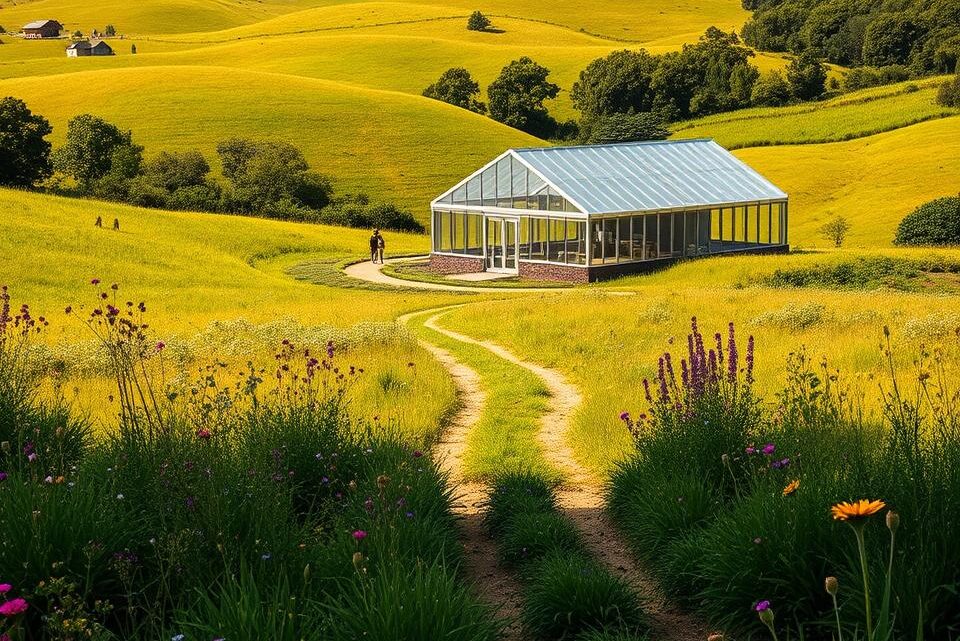
Choosing the right location for a greenhouse is the single most important decision growers in the United Kingdom will make. Proper greenhouse placement UK affects crop yield, energy use and day-to-day costs. It also shapes pest and disease risk, ease of maintenance and compliance with local planning rules.
Good greenhouse siting blends several factors: regional climate, solar access, prevailing winds, drainage and the practicalities of water and electricity supply. The needs of a hobby gardener differ from those of allotment holders, market gardeners or commercial producers. Each demands a tailored approach to optimise greenhouse location for its specific purpose.
Throughout this guide you will find practical steps to refine greenhouse site selection. We reference guidance from the Royal Horticultural Society, Met Office climate data and local authority planning pages to help you make evidence-based choices.
Inhaltsverzeichnis
Key Takeaways
- Selecting the right location directly improves yield and lowers heating and ventilation costs.
- Consider solar access, wind exposure, drainage and logistics when you assess greenhouse siting.
- Different scales of production require different priorities in greenhouse placement UK.
- Use RHS and Met Office resources to inform greenhouse site selection and compliance checks.
- Early planning reduces long-term maintenance, pest risk and regulatory issues.
The Right Location for the Greenhouse
Choosing the right location starts with clear greenhouse objectives. A small hobby glasshouse for salad leaves has different needs to a commercial tunnel for tomatoes. State the greenhouse purpose UK from the outset so site choices match those aims.
Defining the primary objective for placement
Decide whether the priority is light, heat retention, ease of access or utilities. Tomatoes, peppers and cucurbits demand high light and warmth. Seedlings and salad crops tolerate lower light yet need quick access for daily harvesting. Educational or display greenhouses benefit from being close to footpaths and classrooms.
How location influences microclimate and crop performance
Site variables such as slope, aspect and proximity to buildings alter the microclimate influence on temperature and humidity. South-facing, sheltered spots gain extra warmth and longer sun hours. Cold pockets or exposed sites raise the risk of frost and disease pressure.
Soil thermal mass and nearby walls buffer night-time cooling. That buffering helps germination and flowering, especially for tender crops during spring and autumn.
Balancing accessibility with growing conditions
Accessibility vs conditions is a trade-off to assess. A location near the house gives easy water and power access and encourages daily care. It may suffer shade from extensions or face planning constraints if close to property lines.
Consider delivery needs, storage for compost and ease of disabled access. For commercial growers think about workflow: sit packing, storage and vehicle access close to the greenhouse to save labour and time.
Use a simple checklist to match greenhouse objectives with site attributes: sunlight hours, shelter, services, drainage and access. Matching needs to place reduces surprises and keeps crops productive.
Understanding UK Climate Zones and Seasonal Variations
Choosing the right spot for a greenhouse requires a clear sense of regional climate and seasonal change. The United Kingdom has marked contrasts between the milder, wetter west and north-west, and the drier, sunnier south-east. Coastal sites benefit from maritime moderation, while inland hollows can trap cold air and create local frost pockets that harm crops.

Regional differences across the United Kingdom
Wales and western Scotland receive higher rainfall and cooler summers. Southern and eastern England enjoy more sun hours and lower rainfall totals. Urban centres such as London and Manchester show urban heat island effects that reduce frost risk but raise night-time temperatures.
How seasonal sun angles and daylength affect greenhouse placement
In winter the sun stays low, so a south-facing exposure captures the most light. Summer sun is high and intense, which can cause overheating unless you provide ventilation and shading. Short winter daylengths mean many growers fit supplemental lighting to maintain production through the colder months.
Local weather patterns to consider: wind, frost pockets and rainfall
Check prevailing wind directions with Met Office data and local records before siting glazing and vents. Exposed coastal plots face salt‑laden winds that can damage polycarbonate or glass. Frost pockets form where cold air settles near hedgerows or in dips; avoid placing sensitive beds there.
Practical steps include consulting Met Office regional climate summaries and local allotment associations for first-hand experience. Small changes in siting can reduce heating needs and lower the risk from seasonal extremes, improving year‑round yields.
| Region | Typical traits | Implications for greenhouse siting |
|---|---|---|
| Western Scotland & Wales | High rainfall, cool summers, maritime influence | Prioritise drainage, robust glazing; position to reduce prevailing westerlies |
| South‑East England | Drier, sunnier, higher summer heat | Maximise south exposure; plan shading and ventilation to avoid overheating |
| Eastern England | Sunnier, lower rainfall, continental warmth in summer | Use southern aspect for winter light; ensure irrigation for drier spells |
| Urban areas (London, Manchester) | Warmer nights, reduced frost risk, microclimate effects | Take advantage of reduced frost pockets; watch for pollution and limited space |
| Coastal sites | Moderated temperatures, salt‑laden winds | Choose corrosion‑resistant materials and sheltered positioning |
Sunlight Exposure and Orientation
Choosing the right orientation and checking sunlight access are vital steps to maximise crops and reduce heating needs. Simple tests and professional tools together help you plan where a greenhouse will perform best throughout the year.
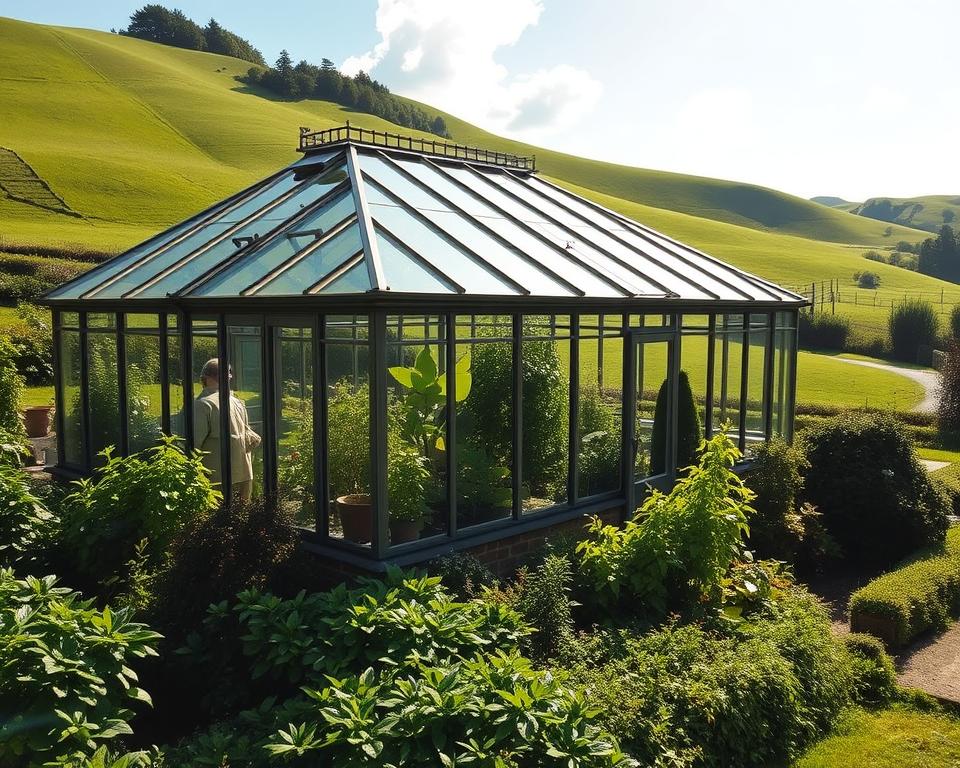
Optimal greenhouse orientation for maximum light in the UK
For rectangular glasshouses, align the long axis east–west so the main glazing faces south. This layout gives even light distribution across benches and helps to maximise light greenhouse performance in winter.
Ridge-run north–south can suit some polycarbonate lean-tos where site constraints or access dictate a different layout. Check manufacturer guidance from brands such as Eden or Juliana on roof pitch and glazing angles to gain the best winter solar gain.
Using tools and apps to measure solar access
Start with a compass and a short shadow study over several days to map obvious obstructions. Then use solar access tools like SunCalc, PVGIS and mobile apps such as Sun Seeker or LightTrac for detailed sun-path visualisation.
For larger sites, Google Earth Pro and GIS solar-analysis modules give accurate sunrise, sunset and incidence-angle data. Record lux readings with a handheld meter at different times to confirm usable growing light.
Shade analysis: trees, buildings and neighbouring structures
Assess shade sources for both leaf-on and leaf-off seasons. Deciduous trees may be less obstructive in winter, yet nearby buildings can cast long shadows that reduce midday and afternoon light.
Use a shade analysis greenhouse approach to measure shadow lengths relative to greenhouse height. Where shading is problematic, consider selective pruning, removal or siting the greenhouse slightly further from the source.
Reflective surfaces, internal layout changes and strategic bench placement can compensate for partial shade. Test interventions with repeat lux readings and update your solar access tools to verify improvements.
Wind, Shelter and Microclimate Management
Site wind patterns dictate many greenhouse choices. Use Met Office wind data and local observation to note prevailing directions, gust frequency and storm exposure. Coastal and upland sites need particular caution because gusts raise heat loss, risk structural damage and disrupt pollination.

Assessing prevailing winds and windbreak options
Start by mapping dominant winds across seasons. Short visits on windy days reveal turbulence hotspots that data alone may miss. Note field edges, roads and tree lines that channel gusts into unexpected directions.
Choose windbreaks that reduce speed without creating harmful turbulence. Porous screens and staggered plantings work better than solid walls for long-term greenhouse wind protection.
Designing shelter belts and fencing to protect the greenhouse
Place shelter belts at a distance of roughly 5–10 times their mature height upwind to create an effective sheltered zone. Native species such as hawthorn, holly and birch boost wildlife and ease planning consent.
For immediate or seasonal needs, use removable screens, polythene gust guards or shade cloth. Maintain hedges and fences to prevent gaps and excessive shading that would undermine shelter belts greenhouse performance.
How microclimates can extend the growing season
Microclimate measures cut heating demand and lengthen productive periods. South-facing walls, earth banks and internal water barrels store daytime heat and moderate night temperatures under glass.
Combine external windbreak design with internal thermal mass to smooth temperature swings. Good microclimate management UK practices balance wind reduction, light access and thermal storage to protect crops and improve crop quality.
Site Drainage, Soil and Ground Preparation
Good site preparation keeps a greenhouse stable and productive. Start by walking the plot after heavy rain to spot surface water flow, puddles and low-lying zones. Note areas where water pools for more than a day; these need drainage work or raised beds to avoid prolonged waterlogging.
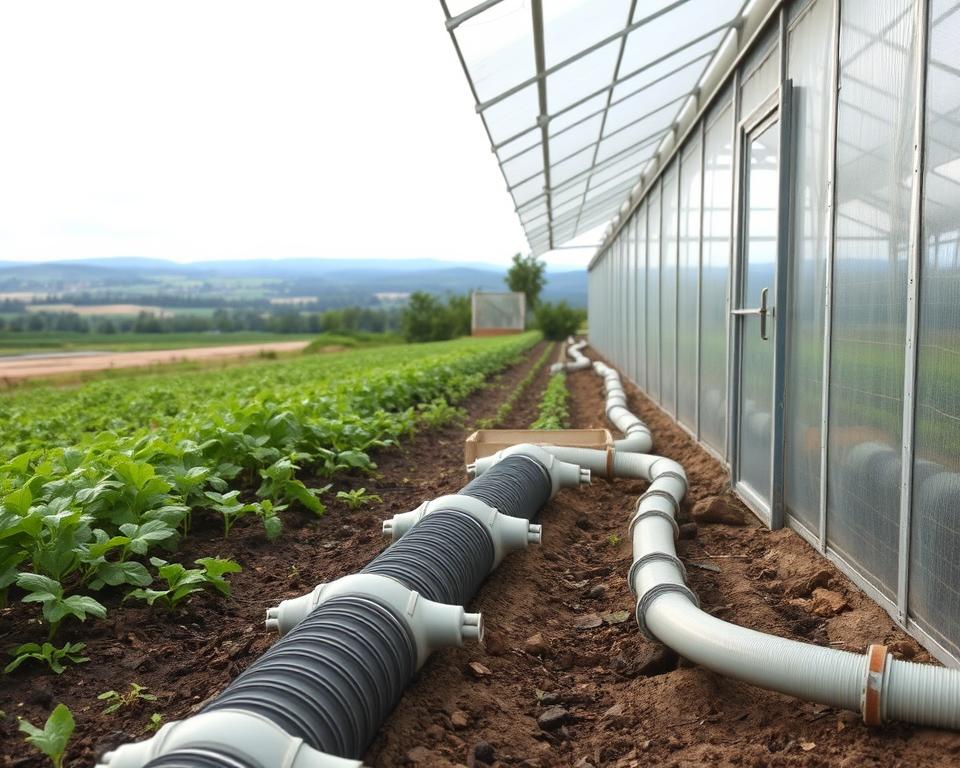
Assess soakaway capacity and subsoil texture. Heavy clay soils and valley bottoms often cause slow drainage and may require French drains, gravel trenches or ACO drainage channels around the perimeter. Permeable surfacing for adjacent paths helps infiltration and reduces run-off towards the structure.
Ground levelling is essential for glass and aluminium frames. A level base ensures doors close properly and seals remain effective. Small slopes may be handled with compacted sub-base, retaining edges or simple terracing. For larger or uneven sites, consider professional earthworks to prevent future subsidence.
Choose foundations that suit the greenhouse type. Concrete slabs suit large, professional houses while treated timber bearers or blockwork pads work well for domestic frames. Polytunnels usually use ground anchors or weighted bases. Manufacturers such as Hartley Botanic and Premier Polytunnels publish specific guidance on greenhouse foundations UK that should be followed for warranty and safety reasons.
Account for frost heave by placing foundations below frost-susceptible depth where relevant and by compacting the sub-base. Good compaction reduces movement and preserves structural integrity over time.
Soil testing greenhouse sites is a pragmatic step before committing to in-ground beds. Test pH, nutrient levels and contamination, particularly on brownfield plots. UK labs such as SoilEssentials and SRUC provide practical analysis that informs whether to improve the existing soil or use imported topsoil and raised beds instead.
Poor soil structure restricts root growth and worsens drainage. For high-value crops, raised beds with imported soil or container systems and grow bags often give faster, more reliable results than trying to remediate heavy subsoil within the greenhouse footprint.
Plan ground preparation greenhouse work in stages: survey and testing, drainage installation, levelling and foundation construction, then final surfacing and bed formation. This sequence reduces rework and keeps installation on schedule.
Access, Logistics and Practical Considerations
Positioning a greenhouse well reduces daily friction and long-term costs. Good greenhouse access UK planning links proximity to utilities, storage and the house with straightforward routes for deliveries and maintenance.

Proximity to water, electricity and storage areas
Place the structure near mains water and electricity to cut trenching time and expense. Check mains pressure and supply size before fitting pumps for irrigation or heaters. Include a dedicated space for potting benches, compost and a locked tool area to streamline work and protect chemicals and equipment.
Pathways, vehicle access and ease of maintenance
Create firm, level paths for wheelbarrows and small vehicles with turning space for deliveries. Leave clearance around glazing and service points so contractors can replace panes or service boilers without obstruction. Consider inclusive design with wider doors and level thresholds to make the greenhouse usable for everyone.
Security, visibility and neighbour relations
Site the greenhouse where it is visible from the house to deter theft and vandalism. Fit robust locks and consider motion-sensor lighting and insurance-grade materials for added greenhouse security. Discuss plans with neighbours to avoid disputes over appearance, overshadowing or access, keeping relations amicable and practical.
Plan rainwater capture and frost-proof taps to save mains use and protect pipework from freezing. Address greenhouse utilities early in the design stage to ensure efficient irrigation, heating and automated systems that meet daily needs and seasonal peaks.
Finally, map greenhouse logistics for deliveries, storage flow and waste removal to reduce handling time. A smooth layout saves labour and keeps operations reliable across the year.
Planning Permission, Regulations and Insurance
Before erecting a greenhouse, check local rules and guidance. Many domestic structures fall under permitted development but limits apply to height and proximity to boundaries. A quick call to the local planning authority will clarify whether your project needs formal approval.
When planning permission is required in the UK
Smaller, private greenhouses often avoid planning applications. Larger installations, commercial use, or siting within national parks, conservation areas or on a listed property usually trigger formal consent. Agricultural exemptions exist for certain rural buildings but have strict criteria.
Building regulations, conservation areas and listed properties
Standalone, non-habitable greenhouses rarely fall under building regulations. Additions such as fixed heating, sleeping space or major electrical work can change that and may require compliance with standards like BS 7671. Seek advice early when planning works near conservation areas or for a listed building greenhouse, because special consent is commonly needed and enforced.
Insurance considerations and compliance with safety standards
Talk to insurers before installation. Typical policies can cover glass breakage, storm damage, theft and public liability. Commercial growers must declare operations to obtain adequate public liability and business interruption cover.
| Issue | When it applies | Practical action |
|---|---|---|
| Permitted development limits | Most small domestic greenhouses | Check GOV.UK guidance and local planning rules; measure height and distance from boundaries |
| Planning permission | Large, commercial or protected-area sites | Submit application to local planning authority; include site plans and use details |
| Building regulations | Structures with heating, sleeping or major electrics | Engage a qualified electrician and check BS 7671 compliance; apply for building control if needed |
| Listed building greenhouse | Any new structure affecting a listed property | Obtain listed building consent; consult conservation officers early |
| Commercial biosecurity and waste rules | Commercial growers handling regulated plant material | Follow DEFRA and APHA guidance; maintain records and secure pesticide storage |
| Insurance cover | Domestic and commercial operations | Declare use to insurers; include glass, storm, theft, and public liability cover |
| Health and safety | Any greenhouse with appliances or chemicals | Use HETAS-certified solid-fuel appliances; store chemicals per COSHH; keep certified electrical work |
Environmental Impact and Biodiversity Considerations
Placing a greenhouse requires thought for habitat, water and wider environmental effects. A simple habitat assessment before work starts helps protect nesting birds, bat roosts and rare plants. Contacting Natural England or a local wildlife trust can guide timing and avoid legal issues.
Minimise earthworks and keep mature trees when possible. Small changes to siting can prevent fragmentation of hedgerows and ponds. Using permeable paths and retaining native ground cover reduces disturbance and supports local species while lowering the environmental impact greenhouse owners create.
Plant native nectar-rich borders such as lavender, borage and honeysuckle close to doors and vents. Position insectaries, log piles and a shallow water source to invite bees, hoverflies and lacewings into a pollinator-friendly greenhouse environment. Simple measures boost both pollinator numbers and crop resilience.
Adopt integrated pest management to favour predators over pesticides. Encourage ladybirds, ground beetles and parasitic wasps by providing habitat and avoiding broad-spectrum sprays. This approach strengthens greenhouse biodiversity and cuts chemical dependence.
Design a sustainable drainage greenhouse system that manages runoff on-site. Use gutters feeding tanks with first‑flush diverters and filters for irrigation safety. Create swales, rain gardens and permeable surfaces to slow water flow and recharge soil rather than sending pollution to drains.
Consider renewable energy and low‑carbon heating. Solar PV can supply electricity, solar thermal pre-heats water and air-source heat pumps reduce fuel use. These steps shrink the environmental impact greenhouse operations cause and lower running costs.
Plan for waste responsibly. Provide dedicated composting for plant residues and set clear procedures for packaging and chemical container disposal. Good waste systems complete a low-impact design and sustain the gains in biodiversity and water management.
Cost-Benefit Analysis of Different Locations
Choosing the right plot for a greenhouse requires weighing upfront costs against long-term returns. Site preparation, access to services and microclimate all alter the greenhouse cost-benefit and influence operational budgets.
Estimate installation, running and maintenance costs by site before committing. Rocky or sloped ground raises levelling and foundation bills. Remote plots increase utility trenching and transport charges. Obtain quotes from reputable suppliers such as Hartley Botanic or Vogue Glasshouses to compare realistic figures.
Assess greenhouse running costs UK by modelling heating, ventilation and lighting for each location. Exposed sites demand more heat and can mean higher glazing repairs after storms. Sheltered, south-facing sites reduce energy consumption and can cut annual bills noticeably.
Estimating installation, running and maintenance costs by site
Detail costs in three buckets: site preparation, utilities and ongoing upkeep. Site prep covers levelling, drainage and foundations. Utilities include power, water and any trenching to connect services. Maintenance factors in labour, cleaning and glazing replacements caused by nearby trees.
Create a simple lifecycle table to compare options and spot trade-offs between higher initial outlay and lower annual spend.
| Cost element | Exposed site | Sheltered south-facing | Near services |
|---|---|---|---|
| Site preparation | High — levelling, windproofing | Medium — basic levelling, drainage | Low — minimal groundworks |
| Utility trenching | High — long runs for power and water | Medium — moderate distance | Low — near mains |
| Heating & ventilation spend | High — greater demand in winter | Low — passive solar gain saves energy | Medium — depends on orientation |
| Maintenance | High — wind damage and debris | Low — easier access, less debris | Low — good access reduces labour |
| Payback potential | Longer — higher running costs | Shorter — energy savings and yields | Short — lower setup time and cost |
Yield projections influenced by placement decisions
Estimate yield changes from light and shelter. South-facing, sheltered locations often deliver earlier harvests and improved quality. Market growers see revenue uplift from earlier crops and reduced crop loss in adverse weather.
Use yield projections greenhouse to test scenarios. Model months-to-harvest and average yield per square metre for each plot. Small percentage gains in yield can offset higher installation costs within a few seasons.
Long-term value: resale, expansion and adaptability
Think beyond the immediate season. A well-sited greenhouse with a permanent foundation retains higher greenhouse long-term value for resale. Consider modular designs to allow future expansion or a switch to automated systems.
Factor in grants and incentives when calculating net costs. Local LEPs and DEFRA schemes may reduce the initial burden for renewable systems or professional installations. Include potential grant offsets in the greenhouse cost-benefit model.
Technology and Tools to Aid Site Selection
Modern technology makes greenhouse siting far more precise than relying on rules of thumb. Start with desktop mapping to explore sun paths, slope and land use. Use smartphones and simple instruments for early checks, then scale to professional tools as the project grows.
Use GIS platforms such as QGIS or ArcGIS to overlay layers that matter for plant growth. Public data, contour maps and land-use imagery reveal shading risks and access routes. For commercial projects, commissioning a professional survey gives a thorough baseline.
Solar calculators refine expectations for light across the year. Tools like PVGIS or bespoke solar calculator greenhouse apps estimate insolation and assist in choosing orientation and glazing. Pair solar models with wind exposure maps to gauge ventilation needs.
Remote sensing and drone imagery speed site appraisal. A drone site survey greenhouse can produce orthomosaics, digital elevation models and 3D visuals to assess slope, shadowing and approach paths. Use CAA-certified operators for surveys beyond hobby scale.
Time-lapse photography or seasonal site photos document real shade patterns and frost pockets. Simple shadow sticks help record daily sun angle. These low-cost methods add context to modelling results.
Deploy dataloggers to confirm microclimate assumptions on site. Devices from HOBO and Tinytag measure temperature, humidity and PAR light levels. Soil moisture sensors and tipping-bucket rain gauges validate drainage and irrigation planning.
Integrate monitoring with greenhouse controls during design. Systems by Priva and Argus can use logged data to size heating, ventilation and lighting, and to configure automated responses. That reduces guesswork when establishing setpoints.
Compare costs and benefits with a phased approach. Domestic growers may begin with Google Earth Pro, a solar calculator greenhouse app and simple sensors. Larger ventures should invest in GIS analysis, a drone site survey greenhouse and professional microclimate monitoring to de-risk the site.
Conclusion
Siting a greenhouse well is about balance. Prioritise light, shelter, drainage and access while meeting planning rules. The Right Location for the Greenhouse will lower running costs, boost yields and support long‑term sustainability across UK conditions.
Use a simple decision framework before you commit: state your growing objectives, carry out a solar and shade assessment, evaluate prevailing wind and shelter needs, test soil and drainage, check access and make necessary legal enquiries. This checklist will help you reach a clear greenhouse siting conclusion.
Next steps are practical. Contact your local planning authority, run solar and wind measurements over several weeks, commission soil and drainage tests, and get quotes from reputable manufacturers and installers. Pilot‑monitor microclimate data to validate assumptions and optimise placement.
For most UK situations, a modest investment in site analysis pays off handsomely. Aim for a sheltered, mainly south‑exposed plot with good drainage and easy access to services to truly optimise greenhouse location UK. For further technical guidance refer to resources such as the Royal Horticultural Society, the Met Office and DEFRA, and consult established greenhouse suppliers for specifications and installation advice.
FAQ
What is the single most important factor when choosing a greenhouse site in the UK?
The most important factor is sunlight exposure. A south‑facing site with minimal winter shade maximises solar gain, improves crop performance and lowers heating needs. Consider orientation, nearby trees or buildings that cast long winter shadows, and run a simple shadow study over several days to confirm usable light.
How does greenhouse placement affect running costs and yield?
Placement directly influences microclimate and therefore heating, ventilation and crop quality. Sheltered, south‑exposed locations reduce heat loss and energy demand, enabling earlier and higher‑quality harvests. Conversely, exposed sites raise heating and maintenance costs and may reduce yields through stress and damage from wind.
Do I need planning permission for a greenhouse on my property?
Many domestic greenhouses fall under permitted development, but limits apply for height, proximity to boundaries and use. Larger structures, commercial use, conservation areas or listed properties often require planning permission. Check GOV.UK guidance and consult your local planning authority before installation.
How can I assess wind risk and protect the greenhouse?
Use Met Office wind data and local observation to identify prevailing winds and gust exposure. Effective protection includes porous shelter belts or hedges set 5–10 times their height upwind, solid fencing where appropriate, and temporary screens for seasonal use. Avoid solid walls immediately upwind to reduce turbulence.
What drainage and ground preparation is needed for a greenhouse?
Survey surface water flow and soakaway capacity. Heavy clay or valley sites often need raised beds or French drains. Foundations must be level and suited to the structure—concrete slabs for large houses, treated timber bearers for smaller units—following manufacturer guidance. Ensure sub‑base compaction to limit frost heave.
How should I orient a rectangular greenhouse for best light distribution?
Align the long axis east–west so the largest glazed surfaces face south. This maximises winter solar gain and yields more even light distribution across benches. In constrained sites, ridge‑run north–south may be acceptable for some lean‑to designs; check manufacturer recommendations for glazing angle.
What local climate factors should influence my siting decision?
Consider regional differences—south‑east England is generally drier and sunnier, while western areas are milder and wetter. Account for coastal salt winds, urban heat‑island benefits, frost pockets in hollows and prevailing wind directions. Consult Met Office regional summaries and local gardeners for site‑specific experience.
Which tools can help measure solar access and shade patterns?
Use mobile apps such as SunCalc, Sun Seeker or LightTrac for sun‑path analysis. Google Earth Pro or PVGIS helps for larger sites. Complement digital tools with a simple compass, shadow sticks or a lux meter taken at key times to validate real‑world light levels across seasons.
How can I create a favourable microclimate to extend the growing season?
Use earth banks, water barrels or southern walls to store heat and moderate night temperatures. Install porous windbreaks and plant shelter belts. Inside, thermal mass and well‑designed ventilation reduce temperature swings. These measures lower heating demand and prolong productive cropping.
What considerations apply to utilities, access and security?
Site the greenhouse close to water and electricity to minimise trenching costs. Provide firm, level paths for wheelbarrows and delivery access if needed. Allow space for potting, compost and storage. Position the structure where it is visible from the house to deter theft and discuss plans with neighbours to avoid disputes.
Should I use in‑ground beds or containers inside the greenhouse?
That depends on ground conditions. If soil is heavy, poorly drained or contaminated (common on brownfield sites), raised beds or containers with imported topsoil and structured mixes are preferable. For healthy, free‑draining soils, in‑ground beds are cost‑effective but test pH and nutrients first through a UK soil lab such as SRUC or SoilEssentials.
How do biodiversity and wildlife legal protections affect siting?
Survey for nesting birds, bats, reptiles or protected plants before construction. Timing works outside breeding seasons and consulting Natural England or local wildlife trusts prevents legal breaches. Retain mature trees where possible and include pollinator‑friendly planting to support beneficial insects.
Which monitoring equipment helps validate site assumptions before committing?
Deploy simple dataloggers (HOBO, Tinytag) to record temperature, humidity and light (PAR). Soil moisture probes and rain gauges validate drainage and irrigation needs. For domestic projects a phased approach—smartphone assessments then short‑term monitoring—often suffices before major groundwork.
How do I balance accessibility with ideal growing conditions?
Prioritise what matters most for your objectives. Hobby growers benefit from proximity to the house for frequent visits and security. Commercial operations often favour slightly more remote, optimised light and drainage with planned access for deliveries. Map utilities, workflow and disabled access needs when comparing sites.
What are typical foundation choices for different greenhouse types?
Options include concrete slabs for large, permanent glasshouses; treated timber bearers or blockwork for domestic aluminium frames; and ground anchors or weighted bases for polytunnels. Follow supplier specifications—brands such as Hartley Botanic and Premier Polytunnels publish foundation guidance relevant to their products.
Can renewable technologies be integrated at the chosen site?
Yes. Solar PV for electricity, solar thermal for water pre‑heating, and heat pumps or efficient biomass systems can be sited alongside greenhouses to lower carbon and running costs. Consider roof orientation for PV, planning constraints for panels, and possible grants from local LEPs or DEFRA schemes.
How should I approach a cost‑benefit comparison between two potential sites?
Compare installation costs (levelling, foundations, drainage, utility runs) and projected running costs (heating, ventilation, maintenance). Estimate yield differences due to light and shelter, then model payback periods for any extra investment. Include potential resale and expansion value in longer‑term scenarios.
Where can I find authoritative guidance on greenhouse siting and regulations?
Trusted sources include the Royal Horticultural Society for horticultural best practice, the Met Office for regional climate data, GOV.UK and your local planning authority for permissions, and DEFRA or the Animal and Plant Health Agency for biosecurity and commercial regulations.
What immediate steps should I take once I shortlist a preferred site?
Perform a shadow study and basic solar/wind assessment, commission soil and drainage tests, consult the local planning authority about permissions, obtain quotes from reputable suppliers and installers, and, where appropriate, deploy short‑term monitoring equipment to confirm microclimate performance before finalising works.

