How to Build a Summerhouse Base on a Slope
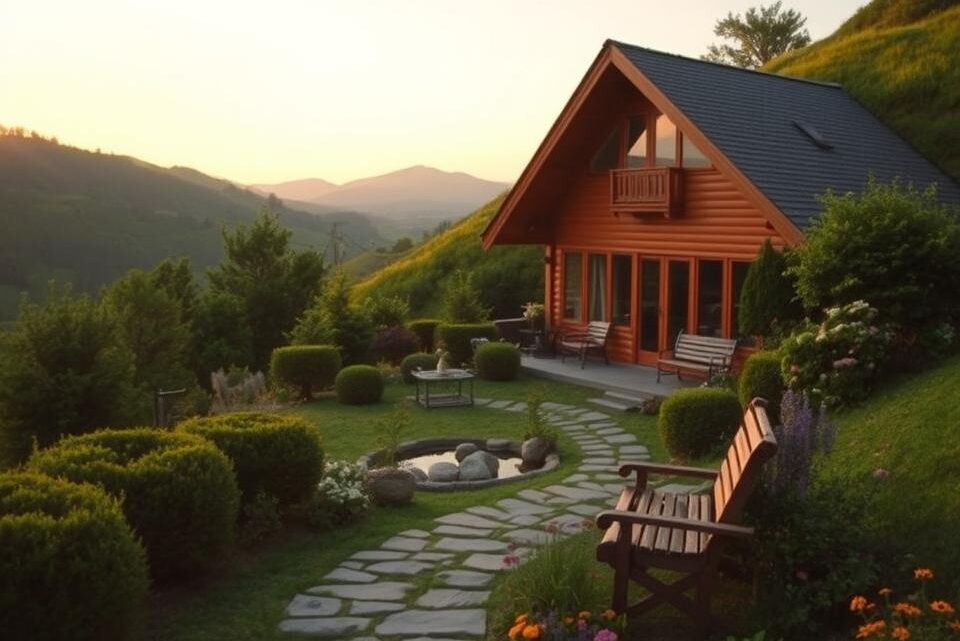
Constructing a summerhouse base on sloped ground can be a daunting task, requiring careful planning and execution to ensure the structure remains stable and secure.
A level base is crucial for any garden structure, as it provides the foundation that supports the entire summerhouse, preventing structural issues over time.
Sloped terrain demands specific techniques to create a stable platform that can withstand the elements and the weight of the summerhouse. This guide will walk you through the process of building a durable summerhouse base on sloped ground.
Inhaltsverzeichnis
Key Takeaways
- Assess the slope to determine the best approach for creating a level base.
- Choose the most suitable method for your garden conditions.
- Prepare the ground to ensure a stable foundation.
- Construct the base using appropriate materials and techniques.
- Ensure the base is level and secure to support the summerhouse.
Understanding the Challenges of Building on a Slope
Creating a level base for a summerhouse on a slope is a complex task that demands attention to detail. Not all plots are perfectly level, and it’s common to encounter slopes when building a shed. An uneven surface doesn’t ensure a smooth installation.
Why a Level Base is Essential for Your Summerhouse
A level base is crucial for the stability and longevity of your summerhouse. It ensures that the structure remains secure and withstands various environmental conditions. A level base paired with a solid foundation is where your garden shed deserves to be.
A level base prevents structural damage by evenly distributing the weight of the summerhouse, thereby reducing the risk of uneven settling and potential collapse.
Common Issues with Sloped Ground
Sloped ground presents several challenges, including soil erosion, which can undermine the stability of your summerhouse base over time. Other issues include water pooling at the lower end of the slope, creating damp conditions that may lead to rot and deterioration of the base materials.
- Soil erosion can compromise the base’s integrity.
- Water accumulation can cause dampness and rot.
- Uneven ground settling can lead to structural shifts.
- Seasonal ground movement due to freezing and thawing cycles can affect base stability.
- Different soil types may have varying load-bearing capacities.
Addressing these issues is crucial for ensuring the long-term stability of your summerhouse base on sloped ground.
Planning Your Summerhouse Base Project
A well-planned summerhouse base is crucial for the longevity and stability of the structure, especially on sloping ground. The process involves several critical steps that ensure your summerhouse is both functional and aesthetically pleasing.
Assessing the Slope Gradient
The first step in planning your summerhouse base is assessing the slope gradient. This involves determining the angle and severity of the slope to decide on the most appropriate construction method. A thorough assessment will help in identifying potential challenges and devising strategies to overcome them.
Choosing the Right Location
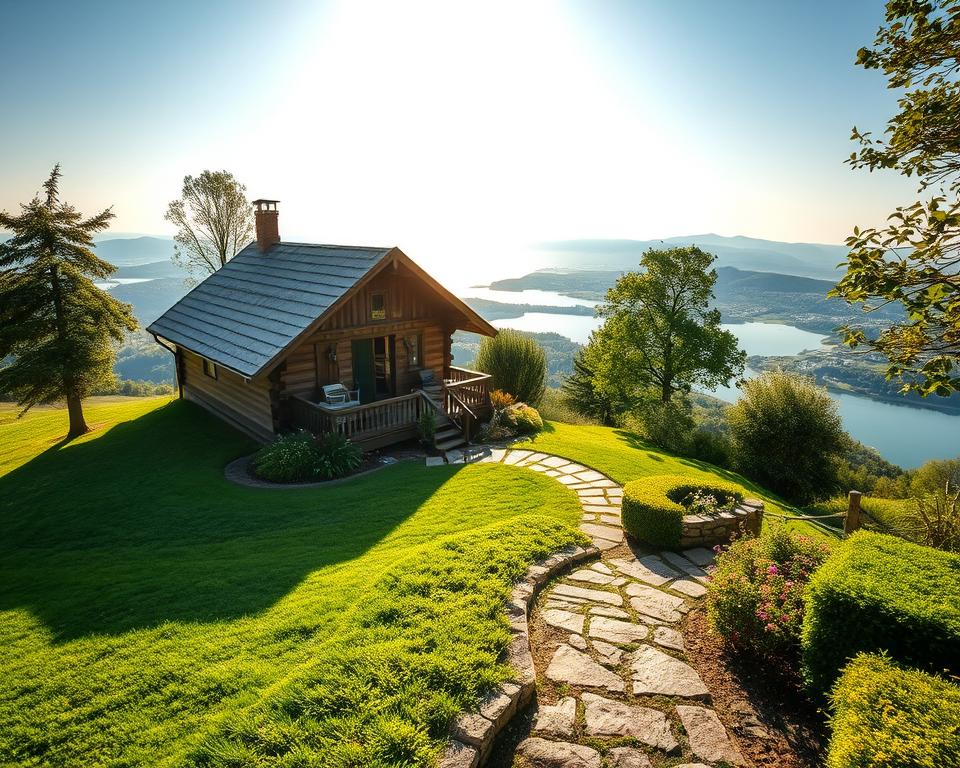
Choosing the right location for your summerhouse is vital. The site should be level, or as level as possible, and should not be prone to waterlogging. Consider the drainage and how it might affect the base of your summerhouse. Ensuring the location is accessible and visible is also important.
Measuring and Marking Your Base Area
Once the location is chosen, the next step is to measure and mark out the base area. This involves marking each corner of the summerhouse’s intended footprint using stakes and running string between them to outline a level, squared perimeter. The base should extend beyond the dimensions of your summerhouse by approximately 30cm on each side to provide adequate support.
| Task | Description |
|---|---|
| Marking Corners | Use stakes to mark each corner of the summerhouse footprint. |
| Outlining Perimeter | Run string between stakes to create a level, squared perimeter. |
| Checking Dimensions | Use a tape measure to confirm the dimensions and ensure accuracy. |
Precise measuring and marking of your base area is a critical first step in the construction process. It guides the excavation and construction phases, ensuring that your summerhouse is built on a solid foundation.
Essential Tools and Materials
To construct a stable summerhouse base on sloping ground, one must first gather the necessary tools and materials.

Required Tools for the Job
Having the right tools is crucial for efficiently building your summerhouse base. Essential tools include a spirit level, shovel, tape measure, and a drill.
These tools will help you measure, dig, and construct your base accurately.
Materials Shopping List
The materials needed will vary depending on your chosen method, but commonly include concrete blocks, gravel, sand, and cement.
Pressure-treated timber is essential for any wooden elements of your base as it resists rot and insect damage.
A damp-proof membrane or geotextile fabric provides an important barrier between the soil and your base materials, preventing weed growth and improving drainage.
You will also need fixings such as galvanised nails, screws, and brackets, and possibly drainage materials including perforated pipe and gravel for managing water runoff.
Using the right materials and a concrete block or two will ensure a sturdy base.
Preparing the Ground for Your Base
To build a sturdy summerhouse base on a slope, thorough ground preparation is indispensable. This process involves several critical steps to ensure a stable and level surface for your summerhouse.
Clearing and Excavating the Site
Begin by excavating to a depth of about 4-6 inches, removing any grass, weeds, or other vegetation. Depending on where you want the door to be placed on your shed, you will either excavate a build-up or a dig-out. This initial clearing is crucial for creating a clean slate for your base.
Effective clearing involves removing not just vegetation but also any debris or obstructions that could interfere with your base. Use appropriate tools to ensure the area is thoroughly cleared.
Creating Proper Drainage Solutions
Effective drainage is crucial for a summerhouse base on sloped ground to prevent water accumulation and potential damage. Installing a layer of coarse gravel at the base of your excavation will facilitate water drainage away from the foundation.
| Drainage Solution | Description | Benefit |
|---|---|---|
| Coarse Gravel Layer | Installed at the base of excavation | Facilitates water drainage |
| Drainage Channels or French Drains | Installed around the perimeter for steeper slopes | Prevents water accumulation |
| Perforated Drainage Pipes | Installed beneath the gravel layer | Directs water away from the base |
The finished base surface should have a slight gradient (approximately 1-2%) to encourage water runoff away from the summerhouse. Ensuring proper drainage will protect your summerhouse from potential water damage.

By carefully preparing the ground and implementing effective drainage solutions, you can create a stable and level surface for your summerhouse, even on sloped ground.
How to Build a Summerhouse Base on a Slope Using Foundation Blocks
Building a stable summerhouse base on sloping ground is achievable with foundation blocks. This method provides a solid foundation, ensuring the summerhouse remains level and secure.
Step-by-Step Foundation Block Installation
The process begins with measuring and marking the area where the summerhouse will be situated. This involves assessing the slope gradient to determine the number of foundation blocks required.
To install the foundation blocks, follow these steps:
- Measure and mark the area.
- Prepare the ground by clearing and excavating the site.
- Dig and fill as necessary to create a stable base.
- Place timber planks or foundation blocks according to the manufacturer’s instructions.
- Build the shed base, ensuring it is level and secure.

Securing and Levelling Your Block Foundation
Once the foundation blocks are in place, the next step is to secure and level them. This involves constructing a timber frame around the perimeter using pressure-treated lumber.
| Step | Description |
|---|---|
| 1 | Construct a timber frame around the perimeter. |
| 2 | Secure timber bearers across the foundation blocks. |
| 3 | Use a spirit level to check the frame is perfectly level. |
| 4 | Install additional cross-bearers for support. |
By following these steps, you can create a level and secure base for your summerhouse, even on sloping ground. The key is to ensure that the foundation blocks are properly positioned and the timber frame is rigid and level.
Building a Retaining Wall for Steeper Slopes
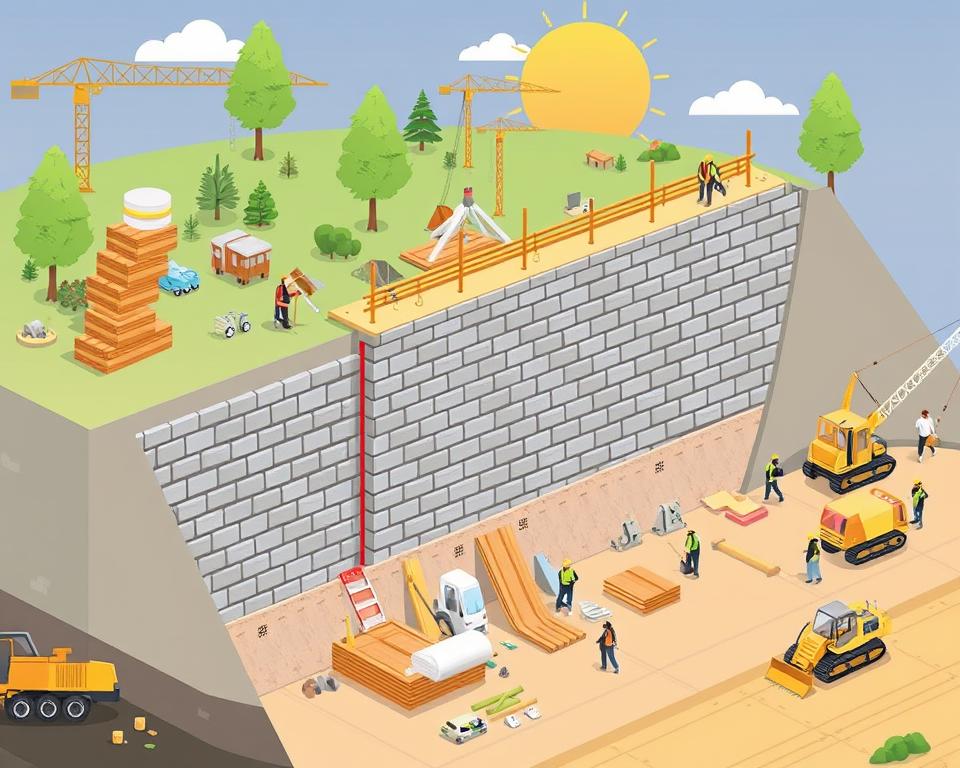
To ensure stability on sloped ground, constructing a retaining wall is a necessary measure for a successful summerhouse base. When dealing with steeper slopes, it’s crucial to create a level surface that can support the weight of the summerhouse and withstand environmental factors.
Constructing a Sturdy Retaining Wall
Constructing a sturdy retaining wall involves several key steps. First, it’s essential to install a drainage system behind the wall to prevent water buildup. This can be achieved by using a perforated pipe surrounded by gravel, which facilitates water movement away from the wall.
The wall itself should be built using materials that can withstand the pressure of the soil and any additional loads. Proper drainage is critical to prevent damage to the wall and the summerhouse base.
Backfilling and Reinforcing the Structure
Once the retaining wall is constructed, the area behind it needs to be backfilled. It’s recommended to use free-draining material such as gravel for the first 30cm to facilitate water movement to the drainage system. The backfill material should be compacted in layers to prevent future settling.
For particularly steep slopes or high walls, consider incorporating geotextile reinforcement layers within the backfill to increase stability. The finished level area created by the retaining wall solution should extend at least 30cm beyond the planned summerhouse dimensions to ensure adequate support for the structure for years to come.
Alternative Foundation Methods for Sloped Ground
Sloped ground poses unique challenges for summerhouse construction, necessitating innovative foundation solutions. When building on uneven terrain, it’s essential to explore various base options to ensure stability and longevity.
Concrete Base Options
A concrete base is a solid foundation for a summerhouse, offering durability and stability. To create a concrete base on a slope, one must first prepare the ground by clearing and excavating the site. Then, a level platform is constructed using concrete, which can be poured into a shuttering system to create a solid base. This method is particularly effective for larger summerhouses or those with heavy features.
Gravel Foundation Techniques
A gravel foundation is another viable option for sloped ground. This method involves laying a compacted gravel base that provides drainage and stability. Gravel foundations are less permanent than concrete and can be adjusted or removed if needed. They are also more environmentally friendly, as they allow for natural water permeability.
Using Screw Piles for Difficult Terrain
Screw piles, also known as helical piles, offer an innovative solution for creating summerhouse bases on particularly difficult or steep terrain. This method involves screwing metal piles into the ground at strategic points, then attaching timber bearers to create a raised platform. Screw piles cause minimal ground disturbance and are adjustable in height, making them ideal for significantly sloped sites.
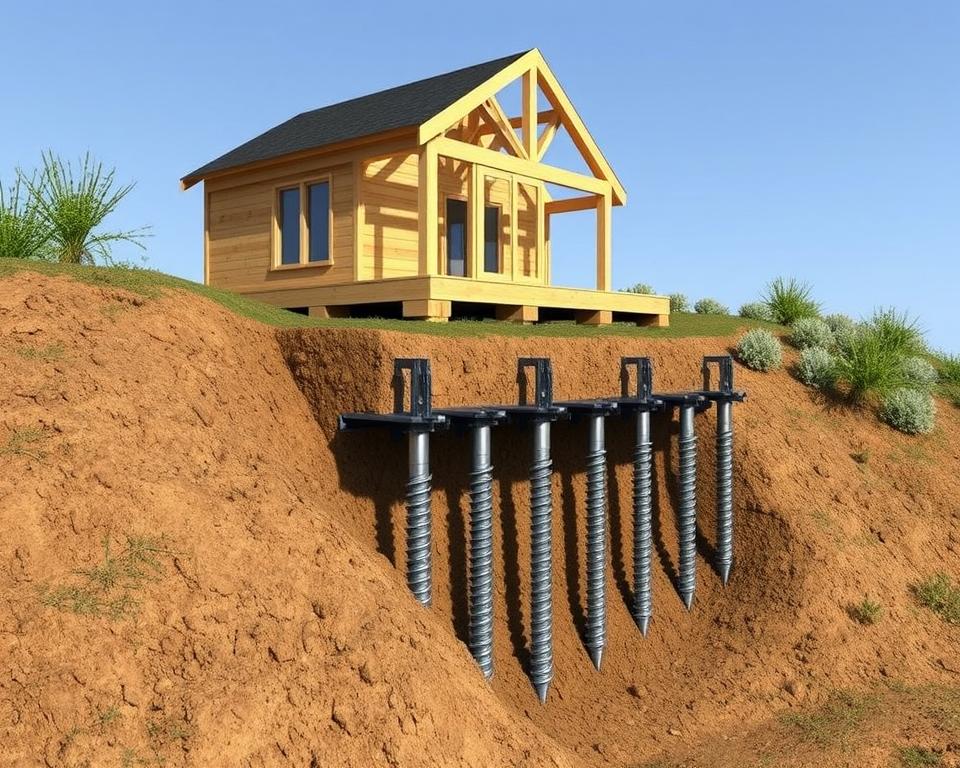
The use of screw piles is particularly advantageous on challenging sites due to their ability to be installed without extensive excavation, thus reducing groundwork requirements and environmental impact.
Conclusion
Building a summerhouse on a slope requires careful consideration, but the result can be a beautiful and functional garden structure. The key to a successful project lies in choosing the right foundation method for your specific site conditions. Whether you opt for foundation blocks for gentle slopes or retaining walls for steeper terrain, ensuring your base is perfectly level is crucial for the structural integrity and longevity of your summerhouse.
A well-constructed base will provide a solid foundation for your garden summerhouse for many years, making the initial investment of time and effort worthwhile. Regular maintenance of your summerhouse base will extend its lifespan and prevent issues such as settling or erosion that can affect stability. By following this guide, you can create a stable, durable base for your summerhouse project, enhancing your outdoor living space.
Remember to check with local authorities regarding building regulations before starting your project. With the right preparation and construction techniques, your sloped garden can accommodate a beautiful summerhouse, providing a wonderful solution for your outdoor needs.
FAQ
What is the best way to ensure a level base on a slope?
To achieve a level base, use a spirit level and string lines to guide the excavation and foundation installation process, ensuring the surface is even and stable.
How do I assess the slope gradient of my garden?
Measure the vertical distance between the highest and lowest points of the slope, and then divide it by the horizontal distance to determine the gradient, which will help you choose the right foundation method.
What are the benefits of using foundation blocks for my summerhouse base?
Foundation blocks provide a stable and level base, are relatively easy to install, and allow for good drainage, making them a popular choice for summerhouse foundations on slopes.
Can I use gravel as a foundation material for my summerhouse?
Yes, gravel can be used as a foundation material, providing good drainage and stability, but it may require additional preparation and compaction to ensure a level surface.
What is the purpose of a retaining wall in a summerhouse base on a slope?
A retaining wall helps to stabilise the soil, prevent erosion, and create a level area for the summerhouse, ensuring the structure remains safe and secure.
Are screw piles a viable option for difficult terrain?
Yes, screw piles can be used to create a stable foundation on challenging slopes, as they can be screwed into the ground, providing a secure base for the summerhouse.
What are the key considerations when choosing a location for my summerhouse?
When selecting a location, consider factors such as drainage, sunlight, and accessibility, as well as the slope gradient and soil stability, to ensure a stable and enjoyable summerhouse.
How do I ensure proper drainage for my summerhouse base?
To ensure proper drainage, install a drainage system, such as a French drain, and use materials like gravel or permeable pavers to allow water to flow freely, reducing the risk of waterlogging.