Designing a Mediterranean Garden: A Step-by-Step Guide
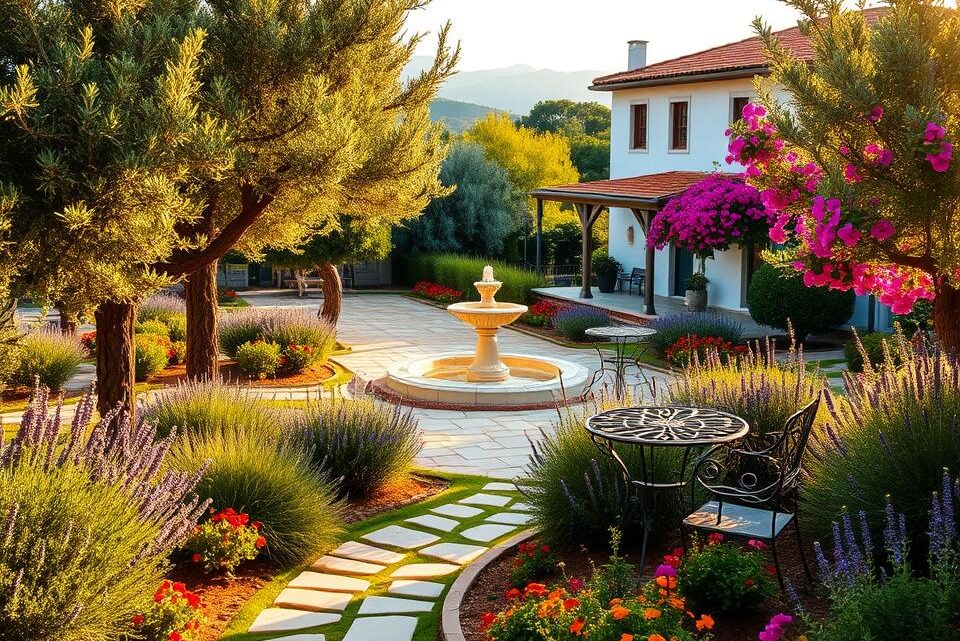
Creating a Mediterranean garden in the UK can be a rewarding experience, bringing a touch of the sun-kissed Mediterranean to your outdoor space.
You can achieve this by carefully planning your garden design to thrive in the UK climate. A well-planned Mediterranean garden not only enhances the aesthetic appeal of your home but also provides a tranquil retreat.
This guide will walk you through the process of garden planning, from selecting the right plants to implementing the design elements that characterise a Mediterranean garden.
Inhaltsverzeichnis
Key Takeaways
- Understand the principles of Mediterranean garden design.
- Learn how to choose plants suitable for the UK climate.
- Discover the key elements to include in your garden planning.
- Follow a step-by-step guide to creating your Mediterranean garden.
- Tips on maintaining your garden to ensure it thrives.
The Essence of Mediterranean Gardens
With their rich history and diverse influences, Mediterranean gardens are a testament to the region’s cultural heritage. These gardens are not just aesthetically pleasing; they also reflect the lifestyle and values of the Mediterranean people.
Key Characteristics of Mediterranean Gardens
Mediterranean gardens are known for their drought-resistant planting and architectural elements. The choice of plants is crucial, with species like lavender, rosemary, and olive trees being popular due to their hardiness and fragrance.
Drought-Resistant Planting
Drought-resistant plants are a hallmark of Mediterranean gardens. These plants have adapted to survive in dry conditions, reducing the need for frequent watering.
Architectural Elements and Structure
Architectural elements such as terracotta pots, stone pathways, and pergolas add structure and character to Mediterranean gardens. These elements not only provide functionality but also enhance the visual appeal.
Historical Background and Influences
The Mediterranean garden style has been influenced by various cultures, including Spanish, Italian, Greek, and French traditions.
Spanish, Italian, Greek and French Styles
| Culture | Influence on Garden Design |
|---|---|
| Spanish | Use of Islamic architectural elements, such as arches and courtyards. |
| Italian | Emphasis on symmetry and formal gardens, often featuring fountains. |
| Greek | Incorporation of native plants and simple, rustic designs. |
| French | Use of formal hedges and a mix of ornamental and edible plants. |
Islamic Garden Influences
Islamic gardens have had a significant impact on Mediterranean garden design, introducing elements like water features and geometric patterns.
Climate Considerations for UK Mediterranean Gardens
The UK’s temperate maritime climate presents unique challenges for creating a Mediterranean garden. While the Mediterranean region is characterized by warm, dry summers and mild, wet winters, the UK experiences a more variable climate with significant rainfall throughout the year.
Adapting Mediterranean Concepts to British Weather
To successfully adapt Mediterranean garden concepts to the UK climate, you need to consider the local weather patterns. This involves understanding and working with rainfall patterns and temperature differences.
Working with Rainfall Patterns
The UK receives more rainfall than the Mediterranean region, so it’s essential to incorporate drainage solutions into your garden design. Consider using permeable paving, raised beds, and plants that can tolerate moist conditions.
Temperature Differences and Solutions
Mediterranean gardens often feature plants that thrive in warm temperatures. In the UK, you can use cold frames, greenhouses, or sheltered areas to create warmer microclimates for these plants.
Microclimate Creation in Your Garden
Creating microclimates within your garden can help you grow a wider range of Mediterranean plants. This involves using walls, structures, and sheltered positioning techniques to retain heat and protect plants from harsh weather.
Using Walls and Structures for Heat Retention
Walls and structures can absorb and retain heat during the day, releasing it at night to create a warmer microclimate. Consider using stone or brick for these features.
Sheltered Positioning Techniques
Positioning plants in sheltered locations, such as against a south-facing wall or in a courtyard, can protect them from wind and frost. 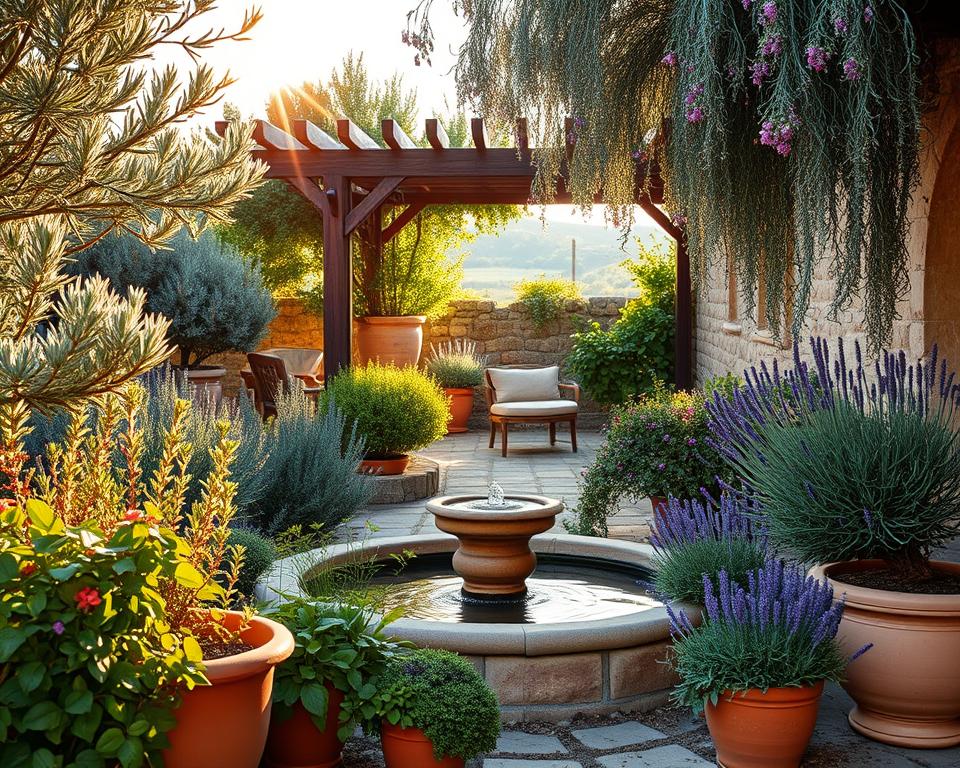
As Charles Dowding, a renowned gardening expert, notes, “Microclimates can make a significant difference in the success of your Mediterranean garden.”
By understanding and adapting to the UK climate, you can create a thriving Mediterranean garden that brings a touch of the Mediterranean to your outdoor space.
Planning Your Mediterranean Garden Layout
The key to a successful Mediterranean garden lies in its layout, which should be both functional and aesthetically pleasing. You need to create a space that not only reflects the warmth and beauty of the Mediterranean but also adapts to the UK climate.
Assessing Your Space and Conditions
Before you start designing, it’s crucial to assess your garden’s conditions. This involves understanding how much sunlight your garden receives and identifying any problem areas.
Sun Mapping Your Garden
Observe your garden at different times of the day to understand the sunlight patterns. This will help you decide where to place sun-loving Mediterranean plants.
Identifying Problem Areas
Look out for areas that are prone to waterlogging or are particularly shaded. Understanding these challenges will help you plan accordingly.
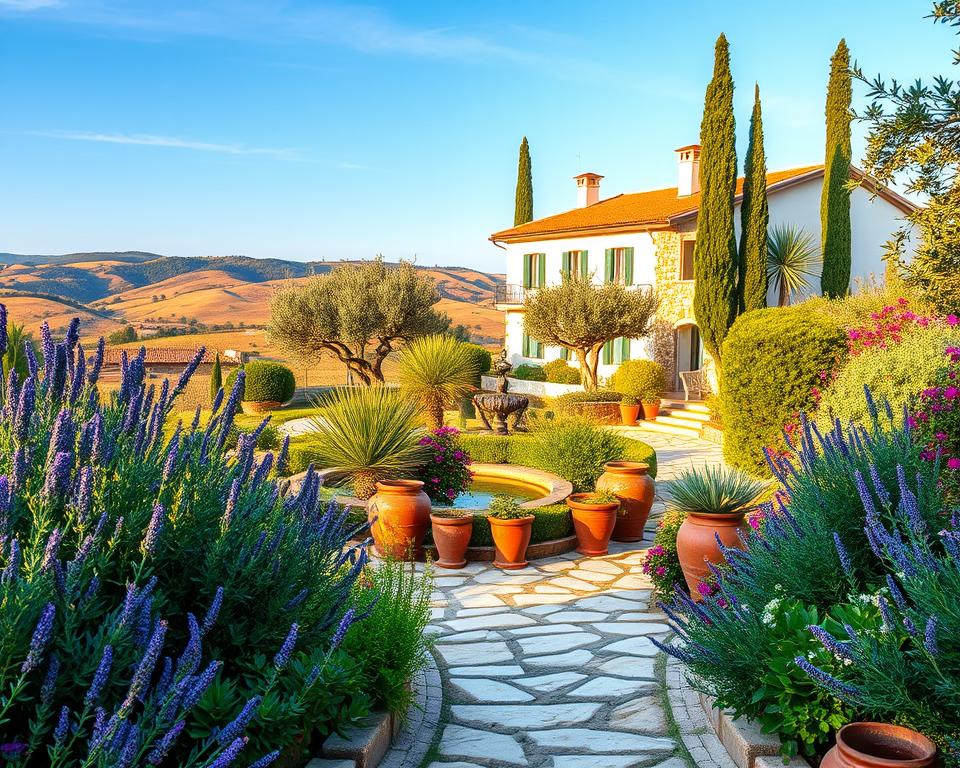
Creating a Functional Design Plan
A functional design plan is essential for a Mediterranean garden. It involves drawing your garden to scale and planning for all seasons.
Drawing Your Garden to Scale
Use graph paper to draw your garden’s layout, including existing features. This will give you a clear picture of your space.
Planning for All Seasons
Consider how your garden will look in different seasons. Choose plants that provide year-round interest.
Zoning Your Garden Areas
Divide your garden into zones, such as practical vs ornamental spaces, and consider transitional areas.
Practical vs Ornamental Spaces
- Designate areas for dining and seating.
- Balance these with ornamental areas featuring Mediterranean plants.
Transitional Areas
Use pathways and stepping stones to create smooth transitions between different zones, enhancing the overall flow of your garden.
By following these steps, you can create a Mediterranean garden layout that is both beautiful and functional, perfect for enjoying throughout the year.
Essential Elements of Designing a Mediterranean Garden
A well-designed Mediterranean garden relies on a thoughtful blend of hard landscaping, plant architecture, and colour schemes. These elements work together to create an outdoor space that is both beautiful and functional.
Structural Components
The structural components of a Mediterranean garden provide the foundation for the overall design. This includes hard landscaping and plant architecture.
Hard Landscaping Priorities
Hard landscaping in a Mediterranean garden often features natural materials such as stone, terracotta, and gravel. These materials help to create a warm and inviting atmosphere.
Plant Architecture Considerations
Plant architecture plays a crucial role in Mediterranean garden design. Plants are often chosen for their sculptural shapes and ability to thrive in dry conditions.
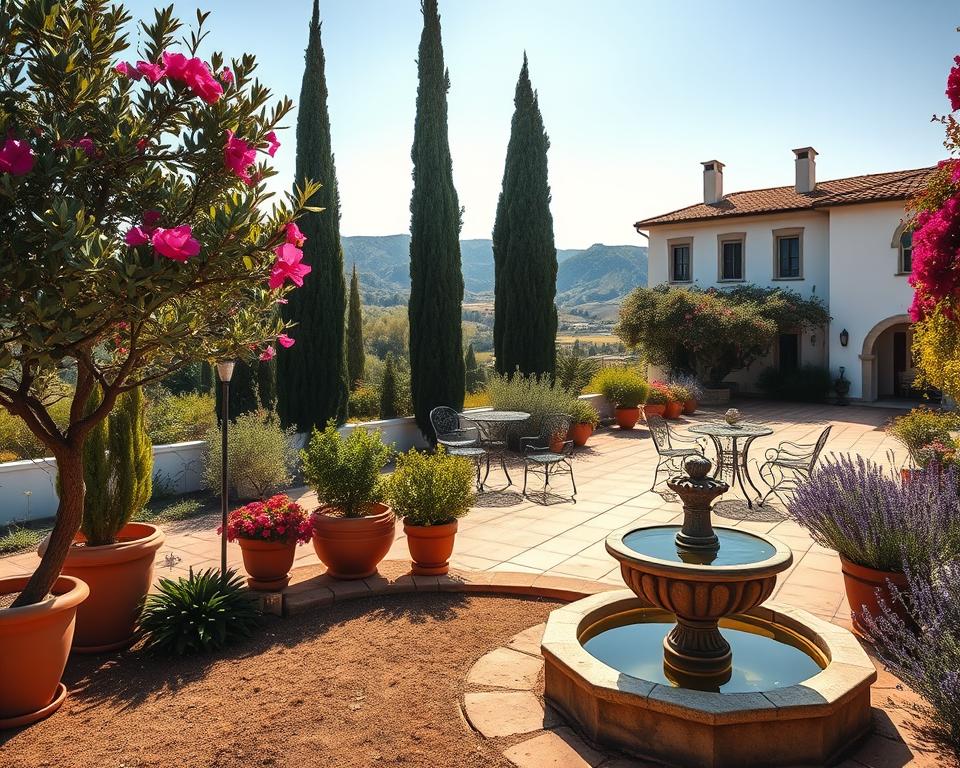
Colour Schemes and Visual Harmony
The colour scheme of a Mediterranean garden is typically inspired by the natural hues of the Mediterranean region. This includes a palette of earthy tones, blues, and whites.
Traditional Mediterranean Palettes
Traditional Mediterranean colour palettes often feature terracotta reds, sun-bleached blues, and soft greens. These colours work together to create a sense of warmth and relaxation.
Creating Year-Round Interest
To maintain visual interest throughout the year, Mediterranean gardens often incorporate a mix of evergreen plants, flowering shrubs, and seasonal colour. This ensures that the garden remains vibrant and engaging in every season.
Soil Preparation for Mediterranean Plants
To successfully grow Mediterranean plants in your UK garden, understanding and replicating their native soil conditions is crucial. Mediterranean plants are adapted to thrive in well-draining, often poor, soils.
Understanding Mediterranean Soil Requirements
Mediterranean soils are typically alkaline, with a high pH. They are also characterized by good drainage and a low nutrient content.
Soil Testing and Analysis
Begin by testing your soil to determine its pH and nutrient levels. You can purchase a soil testing kit or consult a professional.
pH Adjustments for Mediterranean Plants
If your soil is too acidic, you may need to add lime to raise the pH. Conversely, if it’s too alkaline, you can add elemental sulfur or peat moss to lower it.
Improving Drainage in UK Gardens
UK gardens often experience heavy rainfall, which can lead to waterlogged soil. Improving drainage is crucial for Mediterranean plants.
Adding Grit and Sand Techniques
Mixing grit or sand into your soil can significantly improve its drainage. This is particularly effective in heavy clay soils.
Raised Bed Solutions
Creating raised beds is another effective way to improve drainage. Use a mix of topsoil, grit, and compost to create a well-draining growing medium.
| Soil Type | Drainage Improvement Technique |
|---|---|
| Clay Soil | Adding Grit or Sand |
| Heavy Clay | Raised Beds with Gritty Mix |
| Sandy Soil | Minimal Intervention Required |
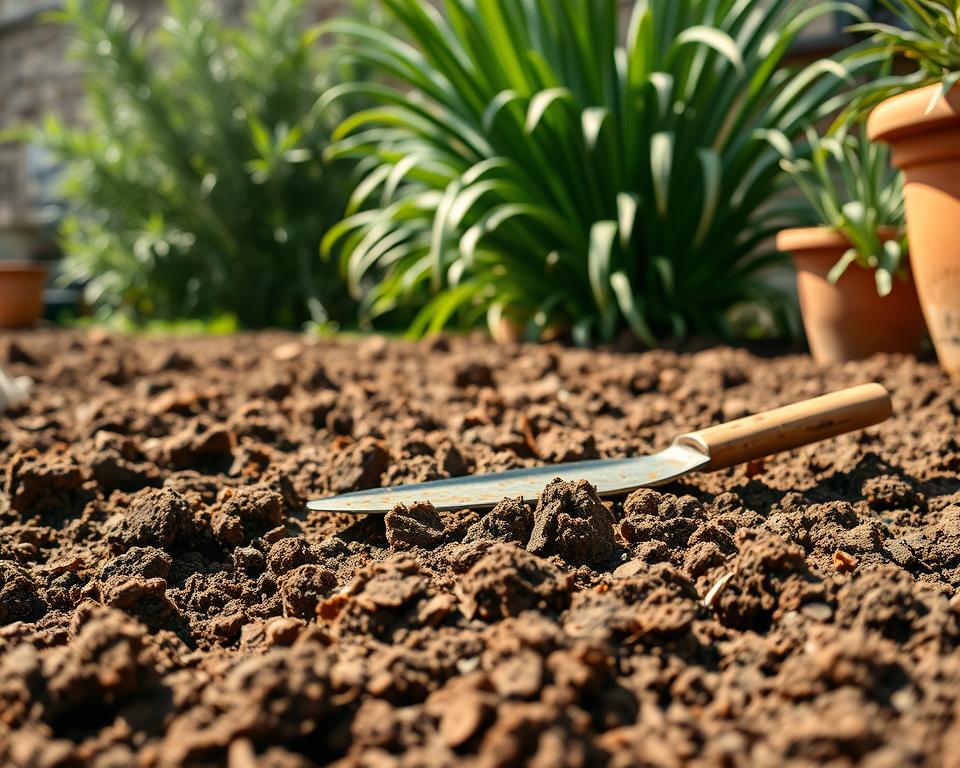
By understanding and adjusting your soil to meet the requirements of Mediterranean plants, you can create a thriving garden that reflects the beauty of the Mediterranean region.
Selecting the Perfect Mediterranean Plants
Mediterranean gardens are known for their beautiful and resilient plants; let’s explore how to select them. When creating a Mediterranean garden, the choice of plants is crucial. You need to select plants that not only thrive in the UK climate but also reflect the characteristic charm of Mediterranean landscapes.
Drought-Tolerant Perennials
Drought-tolerant perennials are a staple in Mediterranean gardens. They are hardy, require less watering, and add beauty to your garden throughout the growing season.
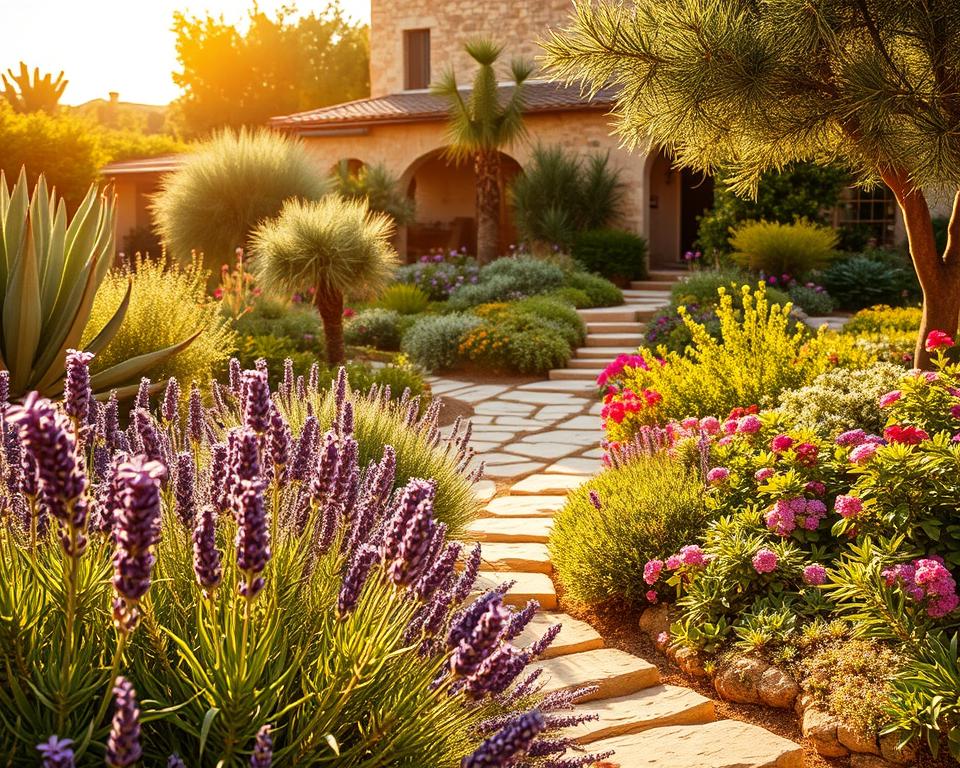
Lavender, Rosemary and Sage Varieties
Plants like lavender, rosemary, and sage are not only drought-tolerant but also aromatic and useful in cooking. For example, Lavandula angustifolia is a popular lavender variety known for its fragrance and purple flowers.
Flowering Perennials for Colour
In addition to herbs, flowering perennials like geraniums and salvias add vibrant colours to your Mediterranean garden. They attract pollinators and create a lively atmosphere.
Mediterranean Herbs and Their Uses
Mediterranean herbs are renowned for their culinary and aromatic qualities. Creating a herb garden is a great way to have fresh ingredients at your doorstep.
Culinary Herb Gardens
A culinary herb garden can include a variety of herbs such as basil, thyme, and oregano. These herbs are essential in Mediterranean cuisine and can be used in a multitude of dishes.
Aromatic Planting Combinations
Combining aromatic plants like rosemary and lavender creates a sensory experience in your garden. As
“The fragrance of herbs and flowers is a hallmark of Mediterranean gardens.”
Ornamental Grasses and Structural Plants
Ornamental grasses and structural plants add texture and form to your Mediterranean garden.
Phormiums and Cordylines
Phormiums and cordylines are popular choices for adding a dramatic touch. Their sword-like leaves create a striking visual effect.
Silver-Leaved Plants for Mediterranean Feel
Silver-leaved plants like artemisia and senecio give your garden a characteristic Mediterranean feel. They are also drought-tolerant, making them ideal for dry conditions.
By incorporating these plants into your garden, you can create a beautiful and resilient Mediterranean landscape that thrives in the UK climate.
Trees and Shrubs for Mediterranean Gardens
When designing a Mediterranean garden, selecting the right trees and shrubs is crucial for achieving an authentic look and feel. These plants not only provide structure and shade but also help to create a microclimate that is characteristic of the Mediterranean region.
Olive Trees and Alternatives for UK Climate
Olive trees are a quintessential Mediterranean feature, but they can be challenging to grow in the UK climate. To overcome this, you can use growing and overwintering techniques to protect your olive trees from harsh winters.
Growing and Overwintering Techniques
To grow olive trees successfully in the UK, you need to provide them with protection during the winter months. This can be achieved by bringing container-grown trees under cover or using a frost blanket to insulate the tree.
Hardy Alternatives with Similar Aesthetics
If olive trees are too demanding, consider alternatives like Phillyrea latifolia or Eleagnus angustifolia, which offer a similar aesthetic and are more resilient to UK weather conditions.
| Tree/Shrub | Hardiness | Maintenance |
|---|---|---|
| Olive Tree | Tender | High |
| Phillyrea latifolia | Hardy | Low |
| Eleagnus angustifolia | Hardy | Medium |
Citrus Options for Container Growing
Citrus trees are another Mediterranean staple that can thrive in UK gardens when grown in containers. They require winter protection methods to survive the cold months.
Winter Protection Methods
To protect your citrus trees during the winter, you can bring them under cover or use a greenhouse. Alternatively, use a frost blanket or fleece to insulate the tree.
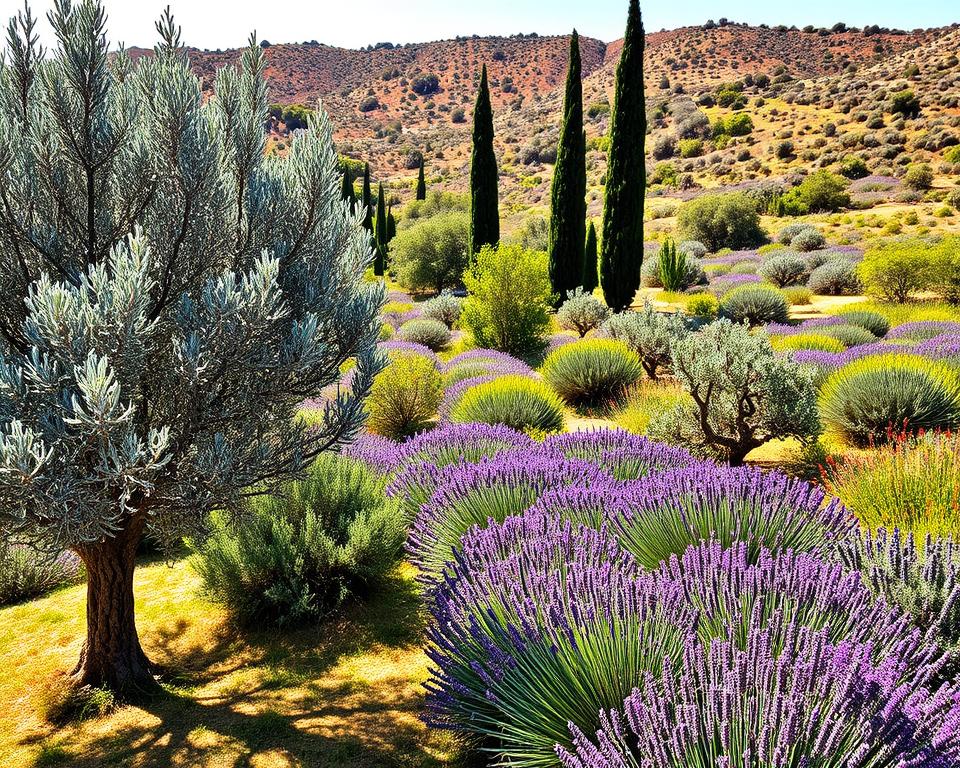
Evergreen Structural Shrubs
Evergreen shrubs like bay, rosemary, and cistus are ideal for creating structure and privacy in your Mediterranean garden. They are also drought-tolerant and require minimal maintenance.
Bay, Rosemary and Cistus
These shrubs can be used to create a beautiful and functional hedge or screen. They are also attractive to pollinators and can be pruned to maintain a desired shape.
Creating Mediterranean-Style Hardscaping
Effective Mediterranean-style hardscaping requires a thoughtful approach to the selection of paving, terracing, and other hard landscaping elements. You need to choose materials and techniques that not only complement the natural beauty of your garden but also withstand the local climate conditions.
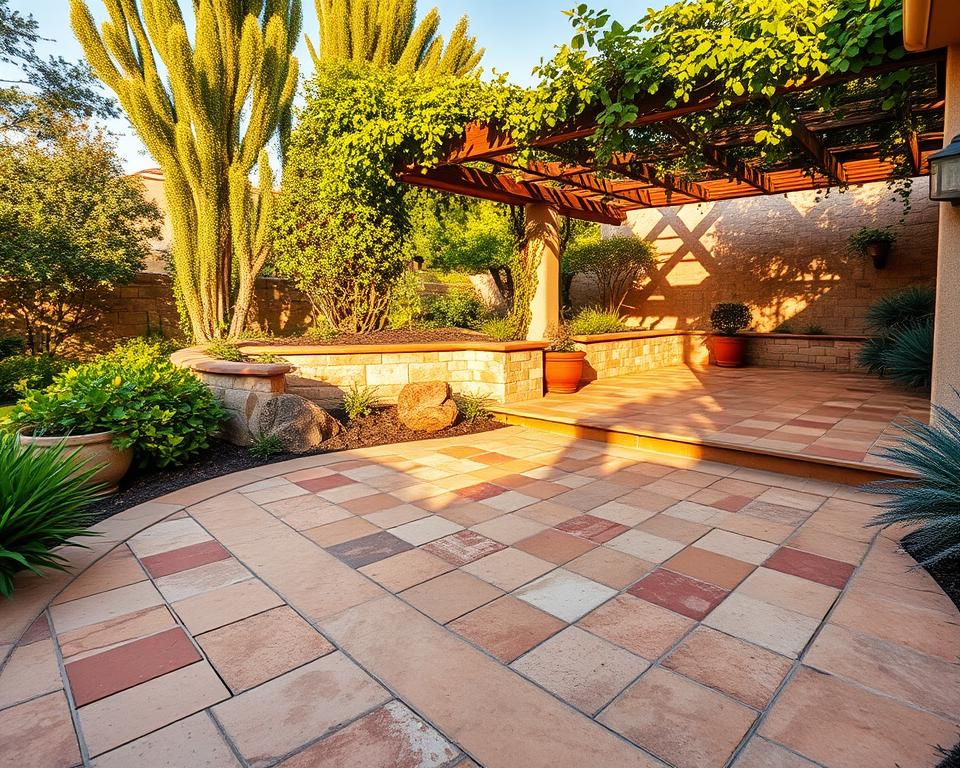
Paving and Pathway Materials
The choice of paving and pathway materials is crucial in creating an authentic Mediterranean look. You can opt for terracotta, stone, or gravel, each offering unique aesthetic and functional benefits.
Terracotta, Stone and Gravel Options
- Terracotta: Adds warmth and a rustic charm, ideal for pathways and patios.
- Stone: Offers durability and versatility, suitable for both paving and decorative features.
- Gravel: Provides excellent drainage and a relaxed, informal appearance.
Installation Techniques for UK Weather
When installing paving materials, it’s essential to consider the UK’s variable weather conditions. Ensure proper drainage by using permeable materials or designing your hardscaping to allow water to flow away from structures.
Walls and Terracing Techniques
Walls and terracing are not just functional; they also add visual interest to your Mediterranean garden. Techniques such as dry stone walling and rendered finishes can be used to create these features.
Dry Stone and Rendered Finishes
Dry stone walling involves constructing walls without mortar, using carefully selected stones. Rendered finishes, on the other hand, provide a smooth, uniform appearance and can be colored to match your garden’s aesthetic.
Creating Level Changes in Small Gardens
Even in small gardens, terracing can create the illusion of more space and add depth. Use retaining walls to create level changes, and consider incorporating steps or ramps for accessibility.
Gravel and Stone Features
Gravel and stone features are integral to Mediterranean hardscaping, offering both functional and decorative benefits. They can be used to create drought-tolerant gardens and decorative arrangements.
Drought-Tolerant Gravel Gardens
Gravel gardens are particularly suited to Mediterranean climates and can thrive in dry conditions. Plant drought-tolerant species among the gravel for a low-maintenance, visually appealing feature.
Decorative Stone Arrangements
Use decorative stones to add texture and interest to your garden. Arrange them in patterns or use them to create focal points, enhancing the overall aesthetic of your Mediterranean garden.
Water Features in Mediterranean Garden Design
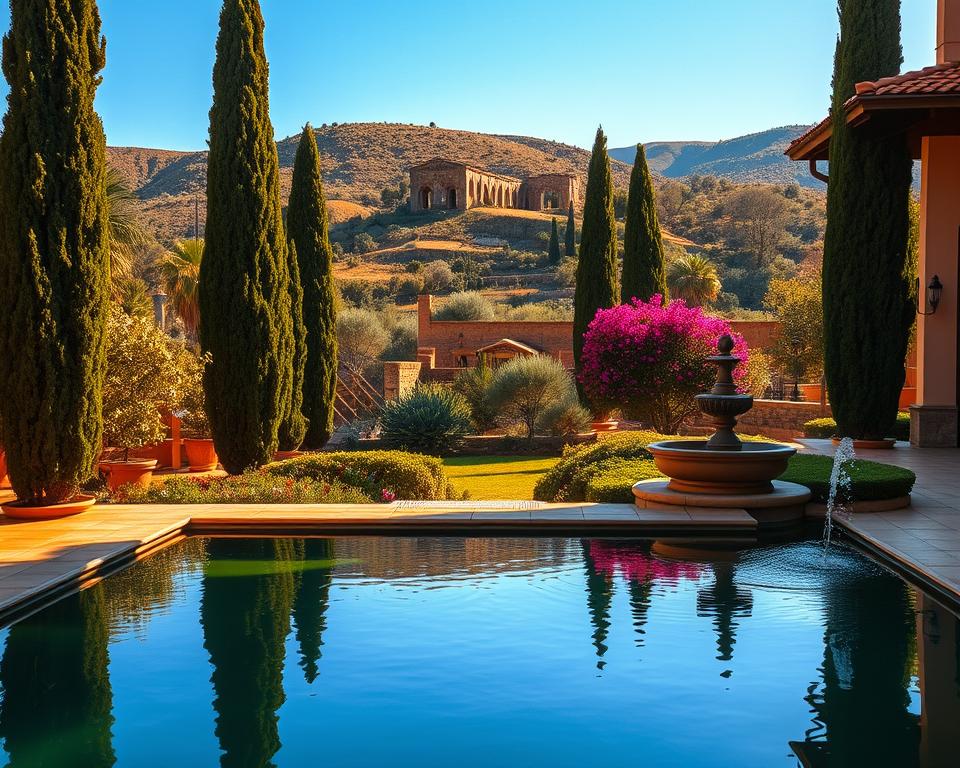
The soothing sound of water is a hallmark of Mediterranean garden design, achieved through the incorporation of various water features. These elements not only add visual interest but also contribute to a serene ambiance, making your garden a perfect retreat.
Simple Fountain Designs
Fountains are a popular choice for Mediterranean gardens, offering both aesthetic appeal and the calming sound of running water. When selecting a fountain, consider the style and scale that will complement your garden.
Wall-Mounted and Freestanding Options
Wall-mounted fountains are ideal for smaller gardens, as they save space while still providing the desired water feature. Freestanding fountains, on the other hand, can become a focal point in larger gardens.
DIY Mediterranean Water Features
Creating your own water feature can be a rewarding project. Consider using natural materials like stone or terracotta pots to create a unique and authentic Mediterranean-style fountain.
Water Conservation Approaches
Incorporating water features into your Mediterranean garden doesn’t have to mean excessive water usage. There are several approaches to conserving water while still enjoying the benefits of a water feature.
Rainwater Harvesting Systems
Implementing a rainwater harvesting system can significantly reduce your water consumption. This involves collecting and storing rainwater for use in your garden, including your water features.
Low-Water Garden Management
Adopting low-water garden management practices, such as using drought-tolerant plants and efficient irrigation systems, can help minimize water waste. This approach ensures your garden remains beautiful while conserving this precious resource.
| Water Feature Type | Water Usage | Maintenance Level |
|---|---|---|
| Wall-Mounted Fountain | Low | Easy |
| Freestanding Fountain | Moderate | Moderate |
| DIY Fountain | Variable | Variable |
By incorporating water features into your Mediterranean garden and adopting water conservation practices, you can create a beautiful and sustainable outdoor space.
Garden Structures and Shade Solutions
When designing a Mediterranean garden, incorporating appropriate garden structures is crucial for both functionality and aesthetic appeal. Garden structures not only provide shade but also contribute to the overall character of the garden.
Pergolas and Covered Seating Areas
Pergolas are a staple in Mediterranean gardens, offering a shaded area for relaxation and entertainment. They can be constructed using various materials, including wood and metal.
Building and Planting Pergolas
When building a pergola, consider the material and design that will complement your garden’s style. Climbing plants such as wisteria or jasmine are ideal for covering pergolas, providing shade and a fragrant ambiance.
Climbing Plants for Shade and Structure
Climbing plants are essential for pergolas, as they provide the necessary shade and add to the garden’s beauty. Choose plants that thrive in your local climate and require minimal maintenance.

Mediterranean-Style Garden Buildings
In addition to pergolas, Mediterranean-style garden buildings such as garden rooms and summerhouses can enhance the functionality and charm of your garden.
Garden Rooms and Summerhouses
Garden rooms and summerhouses offer a more substantial structure for your garden, providing a sheltered space for relaxation or entertainment. They can be designed to reflect the Mediterranean style, with features such as terracotta tiles and rustic finishes.
Creating Authentic Finishes
To achieve an authentic Mediterranean look, incorporate traditional materials and design elements into your garden buildings. This might include using natural stone, terracotta, and wood.
Outdoor Living Spaces: The Mediterranean Way
To truly capture the Mediterranean way of outdoor living, you need to focus on creating inviting spaces that encourage relaxation and social interaction. The Mediterranean lifestyle is renowned for its emphasis on enjoying the outdoors, whether it’s dining alfresco or simply relaxing in a beautifully designed garden.
Creating Alfresco Dining Areas
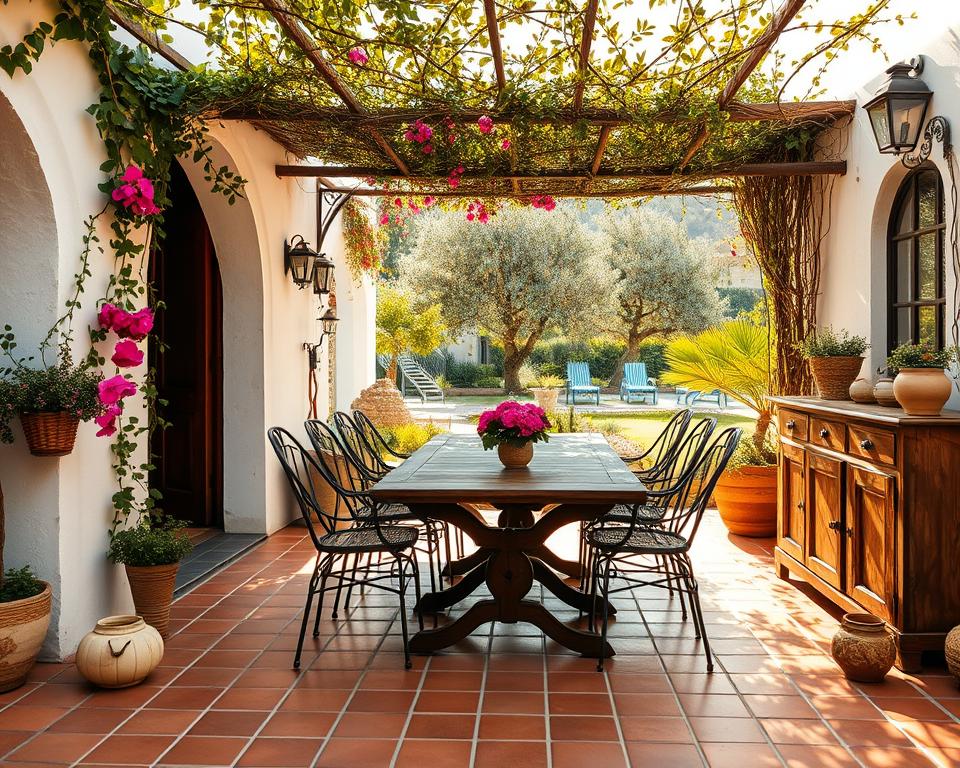
Alfresco dining is a hallmark of Mediterranean outdoor living. To create an inviting alfresco dining area, you need to consider both the practical aspects and the aesthetic appeal.
Practical Surface Choices
Choose a surface that is durable and can withstand various weather conditions. Options include natural stone, such as limestone or travertine, which are not only durable but also add a touch of elegance to your outdoor space.
Weather-Proofing Your Dining Space
To ensure your alfresco dining area remains usable throughout the year, consider incorporating weather-proofing elements such as retractable awnings or pergolas with shade sails. These not only provide shade but also protect against unexpected rain showers.
Comfortable Seating and Relaxation Zones
Beyond dining, creating comfortable seating and relaxation zones is crucial for a well-rounded outdoor living space. The key is to select furniture that is both stylish and comfortable.
Furniture Styles and Materials
Mediterranean furniture often features wrought iron or wooden pieces with intricate designs. Opt for comfortable cushions and throws in natural fabrics to add warmth and texture to your seating areas.
Creating Intimate Garden Rooms
To create intimate garden rooms, use a combination of planting, furniture arrangement, and structural elements like pergolas or trellises to define separate areas within your garden. This will help create a sense of seclusion and tranquility.
By focusing on these elements, you can create an outdoor living space that not only reflects the beauty of the Mediterranean style but also provides a serene and inviting area for relaxation and entertainment.
Container Gardening Mediterranean Style
Container gardening is a versatile and rewarding way to bring the Mediterranean style into your UK garden. By selecting the right containers and plants, you can create a beautiful and thriving outdoor space.
Terracotta Pots and Planting Combinations
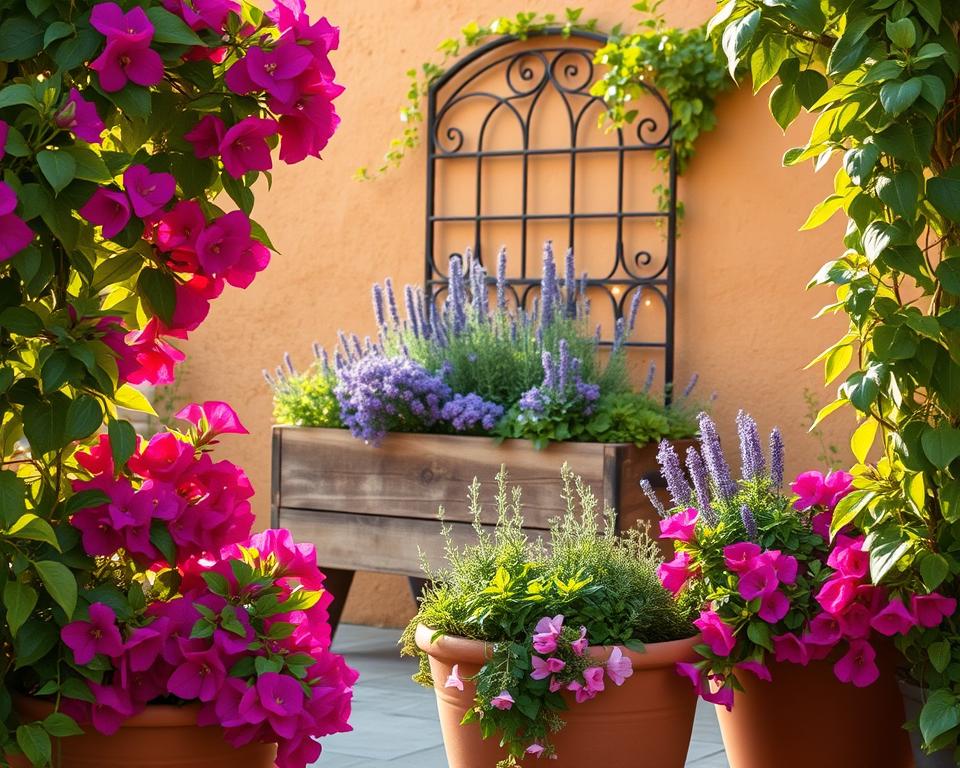
Terracotta pots are a classic choice for Mediterranean container gardening. They offer a traditional look and can help to create a warm, sunny feel in your garden.
Traditional Arrangements and Groupings
To achieve a traditional Mediterranean look, consider grouping terracotta pots together. You can create a visually appealing arrangement by combining pots of different sizes.
- Use a large terracotta pot as the centrepiece.
- Surround it with smaller pots containing complementary plants.
- Consider adding some ornamental grasses or flowering plants.
Frost-Resistant Alternatives
If you live in an area prone to frost, consider using frost-resistant alternatives to terracotta pots. Options include:
- Plastic or resin pots that mimic the look of terracotta.
- Stone or concrete containers that can withstand frost.
Maintaining Container Plants in UK Conditions
To keep your container plants thriving in the UK climate, follow these maintenance tips.
Winter Protection Strategies
Protect your container plants from harsh winter conditions by:
- Moving pots to a sheltered location.
- Using insulation or bubble wrap to protect the roots.
- Reducing watering during the winter months.
Watering and Feeding Regimes
Ensure your container plants receive the right amount of water and nutrients. Use a well-draining potting mix and fertilize regularly during the growing season.
Lighting Your Mediterranean Garden
Creating the perfect ambiance in your Mediterranean garden requires thoughtful lighting design. As the day transitions into night, the right lighting can transform your outdoor space into a warm and inviting haven.
Creating Evening Ambiance
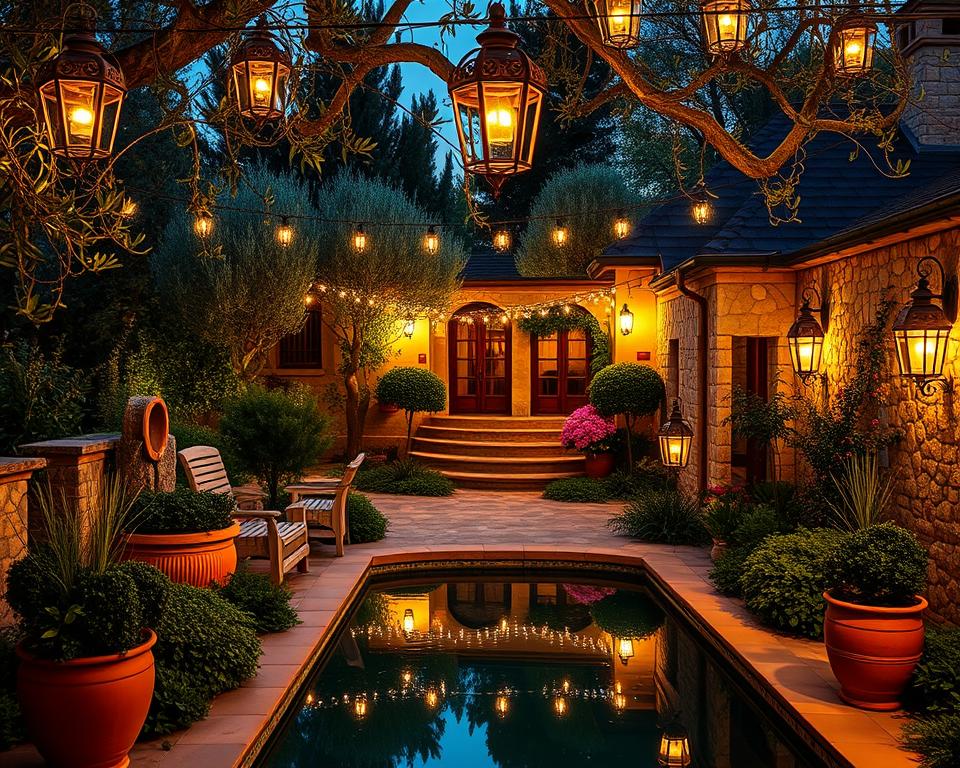
To create a captivating evening ambiance, consider using string lights or lanterns. These not only add warmth but also bring a festive feel to your garden.
String Lights and Lanterns
String lights can be draped across pergolas or along pathways, creating a magical atmosphere. Lanterns, on the other hand, can be placed on tables or hung from trees, adding a touch of elegance.
Highlighting Architectural Features
Use spotlights to highlight the architectural features of your garden, such as terracotta pots, stone walls, or water features. This creates depth and visual interest.
Practical Lighting Solutions
In addition to ambiance, lighting should also serve practical purposes, such as illuminating pathways and steps for safety.
Solar Options for Sustainability
Opting for solar-powered lights is not only eco-friendly but also cost-effective. They charge during the day and light up your garden at night.
Path and Step Lighting for Safety
Ensure that your garden paths and steps are well-lit to prevent accidents. Solar-powered step lights or low-voltage pathway lights are excellent options.
| Lighting Type | Purpose | Benefits |
|---|---|---|
| String Lights | Ambiance | Creates a festive atmosphere |
| Solar-Powered Lights | Practicality & Sustainability | Eco-friendly, cost-effective |
| Spotlights | Highlighting Features | Creates depth and visual interest |
As Nigel Dunnett, a renowned garden designer, once said: “Lighting can completely change the character of a garden, making it a different place at night.”
“The right lighting can transform a garden into an evening paradise.”
Seasonal Maintenance for Mediterranean Gardens
To keep your Mediterranean garden thriving, it’s essential to understand the seasonal maintenance tasks required. A well-maintained garden not only enhances the beauty of your outdoor space but also ensures the longevity of your plants and structures.
Spring and Summer Care
During spring and summer, your Mediterranean garden requires specific care to flourish. This includes:
- Regular watering, taking care not to overwater
- Fertilizing plants with a balanced fertilizer
- Pruning and deadheading to promote healthy growth
Pruning and Deadheading Schedules
Pruning and deadheading are crucial during the growing season. Prune plants in late spring to maintain shape and encourage new growth. Deadheading should be done regularly to promote continuous flowering.
Drought Management Techniques
Although Mediterranean plants are drought-tolerant, they still require adequate moisture during prolonged dry spells. Implement drought management techniques such as mulching to retain soil moisture.
Autumn and Winter Protection
As autumn and winter approach, your Mediterranean garden needs protection from colder temperatures and potential frost. This involves:
- Preparing tender plants for the cold season
- Performing structural maintenance tasks
Preparing Tender Plants for Cold
Bring tender plants under cover or protect them with frost cloth to safeguard against frost damage. Consider relocating potted plants to a sheltered location.
Structural Maintenance Tasks
Inspect garden structures for damage and perform necessary repairs. Clean and clear debris from pathways and around plants to prevent disease and damage.
Pruning and Plant Management
Effective pruning and plant management are key to maintaining the health and appearance of your Mediterranean garden. This includes:
- Using specific pruning techniques for different Mediterranean plants
- Rejuvenating mature plants to maintain their vigor
Specific Techniques for Mediterranean Plants
Different plants require different pruning techniques. For example, olive trees benefit from annual pruning to maintain their shape and promote fruiting.
Rejuvenation Methods for Mature Plants
For mature plants that have become overgrown, consider rejuvenation pruning. This involves cutting back the plant significantly to encourage new growth.
Common Challenges and Solutions
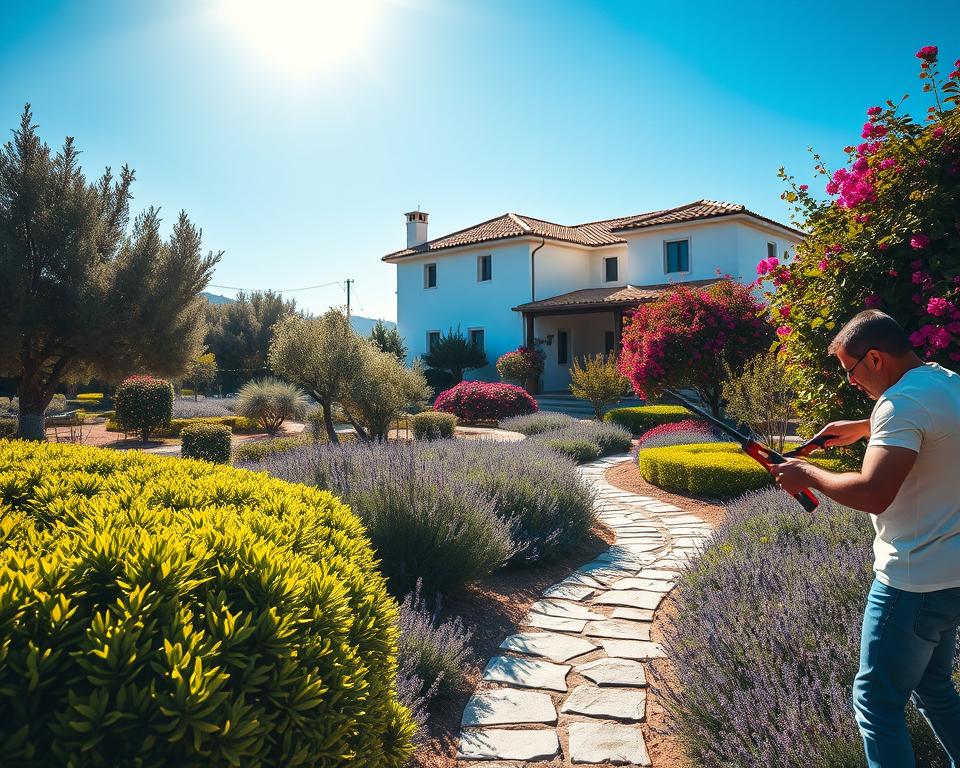
The UK’s temperate maritime climate presents several obstacles for those looking to create a Mediterranean-style garden. While the aesthetic of a Mediterranean garden is highly desirable, the local weather conditions can pose significant challenges.
Dealing with UK Rainfall and Humidity
One of the primary challenges is managing the UK’s rainfall and humidity. Mediterranean plants are adapted to dry conditions, so excessive moisture can be detrimental.
Drainage Solutions for Wet Periods
Improving drainage is crucial. You can achieve this by adding organic matter like compost to the soil, which helps to absorb excess water.
Plant Selection for Humid Conditions
Choosing plants that are more tolerant of humidity, such as Phlomis or Cistus, can also help mitigate the effects of wet weather.
Pest and Disease Management
Pests and diseases are another significant challenge. The UK’s cooler and wetter climate can lead to issues like slugs, snails, and fungal infections.
Common Issues in UK Mediterranean Gardens
Regularly inspect your garden for signs of pests or disease. Common issues include aphids, spider mites, and root rot.
Organic Control Methods
Using organic control methods, such as introducing beneficial insects or applying neem oil, can help manage these problems without harming the environment.
Winter Protection Strategies
Protecting your Mediterranean garden from winter damage is vital. Frost and prolonged cold can kill plants that are not hardy enough.
Fleece and Mulching Techniques
Using fleece to cover sensitive plants and mulching around the base can provide insulation against cold temperatures.
Temporary Structures for Tender Plants
For very tender plants, consider creating temporary structures to shield them from harsh winter conditions.
Conclusion
You now have a comprehensive guide to designing a Mediterranean garden in the UK. By incorporating key elements such as drought-tolerant plants, terracotta pots, and carefully planned hardscaping, you can create a serene and inviting outdoor space.
A Mediterranean garden design summary highlights the importance of adapting to the UK climate while maintaining the essence of Mediterranean style. This involves selecting the right plants, preparing the soil, and incorporating structural components that reflect the region’s aesthetic.
To enhance your UK gardening experience, consider implementing UK gardening tips such as using gravel or stone features to improve drainage and creating microclimates to protect sensitive plants.
By following these guidelines and tips, you can transform your garden into a beautiful Mediterranean oasis, perfect for relaxation and entertainment. Start planning your dream garden today and enjoy the benefits of a well-designed outdoor space.
FAQ
What are the key characteristics of a Mediterranean garden?
Mediterranean gardens are known for their drought-resistant planting, architectural elements, and structural components, often incorporating terracotta, stone, and gravel.
How do I adapt Mediterranean garden concepts to the UK climate?
To adapt Mediterranean garden concepts to the UK climate, focus on creating microclimates, using drought-tolerant plants, and incorporating hard landscaping features that retain heat and manage rainfall.
What plants are suitable for a Mediterranean garden in the UK?
Suitable plants for a Mediterranean garden in the UK include drought-tolerant perennials like lavender, rosemary, and sage, as well as Mediterranean herbs, ornamental grasses, and structural plants like phormiums and cordylines.
How do I prepare the soil for Mediterranean plants?
To prepare the soil for Mediterranean plants, test and analyse your soil, adjust the pH if necessary, and improve drainage by adding grit and sand or creating raised beds.
What are the best trees and shrubs for a Mediterranean garden?
Olive trees, citrus, and evergreen structural shrubs like bay, rosemary, and cistus are well-suited to Mediterranean gardens, providing structure, shade, and a Mediterranean feel.
How can I create a Mediterranean-style hard landscaping?
To create a Mediterranean-style hard landscaping, use terracotta, stone, and gravel for paving and pathways, and incorporate dry stone and rendered finishes for walls and terracing.
What are the benefits of using containers in a Mediterranean garden?
Containers allow for greater flexibility and control over soil conditions, enabling you to grow a wider range of Mediterranean plants, including tender species, in the UK climate.
How do I maintain my Mediterranean garden throughout the year?
To maintain your Mediterranean garden, perform seasonal tasks like pruning, deadheading, and protecting tender plants from frost, and implement drought management techniques during dry periods.
What are the common challenges faced by Mediterranean gardeners in the UK?
Common challenges include dealing with excessive rainfall and humidity, managing pests and diseases, and protecting plants from winter damage, all of which can be addressed with the right strategies and techniques.
How can I create a beautiful and functional outdoor living space in a Mediterranean style?
To create a Mediterranean-style outdoor living space, incorporate alfresco dining areas, comfortable seating zones, and garden structures like pergolas, using materials and furniture that reflect the Mediterranean aesthetic.