Effective Strategies for Heating the Greenhouse
This article sets out clear, practical approaches for heating the greenhouse across the varied UK climate. It is written for hobby gardeners with small glasshouses, allotment holders and commercial propagators who want reliable greenhouse heating strategies that balance plant health, energy use and carbon impact.
We cover technical heating systems such as electric heaters, gas and propane units, hot water (hydronic) setups and underfloor solutions, alongside insulation and retention measures, smart controls and renewable options. The guidance draws on UK Government building and gas safety guidance, Energy Saving Trust advice, Royal Horticultural Society recommendations on greenhouse temperatures, and industry practice from Honeywell, Mitsubishi and Daikin.
The focus is improving plant growth through sensible greenhouse temperature control, reducing energy costs and lowering carbon footprint for UK greenhouse heating. Expect actionable comparisons, regulatory pointers on gas and electrical safety, maintenance schedules and seasonal timing to match plant needs and tariffs.
Inhaltsverzeichnis
Key Takeaways
- Practical strategies will help maintain steady greenhouse temperature control while cutting energy waste.
- Choose systems—electric, gas, hydronic or underfloor—based on greenhouse size and crop needs.
- Combine good insulation, thermal mass and smart controls to reduce running costs.
- Follow UK safety guidance for gas and electrical installations and keep regular maintenance records.
- Renewable options like heat pumps and solar can lower carbon impact for long‑term savings.
Understanding the importance of greenhouse heating
https://www.youtube.com/watch?v=m0tqV6Yw3i0
Controlled warmth shapes the greenhouse microclimate and sets the stage for crop success. Temperature alters germination rates, photosynthesis efficiency, respiration and the timing of flowering. Growers who match heating to plant needs see stronger growth, steadier yields and fewer physiological disorders.
How temperature affects plant growth and development
Temperature drives metabolic pace. Cooler conditions slow germination and leaf expansion. Excessive heat raises respiration, reduces vigour and can trigger bolting in salads or blossom drop in fruiting crops.
Flowering and fruit set respond to thermal cues. Many crops require specific day and night differentials to form flowers and set fruit well. Warmer, humid air encourages pests and fungal diseases such as Botrytis, so heating must pair with ventilation and humidity control.
Typical temperature ranges for common greenhouse crops
Seedlings and propagation thrive at 18–24°C by day and 15–18°C at night. Leafy salads generally prefer 12–20°C to avoid bitterness and bolting. Tomatoes do best around 18–24°C daytime and 15–18°C at night. Cucumbers favour 20–24°C day with 16–18°C night minima.
Overwintering ornamentals and hardy vegetables tolerate lower minima, often 5–10°C depending on species. A modest night drop of 3–6°C benefits many crops by encouraging vigour and limiting respiration losses during darkness.
Energy costs and productivity trade-offs in UK conditions
Heating costs UK growers face rise in winter, especially in northern or exposed sites with greater heat loss. Peak and variable tariffs set by suppliers such as British Gas and SSE influence operating budgets and the viability of higher setpoints.
Marginal yield gains from warming must be weighed against incremental fuel or electricity spend. A simple cost-benefit check helps: estimate extra crop value per °C against local unit energy price. This approach clarifies whether tighter control of the greenhouse microclimate is worth the additional expenditure.
Practical planning links plant temperature requirements and greenhouse crop temperature ranges to running cost decisions. Integrating controls, insulation and sensible setpoints reduces wasted energy while keeping crops within their optimal thermal window.
Heating the Greenhouse
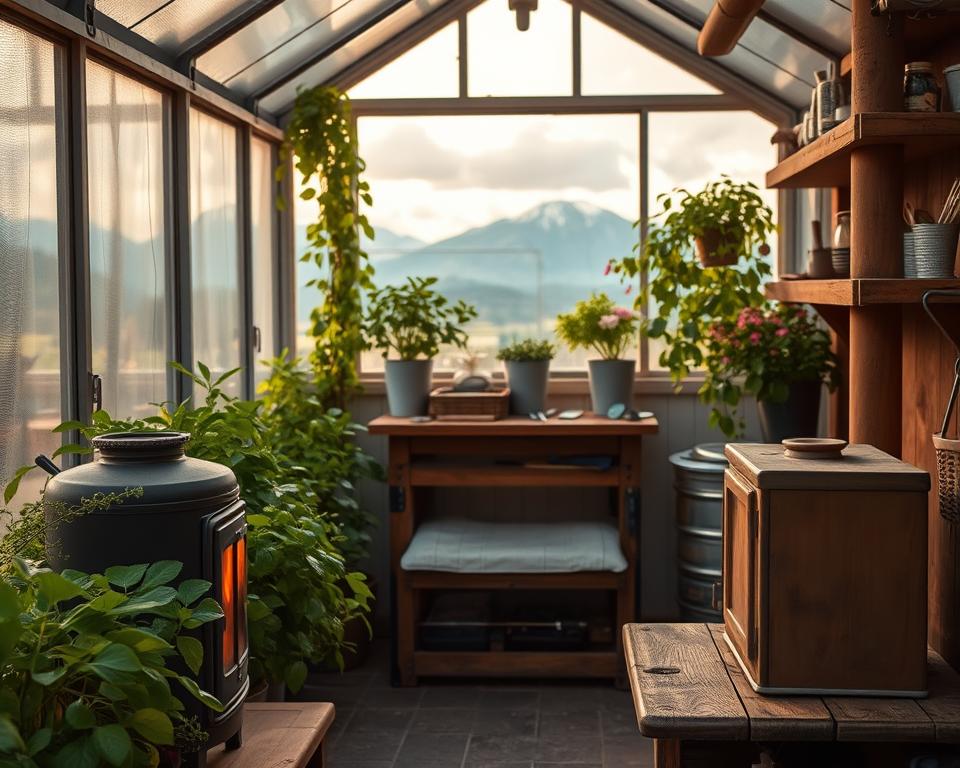
Heating the greenhouse aims to keep root and canopy temperatures within target ranges while using the least possible energy. A clear greenhouse heating overview separates active methods from passive ones and shows how hybrid systems blend both to meet plant needs and sustainability goals.
Active heating covers heaters, boilers and heat pumps. Passive approaches rely on insulation, thermal mass and careful siting. A hybrid solution might pair an air-source heat pump with water barrels to smooth night-time dips. This greenhouse heating overview helps growers choose an approach that suits crop type and budget.
Choice depends on greenhouse size and construction: glass, twin-wall polycarbonate or a polytunnel each change heat loss rates. Crop sensitivity is important. Tomatoes, lettuce and seedlings demand different set points. Local planning rules, fuel availability and sustainability targets will shape options for how to heat a greenhouse.
Heat load calculation is central to system sizing. It factors surface area, insulation R-value, the desired internal temperature against outside lows, infiltration rates and internal gains from lights and people. A correct calculation reduces oversizing, saves capital and cuts running costs.
Any heating plan must tie into ventilation, shading and humidity control to avoid plant stress and disease. Scheduling, zoning and thermostatic control improve efficiency and plant health when integrated across systems.
For gas or hydronic installations consult qualified professionals. Look to Gas Safe Register for gas work and NICEIC or SEI for electrical fittings. Competent installers ensure compliance, safety and optimal performance when planning how to heat a greenhouse.
Types of greenhouse heating systems
Choosing the right heating system shapes plant health, running costs and safety on site. This section outlines the common options gardeners and growers use, with clear notes on suitability, controls and practical issues for UK conditions.
Electric heaters: advantages and limitations
Electric convector and fan-assisted heaters give fast, even air heating for small hobby houses. Infrared panels provide radiant warmth that plants and benches absorb, while electric heat mats are ideal for propagation and seed trays.
Benefits include clean operation, simple installation and rapid control with Honeywell or Drayton thermostats and timers. Zone control lets growers target staging benches or propagation areas with minimal fuss.
Limitations come from higher running costs on standard electric tariffs unless paired with rooftop PV. Some installs need heavy-duty wiring and RCD protection to meet UK electrical regs. For larger spaces, electric systems can be expensive to run.
Gas and propane heaters: efficiency and safety considerations
Natural gas and LPG/propane convector heaters deliver robust baseline heat for larger structures. Options include direct-flue convectors, flued catalytic units and purpose-built greenhouse models that trade off simplicity against the need for venting.
Fuel cost per kWh is often lower than electricity in many UK scenarios, making gas greenhouse heaters economical for continuous loads. Efficiency depends on correct installation and limiting ventilation losses.
Safety matters. Combustion products must be vented and CO detectors fitted. Only Gas Safe registered engineers should handle natural gas connections. For LPG cylinders follow supplier guidance and COSHH storage rules. These systems suit growers who need steady, large-area heating.
Hot water (hydronic) systems: installation and control
Hydronic greenhouse heating uses boilers—gas, oil or biomass—to circulate hot water to radiators, bench coils and underbench pipework. A pump, valves and thermostats form the control backbone.
Installation has higher upfront cost because of pipework, pumps and possible flue work. Professional design and install reduce risk and improve efficiency. Hydronic systems can integrate with combi boilers or biomass sources for lower-carbon operation.
Controls such as thermostatic radiator valves, zone valves and programmable room thermostats help tailor temperatures to propagating areas and staging benches. The result is even heat distribution and quiet running, suited to medium and large greenhouses.
Underfloor heating: benefits for root-zone warmth
Underfloor greenhouse heating comes as electric mats or wet hydronic systems with pipes embedded in screed or substrate. The key aim is to warm the root zone while allowing cooler air temperatures.
Benefits include consistent soil temperatures that support vigorous root growth and reduced plant stress. Growers can often set lower air temperatures and still maintain healthy rooting conditions.
Wet underfloor systems have greater installation complexity and cost. Heat lag means slower response compared with direct air heaters, so they suit stable schedules rather than rapid on/off demands. Care is needed to avoid overheating pots or heat-sensitive species.
Insulation and retention strategies to reduce heat loss
Keeping warmth in a greenhouse saves fuel and steadies temperatures for plants. Good greenhouse insulation, careful glazing choices and sensible draught proofing cut heat loss and lower running costs. Small changes often yield big benefits during cooler months.
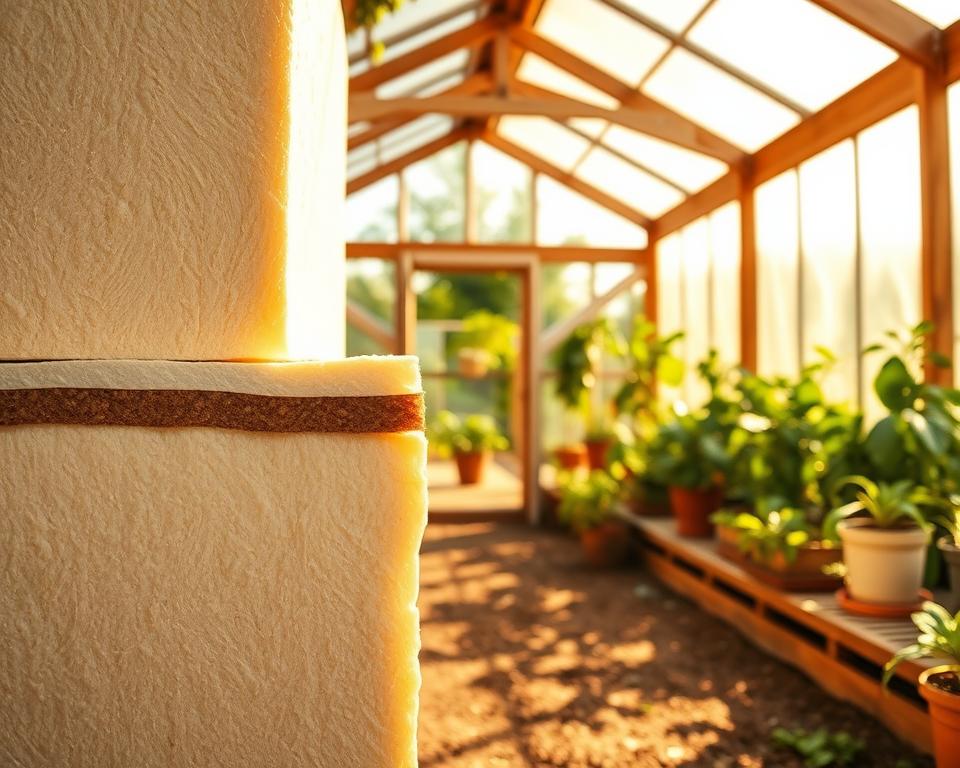
Glazing choice affects light and heat. Single glass is clear but has poor U-values. Twin-wall polycarbonate from Palram offers better insulation with a small drop in light transmission. Low-iron double glazing from Pilkington gives high light clarity and strong thermal performance for a double glazing greenhouse. Thermal bubble film such as VIVOSUN or GrowShield-style products makes for a cheap retrofit; the trapped air pockets improve insulation while keeping installation simple.
Choose glazing to match crop needs. Winter crops benefit from high-transmittance glass or low-iron double glazing greenhouse panels. If budget is tight, a thermal film greenhouse wrap can be fitted on the inside as a seasonal measure to reduce night losses without replacing existing glass.
Sealing draughts reduces cold air infiltration and eases the load on heaters. Use silicone sealant for gaps around frames and weatherstripping on doors. Fit draught-proof seals to vents and louvers where possible. For stubborn gaps, compressible foam strips work well and are quick to fit.
Internal thermal curtains or night screens cut radiant loss from glazing. Reflective insulating quilts give extra protection in severe climates. Operate curtains automatically or close them at dusk and open them on bright days to capture solar gain.
Thermal mass moderates temperature swings by storing heat. Water barrels are excellent because water holds more heat per litre than most materials. A 200-litre barrel offers meaningful buffering for a small greenhouse. Paint barrels dark and place them along the north side to absorb and release warmth without shading plants.
Masonry or concrete walls integrated into the perimeter act as slow-release heaters. Stone or brick positioned to receive daytime sun will discharge heat through the night. Ensure mass does not block light paths or access; low-profile installations work best.
| Option | Thermal benefit | Light transmission | Typical cost | Best use |
|---|---|---|---|---|
| Single glass | Poor | Very high | Low | Classic greenhouses where budget is tight |
| Twin-wall polycarbonate (Palram) | Good | High, slight reduction | Medium | Hobby and commercial tunnels needing impact resistance |
| Low-iron double glazing (Pilkington) | Very good | Very high | High | Winter production with premium light needs |
| Thermal bubble film (VIVOSUN / GrowShield) | Moderate | Variable, can reduce light | Low | Seasonal retrofit for cost-conscious growers |
| Thermal mass (water barrels, masonry) | Night buffering | None (placement sensitive) | Low–Medium | Small greenhouses and passive heating schemes |
Practise good greenhouse draught proofing to get the most from insulation upgrades. Combine sealing, a suitable glazing choice and added thermal mass for steady temperatures and lower heating bills.
Smart controls and thermostatic management
Modern greenhouse control lets gardeners balance temperature, moisture and ventilation with precision. A well set up system reduces fuel use while keeping plants healthy. Choose controls that suit the greenhouse size and the crop’s sensitivity to change.
Programmable thermostats and timers
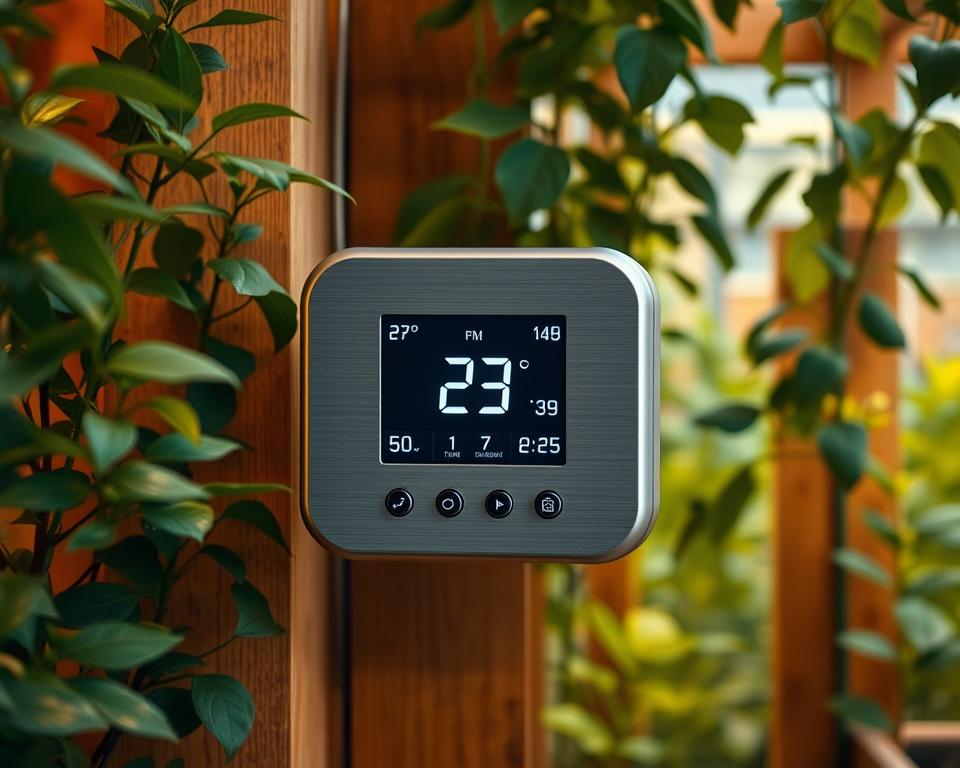
Programmable thermostats maintain setpoints by cycling heating to avoid wasted energy and short-cycling. Use distinct day and night setpoints and enable frost-protection mode for winter security. Models from Honeywell and Drayton (Stat) work well in UK domestic glasshouses, while Hive-compatible units suit households that want simple app control.
Timers help exploit off-peak tariffs when available. Size controls to the heater to prevent very frequent on/off cycles. For benches and propagators, dedicated time programmes reduce fuel use and give consistent root-zone warmth.
Remote monitoring and automation for UK gardeners
Wi-Fi thermostats and networked temperature and humidity sensors allow remote greenhouse monitoring. Brands such as Tado and Hive integrate with home heating, while horticultural systems like HortiSense or EnviroMonitor provide detailed logging and alerts tailored to growers.
Remote greenhouse monitoring helps spot faults early and lets gardeners tweak schedules from a phone. Protect access with strong passwords and keep a local manual override in case the internet fails.
Integrating humidity and ventilation controls with heating
Heating and ventilation must work together to control relative humidity. Warm air holds more moisture, so heating without extraction can raise humidity and increase disease risk. Use hygrometers and humidistats to trigger vents or louvre fans when levels climb.
Link thermostats to automatic vent openers from suppliers such as Davis or Spares2Store and set staged heating when humidity is high. For propagation benches choose controllers that coordinate misting, heating mats and extraction to keep young plants vigorous.
| Control element | Recommended UK brands | Primary benefit | Notes |
|---|---|---|---|
| Programmable thermostat | Honeywell, Drayton (Stat), Hive-compatible | Accurate setpoint control, frost protection | Use day/night schedules; avoid undersized models |
| Wi-Fi thermostat & sensors | Tado, Hive | Remote access, basic logging | Secure with strong passwords; keep manual override |
| Horticultural automation | HortiSense, EnviroMonitor | Detailed data, alarms, crop-focused control | Ideal for commercial and larger hobby setups |
| Vent and humidistat integration | Davis, Spares2Store | Humidity control greenhouse and ventilation coordination | Link to thermostats for staged responses |
| Propagation controllers | Horticultural specialist controllers | Synchronised misting, heating mats and extraction | Prevents damping-off and stabilises germination |
Renewable and low-carbon heating options
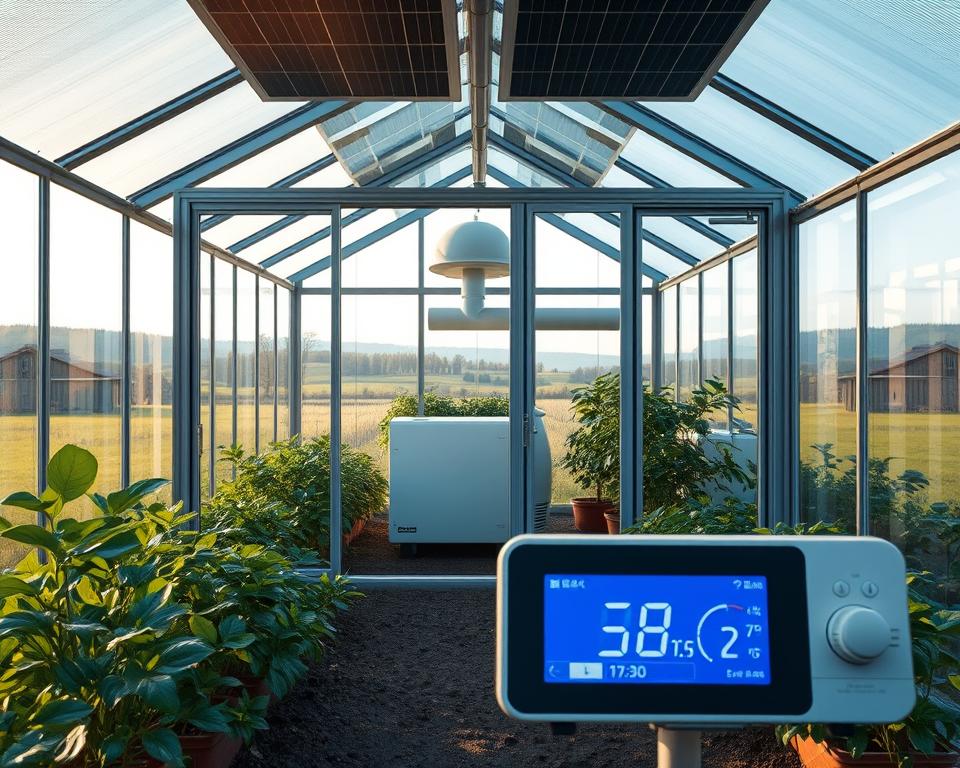
Choosing low-carbon systems can cut fuel bills and shrink a greenhouse’s carbon footprint. This section outlines viable options for gardeners and small growers in the UK, with practical notes on performance, installation and running costs.
Heat pumps: air-source and ground-source considerations
Air-source heat pumps are easier to install and tend to cost less up front. Modern units from Mitsubishi Electric, Daikin and Nibe can reach coefficients of performance (COP) of about 2.5–4 in mild conditions. Performance drops when external temperatures fall very low.
Ground-source heat pumps need larger capital and groundworks. They provide steadier output and higher seasonal efficiency. Both types can drive hydronic circuits in a heat pump greenhouse and work well with buffer tanks to smooth demand.
Solar thermal and photovoltaic systems for greenhouse use
Solar thermal panels heat water for hydronic systems or for storage in buffer tanks. Solar performance in the UK falls in winter but can reduce summer heating and preheat stored water.
Photovoltaic arrays will offset electrical demand for fans, pumps and electric heaters when paired with batteries. Orient PV to the south where possible and consider hybrid in-roof systems if roof area is limited. Export payments and battery costs affect payback.
Biomass boilers and sustainable fuel sources
Small biomass boilers burning wood pellets or logs can supply hydronic circuits and steady baseline heat. Running costs per kWh may be lower than electricity in some areas when fuel is sourced responsibly.
Biomass systems need space for fuel storage, regular ash removal and routine maintenance. Emissions and local permitting rules must be checked before installation. A correctly sized biomass greenhouse boiler suits larger plots with continuous heat demand.
Cost-effective tips for winter greenhouse heating
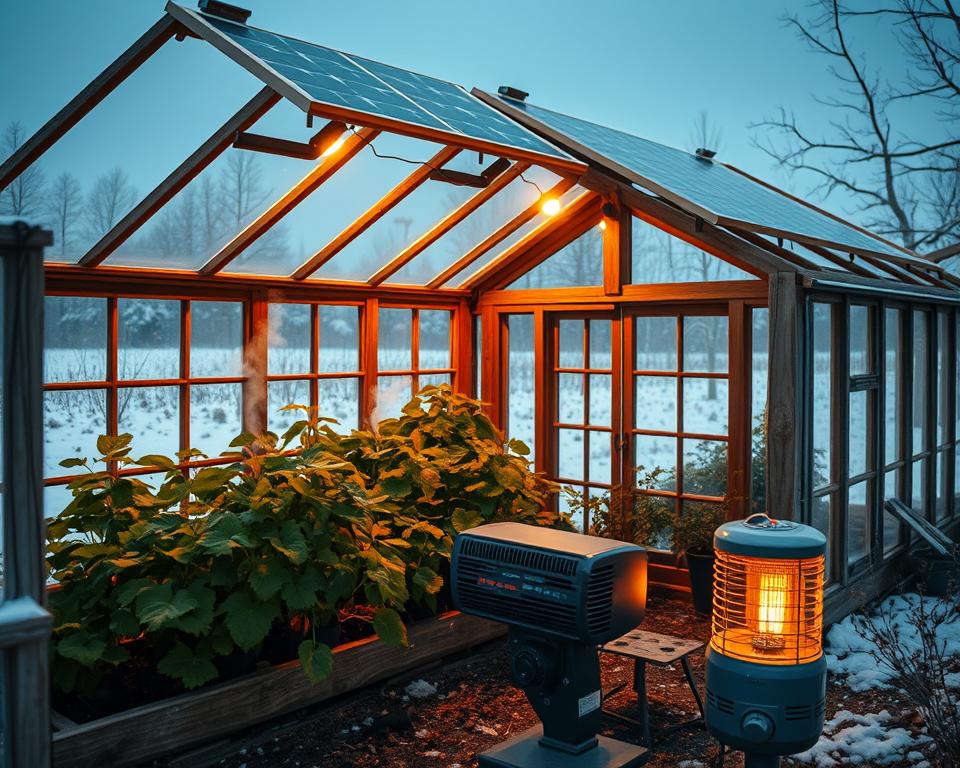
Keeping a greenhouse warm through winter need not be costly. Small changes in practice, layout and control bring big savings while protecting crops. The suggestions below focus on practical steps gardeners and growers can use to save energy greenhouse without risking plant health.
Night-time heat-saving practices
Close vents and drop thermal curtains or bubble wrap at dusk to trap warmth. Fit frost thermostats and set them to minimum safe temperatures, typically 2–5°C for hardy crops, to stop freezes while cutting fuel use.
Place water barrels or other thermal mass where they receive daytime sun. Heat stored in the mass buffers temperature drops overnight. Use mulches to reduce soil heat loss and limit door openings with small pass-through hatches to prevent warm-air escape.
Zoning to heat only active areas
Divide the greenhouse into heated and cooler zones so you only supply warmth where plants are active. Use partition screens and directed radiant heaters or heat mats for propagation benches to avoid heating the whole volume.
Install multiple temperature sensors and perform thermographic checks to identify cold spots. Create microclimates for tender plants in the warmest zones while letting hardier crops occupy cooler areas. This greenhouse zoning approach reduces runtime and fuel use.
Timing and scheduling to match plant needs and tariffs
Build a heating schedule greenhouse that favours daytime warmth when solar gain is available. On time-of-use electricity tariffs, shift heavier heating to cheaper periods and lower night-time setpoints for tolerant crops to save fuel.
Link heaters and pumps to timers or smart controls so they run during PV production when available. Combine short, higher daytime heat bursts with cooler nights for crops that tolerate diurnal swings. These winter greenhouse heating tips help reduce bills while keeping crops productive.
Safety, regulations and maintenance for heating systems
Heating systems need careful attention to keep people and plants safe. Follow clear rules for gas and electrical work, fit alarms where combustion occurs, and keep simple logs of checks. Small greenhouses and commercial glasshouses share the same basic risks, so take each step seriously.
Gas and electrical safety requirements in the UK
Use Gas Safe registered engineers for natural gas work and follow LPG supplier and HSE guidance for bottled-gas systems. Install carbon monoxide alarms near any combustion heater and site appliances so they have proper clearances to avoid burns and allow ventilation. For electrical circuits, comply with BS 7671 and fit RCD protection for outdoor greenhouse sockets. Employ competent electricians on the NICEIC or ELECSA registers for fixed wiring and external outlets.
Regular maintenance schedules to ensure efficiency
Create a simple annual plan for servicing boilers, biomass units and forced-air systems. Clean or replace filters, inspect fan heaters and elements, and check pumps, valves and thermostats. Test frost thermostats and perform a pre-winter check of pipework to reduce freeze risk. Carry out leak checks on LPG lines and confirm regulator condition at least once a year.
Record-keeping and compliance with building regulations
Keep dated logs of services, repairs, CO alarm tests and safety certificates for all appliances. Commercial operations should maintain formal maintenance schedules to meet insurer and trading standards expectations. For major installations or structural changes, consult local authority building control to confirm if planning permission or building regulation approval is required.
| Item | Recommended frequency | Who should perform it | Notes |
|---|---|---|---|
| Boiler or biomass service | Annually | Gas Safe or qualified engineer | Include flue, burner and combustion checks; record certificate |
| LPG system inspection | Annually | Supplier or competent engineer | Check hoses, regulator and leak test; replace parts as needed |
| Electric heater and fan clean | Biannually | Registered electrician or trained staff | Clean elements, test RCD and inspect cable conduits |
| Carbon monoxide alarm test | Monthly | Owner or designated staff | Record tests; replace batteries annually or as specified |
| Controls, thermostats and sensors | Seasonal | Technician or trained gardener | Calibrate devices, test frost control and verify schedules |
| Documentation and log update | After each service | Owner or manager | Store service reports, safety certificates and inspection records |
Choosing the right system for your greenhouse size and crop
Selecting heating for a greenhouse needs a clear plan. Start with a practical greenhouse heat load calculation to avoid under- or oversizing. Factor in glazing type, insulation, expected temperature difference and a modest allowance for infiltration.
Assessing heat loss and insulation
Use a simple rule: required heat (W) = area × U-value × temperature difference. Add extra for doors, vents and draughts. For accuracy consult an HVAC or horticultural heating specialist when you calculate load for large or valuable crops.
Inspect glazing, seals and thermal mass. Double glazing and thermal screens cut heat loss. Water barrels and masonry store heat and reduce peak demand. Aim for conservative sizing to cover cold snaps, but avoid big oversize that causes short cycling.
Matching system capacity to plant needs
Map crop temperature ranges to heating zones. Propagation benches benefit from cable mats or small radiant units. Fruiting tomatoes in larger houses often suit continuous hydronic or gas systems for steady warmth.
Consider a modular approach: install a base system and add spot heaters where needed. This lets you choose greenhouse heater types for specific tasks and scale up as the crop or demand grows.
Budgeting for installation, running costs and lifecycle
Plan a greenhouse heating budget that covers capital costs, installation, energy, upkeep and expected component life. Electric heaters cost less to fit but typically run at higher expense. Hydronic systems and biomass need bigger upfront investment yet can lower fuel cost per kWh over time.
Compare lifespans: electric units 10–15 years, boilers 10–20 years, heat pumps 15–25 years. Request quotes from Gas Safe-registered plumbers or MCS-registered installers for renewables to ensure compliant installation and sound warranties.
| System | Approx. capital cost | Running cost tendency | Typical lifespan | Best use |
|---|---|---|---|---|
| Electric convector or fan heater | Low | High | 10–15 years | Small hobby greenhouses, spot heating |
| Gas or propane boiler with radiators | Medium | Medium | 10–20 years | Medium to large houses needing steady heat |
| Hydronic (hot-water) system | High | Low to medium | 10–20 years | Large production houses, even root-zone warmth |
| Air-source heat pump | High | Low | 15–25 years | Low-carbon option for varied sizes |
| Biomass boiler | High | Low (with cheap fuel) | 10–20 years | Commercial operations with secure fuel supply |
Carry out a simple life-cycle cost comparison before you commit. Use greenhouse heat load calculation results to size equipment and keep the greenhouse heating budget realistic. Seek multiple qualified quotes and choose installers with relevant UK registration to protect performance and safety.
Practical case studies and seasonal schedules
Real-world examples help turn theory into action. Below are concise greenhouse case studies that cover a small glasshouse and a commercial operation. Each study links to a clear seasonal greenhouse schedule so readers can match heating choices to plant needs and UK weather patterns.
Small hobby greenhouse — low-cost solutions
A common 6ft × 8ft glasshouse growing salad leaves and seedlings benefits from simple, inexpensive upgrades. Fit insulating bubble wrap to glazing, add a propagation heat mat for trays, and use a small fan heater controlled by a thermostat for occasional frosts.
Use thermal curtains at night and group pots to form warmer microclimates. Recycled water barrels provide thermal mass and reduce temperature swings. Typical capital outlay ranges from £50 to ££500depending on equipment choice. Running costs stay low by limiting heater use and improving insulation.
Commercial setups — optimising for scale and yield
Commercial greenhouse heating tends to centre on integrated hydronic systems fed by biomass or gas boilers. Computerised climate control links heating, ventilation, CO2 enrichment and supplemental lighting to deliver consistent conditions across multiple ranges.
Investment is higher, but returns come from extended seasons, steadier yields and better crop quality. Best practice includes energy audits, heat-recovery systems, buffer tanks to smooth boiler cycles and demand-side management tied to time-of-use tariffs.
Seasonal adjustment plans for spring, autumn and winter
Spring: reduce night setpoints gradually as outdoor temperatures rise. Keep frost protection for early crops and open vents on warm days to avoid overheating.
Autumn: raise night setpoints slowly to reduce plant stress. Fit thermal curtains early and service heating before colder weather sets in.
Winter: focus on frost protection and critical zones only. Use thermal mass and close curtains nightly. Plan maintenance during mild spells and monitor humidity to limit disease risk.
Below is a sample weekly seasonal greenhouse schedule, tailored for typical UK conditions. It gives setpoints, ventilation timing and heating cycle guidance for hobby and commercial situations.
| Season | Daily night temp (°C) | Day temp (°C) | Ventilation timing | Heating cycles or strategy |
|---|---|---|---|---|
| Spring (hobby) | 6–8 | 14–18 | Open vents midday when >16°C; close overnight | Thermostat-controlled fan heater for nights; reduce use weekly |
| Spring (commercial) | 8–10 | 16–20 | Automated vents; boost ventilation on sunny days | Hydronic system with progressive setback; CO2 enrichment during lights-on |
| Autumn (hobby) | 8–10 | 14–16 | Vent short periods on warm afternoons | Increase night setpoint; use thermal curtains each night |
| Autumn (commercial) | 10–12 | 16–18 | Automated control to maintain humidity and temp balance | Buffer tanks; pre-season boiler service; staged heating |
| Winter (hobby) | 4–6 (frost protection) | 10–14 | Minimal ventilation; ventilate only to control humidity | Night curtains plus occasional fan heater; maximise thermal mass |
| Winter (commercial) | 8–10 for critical zones | 14–16 | Controlled airing during mild daylight hours | Priority heating for propagation and finishing areas; heat recovery systems in use |
Conclusion
This heating the greenhouse summary highlights that effective greenhouse heating balances plant temperature needs, energy efficiency and safety. Active heating systems work best when combined with good insulation, thermal mass such as water barrels, and smart controls to avoid waste. Practical greenhouse heating recommendations include draught-proofing, night insulation and zoning to target heat where plants need it most.
Choose a system that matches your greenhouse size and crop requirements, whether that is an electric heater for a small hobby glasshouse or a hydronic or heat-pump solution for larger spaces. Prioritise thermostatic control and regular maintenance to maintain efficiency and safety; use Gas Safe registered engineers or accredited electricians for installations and checks.
Sustainable choices pay off over the lifecycle. Consider renewables—air-source heat pumps, solar PV with electric heating, or biomass boilers—when they suit your site and budget. The UK greenhouse heating conclusion is clear: assess running costs, not just capital cost, and run small-scale trials before committing to major expenditure.
For crop-specific setpoints and practical schedules, consult horticultural resources such as the Royal Horticultural Society and seek professional advice. Implement these greenhouse heating recommendations, keep records of performance, and refine controls seasonally to achieve reliable growth with lower environmental impact.
FAQ
What temperature should I maintain in my greenhouse for seedlings and propagation?
For seedlings and propagation aim for daytime temperatures of 18–24°C and night-time minima of 15–18°C. Use propagation heat mats or targeted radiant heaters to warm the root zone without overheating the canopy. Thermostatic control and a small variance between day and night will encourage strong root and shoot development.
How can I reduce heating costs in a UK greenhouse while preserving crop quality?
Combine good insulation (thermal bubble film or twin-wall polycarbonate), draught-proofing and internal thermal curtains with targeted heating such as under-bench warmers or heat mats. Employ zoning to heat only active areas, use timers to exploit off‑peak tariffs when available, and add thermal mass (water barrels) to buffer night cooling. Often modest insulation measures yield large savings versus raising setpoints.
Which heating system is best for a small hobby glasshouse?
For small glasshouses electric fan heaters, electric radiant panels or propagation heat mats are usually best. They require low capital outlay, are easy to install and provide rapid control. Pair them with a reliable thermostat (Honeywell or Drayton) and ensure domestic wiring meets RCD protection and BS 7671 guidance.
Are gas or LPG heaters safe to use in greenhouses?
Gas and LPG heaters can be efficient for larger spaces but must be installed and serviced by Gas Safe registered engineers. Ensure correct flueing or use catalytic units designed for greenhouse use, fit carbon monoxide detectors, and provide adequate ventilation to avoid combustion-product build-up. Follow supplier guidance for cylinder storage and COSHH where relevant.
What are the benefits of hydronic (hot water) systems versus electric heating?
Hydronic systems give even heat distribution, lower noise and good control for medium to large greenhouses. They suit integration with boilers, biomass or heat pumps and deliver efficient root and bench heating. Upfront cost and installation complexity are higher than electric systems, so they are best where continuous baseline heat is required and lifecycle costs justify the capital.
Can heat pumps work effectively for greenhouse heating in the UK?
Yes. Modern air-source heat pumps (ASHP) can be effective for moderate greenhouse loads, achieving COPs typically between 2.5–4. Ground-source heat pumps (GSHP) offer higher efficiency but need greater capital and groundwork. Pair heat pumps with buffer tanks and hydronic distribution to smooth operation and maintain stable root-zone temperatures.
How does glazing choice affect heating demand and crop light levels?
Single glass has the poorest insulation and highest heat loss. Twin-wall polycarbonate and double glazing reduce U‑values and lower heating demand but can slightly reduce light transmission. Thermal bubble film is a low-cost retrofit that improves insulation with minimal disruption. Choose glazing that balances winter light requirements and insulation needs for your crops.
What role does thermal mass play and how much do I need?
Thermal mass stores daytime heat and releases it at night, smoothing temperature dips and reducing heating runtime. Water barrels are economical—one 200-litre barrel provides useful buffering for small greenhouses. Position barrels to avoid shading and paint them dark to maximise heat absorption. Add masonry or stone where possible for larger stores.
How should I set thermostats and controls to limit humidity-related disease?
Use thermostats with day/night setpoints and link humidistats or vents so heating and ventilation operate together. Avoid heating without ventilation because warm air holds more moisture and raises fungal risk. Program staged heating and integrate automatic vent openers or extraction fans to manage humidity peaks during warm periods.
Is underfloor heating worthwhile for greenhouse root-zone warmth?
Underfloor heating—electric mats for small areas or wet hydronic circuits for larger installs—provides consistent root-zone warmth and can permit lower air temperatures. Wet systems have higher installation complexity and slower response, but they are efficient for propagation benches and long-term culture beds. Choose based on response time and budget.
What safety and regulatory checks are required for greenhouse heating installations in the UK?
Natural gas work must be carried out by Gas Safe registered engineers; electrical work should follow BS 7671 and be installed by NICEIC/ELECSA-registered electricians. Fit carbon monoxide detectors where combustion appliances are present, keep records of annual servicing, and consult local building control when adding substantial plant or structures.
How can I use solar PV or thermal to reduce heating bills?
PV can offset electric heating when generation and storage (batteries) are available; align heater operation with peak PV production or use load-shifting. Solar thermal can preheat buffer tanks or water for hydronic systems but has limited winter output in the UK. Both approaches reduce grid dependence when sized and managed correctly.
What maintenance should I perform ahead of the heating season?
Service boilers and biomass units annually, clean and test electric heaters and fans, inspect LPG systems for leaks and regulator condition, test thermostats, frost thermostats and CO alarms, bleed hydronic circuits and check insulation, pipework and seals. Keep maintenance logs to satisfy insurers and to spot inefficiencies early.
How do I size heating capacity for my greenhouse?
Perform a heat load estimate using area, glazing U‑values, desired internal minus external design temperature and infiltration rate (basic formula: heat required ≈ area × U‑value × temperature difference). Factor in internal gains and allow for cold snaps. For accurate sizing consult an HVAC or horticultural heating specialist to avoid oversizing and short-cycling.
What low-cost steps give the best winter protection for hardy crops?
Night thermal curtains or bubble wrap, draught-sealing, water-barrel thermal mass, grouping plants to create microclimates and targeted heat mats for vulnerable trays. Set frost thermostats to 2–5°C for hardy crops and close vents at night. These measures are inexpensive and often more effective than simply increasing overall heating setpoints.
Are biomass boilers practical for greenhouse heating and what are the drawbacks?
Biomass boilers using sustainably sourced pellets can lower fuel costs for larger installations and provide good hydronic heat. Drawbacks include space for fuel storage, ash removal, maintenance, emissions considerations and potential permitting. They are best where consistent, long-duration heat is needed and supply logistics are managed.
How can I monitor and manage heating remotely?
Use Wi‑Fi thermostats and sensor networks from brands such as Honeywell, Tado or specialist horticultural systems like HortiSense. Remote monitoring enables data logging, alerts and schedule adjustments. Maintain local manual overrides and secure network credentials to ensure continued operation during outages.
What are practical seasonal schedule tips for spring, autumn and winter?
Spring—gradually reduce night setpoints and increase ventilation during warm days; protect against late frost. Autumn—raise night setpoints early, fit thermal curtains and service systems. Winter—prioritise frost protection and critical zones, use thermal mass and curtains nightly, and monitor humidity to prevent disease. Tailor timings to crop tolerances and local weather forecasts.
Where can I find authoritative guidance on greenhouse temperatures and safety in the UK?
Consult the Royal Horticultural Society for crop-specific temperature guidance, Energy Saving Trust and Ofgem for energy and tariff advice, and UK Government and HSE publications for gas and electrical safety. For installers look to the Gas Safe Register, NICEIC and MCS for accredited professionals and compliant installations.