Guide on How to Impregnate a Wooden Garden House Properly
Protecting your wooden garden house from the unpredictable British weather requires expert timber treatment. Wood preservative is crucial for garden house protection, safeguarding your investment against moisture, decay, and environmental challenges.
Wooden structures in the United Kingdom face constant threats from rainfall, humidity, and temperature variations. Your garden house needs robust protection to maintain its structural integrity and aesthetic appeal. Professional timber treatment ensures your wooden structure remains durable and resistant to potential damage.
This comprehensive guide will walk you through the essential steps of wood preservative application, helping you protect your garden house effectively. You’ll learn professional techniques that extend the lifespan of your wooden structure and prevent costly repairs.
Inhaltsverzeichnis
Key Takeaways
- Timber treatment protects against moisture and decay
- Professional wood preservative prevents structural damage
- Regular maintenance extends garden house lifespan
- Proper impregnation techniques prevent costly repairs
- Understanding wood protection saves long-term investment
Understanding the Importance of Wood Impregnation for Garden Structures
Protecting your wooden garden house is more than a simple maintenance task—it’s a critical investment in preserving your outdoor structure’s longevity and structural integrity. Timber preservation goes beyond cosmetic concerns, addressing fundamental challenges that wooden structures face in the unpredictable British climate.
What Wood Impregnation Means
Wood impregnation is a sophisticated protection method that penetrates deep into timber fibres. Unlike surface treatments that merely coat the wood, impregnation introduces protective substances directly into the cellular structure. This process creates a robust defence mechanism against multiple environmental threats.
- Penetrates wood’s internal structure
- Creates long-lasting moisture protection
- Prevents fungal growth from within
- Strengthens timber’s natural resistance
Why Your Garden House Needs Protection
Your garden house constantly battles challenging environmental conditions. Moisture protection becomes crucial in the UK’s damp climate, where wood can quickly absorb water. Rot prevention is not just recommended—it’s essential for maintaining structural stability and aesthetic appeal.
The Consequences of Neglecting Wood Treatment
Untreated wood suffers rapid deterioration. Without proper fungal protection, your garden house becomes vulnerable to decay, potentially compromising its structural integrity within just two to three years. The financial implications of replacement far outweigh the cost of preventative treatment.
Investing in timber preservation today saves significant expenses tomorrow.
By understanding these critical aspects of wood treatment, you’ll be equipped to protect your garden house effectively against the UK’s challenging environmental conditions.
Choosing the Right Impregnation Products for Your Wooden Garden House
Selecting the perfect wood impregnation products can be a crucial decision for protecting your garden house. Different treatments offer unique benefits that cater to various wood preservation needs.
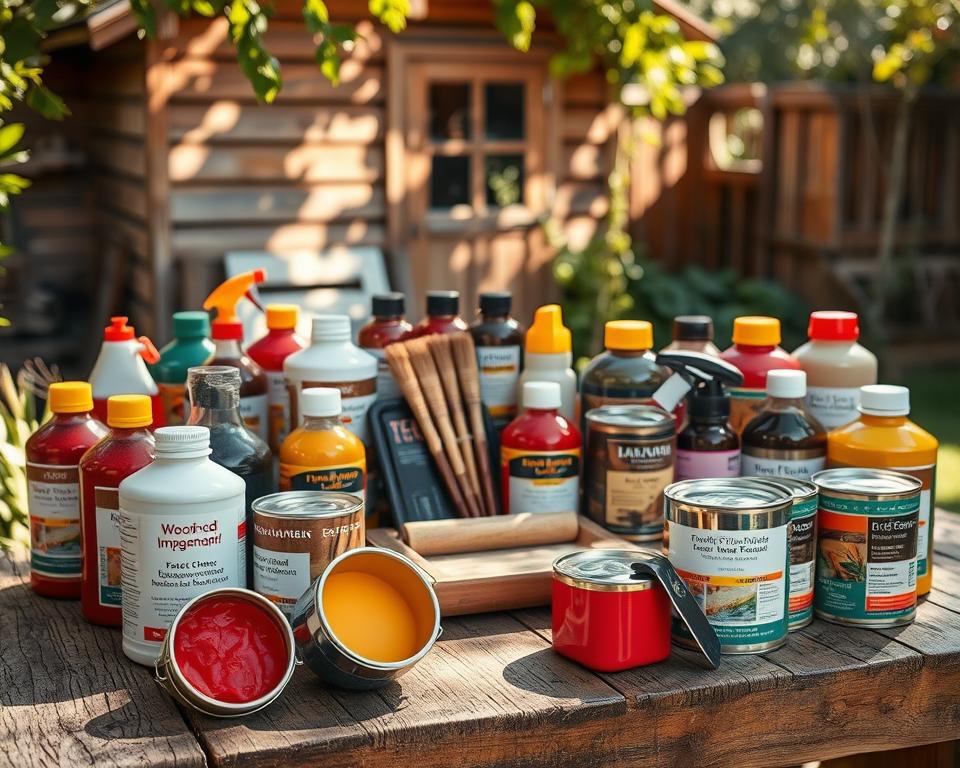
When exploring wood treatment options, you’ll encounter three primary categories:
- Water-based treatment: Environmentally friendly and low-odour options perfect for DIY enthusiasts
- Solvent-based treatment: Provides deeper wood penetration and long-lasting protection
- Natural wood oils: Enhances wood’s natural beauty while offering protection
Water-based treatments shine for their eco-friendly characteristics. They dry quickly, clean up easily, and minimise harmful chemical emissions. Solvent-based treatments penetrate deeper into wooden structures, creating robust protection against moisture and UV damage.
Natural wood oils like linseed and tung oil bring exceptional water repellence. They create a breathable protective layer while maintaining the wood’s authentic appearance. These treatments work brilliantly for garden houses exposed to variable British weather conditions.
When choosing your wood impregnation product, consider these key factors:
- Wood type and age
- Desired finish (clear, tinted, or coloured)
- Maintenance requirements
- Local environmental conditions
Understanding product labels is essential. Look for terms like “microporous” and “UV filters” to ensure comprehensive protection for your wooden garden house.
Essential Tools and Materials You’ll Need
Preparing for a wood treatment application requires careful planning and the right equipment. Your exterior wood treatment success depends on selecting appropriate tools and protective gear. Before starting your garden house impregnation project, gather essential supplies to ensure a professional and safe wood protective coating process.
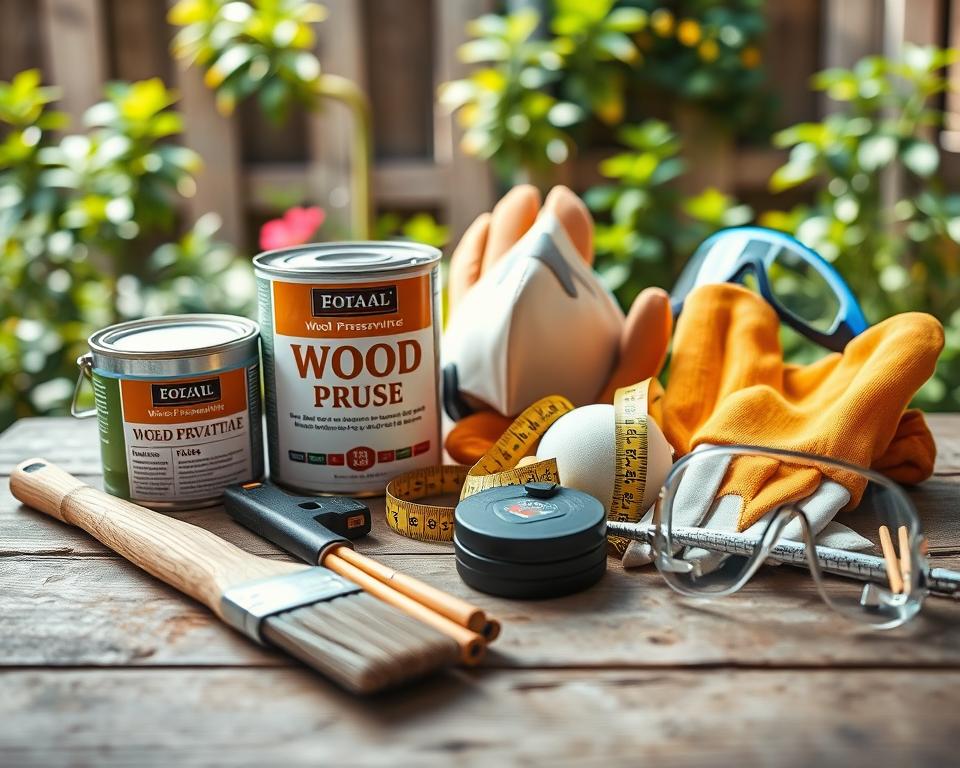
Safety Equipment for Wood Treatment
Protecting yourself during wood treatment is crucial. Professional-grade safety equipment prevents potential health risks from chemical exposure.
- Chemical-resistant gloves (nitrile or neoprene)
- Safety goggles or protective glasses
- Respirator mask with appropriate filters
- Long-sleeved protective clothing
- Sturdy closed-toe footwear
Application Tools and Supplies
Selecting high-quality tools ensures an even and effective wood treatment application. Your equipment can significantly impact the final protective coating result.
- Synthetic bristle brushes (multiple sizes)
- Paint rollers with medium-nap sleeves
- Paint tray
- Stirring sticks
- Drop cloths or plastic sheeting
- Cleaning materials compatible with your chosen treatment
Optional but recommended tools include pump sprayers for challenging areas and sanding equipment for surface preparation. Investing in quality tools will enhance your exterior wood treatment’s effectiveness and longevity.
Preparing Your Wooden Garden House for Treatment
Successful timber treatment begins with meticulous garden structure maintenance. Before applying any protective coating, you’ll need to prepare your wooden garden house carefully to ensure maximum weather resistance and longevity.

Start by selecting the perfect timing for your wood treatment. Aim for a dry spell with minimal moisture, ideally when the wood’s moisture content is below 20%. This critical step ensures optimal product penetration and effectiveness.
- Check wood moisture levels using a moisture metre
- Plan treatment during a predicted dry period
- Avoid treatment during humid or rainy conditions
Cleaning is paramount in timber treatment. Remove all dirt, algae, and previous failing coatings using appropriate cleaners. For UK garden structures prone to damp conditions, a fungicidal wash might be necessary to eliminate green algae and prevent future growth.
| Cleaning Step | Required Tools | Purpose |
|---|---|---|
| Initial Cleaning | Stiff brush, mild detergent | Remove surface dirt |
| Fungal Treatment | Fungicidal wash | Eliminate algae and mildew |
| Surface Preparation | 80-120 grit sandpaper | Open wood grain for treatment |
After cleaning, allow the wood to dry completely for at least 48 hours. Gently sand the surfaces with 80-120 grit sandpaper to open the wood grain without causing damage. Inspect the structure thoroughly, filling any cracks or holes with exterior wood filler.
Protect areas not intended for treatment by removing or masking fixtures like hinges, locks, and windows. This preparation ensures your garden structure maintenance will be precise and effective.
How to Impregnate a Wooden Garden House
Protecting your wooden garden house requires careful wood preservative application. The right protective coating technique can significantly extend the life of your outdoor structure and prevent potential damage from moisture and environmental factors.
Successful garden house treatment involves a systematic approach that ensures comprehensive protection. Before beginning, gather all necessary materials and prepare your workspace carefully.
Step-by-Step Application Process
- Stir the wood preservative thoroughly (do not shake)
- Start with hard-to-reach areas like underneath panels and end grain
- Work systematically, dividing the garden house into manageable sections
- Apply using the wet-on-wet technique for maximum absorption
Proper Technique for Even Coverage
When applying the protective coating, use long, smooth brush strokes following the wood grain. Press gently but firmly to work the product into the surface. Watch for signs of saturation – when the wood stops absorbing quickly, you’ve achieved proper coverage.
Working with Different Wood Surfaces
Different areas of your garden house require specific attention during wood preservative application:
- Horizontal surfaces (roofs, window sills): Maximum weather exposure requires extra product
- Vertical cladding: Thorough but lighter coverage
- End grain: Multiple applications due to higher absorption
- Rough-sawn timber: Requires more product than smooth surfaces
Pay special attention to joints, corners, and areas around windows and doors to ensure complete garden house treatment. Remove excess product within 10-15 minutes to prevent sticky patches and uneven finish.
Timing and Weather Considerations for Optimal Results
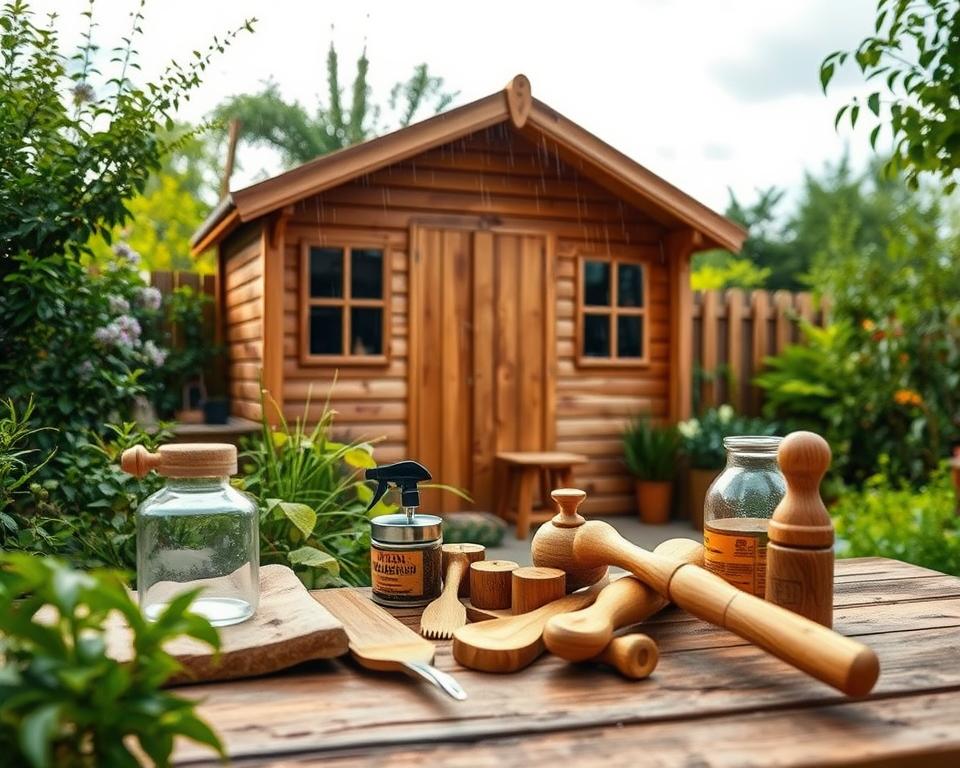
When tackling wood impregnation in the UK, understanding weather conditions becomes crucial for moisture protection and successful treatment. The unpredictable British climate demands careful planning and strategic approach to wood preservation.
Your UK climate treatment strategy must consider several key factors:
- Temperature range between 10°C and 25°C
- Minimal humidity levels
- Dry surface conditions
- No imminent rainfall forecast
Selecting the right moment for wood treatment requires precision. Late spring (May-June) and early autumn (September) typically offer the most stable weather windows for impregnation.
Professional woodworkers recommend monitoring detailed weather forecasts to ensure optimal treatment conditions.
Your weather considerations should include:
| Weather Aspect | Ideal Conditions | Treatment Impact |
|---|---|---|
| Temperature | 10-25°C | Ensures proper product penetration |
| Humidity | Below 80% | Prevents extended drying times |
| Rain Forecast | Clear 24-48 hours | Prevents product washout |
Remember that preparation is key. Check morning conditions, ensure wood surfaces are completely dry, and aim for gentle breezes that aid drying without risking debris contamination.
Drying Times and Curing Process
Understanding the wood protection process is crucial when treating your garden house. Treatment curing isn’t an instant process, but a carefully timed transformation that requires patience and attention to detail.
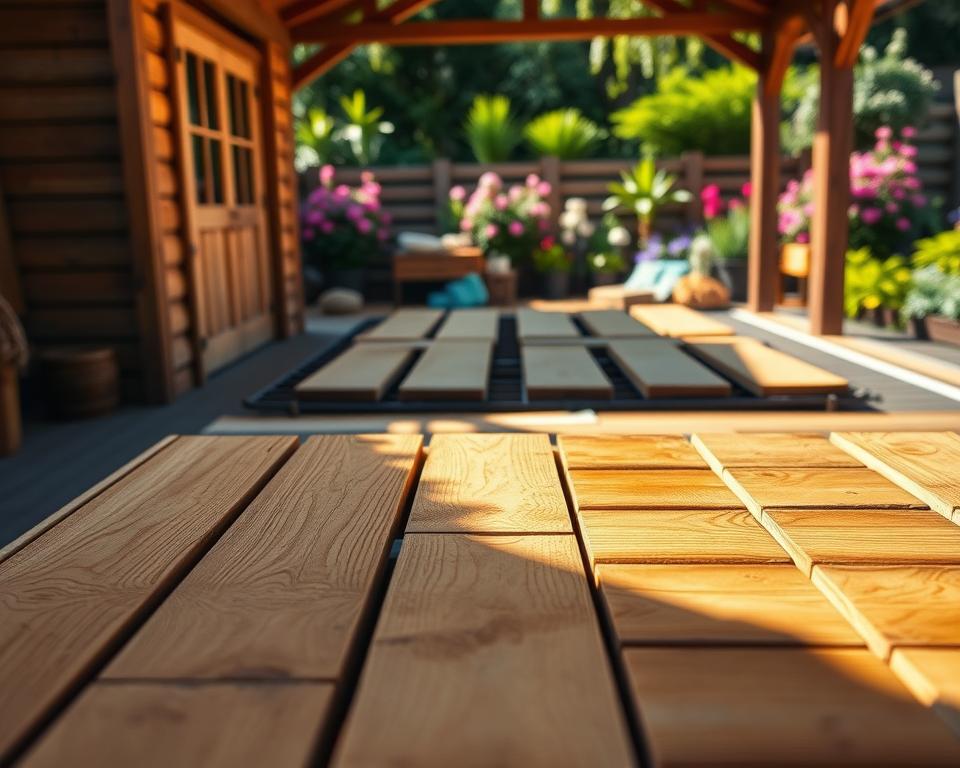
What to Expect During the Drying Phase
Timber preservation involves more than simply applying a protective coating. The drying phase is complex and varies depending on your chosen product:
- Water-based products typically dry to touch within 2-4 hours
- Solvent-based treatments require 4-8 hours to dry initially
- Oil-based solutions may take 6-12 hours between coats
Weather conditions significantly impact drying times. British climate, with its variable humidity and temperatures, can extend the curing process. Ideal conditions include temperatures between 15-20°C with moderate humidity.
When Your Garden House is Ready to Use
Determining when your garden house is fully treated requires careful observation. Look for these signs of complete treatment curing:
- Surface no longer appears wet
- Strong chemical odours have dissipated
- Wood colour stabilises
- Surface feels resistant and hardened
Typically, full curing takes between 7-30 days, depending on the product. Rushing this process can compromise your timber preservation efforts, potentially damaging the protective layer you’ve carefully applied.
Common Mistakes to Avoid When Treating Garden House Wood
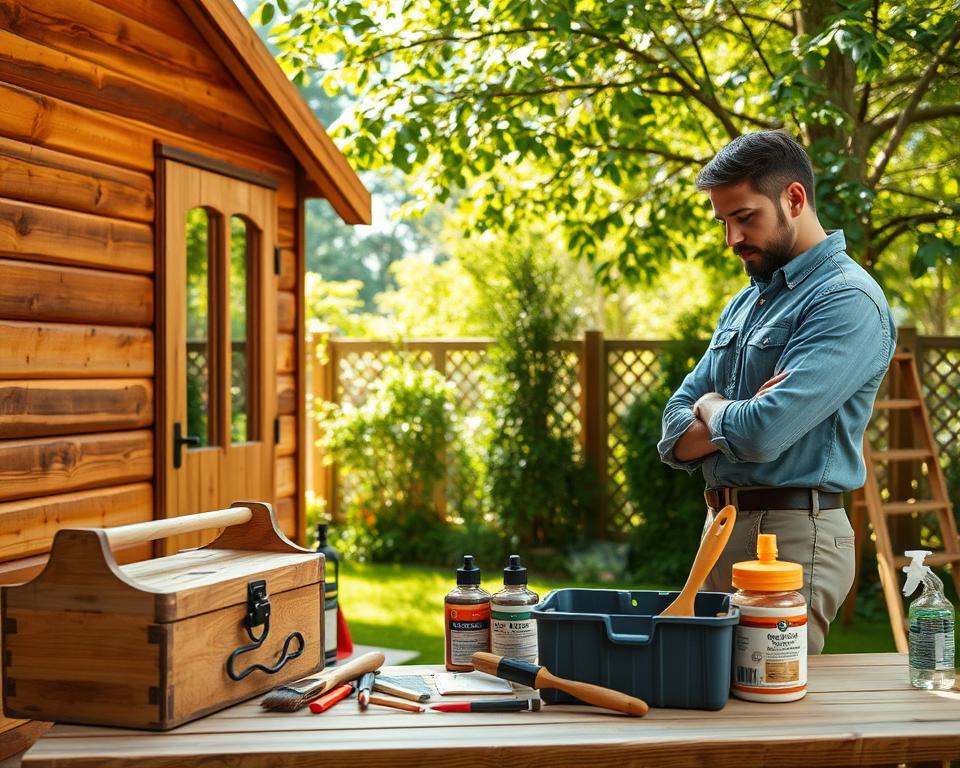
Protecting your wooden garden house requires careful attention to detail. Wood treatment errors can compromise the longevity and appearance of your structure. Understanding the most common application mistakes will help you achieve optimal timber protection.
Successful wood treatment depends on avoiding several critical failures that DIY enthusiasts often encounter:
- Insufficient surface preparation prevents proper product penetration
- Applying treatment too thinly reduces protective capabilities
- Over-application creates sticky surfaces that attract dirt
- Treating wood with excessive moisture content accelerates decay
Timing plays a crucial role in preventing timber protection failures. Avoid treating your garden house wood:
- During extreme temperature conditions
- When rain is expected within 24 hours
- With moisture content above 20%
Pay special attention to challenging areas like end grain, cuts, and hard-to-reach spots beneath cladding. These areas require extra product and meticulous application to prevent moisture penetration and potential structural damage.
Remember: Proper preparation is the key to long-lasting wood protection.
Mixing different treatment products or applying new coatings over failing previous layers can lead to significant wood treatment errors. Always ensure complete removal of old treatments and use compatible products for the best results.
Maintaining Your Impregnated Wooden Garden House
Protecting your wooden garden house requires consistent garden building maintenance. Regular care ensures your timber structure remains resilient against environmental challenges and extends its lifespan significantly.
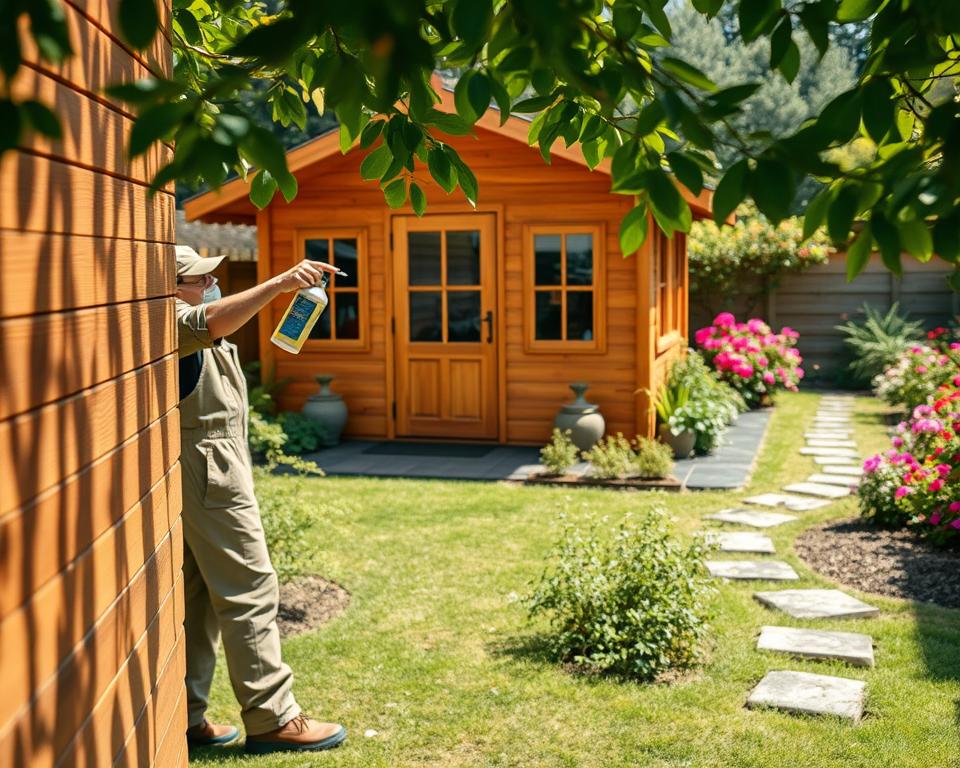
Creating a Robust Timber Care Schedule
Developing a strategic timber care schedule is crucial for preserving your garden building’s integrity. Your maintenance routine should focus on proactive inspection and timely interventions.
- Conduct comprehensive inspections twice annually
- Perform quick visual checks after severe weather events
- Monitor wood treatment effectiveness
Inspection Essentials
During your wood retreatment assessments, pay careful attention to key indicators of potential wood degradation:
- Check water beading performance
- Examine colour changes and UV protection
- Look for moisture penetration signs
- Identify potential rot or soft spots
When to Reapply Treatment
Recognise the critical moments for wood retreatment by watching for specific signs:
- Water no longer beads on surface
- Wood appears dry or faded
- Early algae or mould growth appears
- Noticeable colour changes in timber
Typically, retreatment becomes necessary every 2-5 years, depending on your garden building’s exposure to weather conditions. Remember, preventative maintenance is always more cost-effective than extensive repairs.
Environmental and Safety Considerations

Protecting your wooden garden house requires careful consideration of environmental impact and safety. Eco-friendly treatment options have revolutionised wood preservation, offering safer alternatives to traditional chemical solutions.
When selecting safe wood preservatives, you’ll want to focus on several key factors:
- Choose water-based products with low volatile organic compound (VOC) emissions
- Look for certifications indicating environmental protection standards
- Prioritise treatments free from heavy metals and toxic biocides
Understanding the environmental implications of wood treatments is crucial. Modern preservatives developed in the UK must comply with strict Biocidal Products Regulation, ensuring both effectiveness and ecological responsibility.
Safety considerations extend beyond product selection. Consider these practical guidelines:
- Protect surrounding garden areas during application
- Use drop cloths to prevent soil contamination
- Keep treatment areas away from children and pets
Proper disposal of wood treatment products is essential for environmental protection. Never pour unused preservatives down drains or dispose of them with household waste. Instead, take them to local council recycling centres specialising in hazardous waste collection.
| Treatment Type | Environmental Impact | Safety Rating |
|---|---|---|
| Water-based preservatives | Low | High |
| Natural oil-based treatments | Very Low | High |
| Traditional solvent-based products | High | Low |
Remember to store any remaining wood preservatives in a cool, dry place. Seal containers tightly, keep them out of reach of children, and use within the manufacturer’s recommended timeframe to maintain both effectiveness and safety.
Conclusion
Maintaining your wooden garden house requires dedication and understanding. Your journey through timber protection involves more than just a single treatment—it’s an ongoing commitment to preserving your structure’s integrity and appearance. By investing time in proper wooden garden house care, you protect not just a building, but a valuable extension of your property.
The timber protection summary you’ve learned demonstrates that careful treatment can significantly extend your garden house’s lifespan. Each step—from selecting appropriate impregnation products to applying them with precision—contributes to creating a resilient structure capable of withstanding the UK’s challenging weather conditions. Your newfound skills will serve you beyond this single project, enabling you to safeguard other wooden structures on your property.
Regular inspection and timely retreatment are crucial elements of effective wood preservation. You now understand that prevention is far more cost-effective than repair. With the techniques and knowledge gained, you can confidently approach your wooden garden house maintenance, ensuring it remains an attractive and functional space for decades to come.
Your proactive approach to timber protection represents a wise investment in your property. By applying the principles of careful wood treatment, you’re not just maintaining a structure—you’re preserving a valuable asset that enhances your outdoor living space.
FAQ
What does wood impregnation mean?
Wood impregnation is a process of saturating wood fibres with protective substances that penetrate deep into the timber, creating a barrier against moisture, UV damage, fungal growth, and insect infestation. Unlike surface coatings, impregnation products have smaller molecular structures that can penetrate the wood’s cellular structure, providing protection from within.
How often should I impregnate my wooden garden house?
Typically, you should retreat your wooden garden house every 2-5 years, depending on exposure and product type. Signs that retreatment is needed include water no longer beading on the surface, wood appearing dry or faded, early signs of algae or mould growth, or noticeable colour changes and weathering.
What safety equipment do I need for wood treatment?
Essential safety equipment includes chemical-resistant gloves (nitrile or neoprene), safety goggles or glasses, a respirator mask, protective long-sleeved clothing, and sturdy footwear. These items protect you from potential chemical exposure during the impregnation process.
Can I impregnate my wooden garden house in any weather?
No, optimal impregnation requires specific weather conditions. Ideal temperatures are between 10°C and 25°C, with low humidity. Avoid treating wood when rain is forecast within 24-48 hours, and choose late spring or early autumn for the best conditions in the UK.
What’s the difference between water-based and solvent-based impregnation products?
Water-based treatments are more environmentally friendly, have lower odour, dry quickly, and are easier to clean up. Solvent-based treatments offer deeper penetration and longer-lasting protection, particularly suitable for the UK climate, but require more ventilation and have stronger odours.
How do I prepare my wooden garden house for impregnation?
Preparation involves cleaning the wood thoroughly, removing dirt and algae, allowing it to dry completely, light sanding to open the wood grain, filling any cracks or holes, and checking that the wood’s moisture content is below 20%. Proper preparation is crucial for effective treatment.
Are wood impregnation products environmentally safe?
Modern wood treatment products are increasingly environmentally responsible. Look for low-VOC options, products with eco-certifications, and those complying with UK’s Biocidal Products Regulation. Water-based and natural oil-based products tend to have the least environmental impact.
How long does it take for impregnation treatment to cure?
Curing times vary by product type. Water-based products are typically dry to touch in 2-4 hours, fully cured in 2-7 days. Solvent-based products may take 4-8 hours to dry, with full curing in 7-14 days. Oil-based products can take 14-30 days for complete curing.
Can I apply impregnation treatment myself?
Yes, wood impregnation is a DIY-friendly process if you follow proper techniques. The key is careful preparation, selecting the right product, using appropriate tools, and applying the treatment systematically following manufacturer instructions and the guidance in this comprehensive guide.
What happens if I don’t impregnate my wooden garden house?
Without proper treatment, your wooden garden house becomes vulnerable to moisture penetration, fungal growth, insect infestation, and UV damage. In the UK’s damp climate, untreated wood can develop rot within two to three years, compromising structural integrity and significantly reducing the structure’s lifespan.