Shed Material: Wood vs Plastic vs Metal?

Selecting the right construction option for your garden sheds represents one of the most important decisions you’ll face when investing in outdoor storage. Your choice will directly impact durability, maintenance costs, and long-term satisfaction with your purchase.
Three primary options dominate the UK market today. Traditional timber offers classic appeal and natural aesthetics. Modern synthetic alternatives provide low-maintenance convenience. Durable metallic solutions deliver exceptional longevity and security.
This comprehensive guide examines each option’s unique characteristics and benefits. We’ll explore maintenance requirements, weather resistance, and cost considerations. Understanding these differences ensures you make an informed choice that perfectly suits your garden’s requirements, local climate conditions, and personal preferences.
Whether you’re storing gardening tools, outdoor furniture, or creating a workshop space, the right shed construction choice will serve you well for years to come.
Inhaltsverzeichnis
Key Takeaways
- Three main construction options are available: timber, synthetic, and metallic alternatives
- Each option offers distinct advantages in terms of durability, maintenance, and aesthetics
- Climate conditions and intended use should influence your decision
- Initial cost differs significantly from long-term value considerations
- Proper research prevents costly mistakes and ensures satisfaction
- UK weather patterns particularly affect certain construction choices
Understanding Your Shed Material Options
The foundation of successful garden storage solutions begins with understanding the three primary shed material options available today. Each material brings unique characteristics that will influence your shed’s performance, appearance, and maintenance requirements for years to come.
Modern homeowners can choose between traditional timber, contemporary plastic composites, and robust metal constructions. These outdoor shed materials have evolved significantly, offering improved weather resistance and enhanced functionality compared to earlier generations.
Why Material Choice Matters for Your Garden
Your material selection directly impacts how well your shed integrates with your garden’s aesthetic and functional requirements. Shed durability varies dramatically between materials, affecting everything from structural integrity to visual appeal over time.
Weather resistance becomes particularly crucial in the UK climate. British conditions demand materials that can withstand frequent rainfall, temperature fluctuations, and occasional severe weather events. The wrong choice can lead to premature deterioration and costly replacements.
Security considerations also vary by material type. Some materials naturally deter break-ins, whilst others may require additional security measures. Your neighbourhood and intended storage contents should influence this aspect of your decision.
Key Factors to Consider Before Choosing
Several critical factors should guide your material selection process. Understanding these elements helps ensure your chosen garden storage solutions meet both immediate needs and long-term expectations.
| Factor | Wood | Plastic | Metal |
|---|---|---|---|
| Initial Cost | Moderate to High | Low to Moderate | Moderate to High |
| Maintenance Level | High | Very Low | Low to Moderate |
| Weather Resistance | Moderate (with treatment) | Excellent | Good to Excellent |
| Aesthetic Appeal | Traditional/Natural | Modern/Clean | Industrial/Contemporary |
| Expected Lifespan | 15-25 years | 10-20 years | 20-30+ years |
Budget considerations extend beyond initial purchase price. Maintenance costs, replacement frequency, and potential repairs significantly impact total ownership expenses. Some materials require annual treatments, whilst others remain virtually maintenance-free.
Local planning regulations may also influence your choice. Certain materials and colours might face restrictions in conservation areas or locations with strict aesthetic guidelines. Always check with your local planning authority before making final decisions.
Environmental impact increasingly matters to conscientious homeowners. Consider the sustainability of outdoor shed materials, including manufacturing processes, recyclability, and carbon footprint throughout the product lifecycle.
Wooden Sheds: Traditional Charm and Natural Appeal
Wooden sheds continue to dominate British gardens with their timeless aesthetic and natural integration. These classic garden buildings offer a perfect blend of functionality and visual appeal that complements traditional and contemporary outdoor spaces alike. The natural warmth and character of timber construction creates an inviting storage solution that enhances rather than detracts from your garden’s overall design.
The popularity of wooden garden sheds stems from their versatility and ability to age gracefully within the landscape. Unlike synthetic materials, wood develops a natural patina over time that adds character and charm to your outdoor space.
Types of Wood Used in Shed Construction
Understanding the different timber options available helps you make an informed decision about your garden storage needs. Pressure-treated softwood represents the most common and cost-effective choice for shed construction. This material undergoes chemical treatment to resist rot and insect damage, extending its lifespan significantly.
Cedar stands out as a premium option for discerning homeowners. This naturally weather-resistant timber contains oils that repel insects and moisture. Cedar sheds require minimal treatment whilst maintaining their attractive appearance for decades.
Engineered timber products offer modern alternatives to traditional wood construction. These materials combine wood fibres with resins to create boards that resist warping and splitting. They provide consistent quality whilst maintaining the natural appearance of solid wood.

Advantages of Wooden Sheds
The benefits of choosing timber for your garden storage extend far beyond aesthetic appeal. Excellent insulation properties make wooden structures ideal for protecting stored items from temperature fluctuations. This natural insulation keeps your tools and equipment in optimal condition throughout the changing seasons.
Customisation opportunities abound with wooden construction. You can easily add windows, skylights, or additional doors to suit your specific requirements. The flexibility of timber allows for modifications that would be challenging with alternative materials.
Traditional garden buildings blend seamlessly with established landscapes. The natural material complements existing trees, plants, and outdoor features without creating visual discord. This harmonious integration maintains your garden’s aesthetic balance.
Structural strength provides excellent security for valuable tools and equipment. Properly constructed wooden sheds offer robust protection against weather and potential intruders.
Disadvantages of Wooden Sheds
Timber construction does present certain challenges that require consideration. Regular maintenance demands represent the most significant drawback of wooden structures. Without proper care, wood becomes susceptible to rot, warping, and pest infestations.
Weather vulnerability affects untreated or poorly maintained timber. British climate conditions can cause wood to expand, contract, and deteriorate over time. This natural process requires ongoing attention to preserve structural integrity.
Initial cost often exceeds basic plastic alternatives, particularly for premium timber options. Quality wooden garden sheds represent a significant investment compared to synthetic materials.
Fire risk considerations apply to all wooden structures. Whilst not a major concern for most homeowners, timber construction does present higher fire risk than metal or plastic alternatives.
Essential Maintenance for Wooden Sheds
Proper shed maintenance ensures your timber structure remains functional and attractive for many years. Annual treatment with wood preservative forms the cornerstone of effective maintenance. This protective coating prevents moisture penetration and insect damage.
Regular inspection identifies potential problems before they become serious issues. Check for loose boards, damaged roofing, and signs of pest activity. Early intervention prevents minor problems from developing into costly repairs.
Cleaning and preparation precede any treatment application. Remove dirt, algae, and loose paint before applying preservatives. Proper surface preparation ensures optimal adhesion and protection.
| Maintenance Task | Frequency | Estimated Time | Difficulty Level |
|---|---|---|---|
| Wood preservative treatment | Annually | 4-6 hours | Easy |
| Roof inspection and repair | Bi-annually | 2-3 hours | Moderate |
| Door and window adjustment | As needed | 1-2 hours | Easy |
| Gutter cleaning | Seasonally | 1 hour | Easy |
Ventilation maintenance prevents moisture buildup that leads to rot and mould. Ensure air vents remain clear and consider installing additional ventilation if condensation becomes problematic. Proper airflow extends the lifespan of both your shed and stored contents.
Foundation care supports the entire structure’s longevity. Keep the base clear of vegetation and debris. Ensure proper drainage around the perimeter to prevent water accumulation that could damage the timber frame.
Plastic Sheds: Modern Convenience and Low Maintenance
For busy homeowners prioritising convenience, plastic sheds deliver unmatched durability with minimal upkeep requirements. These contemporary storage solutions have gained tremendous popularity across Britain due to their practical benefits and hassle-free ownership experience. Unlike traditional materials, plastic construction eliminates many common shed problems whilst providing reliable protection for your garden tools and equipment.
The synthetic approach to garden storage represents a significant advancement in outdoor building technology. Weatherproof sheds made from plastic materials resist the elements without requiring annual treatments or repairs. This modern alternative appeals particularly to those seeking long-term value with reduced maintenance commitments.
Resin and Vinyl Shed Materials Explained
Most plastic sheds utilise high-density polyethylene or advanced resin compounds in their construction. These engineered materials offer superior weather resistance compared to natural alternatives. Resin garden sheds typically feature double-wall construction with reinforced panels that provide excellent structural integrity.
Vinyl sheds represent another popular plastic option, offering smooth surfaces and enhanced UV protection. The manufacturing process involves injection moulding techniques that create consistent thickness throughout each panel. This precision engineering ensures reliable performance across varying British weather conditions.
Both materials incorporate anti-fade technology that maintains colour vibrancy for years. The molecular structure resists moisture penetration, preventing the rot and decay issues commonly associated with wooden storage buildings.
Benefits of Plastic Shed Construction
Complete weather resistance stands as the primary advantage of plastic shed ownership. These structures withstand heavy rain, snow, and UV exposure without deterioration. The non-porous surface prevents moisture absorption that typically damages other materials over time.
Assembly proves remarkably straightforward with pre-fabricated panels and integrated hardware systems. Most low maintenance sheds can be erected within a few hours using basic tools. The lightweight construction allows for easy repositioning if your garden layout changes.
Cost-effectiveness emerges through eliminated maintenance expenses. No staining, painting, or weatherproofing treatments are necessary throughout the shed’s lifespan. This translates to significant savings compared to wooden alternatives requiring regular upkeep.
Enhanced security features include reinforced door frames and integrated locking mechanisms. Many models offer steel reinforcement points that provide additional protection for valuable stored items.
Drawbacks of Plastic Sheds
Aesthetic limitations represent the most commonly cited disadvantage of plastic construction. The synthetic appearance may clash with traditional garden designs or period property styles. Customisation options remain restricted compared to wooden sheds that accept paint and modifications readily.
Temperature fluctuations can cause expansion and contraction in plastic panels. Extreme heat may lead to slight warping, whilst cold conditions might make materials more brittle. Proper foundation preparation helps minimise these thermal effects.
Initial purchase costs typically exceed basic wooden shed prices. However, this investment often balances through eliminated maintenance expenses over the structure’s lifetime.
Maintenance Requirements for Plastic Sheds
Plastic shed maintenance involves primarily occasional cleaning with mild detergent and water. Annual washing removes accumulated dirt and maintains the shed’s appearance. No specialised treatments or protective coatings are necessary.
Inspect door hinges and locks periodically, applying light lubrication as needed. Check foundation stability annually, ensuring proper drainage around the structure. These simple tasks preserve optimal performance for decades of reliable service.
Metal Sheds: Durability and Security Combined
Metal construction transforms ordinary garden storage into fortress-like protection that safeguards your valuable items for decades. These robust structures represent the pinnacle of secure outdoor storage, offering unparalleled protection against theft, weather, and time itself. Whether you choose steel or aluminium construction, metal sheds deliver exceptional value through their remarkable longevity and minimal maintenance requirements.
The industrial-strength design of metal storage solutions makes them ideal for homeowners who prioritise security above all else. Their fire-resistant properties and pest-proof construction provide peace of mind that softer materials simply cannot match.
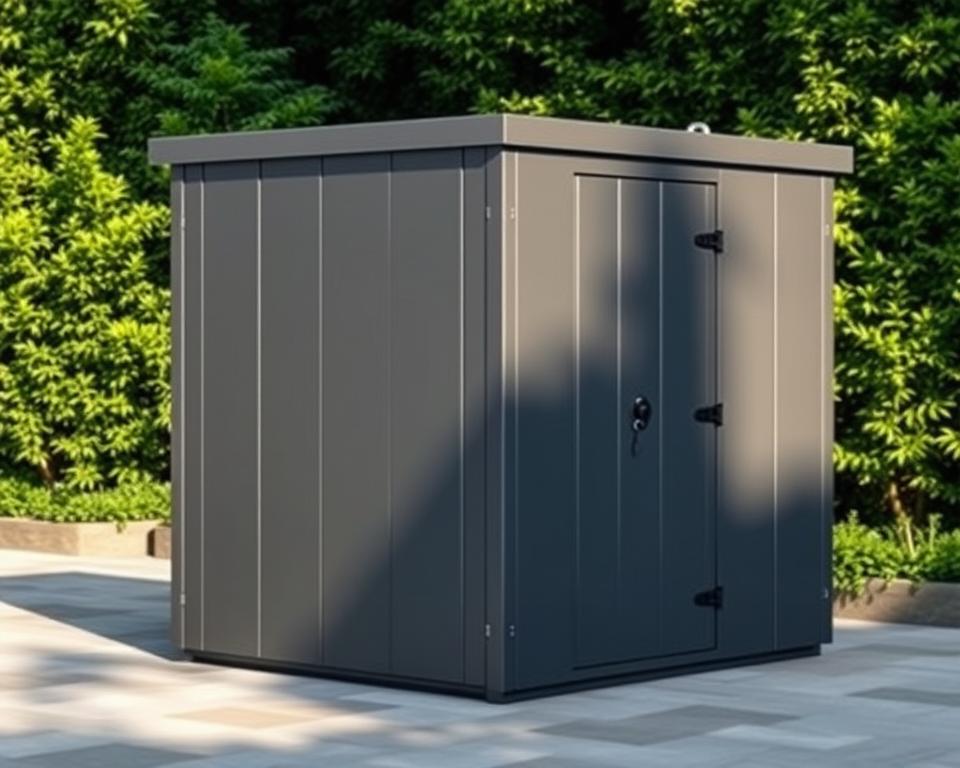
Steel vs Aluminium Shed Options
Steel garden sheds dominate the market for maximum security applications. Galvanised steel construction provides exceptional strength and resistance to forced entry attempts. These heavy-duty structures feature reinforced door frames and can accommodate advanced locking systems that deter even determined intruders.
Aluminium sheds offer a lighter alternative without sacrificing durability. Their natural corrosion resistance makes them particularly suitable for coastal areas where salt air can damage other materials. The reduced weight simplifies installation and makes repositioning possible if your garden layout changes.
The choice between these materials often depends on your specific security needs and environmental conditions. Steel excels in high-crime areas, whilst aluminium performs better in corrosive environments.
| Feature | Galvanised Steel | Aluminium | Key Benefit |
|---|---|---|---|
| Security Level | Maximum | High | Steel offers superior break-in resistance |
| Weight | Heavy | Lightweight | Aluminium easier to handle and install |
| Corrosion Resistance | Good (with coating) | Excellent (natural) | Aluminium requires no protective coating |
| Cost | Moderate | Higher | Steel provides better value for security |
Advantages of Metal Shed Construction
Metal sheds deliver exceptional durability that can span several decades with proper care. Their fire-resistant properties provide crucial protection for storing flammable materials like petrol, paint, or garden chemicals safely away from your home.
The pest-proof nature of metal construction eliminates concerns about rodents, insects, or wood-boring creatures damaging your storage space. Unlike wooden alternatives, metal sheds won’t rot, warp, or become home to unwanted wildlife.
Minimal maintenance requirements make metal sheds particularly attractive to busy homeowners. A simple annual inspection and occasional cleaning typically suffice to maintain peak performance for years.
“Metal sheds offer the ultimate peace of mind for valuable tool storage. Their security features and longevity make them a wise investment for any serious gardener.”
Potential Issues with Metal Sheds
Condensation problems represent the most significant challenge with metal storage structures. Without adequate ventilation, moisture can accumulate inside, potentially damaging stored items or causing rust in lower-quality models.
The industrial appearance of metal sheds may clash with traditional garden aesthetics. Their stark, utilitarian design doesn’t blend naturally with flowering borders or cottage-style landscapes the way wooden alternatives might.
Temperature extremes can make metal sheds uncomfortable workspaces during summer heat or winter cold. The lack of natural insulation means internal temperatures closely follow external conditions.
Initial assembly can prove challenging due to the precision required for proper alignment. Unlike forgiving wooden construction, metal components must fit exactly to ensure weather-tight seals and structural integrity.
Caring for Your Metal Shed
Proper foundation preparation forms the cornerstone of metal shed longevity. A level, well-drained concrete base prevents water pooling and ensures structural stability throughout the shed’s lifespan.
Ventilation installation prevents condensation issues that could otherwise compromise your secure outdoor storage. Ridge vents and louvre panels maintain air circulation whilst preserving security features.
Annual maintenance involves inspecting door seals, lubricating hinges, and checking for any scratches in protective coatings. Prompt attention to minor issues prevents major problems developing over time.
Regular cleaning with mild detergent removes dirt and debris that could trap moisture against metal surfaces. This simple practice significantly extends the life of your investment whilst maintaining its professional appearance.
Cost Comparison: Initial Investment and Long-term Value
Understanding the true cost of shed ownership extends far beyond the initial purchase price. When choosing between wood, plastic, and metal materials, savvy homeowners examine both upfront expenses and ongoing costs. This comprehensive approach reveals which option delivers the best shed value for money over time.
The financial picture becomes clearer when you consider installation requirements, maintenance needs, and potential repairs. Each material presents unique cost patterns that can significantly impact your budget over the shed’s lifetime.
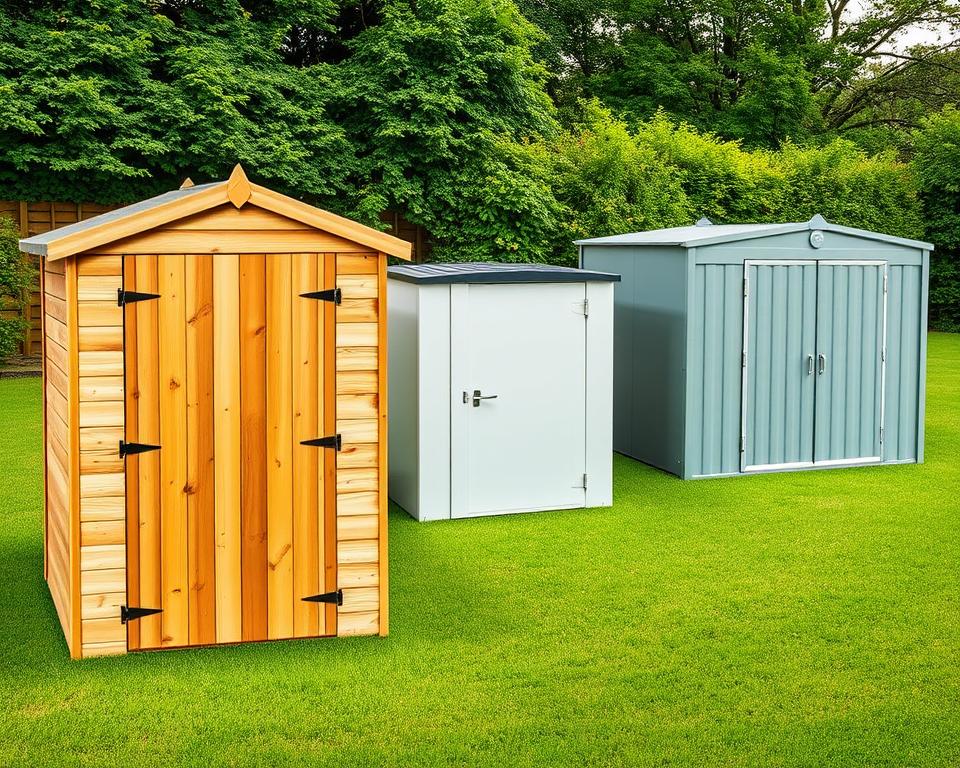
Purchase Price Analysis by Material
Wooden sheds typically offer the most affordable entry point for budget-conscious buyers. Basic timber models start from £200-£400 for smaller sizes, making them attractive for first-time shed owners. However, premium cedar options can exceed £1,000, reflecting superior wood quality and construction.
Plastic sheds command higher initial prices, generally ranging from £300-£800 for comparable dimensions. This premium reflects the engineered materials and sophisticated manufacturing processes involved. The higher upfront cost often surprises buyers who expect plastic to be cheaper than wood.
Metal sheds span the widest price spectrum in the market. Budget steel models start around £250, whilst premium aluminium constructions can exceed £1,200. The significant variation depends on gauge thickness, coating quality, and additional features like reinforced doors or windows.
Installation and Assembly Costs
Shed installation requirements vary dramatically between materials, affecting your total investment. Wooden sheds often demand professional assembly, particularly larger models with complex designs. Professional installation typically adds £150-£300 to your project cost.
Plastic sheds shine in the DIY category with user-friendly assembly systems. Most homeowners can complete installation over a weekend using basic tools. This advantage makes plastic sheds more appealing for hands-on gardeners seeking cost-effective garden storage solutions.
Metal sheds require careful foundation preparation but offer straightforward assembly once the base is ready. The lightweight panels make handling easier, though wind resistance during construction can pose challenges. Foundation costs range from £100-£200 depending on size and ground conditions.
Long-term Maintenance Expenses
Maintenance costs reveal where initial savings can disappear over time. Wooden sheds demand annual treatments costing £30-£50, plus potential repair expenses for rot or insect damage. These ongoing costs accumulate significantly over a decade of ownership.
Plastic and metal alternatives require minimal ongoing investment, making them attractive for busy homeowners. Occasional cleaning and hardware checks represent the primary maintenance tasks, typically costing under £20 annually.
The following table illustrates the total cost of ownership over ten years:
| Material Type | Initial Cost Range | Installation Cost | Annual Maintenance | 10-Year Total |
|---|---|---|---|---|
| Basic Wood | £200-£400 | £200-£300 | £40 | £800-£1,100 |
| Premium Cedar | £800-£1,200 | £250-£350 | £35 | £1,400-£1,900 |
| Plastic Resin | £300-£800 | £50-£100 | £15 | £500-£1,050 |
| Steel | £250-£600 | £150-£250 | £20 | £600-£1,050 |
| Aluminium | £600-£1,200 | £150-£250 | £15 | £900-£1,600 |
These figures demonstrate how maintenance expenses can dramatically alter the value equation. Wooden sheds may start cheaper but often cost more over their lifetime due to ongoing care requirements.
Smart buyers also consider replacement frequency when calculating true costs. While wooden sheds might need replacing after 10-15 years, quality plastic and metal options can last 20+ years with minimal maintenance. This longevity factor makes the higher initial investment more justifiable for long-term planning.
Durability and Lifespan: Which Material Lasts Longest?
The longevity of your garden shed depends heavily on the material you choose and how well you maintain it. Understanding the expected lifespan of different materials helps you make a wise investment that serves your storage needs for years to come. When comparing durable outdoor buildings, each material offers distinct advantages in terms of weather resistance and structural integrity.
Your choice between wood, plastic, and metal significantly impacts how long your shed will remain functional and attractive. Proper maintenance and environmental considerations play equally important roles in determining overall durability.
Expected Lifespan by Material Type
Wooden sheds typically provide 10 to 15 years of reliable service when properly maintained. However, premium cedar constructions can extend this lifespan considerably, often reaching 20 years or more with regular care and treatment.
The natural oils in cedar wood provide enhanced resistance to rot and insect damage. Regular staining and sealing every two to three years helps wooden sheds achieve their maximum potential lifespan.

Plastic sheds generally offer 15 to 20 years of maintenance-free service. Their UV-resistant formulations prevent degradation from constant sunlight exposure, making them excellent long-lasting garden sheds for sunny locations.
Modern resin and vinyl materials resist fading, cracking, and warping. This consistency makes plastic sheds particularly appealing for homeowners seeking minimal upkeep requirements.
Metal sheds, particularly those made from galvanised steel or aluminium, can last 20 to 30 years or more with appropriate care. Their superior structural strength and weather resistance make them the longest-lasting option in most shed lifespan comparison studies.
Quality metal sheds often come with extended warranties reflecting their durability. Proper foundation preparation and regular inspections help metal structures achieve their full lifespan potential.
Environmental Factors Affecting Shed Longevity
Several environmental conditions significantly impact how long your shed will last, regardless of material choice. Ground moisture levels pose the greatest threat to shed foundations and lower wall sections.
Proper drainage around your shed prevents water accumulation that leads to rot in wooden structures and rust in metal frames. Installing adequate guttering and ensuring water flows away from the building extends lifespan considerably.
Exposure to prevailing winds affects structural integrity over time. Sheds positioned in windy locations require secure anchoring and regular checks for loose panels or fittings.
Tree coverage creates both benefits and challenges for shed longevity. While trees provide protection from harsh sunlight and wind, they also contribute to debris accumulation and reduced air circulation that can promote moisture problems.
Regular maintenance inspections help identify minor issues before they develop into major problems. Addressing small repairs promptly prevents costly damage and extends the useful life of all durable outdoor buildings significantly.
Climate Considerations for UK Weather Conditions
British weather conditions demand careful consideration when selecting shed materials for your garden. The UK’s challenging climate presents unique obstacles that can significantly impact your shed’s performance and longevity. Understanding how different materials respond to our unpredictable weather patterns will help you make an informed decision.
From persistent rainfall to sudden temperature drops, UK weather resistant sheds must withstand a variety of environmental stresses throughout the year. Each material type offers distinct advantages and challenges when facing Britain’s demanding climate conditions.
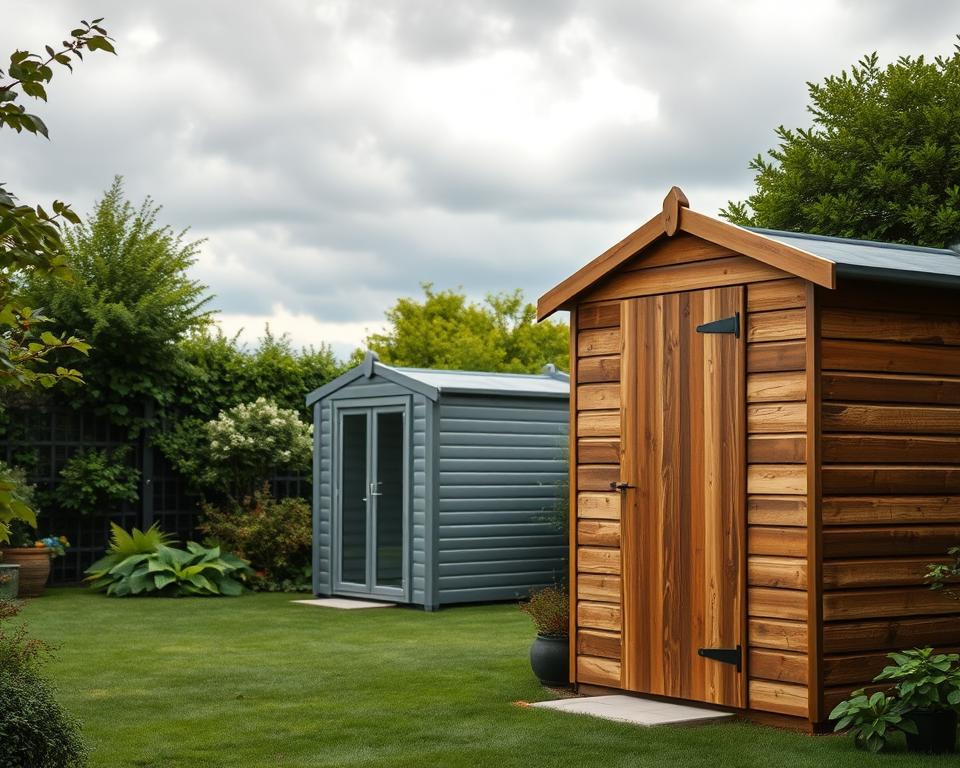
Handling British Rain and Humidity
Britain’s average annual rainfall of 1,200mm creates significant challenges for garden storage solutions. Constant moisture exposure can quickly deteriorate poorly chosen materials, making water resistance a critical factor in your decision.
Wooden sheds require regular treatment with weatherproof stains or paints to maintain their water resistance. Without proper maintenance, timber can absorb moisture, leading to rot, warping, and structural weakness. Quality timber treatments need reapplication every 2-3 years to ensure continued protection.
Plastic sheds excel in wet conditions, offering inherent waterproofing that requires no additional treatment. The non-porous surface prevents moisture absorption, eliminating concerns about rot or water damage. However, proper ventilation remains essential to prevent condensation buildup inside.
Metal sheds provide excellent water resistance but can develop condensation issues in high humidity. The UK’s average humidity levels of 70-80% can cause moisture to collect on interior surfaces, potentially damaging stored items without adequate ventilation systems.
Wind Resistance and Structural Integrity
All-weather outdoor sheds must withstand Britain’s autumn and winter storms, which can generate winds exceeding 70mph. Structural integrity becomes paramount during these challenging weather events.
Metal sheds generally offer superior wind resistance due to their rigid construction and secure anchoring systems. Steel frames provide exceptional stability, whilst aluminium options offer good resistance with lighter weight. Proper foundation anchoring is essential for all metal shed installations.
Well-constructed wooden sheds can handle strong winds effectively when properly anchored and maintained. Thicker timber construction provides better wind resistance, though regular inspection of joints and fixings remains important after severe weather events.
Plastic sheds may struggle in extreme wind conditions, particularly lighter resin models. However, quality vinyl constructions with reinforced walls and secure anchoring systems can provide adequate wind resistance for most UK locations.
Temperature Fluctuation Effects
The UK’s temperature range from -10°C to 30°C creates expansion and contraction stresses that affect all shed materials differently. Understanding these effects helps ensure your British climate garden storage remains functional year-round.
Plastic materials experience the most noticeable dimensional changes with temperature fluctuations. Slight expansion and contraction can affect door and window alignments, though quality manufacturers design their products to accommodate these movements.
Wooden sheds can develop cracks or warping during extreme temperature changes, particularly when moisture levels vary simultaneously. Regular maintenance and proper ventilation help minimise these effects and preserve structural integrity.
Metal sheds remain dimensionally stable across temperature ranges but require proper ventilation to manage condensation caused by temperature differentials. Adequate airflow prevents moisture buildup that could damage stored items or promote rust formation.
Shed Material: Wood vs Plastic vs Metal? – Direct Comparison
Making the right choice between wood, plastic, and metal requires a comprehensive understanding of how each material performs in real-world conditions. This shed comparison guide examines the practical differences that matter most to UK homeowners.
Each material offers distinct characteristics that suit different needs and preferences. Understanding these differences helps you select the best garden shed material for your specific situation.
Performance Comparison Table
A detailed comparison reveals how each material performs across key criteria that affect your long-term satisfaction.
| Performance Factor | Wood | Plastic | Metal |
|---|---|---|---|
| Initial Cost | Moderate to High | Low to Moderate | Moderate |
| Maintenance Requirements | High (annual treatment) | Very Low (occasional cleaning) | Low (rust prevention) |
| Weather Resistance | Good with treatment | Excellent | Excellent |
| Security Level | Moderate | Low | High |
| Customisation Options | Excellent | Limited | Moderate |
Best Use Cases for Each Material
Wooden sheds excel in traditional garden settings where natural aesthetics matter most. They’re ideal for workshops, potting sheds, or decorative storage in cottage-style gardens. The ability to customise and modify wooden structures makes them perfect for hobby enthusiasts.
Plastic sheds perform exceptionally well for busy homeowners seeking reliable storage without ongoing maintenance commitments. They suit contemporary garden designs and coastal locations where salt air affects other materials. These storage shed options are perfect for basic garden tool storage.
Metal sheds dominate in security-focused applications and areas prone to vandalism or extreme weather. They suit modern garden designs whilst providing maximum protection for valuable equipment. Commercial users often prefer metal for its durability and professional appearance.
Suitability for Different Garden Types
Garden compatibility varies significantly across materials. Formal gardens benefit from wooden or high-quality plastic options that complement structured landscaping. The natural appearance of wood blends seamlessly with established plantings.
Contemporary spaces suit sleek metal or plastic designs that match modern architectural styles. Clean lines and neutral colours work well with minimalist garden layouts. These materials don’t compete with contemporary features.
Traditional cottage gardens naturally complement wooden constructions. The rustic charm of timber structures enhances the informal, natural feel of these garden styles. Wood ages gracefully alongside mature plantings and traditional features.
Step-by-Step Guide to Choosing Your Ideal Shed Material
The process of choosing garden shed material becomes straightforward when you follow a structured decision-making framework. This comprehensive approach ensures you select the most suitable option for your specific circumstances. By breaking down the selection process into manageable steps, you’ll make an informed choice that serves you well for years to come.
Every successful shed purchase begins with thorough preparation and honest self-assessment. The key lies in systematically evaluating each factor rather than making impulsive decisions based on initial impressions alone.
Assess Your Budget and Storage Requirements
Begin your shed buying guide journey by establishing a realistic total budget that extends beyond the initial purchase price. Factor in foundation preparation costs, which can range from £200-£800 depending on your chosen base type. Include assembly expenses if you’re hiring professionals, typically adding £300-£600 to your overall investment.
Consider long-term maintenance costs over the shed’s expected lifespan. Wooden sheds require annual treatments costing £30-£50, whilst plastic and metal options need minimal ongoing investment. Calculate the total cost of ownership rather than focusing solely on the upfront expense.
Define your storage requirements with precision. Simple tool storage differs significantly from workshop spaces or valuable equipment protection. List everything you plan to store and consider future needs. A shed that’s too small becomes frustrating quickly, whilst oversizing unnecessarily inflates costs.
Evaluate Your Garden Environment and Space
Your garden’s unique characteristics significantly influence material suitability. Assess exposure to prevailing winds, particularly if you live in coastal areas where salt air affects metal components. Check drainage conditions around your proposed shed location, as poor drainage accelerates material deterioration.
Consider proximity to trees and overhanging branches. Falling debris can damage roofs, whilst constant shade creates damp conditions favouring wood rot and metal corrosion. Examine your available space for maintenance access – you’ll need clearance around the shed for cleaning and repairs.
Evaluate how the shed will integrate with your existing garden aesthetics. A plastic shed might look out of place in a traditional cottage garden, whilst a rustic wooden structure could clash with contemporary landscaping. Visual harmony enhances your property’s overall appeal.
Consider Your Maintenance Preferences
Honestly assess your attitude towards ongoing maintenance tasks. Some gardeners find annual wood treatment therapeutic and enjoyable, viewing it as part of their seasonal garden care routine. Others prefer minimal-maintenance solutions that require only occasional cleaning.
Consider your available time and physical capabilities. Wood treatment involves scraping, sanding, and applying preservatives – tasks requiring several hours annually. Metal sheds need periodic rust checks and touch-ups, whilst plastic options require only washing with soapy water.
Factor in your local climate’s maintenance demands. Areas with high rainfall increase wood treatment frequency, whilst coastal locations accelerate metal corrosion. Choose materials that align with your maintenance capacity and preferences.
The best shed material is the one that matches your lifestyle, budget, and garden conditions – not necessarily the most expensive or popular option.
Make Your Final Material Decision
Synthesise all gathered information to make your final choice. Weight each factor according to your priorities – budget-conscious buyers might prioritise initial cost, whilst those seeking longevity focus on durability. Garden storage planning requires balancing multiple considerations rather than optimising for single factors.
Visit local suppliers to examine materials firsthand before making your final decision. Touch the surfaces, check construction quality, and ask about warranties. Many retailers offer valuable insights based on customer feedback and local climate experience.
Don’t hesitate to seek advice from experienced shed retailers who understand regional weather patterns and customer satisfaction rates. Their expertise can prevent costly mistakes and ensure you select the most appropriate material for your specific situation.
Create a simple scoring system rating each material against your key criteria. This objective approach helps overcome emotional preferences and ensures your choice aligns with practical requirements. Remember, the perfect shed material is the one that best serves your individual needs and circumstances.
Conclusion
Your best shed material choice depends on balancing personal priorities with practical considerations. Wood offers natural beauty and customisation options, plastic provides weather resistance with minimal upkeep, while metal delivers superior security and longevity. Each material serves different garden storage needs effectively.
Consider your garden storage investment as a long-term commitment rather than just an initial purchase. The cheapest option upfront may cost more over time through repairs and replacements. Your local climate, available space, and maintenance preferences should guide this outdoor building decision.
Visit local suppliers to examine materials firsthand. Touch the surfaces, check construction quality, and ask about warranties. Speaking with existing shed owners provides valuable real-world insights about performance and satisfaction levels.
Your perfect shed material matches your unique circumstances. A busy professional might prefer low-maintenance plastic, whilst a gardening enthusiast may enjoy caring for a wooden structure. Security-conscious homeowners often choose metal for valuable tool storage.
Take time with this decision. A well-chosen shed serves your garden reliably for decades, making careful consideration worthwhile. The right material choice ensures your outdoor storage solution meets both current needs and future expectations, providing lasting satisfaction with your investment.
FAQ
Which shed material offers the best value for money in the UK?
Wooden sheds typically offer the best initial value, with basic models starting from £200-£400. However, when considering long-term costs including annual maintenance treatments (£30-£50 yearly), plastic sheds often provide better overall value due to their 15-20 year lifespan with minimal maintenance requirements. For maximum longevity, metal sheds deliver excellent value over their 20-30 year lifespan despite higher initial costs.
How long do wooden sheds last compared to plastic and metal alternatives?
Wooden sheds typically last 10-15 years with proper maintenance, whilst premium cedar constructions can reach 20+ years. Plastic sheds generally offer 15-20 year lifespans with minimal care, and metal sheds (particularly galvanised steel and aluminium) can last 20-30 years or more with appropriate foundation preparation and care.
Which shed material requires the least maintenance?
Plastic sheds require the least maintenance, needing only occasional cleaning with soap and water. Metal sheds are second-best, requiring minimal upkeep beyond ensuring proper ventilation and checking for any damage. Wooden sheds demand the most maintenance, requiring annual treatments with wood preservative and regular inspections for rot, warping, or pest damage.
Are plastic sheds suitable for British weather conditions?
Yes, plastic sheds are excellent for British weather. They’re engineered from high-density polyethylene, resin, or vinyl to withstand the UK’s frequent rainfall and high humidity (70-80% year-round) without rotting or requiring treatments. They feature fade-resistant colours and complete weather resistance, making them ideal for our climate conditions.
Do metal sheds suffer from condensation problems?
Metal sheds can experience condensation issues, particularly during Britain’s humid conditions, due to their limited insulation properties. However, this is easily managed through proper ventilation installation and ensuring adequate airflow. Many modern metal sheds include ventilation features, and additional vents can be added to prevent moisture build-up.
Which shed material offers the best security for valuable tools and equipment?
Metal sheds provide superior security with robust steel construction that deters break-ins, reinforced door frames, and secure locking mechanisms. They offer fire resistance and pest-proof storage. Whilst wooden sheds can be secured with additional locks, and plastic sheds offer reasonable security, metal construction provides the highest level of protection for valuable equipment.
Can wooden sheds be customised more easily than other materials?
Yes, wooden sheds offer excellent customisation potential. They can be easily modified with additional windows, doors, shelving, or partitions. The natural material accepts paint, stain, or preservative treatments in various colours. Plastic sheds have limited customisation options due to their pre-fabricated design, whilst metal sheds can be modified but require specialised tools and skills.
Which shed material is best for coastal areas with salt air exposure?
Plastic sheds perform exceptionally well in coastal locations as they’re completely resistant to salt air corrosion. Aluminium sheds also offer good corrosion resistance. However, wooden sheds and standard steel sheds may suffer accelerated deterioration from salt air exposure, requiring more frequent maintenance or premium treatments to maintain their condition.
Are there any environmental considerations when choosing shed materials?
Wooden sheds are the most environmentally friendly option, being made from renewable resources and biodegradable at end-of-life. Many use sustainably sourced timber with FSC certification. Metal sheds are highly recyclable, particularly aluminium options. Plastic sheds, whilst long-lasting, are made from petroleum-based products, though some manufacturers now use recycled materials in their construction.
What foundation requirements differ between shed materials?
Metal sheds typically require the most robust foundation preparation due to their weight and need for proper anchoring against wind. Wooden sheds need level, well-drained foundations to prevent moisture damage and warping. Plastic sheds are the most forgiving, being lightweight and often including integrated floor systems, though they still benefit from level, stable foundations for optimal performance and door alignment.