Secure Your Shed: Anchoring a Metal Garden Shed to the Ground
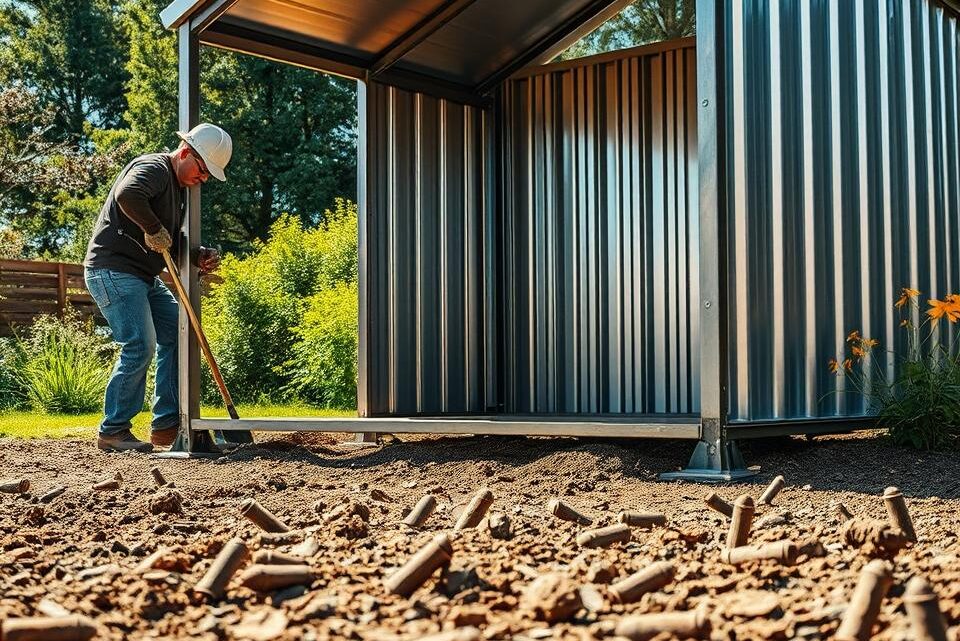
Anchoring a metal garden shed to the ground is a vital first step for any homeowner or gardener in the UK. A secure shed reduces the risk of wind damage, theft and gradual movement that can warp doors or undermine foundations. This guide explains why metal shed anchorage matters, what to check before you start, and how proper shed foundations UK boost long-term shed stability.
Throughout this article you will find clear, practical advice aimed at DIY enthusiasts, landlords and small contractors. We cover site preparation, soil checks, anchor types, step-by-step installation and basic maintenance. Whether you choose ground anchors, screw piles or a bolt-down concrete solution, understanding the options helps you create a secure shed that meets insurers’ expectations and local regulations.
Inhaltsverzeichnis
Key Takeaways
- Anchoring a metal garden shed to the ground prevents wind uplift, vandalism and movement.
- Assess soil type and locate underground services before installing any anchors.
- Choose metal shed anchorage suited to your site: auger anchors for soft ground, bolt-downs for concrete bases.
- Good shed foundations UK practices improve longevity and may be required by insurance policies.
- Regular inspections after severe weather spot loosening, corrosion or movement early.
Why Proper Anchorage Matters for Metal Garden Sheds
A metal garden shed left without secure fixings faces clear hazards. Strong gusts can lift light frames, panels can warp, and doors may jam. These outcomes raise shed risks unanchored owners must consider before installing any structure in a garden.
Uplift and overturning pose real threats to people and property. A shed that becomes airborne can damage fences, cars or neighbouring buildings. Movement of the frame accelerates corrosion where panels rub and water collects, shortening the life of the shed and creating security weaknesses.
UK weather patterns magnify the problem. Coastal gardens and exposed ridgelines see higher gusts, while inland locations still suffer frequent gales. Smooth metal surfaces and light framing increase wind uplift, so a windproof shed relies on correct anchorage to resist uplift forces and reduce sway.
Seasonal freeze–thaw cycles and heavy rain change ground conditions. Clay soils can heave and displace footings, while saturated soils lower anchor holding power. Microclimates around trees, walls or terraces alter wind behaviour, so site-specific anchoring is often required rather than a one-size-fits-all approach.
Insurers expect reasonable precautions against avoidable damage. If a shed blows over, that can jeopardise a claim under shed insurance UK policies, particularly where combustible goods or business stock are stored. Some policies list specific requirements for foundations and restraints.
Local rules and safety practice shape what is acceptable. Sheds below a certain size escape Building Regulations, yet planning restrictions or conservation area rules can apply. Checking shed safety regulations with the local council and consulting utility maps helps avoid costly mistakes and reduces liability for damage to neighbours.
Anchoring a Metal Garden Shed to the Ground
Choosing the right anchor for a metal garden shed starts with a clear look at the options and the ground beneath it. Below are practical notes on common systems, how to match them to site conditions and what to check on your shed’s base and frame before you fix anything in place.

Overview of Common Anchoring Methods
Ground anchors such as auger anchors and helical types are driven into soil and secured to the shed frame with straps or brackets. These work well where the soil offers reasonable holding strength and access for installation is straightforward.
Bolt-down shed installation uses mechanical anchors into concrete pads or a full slab. Chemical resin fixings give extra pull-out resistance for heavy winds or poor soils.
Screw piles, sometimes called helical piles, provide deep, high-capacity anchorage. They suit sites with frost heave risk or where a full concrete slab is impractical.
Concrete sleeper blocks act as mass anchors for lightweight frames. Timber bearer fixings anchor a timber base to paving or concrete and keep the base stable without major excavation.
Choosing the Right Method for Your Site and Soil
Light, well-drained soils often allow the use of auger anchors. They are quick to install and cost effective for small to medium sheds.
Clay or frost-prone soils need deeper solutions. A bolt-down shed on concrete pads or screw piles reduces the risk of movement from frost heave.
Loose sand or gravel gives poor grip to shallow anchors. In those cases, a bolt-down system to concrete or screw piles gives superior holding power.
Coastal locations and exposed sites benefit from multiple anchors or concrete fastening to resist sustained winds. Factor in access, budget and whether the shed will be moved later on.
How to Evaluate Your Shed’s Base and Frame
Start shed base evaluation by checking the manufacturer guidance from brands such as Garden Buildings Direct, Forest or Viking for their recommended fixings. Follow any listed anchor points.
Identify the base type: metal skids, timber bearers or an assembled metal base. Look for solid points to attach straps or brackets without crushing thin sections.
Inspect frame strength. Thin RHS or pressed-metal frames may need reinforcing plates or bespoke brackets to spread loads and avoid local distortion.
Measure the base and mark anchor positions. Corners are primary locations, with midpoints added for larger sheds. Confirm door orientation so anchors do not block access or maintenance.
| Anchor Type | Best Soil | Typical Use | Key Benefit |
|---|---|---|---|
| Auger anchors | Light to medium, well-drained | Small/medium sheds | Quick, low-cost installation |
| Bolt-down shed (concrete) | Stable ground or prepared slab | Permanent installations | High pull-out resistance |
| Screw piles | Frost-prone, loose or deep soils | Sites needing deep anchorage | Excellent for heave and poor soils |
| Concrete sleeper blocks | Varied soils with flat base | Light frames needing mass | Discrete, non-invasive anchor |
| Timber bearer fixings | Paved or concrete foundations | Timber-base sheds | Simple to retrofit and adjust |
Preparing the Site and Assessing Ground Conditions
Before you anchor a shed, carry out a straightforward soil assessment shed to understand ground behaviour. A quick hand test and a percolation check reveal whether the site is clay, loam, sand or gravel. This helps you choose suitable anchors and avoid future movement.

Checking Soil Type: Clay, Loam, Sand, and Gravel
Handle a sample to judge texture. Clay feels sticky and cohesive, loam is crumbly and fertile, sand has a gritty feel and gravel shows loose particles. Each type affects anchor choice and foundation depth.
Clay can heave and shrink with moisture changes. For clay, plan deeper footings or use flexible anchors that tolerate movement. Sandy or gravelly soils give poor lateral support. In those cases, a concrete slab for shed or screw piles perform better.
Loam generally drains and supports standard anchors if surface water is managed. If drainage looks uncertain, a percolation test will show how fast water passes through. For complex or large builds, commission a professional ground investigation.
Locating Underground Services and Permits
Always take steps to locate underground services before any excavation. Use the national utility locator services to locate underground services and identify gas, water, electricity and telecom lines. Striking a service can cause danger and heavy repair bills.
Check with your local council about permits for larger sheds or restricted areas. Notify neighbours if work sits close to boundary lines and confirm access rights. Proper permits and consents prevent delays and enforcement action.
Achieving a Level, Stable Base: Paving, Concrete Slab, or Timber Bearers
Shed base preparation starts with a stable, level platform. For small sheds, paving slabs on compacted hardcore offer a quick, cost-effective solution. Ensure each slab bears uniformly to avoid localised frame stress.
A concrete slab for shed gives a permanent, flat base suited to bolt-down anchor systems. Typical thickness ranges 75–100mm with suitable reinforcement on poor ground. Concrete pads reduce lateral movement on loose soils.
Timber bearers raised on compacted hardcore or concrete blocks create a breathable, elevated floor. Treat and damp-proof the bearers and secure them to avoid uplift. Timber bearers suit uneven sites where a raised floor helps ventilation.
| Soil Type | Risk Profile | Recommended Base | Anchor Approach |
|---|---|---|---|
| Clay | High heave and shrink; seasonal movement | Deep footings or reinforced concrete slab | Flexible anchors or deeper bolt-down systems |
| Loam | Good bearing if drained; moderate risk otherwise | Paving on hardcore, timber bearers, or slab | Standard ground anchors or bolt-downs |
| Sand | Poor lateral resistance; shifts under load | Concrete slab for shed or screw piles | Screw piles or concrete pads for lateral stability |
| Gravel | Loose particles; variable settlement | Compacted hardcore with slab or concrete pads | Concrete anchors or screw piles recommended |
Keep the base square and level within the manufacturer’s tolerances to prevent strain on the frame. Plan falls and drainage away from the shed to limit standing water and reduce corrosion over time.
Anchor Types and Materials for Metal Sheds
Choosing the right anchors and materials keeps a metal garden shed stable and durable in UK conditions. Below are common options, their strengths and drawbacks, plus suggestions for materials and fixings that resist damp and salt air.
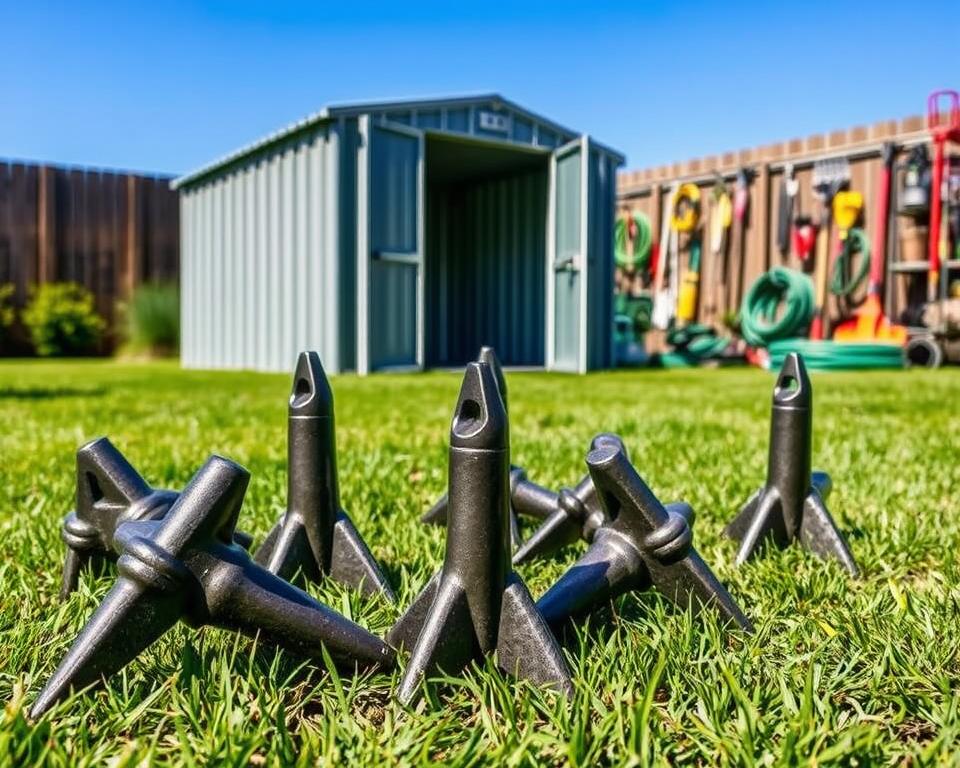
Ground anchors and auger anchors
Auger anchors are screwed into the soil with a bar or driver. They work well in loam and compacted soils. In windy locations use multiple points at corners and midpoints. Many installers in the UK choose auger anchors UK for temporary to semi-permanent fixing because they are quick and removable.
Sizes and holding capacities vary. Auger anchors are cost-effective and easy to install. They perform less well in very loose sand or frost-prone clay unless driven deeper or paired with mass.
Concrete anchors and bolt-down systems
For permanent installs use chemical resin anchors or mechanical expansion bolts set into a poured pad or slab. Wedge anchors and sleeve anchors give high tensile and shear capacity for security-critical sites.
Ensure correct embedment depth and allow concrete to cure before loading. Bolt-down anchors suit heavy sheds and high-wind zones where fixed, robust attachment is essential.
Concrete sleeper blocks and screw piles
Concrete sleeper blocks act as heavy mass supports beneath timber bearers. They can be bonded to the base or used with straps for added hold.
Screw piles, often galvanised helical piles, are screwed or driven to a design depth to reach load-bearing strata. For poor soils they give strong lateral and uplift resistance. Many groundworks firms supply screw piles shed installations for minimal excavation sites.
Corrosion-resistant materials and fixings for longevity
Use galvanised anchors and hot-dipped galvanised fixings where possible. For coastal or severe exposure specify marine-grade stainless steel A4 for bolts and connectors. Rubber or neoprene washers and suitable sealants protect penetration points from moisture.
Avoid plain steel in contact with wet timber or soil. Consider sacrificial coatings and an inspection schedule to extend service life. For security and low maintenance choose stainless fixings shed to reduce the risk of rust and failure.
To compare options quickly, consider a simple table of typical use, cost, and best soils when planning your anchor choice.
| Anchor Type | Best Soil | Typical Use | Durability / Fixings |
|---|---|---|---|
| Auger anchors | Loam, compacted clay | Temporary to semi-permanent; quick installs | Galvanised; suitable with stainless fixings shed |
| Bolt-down anchors | Concrete slab | Permanent mounts; high security | Resin or wedge bolts; hot-dip galvanised or stainless |
| Concrete sleeper blocks | Most soils with minimal excavation | Mass support for bearers; simple installation | Use galvanised straps and stainless fixings shed |
| Screw piles | Poor or variable soils | Permanent, minimal digging; high load capacity | Galvanised piles; pair with stainless bolts |
Step-by-Step Guide to Installing Ground Anchors
A clear sequence makes install ground anchors shed straightforward and safe. Start by gathering the right kit, mark anchor points with care, drive auger anchors accurately, then secure the shed frame with straps or brackets. Small, measured steps reduce rework and protect the shed in high winds.
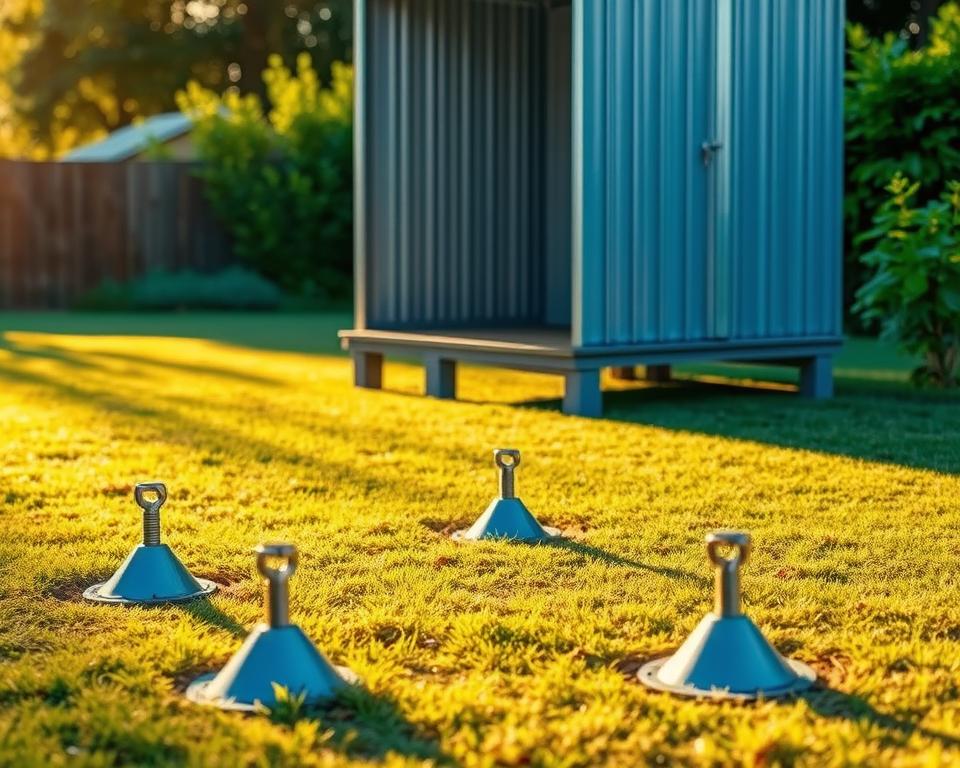
Tools and materials you’ll need
Prepare auger anchors or helical anchors matched to your soil and the shed’s load. Add anchor straps shed, galvanised brackets, ratchet straps or turnbuckles for tensioning. Essential shed anchoring tools include a spade, spirit level, tape measure, marker pegs, sledgehammer, elbow bar or anchor driver, and a cordless drill with metal bits. Wear gloves, eye protection and steel-toe boots.
Marking out and positioning anchor points
Place anchors at the corners first. For larger units add anchors at midpoints of the long sides to create a stable rectangular or triangular layout. Measure diagonals to confirm the base is square. Mark spots on the base plate or bearers so fixings hit solid material and do not clash with shelving or door movement.
Driving and securing auger or helical anchors
For hand-screwed auger anchor installation, feed the driver bar through the anchor and turn clockwise with steady downward pressure. Stop when the anchor reaches the manufacturer’s recommended depth and feels resistant to rotation. For larger helical anchors use a mechanical driver or powered auger to hit depth and torque targets.
Check manufacturer load tables to confirm holding capacity. If soil is uncertain, embed anchors deeper or add extra anchors. Use a torque wrench where required to achieve specified tightness without damaging the anchor threads.
Attaching anchor straps or brackets to the shed frame
Fix galvanised or stainless steel brackets to strong parts of the frame, such as base plates or reinforced bearers. For thin steel use self-drilling metal screws. For heavier frames use bolts with backing plates. Tighten to the recommended torque to avoid loosening under load.
Fit anchor straps shed or turnbuckles and tension to remove slack. Do not over-tension; excessive force can distort the frame or misalign doors. Seal around fixings with a compatible sealant to keep water out. Test door operation after final tensioning and re-check all shed anchoring tools for secure fitment.
Step-by-Step Guide to Installing Bolt-Down and Concrete Anchors
This guide walks through preparing a concrete base, setting anchor bolts and chemical fixings, checking torque, and sealing to prevent water ingress. Follow each stage to secure a bolt-down shed to a stable concrete pads shed foundation that meets performance and durability expectations.
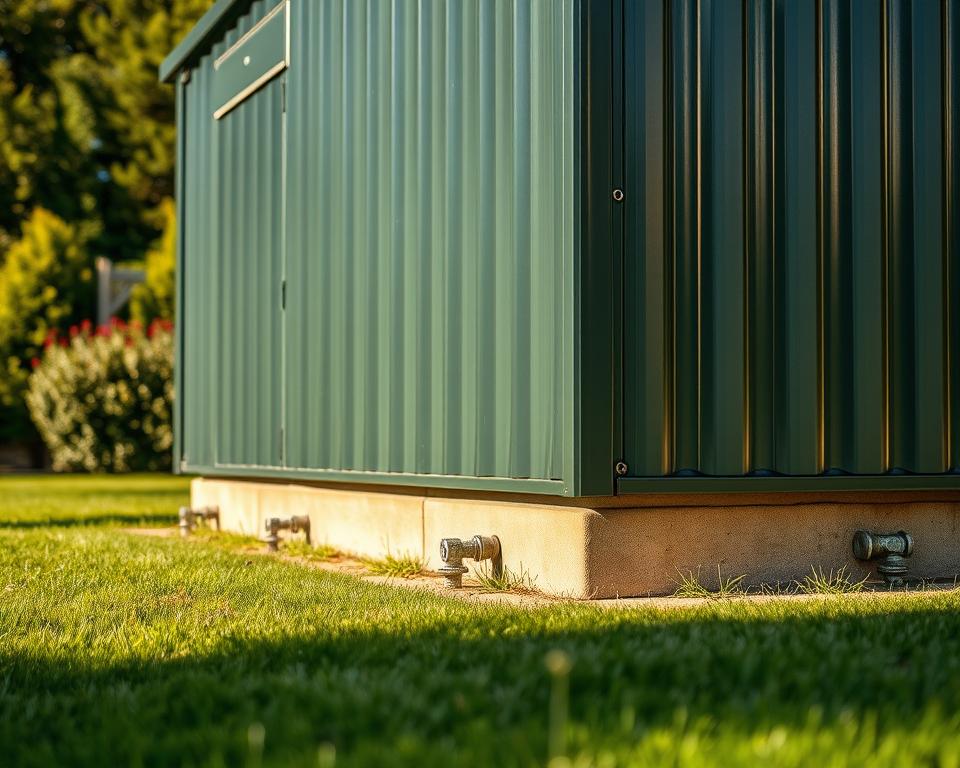
Preparing and Pouring a Concrete Base or Pads
Excavate to the required depth and lay compacted hardcore such as MOT Type 1. Add a levelling layer of sharp sand before setting formwork for a full slab or individual pads.
Place reinforcement mesh or rebar where the slab thickness or ground conditions demand it. For small garden buildings a 75–100mm slab is typical. Increase thickness and reinforcement on weak ground or for heavier loads.
Allow adequate curing. Expect around seven days for light loading and 28 days for full strength before loading or drilling for anchors. Proper curing reduces the risk of cracking around anchor points during a concrete anchor installation.
Installing Anchor Bolts and Chemical Fixings
For cast-in anchors set bolts into wet concrete using a template to keep positions plumb and correctly spaced. For post-installed anchors, drill holes to the manufacturer’s specified diameter and depth.
Clean drilled holes thoroughly by blowing and brushing out debris. Use resin capsules or measured injectible epoxy systems when specified. Choose recognised products such as Hilti HIT or Rawlplug and follow temperature and curing guidelines for chemical anchors resin.
Observe edge distances and spacing to avoid breakout. This step is vital when planning concrete anchor installation for wind loading and long-term stability of a bolt-down shed.
Ensuring Correct Torque and Fixing Tightness
Use a calibrated torque wrench to apply the manufacturer’s specified torque for mechanical anchors. Under-torquing reduces holding capacity. Over-torquing can damage the anchor or the concrete.
For chemical anchors resin systems wait for the full cure time before applying load. Check the resin product for torque guidance and load ratings. Re-check torque after initial weathering and include these checks in routine maintenance.
Sealing Around Fixings to Prevent Water Ingress
Protect anchor heads and any penetration with exterior-grade sealants such as silicone or polyurethane. Bitumen mastic is an option for areas prone to pooling water. A good seal prevents corrosion where bolts meet the concrete pads shed surface.
Where timber bearers sit on a slab add a damp-proof course and noggings to prevent rot. Inspect seals periodically and renew if cracked or degraded to maintain the long life of a bolt-down shed.
| Stage | Key Actions | Typical Timing | Notes |
|---|---|---|---|
| Excavation & Base Prep | Excavate, compact MOT Type 1, lay sharp sand, set formwork | 1 day | Depth depends on soil; confirm local ground conditions |
| Reinforcement & Pour | Place mesh/rebar, pour concrete to 75–100mm (or thicker) | 1 day | Increase thickness on weak ground or heavy loads |
| Curing | Keep moist, protect from frost and rapid drying | 7–28 days | 28 days for full strength before drilling for anchors |
| Anchor Installation | Cast-in or drill, clean holes, insert bolts or chemical anchors resin | Varies by method | Follow manufacturer specs for spacing and edge distance |
| Tightening & Testing | Use calibrated torque wrench, allow resin cure then torque | Initial check after curing, periodic re-checks | Record torque values for maintenance |
| Sealing & Protection | Apply silicone, polyurethane or bitumen mastic around fixings | 1–2 hours to apply | Inspect annually; renew if degraded to prevent rust |
Maintaining and Inspecting Anchors Over Time
Regular upkeep keeps a metal shed secure and extends the life of its fixings. A short, consistent programme of shed anchor maintenance helps spot problems early and saves on costly repairs. Carry out checks after strong winds and heavy rain, and at least once a year.
Routine checks after severe weather
After storms, inspect shed anchors for any visible movement. Look for loosened straps, detached brackets or uplifted slabs. Check the shed panels for new dents and doors for increased friction or misalignment, which can show frame distortion.
Make a simple log of each inspection. Note the date, weather event and anything you found. This record supports insurance claims and helps plan repairs.
Signs of corrosion, movement or loosening
Look closely for rust on bolts, straps and anchor heads, especially where metal meets sealant. Corrosion checks anchors should include joints and hidden fasteners beneath eaves or underbearers.
Watch for cracking in concrete around bolt holes, sagging between base and foundation, or a rattling sound from fixings. Timber bearer rot where fixings pass through can mean loss of grip and needs immediate attention.
How to re-tighten or replace faulty fixings
Re-torque mechanical anchors to the manufacturer’s specification. If bolts show corrosion, replace them with stainless steel or hot-dip galvanised equivalents to reduce future issues.
For failed chemical anchors, remove the bolt and resin, then re-drill to a larger diameter and re-anchor. If concrete has broken out, install a new pad or consult a groundworker. Replace corroded straps or brackets and fit backing plates where frames have weakened.
Keep a checklist when you inspect shed anchors and note any corrosion checks anchors and actions taken. Periodic re-tighten shed fixings after the first season, then at routine intervals, keeps the shed stable and secure.
Cost, Tools and Hiring a Professional vs DIY
Choosing how to anchor a metal shed blends budget, skill and site conditions. Below is a concise guide to help you weigh estimated costs, the essential kit for a DIY job and when it makes sense to hire a professional installer or groundworker.
Auger and ground anchors are the most affordable option for many gardens. Materials typically range from £10–£40 per anchor depending on size and galvanisation. For an average shed you might need 4–8 anchors, putting materials at about £40–£320.
Bolt-down systems to a concrete slab or pads demand more work. Slab materials and labour often come in at £150–£600 depending on size. Anchor kits for chemical or mechanical fixings cost around £20–£80. A DIY project usually totals £200–£800. Professional installation will push that figure higher.
Screw piles offer strong, long-lasting support. Individual piles vary widely in price, roughly £80–£300 each. Professional installation is commonly required. A typical full install can range from £400 up to £1,500 or more, depending on site access and number of piles.
Labour and total budget factors
Groundworker rates in the UK vary. Expect roughly £150–£300 per day for a skilled labourer or a small team. Specialist contractors and engineers charge more. Final anchoring cost shed UK depends on site difficulty, the number of fixings, material grade and whether you engage contractors.
Essential DIY shed anchoring tools
- Hand tools: spade, mallet or sledgehammer, spirit level, tape measure and marker pegs.
- Power tools: cordless drill with metal bits, SDS hammer drill for concrete and an impact driver for bolts.
- Anchor-specific tools: anchor driver bar, torque wrench or heavy-duty ratchet and a turning tool for helical anchors.
- PPE and consumables: gloves, safety goggles, ear protection, sturdy boots, sealant, washers, galvanised fixings, resin cartridges and concrete mix.
When to hire a professional installer or hire groundworker shed
If the site has complex ground conditions such as a high water table, unknown services or contamination, you should consider hiring an expert. Large, heavy sheds or projects using screw piles need accurate torque and load calculations best handled by professionals.
Insurers or local rules may demand certified installation or specific manufacturer warranties. If you lack the right tools, physical ability or want an insurance-backed guarantee, it is sensible to hire a contractor or groundworker.
Balancing cost and confidence
DIY can save money when conditions are straightforward and you have the correct DIY shed anchoring tools. For difficult sites or when precise calculations are essential, compare quotes and check credentials before you hire groundworker shed. For projects involving screw piles, research typical screw pile cost UK and request detailed estimates from reputable installers.
Conclusion
Proper anchoring of a metal garden shed is essential for safety, security and longevity, particularly given the variable UK climate. This secure shed guide has walked through soil assessment, base preparation and the main anchoring options so you can choose the right system for your ground type and exposure.
For most suburban gardens, auger anchors or bolt-down pads on a well-prepared base will deliver long-term shed stability. In exposed, coastal or poor ground conditions, concrete pads or screw piles are more suitable and may justify hiring a groundworker. Always locate underground services, use appropriate PPE and follow manufacturer torque and curing specifications.
Practical next steps are simple: assess your site, consult the shed manufacturer, pick corrosion-resistant fixings and follow the step-by-step installation and maintenance guidance in this secure shed guide. Keeping records for insurance and carrying out routine inspections will protect both the structure and the people around it.
A correctly anchored shed protects possessions, preserves the structure and reduces risk to neighbouring property. Investing the right time and resources now will ensure anchoring metal shed UK projects deliver reliable long-term shed stability.
FAQ
Why is anchoring a metal garden shed important?
Anchoring prevents uplift, overturning and movement during high winds and storms. A secure shed protects possessions, reduces the risk of damage to neighbours’ property and avoids structural distortion that can lead to leaks or security weaknesses. Insurers often expect reasonable steps to secure outbuildings, so proper anchorage can affect cover for storm damage.
How do I choose the right anchoring method for my site?
Select anchors based on soil type, wind exposure, permanence and budget. Auger or ground anchors suit well‑drained suburban soils; concrete pads with mechanical or chemical anchors work best on loose sand, gravel or high‑wind/coastal sites. For frost‑prone clay or poor bearing ground, consider screw piles or deeper concrete solutions. Factor in access and whether the shed may need relocating.
What site checks should I do before anchoring?
Check soil type by hand (sticky for clay, crumbly for loam, gritty for sand) and test drainage. Locate underground services using national utility locator services before any digging. Check local council planning rules if the shed is large or in a conservation area. Also assess surrounding trees, drains and boundaries to avoid future risks.
Can I use auger anchors in clay or frost‑prone ground?
Auger anchors can work in many clays but are more vulnerable to frost heave in high‑plasticity clays. In frost‑prone or heave‑susceptible soils, deeper anchors, screw piles or bolt‑down concrete pads provide better long‑term resistance. When in doubt, increase embedment depth or choose a method that resists uplift and lateral movement.
How many anchors do I need for a typical shed?
For a small to medium shed, anchors at each corner are the minimum. Larger sheds usually require additional anchors at midpoints of longer sides or a triangular layout to distribute loads evenly. Check the shed’s base dimensions and manufacturer guidance; heavier and higher‑wind sites often need more anchors.
What materials and fixings resist corrosion in the UK climate?
Use hot‑dip galvanised anchors, stainless‑steel (A2 or A4) bolts and galvanised brackets. For coastal locations, choose marine‑grade stainless steel (A4) and additional sacrificial coatings. Use neoprene or rubber washers and exterior‑grade sealants at penetration points to prevent water ingress and prolong service life.
How do I install an auger or helical ground anchor?
Mark anchor positions at corners and midpoints, then drive the auger by inserting the driver bar and turning clockwise until reaching the recommended depth and torque. For larger helical piles, use a mechanical driver. Attach galvanised straps or brackets to structurally sound points on the shed frame and tension with turnbuckles or ratchets—avoiding over‑tensioning that could distort the frame.
What are the steps for bolt‑down anchors and concrete pads?
Excavate and lay compacted hardcore, set formwork, place reinforcement and pour a 75–100mm slab or thicker where required. Cure concrete adequately (light loading ~7 days, full strength ~28 days). Install cast‑in anchors or drill, clean holes and use chemical resins (eg Hilti, Rawlplug) or mechanical expansion anchors, torquing to manufacturer values and sealing around fixings.
How do I check for correct torque and fixing tightness?
Use a calibrated torque wrench and follow anchor manufacturer torque specifications. For mechanical anchors, achieve specified torque; for chemical anchors, allow full cure before loading and then check torque. Re‑check torque after initial weathering and periodically during maintenance to ensure sustained performance.
What routine maintenance should I perform on anchors?
Inspect anchors after severe weather and at least annually. Look for rust, loosened straps, uplift, cracking in concrete or sagging between base and foundation. Re‑torque mechanical anchors, replace corroded fixings with galvanised or stainless alternatives, renew sealant and, if chemical anchors fail, re‑drill and re‑anchor or repair the pad.
Are there legal or insurance considerations when anchoring a shed?
Many insurers expect reasonable precautions; an unanchored shed that causes damage could affect claims. Building Regulations rarely apply to small sheds, but planning rules may in conservation areas or for oversized outbuildings. Always check with your local council and your insurer’s requirements—especially if storing business stock or combustible materials.
What tools and PPE do I need for a DIY anchoring job?
Essential tools include a spade, spirit level, tape measure, sledgehammer, anchor driver bar, torque wrench, cordless drill and an SDS hammer for concrete. PPE should include gloves, eye protection, ear protection and steel‑toe boots. For chemical anchors, use appropriate cartridges and follow manufacturer safety guidance.
When should I hire a professional installer?
Hire a professional if the site has complex ground conditions, a high water table, unknown services, or if the shed is large and heavy. Professionals are recommended for screw piles, when load calculations or certified installation are required, or when you lack the necessary tools or physical capability. They provide warranty and compliance assurance.
What are realistic cost expectations for anchoring in the UK?
Auger anchors typically cost £10–£40 each; a set for an average shed may be £40–£320 in materials. Concrete slab and bolt‑down DIY projects often fall between £200–£800 depending on size. Screw piles vary widely (£80–£300 each plus installation); full professional installs can range £400–£1,500+. Labour rates for groundworkers are commonly £150–£300 per day.
How do I ensure anchor points don’t interfere with doors or internal shelving?
Plan anchor positions before finalising base and frame fastening. Measure door swing and shelving locations, and mark anchor spots to avoid internal obstructions. For timber bearers, use pads or sleeper blocks positioned clear of door thresholds, and check door operation after securing and tensioning anchors.