DIY Guide: Concrete Foundation for Shed Construction – Expert Tips

Building a shed in the UK requires careful planning, especially when it comes to laying the concrete foundation. A well-constructed foundation is crucial for the longevity and stability of your shed, particularly in the UK’s varied climate.
You need to consider factors such as drainage, ground conditions, and the size of your shed when preparing the site. This comprehensive guide will walk you through the process, providing expert tips tailored to the UK climate.
By following this DIY guide, you’ll be able to construct a robust concrete foundation that will support your shed and withstand the elements.
Inhaltsverzeichnis
Key Takeaways
- Understand the importance of a proper foundation for your shed.
- Learn how to prepare the site for construction.
- Discover expert tips for building a concrete foundation.
- Find out how to ensure drainage and stability.
- Understand the benefits of a well-constructed foundation in the UK climate.
Understanding the Importance of a Proper Shed Foundation
The foundation of your shed plays a vital role in its structural integrity and lifespan. A well-constructed foundation ensures that your shed remains stable and secure, protecting it from environmental factors such as moisture and soil erosion.
Why Concrete Foundations Are Ideal for UK Climate
The UK’s climate, characterized by frequent rainfall and varying temperatures, demands a foundation that can withstand such conditions. Concrete foundations are particularly suited for the UK climate due to their durability and resistance to moisture. Unlike other materials, concrete does not rot or decay when exposed to wet conditions, making it an ideal choice for shed foundations.
Long-term Benefits of Investing in Quality Foundations
Investing in a quality foundation may seem costly upfront, but it offers numerous long-term benefits. A sturdy foundation reduces the need for frequent repairs and maintenance, saving you money over time. Moreover, it prevents structural issues that could compromise the safety and functionality of your shed.
| Benefits | Description |
|---|---|
| Durability | Concrete foundations withstand harsh weather conditions and last longer. |
| Low Maintenance | Reduces the need for frequent repairs and maintenance. |
| Structural Integrity | Ensures the shed remains stable and secure. |
Planning Your Concrete Foundation Project
To build a durable shed, you must first plan your concrete foundation project meticulously. This involves several key considerations to ensure your foundation is both strong and compliant with UK regulations.
Determining the Right Size and Location
When determining the size and location of your shed’s foundation, consider the shed’s dimensions and the space needed for access around it. Ensure the area is level and clear of debris. The size of the foundation should be slightly larger than the shed itself to accommodate any external cladding or finishes.
Assessing Ground Conditions in Your Garden
Assessing the ground conditions is crucial. Check for soil type, drainage, and any signs of waterlogging. You may need to perform a simple percolation test or consult with a professional to determine the soil’s stability and drainage characteristics.
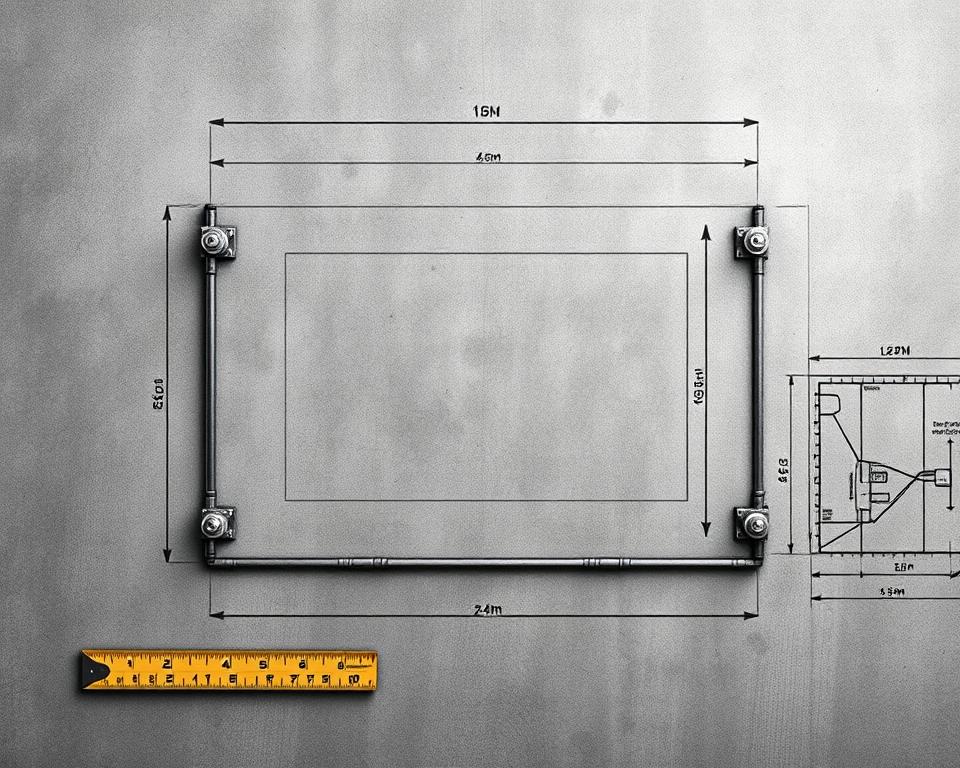
Obtaining Necessary Permissions and Compliance with UK Building Regulations
Before commencing your project, verify if you need planning permission or if your project complies with the UK’s Building Regulations. Certain sheds may be considered ‘permitted development,’ but it’s essential to check with your local authority to avoid potential fines.
| Aspect | Considerations |
|---|---|
| Size and Location | Shed dimensions, access space, level ground |
| Ground Conditions | Soil type, drainage, waterlogging |
| Permissions and Compliance | Planning permission, Building Regulations |
By carefully planning your concrete foundation, you can ensure a stable base for your shed that meets all necessary regulations and withstands the UK climate.
Essential Tools and Materials Checklist
Before you start constructing your shed’s concrete foundation, it’s essential to gather all the necessary tools and materials. Having everything on hand will streamline the process and prevent unnecessary delays. A well-prepared foundation is crucial for the stability and longevity of your shed.
Tools Required for Foundation Construction
To begin, you’ll need a variety of tools to prepare the site and lay the foundation. These include both hand tools and power equipment, as well as measuring and levelling instruments.
Hand Tools and Power Equipment
Hand tools such as shovels, trowels, and spirit levels are indispensable for tasks like digging, smoothing, and ensuring the foundation is level. Power equipment, including concrete mixers or drills, may also be necessary depending on the scale of your project.
Measuring and Levelling Instruments
Accurate measurements and levelling are critical to a successful foundation. Use a laser level and a tape measure to ensure your foundation is square and level.

Materials and Quantities Calculator
Once you have your tools, you’ll need to calculate the materials required. This includes concrete mix components, formwork, and reinforcement materials.
Concrete Mix Components
The concrete mix is a critical component of your foundation. You’ll need to determine the right ratio of cement, sand, and aggregate for your mix. A typical mix for a shed foundation might be 1 part cement to 2 parts sand to 3 parts aggregate.
Formwork and Reinforcement Materials
Formwork provides the shape for your foundation, while reinforcement materials like rebar or mesh add strength. Ensure you have enough timber for the formwork and the necessary reinforcement materials.
| Material | Quantity | Purpose |
|---|---|---|
| Concrete Mix | Calculated based on foundation size | Foundation base |
| Timber for Formwork | Dependent on foundation perimeter | Shaping the foundation |
| Rebar or Mesh | Based on foundation size and design | Reinforcing the foundation |
Types of Concrete Foundations for Garden Sheds
A well-constructed foundation is essential for any garden shed, and there are several types of concrete foundations to consider. The right choice depends on factors such as the size of your shed, the condition of your garden soil, and your budget.
Slab Foundations
Slab foundations are a popular choice for garden sheds. They consist of a single layer of concrete that covers the entire footprint of the shed. Slab foundations are ideal for smaller sheds and provide a solid, level base. They are relatively quick to install and can be finished with a smooth or textured surface.
Pier Foundations
Pier foundations involve constructing a series of concrete piers that support the shed. This type is suitable for larger sheds or those built on sloping ground. Pier foundations allow for better drainage and can be more cost-effective than a full slab.
Strip Foundations
Strip foundations are used for sheds that require a more traditional foundation approach. They involve laying concrete strips under the walls of the shed. Strip foundations are versatile and can be used on various soil types, providing a stable base for the shed.
Choosing the Right Type for Your Needs
When deciding on the type of concrete foundation for your garden shed, consider factors such as shed size, soil condition, and local building regulations. A comparison table can help you visualize the differences:
| Foundation Type | Ideal For | Key Benefits |
|---|---|---|
| Slab | Small to medium sheds, level ground | Quick installation, solid base |
| Pier | Large sheds, sloping ground | Better drainage, cost-effective |
| Strip | Various shed sizes, different soil types | Versatile, stable base |
By understanding the different types of concrete foundations and their advantages, you can make an informed decision that suits your garden shed needs.

DIY Guide: Concrete Foundation for Shed Construction
A well-built concrete foundation is the backbone of any successful shed construction project. It provides a solid base that ensures the longevity and stability of your shed.
Overview of the Construction Process
The construction process involves several key steps, starting with preparing the site and laying out the foundation area. You’ll need to excavate the ground, create formwork, and then pour concrete into it. Ensuring that each step is done correctly is crucial for a successful outcome.
Site preparation is critical and involves clearing the area, removing any debris, and levelling the ground. Once the site is prepared, you can start marking out the foundation area according to your shed’s dimensions.
Estimated Timeline and Budget Considerations
Understanding the timeline and budget for your project is vital. The time it takes to complete the foundation can vary depending on the size of your shed and the complexity of the job.
Cost Breakdown for UK Materials
The cost of materials for a concrete foundation in the UK can vary, but you can expect to spend around £500-£1000 for a standard-sized shed. This includes the cost of concrete, reinforcement materials, and formwork.
Realistic Timeframes for DIY Construction
For a DIY enthusiast, laying a concrete foundation can take anywhere from a weekend to several weeks, depending on the project’s scope and your availability. It’s essential to plan realistically and allow for unexpected delays.
Safety Precautions When Working with Concrete
Working with concrete requires taking certain safety precautions to avoid injury. Always wear protective gear, including gloves, safety glasses, and a dust mask. Ensure the area is well-ventilated, and avoid skin contact with wet concrete.
Proper safety equipment is your first line of defence against accidents. Make sure you understand how to handle concrete safely before you start your project.

Site Preparation Techniques
A well-prepared site is essential for a stable and long-lasting shed foundation. Proper site preparation involves several key steps that ensure your foundation is built on a level, stable, and dry surface.
Clearing and Levelling the Ground
The first step in site preparation is clearing the area of any debris, vegetation, or obstructions. Use a garden fork or a mechanical digger for larger areas to remove roots and large stones. Once cleared, assess the ground for its levelness. You can use a spirit level and a straight edge to determine the high and low spots. Fill in low areas with compacted gravel or sand to create a level surface.
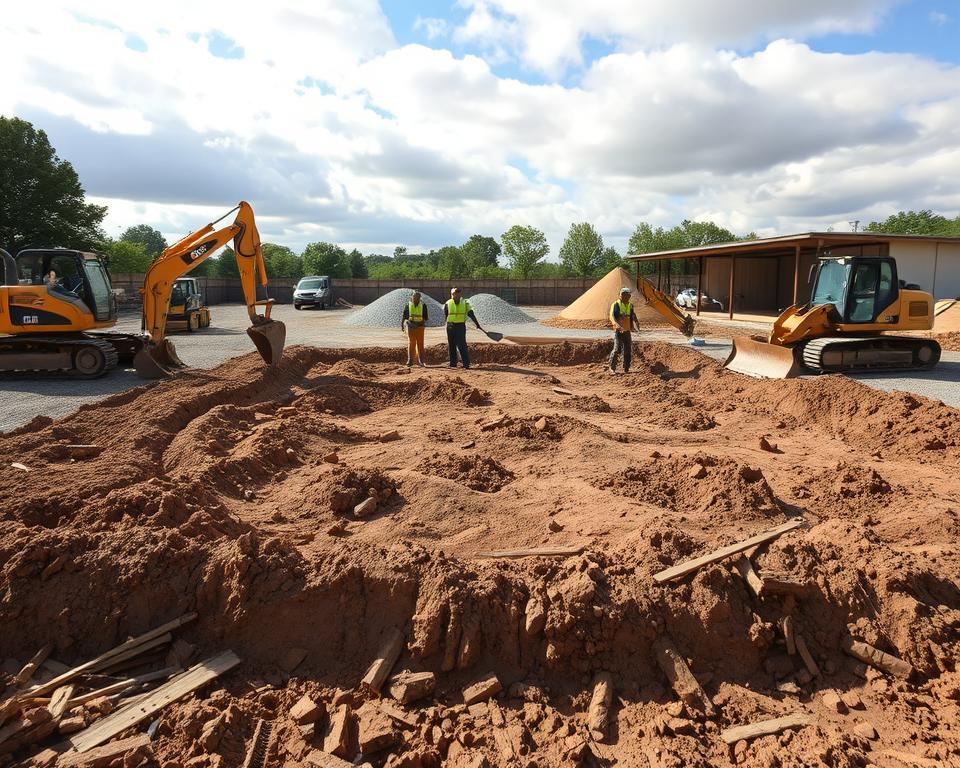
Setting Out and Marking Your Foundation Area
After levelling, mark out the area where your foundation will be laid. Use wooden stakes and string to outline the perimeter. Ensure the corners are square by measuring diagonally between opposite corners; the measurements should be equal. Check local guidelines for any specific marking requirements.
Dealing with Drainage Issues Common in UK Gardens
UK gardens often suffer from drainage issues due to clay soils. To mitigate this, install a French drain if necessary, or ensure the ground slopes away from the foundation area. Use a permeable material like gravel around the foundation to help with water dispersion. Proper drainage is crucial to prevent water accumulation under your shed, which can lead to foundation damage.
By following these site preparation techniques, you can ensure a solid foundation for your shed, enhancing its durability and stability.
Excavation Guidelines for Different Soil Types
Before you start digging, it’s essential to know the type of soil you’re dealing with and how it affects your foundation. Excavation is a critical step in preparing the ground for your shed’s concrete foundation. The process varies significantly depending on the soil type and local conditions such as the UK frost line.
Proper Depth Requirements for UK Frost Line
The depth of your excavation is crucial to prevent damage from frost heave. In the UK, the frost line can vary, but generally, you need to excavate to a depth below this line to ensure stability. Typically, this means excavating to at least 450mm deep, but this can vary depending on your location and soil type.
| Region | Recommended Excavation Depth |
|---|---|
| Southern England | 450mm |
| Northern England/Scotland | 600mm |
Handling Clay, Sandy, and Loamy Soils
Different soils present unique challenges. Clay soils retain water and can expand, potentially causing foundation shifts. Sandy soils drain quickly but may require additional support to prevent collapse. Loamy soils are generally more stable but still need careful handling. Understanding these characteristics helps you prepare the ground effectively.

Managing Excavated Soil
Once you’ve excavated, managing the removed soil is essential. You can either reuse it to backfill around your foundation or remove it from the site. Ensure that the area is level and compact the backfill material to prevent settling issues.
By following these guidelines, you can ensure a solid foundation for your shed, regardless of the soil type you’re working with.
Creating Formwork for Your Concrete Pour
Creating formwork is a fundamental step in preparing for your concrete pour. Formwork acts as a mould into which you will pour your concrete, giving your foundation its shape and ensuring it sets properly. To build effective formwork, you need to focus on selecting the right materials, constructing it sturdily, and ensuring it is accurately aligned.
Selecting Appropriate Timber for Forms
When it comes to selecting timber for your formwork, you should opt for sturdy, straight-grained wood that can withstand the pressure of the wet concrete. Plywood or oriented strand board (OSB) are popular choices due to their strength and cost-effectiveness. Ensure the timber is free from knots and other defects that could compromise the formwork’s integrity.
Building and Bracing Your Forms
Building your formwork involves constructing a box that matches your foundation’s dimensions. Use wooden stakes and braces to secure the formwork in place, ensuring it can resist the weight of the concrete. It’s crucial to double-check the formwork’s alignment and levels to avoid any issues during the concrete pour.
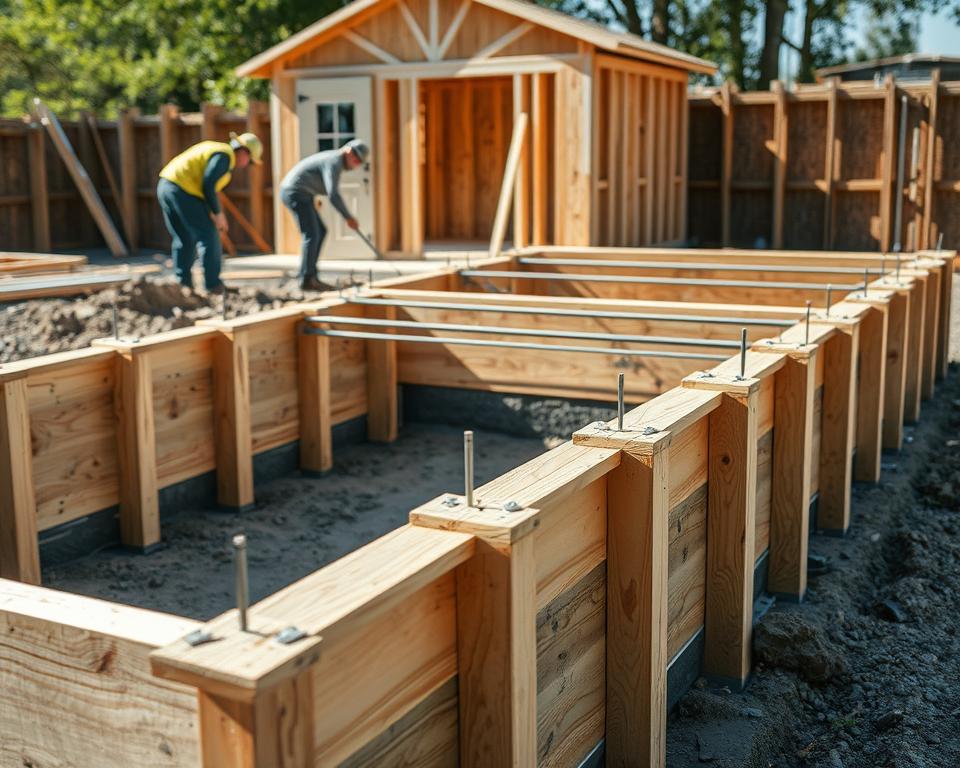
Ensuring Square Corners and Level Edges
To guarantee your foundation is properly shaped, you must ensure the formwork has square corners and level edges. Use a carpenter’s square to verify the corners, and a spirit level to check the edges are perfectly level. This attention to detail will result in a professionally finished foundation.
By following these guidelines, you can create robust formwork that will support your concrete pour, resulting in a strong and durable foundation for your shed.
Reinforcement Techniques for Stronger Foundations
Reinforcement is a critical component in constructing a robust foundation that can withstand various environmental conditions. A well-reinforced foundation is essential for the structural integrity and longevity of your shed.
Using Rebar and Mesh in Your Foundation
Rebar (reinforcing bar) and mesh are commonly used materials for reinforcing concrete foundations. Rebar is used to add tensile strength to the concrete, while mesh helps in distributing the load across the foundation.
Selecting the Right Gauge and Type
The gauge and type of rebar or mesh you choose depend on the size of your foundation and the expected load it will bear. Typically, a 10mm or 12mm rebar is suitable for most shed foundations.
Cutting and Bending Techniques
Cutting and bending rebar require specific tools and techniques. You can use a rebar cutter or a hacksaw for cutting, and a rebar bender for bending. It’s crucial to follow safety guidelines when handling these tools.
Proper Spacing and Positioning of Reinforcement
The spacing and positioning of rebar or mesh within the foundation are critical for its effectiveness. Generally, rebar should be placed in a grid pattern, with the spacing determined by the foundation’s design and load-bearing requirements.
| Foundation Size | Rebar Spacing | Mesh Size |
|---|---|---|
| Small (up to 6×4 feet) | 300mm | 100x100mm |
| Medium (6×6 to 8×6 feet) | 250mm | 100x100mm |
| Large (8×8 feet and above) | 200mm | 50x50mm |
For a visual representation of reinforcement techniques, consider the following image: 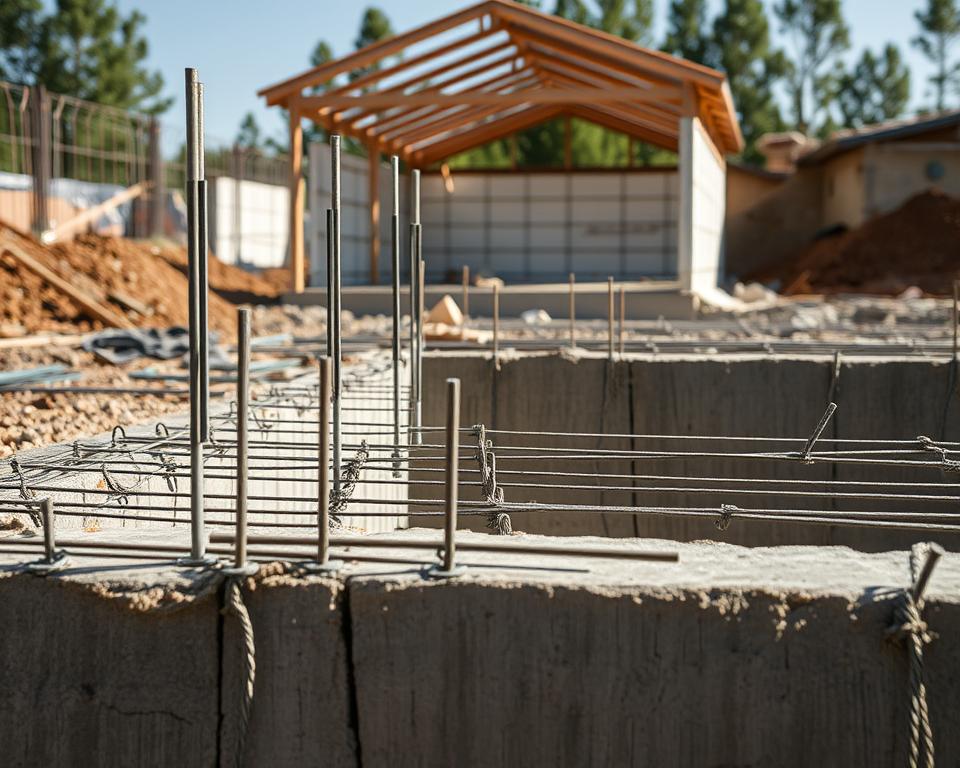
Mixing and Pouring Concrete Correctly
To ensure a durable and long-lasting shed foundation, it’s crucial to understand the intricacies of concrete mixing and pouring. This process is fundamental to achieving a strong and stable base for your shed.
Calculating the Right Concrete Mix Ratio
Calculating the correct concrete mix ratio is vital for the strength and durability of your foundation. A typical mix ratio for shed foundations in the UK might be 1:2:4 (cement:sand:aggregate). However, this can vary based on the specific requirements of your project, including the load-bearing capacity needed and the environmental conditions.
To determine the exact mix ratio, consider factors such as the type of soil, the weight of the shed, and local building regulations. It’s also advisable to consult with a professional or use a mix ratio calculator to ensure accuracy.
Using Ready-Mix vs. Hand-Mixing Concrete
When it comes to mixing concrete, you have two primary options: ready-mix or hand-mixing. Ready-mix concrete is purchased pre-mixed from a supplier, offering convenience and consistency. Hand-mixing, on the other hand, allows for more control over the mix ratio but requires more labor and the right equipment.
Ready-mix is generally recommended for larger projects or when you’re short on time. For smaller sheds, hand-mixing can be a cost-effective and viable option, provided you’re confident in your ability to achieve the correct mix ratio.
Techniques for Even Pouring and Distribution
Once your concrete is mixed, the next critical step is pouring and distributing it evenly across the foundation area. Use a consistent pouring technique to avoid creating air pockets or uneven surfaces.

Working with Concrete in Cold Weather
In cold weather, concrete can set more slowly, potentially weakening the structure. Use cold-weather admixtures to help mitigate this issue, and consider covering the concrete with insulation to retain heat.
Managing Concrete in Hot or Rainy Conditions
In hot weather, concrete can dry too quickly, leading to cracking. Use retarding admixtures to slow down the drying process, and keep the surface moist with water. In rainy conditions, protect your concrete pour with tarps or plastic sheeting to prevent water from diluting the mix.
By mastering the techniques for mixing, pouring, and managing concrete under various conditions, you’ll be well on your way to creating a robust and reliable foundation for your shed.
Finishing and Curing Your Concrete Foundation
Finishing and curing are the final, yet vital, stages in establishing a strong and lasting concrete foundation for your shed. These processes are crucial for ensuring the durability and longevity of your foundation, especially under British weather conditions.
Levelling and Smoothing Techniques
After pouring the concrete, use a levelling tool to ensure the surface is even and smooth. This step is essential for providing a stable base for your shed. You can use a tamping tool or a vibratory plate to remove any air pockets and achieve a uniform surface.

Proper Curing Methods for British Weather Conditions
Curing your concrete correctly is vital, especially in the UK’s often damp and cool climate. You can use a curing compound to prevent moisture loss, or cover the concrete with a damp cloth or plastic sheeting to maintain humidity. These methods help in achieving optimal strength.
Protecting New Concrete from Rain and Frost
New concrete is vulnerable to rain and frost, which can significantly weaken it. To protect it, cover the concrete with a waterproof membrane or tarpaulin during rainy periods. In cold weather, use insulation or a heated enclosure if possible. These precautions will help safeguard your foundation during its early stages.
Installing Damp-Proof Membranes and Insulation
To ensure your shed remains dry and comfortable, installing a damp-proof membrane is essential. A damp-proof membrane (DPM) acts as a barrier to prevent moisture from rising into your shed, thereby reducing the risk of dampness and potential damage to your stored belongings.

Selecting the Right DPM for UK Conditions
The UK’s damp and temperate climate means selecting the right DPM is crucial. You should look for a membrane that is specifically designed to withstand UK weather conditions. A good quality DPM should be made from a durable material such as polyethylene or polypropylene, and should be resistant to punctures and tears.
When choosing a DPM, consider the following factors:
- Thickness: A thicker membrane generally offers better protection.
- Material: Polyethylene and polypropylene are popular choices.
- Compatibility: Ensure the DPM is compatible with your shed’s construction materials.
| DPM Material | Thickness (mm) | Resistance to Puncture |
|---|---|---|
| Polyethylene | 0.5 | High |
| Polypropylene | 0.3 | Medium |
Insulation Options to Prevent Cold and Moisture
Insulation is another critical aspect of shed construction, helping to regulate the internal temperature and prevent moisture buildup. There are several insulation options available, including foam board insulation, fiberglass batts, and reflective insulation.
“Proper insulation can significantly reduce heat loss and prevent moisture accumulation, making your shed a more comfortable and usable space.” – Shed Construction Expert
When selecting insulation, consider the following:
- R-value: Choose insulation with an appropriate R-value for your climate.
- Moisture resistance: Opt for insulation that is resistant to moisture damage.
- Ease of installation: Consider how easy the insulation is to install.
Anchoring Your Shed to the Foundation
Anchoring your shed to the foundation is essential for preventing damage from wind and ensuring longevity. A well-anchored shed can withstand various weather conditions, providing you with a safe and durable storage solution.
Different Anchoring Methods
There are several methods to anchor a shed to its foundation, each with its own advantages. The choice of method depends on the type of foundation, shed design, and local building regulations.
- Ground Anchors: These are used for sheds on slab or pier foundations. They are screwed into the ground and attached to the shed frame.
- Concrete Anchors: Ideal for sheds on concrete slab foundations. These involve drilling into the concrete and securing the shed with anchor bolts.
- Frame Anchors: Used for sheds with a wooden frame. These anchors secure the frame directly to the foundation.
Installing J-Bolts and Other Fasteners
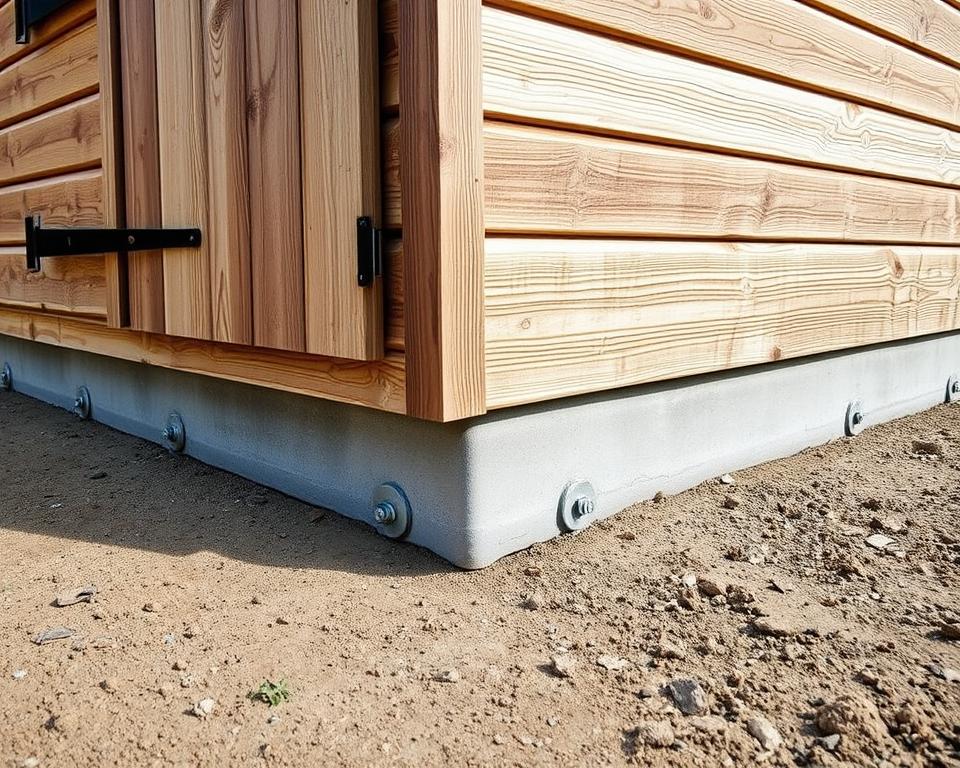
J-Bolts are a common type of fastener used to anchor sheds to concrete foundations. They are embedded in the concrete during the pouring process, providing a secure point to attach the shed.
| Fastener Type | Application | Advantages |
|---|---|---|
| J-Bolts | Concrete foundations | High holding power, durable |
| Ground Anchors | Slab or pier foundations | Easy to install, adjustable |
| Frame Anchors | Wooden frame sheds | Directly secures frame to foundation |
When installing J-Bolts or other fasteners, ensure they are correctly positioned and securely tightened to provide maximum stability for your shed.
Troubleshooting Common Foundation Problems
Troubleshooting foundation problems is essential to maintaining the integrity and longevity of your shed. Even with careful construction, issues such as cracks, settlement problems, and poor drainage can arise, necessitating prompt and effective solutions.
Addressing Cracks and Settlement Issues
Cracks in your foundation can be caused by settlement, shrinkage, or external factors like soil movement. To address these issues, you should first identify the cause. For minor cracks, a simple repair using a concrete sealant may suffice. However, more significant cracks may require professional assessment to determine the best course of action. Ensuring the foundation is level and stable is crucial to preventing further damage to your shed.

Solutions for Poor Drainage and Water Pooling
Poor drainage and water pooling around your shed’s foundation can lead to erosion, dampness, and structural damage. To mitigate these issues, ensure the ground around your shed slopes away from the foundation. Installing a French drain or adjusting the ground level can help redirect water. Regularly inspecting your shed’s surroundings and maintaining clear gutters and downspouts will also help prevent water accumulation.
Maintenance Tips for Long-Lasting Foundations
To ensure your shed foundation remains in good condition, regular maintenance is crucial. A well-maintained foundation not only prolongs the life of your shed but also prevents costly repairs down the line. As stated by a leading construction expert,
“Regular maintenance is the key to a long-lasting foundation.”
Seasonal Checks are vital to maintaining your foundation. You should inspect your foundation at least twice a year, in spring and autumn, to identify any potential issues early on.
Seasonal Checks and Maintenance Schedule
During your seasonal checks, look out for signs of damage such as cracks, unevenness, or water pooling around the foundation. Make a note of any issues you find and address them promptly. A simple maintenance schedule might include:
- Inspecting the foundation for cracks or damage
- Checking for drainage issues
- Ensuring the shed is level and secure
Repairing Minor Damage Before It Worsens
If you notice any minor damage, it’s essential to repair it before it becomes a significant issue. For small cracks, you can use a concrete repair mix. For more extensive damage, you may need to consult a professional. As “prevention is better than cure”, regular maintenance can save you time and money in the long run.

Conclusion
By following this DIY guide, you’ve gained the knowledge and confidence to build a concrete foundation for your shed, ensuring a sturdy base that will stand the test of time. A well-constructed concrete foundation is crucial for the longevity and stability of your shed, protecting it from the elements and potential damage.
As you’ve learned, careful planning, execution, and maintenance are key to a successful concrete foundation project. From preparing the site to finishing and curing the concrete, each step plays a vital role in creating a solid base for your shed. With your newfound understanding, you’re now equipped to tackle this project with ease, enjoying the benefits of a professionally built foundation without the hefty price tag.
By investing time and effort into building a high-quality concrete foundation, you’ll be able to enjoy your shed for years to come, knowing it’s securely anchored to a solid base. This DIY guide has provided you with the expertise to create a durable and long-lasting foundation, and with proper maintenance, it will continue to support your shed for many years.
FAQ
What type of concrete foundation is best for a shed in the UK?
The best type of concrete foundation for a shed in the UK depends on the size of the shed, the soil type, and the local weather conditions. Slab, pier, and strip foundations are popular options.
How do I determine the right size and location for my shed foundation?
To determine the right size and location, consider the shed’s dimensions, the slope of your garden, and any local building regulations. Ensure the area is level and clear of debris.
What are the essential tools and materials needed for a concrete foundation?
Essential tools include hand tools, power equipment, measuring and levelling instruments. Materials needed include concrete mix components, formwork, and reinforcement materials like rebar and mesh.
How do I mix and pour concrete correctly for my shed foundation?
To mix and pour concrete correctly, calculate the right concrete mix ratio, use ready-mix or hand-mix concrete, and pour it evenly. Consider weather conditions and use techniques to prevent segregation.
What are the benefits of installing a damp-proof membrane (DPM) and insulation?
Installing a DPM and insulation can prevent moisture issues, reduce cold transfer, and improve the overall durability and comfort of your shed.
How do I anchor my shed to the concrete foundation?
To anchor your shed, use J-Bolts or other fasteners, and follow the manufacturer’s instructions for installation. Different anchoring methods are available, depending on the shed type and foundation.
What are common foundation problems, and how can I troubleshoot them?
Common foundation problems include cracks, settlement issues, poor drainage, and water pooling. Troubleshooting involves identifying the cause and applying the appropriate solution, such as sealing cracks or improving drainage.
How do I maintain my concrete foundation to ensure it lasts?
Regular maintenance involves seasonal checks, inspecting for damage, and repairing minor issues before they worsen. This helps extend the life of your foundation.
Can I build a concrete foundation in wet or cold weather?
While it’s possible to build a concrete foundation in various weather conditions, it’s crucial to take precautions. Use admixtures to improve workability in cold weather, and protect the concrete from rain.
What are the UK building regulations regarding shed foundations?
UK building regulations require that shed foundations comply with certain standards, including depth and load-bearing capacity. Check with your local authority for specific requirements.