
How To Make Your Back Garden A Hub For Wildlife

Gardens in Britain cover an area more than twice as large as all of our national nature reserves, presenting a significant opportunity to support wildlife and enhance local biodiversity.
With over half of our species in decline, transforming ordinary gardens into thriving wildlife habitats can provide a vital lifeline. Even small changes can make difference to local wildlife populations, offering sanctuary and supporting nature.
By making your garden a haven for wildlife, you not only support local ecosystems but also create a space that brings enjoyment and connection with nature.
Inhaltsverzeichnis
Key Takeaways
- Transforming your garden into a wildlife habitat can significantly support local biodiversity.
- Small changes in your garden can make a substantial difference to local wildlife populations.
- Creating a wildlife-friendly garden is an ongoing process that changes with the seasons.
- Gardens of all sizes can be adapted to support wildlife, from large country plots to small urban spaces.
- Wildlife gardens provide enjoyment and connection with nature for homeowners.
Why Wildlife Gardens Matter in Britain
Wildlife gardens play a crucial role in supporting Britain’s biodiversity. With gardens covering an area more than twice as large as all national nature reserves combined, their impact on the environment is substantial.
The Biodiversity Crisis and Garden Solutions
Britain is facing a biodiversity crisis, with over half of its species in decline and one in seven heading towards extinction. Domestic gardens collectively form a significant portion of green space in the UK, making them crucial for wildlife conservation efforts. By creating wildlife-friendly gardens, individuals can contribute to the national effort to reverse biodiversity decline.
Environmental Benefits Beyond Wildlife
Wildlife gardens offer numerous environmental benefits beyond supporting wildlife. These include carbon sequestration, improved air quality, and natural flood management. By adopting wildlife-friendly gardening practices, individuals can make a positive impact on the environment.
- Boosting biodiversity through diverse plant species
- Improving water quality by reducing pollution
- Absorbing carbon to mitigate climate change effects
Gardens help people connect with nature, improving mental wellbeing and environmental awareness. Even small gardens can make a significant difference.
How To Make Your Back Garden A Hub For Wildlife: First Steps
Transforming your garden into a wildlife haven begins with understanding the space you have available. Whether you have a spacious lawn or a small balcony, every garden can contribute to supporting local wildlife.
Assessing Your Current Garden Space
To make your garden more wildlife-friendly, start by assessing its current condition. Consider factors such as soil type, sun exposure, and existing plants. Identify areas that are already attracting wildlife and those that could be improved. This assessment will help you plan the most effective changes.
Planning for Year-Round Wildlife Support
To support wildlife throughout the year, plan for different seasons. Choose plants that provide food and shelter during various times of the year. For example, spring-flowering bulbs can provide early nectar for pollinators, while autumn berries can feed birds. Consider creating a table to plan your garden’s year-round support:
| Season | Plants/Features | Wildlife Supported |
|---|---|---|
| Spring | Flowering bulbs, early nectar plants | Pollinators (bees, butterflies) |
| Summer | Native wildflowers, insect hotels | Insects, birds |
| Autumn | Berry-producing shrubs, leaf litter | Birds, small mammals |
| Winter | Evergreen plants, seed feeders | Birds, hedgehogs |
By planning carefully and making a few simple changes, you can make your garden a valuable resource for local wildlife species throughout the year.
Planting for Pollinators and Birds
The key to making your garden a hub for wildlife lies in choosing plants that provide year-round support for pollinators and birds. By selecting a mix of native wildflowers and berry-producing plants, you can create a haven that attracts a variety of species throughout the year.
Native Wildflowers That Attract Bees and Butterflies
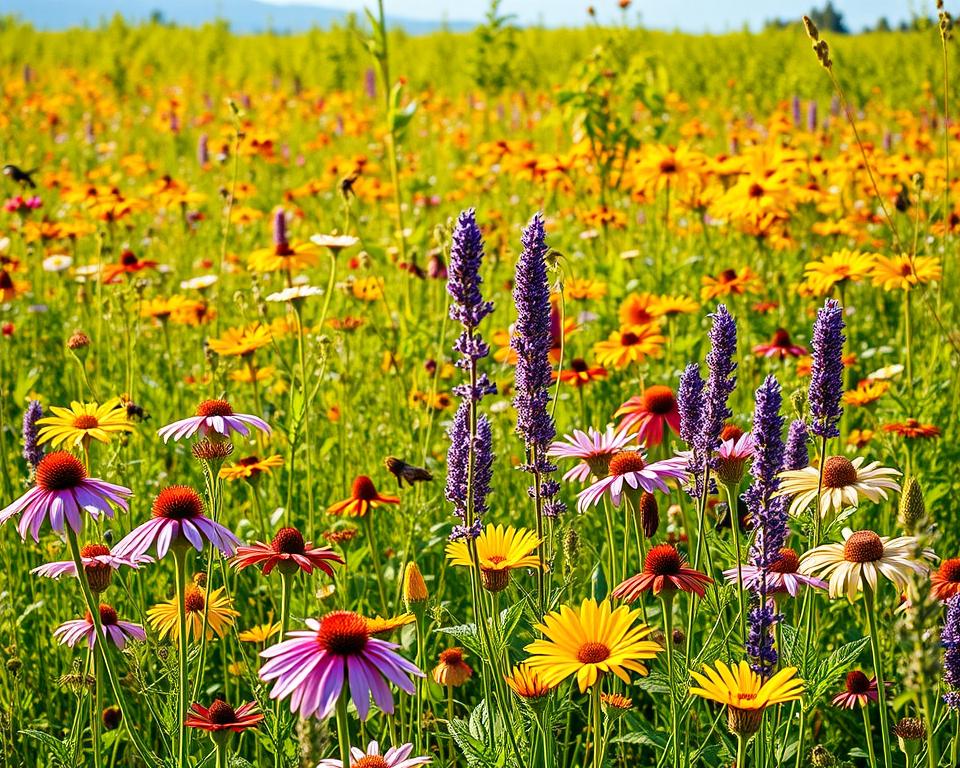
Native wildflowers are particularly effective at attracting bees and butterflies due to their rich nectar and pollen content. Plants like clover, lavender, and snowdrops are excellent choices for spring and summer, providing essential resources for pollinators. When selecting wildflowers, consider their flower shape, color, and nectar content to maximize their value to pollinators.
Berry-Producing Plants for Garden Birds
Berry-producing plants are crucial for garden birds, especially during autumn and winter when other food sources are scarce. Plants like holly and native trees provide berries that are rich in nutrients, supporting birds like sparrows and finches. By incorporating these plants into your garden, you can create a welcoming environment for birds and other wildlife.
To maximize the wildlife value of your garden, consider creating planting schemes that combine aesthetic appeal with functional support for pollinators and birds. Avoid using pesticides, which can harm these species, and instead opt for natural gardening practices that promote a healthy ecosystem.
Adding Trees and Shrubs to Your Wildlife Garden
Native trees and shrubs play a crucial role in supporting the local ecosystem in your garden. They provide food, shelter, and nesting sites for various wildlife species, enhancing biodiversity.
Best Native Trees for Small British Gardens
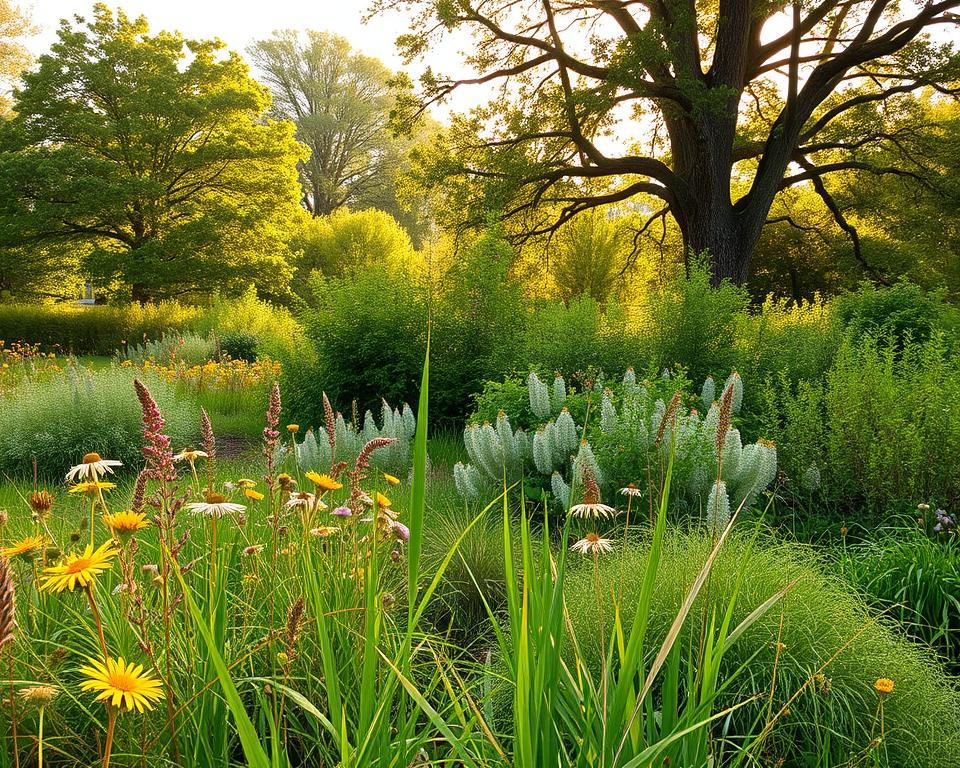
When selecting trees for small British gardens, consider native species such as rowan, hawthorn, and silver birch. These trees offer numerous benefits for wildlife, including berries for birds and insects. A mixture of tree sizes will benefit different species; for example, long-tailed tits require trees above head height, while wrens and dunnocks need dense cover low down.
Creating Wildlife-Friendly Hedgerows
Creating wildlife-friendly hedgerows using native species can significantly enhance your garden’s biodiversity. Hedgerows provide food, nesting opportunities, and shelter for various wildlife. To establish a thriving hedgerow, plant native species such as hawthorn, blackthorn, and hazel, and maintain it through regular pruning.
Creating Water Features for Garden Wildlife
A well-designed water feature can transform your garden into a thriving ecosystem, supporting various forms of wildlife. Water attracts wildlife, making it one of the most beneficial additions to a garden.

Building a Pond Step-by-Step
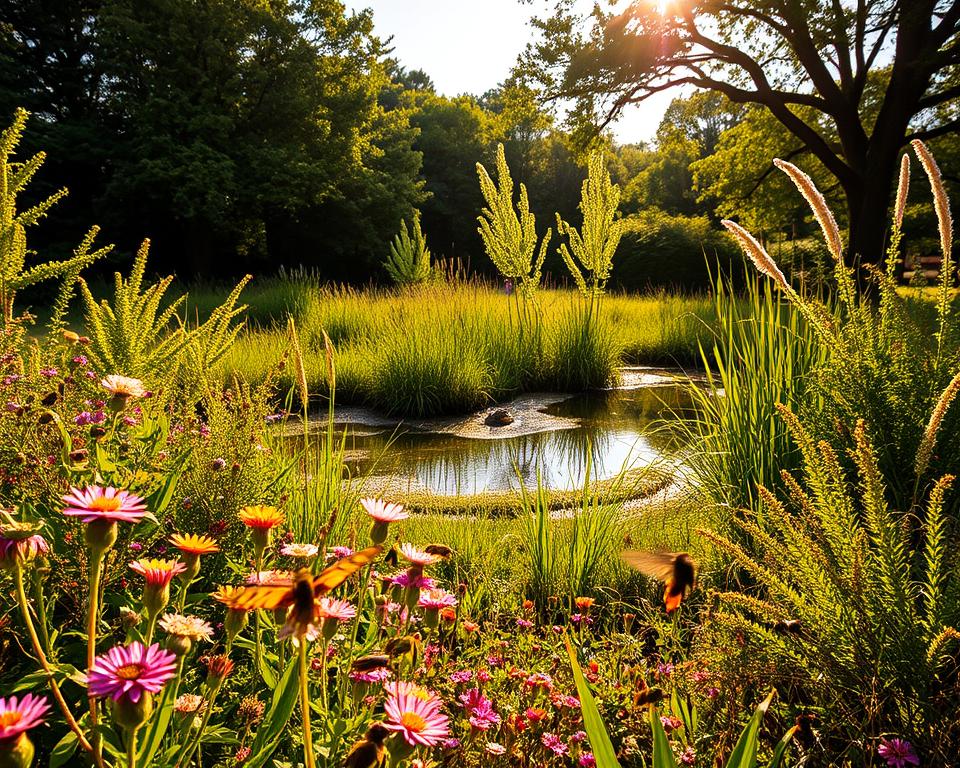
To create a wildlife pond, start by selecting a suitable location that receives partial sunlight. The pond should be at least 60cm deep to support aquatic life. When digging, create a shallow area for newts and frogs. Line the pond with a durable liner, and add native aquatic plants like water lilies and cattails.
Simple Water Sources for Limited Spaces
For gardens with limited space, consider alternatives like container ponds or bird baths. These can provide a source of water for birds and other small creatures. Ensure that the water is fresh and clean, and provide a safe means of access and exit for wildlife.
By incorporating a water feature into your garden, you can attract a range of wildlife, from amphibians to birds and small mammals. Regular maintenance, such as cleaning and checking the water level, will help to create a thriving ecosystem.
Providing Food and Shelter Throughout the Seasons
The key to a thriving wildlife garden lies in providing the right food and shelter for different species across the seasons. By understanding the varying needs of wildlife throughout the year, gardeners can create a haven that supports local biodiversity.
Natural Food Sources to Plant for Different Species
Different species have varying nutritional needs across the seasons. To support local wildlife, it’s essential to plant a variety of flora that provide natural food sources. For example, nectar-rich flowers like lavender and sunflowers are perfect for pollinators during the summer, while berry-producing plants like hawthorn and rowan provide sustenance for birds in the autumn.
| Season | Food Source | Benefiting Species |
|---|---|---|
| Spring | Nectar-rich flowers | Pollinators (bees, butterflies) |
| Summer | Insects and seeds | Birds, small mammals |
| Autumn | Berry-producing plants | Birds, mammals |
| Winter | Seed heads, nuts | Birds, small mammals |
Creating Homes for Hedgehogs, Birds, and Insects
In addition to providing food, creating homes for wildlife is crucial. This can include bird boxes, hedgehog houses, and insect hotels. When designing these habitats, it’s essential to consider the specific needs of the target species. For example, hedgehogs require sheltered areas with leaves and twigs, while insects benefit from structures with hollow tubes.
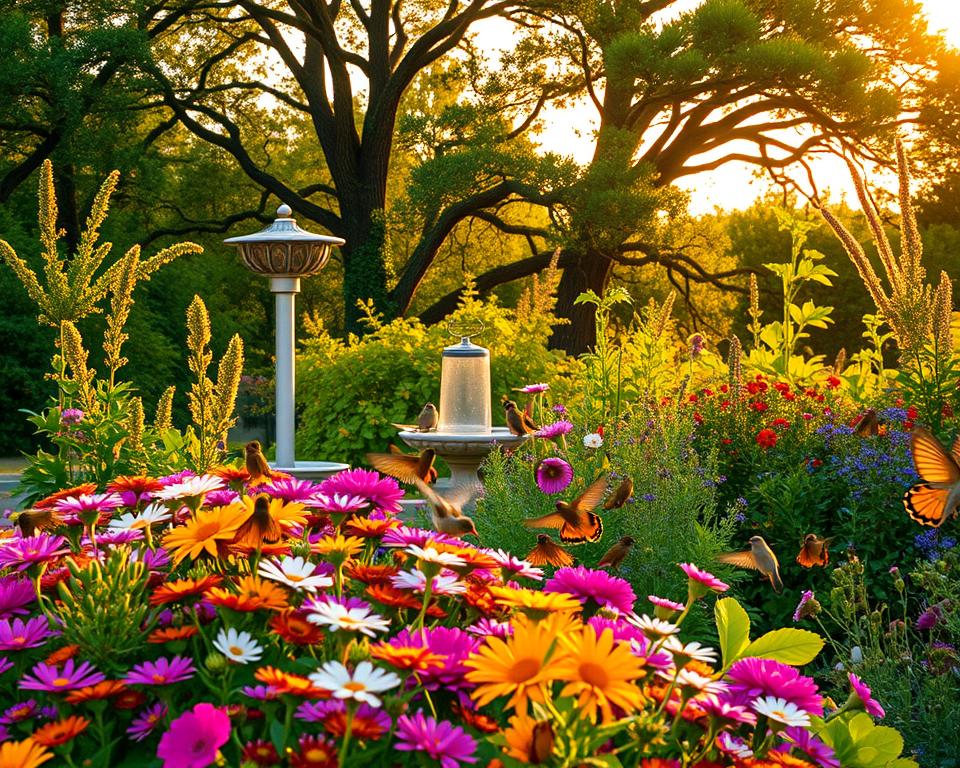
Positioning these homes effectively within the garden is also important. Placing bird boxes in trees, for instance, can provide safe roosting sites, while locating hedgehog houses in quiet, sheltered areas can encourage occupancy.
By providing both food and shelter in proximity, gardeners can support wildlife through their entire life cycles, creating a thriving ecosystem that benefits local biodiversity.
Wildlife-Friendly Gardening Practices
To truly make your garden a hub for wildlife, you need to rethink your gardening habits. This involves adopting practices that are not only beneficial for the environment but also create a welcoming space for various creatures.
Chemical-Free Gardening
The use of pesticides and herbicides in gardens has been linked to the decline of insect populations. Swapping to organic alternatives like seaweed feed can significantly reduce this impact. Making your own compost heap is another effective way to fertilize your garden while providing a habitat for creatures.
One reason behind the massive loss of insects is the increasing use of chemicals. As stated by environmental experts, “The widespread use of pesticides has devastating effects on bee populations and other beneficial insects.”
“The use of pesticides in gardens is a significant threat to our insect populations,” says Dr. Jane Smith, a renowned entomologist. “By adopting organic gardening methods, we can help mitigate this issue.”
Embracing Natural Decay
Decay is a natural process that returns nutrients to the ground. Leaving some areas of your garden untidy, with dead branches and leaf litter, can provide habitats for insects and hedgehogs. Logs and rocks also serve as vital shelters for various wildlife.
| Natural Element | Wildlife Benefit |
|---|---|
| Dead Branches | Habitat for insects and birds |
| Leaf Litter | Shelter for hedgehogs and insects |
| Logs | Food source for beetle larvae |
By embracing natural decay and reducing garden tidiness, you can create a more welcoming environment for wildlife. This approach not only supports biodiversity but can also reduce maintenance work in the long run.
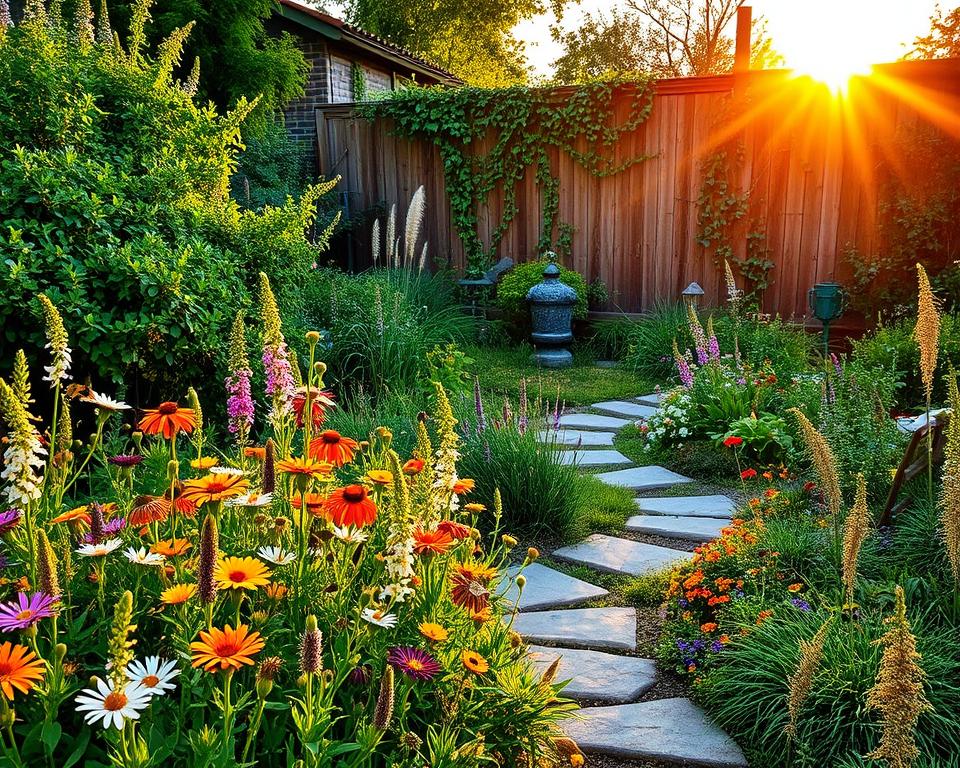
Changing your gardening routines, such as reducing pruning and selective weeding, can also make a significant difference. Recognizing the value of certain “weeds” and allowing them to coexist with your desired plants can enhance the biodiversity of your garden.
In conclusion, adopting wildlife-friendly gardening practices is a straightforward yet effective way to support local wildlife. By going chemical-free, embracing natural decay, and creating habitats, you can transform your garden into a thriving ecosystem.
Connecting Gardens for Wildlife Corridors
For many species, the survival and genetic diversity depend on the connectivity between gardens. Wildlife corridors are essential for allowing animals to move freely between gardens, thereby accessing food, shelter, and potential mates. This connectivity is particularly crucial for species like hedgehogs, which require large ranges of between 10 and 20 hectares.
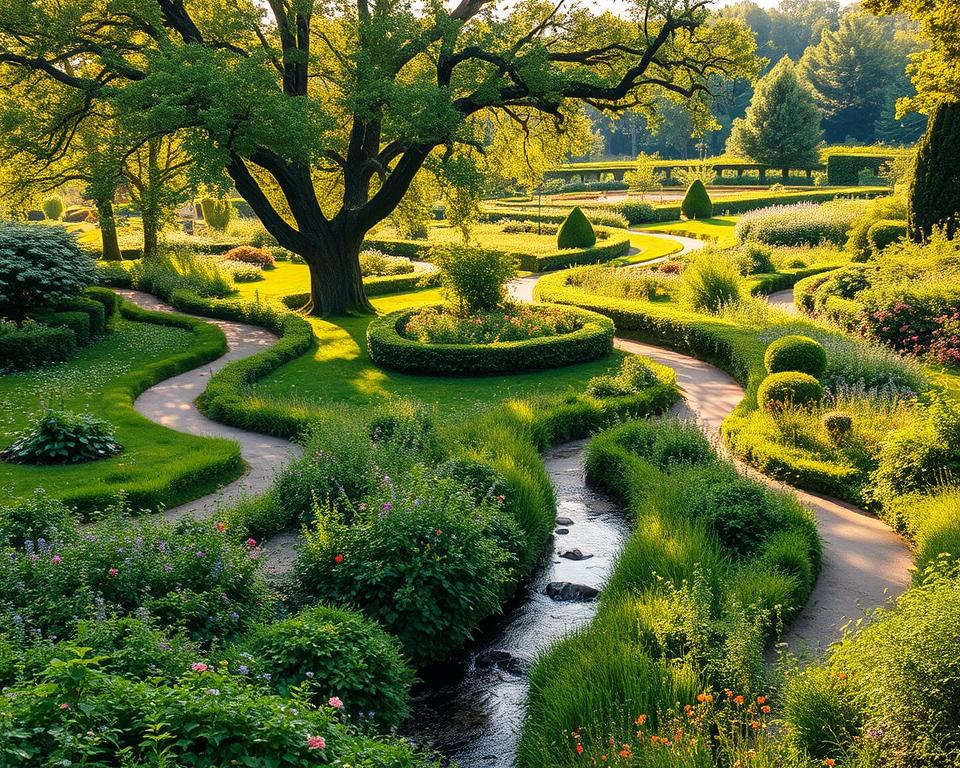
The creation of wildlife corridors can be achieved by modifying garden boundaries to allow access for small mammals and other wildlife. This can involve cutting holes in fences or creating tunnels under walls.
Creating Access Points for Hedgehogs and Small Mammals
To facilitate the movement of hedgehogs and other small mammals, gardeners can create access points in their fences and walls. A simple method is to cut a hole about 13cm x 13cm in the fence, near a corner, allowing animals to pass through. Alternatively, digging a tunnel under the fence can also provide a safe passage.
| Method | Description | Benefits |
|---|---|---|
| Cutting a hole in the fence | Create a 13cm x 13cm hole near a corner | Easy to implement, effective for hedgehogs |
| Digging a tunnel under the fence | Excavate a small tunnel under the fence | Safe passage for small mammals, less visible |
Collaborating with Neighbours for Greater Impact
Collaborating with neighbours is vital for creating effective wildlife corridors. By working together, gardeners can ensure that their efforts are not isolated and that a larger, more cohesive habitat is created. This can involve discussing garden modifications with neighbours and coordinating efforts to maximize the impact on local wildlife.
Community-level initiatives can further enhance wildlife connectivity across multiple properties. By identifying potential wildlife corridors in the neighbourhood and targeting improvements, residents can create a more resilient habitat network that supports local biodiversity.
Conclusion: Observing and Enjoying Your Wildlife Garden
As you transform your garden into a haven for wildlife, you’ll discover the joy of connecting with nature. By following the tips outlined in this article, you’ve taken significant steps towards creating a vibrant wildlife hub. The process of creating a garden that supports local creatures is ongoing, involving observation, learning, and adaptation.
Documenting the wildlife visiting your garden can be a rewarding experience. Consider keeping a journal, taking photographs, or participating in citizen science projects like the Big Butterfly Count or the Big Garden Birdwatch. These activities not only enhance your understanding of the creatures you’re supporting but also contribute to a broader understanding of nature. Every small change you make can make a difference to local birds and mammals.
By sharing your experiences and advice with others, you can inspire wider community action and create a lasting impact. Start your wildlife gardening journey today and enjoy the many rewards it brings.
FAQ
What are the best plants to attract pollinators to my garden?
Native wildflowers such as lavender, coneflower, and black-eyed susan are ideal for attracting bees and butterflies. Incorporating a variety of plants that provide nectar and pollen throughout the year will support a diverse range of pollinators.
How can I create a wildlife pond in a small garden?
To create a wildlife pond, choose a suitable location, dig a depression, and line it with a pond liner. Add a variety of aquatic plants, such as water lilies and cattails, to provide shelter and food for aquatic creatures. Ensure the pond has a shallow area for easy access.
What type of trees are suitable for small British gardens?
Native trees like crab apple, hawthorn, and rowan are excellent choices for small gardens. They provide food and shelter for various bird species and other wildlife, while also being relatively compact.
How can I support hedgehogs in my garden?
To support hedgehogs, create a hedgehog-friendly habitat by providing food, such as mealworms, and shelter, like log piles or hedgehog houses. Ensure your garden is hedgehog-accessible by creating pathways through fences or walls.
What are the benefits of reducing mowing schedules in my garden?
Reducing mowing schedules allows wildflowers to bloom, providing a source of food for pollinators. It also creates a more diverse habitat for small mammals and insects, promoting biodiversity in your garden.
How can I collaborate with my neighbours to create a wildlife corridor?
To create a wildlife corridor, discuss with your neighbours the possibility of connecting your gardens by creating access points for hedgehogs and small mammals. This can be achieved by making holes in fences or removing sections of fencing to allow wildlife to move freely between gardens.

