
How to Paint a Shed or Summerhouse
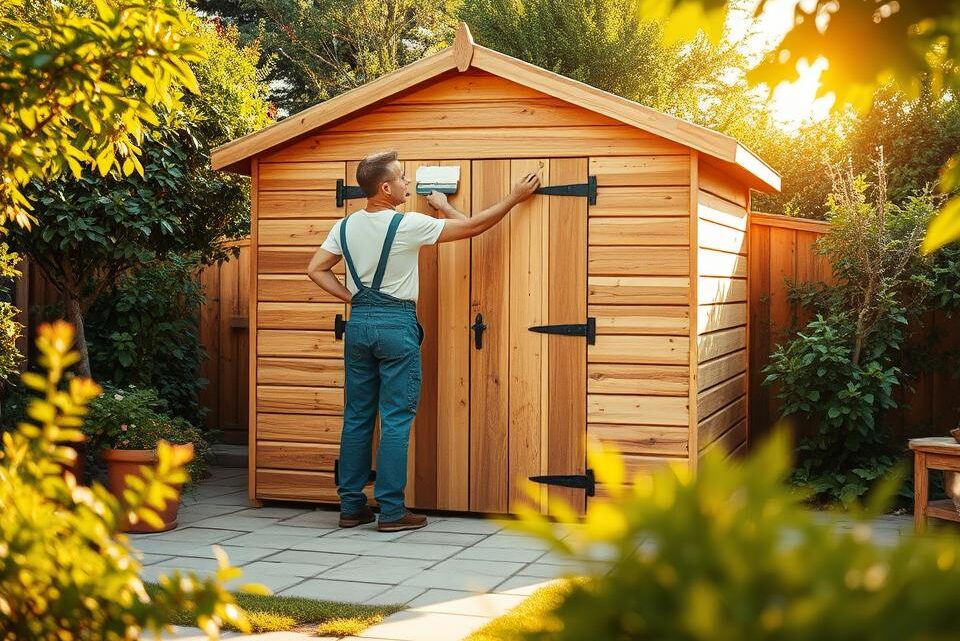
Transforming your garden building through summerhouse painting or shed painting can breathe new life into your outdoor space. A garden building makeover not only enhances the visual appeal of your garden but also provides crucial protection against harsh weather conditions.
Painting your shed or summerhouse is more than a simple aesthetic upgrade. It creates a protective barrier that shields wooden structures from moisture, UV rays, and potential decay. With the right approach, even DIY enthusiasts can achieve a professional-looking finish that will extend the life of their garden building.
This comprehensive guide will walk you through every step of the shed painting process, from selecting the right materials to applying the perfect finish. Whether you’re a seasoned DIY expert or a first-time painter, you’ll find practical advice to help you revitalise your outdoor structure.
Inhaltsverzeichnis
Key Takeaways
- Protect your garden building from environmental damage
- Enhance the aesthetic appeal of your outdoor space
- Learn professional painting techniques
- Save money by completing the project yourself
- Increase the longevity of your wooden structure
Essential Tools and Materials for Shed Painting
Preparing for a shed painting project requires careful selection of the right outdoor paint brushes, materials, and safety equipment. A successful paint job depends on having the proper tools and understanding their specific uses.
Selecting the right tools can make a significant difference in your painting project’s final appearance and durability. Let’s explore the essential equipment you’ll need to transform your shed or summerhouse.
Types of Paint Brushes and Rollers
When choosing outdoor paint brushes, consider these key factors:
- Natural bristle brushes for oil-based shed paint types
- Synthetic bristle brushes for water-based paints
- Angled brushes for precision edges and corners
- Foam rollers for smooth, even application on large surfaces
Recommended Paint Types for Outdoor Structures
Different shed paint types offer unique benefits for exterior surfaces:
- Acrylic latex paints: Quick-drying and weather-resistant
- Oil-based paints: Excellent durability and wood protection
- Exterior wood stains: Enhance natural wood grain
Safety Equipment and Preparation Materials
Prioritise your safety with essential painting safety gear:
- Protective goggles
- Respiratory masks
- Disposable gloves
- Protective overalls
Preparation materials are equally crucial for a professional finish. Stock up on sandpaper, wood filler, cleaning solutions, and drop cloths to protect surrounding areas.
Preparing Your Shed for Painting
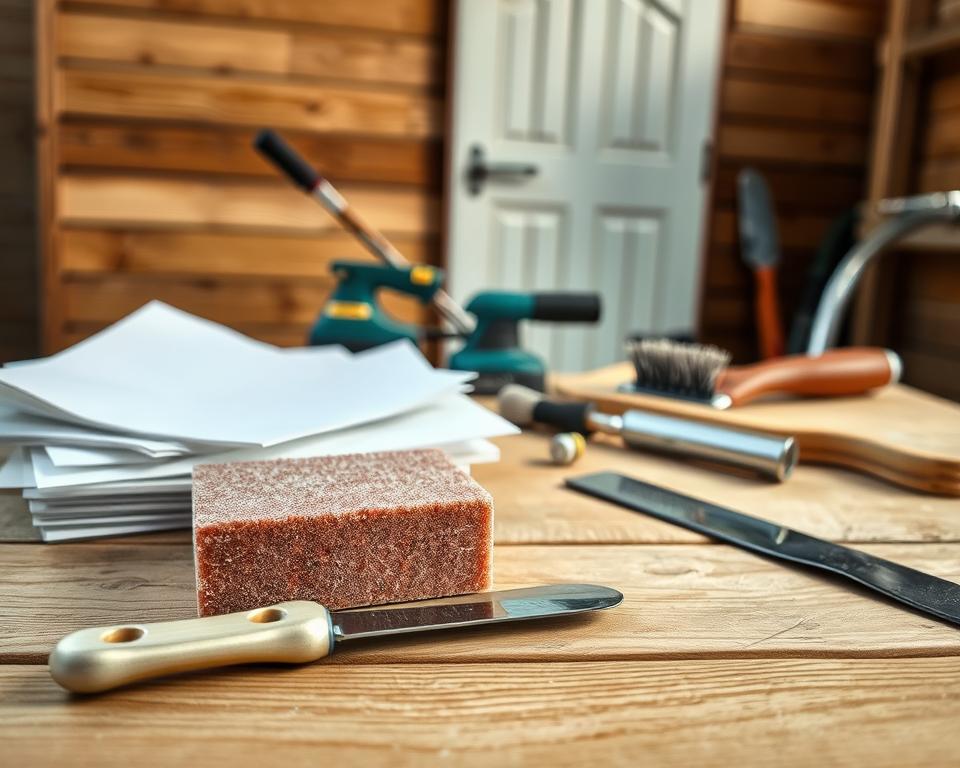
Shed surface preparation is a critical first step in achieving a professional paint finish. Before picking up a paintbrush, you’ll need to thoroughly clean and inspect your shed’s exterior. Cleaning the shed for painting removes dirt, mildew, and loose debris that could prevent proper paint adhesion.
Start with a comprehensive cleaning process. Use a stiff-bristled brush and a mixture of water and mild detergent to scrub away years of accumulated grime. For stubborn areas, a pressure washer can be effective, but use it carefully to avoid damaging the wood surface.
- Inspect the shed for any structural damage
- Remove loose or protruding nails
- Replace any rotted or damaged wooden boards
- Check for signs of insect infestation
Sanding the shed is your next crucial step. This process creates a smooth surface that helps paint adhere better and provides a more professional finish. Use medium-grit sandpaper to remove old paint, smooth rough areas, and create an ideal surface for new paint.
Pay special attention to areas with peeling paint or rough patches. Careful sanding ensures your new paint job will look smooth and last longer. Use a sanding block or electric sander for larger areas, and don’t forget to wear protective goggles and a dust mask during this process.
Pro tip: Always work in a well-ventilated area and remove any hardware or fixtures that you don’t want to paint.
After sanding, wipe down the entire surface with a clean, dry cloth to remove all dust and debris. Your shed is now perfectly prepared for a fresh coat of paint that will protect and beautify your outdoor structure.
Weather Conditions and Best Time to Paint
Selecting the right outdoor painting weather is crucial for achieving a professional finish on your shed. The success of your painting project depends significantly on understanding environmental conditions and their impact on paint application and drying.
Outdoor painting requires careful consideration of temperature and humidity levels. The best season to paint shed typically falls between late spring and early autumn when weather conditions are most stable.
Ideal Temperature and Humidity Levels
Professional painters recommend painting when temperatures range between 10-25°C. Extreme temperatures can negatively affect paint performance:
- Below 10°C: Paint becomes thick and difficult to apply
- Above 25°C: Paint dries too quickly, causing uneven coverage
- Ideal humidity: Between 40-70% for optimal paint drying time
Seasonal Considerations for Painting
Choosing the right season can significantly impact your painting project’s quality. Late spring and early autumn offer the most reliable outdoor painting conditions.
| Season | Painting Suitability | Temperature Range |
|---|---|---|
| Spring | Excellent | 15-22°C |
| Summer | Good (early/late) | 18-25°C |
| Autumn | Ideal | 12-20°C |
| Winter | Not Recommended | Below 10°C |
How Long Paint Takes to Dry
Paint drying time varies depending on environmental conditions. Typically, exterior paint requires:
- Touch dry: 1-2 hours
- Recoat: 4-6 hours
- Full cure: 24-48 hours
Factors like humidity, temperature, and paint type can influence these timings. Always check the manufacturer’s specific guidelines for the most accurate information.
How to Paint a Shed or Summerhouse
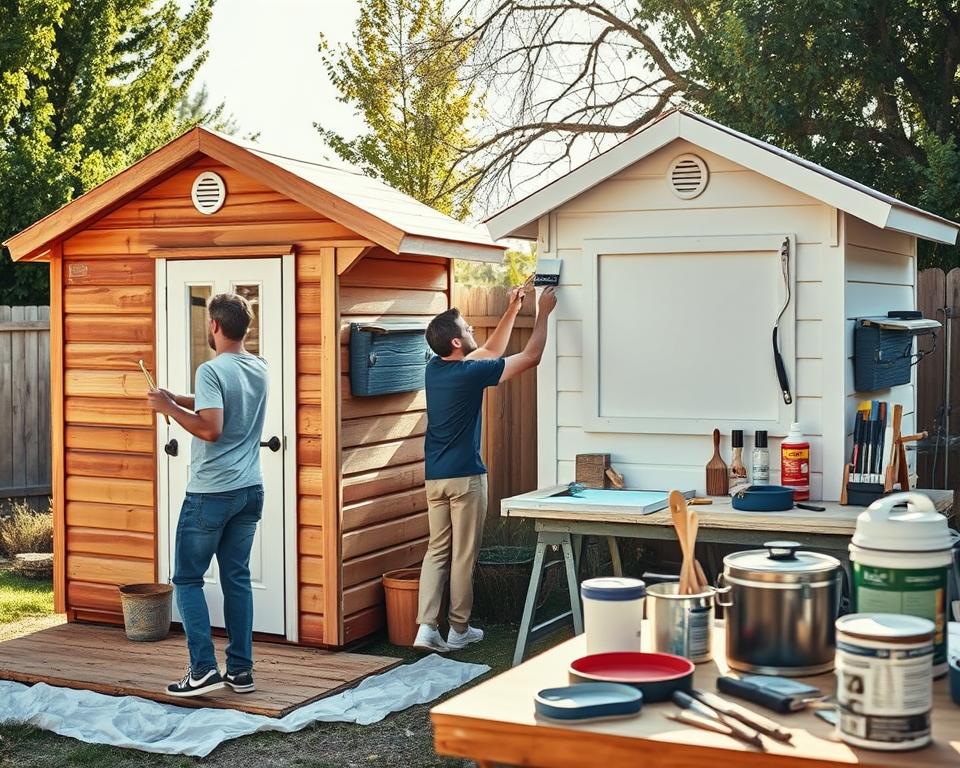
Mastering shed painting techniques requires careful preparation and a systematic approach. DIY shed painting can transform your outdoor space, giving your summerhouse a fresh and vibrant look.
Start with the roof if applicable, working your way down to the walls and trim. Summerhouse paint application involves several critical steps to achieve a professional finish:
- Begin with clean, dry surfaces
- Use high-quality exterior paint
- Apply thin, even coats
- Work in consistent stroke directions
When applying paint, use a combination of brushes and rollers for different areas. Wide rollers work best for large wall surfaces, while smaller brushes help with detailed trim and edges. Ensure you maintain a wet edge to prevent visible lap marks.
For hard-to-reach areas, consider using an extension pole with your roller or a smaller angled brush. These shed painting techniques help you achieve complete coverage without awkward stretching or climbing.
Remember to paint during dry, mild weather conditions. Avoid painting in direct sunlight or when rain is forecast, as this can impact the paint’s adhesion and drying process.
Patience is key in achieving a smooth, professional-looking finish.
Treating and Priming Wood Surfaces
Protecting your shed starts with proper wood treatment and preparation. Wood surfaces require careful attention to ensure longevity and a professional finish. Understanding how to treat and prime wood effectively can prevent future damage and extend the life of your outdoor structure.
Successful wood treatment for sheds involves several critical steps that help preserve the structural integrity of your outdoor building. Before painting, you’ll need to assess and address any existing wood damage.
Identifying and Repairing Wood Damage
Repairing shed wood requires a systematic approach. Look for these key signs of wood deterioration:
- Soft or crumbling wood texture
- Visible rot or fungal growth
- Discolouration or dark spots
- Warping or structural weakness
Wood Preservative Application
Shed primer application is crucial for protecting wood from moisture and environmental damage. Select a high-quality wood preservative that penetrates deeply and creates a protective barrier against potential rot.
“Proper preparation prevents poor performance” – A crucial principle in shed maintenance
Primer Techniques for Optimal Protection
When applying primer, follow these essential techniques:
- Clean the surface thoroughly
- Sand rough areas
- Apply preservative evenly
- Allow complete drying between coats
- Choose a primer compatible with your paint type
Professional tip: Always use a preservative specifically designed for exterior wood structures to ensure maximum protection against weathering and decay.
Professional Painting Techniques and Tips

Mastering professional painting techniques can transform an ordinary shed into a stunning outdoor feature. Expert shed painting tips go beyond simple brush strokes, requiring precision and careful preparation.
Professional painting techniques start with understanding your tools and approach. Experienced painters know that technique matters as much as the paint itself.
- Use high-quality synthetic brushes for smooth application
- Apply paint in consistent, overlapping strokes
- Maintain a wet edge to prevent visible lap marks
- Work systematically from top to bottom
“The difference between an amateur and professional finish is in the details” – Professional Painting Craftsman
Shed painting hacks can save time and improve results. Consider using a paint pad for large, flat surfaces to achieve an even, streak-free finish. When painting around windows and doors, use painter’s tape to create crisp, clean edges.
For optimal coverage, thin coats are preferable to thick, uneven applications. Allow each coat to dry completely before applying the next, ensuring a professional-looking result that will protect your shed for years to come.
Common Mistakes to Avoid When Painting
Painting a shed can be tricky, and many DIY enthusiasts fall into common traps that compromise the final finish. Understanding shed painting mistakes can save you time, money, and frustration. Let’s explore the most frequent errors and how to avoid them.
Paint Application Errors
Avoiding paint errors requires careful technique and attention to detail. Some of the most common painting pitfalls include:
- Applying paint too thickly, which leads to uneven coverage
- Skipping primer and expecting perfect results
- Using incorrect paint types for exterior wood surfaces
- Rushing between coats without proper drying time
Surface Preparation Oversights
Proper surface preparation is crucial for a professional-looking paint job. Neglecting these steps can result in poor adhesion and premature paint failure:
| Preparation Step | Potential Problem |
|---|---|
| Inadequate cleaning | Paint won’t adhere properly |
| Skipping sanding | Uneven surface and poor paint grip |
| Ignoring wood damage | Continued deterioration under paint |
Weather-Related Problems
Weather conditions play a significant role in successful shed painting. Avoid painting in direct sunlight or when rain is forecast. Ideal painting conditions include:
- Temperatures between 10-25°C
- Low humidity
- Overcast but dry weather
- Minimal wind
By understanding these common painting pitfalls, you can achieve a professional-looking finish that protects and enhances your shed for years to come.
Maintaining Your Newly Painted Shed
Protecting your painted summerhouse requires consistent care and attention. Proper shed paint maintenance can significantly extend the life of your outdoor structure, keeping it looking pristine for years to come.
Regular cleaning is the cornerstone of extending paint life. Create a simple maintenance routine that will preserve your shed’s appearance:
- Clean the surface gently with a soft brush or low-pressure washer twice a year
- Remove dirt, moss, and debris that could damage the paint
- Check for any signs of paint wear or damage
Protecting your painted summerhouse from environmental challenges is crucial. UV rays can cause significant paint degradation, so consider these protective strategies:
- Apply a clear UV-resistant coating annually
- Touch up small paint chips or scratches immediately
- Trim nearby vegetation to reduce moisture and shade
Seasonal inspections are your best defence against major paint damage. Walk around your shed each spring and autumn, looking for:
- Peeling or cracking paint
- Signs of wood rot
- Areas where moisture might be collecting
When you spot minor issues early, you can prevent costly repairs and maintain the shed’s protective paint layer. A little preventative maintenance goes a long way in preserving your outdoor structure’s beauty and structural integrity.
Conclusion
Painting your shed or summerhouse is more than just a weekend project—it’s a transformative experience for your garden building. The shed painting benefits extend far beyond aesthetics, offering protection and renewed vigour to your outdoor structure. By investing time and care, you’ll create a stunning focal point that enhances your entire garden landscape.
The summerhouse transformation process involves careful preparation, selecting quality materials, and applying professional techniques. Homeowners who embrace this DIY challenge will discover the joy of breathing new life into their garden buildings. Regular maintenance ensures your painted structure remains vibrant and protected against weather elements, preserving its beauty for years to come.
Your newfound knowledge empowers you to tackle garden building improvement with confidence. From understanding surface preparation to mastering painting techniques, you’ve gained valuable skills that will serve you well. Whether you’re protecting a classic wooden shed or revitalising a charming summerhouse, the right approach can turn an ordinary structure into an extraordinary garden feature.
Remember that each brushstroke is an investment in your outdoor space. With patience, attention to detail, and the techniques outlined in this guide, you’re ready to create a stunning garden building that reflects your personal style and care.
FAQ
What type of paint is best for a wooden shed or summerhouse?
For outdoor wooden structures, exterior wood paint is ideal. Look for water-based or oil-based paints specifically designed for exterior use, such as Dulux Weathershield or Cuprinol Garden Shades. These paints offer excellent weather resistance, UV protection, and durability against the British climate.
How often should I repaint my shed or summerhouse?
Typically, you should repaint your shed every 3-5 years, depending on the paint quality, exposure to weather conditions, and how well the previous paint job was maintained. Regular inspections and touch-ups can help extend the time between full repainting.
Do I need to prime the wood before painting?
Yes, priming is crucial. A good wood primer helps seal the surface, improves paint adhesion, and provides an additional layer of protection against moisture and rot. Choose a primer specifically designed for exterior wooden surfaces for the best results.
What’s the best time of year to paint a shed in the UK?
The ideal painting season is late spring or early autumn when temperatures are between 10-25°C, with low humidity and minimal chance of rain. Avoid painting during winter or at the height of summer when extreme temperatures can affect paint application and drying.
How do I prepare my shed’s surface before painting?
Proper preparation involves thorough cleaning, removing any dirt, mildew, or loose paint. Sand the surface to create a smooth base, repair any damaged wood with wood filler, and ensure the surface is completely dry before applying primer and paint.
Can I paint over an existing painted surface?
You can, but proper preparation is key. Sand down the existing paint to create a smooth surface, remove any loose or flaking paint, and clean thoroughly. If the existing paint is in poor condition, it’s best to strip it completely before applying a new coat.
What safety equipment do I need for painting a shed?
Essential safety gear includes protective goggles, dust masks, rubber gloves, and old clothing. If using a ladder, ensure it’s stable and have someone to spot you. Protect your skin and eyes from paint splashes and use adequate ventilation when working.
How many coats of paint will I need?
Two coats of paint are typically recommended for the best coverage and protection. Apply thin, even coats, allowing sufficient drying time between each application. This approach provides better durability and a more professional finish than a single thick coat.
What should I do if I notice paint peeling or cracking?
Address peeling paint immediately by scraping off loose paint, sanding the area smooth, and cleaning thoroughly. Check for underlying moisture issues or wood damage. Reapply primer and paint to the affected areas to prevent further deterioration.
Can I paint my shed in direct sunlight?
Avoid painting in direct sunlight. The heat can cause the paint to dry too quickly, leading to uneven application, visible brush marks, and poor adhesion. Choose a cloudy day or work in shaded areas for the best painting conditions.

