How to Make Your Own Garden Sundial
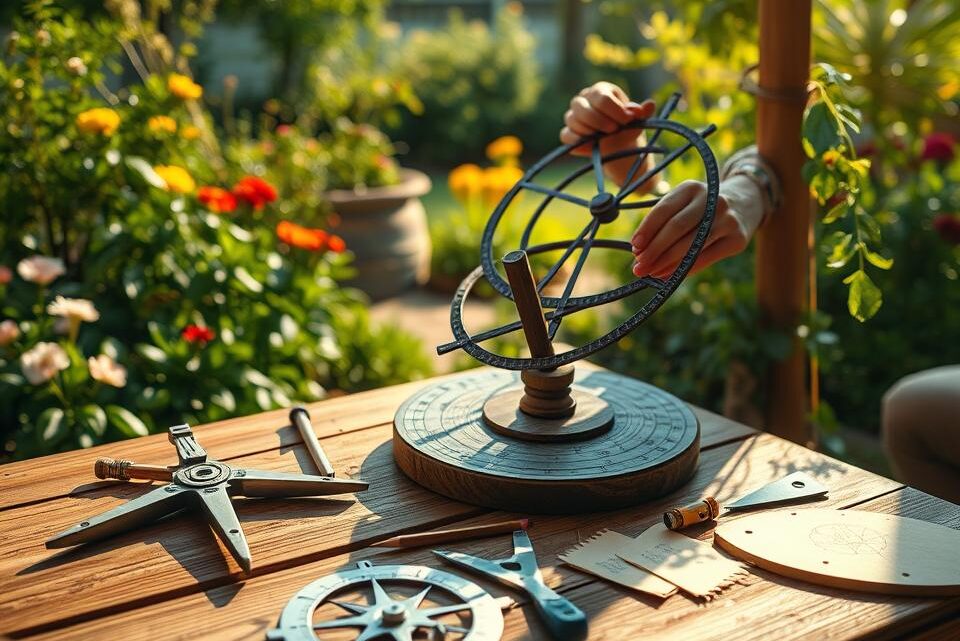
Creating a garden sundial is a fun and rewarding DIY project that can add a touch of elegance to your outdoor space. A sundial is not only a beautiful garden decoration, but it also serves as a functional time-telling device that utilises the sun’s shadow to indicate the time.
By following a few simple steps, you can create a stunning sundial that will become a focal point in your garden. The process of sundial making involves understanding the basic principles of how a sundial works and then crafting it using suitable materials.
Inhaltsverzeichnis
Key Takeaways
- Understand the basic principles behind a sundial’s functionality.
- Choose suitable materials for crafting your sundial.
- Learn how to design and create a sundial that complements your garden.
- Discover tips for placing your sundial for optimal time-telling.
- Explore various DIY sundial designs to inspire your project.
The Ancient Art of Timekeeping
The art of timekeeping has been a cornerstone of human civilisation for millennia. From ancient civilisations to modern times, the need to measure time has been crucial for organising daily life, agricultural activities, and religious rituals. Sundials, in particular, have played a significant role in this endeavour.
The History of Sundials
Sundials have a rich history that spans thousands of years, with evidence of their use found in ancient cultures such as Egypt, Greece, and Rome. These early timekeeping devices were often simple in design, consisting of a vertical stick or pillar that cast a shadow as the sun moved across the sky. Over time, sundials evolved to become more sophisticated, incorporating intricate designs and calibrations to improve their accuracy.
| Civilisation | Contribution to Sundials |
|---|---|
| Ancient Egypt | Developed early forms of sundials around 3500 BC |
| Ancient Greece | Improved sundial designs, incorporating various shapes and angles |
| Ancient Rome | Popularised sundials throughout their empire, using them for public timekeeping |
How Sundials Work
Sundials work on the principle that as the sun moves across the sky, the shadow cast by a vertical object, known as the gnomon, moves across a calibrated surface, indicating time. The accuracy of a sundial depends on its design, the latitude of its location, and its orientation towards the celestial pole. By understanding these principles, you can create a sundial that not only tells time but also serves as a beautiful garden feature.
Understanding the Science Behind Sundials
To comprehend the intricacies of sundials, it’s essential to delve into the science that governs their functionality. Sundials are more than just ancient timekeeping devices; they are a manifestation of astronomical phenomena and their practical applications.
The Earth’s Movement and Shadows
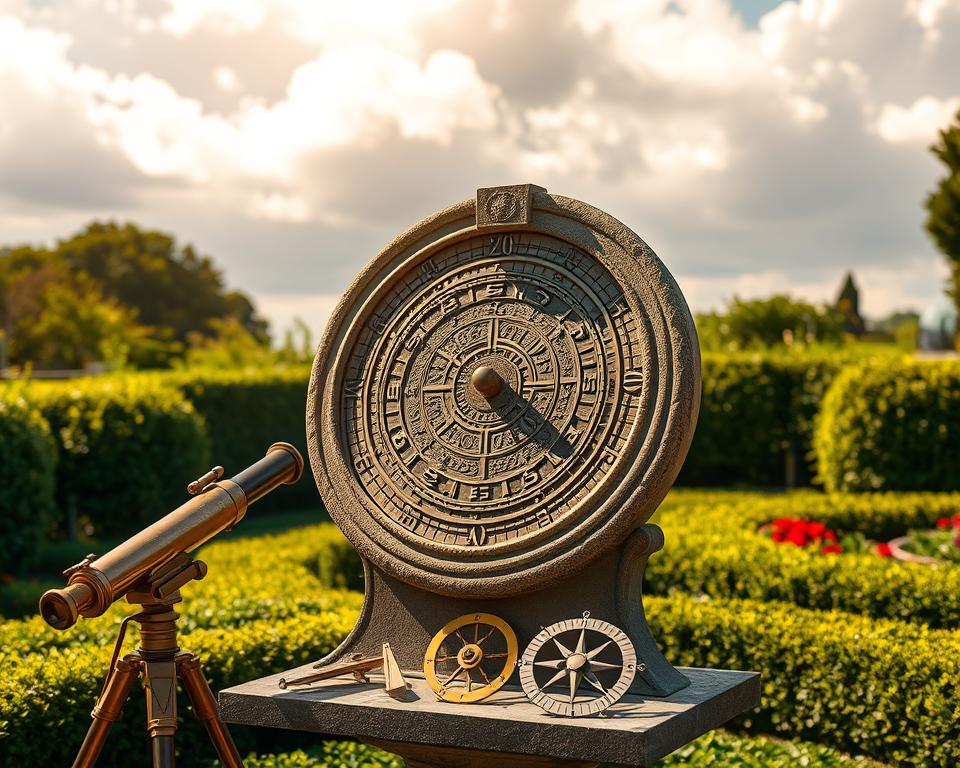
The Earth’s rotation and its tilt on its axis are fundamental to understanding how sundials work. As the Earth rotates, the position of the Sun in the sky changes, causing shadows to move across the sundial’s surface. The gnomon, a crucial component of the sundial, casts a shadow that indicates time.
Sundial Terminology
To fully appreciate the science behind sundials, it’s necessary to familiarize yourself with key terminology. Understanding these terms will help you construct and use a sundial effectively.
Gnomon, Dial Face, and Hour Lines
The gnomon is the vertical stick or object that casts a shadow on the sundial. The dial face is the surface on which the shadow falls, and it is typically marked with hour lines that indicate different times of the day. The alignment and spacing of these hour lines are critical to the sundial’s accuracy.
Understanding Latitude and Longitude for Sundials
Latitude and longitude are geographical coordinates that play a significant role in sundial construction. The latitude of a location determines the angle at which the gnomon should be positioned relative to the dial face. Understanding these concepts is crucial for creating an accurate sundial.
| Term | Description | Importance |
|---|---|---|
| Gnomon | Vertical stick or object casting a shadow | Critical for indicating time |
| Dial Face | Surface on which the shadow falls | Marked with hour lines for time indication |
| Latitude | Geographical coordinate indicating location’s north-south position | Determines gnomon angle for accuracy |
Types of Garden Sundials You Can Create
The type of sundial you choose for your garden can significantly impact its functionality and aesthetic appeal. When deciding on a sundial, you have several options to consider, each with its unique characteristics and advantages.
Horizontal Sundials
Horizontal sundials are one of the most common types of sundials and are ideal for gardens with plenty of sunlight. They are placed horizontally on the ground or on a flat surface, making them easy to install and maintain. The dial plate is marked with hour lines that are not equally spaced, requiring careful calculation to ensure accuracy.
Vertical Sundials
Vertical sundials, on the other hand, are mounted on a vertical surface, such as a wall or fence. They are particularly useful in gardens with limited space or where a horizontal surface is not available. However, they require more complex calculations to account for the vertical orientation.
Equatorial Sundials
Equatorial sundials are designed to be parallel to the Earth’s equator. They are considered to be more accurate than horizontal or vertical sundials, as the hour lines are equally spaced, making them easier to read. However, they can be more challenging to construct and install.
To help you decide which type of sundial is best for your garden, consider the following comparison:
| Type of Sundial | Installation | Accuracy | Aesthetic Appeal |
|---|---|---|---|
| Horizontal | Easy | Good | Versatile |
| Vertical | Moderate | Good | Space-saving |
| Equatorial | Challenging | High | Unique |
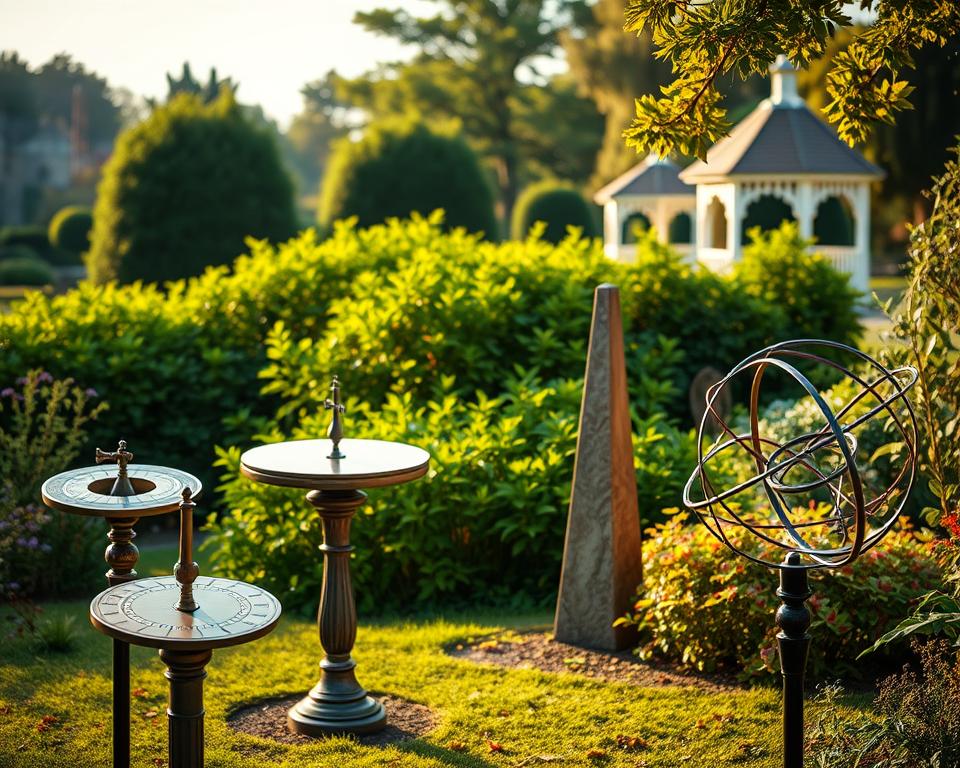
By considering these factors and characteristics, you can choose the perfect sundial for your garden, enhancing both its functionality and beauty.
Essential Tools and Materials for Your Sundial Project
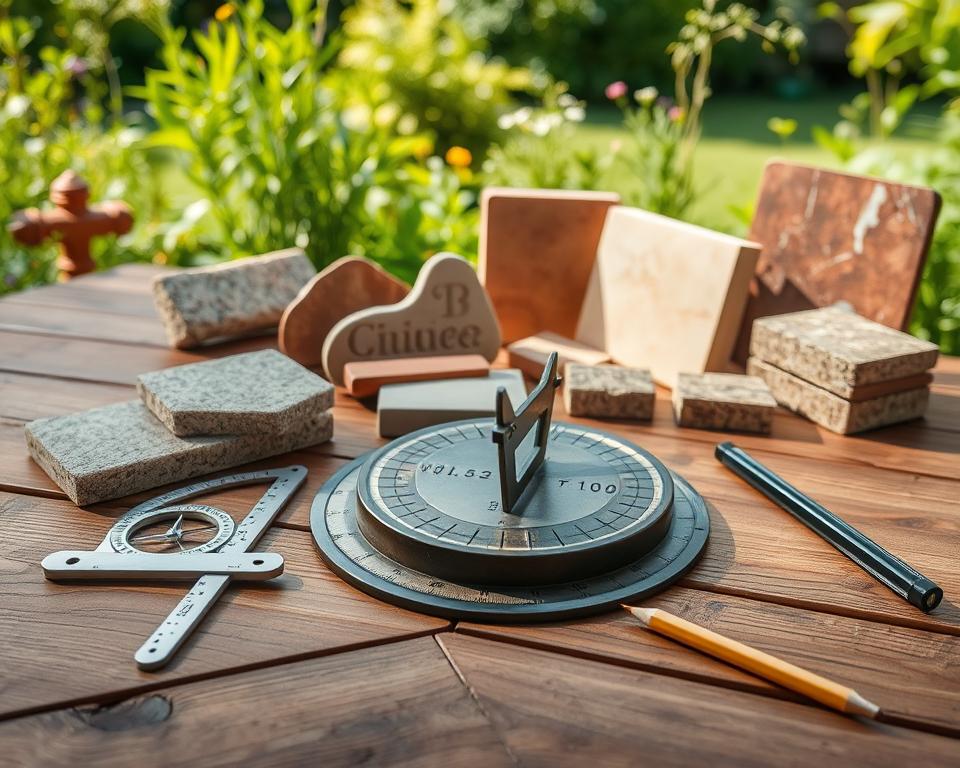
Before you start building your sundial, it’s essential to have the right tools and materials on hand. A well-prepared workspace will make the process smoother and more enjoyable.
Basic Tools Required
To begin, you’ll need some fundamental tools to measure, cut, and shape your sundial components.
Measuring and Marking Tools
Accurate measurements are crucial for a sundial to function correctly. You’ll need a steel ruler or a tape measure to measure lengths and a protractor or angle measurer to measure angles. A pencil or marker will help you mark the dial plate and other components.
Cutting and Shaping Implements
Depending on the material you choose for your sundial, you’ll need appropriate tools for cutting and shaping. For example, a saw or craft knife can be used for cutting wood or plastic, while a chisel or file can help shape the gnomon or other parts.
Material Options and Considerations
The choice of material for your sundial is critical, as it affects both its durability and its appearance.
Weather-Resistant Materials
Since your sundial will be outdoors, it’s vital to select materials that can withstand various weather conditions. Stainless steel, copper, and weather-resistant woods like teak or cedar are good options. You can also consider using stone or concrete for a more permanent installation.
Aesthetic Considerations
The material you choose should also complement your garden’s style and surroundings. Consider the colour, texture, and overall aesthetic you want to achieve. For instance, a wooden sundial can blend nicely with a natural or cottage-style garden, while a metal sundial might suit a more modern landscape.
Planning Your Garden Sundial Design
The first step in making your own garden sundial is to plan its design, taking into account your specific location. A well-designed sundial is not only functional but also a beautiful addition to your garden.
Determining the Perfect Location
When determining the perfect location for your sundial, consider a spot that receives direct sunlight for most of the day. Avoid areas shaded by trees or buildings. The surface should be level and stable to ensure accurate timekeeping.
Designing for Your Climate and Latitude
Your climate and latitude play crucial roles in sundial design. In regions with high latitudes, the sundial’s angle needs to be adjusted to compensate for the sun’s lower trajectory. Consider the average sunlight hours and seasonal changes in your climate when designing your sundial.
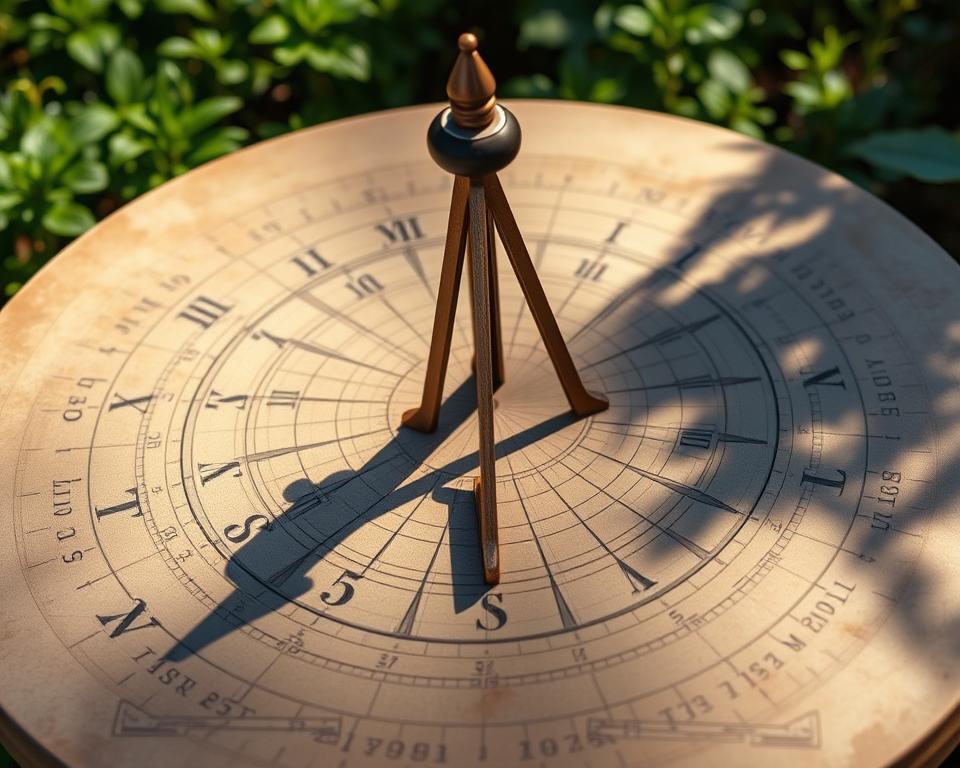
Sketching Your Sundial Plan
Once you have determined your location and considered your climate and latitude, it’s time to sketch your sundial plan. This involves making mathematical calculations for your specific location.
Mathematical Calculations for Your Location
To accurately mark hour lines on your sundial, you need to calculate the sun’s declination angle for your latitude. This requires using trigonometric formulas that take into account your location’s latitude.
Drawing Templates and Patterns
Using graph paper, draw a template or pattern for your sundial. You can use pre-made templates or create your own based on your calculations. Ensure your design is proportional and accurately represents the hour lines for your location.
| Latitude | Declination Angle | Hour Line Spacing |
|---|---|---|
| 50°N | 23.5° | 15° |
| 40°N | 20° | 12° |
| 30°N | 16.5° | 9° |
How to Make Your Own Garden Sundial: The Basic Process
The process of making a sundial involves several key steps, from designing the base to crafting the gnomon. Understanding these steps is crucial to creating a functional and aesthetically pleasing sundial for your garden.
Creating the Sundial Base
The base of your sundial is its foundation, providing the surface on which the time will be indicated. To create a sturdy base, you need to prepare the surface and establish the centre point accurately.
Preparing the Surface
To prepare the surface, start by selecting a material that is durable and can withstand various weather conditions. Stone, wood, and metal are popular choices. Ensure the surface is flat and smooth. If you’re using a material that’s prone to warping, like wood, consider applying a protective coating to prevent damage over time.
Establishing the Centre Point
The centre point is where the gnomon will be positioned. To establish it, draw a circle on the surface and mark the centre. For a horizontal sundial, this point will be the location of the gnomon. Accuracy is crucial here, as the centre point affects the sundial’s ability to tell time correctly.
Crafting the Gnomon
The gnomon is the vertical stick or pillar that casts a shadow, indicating the time. Crafting it requires calculating the correct angle and securing it firmly to the base.
Calculating the Correct Angle
The angle of the gnomon is critical and depends on your latitude. For a horizontal sundial, the angle should be equal to the latitude of your location. Use a calculator or a sundial design tool to determine the precise angle. This ensures that your sundial accurately tells time throughout the year.
Securing the Gnomon to the Base
Once you’ve calculated the angle, secure the gnomon to the base. Ensure it’s firmly attached so that it doesn’t shift over time due to weather conditions. A sturdy attachment is vital for the sundial’s accuracy and longevity.
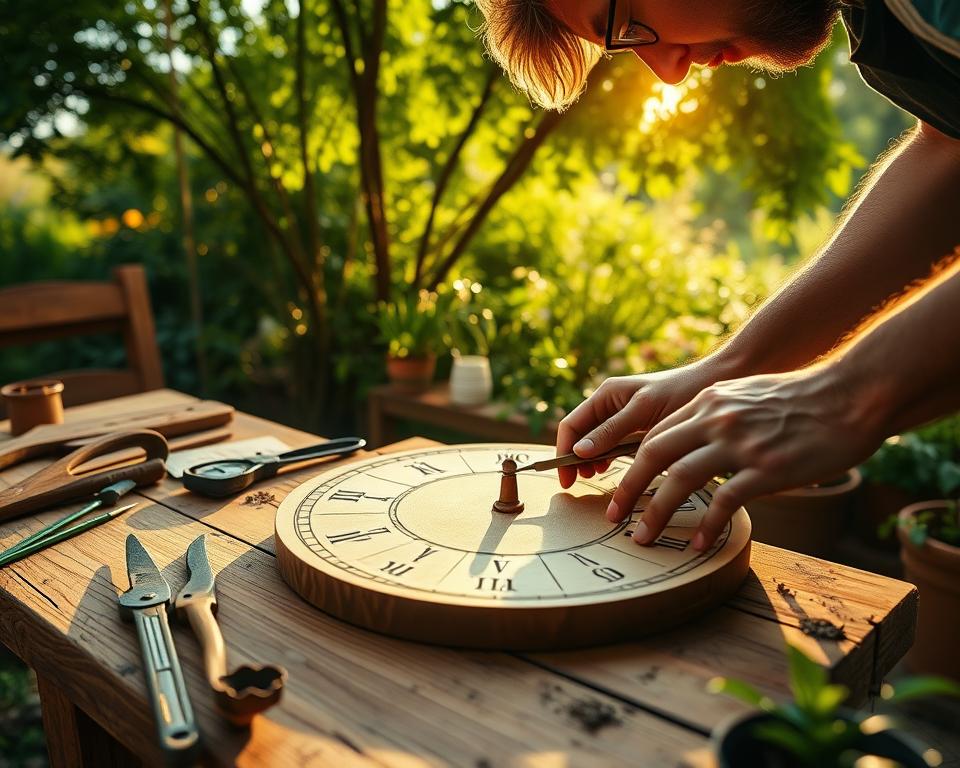
By following these steps, you can create a functional sundial that not only tells time but also adds a unique element to your garden. Remember, the key to a successful sundial is in the details, from the base preparation to the gnomon’s angle calculation.
Step-by-Step Guide to Building a Horizontal Sundial
With a few simple tools and some basic knowledge, you can construct a horizontal sundial that will accurately tell time in your garden. A horizontal sundial is one of the most common types of sundials and is ideal for garden settings due to its simplicity and effectiveness.
Preparing the Dial Plate
The first step in building your horizontal sundial is preparing the dial plate. The dial plate is the surface on which the hour lines will be marked. To prepare it, you’ll need a flat, sturdy material such as stone, wood, or metal. Ensure the surface is clean and dry before proceeding. If you’re using a material that’s prone to weathering, consider applying a protective coating to extend its lifespan.
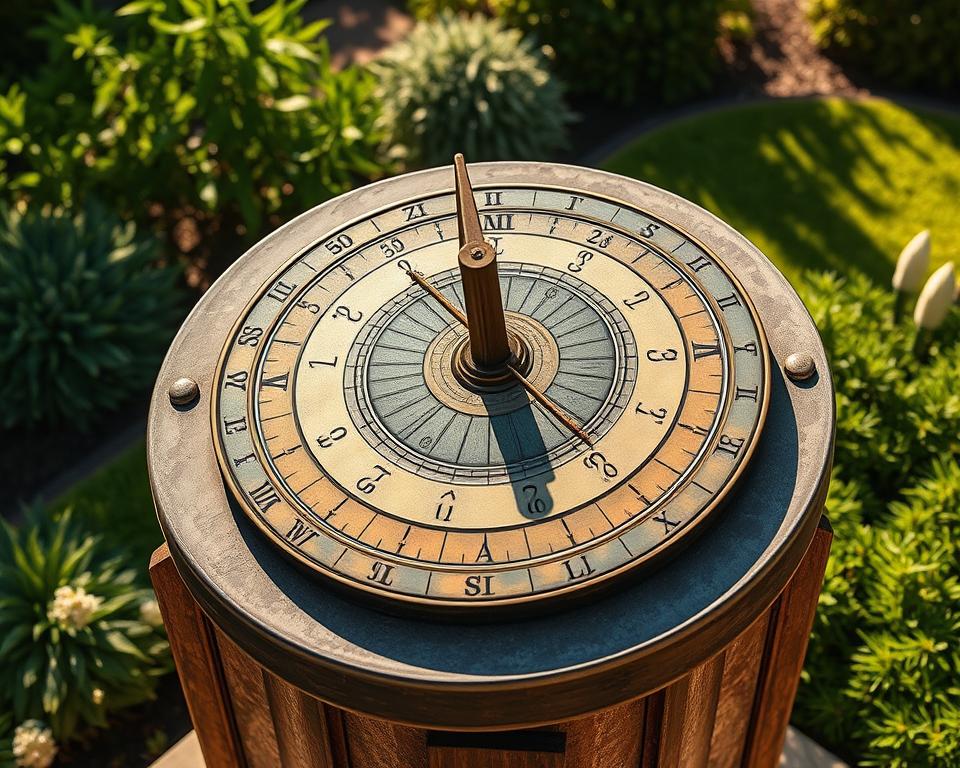
Marking the Hour Lines
Marking the hour lines is a critical step in creating a functional sundial. The accuracy of these lines determines how well your sundial will tell time. There are two primary methods for marking hour lines: using trigonometry or employing alternative methods for those less comfortable with mathematical calculations.
Using Trigonometry for Accurate Lines
Trigonometry allows for precise calculation of the hour lines based on your latitude. By applying trigonometric formulas, you can determine the exact angles for each hour line. This method ensures that your sundial is accurate and reliable.
Alternative Methods for Non-mathematicians
If trigonometry seems daunting, there are alternative methods available. You can use pre-calculated tables or online tools that provide hour line angles for different latitudes. These resources simplify the process, making it accessible to everyone.
Attaching the Gnomon
The gnomon is the vertical piece that casts a shadow on the dial plate, indicating the time. Attaching it correctly is crucial for the sundial’s accuracy. Ensure the gnomon is perpendicular to the dial plate and aligned with the true north. The height and angle of the gnomon should be appropriate for your latitude to ensure accurate timekeeping.
By following these steps, you can create a beautiful and functional horizontal sundial for your garden. Remember to calibrate your sundial according to your latitude and the equation of time for the most accurate results.
Creating a Sundial from Different Materials
Choosing the right material is a critical step in creating a sundial that is both effective and visually pleasing. The material you select will impact the sundial’s durability, accuracy, and overall aesthetic appeal.
Stone Sundials
Stone is a popular choice for sundials due to its durability and natural beauty. Stone sundials can withstand various weather conditions, making them ideal for outdoor use.
Working with Slate and Marble
Slate and marble are excellent options for stone sundials. They are dense, weather-resistant, and can be carved with intricate designs. When working with these materials, use sharp tools to achieve precise lines.
Carving Techniques
To carve your design onto slate or marble, start by sketching the pattern onto the stone. Use a combination of chisels and gouges to carefully remove material and create the desired design.
Wooden Sundials
Wood is another viable material for sundials, offering a warm, natural look. Wooden sundials can be crafted from various types of timber, each with its unique characteristics.
Selecting and Treating Timber
Choose durable, weather-resistant wood like oak or teak for your sundial. Apply a protective finish to safeguard the wood against the elements.
Woodworking Methods
Use standard woodworking techniques to shape and assemble your sundial. Ensure the surface is smooth and even to accurately mark the hour lines.
Metal and Other Material Options
Metal sundials offer a sleek, modern alternative. You can also consider other materials like concrete or composite materials for unique designs. Each material has its advantages and challenges.
| Material | Durability | Aesthetic Appeal |
|---|---|---|
| Stone | High | Natural beauty |
| Wood | Medium | Warm, natural look |
| Metal | High | Modern, sleek |
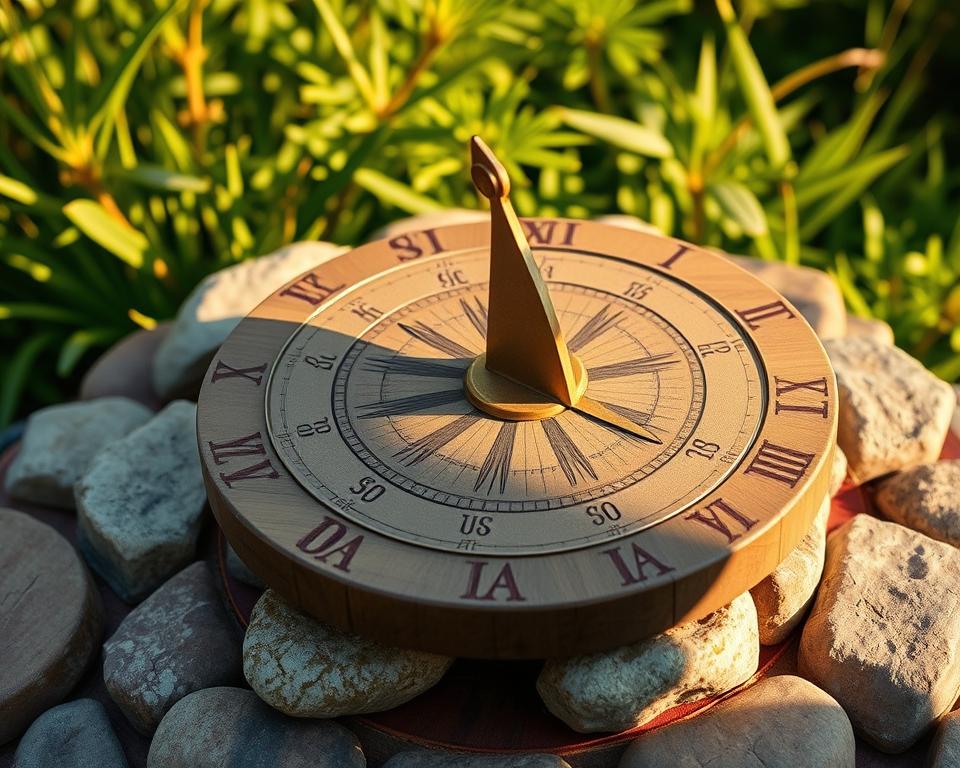
Adding Decorative Elements to Your Sundial
To make your sundial stand out, you can incorporate various decorative elements. A well-designed sundial can not only tell time but also become a beautiful focal point in your garden.
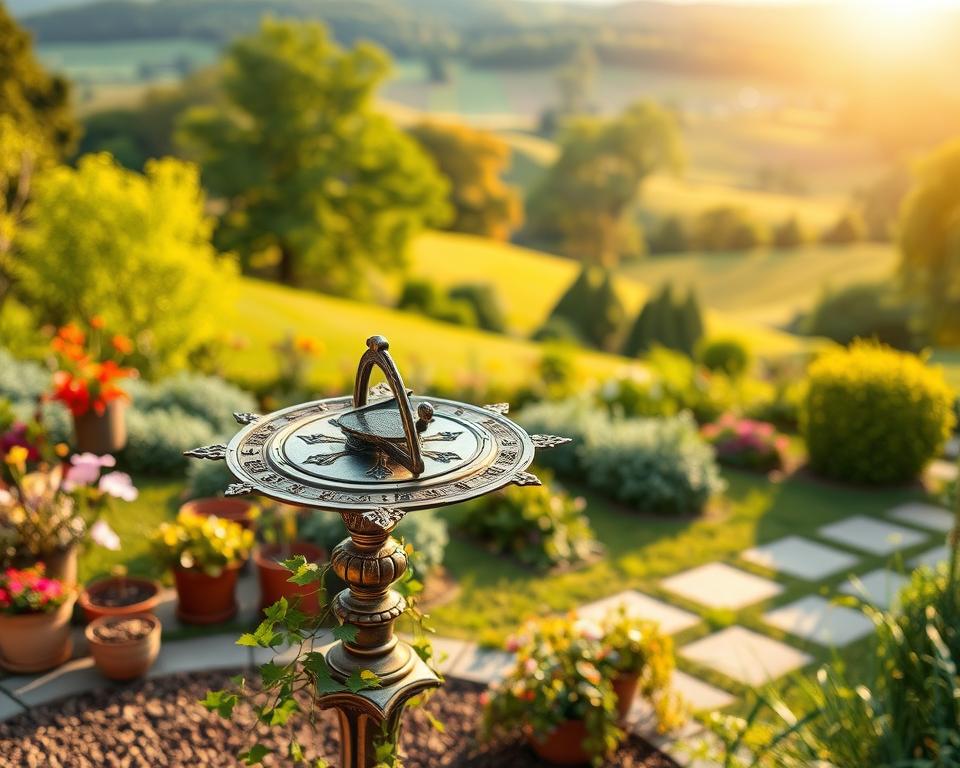
Engraving and Painting Techniques
Engraving and painting are excellent ways to add a personal touch to your sundial. You can use engraving to inscribe intricate designs or hour markers on the dial plate. For a more vibrant look, consider painting the sundial with weather-resistant paints.
Some techniques to explore include:
- Using stencils for precise designs
- Applying multiple coats of paint for durability
- Combining engraving and painting for a unique effect
Incorporating Mottoes and Designs
Incorporating mottoes and designs can add an extra layer of meaning to your sundial. Traditional sundial mottoes often reflect on the passage of time or the importance of making the most of the present moment.
Traditional Sundial Mottoes
Some classic examples of sundial mottoes include “Tempus Fugit” (Time Flees) and “Carpe Diem” (Seize the Day). These phrases not only add aesthetic value but also serve as reminders of the significance of time.
Creating Personalised Inscriptions
You can also create personalised inscriptions that reflect your personal philosophy or commemorate a special occasion. Consider using a meaningful quote or a family name to make your sundial truly unique.
By thoughtfully incorporating decorative elements, you can create a sundial that is not only functional but also a beautiful and meaningful addition to your garden.
Properly Positioning Your Sundial in the Garden
Accurate sundial positioning is vital for reliable time-telling in your garden. To achieve this, you need to consider a few critical factors that affect how your sundial operates.
Finding True North
One of the most important aspects of sundial positioning is aligning it with true north. This ensures that your sundial accurately reflects the time based on the sun’s shadow.
Using a Compass
A compass can be a useful tool for determining true north. However, it’s essential to adjust for magnetic declination, which varies depending on your location. Magnetic declination is the difference between magnetic north and true north.
The Shadow Method
Another method to find true north is by observing the shadow of a vertical stick or object. Mark the end of the shadow at two different times, and the midpoint between these marks will indicate south, thus helping you determine true north.
Levelling and Securing Your Sundial
Once you’ve aligned your sundial with true north, it’s crucial to ensure it’s level and securely fixed in place. A level sundial base is vital for accurate timekeeping, as any tilt can distort the shadow cast by the gnomon.
| Positioning Factor | Importance | Method |
|---|---|---|
| True North Alignment | High | Compass or Shadow Method |
| Levelling | High | Spirit Level |
| Securing | High | Stable Base or Mounting |
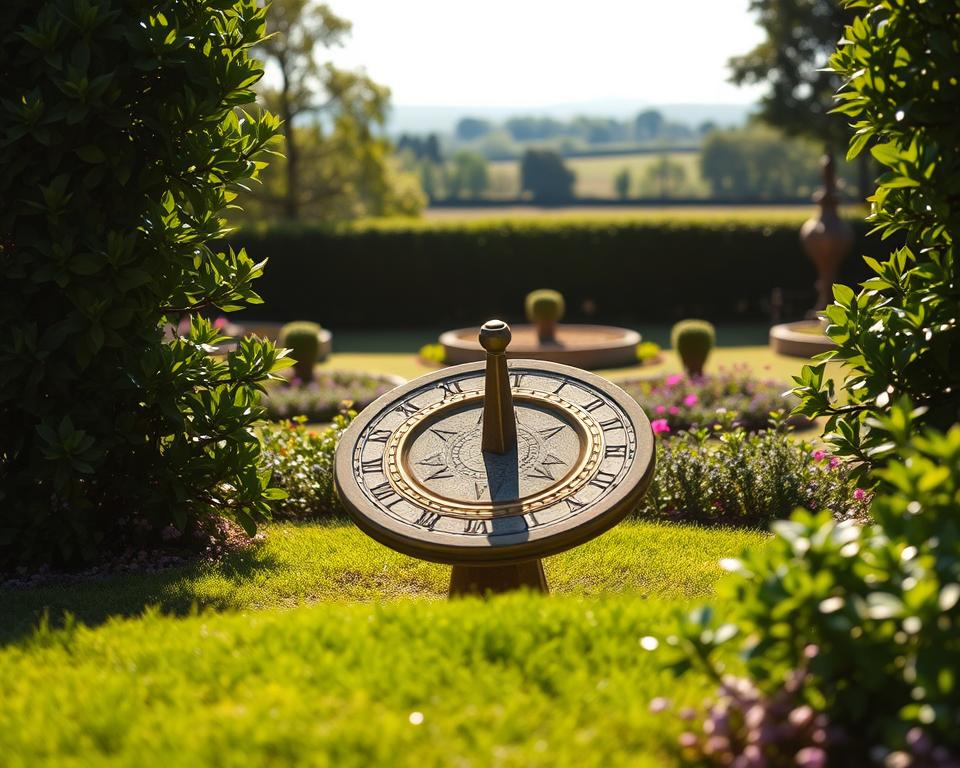
By carefully positioning your sundial, ensuring it’s level, and securing it firmly, you’ll be able to enjoy accurate timekeeping in your garden. Proper sundial positioning enhances both the functionality and aesthetic appeal of your sundial.
Calibrating Your Sundial for Accuracy
Sundial calibration is an essential step in creating a reliable timekeeping device for your garden. To ensure your sundial provides accurate time readings, you need to understand and adjust for several factors that can affect its performance.
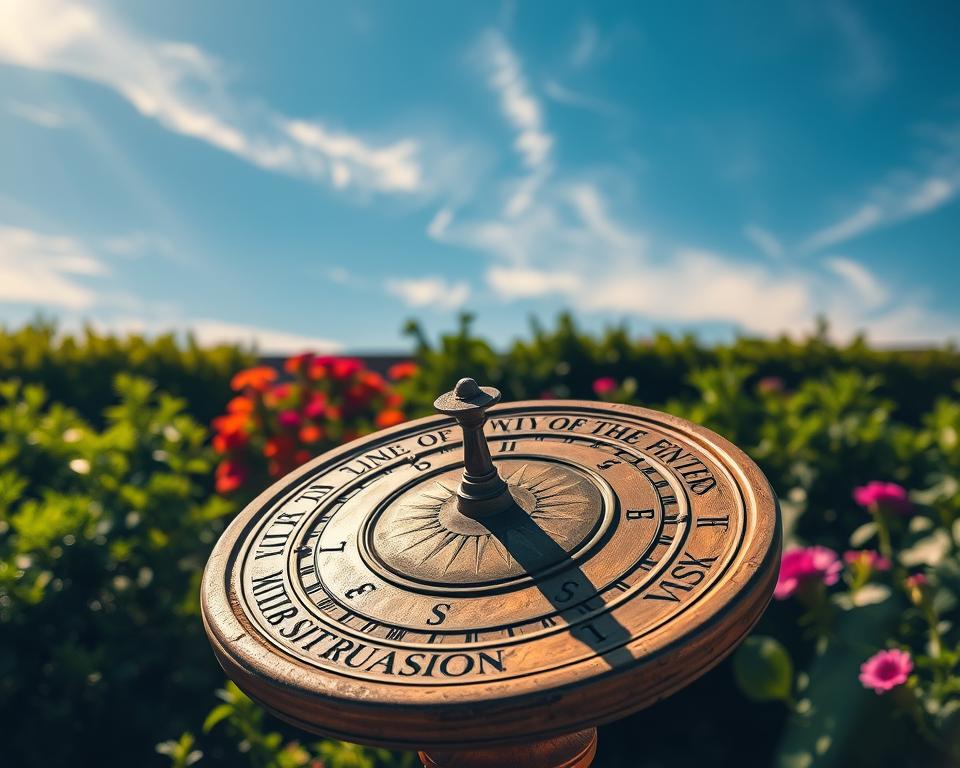
Understanding the Equation of Time
The Equation of Time is a critical factor in sundial calibration. It accounts for the difference between the time shown by a sundial and the actual clock time. This discrepancy arises because the Earth’s orbit is not a perfect circle, and its axis is tilted. As a result, the sundial’s time can be up to 16 minutes faster or slower than clock time, depending on the time of year. Understanding this equation is vital for making the necessary adjustments to your sundial.
Adjusting for Daylight Saving Time
Another important consideration is Daylight Saving Time (DST). During DST, clocks are set forward by one hour in the summer months. Your sundial, however, continues to show the same time as it did before. To adjust for DST, you simply need to mentally add one hour to the time shown by your sundial during the DST period. It’s a straightforward adjustment that ensures your sundial remains a useful timekeeping device.
Testing and Fine-tuning
Testing your sundial regularly is crucial for fine-tuning its accuracy. This involves comparing the time shown by your sundial with clock time on a regular basis. Recording daily readings over a period can help identify any consistent discrepancies that need to be adjusted for.
Recording Daily Readings
To refine your sundial’s accuracy, record the time shown by your sundial at the same moment every day (e.g., noon) and compare it with clock time. This will help you identify any patterns in the discrepancies.
Making Seasonal Adjustments
As the seasons change, so does the sun’s path across the sky. Making seasonal adjustments to your sundial ensures it remains accurate throughout the year. This may involve recalibrating the gnomon’s angle or adjusting the hour lines to account for the changing solar declination.
By understanding the Equation of Time, adjusting for Daylight Saving Time, and regularly testing and fine-tuning your sundial, you can ensure it remains a reliable and accurate timekeeping device in your garden.
Troubleshooting Common Sundial Problems
You might find that your sundial isn’t keeping perfect time, and this can be due to several reasons. Understanding these issues is crucial to ensuring your sundial remains accurate and functional.
Addressing Inaccurate Time Readings
Inaccurate time readings can be frustrating. There are several factors that contribute to this problem, including alignment issues and shadow distortions.
Alignment Issues
Alignment is critical for a sundial’s accuracy. If the gnomon is not aligned correctly with the sundial’s dial plate, it can lead to incorrect time readings. Ensure that the gnomon is parallel to the Earth’s axis and aligned with true north.
Shadow Distortions
Shadow distortions can occur due to the surrounding environment or the design of the sundial itself. Objects nearby can cast additional shadows, while a poorly designed gnomon can distort the shadow, leading to inaccuracies.

Dealing with Seasonal Variations
Sundials need to account for seasonal variations. The Earth’s tilt causes the sun’s path across the sky to change throughout the year, affecting the sundial’s accuracy. Adjustments may be necessary to compensate for these changes.
| Season | Adjustment Needed | Reason |
|---|---|---|
| Summer | Yes | Longer days, sun’s higher path |
| Winter | Yes | Shorter days, sun’s lower path |
| Spring/Autumn | Minimal | Moderate sun path |
By understanding and addressing these common issues, you can ensure your sundial remains a reliable and charming addition to your garden.
Maintaining Your Garden Sundial Through the Seasons
As the seasons change, your garden sundial requires attention to maintain its accuracy and appearance. Regular maintenance ensures that your sundial continues to function correctly and remains a beautiful feature in your garden.
Seasonal Maintenance Tips
To keep your sundial in good condition, follow these seasonal tips:
- Spring: Check the sundial’s alignment after winter and make any necessary adjustments.
- Summer: Clean the sundial regularly to remove dirt and debris.
- Autumn: Remove fallen leaves and inspect the sundial for any damage.
- Winter: Protect the sundial from harsh weather conditions using appropriate methods.
Protecting Against Weather Damage
Weather conditions can significantly impact your sundial’s accuracy and longevity. To protect it, consider the following measures:
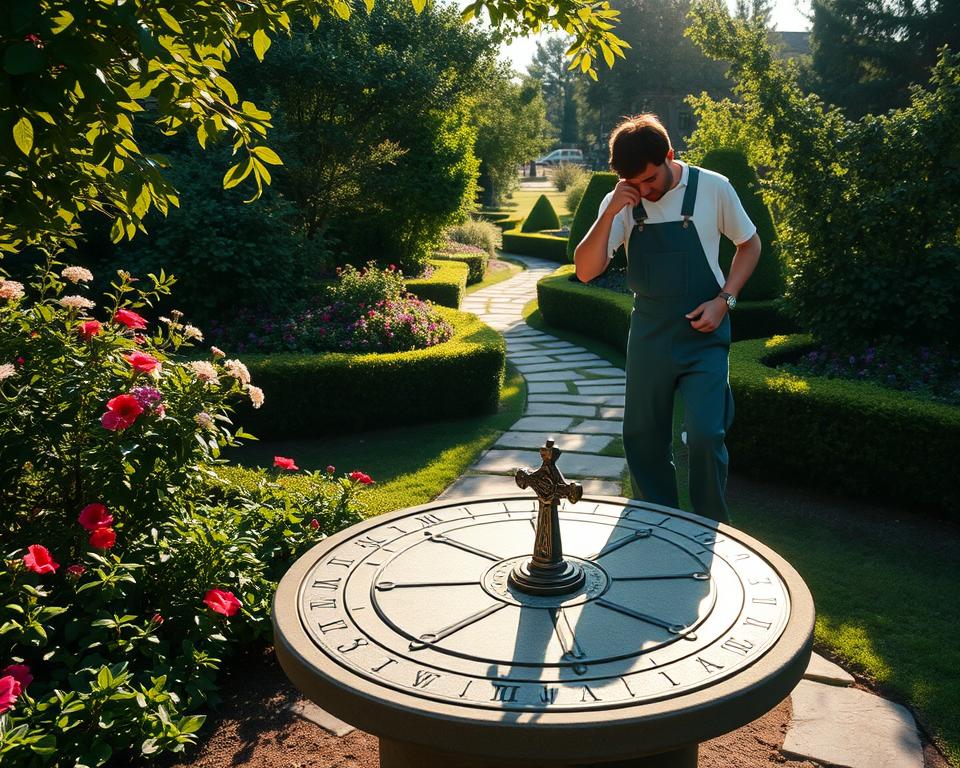
During winter, cover your sundial with a breathable cloth or bring it indoors if possible. This will shield it from extreme cold and moisture.
Cleaning and Restoration
Regularly clean your sundial using a soft brush and mild soap solution. For more thorough restoration, consider consulting a professional to avoid damaging the sundial.
Creative Sundial Projects for Different Garden Styles
Your garden’s unique character can be perfectly complemented by a sundial that matches its style, whether it’s a quaint cottage or a modern minimalist space. A well-designed sundial can enhance the aesthetic appeal of your garden while serving as a functional time-telling device.
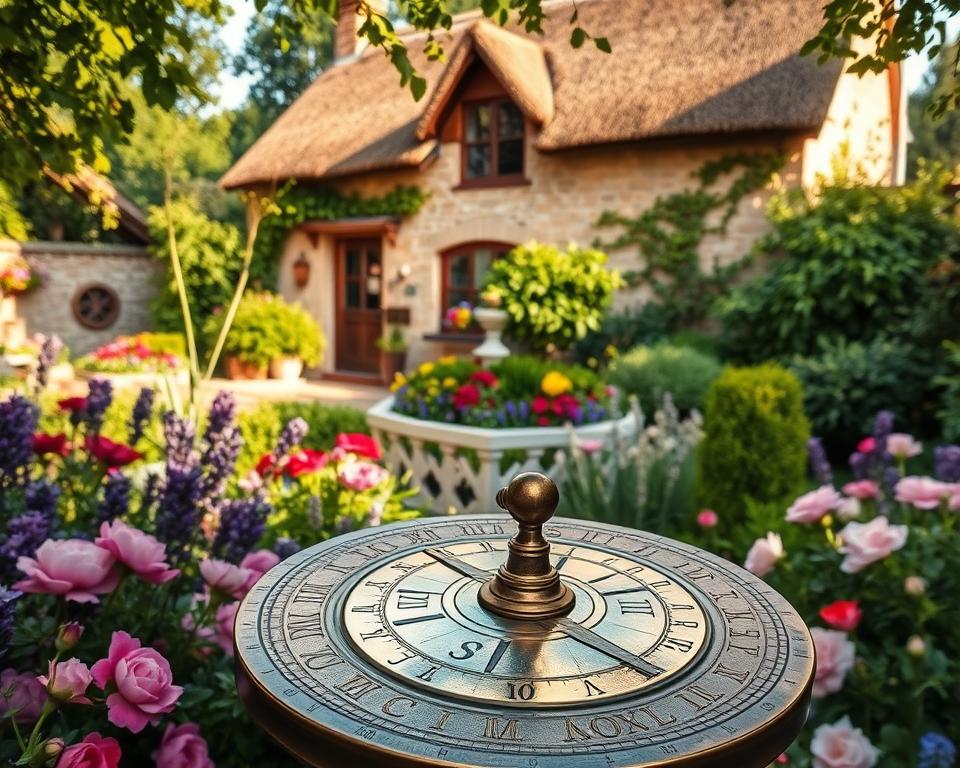
Cottage Garden Sundials
Cottage garden sundials often feature traditional designs and materials, such as stone or wood. To create a charming cottage-style sundial, consider using natural materials and incorporating floral patterns or other decorative elements that reflect the garden’s character.
Modern Minimalist Designs
For a modern minimalist garden, a sleek and simple sundial design is often the most effective. Consider using materials like metal or concrete to create a clean and contemporary look. A minimalist sundial can be a striking focal point in a modern garden.
Child-Friendly Sundial Projects
Creating a sundial can be a fun and educational project for children. Consider designing a sundial that incorporates interactive elements, such as a movable gnomon or hour markers that can be adjusted seasonally.
Human Sundials
A human sundial is a creative and engaging way to involve people in the sundial experience. This can be achieved by using individuals standing on marked hour lines to create the shadow, making it an interactive garden feature.
Educational Garden Features
Sundials can serve as valuable educational tools, teaching children about the movement of the sun, the concept of time, and the science behind sundials. Incorporating educational elements into your sundial design can enhance its value and appeal.
By choosing a sundial design that complements your garden’s style, you can create a unique and functional feature that enhances the overall aesthetic of your outdoor space.
Conclusion
As you complete your sundial project, you’ll not only have a functional timekeeping device but also a beautiful piece of garden decoration that adds character to your outdoor space. By following the steps outlined in this article, you’ve successfully created a unique DIY project that enhances your garden’s aesthetic appeal.
Your sundial serves as a connection to the past, blending traditional timekeeping methods with modern garden design. As you enjoy your new sundial, you’ll appreciate the blend of art, science, and history it brings to your garden. Whether you’re a seasoned gardener or a DIY enthusiast, your sundial is sure to be a conversation starter and a lasting addition to your outdoor decor.
In conclusion, creating a sundial is a rewarding DIY project that combines functionality with garden decoration, allowing you to appreciate the beauty of timekeeping in a unique and personal way.
FAQ
What is the best material to use for a sundial?
The best material for a sundial depends on your preference and the style of your garden, but weather-resistant materials like stone, slate, or hardwood are recommended.
How do I determine the correct angle for my sundial’s gnomon?
The angle of the gnomon should be equal to the latitude of your location. You can find your latitude using an online map or a GPS device.
Can I build a sundial in a shaded area?
A sundial requires direct sunlight to function, so it’s not suitable for a shaded area. Choose a location that receives sunlight for most of the day.
How do I calibrate my sundial for accuracy?
To calibrate your sundial, you need to understand the equation of time and adjust for daylight saving time. You may also need to make seasonal adjustments.
What is the purpose of the hour lines on a sundial?
The hour lines on a sundial indicate the time of day. They are calculated based on the latitude of your location and the style of the sundial.
Can I use a sundial at night or on cloudy days?
A sundial is not functional at night or on cloudy days, as it relies on sunlight to indicate the time.
How do I maintain my sundial?
Regularly clean your sundial and protect it from extreme weather conditions. You may also need to reapply a sealant or finish to protect the material.
Can I make a sundial with children?
Yes, creating a sundial can be a fun and educational project for children. You can simplify the process and use child-friendly materials.
What are some common problems with sundials?
Common issues with sundials include inaccurate time readings, shadow distortions, and seasonal variations. You can troubleshoot these problems by adjusting the gnomon or making seasonal adjustments.
How long does it take to build a sundial?
The time it takes to build a sundial depends on the complexity of the design and the materials used. A simple sundial can be built in a few hours, while a more complex one may take several days.