Creating Durable Raised Garden Beds with Robust Flora
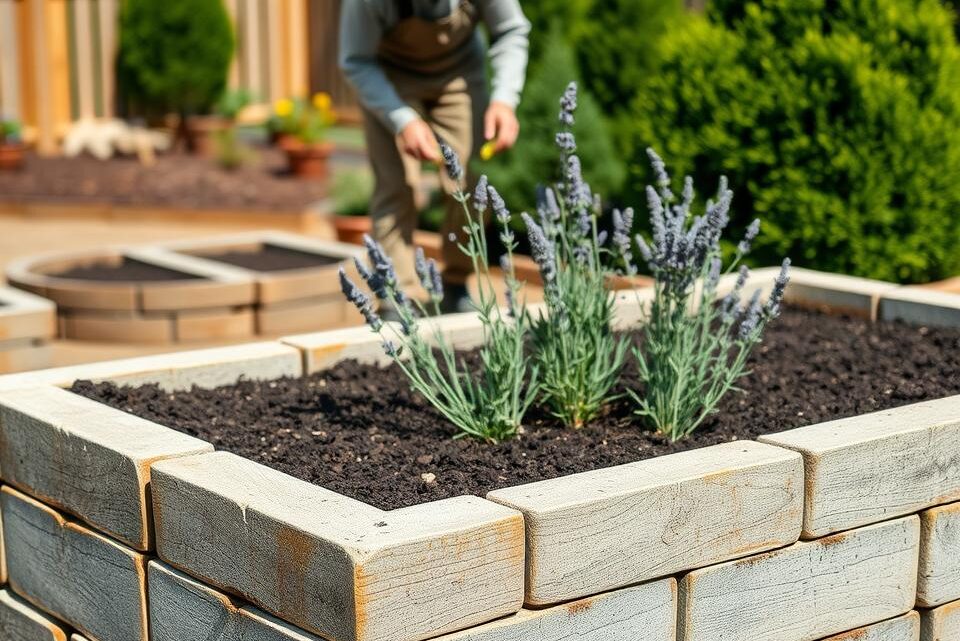
Are you looking to enhance your outdoor space with a long-lasting garden solution? Constructing a raised bed using robust materials offers numerous advantages for your gardening projects. These structures provide excellent drainage and soil control, making them ideal for various plants.
Unlike traditional wooden frames that may warp over time, certain construction materials ensure stability and durability. This approach allows you to customise your garden layout while supporting healthy root development. Proper planning and execution can significantly improve your gardening success.
Our comprehensive guide covers everything from initial planning to ongoing maintenance. You’ll learn about optimal soil depth, plant selection for the UK climate, and practical building techniques. This method not only increases accessibility but also maximises your growing potential.
Inhaltsverzeichnis
Key Takeaways
- Robust construction materials offer superior longevity compared to traditional wood
- Raised structures provide better drainage and soil management for your garden
- Customisable layouts allow for efficient use of available space
- Proper soil depth and composition are crucial for plant health
- Selecting appropriate flora ensures success in the British climate
- Regular maintenance preserves the integrity and appearance of your garden feature
Understanding the Benefits of Concrete Block Planters
Modern gardening solutions have evolved to incorporate construction techniques that enhance both function and form. When you build raised garden structures using specific materials, you create a foundation that supports healthy growth while adding aesthetic appeal to your outdoor space.
These structures offer distinct advantages over traditional wooden frames. They provide superior stability and can be customised to fit any garden layout. The right choice of materials ensures your investment will last for years to come.
Durability and Longevity of Concrete Construction
Concrete blocks demonstrate exceptional resilience in outdoor environments. Their composition of cement and aggregate creates a material that resists warping and breaking under pressure. Unlike wooden frames that deteriorate over time, these structures maintain their integrity through seasonal changes.
Standard blocks measure approximately 440mm x 215mm x 100mm, providing substantial mass for stability. You can secure them using products like Loctite adhesive for additional reinforcement. A rubber mallet helps achieve precise placement during construction.
Modern manufacturing processes ensure these materials are safe for edible gardens. They do not leach harmful chemicals into your soil, making them suitable for growing vegetables and herbs. This safety aspect is crucial for any food-producing garden space.
Thermal Properties for Plant Protection
The thermal mass of certain building materials offers significant benefits for plant health. These structures absorb heat during the day and release it gradually at night. This temperature regulation protects root systems from sudden frosts or heat spikes.
In the UK climate, this thermal buffering is particularly valuable. It extends the growing season by protecting against early autumn frosts. Your plants enjoy a more stable environment, promoting healthier growth throughout the year.
The material’s density also helps maintain consistent moisture levels. It reduces rapid evaporation during warm periods while preventing waterlogging during wet spells. This balanced environment supports optimal root development.
Design Flexibility and Customisation Options
One of the greatest advantages is the freedom to create custom layouts. You can design curved edges or straight lines to complement your garden’s aesthetic. The modular nature allows for endless configuration possibilities.
For a finished appearance, consider adding cap blocks to the top layer. These provide a smooth surface that enhances the visual appeal. You can also render the exterior with bonding cement for a modern, seamless look.
The table below compares different materials for raised garden structures:
| Material Type | Lifespan | Thermal Properties | Customisation Options | Maintenance Requirements |
|---|---|---|---|---|
| Concrete Blocks | 25+ years | Excellent thermal mass | High flexibility | Minimal |
| Pressure-treated Wood | 10-15 years | Moderate insulation | Limited shapes | Annual treatment |
| Metal Sheets | 15-20 years | Poor insulation | Fixed shapes | Rust prevention |
| Recycled Plastic | 20+ years | Good insulation | Moderate flexibility | None |
When you build raised bed structures, consider both practical and aesthetic factors. The right choice depends on your specific needs and garden conditions. Proper planning ensures your garden feature will serve you well for many seasons.
Remember to consider drainage requirements during the design phase. Adequate water management is essential for plant health. The bottom layer should facilitate proper moisture control without waterlogging.
Selecting Suitable Hardy Plants for UK Gardens
Choosing the right flora transforms your outdoor space into a thriving ecosystem. The UK’s variable climate demands careful selection for lasting success. Your raised garden bed deserves vegetation that complements its robust nature.
Optimal choices provide year-round appeal and practical benefits. They should withstand temperature fluctuations while enhancing your garden’s visual appeal. This approach maximises your investment in both structure and greenery.
Winter-Hardy Perennials for Year-Round Interest
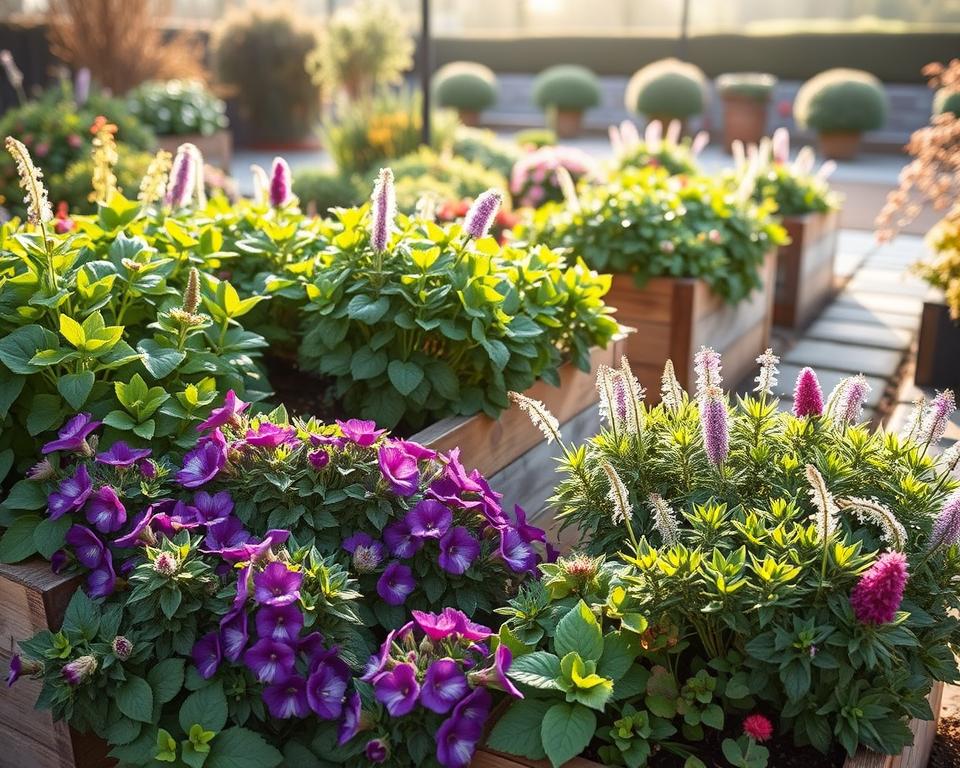
Perennials offer reliable performance through seasonal changes. Heuchera varieties provide striking foliage colours from silver to deep purple. Their textured leaves maintain interest even during dormant periods.
Sedum species deliver exceptional drought resistance and winter structure. Their succulent leaves and late blooms support pollinators into autumn. These varieties tolerate the thermal properties of masonry constructions exceptionally well.
For successful establishment, ensure at least 45-50cm soil depth. This accommodates root development while providing insulation. The mass of surrounding materials helps regulate soil temperature effectively.
Evergreen Shrubs for Structure and Form
Buxus sempervirens creates formal structure with minimal maintenance. Its dense growth habit withstands wind exposure in elevated situations. Regular trimming maintains desired shapes throughout the year.
Ilex aquifolium varieties offer berries for wildlife and glossy foliage. They provide excellent screening and withstand frost without damage. Their adaptability makes them ideal for structured garden designs.
These woody specimens benefit from the stability of solid constructions. The enclosed environment supports root establishment while preventing frost heave. This protection ensures longevity for your investment.
Cold-Tolerant Herbs and Edibles
Rosemary officinalis delivers aromatic foliage and winter flowers. Its woody stems withstand temperatures well below freezing when established. This Mediterranean herb thrives in free-draining situations.
Brassica oleracea varieties provide fresh produce through cold months. Kale and collards develop sweeter flavours after frost exposure. Their nutritional value makes them valuable garden additions.
Thymus species form evergreen mats that tolerate foot traffic. Their flowers attract beneficial insects while providing culinary value. These hardy specimens require minimal protection during UK winters.
| Plant Type | Variety Examples | Soil Depth Required | Seasonal Interest | Maintenance Level |
|---|---|---|---|---|
| Perennials | Heuchera, Sedum | 45-50cm | Year-round foliage | Low |
| Evergreen Shrubs | Buxus, Ilex | 50-60cm | Permanent structure | Medium |
| Herbs & Edibles | Rosemary, Kale | 40-45cm | Harvest year-round | Low |
Your selection should consider ultimate size and growth habits. Allow sufficient space for development without overcrowding. This planning ensures healthy specimens for years to come.
The right potting soil mixture supports strong establishment. Incorporate organic matter to retain moisture while ensuring drainage. This balance is crucial for containerised growth situations.
Remember that thermal mass benefits root zone temperature regulation. It protects against sudden frosts while reducing summer heat stress. This stability promotes stronger growth throughout the seasons.
Planning Your Concrete Planter Block Layout
Strategic layout planning forms the foundation of successful raised garden construction. Your approach determines both functionality and long-term maintenance requirements. Careful consideration at this stage prevents issues with accessibility and plant health.
Assessing Your Garden Space and Sun Exposure
Begin by evaluating sunlight patterns throughout your outdoor area. South-facing positions receive maximum daylight exposure, which is crucial for robust growth. Observe how shadows fall during different times of day.
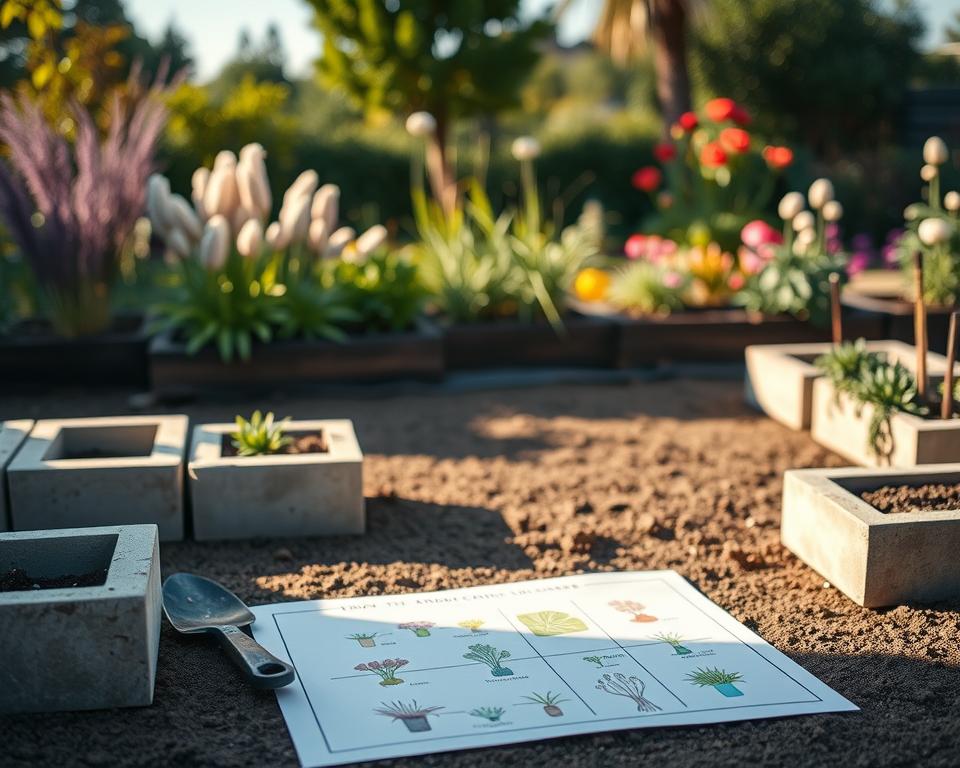
Use line-marking spray to outline potential positions before finalising your design. This temporary visualisation helps you understand spatial relationships. Consider existing structures that might cast unwanted shade.
Avoid areas with sudden level changes or poor drainage patterns. Gentle slopes can be incorporated into terracing designs. Steep gradients may require additional stabilisation measures.
Determining the Optimal Size and Height
Standard dimensions of 4 feet width by 16 feet length provide excellent accessibility. This size allows easy reach to the centre from either side. You avoid stretching that might strain your back during maintenance.
The ideal height ranges from 18 to 24 inches for most gardening needs. This depth accommodates sufficient root development while remaining comfortable to work with. Deeper constructions may require additional support.
- Width: Maximum 4 feet for easy access to the centre
- Length: Flexible but 16 feet offers practical management
- Height: 18-24 inches balances soil volume and accessibility
Creating Accessible Pathways Between Planters
Maintain minimum 3-foot pathways between your garden structures. This width accommodates wheelbarrows and comfortable movement. Wider paths may be necessary for wheelchair access.
Consider surface materials that provide firm footing year-round. Gravel or paving stones prevent mud formation during wet periods. Proper pathways significantly enhance your gardening experience.
“A well-designed garden layout should prioritise both plant needs and human accessibility. The relationship between growing spaces and circulation paths determines long-term usability.”
Your planning decisions directly influence maintenance efficiency and plant vitality. Thoughtful arrangement reduces physical strain during routine tasks. This foresight ensures your garden remains enjoyable for years to come.
Preparing the Site and Foundation
Proper groundwork ensures your garden feature stands the test of time. A solid foundation prevents shifting and maintains structural integrity through seasonal changes. This preparation phase directly influences the longevity of your construction.
Clearing and Levelling the Ground Surface
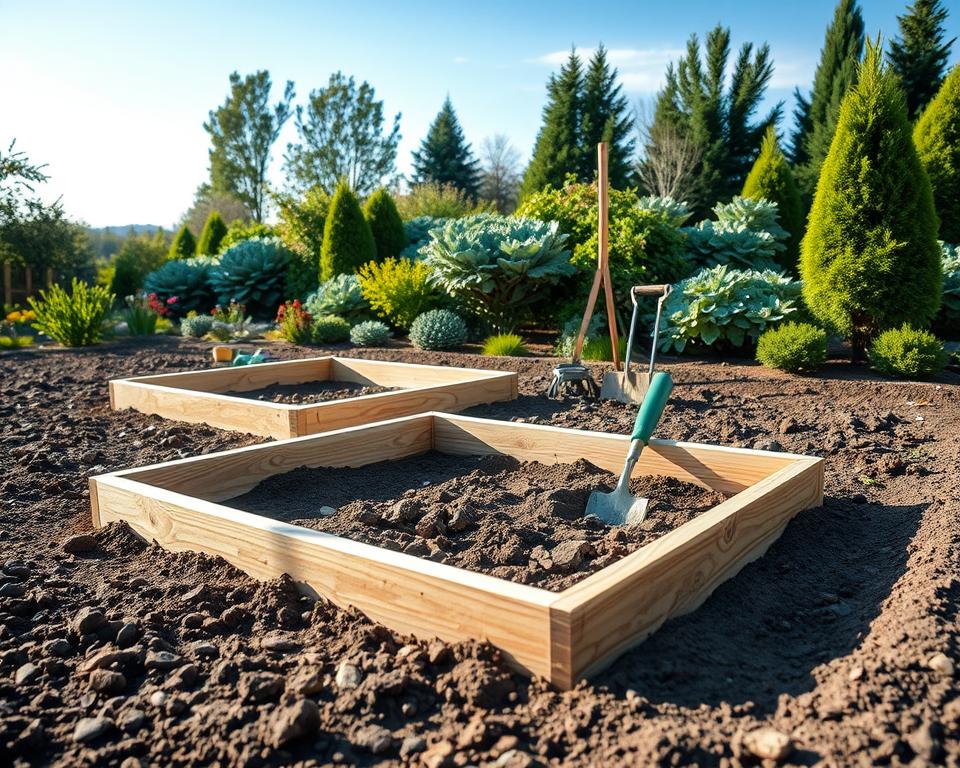
Begin by removing any existing vegetation or debris from your chosen area. Use a spade to cut through turf and a rake to clear smaller stones. For previous wooden structures, employ a circular saw to dismantle them efficiently.
Ensure the ground surface is completely level using a spirit level. This step guarantees your first course sits evenly across the entire area. An uneven base can lead to instability and drainage issues later.
Creating a Stable Base with Hardcore and Sand
Spread an 8cm layer of MOT Type 1 hardcore across the prepared area. This material provides excellent compaction properties for stability. Use a wacker plate to compress the layer thoroughly.
Add a 2cm layer of sharp sand over the compacted hardcore. The sand helps create a level bedding surface for your first course. It also assists with minor adjustments during placement.
Material quantities depend on your garden bed size. Standard 850kg bags cover approximately 10 square metres at 8cm depth. Calculate your requirements based on total area measurements.
Ensuring Proper Drainage Considerations
Avoid using landscape fabric beneath your foundation layers. The gravel and sand mixture naturally facilitates water movement away from the base. This prevents waterlogging while maintaining soil moisture balance.
The compacted base should slope slightly away from centre points. This encourages water to drain outward rather than pooling beneath your structure. Proper drainage protects root systems from excessive moisture.
| Material | Layer Depth | Function | Compaction Method | Coverage per 850kg |
|---|---|---|---|---|
| MOT Type 1 Hardcore | 8cm | Primary stability | Wacker plate | 10m² at 8cm depth |
| Sharp Sand | 2cm | Level bedding | Manual levelling | 25m² at 2cm depth |
This foundation approach supports the weight of filled beds while preventing settlement. The combination of materials creates a stable platform that lasts for decades. Your careful preparation now ensures trouble-free gardening for years to come.
Constructing Your Concrete Block Planters
Mastering the assembly process transforms your garden vision into a lasting reality. Proper construction techniques ensure your raised bed maintains structural integrity through seasonal changes. This phase requires meticulous attention to detail and the right materials.
Laying the First Course with Precision Levelling
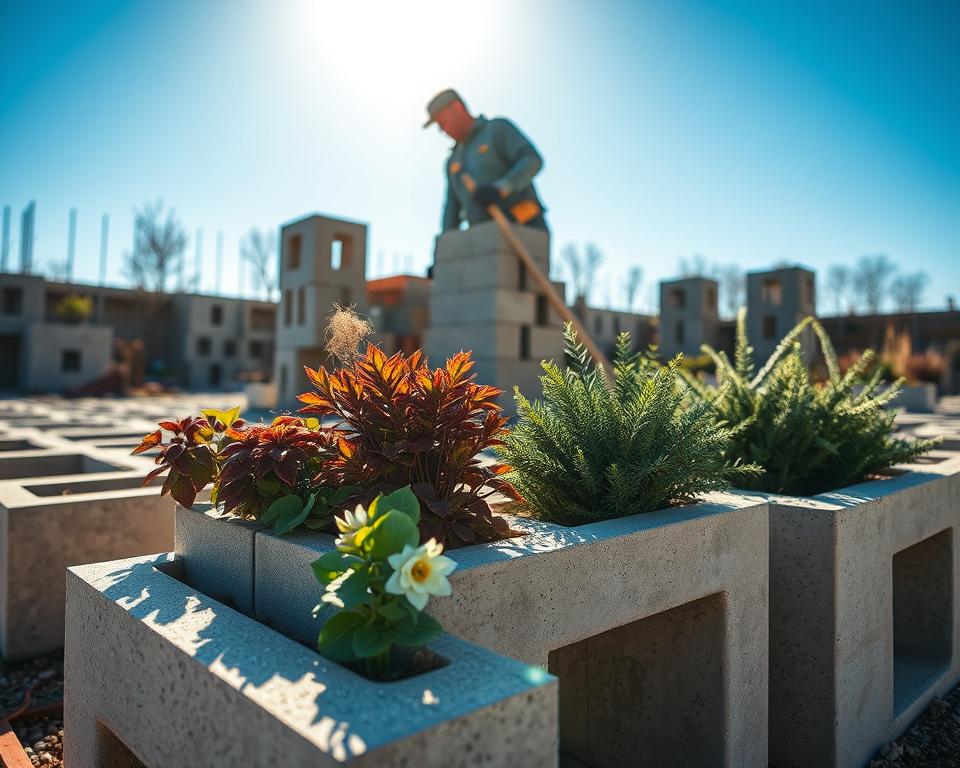
Begin by preparing a mortar mix of five parts sharp sand to one part cement. This ratio provides optimal bonding strength while allowing workability. Spread the mixture evenly across your prepared foundation.
Place each unit carefully onto the mortar bed using a rubber mallet. Check alignment with a spirit level after positioning every second block. Minor adjustments at this stage prevent compounding errors in subsequent layers.
“The integrity of any masonry structure depends entirely on the precision of its first course. A level foundation prevents countless issues throughout the building process.”
Allow the initial layer to cure for 24 hours before proceeding. This curing period ensures stable support for additional weight. Your patience during this phase rewards you with a solid base.
Building Subsequent Layers with Staggered Joints
Apply construction adhesive like Loctite PL Premium between courses. This polyurethane formula creates flexible bonds that withstand ground movement. It complements the mortar’s structural properties.
Stagger vertical joints by at least half the block’s length between layers. This technique distributes weight evenly across the entire structure. It prevents weak points that could compromise stability.
Cut units to size using a brick chisel and hammer when necessary. Measure carefully before making any cuts to maintain consistent dimensions. Custom pieces help achieve perfect alignment throughout.
| Bonding Method | Setting Time | Flexibility | Water Resistance | Recommended Use |
|---|---|---|---|---|
| 5:1 Mortar Mix | 24-48 hours | Low | High | Foundation courses |
| Construction Adhesive | 4-6 hours | High | Excellent | Vertical bonding |
| Mechanical Fasteners | Instant | None | Variable | Additional reinforcement |
Adding Finishing Touches with Cap Blocks
Complete your structure with solid cap blocks measuring approximately 4x8x16 inches. These units provide a smooth, comfortable seating surface around your garden feature. Their weight adds stability to the top layer.
Secure cap blocks using the same adhesive employed between courses. This ensures consistent bonding throughout the entire assembly. The finished appearance enhances your outdoor space’s aesthetic appeal.
Consider applying a surface sealant for additional protection against weathering. This optional step extends the life of your construction while maintaining its appearance. Your completed raised bed now stands ready for soil filling and planting preparation.
Preparing Soil and Planting Environment
The foundation of successful cultivation lies beneath the surface. Your soil composition directly influences plant health and longevity. Proper preparation creates an environment where vegetation thrives.
Masonry structures offer unique advantages for soil management. Their thermal properties help regulate moisture levels effectively. This stability supports consistent growth throughout seasonal changes.
Choosing the Right Soil Mix for Hardy Plants
Selecting quality topsoil proves more economical than potting alternatives. Loam-based varieties provide excellent structure and nutrient retention. They decompose slower, maintaining volume for years.
For standard raised constructions, aim for 18-20 inches depth after settlement. This accommodates most root systems while allowing proper drainage. Deeper beds may require additional support.
Calculate quantities based on your garden’s dimensions. A typical tall bed requires approximately 2.75 cubic yards of material. Account for 4-5 inches of settlement over time.
Creating Optimal Drainage Layers
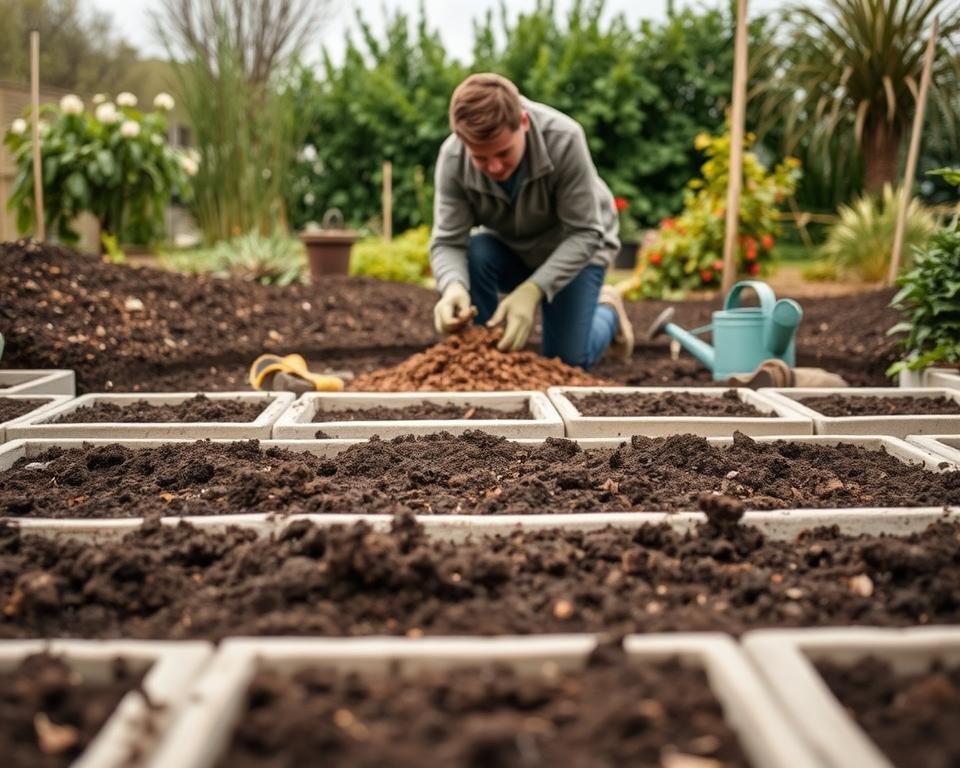
Begin with a 4-inch gravel layer at the base of your structure. This prevents waterlogging while allowing excess moisture to escape. Use clean, washed aggregate to avoid soil contamination.
Hardcore materials provide excellent drainage properties. Their angular nature creates voids for water movement. This system protects roots from rot during wet periods.
The table below compares drainage materials for raised garden structures:
| Material Type | Layer Depth | Drainage Efficiency | Cost per m³ | Longevity |
|---|---|---|---|---|
| 20mm Gravel | 4 inches | Excellent | £45-£60 | Permanent |
| Hardcore | 4 inches | Good | £30-£40 | Permanent |
| Broken Bricks | 6 inches | Moderate | £20-£30 | 10+ years |
Amending Soil for Nutrient Requirements
Enrich your topsoil with well-rotted organic matter. Compost provides essential nutrients while improving soil structure. Aim for a 30% amendment ratio for most vegetation.
For vegetable production, incorporate balanced fertiliser during preparation. This ensures adequate nutrition throughout the growing season. Regular testing helps maintain optimal pH levels.
The mass of surrounding masonry influences soil temperature regulation. It protects against sudden frosts while reducing summer heat stress. This stability promotes stronger growth patterns.
“The difference between good and great gardens often lies in the soil preparation. Investing time in proper foundation work yields dividends for years to come.”
Your careful attention to soil composition ensures healthy development. The right environment supports robust growth and abundant harvests. This approach maximises your gardening success.
Planting and Maintaining Your Hardy Plants
Establishing your garden feature requires thoughtful execution and ongoing care. Proper techniques ensure your investment yields beautiful results for years. The right approach maximises plant health while minimising maintenance efforts.
Proper Planting Techniques for Container Growth
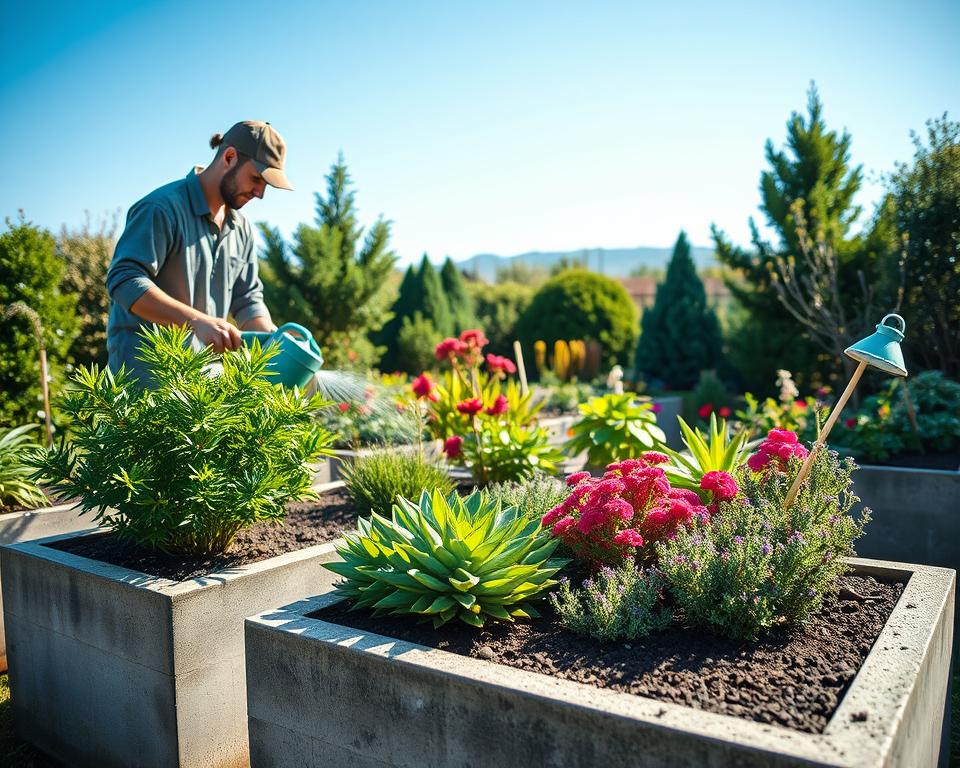
Begin by gently removing specimens from their nursery containers. Carefully tease out any circling roots to encourage outward growth. This step prevents future girdling and promotes healthy development.
Position each specimen at its original soil level in your garden feature. The crown should sit just above the surrounding surface. This placement prevents rot while allowing proper establishment.
Backfill with your prepared soil mixture, firming gently around the roots. Avoid compacting the soil too heavily as this restricts oxygen flow. Water thoroughly immediately after positioning each specimen.
Watering Strategies for Concrete Planters
Masonry constructions retain heat, accelerating moisture evaporation. Water deeply but less frequently to encourage strong root systems. This approach teaches roots to seek moisture at deeper levels.
During summer months, check soil moisture daily. Insert your finger to assess conditions beneath the surface. Adjust your schedule based on weather patterns and plant needs.
The table below illustrates optimal watering practices:
| Season | Frequency | Depth Check | Special Considerations |
|---|---|---|---|
| Spring | Every 5-7 days | 2 inches | Monitor new growth |
| Summer | Every 2-3 days | 3 inches | Early morning watering |
| Autumn | Weekly | 2 inches | Reduce as temperatures drop |
| Winter | Every 2-3 weeks | 1 inch | Only during dry spells |
Seasonal Maintenance and Winter Protection
Apply a 5cm layer of organic mulch before winter arrives. Well-rotted compost or bark chips provide excellent insulation. This layer protects roots from freezing temperatures while enriching the soil.
Prune perennials in late autumn to remove dead growth. This encourages vigorous regrowth when spring returns. Always use sharp, clean tools to prevent disease transmission.
Inspect your structure annually for any shifting or settling. Add fresh soil as needed to maintain optimal depth. This maintenance preserves both function and appearance.
“Successful gardening involves working with nature’s rhythms rather than against them. Observing and adapting to seasonal changes ensures lasting success.”
Rotate your working position around the bed to avoid strain. This simple practice prevents back discomfort during longer sessions. Your comfort enhances the gardening experience.
For vegetable production, consider companion planting strategies. Certain combinations naturally deter pests while improving growth. This organic approach reduces maintenance requirements.
Remember that thermal mass helps regulate soil temperature extremes. It provides natural protection during temperature fluctuations. This stability supports healthier specimens throughout the year.
Conclusion
Your journey to creating a resilient garden structure culminates in a feature that offers both beauty and practicality. These elevated growing spaces provide exceptional durability and thermal regulation for your vegetation.
Proper planning and construction ensure your investment delivers high yields for over two decades. The accessible design makes gardening enjoyable for everyone, regardless of mobility.
Now is the perfect time to begin your project using this comprehensive guide. Share your successful results with fellow gardening enthusiasts online. Your productive outdoor space awaits its transformation.
FAQ
What are the main advantages of using concrete blocks for raised beds?
Concrete blocks offer exceptional durability and longevity, resisting weathering and decay. Their thermal mass helps protect roots from temperature fluctuations, and their modular nature allows for easy customisation of your garden’s layout and design.
Which plants are best suited for these types of planters in the UK climate?
Opt for winter-hardy perennials like Heuchera or hardy ferns, evergreen shrubs such as box or lavender for structure, and cold-tolerant edibles including kale and parsley. These choices ensure year-round interest and resilience.
How do I ensure proper drainage in a concrete block raised bed?
Start with a base layer of hardcore or gravel to promote water movement. Use a well-draining soil mix, and consider adding horticultural grit to prevent waterlogging. Ensure there are gaps or weep holes if your design is fully enclosed.
What is the ideal soil mix for hardy plants in these containers?
A blend of topsoil, compost, and sharp sand or grit works well. This combination provides nutrients, improves drainage, and supports healthy root development, which is crucial for plants in a confined space.
How should I water plants in concrete planters compared to traditional beds?
Water more frequently but in smaller amounts, as concrete can cause the growing medium to dry out faster. Check moisture levels regularly, especially during warm spells, and adjust your watering schedule to meet your plants’ needs.
Can I build these beds on an uneven surface?
It’s essential to level the ground first for stability. Use a spirit level during construction to ensure each course is even, preventing structural issues and ensuring your bed sits securely on its foundation.