Your Guide to Designing a Romantic Garden
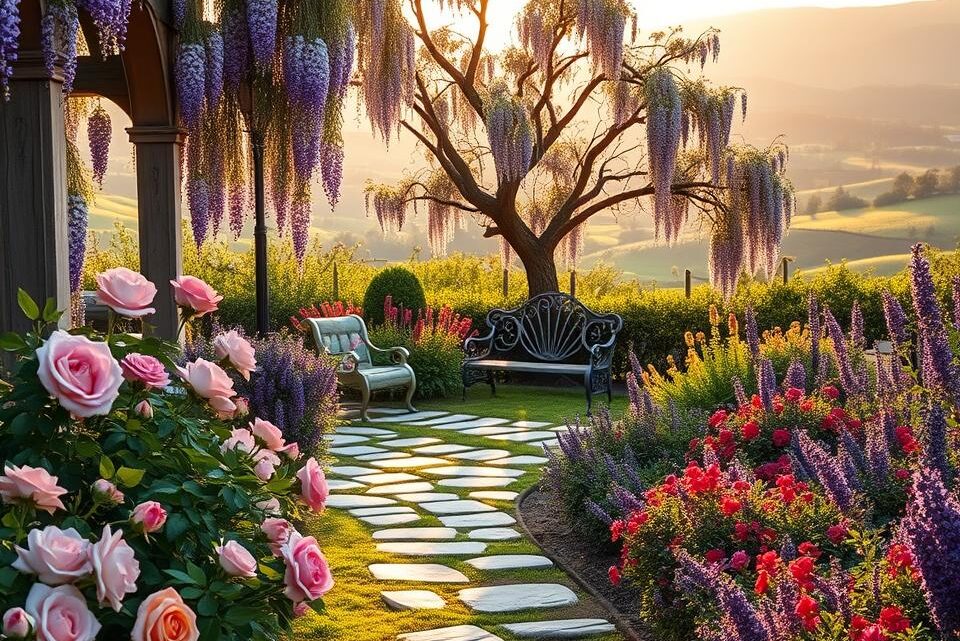
Creating a serene and inviting outdoor space is a dream for many homeowners in the UK. You can transform your garden into a haven that exudes warmth and elegance with the right design elements.
Imagine strolling hand-in-hand through a lush, vibrant garden, surrounded by the soothing sounds of nature. To achieve this idyllic setting, consider incorporating key features such as meandering pathways, soft lighting, and fragrant flowers into your garden design.
By combining these elements, you can create a romantic ambiance that is perfect for relaxation and entertainment. In this guide, we will explore the essential components of a romantic garden and provide you with practical tips to bring your vision to life.
Inhaltsverzeichnis
Key Takeaways
- Identify the key elements that make a garden romantic and inviting
- Discover how to incorporate meandering pathways and soft lighting into your garden design
- Learn how to select fragrant flowers and lush foliage to enhance the ambiance
- Understand the importance of combining design elements to create a serene atmosphere
- Explore practical tips to bring your romantic garden vision to life
The Essence of Romantic Gardens
A romantic garden is more than just a collection of plants; it’s an experience that engages the senses. As you step into such a garden, you’re enveloped in a world of beauty and tranquility.
Historical Influences on Romantic Garden Design
The history of romantic gardens is deeply rooted in various cultural and historical contexts. Understanding these influences can help you create a garden that not only looks beautiful but also tells a story.
Victorian Garden Traditions
During the Victorian era, gardens became an expression of wealth and status, featuring intricate designs and exotic plants. These gardens were often characterized by their use of vibrant colours and ornate decorations.
European Romantic Movement in Gardens
The European Romantic movement brought a new perspective to garden design, emphasizing nature and emotion. Gardens from this period often featured winding paths, naturalistic landscapes, and an emphasis on sensory experiences.
Key Elements That Define a Romantic Garden
So, what makes a garden romantic? Several key elements come together to create this effect, including sensory experiences and emotional connections.
Sensory Experiences: Fragrance and Texture
A romantic garden engages your senses, with fragrant flowers and herbs filling the air with sweet scents. The texture of plants, from soft grasses to rough tree bark, adds depth to the sensory experience.
| Sensory Element | Examples |
|---|---|
| Fragrance | Roses, lavender, jasmine |
| Texture | Soft grasses, rough tree bark, velvety petals |
Emotional Connections in Garden Spaces
Romantic gardens also foster emotional connections, whether it’s a quiet spot for contemplation or a vibrant area for social gatherings. These spaces are designed to evoke feelings and create lasting memories.
Planning Your Romantic Garden Space
Transforming your outdoor space into a romantic garden retreat begins with careful planning. To achieve this, you need to understand your garden’s potential and how to layout out the space effectively.
Assessing Your Garden’s Potential
Before you start designing, it’s crucial to assess your garden’s conditions and natural features. This involves evaluating the sunlight and soil conditions, as well as identifying any natural focal points.
Evaluating Sunlight and Soil Conditions
Understanding the sunlight patterns and soil quality in your garden is vital. Most flowering plants require at least six hours of direct sunlight per day. Soil condition affects plant health, so testing its pH level and nutrient content is essential.
Identifying Natural Focal Points
Every garden has unique features that can serve as focal points, such as a mature tree, a pond, or a slope. Identifying these features helps in creating a design that complements and enhances these natural elements.
Creating a Romantic Garden Layout
With an understanding of your garden’s potential, you can start planning the layout. This involves sketching out your design and zoning different areas for various moods and purposes.
Sketching Your Garden Design
Start by sketching the outline of your garden, including existing features and the areas you want to create. Consider the flow and how visitors will experience the space.
Zoning for Different Moods and Purposes
Divide your garden into zones that evoke different moods or serve different purposes, such as a secluded seating area or a vibrant flower bed. This zoning will help create a dynamic and engaging garden.
| Zone | Purpose | Features |
|---|---|---|
| Seating Area | Relaxation | Comfortable seating, shade, soft lighting |
| Flower Bed | Visual Appeal | Vibrant flowers, fragrant herbs, decorative edging |
By carefully assessing your garden’s potential and creating a thoughtful layout, you can design a romantic garden that is both beautiful and functional.
Designing a Romantic Garden: Core Principles
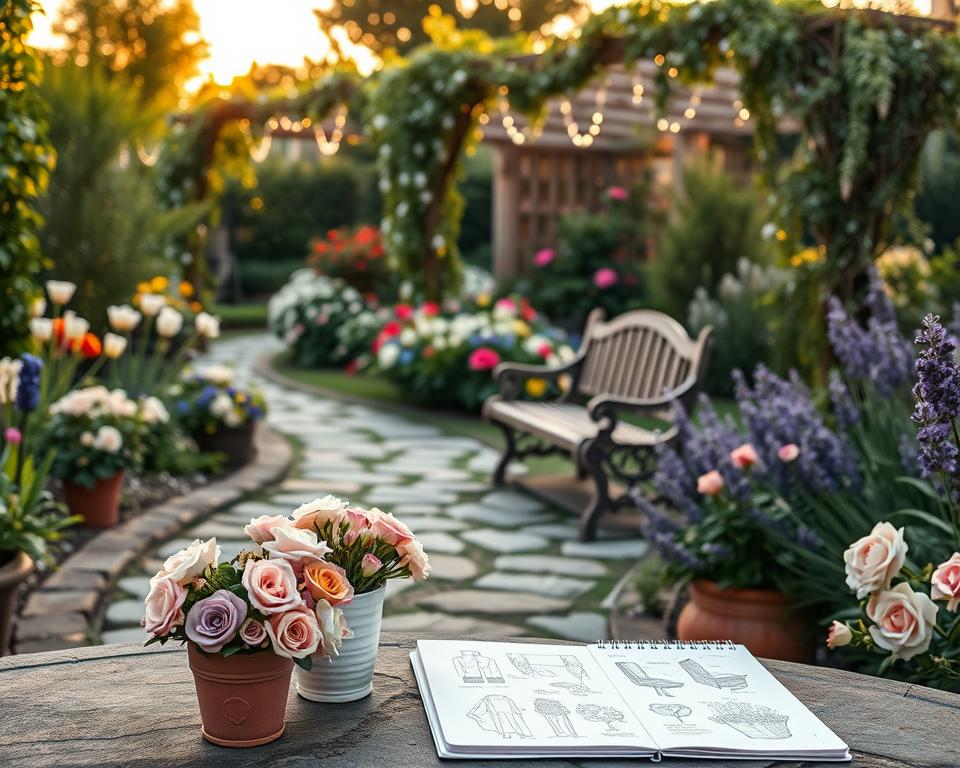
To create a truly romantic garden, it’s essential to understand and apply certain core design principles. A romantic garden is characterised by its ability to evoke feelings of intimacy, serenity, and enchantment. By embracing these principles, you can craft an outdoor space that not only delights the senses but also provides a tranquil retreat from the world.
Embracing Informal Structure
A key characteristic of a romantic garden is its informal structure. Unlike formal gardens, which are often symmetrical and regimented, romantic gardens favour a more relaxed, naturalistic approach. This doesn’t mean abandoning all structure, but rather finding a balance between order and a more free-flowing design.
Balancing Order and Wildness
To achieve this balance, consider mixing neatly manicured areas with wilder, more natural sections. For example, a neatly trimmed hedge can border a more unruly flower bed, creating a sense of contrast that adds visual interest.
Creating Natural Flow Between Areas
Ensure that different areas of your garden flow naturally into one another. Meandering paths, strategically placed plants, and subtle changes in level can all help to create a sense of continuity and guide visitors through the garden.
Creating Mystery and Surprise
A romantic garden should also have an element of mystery and surprise. This can be achieved through the clever use of hidden corners, unexpected vistas, and varied planting.
Hidden Corners and Discoveries
Consider incorporating secluded areas or ‘secret gardens’ within your garden. These can be created using screening plants, trellises, or other garden features to conceal and reveal different areas.
Using Height and Depth for Intrigue
Varying the height and depth of your planting and garden features can add intrigue. Tall trees, climbing plants on trellises, and layered borders all contribute to a sense of depth and visual interest.
Establishing Intimate Spaces
Intimacy is a hallmark of a romantic garden. Creating private nooks and conversation areas encourages relaxation and fosters a sense of connection.
Private Nooks and Conversation Areas
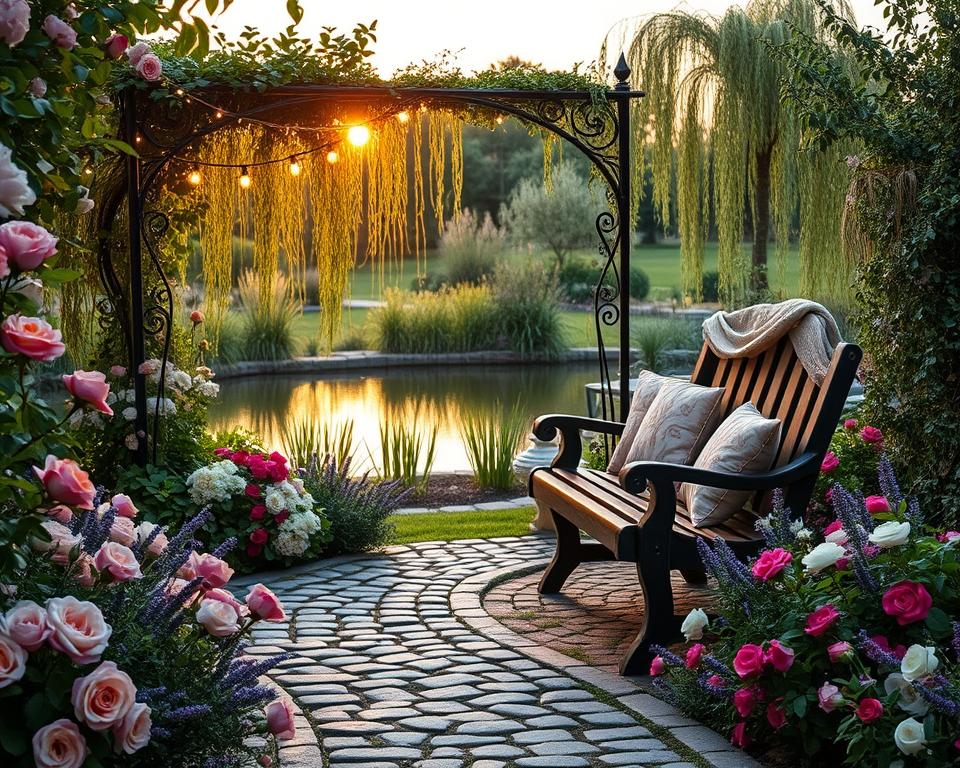
Use garden furniture, arches, and planting to define these intimate spaces. A secluded bench or a circular seating area surrounded by lush planting can become a romantic haven within your garden.
Budgeting for Your Romantic Garden
Creating a romantic garden on a budget requires careful planning and prioritization. To achieve your dream garden without overspending, you need to make informed decisions about where to allocate your resources.
Prioritising Essential Elements
When budgeting for your romantic garden, it’s crucial to prioritise the elements that are most important to you. This might include beautiful plants, decorative features, or seating areas.
Investment Plants vs Decorative Elements
Consider investing in high-quality plants that will grow and flourish over time, rather than spending a lot on decorative elements that may not have a lasting impact. Perennials and climbers can add beauty and fragrance to your garden for years to come.
Phased Implementation Strategies
Implementing your garden design in phases can help spread the cost over time. Start with the most essential elements and gradually add more features as your budget allows. This approach also allows you to adjust your design as you go along.
Cost-Saving Tips and Alternatives
There are several ways to save money when creating your romantic garden. Consider alternatives to expensive garden features and materials.
Propagation and Seed Saving
Propagating plants from cuttings or saving seeds from your existing plants can be a cost-effective way to increase your plant collection. This method also allows you to preserve the characteristics of your favourite plants.
Upcycling and Repurposing for Garden Features
Think creatively about how to reuse materials for your garden features. Old containers, wooden pallets, and other household items can be repurposed as planters, trellises, or other decorative elements, adding a unique touch to your garden.

Selecting the Perfect Colour Palette
Selecting the perfect colour palette is a crucial step in designing your romantic garden. The colours you choose will set the tone for the entire space, influencing its ambiance and aesthetic appeal.
Traditional Romantic Colour Schemes
Romantic gardens often feature colour schemes that evoke a sense of nostalgia and intimacy. Two popular approaches include soft pastels and rich jewel tones.
Soft Pastels and Their Effect
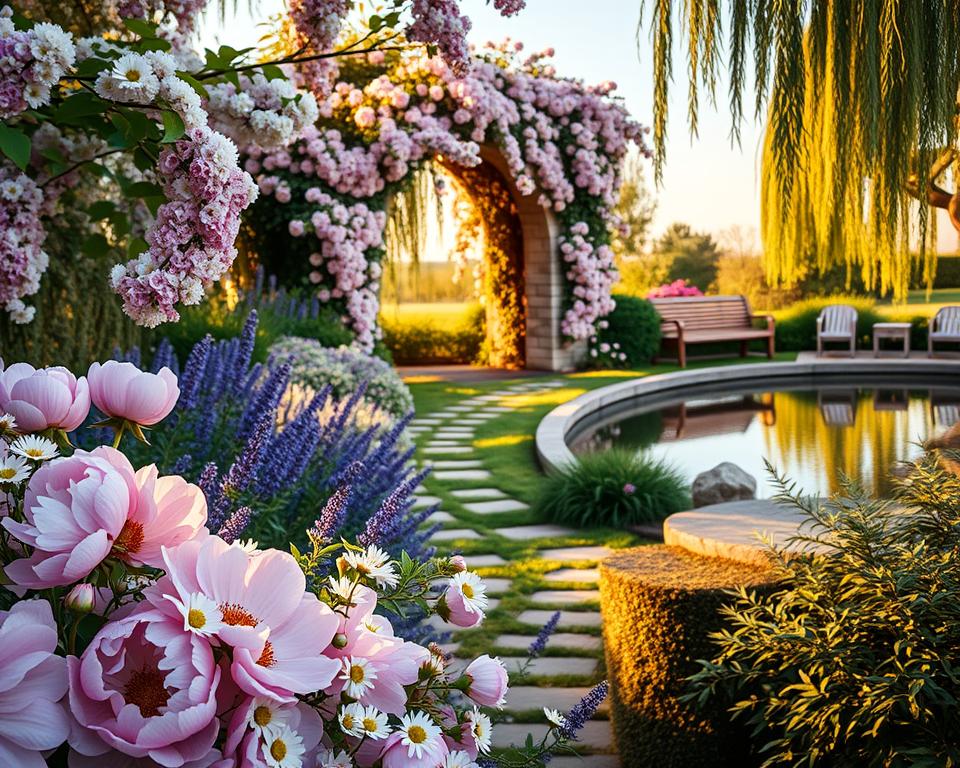
Soft pastel colours, such as pale pink, baby blue, and mint green, create a soft, dreamy atmosphere. These colours are calming and can make your garden feel like a serene retreat.
Rich Jewel Tones for Drama
For a more dramatic effect, rich jewel tones like emerald green, sapphire blue, and ruby red can add depth and luxury to your garden. These colours are particularly effective when used in foliage and flowering plants.
Creating Colour Harmony Throughout Seasons
To maintain visual interest throughout the year, consider strategies that ensure colour harmony across different seasons.
Succession Planting for Continuous Colour
Succession planting involves planting different flowers and plants at different times to ensure continuous colour throughout the growing season. This technique can help keep your garden vibrant from spring to autumn.
Foliage as a Colour Foundation
Using foliage plants with varying colours and textures can provide a year-round colour foundation. This approach is particularly useful in winter when flowering plants are less prominent.
| Colour Scheme | Seasonal Interest | Plant Suggestions |
|---|---|---|
| Soft Pastels | Spring, Summer | Roses, Forget-me-nots, Foxgloves |
| Rich Jewel Tones | Summer, Autumn | Salvias, Delphiniums, Asters |
| Foliage Focus | Year-round | Hostas, Heuchera, Holly |
By thoughtfully selecting your garden’s colour palette and employing strategies like succession planting and foliage focus, you can create a romantic garden that remains beautiful throughout the seasons.
Essential Plants for a Romantic Garden
When designing a romantic garden, the choice of plants is crucial in setting the tone for romance and intimacy. The right flora can transform your outdoor space into a haven of beauty and serenity.
Roses: The Quintessential Romantic Flower
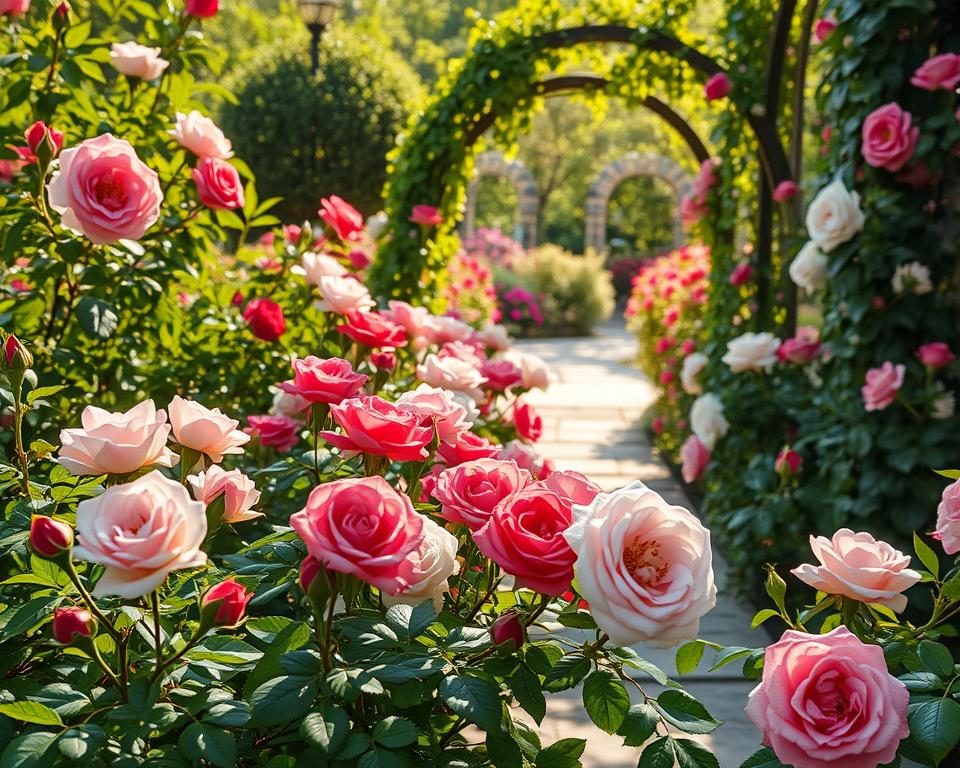
Roses are synonymous with romance and are a must-have in any romantic garden. Their beauty, fragrance, and variety make them an ideal choice for creating a romantic ambiance.
Old Garden Roses vs Modern Varieties
Old garden roses offer a nostalgic charm with their fragrant blooms and natural growth habit. Modern varieties, on the other hand, provide a wider range of colours and improved disease resistance. Consider combining both for a diverse and resilient rose collection.
Caring for Roses in British Climate
In the British climate, roses require regular care, including pruning, feeding, and mulching. Ensure you choose varieties that are suitable for the local weather conditions to minimize maintenance.
Climbing and Rambling Plants
Climbing and rambling plants are perfect for adding vertical interest and creating a sense of enchantment in your romantic garden. They can be trained to climb arbors, trellises, or walls, adding depth and texture.
Wisteria, Clematis, and Honeysuckle
Wisteria, clematis, and honeysuckle are popular choices for climbing plants, offering beautiful blooms and fragrance. They require regular pruning and training to maintain their shape and promote flowering.
Training and Support Systems
To make the most of climbing plants, provide sturdy support systems such as trellises or arbors. Regular training and pruning will help maintain their desired shape and encourage blooming.
Fragrant Flowers and Herbs
Fragrant flowers and herbs are essential for creating a sensory experience in your romantic garden. They can be used to create pathways, borders, or simply enjoyed for their fragrance.
Evening-Scented Plants
Evening-scented plants like night-blooming jasmine and evening primrose release their fragrance in the evening, creating a magical atmosphere. Incorporate these plants into your garden design to enhance the romantic ambiance.
Creating Sensory Pathways
Create sensory pathways by planting fragrant herbs and flowers along your garden paths. This will engage your senses and invite exploration, making your garden a more immersive experience.
Creating Enchanting Garden Structures
To create a truly romantic garden, you need to incorporate structures that not only complement the natural beauty but also add an element of enchantment. Enchanting garden structures are crucial in defining the character and charm of your outdoor space.

Arbours, Pergolas and Trellises
Arbours, pergolas, and trellises are not just functional elements; they are key features that can elevate the aesthetic appeal of your garden. These structures provide support for climbing plants, create shaded areas, and add depth to your garden landscape.
Material Choices and Weathering
The choice of material for your arbours, pergolas, and trellises can significantly impact their durability and appearance. Wood, metal, and vinyl are popular options, each with its own advantages. For instance, wooden structures can weather beautifully over time, developing a charming patina that adds to their character. Consider using durable hardwoods like oak or teak for a long-lasting finish.
Placement for Maximum Impact
Strategic placement of these structures is crucial for maximizing their impact. Position them in areas where they can create focal points or define different sections of your garden. For example, an arbour can serve as a picturesque entrance, while a pergola can create a shaded pathway.
Romantic Seating Areas
Seating areas are an integral part of a romantic garden, providing intimate spaces for relaxation and contemplation. When designing these areas, consider both comfort and aesthetics.
Benches and Swing Seats
Choose benches or swing seats that complement the style of your garden. A wooden bench can add a rustic charm, while a metal swing seat can introduce a playful element. Ensure that the seating is comfortable and inviting, encouraging you to linger.
Creating Comfortable Retreats
To create a truly comfortable retreat, consider adding cushions, throws, and other textiles that can enhance the coziness of your seating area. Soft lighting can also play a significant role in setting the ambiance, making the space more inviting in the evenings.
Decorative Gates and Entrances
The entrance to your garden sets the tone for the entire experience. A decorative gate can create a grand first impression, while a simple entrance can be just as effective if designed thoughtfully.
First Impressions and Thresholds
When designing your garden entrance, consider the threshold as a transition from the outside world to your romantic retreat. Use plants, lighting, and decorative elements to create a welcoming atmosphere that invites visitors to explore your garden.
Pathways and Borders in Your Romantic Garden
The charm of a romantic garden lies in its winding paths and lush borders, which beckon you to explore further. As you design your garden, consider how these elements can work together to create a captivating and intimate atmosphere.
Winding Paths and Their Appeal
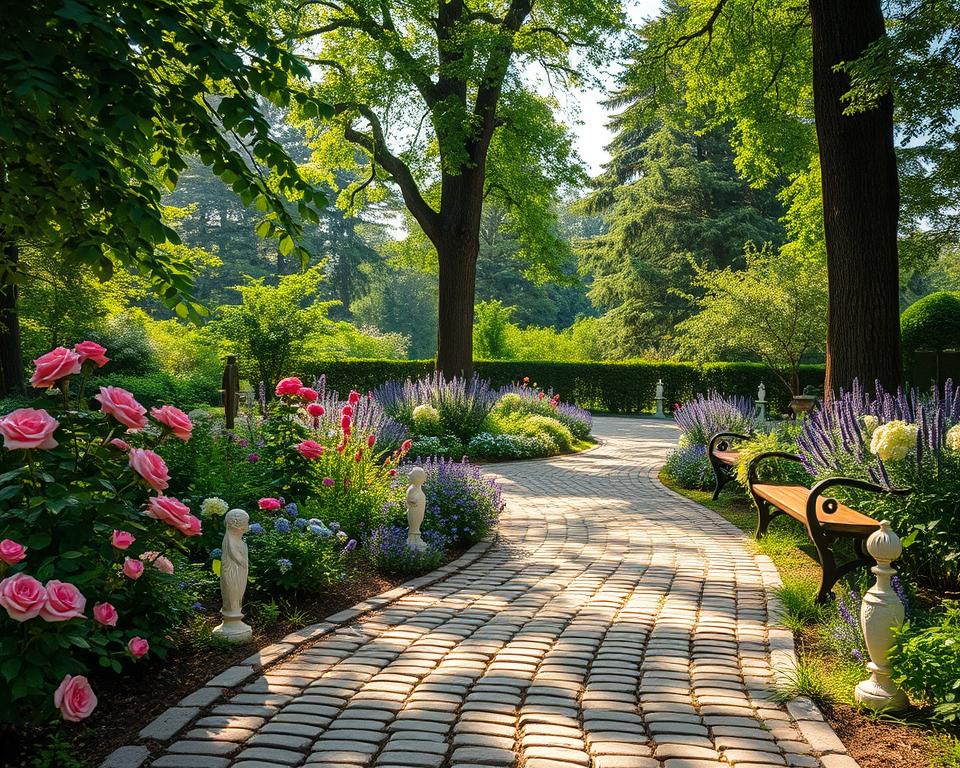
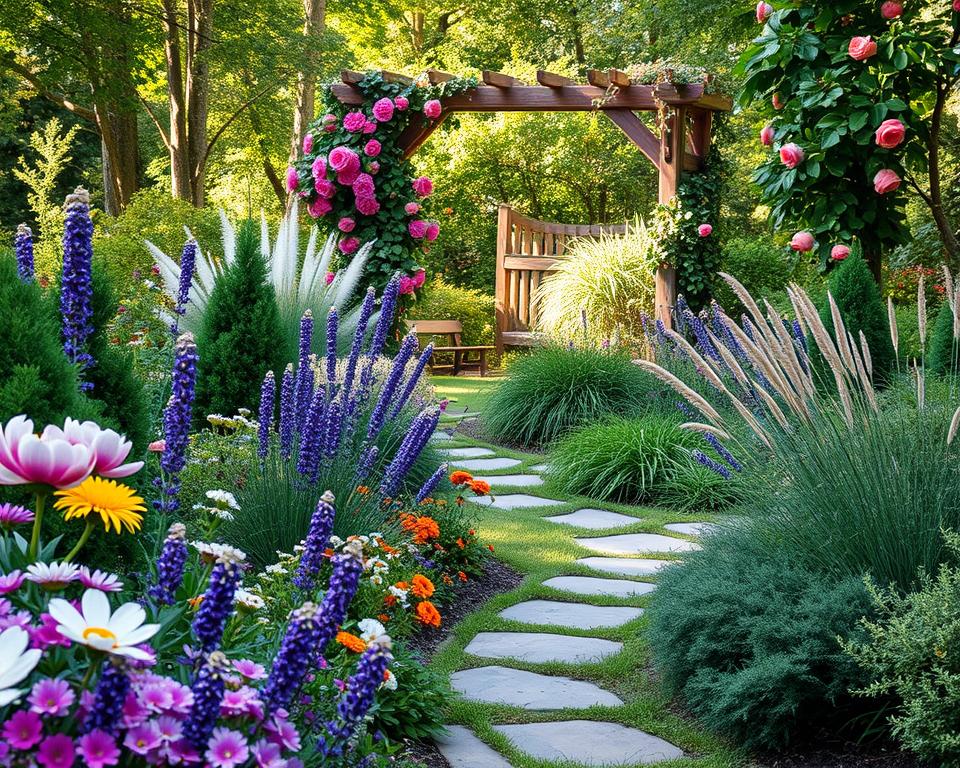
Winding paths are a hallmark of romantic gardens, inviting visitors to meander and discover hidden treasures. These paths not only add visual interest but also create a sense of journey and exploration.
Material Selection for Pathways
The material you choose for your pathways can greatly impact the overall aesthetic of your garden. Options range from natural stone and gravel to brick and wood chips. Consider the colour and texture of the material in relation to your garden’s overall design.
Edging Techniques and Plants
Edging your pathways with plants or decorative elements can enhance their appeal. Use low-growing plants like thyme or creeping Jenny to soften the edges, or opt for more structured edging like brick or metal.
Lush, Overflowing Borders
Lush borders are another key feature of romantic gardens, providing a riot of colour and texture. To achieve this look, focus on layering plants and maintaining a controlled wilderness appearance.
Layering Plants for Depth
Layering plants involves placing taller plants at the back, mid-sized in the middle, and smaller ones at the front. This creates depth and visual interest. Consider using a mix of foliage and flowering plants to add texture and colour throughout the seasons.
Maintaining the Controlled Wilderness Look
To maintain a controlled wilderness look, regular maintenance is essential. This includes pruning, weeding, and mulching. The goal is to keep the borders looking lush and full without appearing overgrown or neglected.
| Pathway Material | Edging Options | Border Layering Tips |
|---|---|---|
| Natural Stone | Brick Edging | Taller plants at the back |
| Gravel | Low-growing plants | Mid-sized plants in the middle |
| Brick | Metal Edging | Smaller plants at the front |
Water Features for Romance and Tranquility
A romantic garden isn’t complete without the soothing presence of water features, which add depth and character. Water features can transform your outdoor space into a tranquil retreat, perfect for relaxation and contemplation.
Water features come in various forms, from small ponds and reflecting pools to fountains that create soothing sounds. Each type offers a unique way to enhance the romantic ambiance of your garden.
Small Ponds and Reflecting Pools
Small ponds and reflecting pools are ideal for creating a sense of calm in your garden. They can be designed to fit into small or large spaces, depending on your garden’s layout.
Installation Considerations
When installing a small pond or reflecting pool, consider the location, size, and depth. Ensure that the area is level and that the water feature is proportionate to your garden.
Appropriate Aquatic Plants
Aquatic plants such as water lilies and irises are perfect for small ponds. They add beauty and help maintain the water’s ecological balance.
For example, a well-placed water lily can not only beautify your pond but also provide shade, reducing algae growth. As the renowned garden designer, Gertrude Jekyll, once said, “The pond is a mirror, reflecting the beauty of the surrounding landscape.”
“The pond is a mirror, reflecting the beauty of the surrounding landscape.”
Fountains and Water Sounds
Fountains are another excellent way to incorporate water features into your garden, creating soothing sounds that enhance the romantic atmosphere.
Solar and Low-Energy Options
Consider solar-powered fountains for an eco-friendly option. They are not only environmentally friendly but also cost-effective.
Winterising Water Features
To protect your water features during winter, consider draining pumps and pipes, and covering the pond to prevent debris from entering.
| Water Feature Type | Maintenance Requirement | Cost Estimate |
|---|---|---|
| Small Pond | Regular cleaning, aquatic plant maintenance | £500-£1,000 |
| Fountain | Pump maintenance, occasional cleaning | £300-£800 |
| Reflecting Pool | Occasional cleaning, water level maintenance | £800-£1,500 |
Maintaining Water Features
Regular maintenance is crucial to keep your water features looking their best. This includes cleaning, checking pumps, and ensuring that the water level is appropriate.
Seasonal Care Requirements
Seasonal care involves tasks such as cleaning out debris, checking for damaged or worn-out parts, and preparing the water feature for different weather conditions.
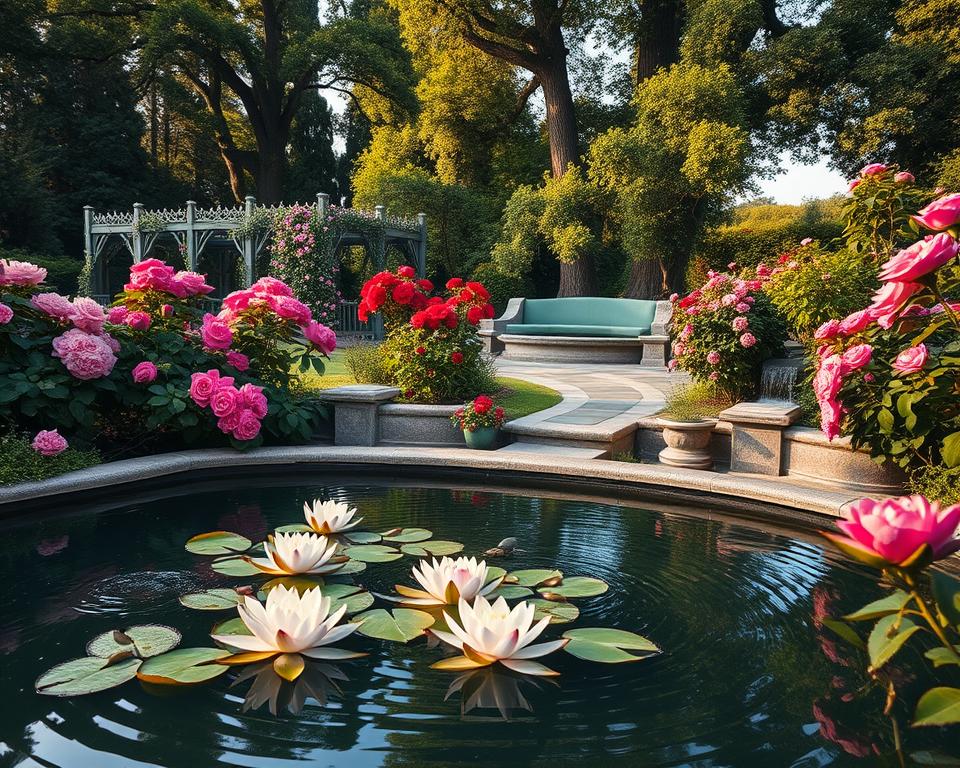
By incorporating water features into your garden and maintaining them properly, you can enjoy a serene and romantic outdoor space throughout the year.
Garden Ornaments and Decorative Elements
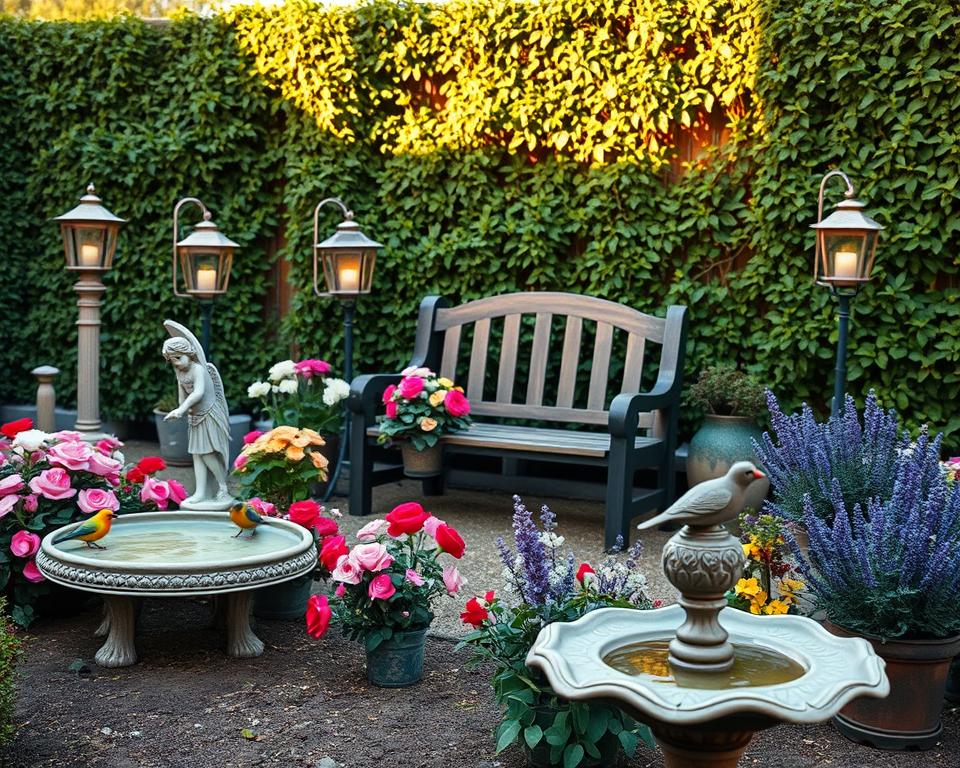
Garden ornaments and decorative elements play a crucial role in defining the character and ambiance of a romantic garden. These features not only add visual interest but also help to create a sense of personality and charm in your outdoor space.
Statuary and Sculptural Elements
Statuary and sculptural elements can be a beautiful addition to a romantic garden, adding a touch of elegance and sophistication. When choosing statuary, consider pieces that reflect the natural world or evoke a sense of mythology and romance.
Placement and Scale Considerations
When placing statuary or sculptural elements, consider the scale of the piece in relation to your garden. A large statue can be a focal point, while smaller pieces can be used to create a sense of discovery as visitors wander through the garden.
Weathering and Patina Development
Over time, statuary and sculptural elements can develop a beautiful patina, adding character to your garden. Consider materials that will weather well, such as stone or bronze, to create a sense of age and history.
Vintage and Antique Garden Accessories
Vintage and antique garden accessories can add a unique and personal touch to your romantic garden. Look for pieces that reflect your personal style and complement the overall aesthetic of your garden.
Sourcing Authentic Pieces
When sourcing vintage or antique pieces, consider visiting antique shops, flea markets, or online marketplaces. Be sure to inspect items carefully to ensure they are in good condition and suitable for outdoor use.
Preservation Techniques
To preserve your vintage or antique garden accessories, consider applying a protective coating or storing them in a dry location during harsh weather conditions. Regular cleaning and maintenance will also help to extend their lifespan.
Romantic Lighting Solutions
Romantic lighting solutions can transform your garden into a magical and inviting space in the evening. Consider using a combination of lighting types to create a warm and welcoming ambiance.
Solar Lighting Pathways
Solar-powered lights are an eco-friendly and cost-effective way to illuminate pathways and highlight garden features. They come in a variety of styles and can be easily installed along walkways.
Creating Evening Ambiance
To create a romantic evening ambiance, consider using soft, warm lighting to highlight key features and create pools of light. This will help to create a sense of intimacy and warmth in your garden.
Creating Year-Round Interest in Your Romantic Garden
To keep your romantic garden captivating throughout the year, it’s essential to incorporate elements that provide interest across all seasons. This involves a thoughtful selection of plants, features, and design elements that work together to create a beautiful and inviting space.
Spring and Summer Splendour
Spring and summer are the seasons when your romantic garden will be at its most vibrant. To make the most of these seasons, consider incorporating a mix of flowering bulbs, perennials, and annuals that provide a succession of blooms.
Bulb Planting Strategies
Planting bulbs such as daffodils, tulips, and hyacinths in the autumn will provide a stunning display of colour in the spring. Consider naturalizing bulbs in grassy areas or under trees for a more informal look.
Summer Flowering Highlights
For a romantic garden that’s full of life during the summer months, incorporate plants like roses, peonies, and delphiniums. These flowers not only add vibrant colours but also fill the air with their sweet fragrance.
Autumn and Winter Romance
As the seasons transition into autumn and winter, your romantic garden can still be a place of beauty and tranquility. By incorporating plants with interesting seed heads, berries, or structural forms, you can maintain visual interest throughout the colder months.
Structural Plants for Winter Interest
Plants like holly, berberis, and ornamental grasses provide structure and texture to your garden during the winter. Their interesting forms and colours add depth and visual appeal to the winter landscape.
Seed Heads and Frost Effects
Many plants, such as coneflowers and black-eyed susans, leave behind attractive seed heads that can add a delicate, lacy texture to your garden under frost. Leaving these seed heads intact can provide winter interest and a habitat for wildlife.
Maintenance Tips for Your Romantic Garden
Maintaining a romantic garden requires a thoughtful approach to preserve its charm. A well-designed garden is not just about initial planning, but also about ongoing care. This ensures that your garden remains a beautiful and tranquil retreat throughout the year.
Achieving the “Controlled Chaos” Look
The “controlled chaos” look is a hallmark of a romantic garden, where lush vegetation and vibrant flowers create a sense of abundance. To achieve this, you need to strike a balance between order and spontaneity.
Strategic Pruning Techniques
Pruning is essential to maintain the health and appearance of your plants. Prune your plants strategically to encourage growth and flowering, while maintaining a natural, unstructured look. For example, pruning roses in late winter or early spring promotes healthy growth.
Self-Seeding Plants Management
Self-seeding plants can add to the charm of your garden, but they need to be managed to prevent overgrowth. Regularly remove unwanted seedlings to maintain the desired balance and prevent your garden from becoming too dense.
Seasonal Maintenance Schedule
A seasonal maintenance schedule helps you stay on top of garden tasks. By breaking down tasks into manageable chunks, you can ensure your garden remains beautiful throughout the year.
Monthly Task Breakdown
Here’s a brief overview of monthly tasks: In spring, focus on pruning and planting. Summer is for deadheading and watering. Autumn involves clearing leaves and preparing plants for winter. Winter is the time for structural repairs and planning.
Labour-Saving Techniques
To save time and effort, consider labour-saving techniques such as mulching, which reduces weed growth and retains moisture. Using drought-tolerant plants can also minimize watering needs.
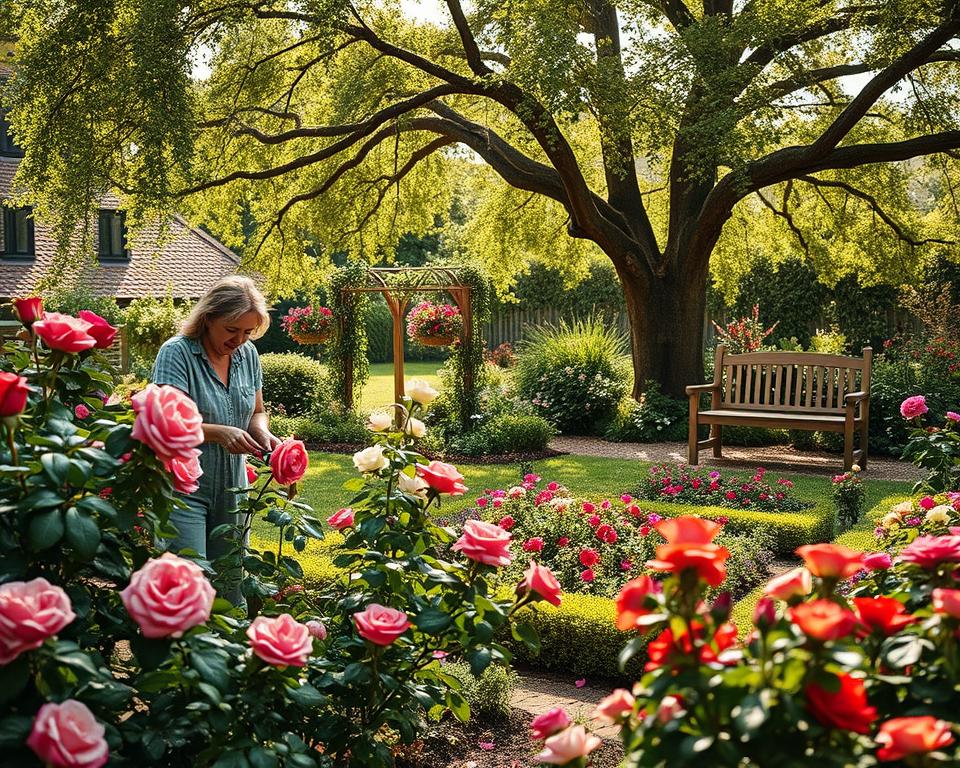
By following these maintenance tips, you can enjoy a beautiful and thriving romantic garden. Regular care and attention will ensure that your garden remains a haven of peace and beauty.
Small Space Solutions for Romantic Gardens
You don’t need a large yard to create a romantic garden; even the smallest of spaces can be transformed into a lovely retreat. With a bit of creativity and some clever design, you can turn a compact outdoor area into an intimate oasis.
Container Gardening with Romantic Elements
Container gardening is an excellent way to add romance to a small space. By choosing the right pots and plants, you can create a beautiful display that adds to the ambiance of your garden.
Pot Selection and Arrangement
Selecting the right pots is crucial for creating a romantic atmosphere. Opt for pots with a classic, timeless design, and arrange them in a way that creates a sense of harmony. Consider grouping pots of varying sizes together to add visual interest.
Specialised Care Requirements
Containers require more frequent watering and fertilization than plants in the ground. Use a high-quality potting mix and fertilize regularly to keep your plants healthy and thriving.
Vertical Gardening for Limited Spaces
Vertical gardening is another effective way to maximize space in a small garden. By using walls and fences, you can create a lush, romantic atmosphere even in the most compact areas.
Wall and Fence Transformations
Transforming a wall or fence into a garden can be achieved with trellises, climbing plants, or living walls. This not only adds greenery to your space but also creates a sense of seclusion and intimacy.
Balcony and Terrace Romantic Gardens
Even balconies and terraces can be turned into romantic gardens with the right design. Use container gardening and vertical gardening techniques to create a cozy, inviting space that feels like a retreat.
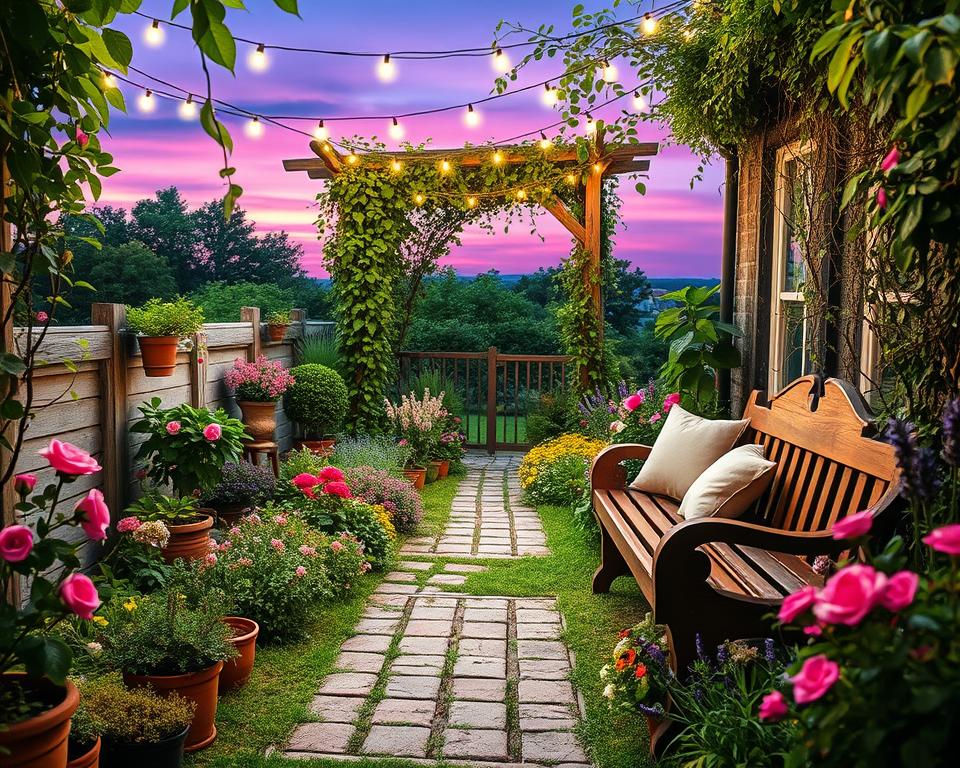
Conclusion: Enjoying Your Romantic Garden Retreat
As you complete your romantic garden, it’s time to sit back and enjoy the fruits of your labour. Your garden is now a serene oasis, perfect for relaxation and contemplation. With the key elements in place, you can unwind and appreciate the beauty surrounding you.
Stroll along your winding paths, take in the fragrance of blooming flowers, and listen to the soothing sounds of your water feature. Your romantic garden retreat is designed to be a haven, a place to escape the stresses of everyday life and reconnect with nature and loved ones.
As you enjoy your garden, remember that maintenance is key to keeping it looking its best. Regularly tend to your plants, and make seasonal adjustments to ensure your garden remains a vibrant and inviting space throughout the year. By doing so, you’ll be able to fully appreciate enjoying your garden and make the most of your romantic garden retreat.
FAQ
What are the key elements that define a romantic garden?
A romantic garden is characterised by sensory experiences, emotional connections, and a blend of natural beauty and carefully designed features, such as fragrance, texture, and colour.
How do I assess my garden’s potential for a romantic garden design?
To assess your garden’s potential, evaluate sunlight and soil conditions, identify natural focal points, and consider the overall layout and existing features that can be incorporated into your design.
What is the importance of colour palette in a romantic garden?
The colour palette plays a crucial role in creating a romantic atmosphere, with traditional romantic colour schemes often featuring soft pastels and rich jewel tones that evoke a sense of warmth and intimacy.
What types of plants are essential for a romantic garden?
Roses, climbing and rambling plants, and fragrant flowers and herbs are staples of a romantic garden, providing beauty, scent, and texture that enhance the sensory experience.
How can I create enchanting garden structures?
Arbours, pergolas, and trellises can be used to create inviting spaces, while benches, swing seats, and decorative gates and entrances add to the romantic ambiance.
What are some tips for maintaining a romantic garden?
To maintain a romantic garden, adopt strategic pruning techniques, manage self-seeding plants, and follow a seasonal maintenance schedule to achieve a “controlled chaos” look.
Can I create a romantic garden in a small space?
Yes, container gardening and vertical gardening solutions can be used to create a romantic garden in small spaces, such as balconies and terraces, by selecting the right plants and features.
How do I incorporate water features into my romantic garden?
Small ponds, reflecting pools, and fountains can be used to create a soothing and peaceful atmosphere, while also providing a habitat for aquatic plants and wildlife.
What are some budget-friendly tips for creating a romantic garden?
Prioritise essential elements, consider phased implementation strategies, and use cost-saving techniques such as propagation, seed saving, and upcycling to create a romantic garden on a budget.